Malaysia’s crown prince launches ringgit stablecoin, Zetrix treasury

cointelegraphPublished on 2025-12-09Last updated on 2025-12-09

Abstract

Malaysia's Crown Prince Ismail Ibrahim, through his telecom company Bullish Aim, has launched RMJDT, a ringgit-pegged stablecoin, under the country's regulatory sandbox. The stablecoin, issued on the Zetrix blockchain, aims to boost the ringgit's use in cross-border trade and attract foreign investment. Additionally, Bullish Aim is creating a digital asset treasury with an initial allocation of 500 million ringgit ($121.5M) in ZETRIX tokens, modeled after MicroStrategy's Bitcoin strategy. This move aligns with Malaysia's Digital Asset National Policy, despite growing market skepticism about the sustainability of digital asset treasuries.

The eldest son of Malaysia’s billionaire king is launching a stablecoin pegged to the national currency, targeting payments across the Asia-Pacific region.

Bullish Aim, a telecom company owned by Ismail Ibrahim, the son of Sultan Ibrahim Iskandar of the Johor royal family, on Tuesday announced the launch of RMJDT, a new stablecoin backed by the Malaysian ringgit, the country’s fiat currency.

The upcoming stablecoin is set to be issued on Zetrix, a layer-1 blockchain designed to connect governments, businesses and individuals to the Web3 economy with a focus on cross-border integration, particularly in China.

In addition to launching the stablecoin, Bullish Aim will also establish a digital asset treasury (DAT) company with an initial treasury allocation of 500 million ringgits ($121.5 million) in Zetrix (ZETRIX) tokens, the announcement states.

Stablecoin launch under Malaysia’s regulatory sandbox

According to the announcement, RMJDT is launched under Malaysia’s regulated sandbox framework by the Securities Commission and Bank Negara Malaysia, aiming to test financial innovations, including stablecoins.

Launched in June, the sandbox aims to explore digital asset use cases such as programmable payments, ringgit-backed stablecoins and supply chain financing.
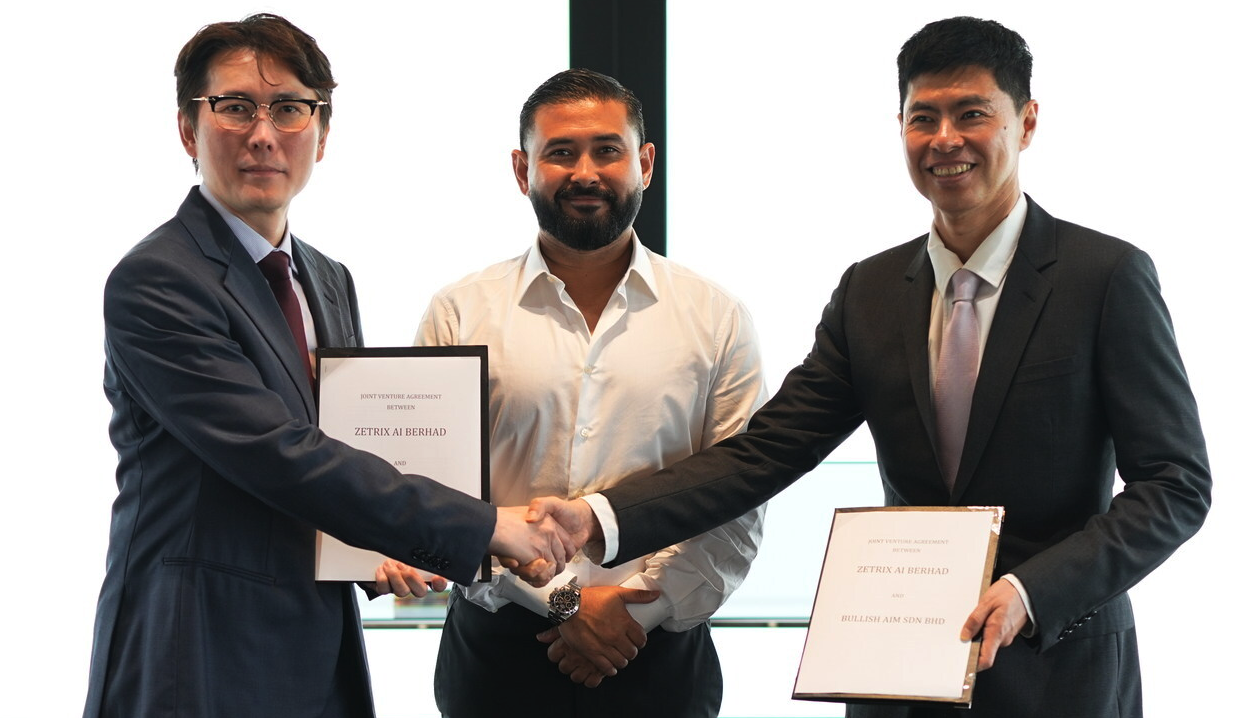
Bullish Aim’s managing director Lion Peh, Malaysia’s Crown Prince Ismail Ibrahim and Zetrix co-founder TS Wong (from left to right). Source: Bullish Aim/Zetrix


“RMJDT is designed to strengthen the international use of the Malaysian ringgit in cross-border trade settlements and to act as a catalyst for attracting increased foreign direct investment into Malaysia,” the announcement reads, adding that the initiative aligns with global tokenization trends and directly supports Malaysia’s Digital Asset National Policy.

DAT modeled after MicroStrategy: Has the DAT bubble burst?

Addressing its $121 million Zetrix DAT, Bullish Aim said it plans to increase the treasury to $243 million.

Bullish said the DAT is modeled after global precedent-setters like Michael Saylor’s Strategy, which has accumulated 660,624 Bitcoin (BTC) on its balance sheet since announcing its Bitcoin strategy in 2020.

“As the issuer of RMJDT, we view the establishment of a Zetrix-token treasury as a strategic necessity — both to support operational stability and to deepen alignment with the national blockchain,” Ismail said.

Bullish Aim is entering the DAT sector as many companies with digital asset treasuries face struggles. Ismail’s reported $2.7 billion Singapore land sale bid in August shows how cash-rich players continue to bet big despite growing concerns over Strategy copycats.

According to CoinShares head of research, James Butterfill, the DAT bubble may have already burst following a rally in the summer of 2025.

Related: Digital asset treasury boom stalls as flows drop to $1.3B and stocks tumble

“As the bubble deflates, the market is re-evaluating which companies genuinely fit the DAT model and which were simply riding momentum,” Butterfill said in a DAT update last week.

He also suggested that the future of DATs will be linked to fundamentals such as disciplined treasury management, credible business models and realistic expectations about the role of digital assets on corporate balance sheets.

Cointelegraph approached Bullish Aim for comment regarding its stablecoin and DAT plans, but had not received a response at the time of publication.

Magazine: Koreans ‘pump’ alts after Upbit hack, China BTC mining surge: Asia Express


Related Reads

$9.4 Billion: The Largest Robotics Funding This Year Has Emerged

Munich-based humanoid robotics company Neura has completed a $1.4 billion (approximately RMB 94.9 billion) Series C funding round, valuing the company at around $7 billion and positioning it among the global leaders in the sector. The investment round is notable not just for its size—reportedly the largest in robotics this year—but also for its strategic backers, which include tech giants like NVIDIA and Amazon, alongside established industrial players such as German engineering firms Bosch and Schaeffler. This mix of investors signals a significant shift in the industry's focus from technological demonstrations and general-purpose narratives toward practical, industrial deployment and commercialization. Neura's approach centers on developing humanoid robots for defined, high-value industrial tasks rather than pursuing a general-purpose model. Its early validation comes from a partnership with BMW, where its robots are being tested on actual production lines. The involvement of Bosch and Schaeffler, companies deeply embedded in global manufacturing, underscores a growing belief that humanoid robots are transitioning from labs to viable factory-floor solutions. The article highlights two converging trends driving investment: advancements in AI and large language models, which enhance robots' perception and decision-making in unstructured environments, and mounting pressure from labor shortages and rising costs in major manufacturing regions. The funding landscape is now bifurcating between companies like Figure AI, focusing on versatile general-purpose robots, and firms like Neura, targeting specific vertical industrial applications with clearer, shorter paths to ROI. While technical hurdles remain, the core challenges for widespread adoption are increasingly seen as engineering and commercial in nature: managing the high integration and customization costs for different factory environments and establishing robust, localized maintenance and service networks. The record investment in Neura, particularly from industrial capital, indicates the industry's growing confidence in moving from proving feasibility to solving the practical problems of scalability, reliability, and building sustainable business models around humanoid robots in real-world settings like automotive manufacturing and hazardous labor environments.

marsbit10h ago

$9.4 Billion: The Largest Robotics Funding This Year Has Emerged

marsbit10h ago

Trading

Spot
Futures

Hot Articles

Discussions

Welcome to the HTX Community. Here, you can stay informed about the latest platform developments and gain access to professional market insights. Users' opinions on the price of S (S) are presented below.

活动图片