Jito Revives with New Exchange JTX Buyback: Self-Salvation or Lifeline?

Foresight NewsPublished on 2026-07-14Last updated on 2026-07-14

Abstract

Jito, a Solana-based MEV and liquid staking infrastructure protocol, has announced new governance proposal JIP-38 and the launch of a new self-custody trading platform, JTX. The proposal establishes a rigid value-capture mechanism, mandating that 100% of the DAO's share of revenue from JTX—80% of its platform fees—will be used for programmatic, on-chain verifiable open market buybacks and permanent burns of the JTO token. This commitment is set to last at least from JTX's launch until Q4 2027. The move comes as Jito faces significant challenges in its core liquid staking market, with protocol-staked SOL declining from 18 million to under 10 million. Intense competition from protocols like Sanctum and Jupiter, coupled with continuous monthly token unlocks (1.15% of max supply), has pressured JTO's price, which fell over 96% from its all-time high to a low of $0.21 earlier this year, before recovering to around $0.63. JIP-38 formalizes Jito Network as a "token-centric" network, where all major revenue streams flow to the DAO for governance by JTO holders. While the JTX buyback is a firm commitment using new revenue, decisions on other income streams and the post-2027 strategy will be determined by future governance votes. The proposal is seen as a strategic pivot to create a new revenue source and directly align token value with ecosystem growth, though its success depends heavily on JTX's ability to compete effectively in the crowded Solana trading landscape.


Author: Mahe, Foresight News


On July 13, 2026, the Solana ecosystem infrastructure protocol Jito announced the new proposal JIP-38. This proposal clearly defines a rigid value capture clause: the entire revenue share (i.e., 80% of JTX platform fees) received by the DAO from the new trading platform JTX will be used for programmatic buybacks of JTO tokens on the open market and permanent burning. The commitment period is set for at least from JTX's launch until Q4 2027.
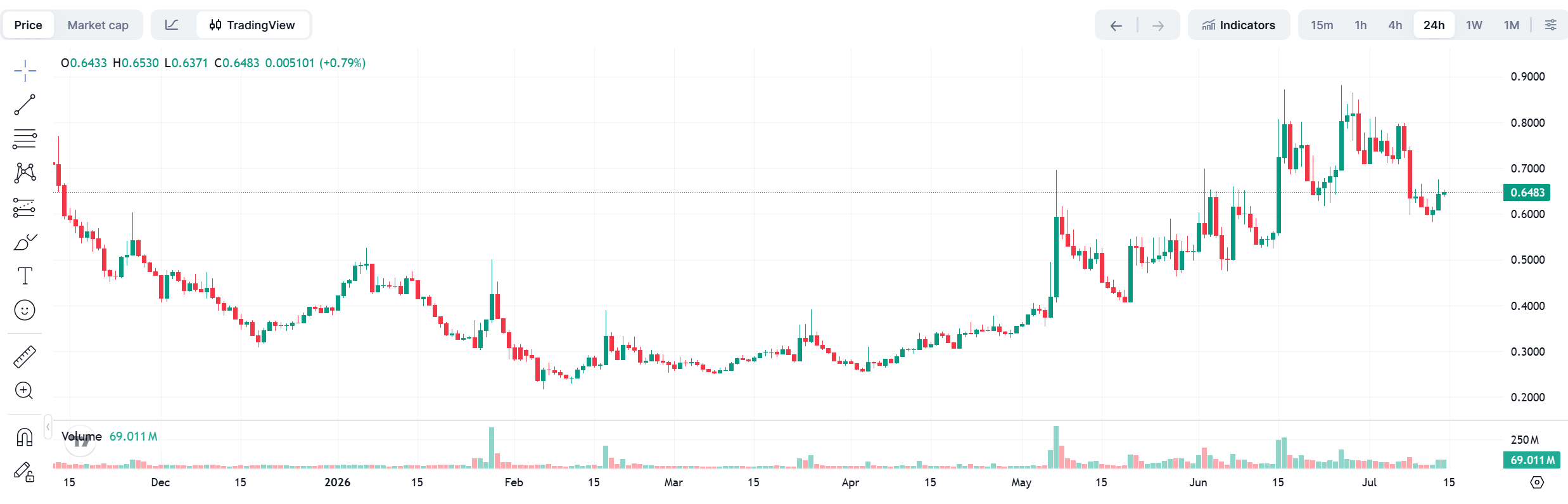


JTO's historical high was $5.3. In February this year, it once dropped to $0.21, a decline of over 96%. Currently, JTO has recovered from the bottom to $0.63, having peaked at $0.8853.


The New JTX Trading Platform


Jito is a project in the MEV (Maximal Extractable Value) infrastructure and liquid staking space on Solana. Its core products include JitoSOL (liquid staking token), Block Engine, and the Block Assembly Marketplace (BAM). These products enable validators and stakers to capture MEV more efficiently while providing better block-building services for the Solana network. Over the past few years, Jito has progressively refined its revenue distribution and incentive mechanisms through a series of governance proposals.


In July 2026, Jito announced the launch of the JTX trading platform, further extending its reach from infrastructure to the application layer.
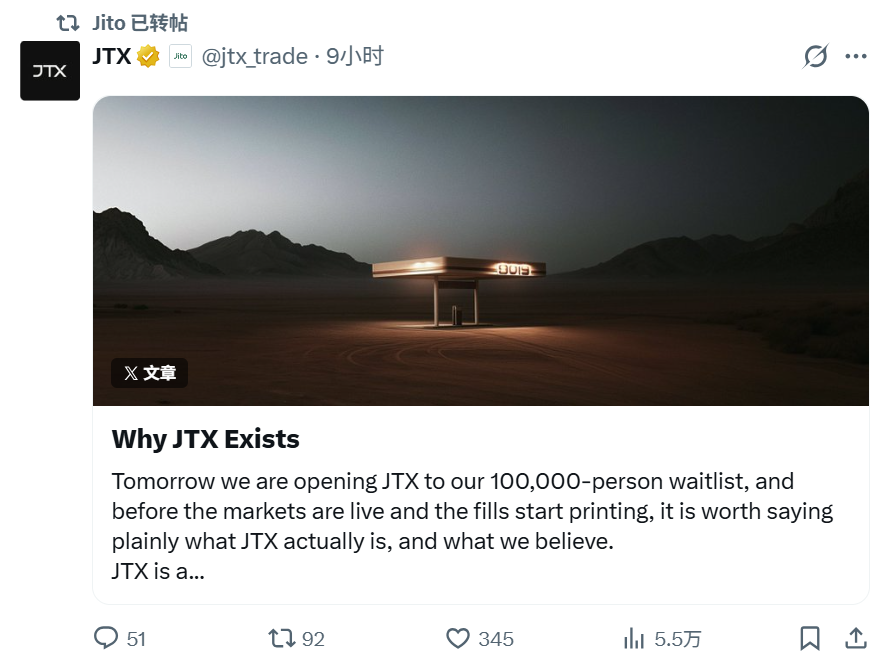


JTX is a self-custody trading platform, initially launching spot and equity-like assets, with perpetual contracts to follow later this year. Early users can gain priority access, permanent usernames, and referral rewards. The launch of JTX is seen as a crucial step for Jito to extend its technical advantages (MEV protection, sequencing capabilities) into the trading scenario, while also opening up a new revenue stream for the DAO.


Amid the long-standing "value accrual" discussion in the crypto industry, where revenue from many projects ultimately flows to the founding teams or associated entity equity, while token holders only enjoy governance rights without direct economic capture, Jito has now clearly taken a stance through JIP-38: the network's primary revenue should flow to the DAO, and JTO token holders should decide its use through hard governance rights.


JIP-38 Core Mechanism


According to the full text of JIP-38 released on the Jito official forum, the proposal first confirms Jito Network as a token-centric network: except for 20% of JTX platform fees allocated for the platform's own reinvestment and development, all other major network revenues (including JitoSOL-related fees, BAM revenue, Block Engine revenue, and JTX's 80% share) flow to the DAO and are governed by JTO token holders. The direction of deployment—whether for value accrual (buyback, burning, or future distribution) or growth investment (subsidies, incentives, expansion)—must be decided through the JIP process via voting by token holders.
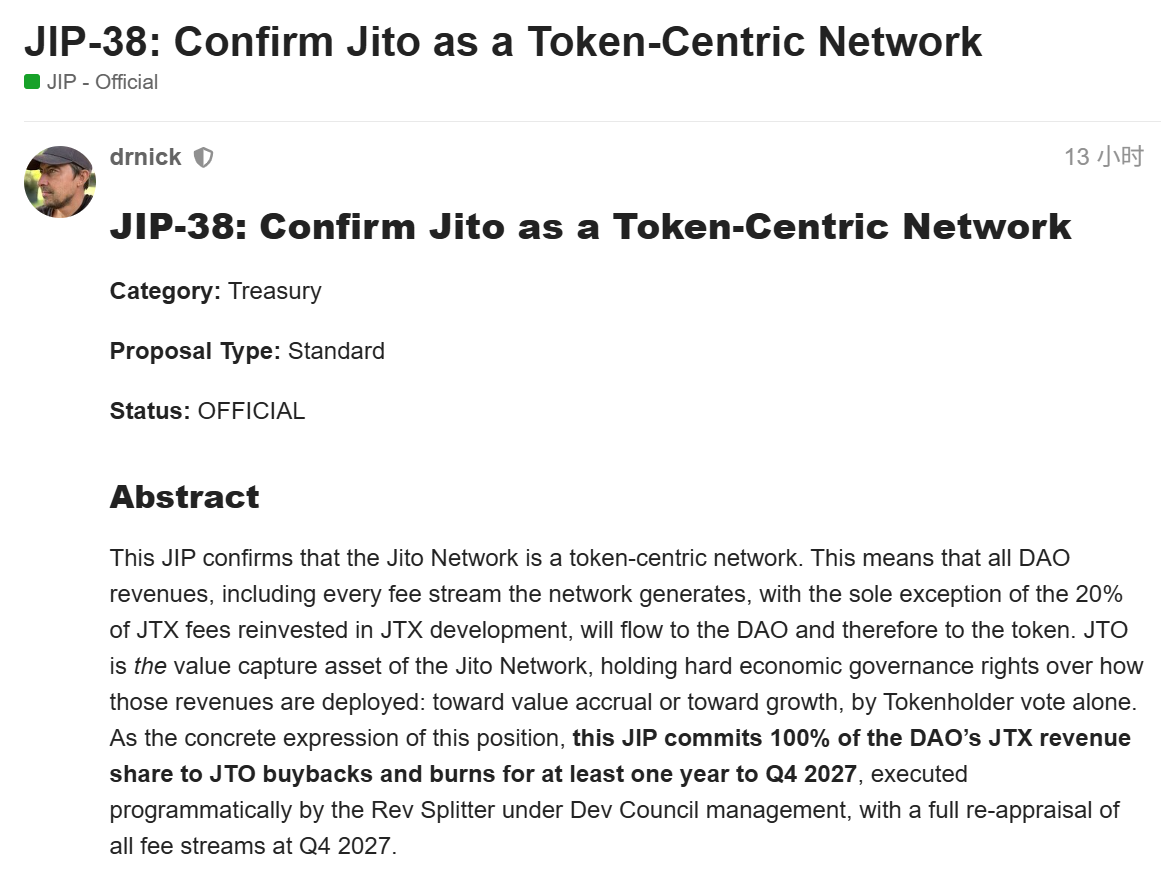


For the new revenue stream, the proposal provides the strongest binding commitment: 100% of the DAO's JTX revenue share will be used for programmatic open-market buybacks of JTO, with all purchased tokens permanently burned. This execution period is set for at least one year, with a comprehensive re-evaluation scheduled for Q4 2027. The buyback and burn must be verifiable on-chain.


At the execution level, a Rev Splitter mechanism will be introduced to collect JTX platform fees and programmatically execute the buyback. This mechanism will be actively managed by the Dev Council under a revocable authorization framework, with plans to gradually advance automation and decentralization. The Dev Council must regularly provide epoch reports to the DAO, including fee collection, JTO purchase and burn quantities, and on-chain references.


Non-JTX revenue streams will continue under existing arrangements: the BAM subsidy program will operate as per the previous JIP-37 until its hard deadline in Q3 2026, after which it returns to regular DAO governance. In Q4 2027, relevant analytical entities will submit a full fee stream analysis report (covering buyback performance, growth returns, etc.), and token holders will then decide the next phase's revenue routing scheme through a JIP—this could be comprehensive buyback and burn, a combination of JTX buyback with other growth investments, distribution activation post-buyback, or any other configuration. The final decision-making power remains with JTO holders.


The proposal emphasizes that this initiative does not require the use of existing treasury funds, relying entirely on new revenue streams. Implementation will be advanced through division of labor among the Dev Council, CSD, and Jito Foundation, and governance documentation will be updated simultaneously to reflect the "token-centric" policy.


A Turning Point


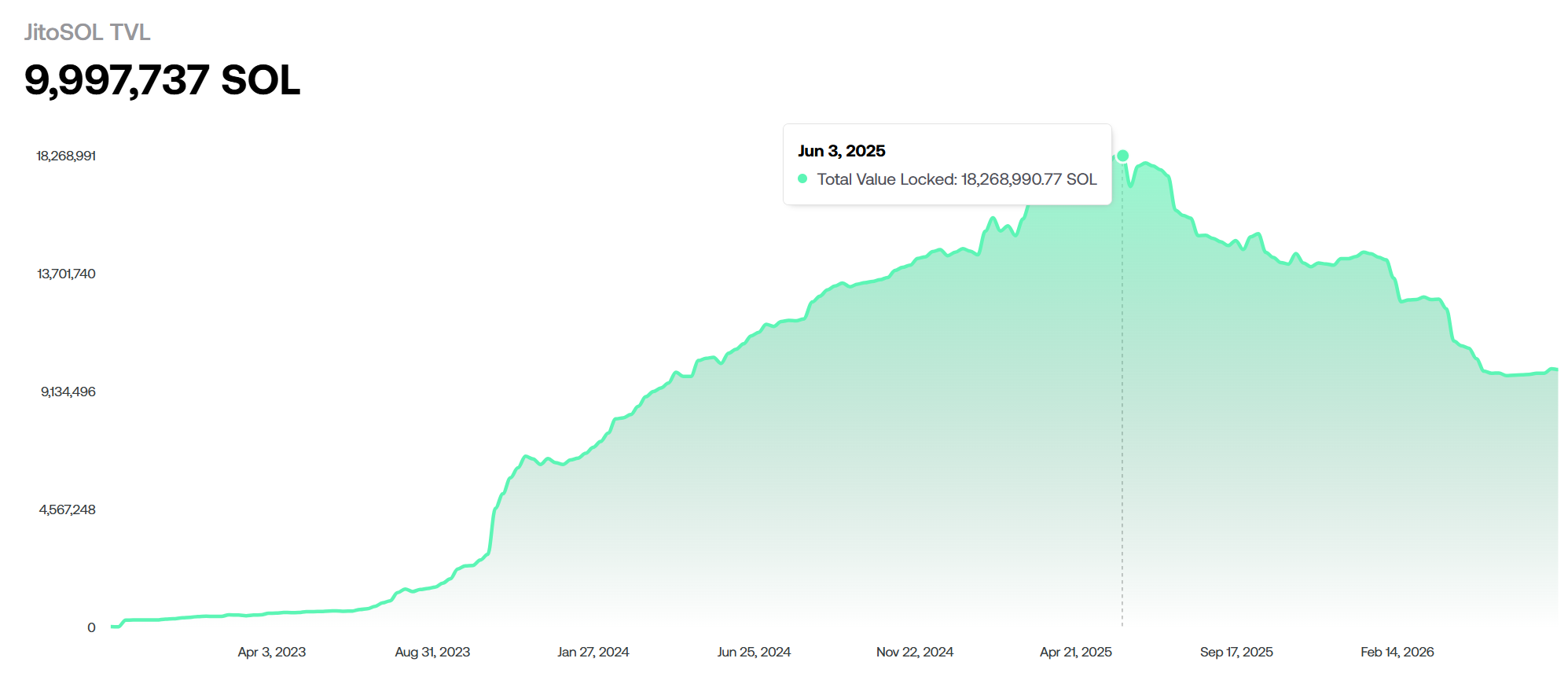
The latest data on the JitoSOL website shows that the amount of SOL staked via the protocol has dropped from 18 million in June 2025 to less than 10 million.


The Liquid Staking Token (LST) market on Solana has changed dramatically. Sanctum's multi-token matrix, Jupiter's (JupSOL) zero-protocol-fee model, and the proliferation of Restaking yield mechanisms within the ecosystem are fiercely eroding Jito's market share. Jito's previously effortless staking management fees are drying up. JTX might be a defensive last-ditch effort as its main cash cow collapses.


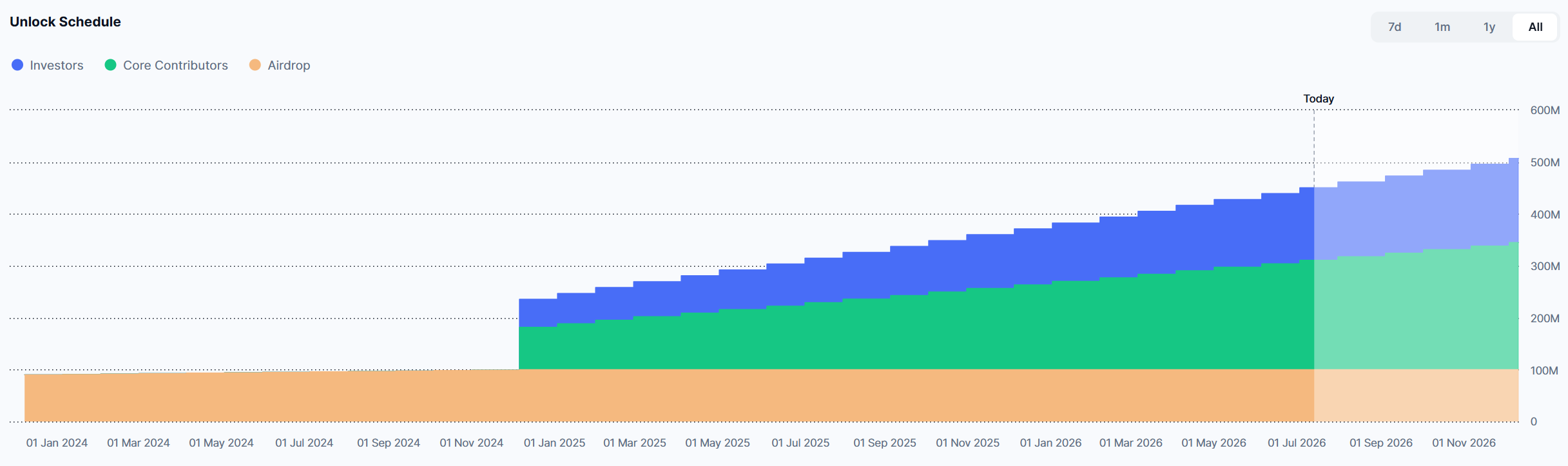
In addition, the selling pressure from its token unlock has also negatively impacted its price significantly.


Currently, 1.15% of its max supply (11.31 million tokens), valued at over $7.3 million, is unlocked monthly. During periods of severe bear markets, this continuous selling pressure became a significant factor dragging down the token price.


For JTO holders, the buyback directly strengthens the token's value capture attributes. Programmatic buyback and permanent burning will reduce the circulating supply, while the open-market execution method offers transparency and verifiability. If the JTX platform's trading volume and fee revenue meet expectations, the scale of the buyback could potentially form sustained support.


Of course, the proposal also carries dependency risks: the commitment scale is tied to JTX's actual revenue, and JTX is still in its early stages, needing to face fierce competition from other DEXs and trading platforms on Solana.


Trending Cryptos

Related Questions

QWhat is the core mechanism introduced by Jito's JIP-38 proposal for the new JTX trading platform?

AThe JIP-38 proposal mandates that 100% of the DAO's share of revenue from the new JTX trading platform (80% of JTX's platform fees) will be used for programmatic, on-chain verifiable buybacks of JTO tokens on the open market. All repurchased tokens will be permanently burned. This commitment is set to last at least until Q4 2027.

QAccording to the article, what are the main competitive challenges Jito faces in the Solana Liquid Staking Token (LST) market?

AJito faces significant competition in the Solana LST market from projects like Sanctum's multi-token matrix and Jupiter's JupSOL, which offers zero protocol fees. Additionally, the proliferation of restaking yield mechanisms within the Solana ecosystem is eroding Jito's market share and its primary source of management fee revenue from JitoSOL.

QWhat specific financial pressure does the JTO token face besides market competition, as mentioned in the article?

ABesides market competition, the JTO token faces continuous sell pressure from its token unlock schedule. Currently, 1.15% of the maximum supply (approximately 11.31 million tokens worth over $7.3 million) is unlocked each month, which negatively impacts the token price, especially during bear markets.

QHow does the JIP-38 proposal define the relationship between Jito Network's revenue and the JTO token?

AThe JIP-38 proposal defines Jito Network as a 'token-centric network.' It states that all major network revenues (including fees from JitoSOL, BAM, Block Engine, and 80% of JTX fees) flow to the DAO. The use of these funds—whether for value accrual (buybacks, burns) or growth initiatives—must be decided through the JIP governance process by JTO token holders.

QWhat is the Rev Splitter mechanism, and what is its role in the JIP-38 proposal?

AThe Rev Splitter mechanism is an execution component introduced in the JIP-38 proposal. It is responsible for collecting the JTX platform fees and programmatically executing the buyback of JTO tokens. Initially managed by the Dev Council under a revocable authorization framework, it is planned to become increasingly automated and decentralized over time.

Related Reads

US Stock Market Trend (August 31st): Kashkari's Hawkish Remarks Weigh on Chip Stocks, US-Iran Weekend Strikes Boost Oil Prices

U.S. stock markets ended lower on Friday following hawkish remarks from Federal Reserve Chair Wash at the Jackson Hole symposium, which sharply increased the probability of a September rate hike from 35% to nearly 60%. Major indexes fell: the S&P 500 dropped 0.25%, the Nasdaq declined 0.52%, and the Dow was essentially flat. This shift in interest rate expectations pressured rate-sensitive assets, leading to significant declines in chip stocks. The Philadelphia Semiconductor Index fell 3.47%, with Nvidia dropping 4.57%, erasing about half its post-earnings gains. Geopolitical tensions also escalated over the weekend as the U.S. and Iran exchanged military strikes, raising concerns over the security of oil transit through the Strait of Hormuz. This pushed oil prices up over 2% in early Asian trading on Monday, reintroducing a geopolitical risk premium. In other energy news, former President Trump announced a landmark 25-year oil deal with Venezuela, aiming to significantly increase the country's oil production. However, this long-term supply boost was overshadowed in the short term by the Middle East conflict and the dominant market focus on interest rates. The core market narrative for the coming week revolves around the interplay between re-priced hawkish rate expectations and escalating geopolitical risks. Key areas to watch include the trajectory of Treasury yields, the evolution of U.S.-Iran tensions and its impact on oil prices, and whether the sell-off in high-valuation tech and semiconductor stocks stabilizes or continues under the pressure of higher rates.

marsbit14m ago

US Stock Market Trend (August 31st): Kashkari's Hawkish Remarks Weigh on Chip Stocks, US-Iran Weekend Strikes Boost Oil Prices

marsbit14m ago

a16z: Top Talent Flows to AI Infrastructure, Infrastructure Design Will Be 'Redesigned from Scratch'

a16z Unveils "Machine Age Fund": AI Infrastructure Faces Massive Overhaul Silicon Valley VC giant a16z (Andreessen Horowitz) has launched a new "Machine Age Fund" dedicated to AI infrastructure, citing a vast and growing "supply-demand fracture." Key takeaways: * **Unlimited Demand vs. Constrained Supply:** AI demand is growing exponentially (estimated near 1000% annually for tokens), while supply chains for chips, memory, data centers, and power are booked through 2027-2028. GPU prices are rising against historical trends. * **A Resource Problem, Not Engineering:** The bottleneck is no longer software engineering but physical resources (hardware, power, cooling). Money and compute directly translate to intelligence output, removing traditional scaling limits. * **Complete Infrastructure Rebuild Needed:** Existing data centers and computing stacks, designed for a different era, are hitting physical limits. Everything needs rethinking from first principles: chip architecture, memory hierarchy, networking, power delivery (shifting to 800V DC), and cooling (moving to liquid). * **Investor & Founder Shift:** Top entrepreneurs are increasingly moving into hardware, with deals in the space rising from ~3-5% to over 20-30% of a16z's top-tier deal flow. Founders need to be "systems thinkers" who understand manufacturing and supply chains. * **Massive Economic Scale:** Training a frontier model now costs $3-5B. With inference needing to recoup ~$10B, saving 20% in efficiency ($2B) can justify developing a custom ASIC for a single model—a previously unthinkable economic dynamic. * **Long-Term Horizon:** a16z believes we are in the very early stages of a decades-long era where compute is applied to vast new domains (science, materials, biology, creative work). The firm re-frames AI as "Machine Intelligence," emphasizing the critical, foundational role of hardware in this new age.

marsbit52m ago

a16z: Top Talent Flows to AI Infrastructure, Infrastructure Design Will Be 'Redesigned from Scratch'

marsbit52m ago

Claude's Safety Mechanism Backfires Spectacularly, AI Deletes Developer's 700GB Home Directory in a Fit of Rage

Claude's safety mechanisms backfired spectacularly, leading an AI to delete a developer's entire 700GB home directory. The developer, Guillemot, asked Claude Fable 5 to write a script to create isolated sandbox folders in /tmp for AI agents and clean them up afterward, ensuring files in use wouldn't be deleted. Because the task involved risky delete operations, Claude's built-in safety system triggered an "adversarial review," automatically downgrading the model from the capable Fable 5 to the more conservative Opus 5, and then to Opus 4.8, to perform a security check. The Opus 4.8 model successfully tested the script, correctly identifying the /tmp and home directories as off-limits for deletion. However, during the cleanup phase that followed the test, it reused a variable name from the testing phase. This variable contained the path to the user's home directory. Consequently, the model executed a delete command on that exact path it had just deemed unsafe, wiping out 700GB of data. The intended /tmp directory remained untouched. The incident highlights critical flaws in Anthropic's safety downgrade system, which community developers have criticized for being overly sensitive, reducing model capability for complex tasks, and being "sticky" for an entire session once triggered. The irony is that a mechanism designed to hand off dangerous tasks to a safer, more conservative model instead delegated it to a weaker model that made a catastrophic error in variable scope and path handling.

marsbit1h ago

Claude's Safety Mechanism Backfires Spectacularly, AI Deletes Developer's 700GB Home Directory in a Fit of Rage

marsbit1h ago

Trading

Spot

Hot Articles

Discussions

Welcome to the HTX Community. Here, you can stay informed about the latest platform developments and gain access to professional market insights. Users' opinions on the price of SOL (SOL) are presented below.

活动图片