Israel-US-Iran Conflict Surpasses 100 Days, One Key to US-Iran Reconciliation Lies in Asset Unfreezing?

Odaily星球日报Published on 2026-06-10Last updated on 2026-06-10

Abstract

The U.S.-Israel-Iran conflict has surpassed 100 days, with peace talks remaining difficult. A key sticking point in U.S.-Iran negotiations is the approximately $24 billion in frozen Iranian assets, including around $1 billion in cryptocurrencies like USDT, BTC, and ETH seized by the U.S. Treasury. Iran demands at least 50% of its assets be unfrozen immediately upon any agreement, a condition U.S. President Trump has firmly rejected, insisting no sanctions will be lifted early. Trump's inconsistent statements about an imminent deal have complicated negotiations. Iran has proposed a four-phase peace plan, with the second phase focusing on core issues like asset unfreezing. Meanwhile, the U.S. is reportedly considering using the frozen Iranian funds to aid Gulf nations affected by the conflict. Analysts suggest the asset dispute and broader geopolitical tensions mean a pattern of "fighting while talking" is likely to continue, with the conflict having a general macro impact on crypto markets rather than causing direct sell-offs of specific assets.

Original | Odaily Planet Daily (@OdailyChina)

Author | Wenser (@wenser 2010 )
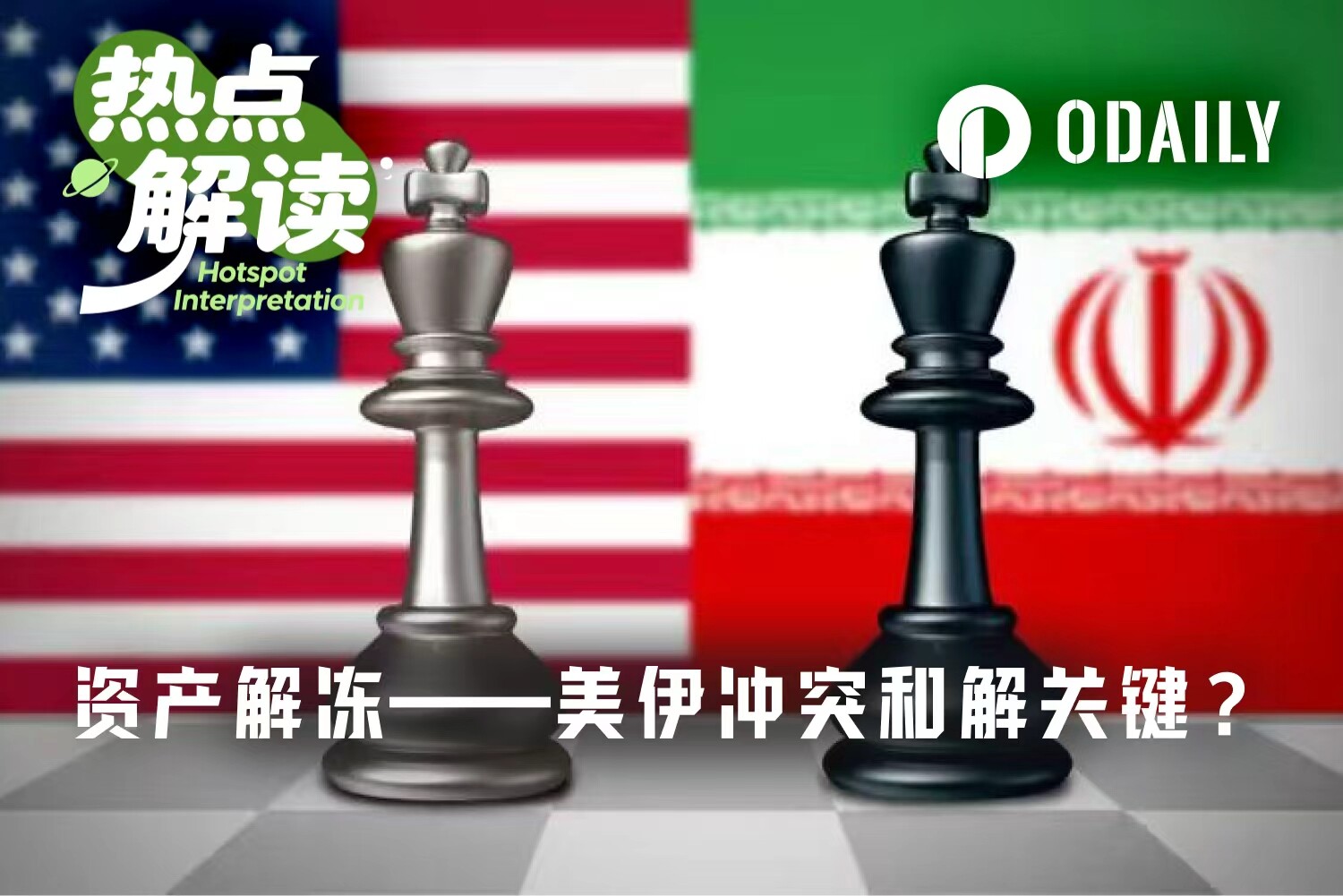
June 10th, the 103rd day since the outbreak of the US-Israel-Iran war, peace talks between the US and Iran remain arduous with no conclusion yet.

Today, following Israel's strike action against Iran, according to US officials, the US's third round of strikes against Iran has also commenced and swiftly concluded. Behind this century-defining conflict, the key to reconciliation is not only the deeper issues of Iran's nuclear weapons and uranium enrichment materials but also a current major sticking point between the two sides: the $24 billion worth of Iranian assets frozen by the US, including approximately $1 billion in crypto assets.

Where do these assets come from? What do the crypto assets include? Can the US and Iran reach an agreement on this matter going forward? These are the main topics we will explore in this article.

Trump's Laughably 'Hot-and-Cold' Duplicity: Coexisting Toughness and Compromise

Whether the US-Iran conflict can end through negotiations naturally hinges on the key figure, US President Trump. However, the businessman-turned-president Trump has a particularly flexible character and, compared to politician-type presidents, is more focused on practical interests. Therefore, his projected image is also extremely fragmented: on one hand, his public statements are sometimes tough, sometimes conciliatory; on the other hand, he is accustomed to setting up smokescreens, using pretexts like negotiations, reconciliation, and 'an agreement is about to be reached' to mislead Iran and even global news media, thereby achieving goals such as 'manipulating capital markets' and other undisclosed purposes.

According to CNN reports, since the outbreak of the Iran conflict on February 28th, Trump has made statements like 'a US-Iran agreement is about to be reached' more than 30 times (Odaily Planet Daily note: some say at least 37 times) on social media, in public appearances, and during phone interviews with reporters.

In view of this, Iran has also not harbored a 'quick-fix' fantasy about the peace talks, instead envisioning them as a four-stage plan.

On June 4th, according to reports from the Iranian media Fars News, Iran outlined a four-phase plan for an agreement with the United States:

  • The first phase focuses on a comprehensive cessation of military action on all fronts, including Iran, the United States, and the Axis of Resistance;
  • The core of the second phase is the implementation of measures for four key issues, including: the Strait of Hormuz and related mechanisms, lifting the blockade, canceling oil restrictions and sanctions, and unfreezing part of Iran's assets;
  • The third phase would initiate broader negotiations on sanctions and nuclear issues after objective and verifiable measures are implemented;
  • The fourth phase involves establishing a supervisory committee to monitor the implementation of the agreement and track the parties' compliance.

Previously, the US and Iran had ceased hostilities, but due to Israel attacking Iran again and the turbulent situation in Lebanon, the efforts of the first phase were temporarily thwarted; the second phase is now the main sticking point in the US-Iran talks.

Specific Amount of Frozen Iranian Assets: Iran Claims $24 Billion, US Confiscated $1 Billion in Crypto Assets

Previously, according to CNN, a US official familiar with the negotiations stated that one of the remaining key sticking points in the US-Iran negotiations is the issue of economic compensation, as Trump is eager to secure a deal perceived as superior to the agreement reached during the Obama administration.

The official said, Iran has informed mediators that once both sides agree on an initial Memorandum of Understanding, they want some form of economic compensation as soon as possible, not deferred to a future date. But officials in the Trump administration worry that unfreezing funds at such an early stage could alleviate the economic damage inflicted on Iran—this might eliminate, or at least weaken, a key leverage Washington holds over Tehran. This leverage would be crucial for the US entering the second phase of negotiations to discuss specific details of Iran's nuclear program. Trump has made clear to his team that he wants any deal to appear much tougher than the 2015 agreement and to avoid any action that could be interpreted as 'handing over large sums of cash'—a phrase Trump used to criticize Obama's decision to provide economic compensation to Iran.

On June 6th, media reports indicated that a potential US-Iran agreement depends on whether the US agrees to release $24 billion in frozen Iranian assets. This figure was later confirmed by Iranian officials.

That day, according to Iran's Tasnim News Agency, Iran's Deputy Foreign Minister for Legal and International Affairs, Kazem Gharibabadi, stated that at least 50% of Iran's frozen financial assets must be unfrozen immediately upon signing any Memorandum of Understanding with the US. He added that the remaining funds should be 'unfrozen within a limited time of one to two months after the agreement is signed.' Gharibabadi stated that these assets belong to Iran and were 'illegally frozen' by the US, and unfreezing them is a core requirement of any potential understanding. He said the remaining details of the access-to-funds mechanism, including technical and financial arrangements, would be negotiated further during the 60-day implementation period after the memorandum is signed.

However, this demand was immediately met with Trump's stern refusal: he stated he would not unfreeze Iranian assets or lift any sanctions in advance of any agreement.

In late May, US Treasury Secretary Scott Bessent stated in an interview with Fox News that the US had seized approximately $1 billion in Iranian crypto assets. Bessent said the action was part of sanctions against the Iranian regime and its proxy networks, and the funds had been frozen. This includes about $344 million worth of USDT stablecoin frozen by stablecoin issuer Tether in April this year, as well as other cryptocurrencies like BTC and ETH.

He stated that before the US Treasury Department intervened, the Iranian regime was stealing $400 to $500 million per month and distributing the money to dozens of senior officials. 'We are working with allies across Europe to seize various villas, houses, and properties,' Bessent explained. 'And this money was actually stolen from the Iranian people.' Additionally, according to Bitcoin News analysis, the figure Bessent initially disclosed in late April was 'close to $500 million,' while the latest figure as of May 29th has surpassed the $1 billion mark, indicating that the enforcement intensity of this operation, named 'Operation Economic Fury,' continues to increase.

It is worth mentioning that, according to Wikipedia, the US had previously even seized an Iranian government-owned skyscraper in Manhattan (valued at over $1 billion) and its accumulated rent (approximately $50 million).

Furthermore, according to the latest media reports, the US is considering using frozen Iranian assets to fund the reconstruction and repair work in Gulf countries affected by the 'US-Israel-Iran conflict.' According to informed sources, US Treasury Secretary Scott Bessent has directed relevant teams to assess the damage Iran has caused to Gulf allies. Additionally, the US is considering using frozen Iranian assets to compensate for potential future losses.

Considering all the above information, despite Trump stating last night that he was 'very close to a very good, strong, powerful agreement,' the US-Israel-Iran conflict will find it difficult to achieve reconciliation before the issues of compensation and the handling of frozen assets are determined.

As for the impact on crypto assets, it is largely confined to the macro landscape affecting the broader crypto market; the direct market-dumping impact on specific cryptocurrencies like BTC and ETH is relatively minor.

In the foreseeable future, although both sides hope to end this conflict quickly, constrained by conflicts of interest and the international situation, 'fighting while talking, talking while fighting' will likely remain the norm for the US, Iran, and even Israel.

Related Questions

QAccording to the article, what is identified as a key obstacle in the US-Iran negotiations after the initial ceasefire?

AAccording to the article, a key obstacle in the US-Iran negotiations is the issue of Iran's frozen assets, specifically the process and timing of their unfreezing, with Iran demanding immediate access to at least 50% of the $24 billion in total.

QWhat are the four stages of the agreement plan outlined by Iran's Fars News, as mentioned in the article?

AAccording to Iran's Fars News, the four-stage plan is: 1) A comprehensive cessation of military operations on all fronts. 2) Addressing four key issues: mechanisms for the Strait of Hormuz, lifting the blockade, canceling oil restrictions/sanctions, and unfreezing part of Iran's assets. 3) Initiating broader talks on sanctions and nuclear issues after verifiable measures from stage 2 are implemented. 4) Forming a supervisory committee to oversee the implementation of the agreement.

QWhat amount of Iranian assets, particularly in cryptocurrency, did US Treasury Secretary Scott Bessent claim were seized by the United States?

AUS Treasury Secretary Scott Bessent stated that the United States had seized approximately $1 billion in Iranian cryptocurrency assets, which included around $344 million in USDT stablecoin frozen by Tether in April, as well as other cryptocurrencies like BTC and ETH.

QWhat was President Trump's reported reaction to Iran's demand for the immediate unfreezing of its assets?

APresident Trump reportedly rejected the demand, stating he would not unfreeze Iranian assets or lift any sanctions ahead of any agreement.

QHow does the article assess the potential impact of the US-Iran conflict on the cryptocurrency market, specifically on assets like BTC and ETH?

AThe article assesses that the impact of the conflict is primarily on the macro landscape of the cryptocurrency market, with minimal direct market 'dumping' pressure on specific coins like BTC and ETH.

Related Reads

2029 Finale Prediction: When Cryptocurrency Completely "Vanishes", Who Can Remain in This Financial Upheaval?

By 2029, the crypto industry will have transformed into a largely invisible but foundational layer for traditional finance. This timeline outlines the key shifts from now until then. By mid-2026, the most sought-after assets on-chain will not be traditional tokens, but synthetic perpetual contracts for private, high-growth companies (like SpaceX, OpenAI). These become primary price discovery tools, highlighting the market's craving for real-world asset value. Most altcoins enter a sustained bear market as their fundamental lack of asset-backed value is exposed. In late 2026, the "AI + Crypto" narrative largely fades as AI giants prove they don't need crypto infrastructure, except for prediction markets betting on model performance. Simultaneously, a quiet but significant wave of tokenization for institutional assets (money market funds, private credit) begins. The industry splits into a noisy speculative economy and a silent institutional one. Throughout 2027, major public blockchain foundations pivot decisively to serve institutional clients, building compliance toolkits and sales teams. However, key sectors hit growth ceilings: private perpetual contracts are legally restricted from public promotion, stable币 growth is capped by looming political uncertainty, and tokenization projects remain cautious. In 2028, following a U.S. election assumed to maintain a regulatory (not prohibitive) stance, a pivotal change occurs. After a major liquidation crisis exposes the flaws of synthetic contracts lacking a real-asset anchor, new regulations allow the *public solicitation* of private security sales (secondary market shares) to accredited investors. This creates a legitimate, direct on-ramp for retail capital into previously illiquid private equity. By 2029, the resulting bull market is driven by trading in real, innovative company shares (biotech, robotics, AI labs), not speculative tokens. "Crypto" as a distinct asset class recedes; it becomes the mundane, unseen plumbing for this new global private markets infrastructure. Tokens that survive are those capturing real cash flows from this infrastructure. Speculation persists but is marginalized. The core questions posed at the start are answered: token value is tied to legally enforceable claims on real assets, frontier tech adoption happens via private market channels, and crypto's absorption into traditional finance is marked by its becoming boring and invisible. The key validation for this entire thesis is whether, by late 2028, a legal pathway exists for ordinary accredited investors to access private assets directly.

marsbit31m ago

2029 Finale Prediction: When Cryptocurrency Completely "Vanishes", Who Can Remain in This Financial Upheaval?

marsbit31m ago

After the U.S. Banned Fable 5, Zhipu's Stock Soared 47%

On June 15, Chinese AI company Zhipu's stock surged up to 47.6% in Hong Kong, closing with a 32.82% gain. This sharp rise followed two key industry events. On June 12, Anthropic was compelled by a U.S. government export control order to suspend global access to its latest flagship models, Claude Fable 5 and Claude Mythos 5, impacting developers and businesses reliant on them. The next day, Zhipu announced it was opening access to its new open-source flagship model, GLM-5.2, for all Coding Plan users, with API and model weights (under the MIT license) to follow. The Anthropic incident highlighted a critical shift in the AI industry: beyond raw capability, the stability, continuous accessibility, and control over AI models are becoming equally vital, especially as AI integrates deeper into business workflows. Zhipu's move, emphasizing that "frontier intelligence should not belong to a few nor be subject to arbitrary revocation," positioned its open, accessible model as an alternative. GLM-5.2 focuses on "Long Horizon Tasks" with a 1M context window, aiming for consistency in complex, extended projects. Market analysts suggest this event exposes the risk of dependency on closed-source models subject to single jurisdiction policies, potentially accelerating a shift toward domestic base models and localized deployments. The investment response indicates a new valuation metric is emerging—prioritizing which companies can provide AI capabilities that are not only advanced but also reliably and sustainably accessible.

marsbit32m ago

After the U.S. Banned Fable 5, Zhipu's Stock Soared 47%

marsbit32m ago

PANews Column Registration and Article Submission Guide

"PANews Column Registration and Submission Guide" provides instructions for users to register as columnists and publish articles on the PANews platform. Key application requirements are emphasized: content should focus on in-depth analysis within Crypto, Web3, blockchain, data, and viewpoints. Content primarily for brand/product introductions will not be approved, and heavily AI-generated content will be rejected. Promotional (PR/soft) content is directed to the business channel. **Registration Process:** * **Web:** Go to the official website footer, click "Apply for Column," and register with a phone number or email (login via verification code, no password). Fill in the column name, description, upload an avatar, and submit links to previously published work. * **Mobile:** Navigate to "My" -> "Contribute & Create" and complete the form. **Article Submission Tutorial:** 1. Log in to the PANews website. 2. Access the "Creator Center" from your personal homepage. 3. Use the editor to create and publish articles. **Video Upload:** The platform supports embedding videos from third-party sites (e.g., Bilibili). Copy the embed code from the source video, use the editor's "Insert/Edit media" button, paste the code under the "Embed" tab, and adjust the display size (recommended: width 100%, height 560px). **PANews Skills (AI Agent Tool):** PANews offers an official AI Agent skill set called PANews Skills, enabling AI tools to query platform content, track trends, and publish column articles directly. It includes three main skills: 1. `panews`: For tracking daily must-read lists, popular articles, and funding news. 2. `panews-creator`: For managing columns, publishing articles, and uploading images. 3. `panews-web-viewer`: For parsing PANews webpages into Markdown. These skills are compatible with various AI Agent tools (OpenClaw, Cursor, Claude Code, ChatGPT, Gemini, etc.). To use the `panews-creator` skill, users must obtain a specific authentication value from the PANews website after logging into their columnist account.

marsbit43m ago

PANews Column Registration and Article Submission Guide

marsbit43m ago

I Built Myself an Investment Workbench Using AI

For the past two weeks, I've been immersed in Vibe Coding—using AI to write code from natural language descriptions. This process has enabled me to quickly build functional tools that address long-standing personal ideas. Previously, I had many concepts but found execution too cumbersome. Key ideas included a unified dashboard for assets across US stocks, Crypto, HK stocks, and A-shares; a real-time alert system for price movements; an investment map visualizing sector relationships; and a tool to correlate prediction market bets with news and market data. Traditional development hurdles meant these often remained unrealized. Using AI (Codex, Claude Code, and DeepSeek API), I built four initial tools: 1. A **Cross-Market Asset Dashboard** showing total assets, daily P&L, and holdings by market, with added features for alerts and sector mapping. It's deployed locally for privacy. 2. A **Prediction Market (PM) Monitor** tracking bets on events (e.g., company valuations) and correlating probability shifts with news and market movements. I categorize bets by conviction to filter noise. 3. A **Simple Operations Backend** for managing my writing workflow (topics, progress, publishing). It's cloud-deployed for mobile access. 4. A **One-Click Formatting Tool** that automates converting drafts into various platform-specific formats, saving manual effort. While these tools are basic, they represent a significant shift: AI lowers the barrier to creating personalized systems. I believe individual investors can now feasibly build core systems for: * **Asset Observation** (tracking holdings and changes) * **Signal Monitoring** (watching for key market shifts) * **Sector Mapping** (understanding network relationships within a sector) * **Performance Review** (documenting rationale and outcomes) The power of Vibe Coding is its fast feedback loop. Ideas can be implemented, tested, and iterated on rapidly, turning "want-to-do" into "done." This marks the start of my new phase, where I'll share investment thoughts, tool tests, on-chain operations, and educational Web3 content.

marsbit59m ago

I Built Myself an Investment Workbench Using AI

marsbit59m ago

Trading

Spot
Futures

Hot Articles

How to Buy ONE

Welcome to HTX.com! We've made purchasing Harmony (ONE) simple and convenient. Follow our step-by-step guide to embark on your crypto journey.Step 1: Create Your HTX AccountUse your email or phone number to sign up for a free account on HTX. Experience a hassle-free registration journey and unlock all features.Get My AccountStep 2: Go to Buy Crypto and Choose Your Payment MethodCredit/Debit Card: Use your Visa or Mastercard to buy Harmony (ONE) instantly.Balance: Use funds from your HTX account balance to trade seamlessly.Third Parties: We've added popular payment methods such as Google Pay and Apple Pay to enhance convenience.P2P: Trade directly with other users on HTX.Over-the-Counter (OTC): We offer tailor-made services and competitive exchange rates for traders.Step 3: Store Your Harmony (ONE)After purchasing your Harmony (ONE), store it in your HTX account. Alternatively, you can send it elsewhere via blockchain transfer or use it to trade other cryptocurrencies.Step 4: Trade Harmony (ONE)Easily trade Harmony (ONE) on HTX's spot market. Simply access your account, select your trading pair, execute your trades, and monitor in real-time. We offer a user-friendly experience for both beginners and seasoned traders.

3.9k Total ViewsPublished 2024.03.29Updated 2026.06.02

How to Buy ONE

Discussions

Welcome to the HTX Community. Here, you can stay informed about the latest platform developments and gain access to professional market insights. Users' opinions on the price of ONE (ONE) are presented below.

活动图片