In 2023, a letter arrived in the mailboxes of one hundred thousand households in Florida, USA.
The letter, from the century-old insurance giant Farmers Insurance, was brief and brutal: one hundred thousand policies, from homes to cars, were voided effective immediately.
Promises in black and white turned into worthless paper overnight. Furious policyholders flooded social media, demanding answers from the company they had trusted for decades. But all they got was a cold announcement: "We must more effectively manage our risk exposure."
In California, the situation was worse. Insurance behemoths like State Farm and Allstate had already stopped accepting any new applications for home insurance, and over 2.8 million existing policies were denied renewal.
An unprecedented "Great Insurance Retreat" is underway in the United States. The very industry that once served as a social stabilizer, promising to be a safety net for all, is itself now in turmoil.
Why? Let's look at the following data.
Hurricane Helene may have caused over $53 billion in damages in North Carolina; Hurricane Milton, according to Goldman Sachs estimates, could result in insured losses exceeding $25 billion; and for a major fire in Los Angeles, AccuWeather estimated total economic losses between $250 and $275 billion, while CoreLogic estimated insurance payouts between $35 and $45 billion.
Insurance companies are finding themselves at the limits of their ability to pay. So, who can replace the traditional insurance industry?
A Wager in a Coffeehouse
The story begins over three hundred years ago in London.
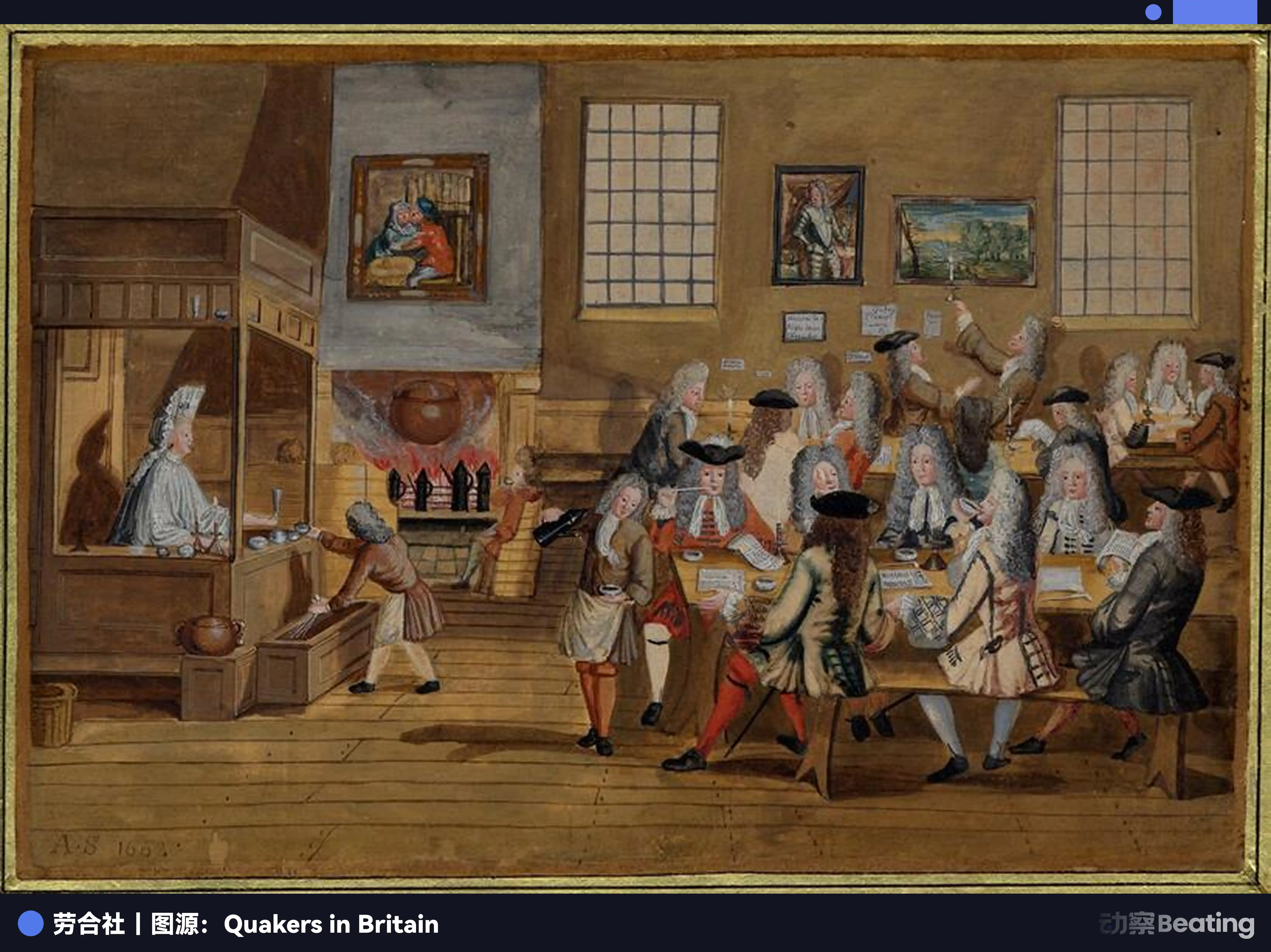
In 1688, on the banks of the Thames, a coffeehouse named Lloyd's was shrouded in the same shadow for sailors, merchants, and shipowners. Merchant ships laden with goods sailed from London to distant Americas or Asia. A safe return meant immense wealth; but encountering a storm, pirates, or running aground meant total loss.
Risk, like an inescapable dark cloud, loomed over every seafarer.
The coffeehouse owner, Edward Lloyd, was a shrewd businessman. He realized these captains and cargo owners needed more than just coffee; they needed a place to share risk. So, he began encouraging a kind of "betting game."
A captain would write the ship and cargo details on a piece of paper and post it on the coffeehouse wall. Anyone willing to assume a portion of the risk could sign their name on this paper and write the amount they were willing to underwrite. If the ship returned safely, they would share a fee (the premium) paid by the captain proportionally; if the ship was lost, they had to compensate the captain for the losses proportionally.
If the ship returns, everyone celebrates; if it sinks, losses are shared.
This was the prototype of modern insurance. It had no complex actuarial models, only simple business wisdom—distributing one person's enormous risk for a group to share.
In 1774, 79 underwriters joined forces to form the Lloyd's Association, moving from the coffeehouse into the Royal Exchange. A modern financial industry worth trillions was born.
For over three hundred years, the essence of the insurance industry has never changed: it is a business of managing risk. Through actuarial science, it calculates the probability of various risks, prices that risk, and sells it to those seeking protection.
But today, this ancient business model faces unprecedented challenges.
When the frequency and intensity of hurricanes, floods, and wildfires far exceed the predictions of historical data and actuarial models, insurance companies find their measuring stick can no longer gauge the world's growing uncertainty.
They have only two choices: either drastically raise premiums, or retreat—as we saw in Florida and California.
A More Elegant Solution: Hedging Risk
While the insurance industry is stuck in the dilemma of "can't calculate accurately, can't afford to pay, dare not insure," we might step outside the insurance framework and look for answers in another ancient industry: finance.
In 1983, McDonald's planned to launch a revolutionary product: Chicken McNuggets. But a major problem faced management: chicken prices were too volatile. If they locked in menu prices and chicken prices soared, the company would face huge losses.
The tricky part was, there was no chicken futures market available to hedge this risk.
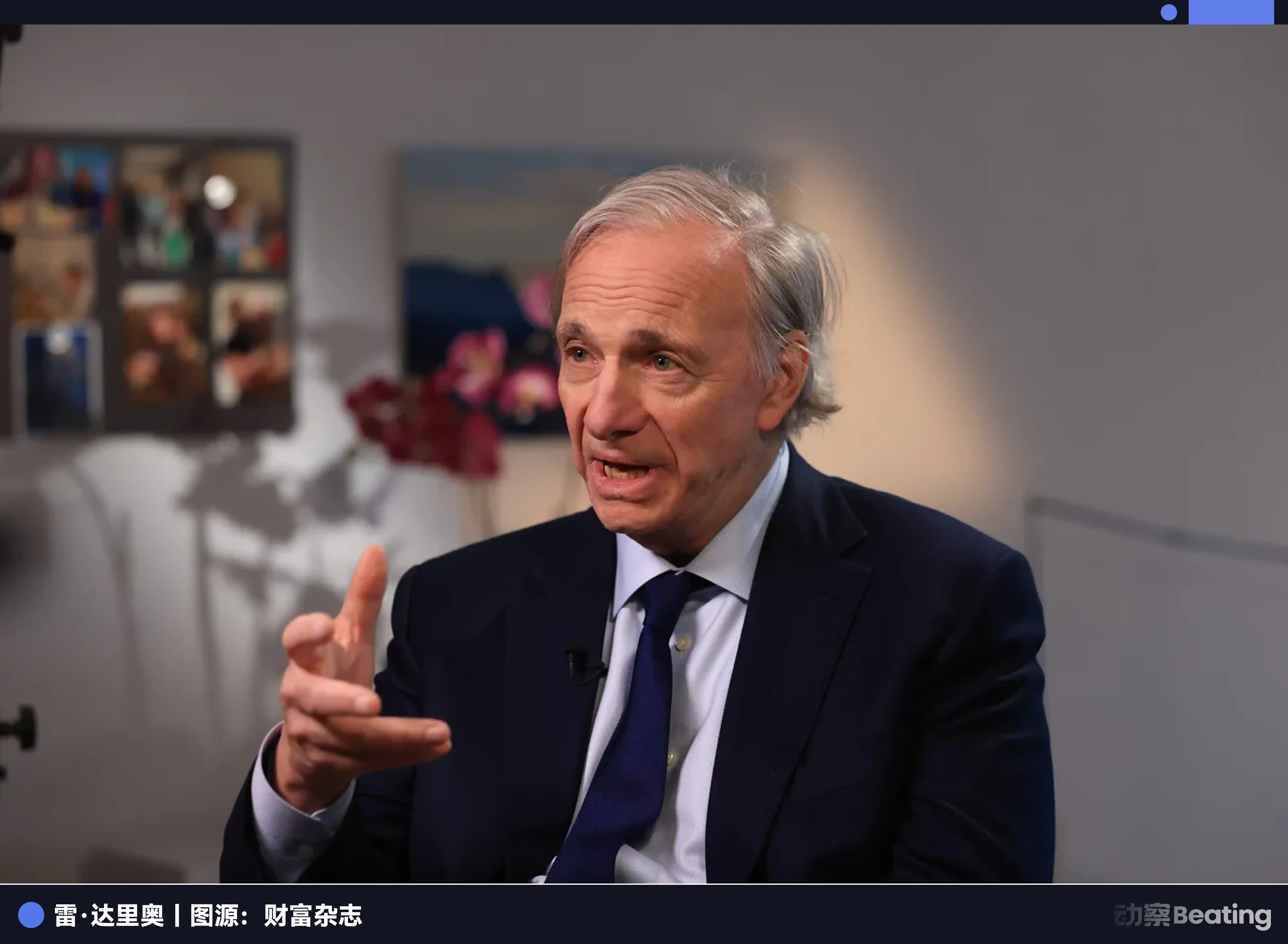
Ray Dalio, then a commodity trader, proposed a genius solution.
He said to McDonald's chicken suppliers: "Isn't the cost of a chicken just the chick, corn, and soybean meal? Chick prices are relatively stable; what really fluctuates are the prices of corn and soybean meal. You can go to the futures market and buy corn and soybean meal futures contracts, locking in your production costs. Then you can supply McDonald's with fixed-price chicken, right?"
This idea of a "synthetic future," commonplace today, was revolutionary at the time. It not only helped McDonald's successfully introduce Chicken McNuggets but also planted the seed for Ray Dalio to later found the world's largest hedge fund, Bridgewater Associates.
Another classic case comes from Southwest Airlines.
In 1993, then-CFO Gary Kelly began establishing a fuel hedging strategy for the company. From 1998 to 2008, this strategy saved Southwest approximately $3.5 billion in fuel costs, equivalent to 83% of the company's profits during the same period.
During the 2008 financial crisis, when oil prices soared to $130 per barrel, Southwest, through futures contracts, purchased 70% of its fuel at a locked-in price of $51 per barrel. This made it the only major U.S. airline that could maintain its "bags fly free" policy at the time.
Whether it was McDonald's chicken or Southwest's fuel, both reveal the same simple business wisdom: use financial markets to transform future uncertainty into present certainty.
This is hedging. Its goal is the same as insurance, but the underlying logic is completely different.
Insurance is the transfer of risk. You transfer a risk (e.g., a car accident, illness) to an insurance company and pay a premium for it. Hedging is the offsetting of risk.
You have a position in the spot market (e.g., need to buy fuel), so you establish an opposite position in the futures market (e.g., buy fuel futures). When the spot price rises, the profit from the futures offsets the loss on the spot.
Insurance is a relatively closed system, dominated by insurance companies and actuaries. Hedging is an open system, priced collectively by market participants.
So, if hedging is so elegant and efficient, why can't we use it to solve today's insurance dilemma? Why can't a Florida resident hedge the risk of a hurricane making landfall, just like Southwest Airlines hedged fuel risk?
The answer is simple: because such a market didn't exist.
Until a young entrepreneur, who started his business in a bathroom, brought it to us.
From "Risk Transfer" to "Risk Trading"
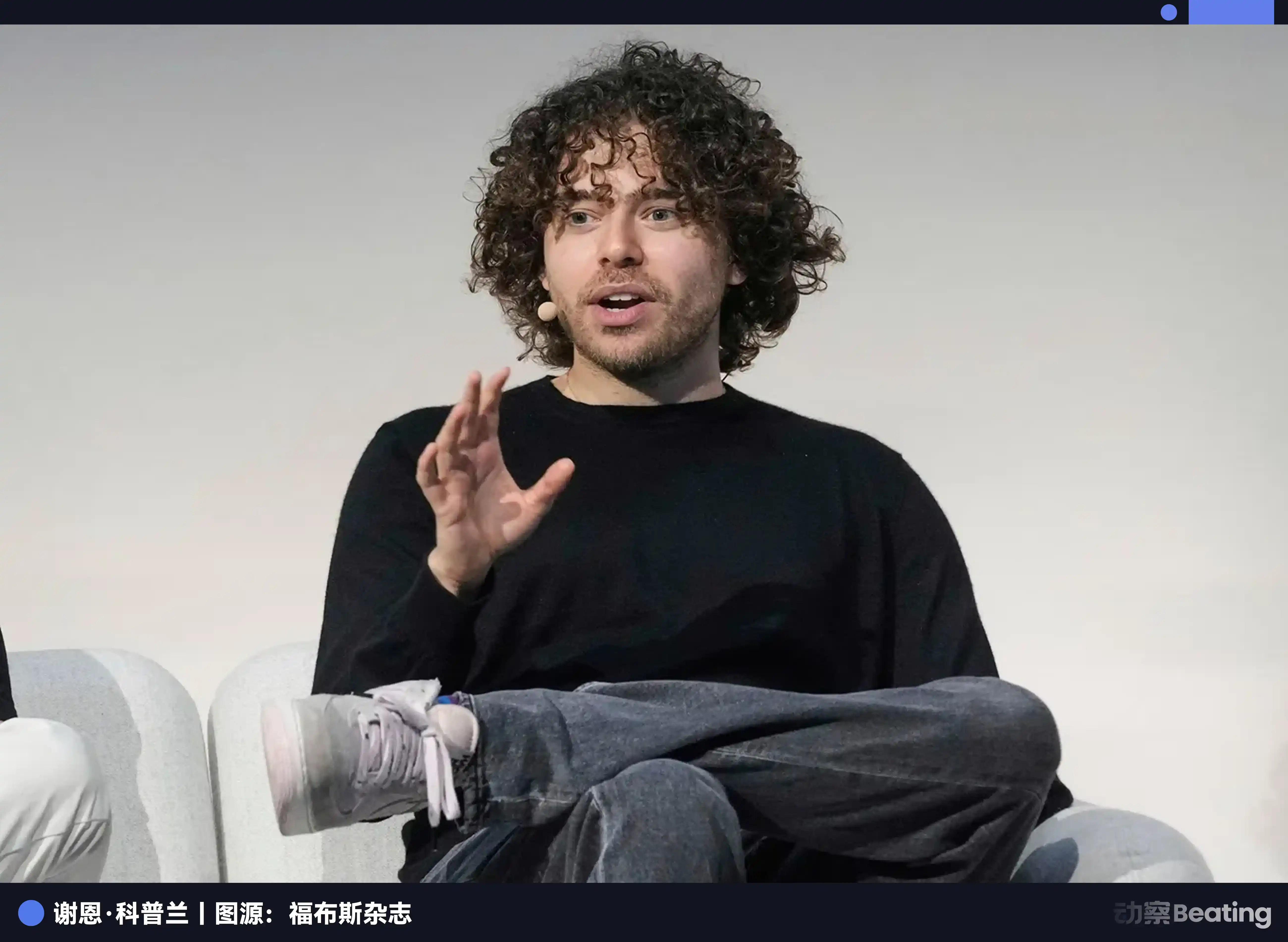
22-year-old Shayne Coplan founded Polymarket in a bathroom. This blockchain-based prediction market gained fame in 2024 during the U.S. presidential election, with annual trading volume exceeding $9 billion.
Beyond the political betting, Polymarket also hosts some intriguing markets. For example, will Houston's maximum temperature exceed 105 degrees Fahrenheit in August? Will California's nitrogen dioxide concentration be above average this week?
An anonymous trader named Neobrother accumulated profits of over $20,000 trading these weather contracts on Polymarket. He and his followers are known as "Weather Hunters."
While insurance companies are fleeing Florida because they can't predict the weather, a group of mysterious players are enthusiastically trading differences of 0.1 degrees Celsius.
Prediction markets are essentially a platform for "futurizing everything." They extend the function of traditional futures markets from standardized commodities (oil, corn, foreign exchange) to any event that can be publicly and objectively verified.
This provides a completely new way of thinking to solve the insurance industry's dilemma.
First, it replaces expert arrogance with the wisdom of the crowd.
Traditional insurance pricing relies on the actuarial models of insurance companies. But when the world becomes increasingly unpredictable, models based on historical data fail.
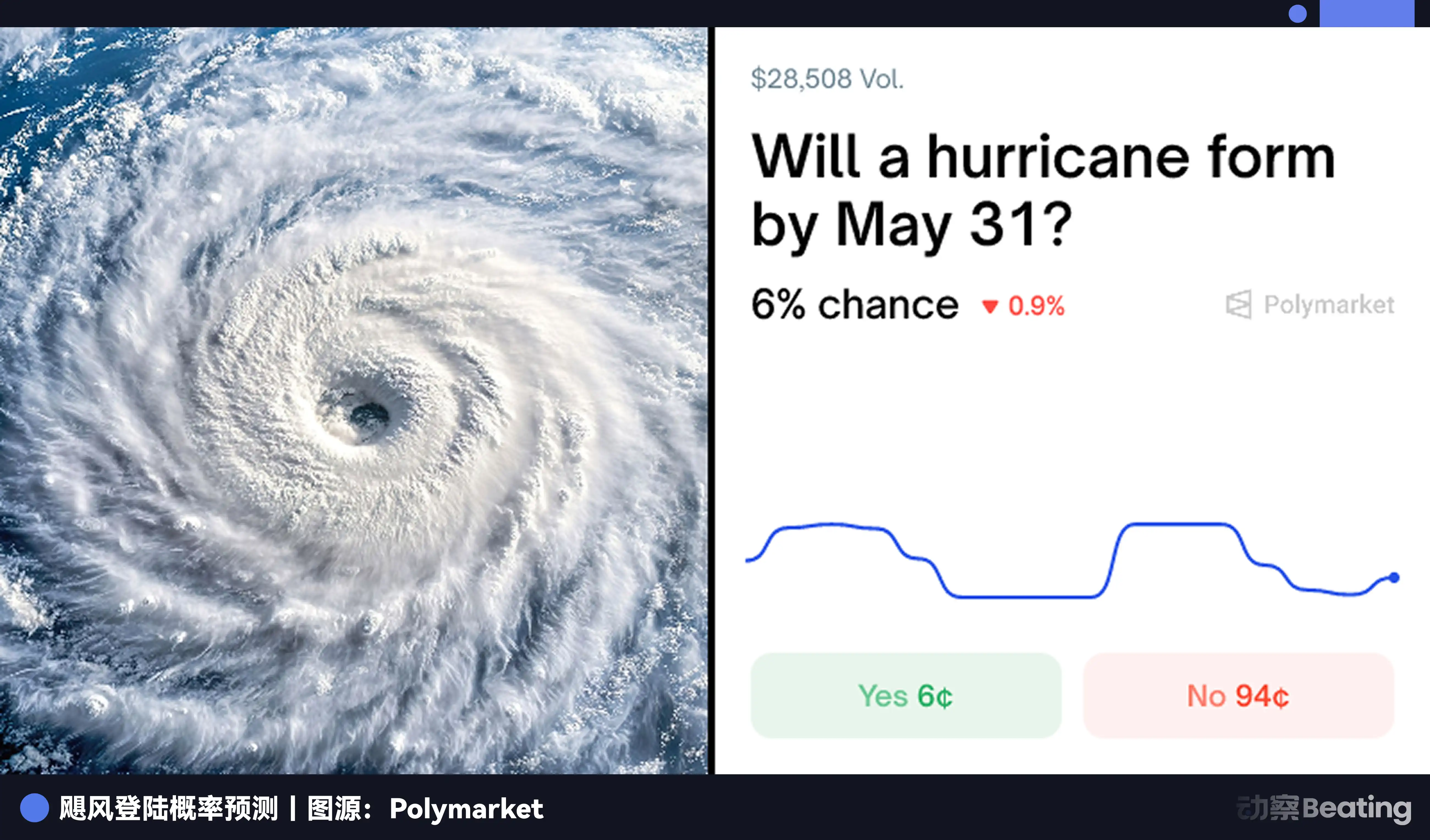
The price on a prediction market, however, is "voted" on by thousands of participants with real money. It reflects the aggregate information the market has on the probability of an event occurring. The price fluctuation of a contract on "whether a hurricane will make landfall in Florida in May" is itself the most sensitive, real-time measure of that risk.
Second, it replaces the helplessness of bearing losses with the freedom to trade.
A Florida resident worried about their house being destroyed by a hurricane no longer has only the "buy insurance" option. They can go to the prediction market and buy a "hurricane will make landfall" contract. If the hurricane does hit, their profit on the contract can be used to cover the cost of damage to their home.
This is, in essence, a personalized risk hedge.
More importantly, they can also sell this contract at any time, locking in profits or cutting losses. Risk is no longer a heavy burden that needs to be packaged and transferred wholesale; it becomes an asset that can be sliced, traded, bought, and sold at will. They transform from risk bearers into risk traders.
This is not just a technical improvement; it's a paradigm shift in thinking. It liberates the pricing power of risk from the hands of a few elite institutions and returns it to everyone.
The End of Insurance, or a New Beginning?
Will this "universal risk trading platform" of prediction markets replace insurance?
On one hand, prediction markets are eroding the foundation of the traditional insurance industry in a fundamental way.
The core of traditional insurance is information asymmetry. Insurance companies have actuaries and massive data models; they need to understand risk better than you to price it. But when the pricing power of risk is replaced by a public, transparent market driven by collective wisdom—or even insider information—the information advantage of insurance companies vanishes.
A Florida resident no longer needs to blindly trust an insurance company's quote; they just need to look at the price of a hurricane contract on Polymarket to know the market's true assessment of the risk.
More crucially, the traditional insurance industry is a "heavy model"—sales, underwriting, claims assessment, payouts... every环节 is full of labor costs and friction. Prediction markets, in contrast, are an ultimate "light model," with only trading and settlement, and almost zero intermediate links.
On the other hand, we see that prediction markets are not a panacea; they cannot completely replace insurance.
They can only hedge risks that are clearly defined and objectively verifiable (e.g., weather, election outcomes). For more complex and subjective risks (e.g., accidents caused by driving behavior, personal health conditions), they are inadequate.
You can't open a contract on Polymarket for the world to predict "whether you will have a car accident next year."
Personalized risk assessment and management remain the core strength of the traditional insurance industry.
The future landscape might not be a war of "one replacing the other," but rather a new and sophisticated relationship of co-opetition.
Prediction markets will become the infrastructure for risk pricing. Like Bloomberg Terminals and Reuters today, they provide the fundamental data anchors for the financial world. Insurance companies might also become deep participants in prediction markets, using market prices to calibrate their models or hedge catastrophic risks they cannot absorb.
And insurance companies will return to the essence of service.
When the pricing advantage is gone, insurance companies must rethink their value. Their core competence will no longer be information asymmetry, but rather a deeper focus on areas requiring deep involvement, personalized management, and long-term service, such as health management, retirement planning, and wealth inheritance.
The giants of the old world are learning the dance of the new world. And the explorers of the new world need to find the route to the continents of the old.
Epilogue
Over three hundred years ago, in a London coffeehouse, a group of merchants used primitive wisdom to invent a mechanism for sharing risk.
Over three hundred years later, in the digital world, players are reshaping how we interact with risk.
History often completes its cycles in the most unexpected ways.
From forced trust to free trading. This might be another exciting moment in financial history. Each of us will evolve from passive risk acceptors to active risk managers.
And this is not just about insurance; it's about how each of us can better survive in this world full of uncertainty.