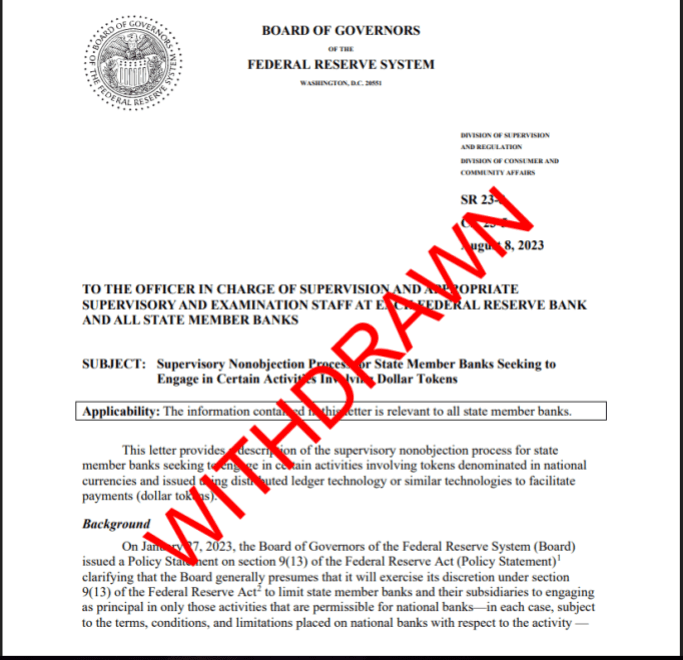
La Reserva Federal anunció el 24 de abril de 2025 que está retirando las normas anteriores para los bancos que manejan criptomonedas y tokens de dólar. A partir de ahora, los bancos serán supervisados de la manera habitual, en lugar de mediante requisitos separados centrados en criptomonedas.
Los bancos ahora pueden moverse más rápido con las criptomonedas
Las normas que se retiraron incluían una carta de 2022 que decía a los bancos miembros estatales que notificaran a la Fed antes de operar con criptomonedas, y una carta de 2023 que requería aprobación antes de manejar tokens de dólar. Estas normas habían impedido que algunos bancos más pequeños, especialmente los no asegurados centrados en criptomonedas, accedieran a cuentas de la Fed o a sistemas de pago.
Otros reguladores se movieron al mismo tiempo. La FDIC y la OCC también retiraron dos declaraciones de 2023 sobre los riesgos de las criptomonedas. Esas declaraciones habían señalado problemas como los riesgos de liquidez y gobernanza en la banca de criptomonedas. Al retirarlas, los bancos ahora enfrentan menos obstáculos formales al ofrecer servicios de criptomonedas.
🚨🚨🚨WOWZERS–la Fed rescindió la guía que promulgó en enero de 2023 simultáneamente con las denegaciones de @custodiabank + la declaración anticripto de la Casa Blanca de Biden. ¡Gracias, VCS Bowman y Gobernador Waller!🙏 La Fed violó la ley al citar esta misma guía en la denegación de Custodia, a pesar de que...
— Caitlin Long 🔑⚡️🟠 (@CaitlinLong_) 17 de diciembre de 2025
Nueva guía de la Fed
El 17 de diciembre de 2025, la Fed introdujo una nueva guía para dar a los bancos miembros estatales asegurados y no asegurados un camino claro para explorar actividades como las criptomonedas, siempre que cumplan con los estándares de gestión de riesgos de la Fed, dijo el banco central.
@federalreserve retira la declaración de política de 2023 y emite una nueva declaración de política respecto al tratamiento de ciertos bancos supervisados por la Junta que facilita la innovación responsable: https://t.co/5s1I9LO9EF
— Federal Reserve (@federalreserve) 17 de diciembre de 2025
La supervisión ahora es parte de la supervisión normal
La Fed dijo que continuará vigilando el trabajo de criptomonedas de los bancos, pero a través de procesos de supervisión regulares. Los bancos ya no necesitan enviar notificaciones adicionales ni obtener aprobación previa para actividades de criptomonedas. Eso incluye cosas como custodia, trading o liquidación de activos digitales. No se están agregando nuevas reglas; ahora es solo parte de la supervisión normal.

Fechas y acciones clave
La fecha importante es el 24 de abril de 2025. En este día, la Fed retiró las cartas de 2022 y 2023, junto con las dos declaraciones interagenciales conjuntas de 2023. Estas anteriormente decían a los bancos cómo informar y obtener aprobación para el trabajo con criptomonedas. La retirada simplemente traslada las actividades de criptomonedas a la supervisión bancaria regular.
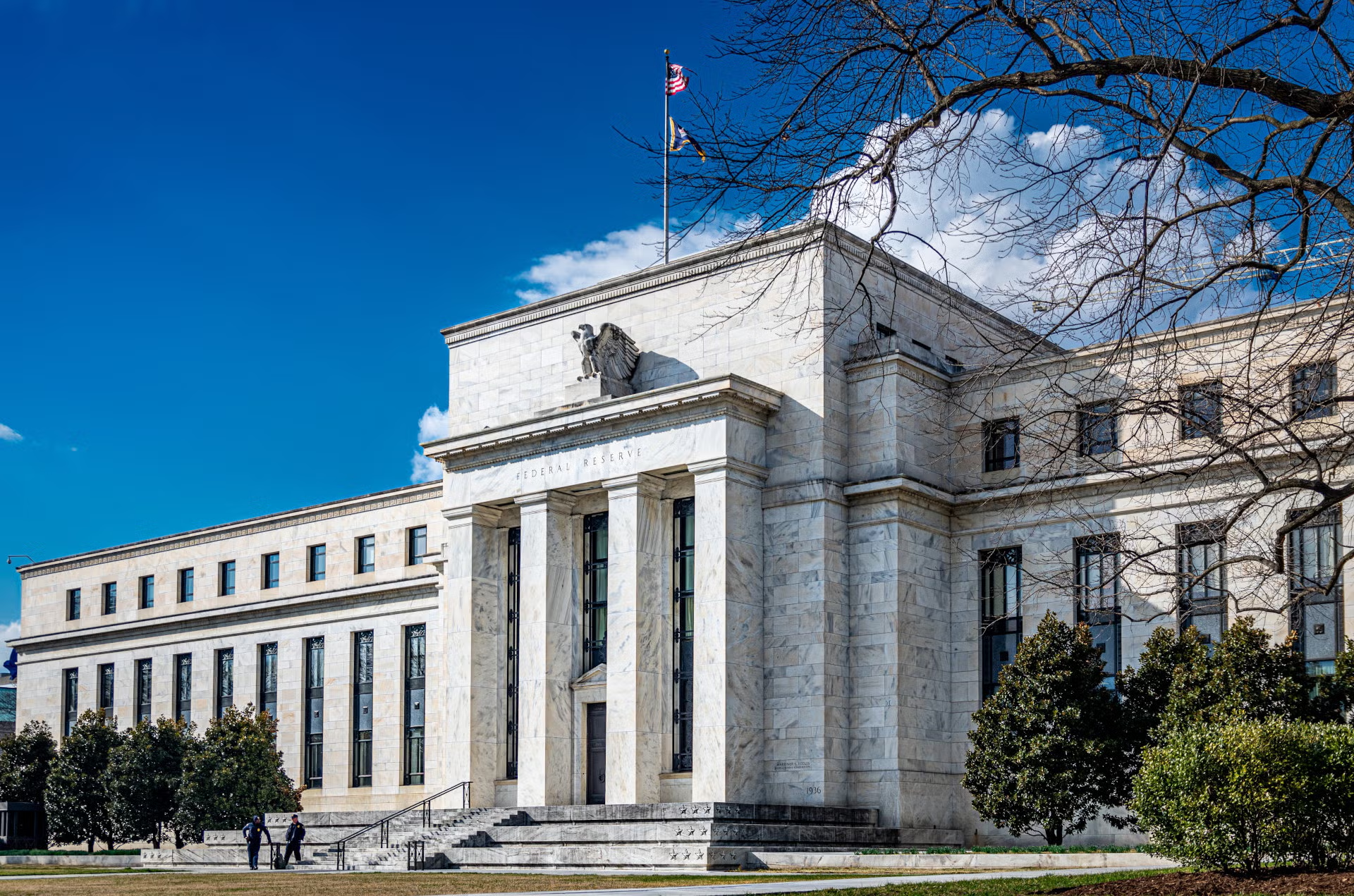
La Reserva Federal de EE. UU. Imagen: TuftsNow
Qué significa esto para los bancos y los mercados
Los bancos tienen más margen de maniobra para proporcionar servicios de criptomonedas porque ya no tienen que seguir las antiguas regulaciones. Han ganado la capacidad de desarrollar, probar y gestionar rápidamente activos digitales. Sin embargo, la Fed continúa vigilando cómo los bancos gestionan sus riesgos.
Si bien este cambio no elimina todos los requisitos regulatorios, elimina gran parte de la duplicación adicional de papeleo y aprobaciones que actuaban como barreras e impedían el progreso en el pasado.
Imagen destacada de Unsplash, gráfico de TradingView







