Ethereum Reclaims $2,000 as ETF Inflows and Upgrade Roadmap Boost Momentum

bitcoinistPublished on 2026-02-26Last updated on 2026-02-26

Abstract

After weeks of stagnation below $1,900, Ethereum surged past the key $2,000 level, reaching $2,158. This rally was driven by renewed institutional demand, with spot Ethereum ETFs recording over $125 million in inflows, led by Grayscale and Fidelity. On-chain data showed accumulation by large holders, and the Ethereum Foundation announced plans to stake 70,000 ETH, reducing circulating supply. The recovery aligns with a broader crypto market rebound. Beyond price, investor focus is on Ethereum's long-term upgrade roadmap. Co-founder Vitalik Buterin outlined plans to drastically reduce block times and achieve faster transaction finality, alongside implementing quantum-resistant cryptography over the coming years. However, short-term volatility may arise from $893 million in ETH options expiring this week. Traders are watching if ETH can hold above $2,000, with sustained institutional interest and upgrade progress being key to determining if this is a lasting trend reversal.

After weeks stuck below a key psychological level, Ethereum (ETH) surged past $2,000 in a swift rally, pushing prices to $2,158 within a day. The recovery comes after a prolonged period of sideways trading around $1,900 and a broader correction that had pushed ETH more than 60% below its previous peak.

The latest double-digit recovery coincided with a wider cryptocurrency market rebound, with total market capitalization rising by over 4% and Bitcoin also advancing during the same period.
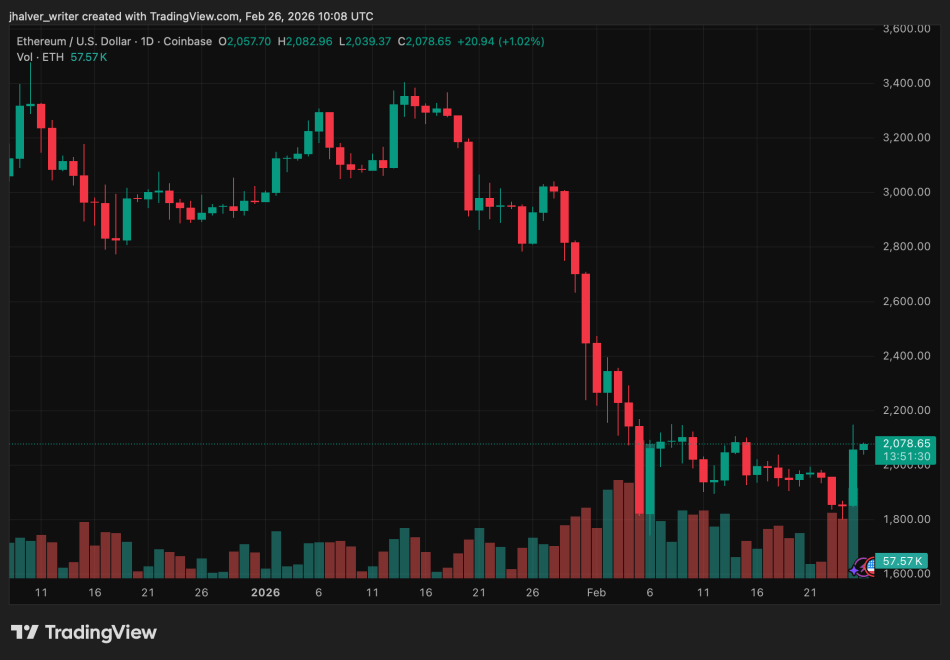
ETH's price trends to the downside on the daily chart. Source: ETHUSD on Tradingview

Ethereum ETF Inflows and Institutional Activity Drive Recovery

Renewed institutional demand helped drive Ethereum’s breakout, as spot ETFs recorded fresh inflows after weeks of outflows. Daily investments topped $20 million in some sessions, with total inflows exceeding $125 million on February 25, led largely by Grayscale and Fidelity products.

On-chain data also pointed to accumulation by large holders. Whale wallets added thousands of ETH while others withdrew significant amounts from exchanges, a pattern often interpreted as long-term positioning rather than short-term trading.

The Ethereum Foundation added another layer of support by announcing plans to stake 70,000 ETH from its treasury. The move reflects a shift toward active reserve management while reducing the circulating supply available on the market.

Technically, momentum indicators turned positive as capital flowed back into the asset. Analysts identified resistance zones between $2,080 and $2,150, while support formed around the psychologically important $2,000 level.

Upgrade Roadmap Signals Faster and More Secure Ethereum

Beyond price action, investor attention has also focused on Ethereum’s long-term development roadmap. Co-founder Vitalik Buterin recently outlined proposals to significantly improve transaction speed and security over the next several years.

The plan includes gradually reducing block slot times from 12 seconds to as low as two seconds, allowing faster transaction processing. Developers are also targeting transaction finality between 6 and 16 seconds, a major reduction from the current confirmation timeframe, which can stretch into minutes.

The roadmap spans multiple protocol upgrades expected through the end of the decade and introduces quantum-resistant cryptography designed to prepare the network for future computing risks. Changes will be implemented gradually to limit disruption and maintain network stability.

Options Expiry Could Increase Short-Term Volatility

Despite improving sentiment, derivatives markets may introduce near-term volatility. Around $893 million worth of ETH options are set to expire this week, with a “max pain” level near $2,200. The put-to-call ratio below 1 suggests traders are leaning toward upside exposure, though expiry mechanics can temporarily influence price direction.

Ethereum’s ability to hold above $2,000 remains the key signal for traders. Sustained institutional inflows and progress on network upgrades could determine whether the latest rally develops into a broader trend reversal or remains a short-term recovery within a larger consolidation phase.

Cover image from ChatGPT, ETHUSD chart on Tradingview

Related Questions

QWhat key price level did Ethereum reclaim and what was the peak price reached during the recent rally?

AEthereum reclaimed the key psychological level of $2,000 and surged to a peak of $2,158 within a day.

QWhat two main catalysts are credited with boosting Ethereum's momentum according to the article?

AThe two main catalysts are renewed inflows into spot Ethereum ETFs and the announcement of a long-term upgrade roadmap for the network.

QHow did the Ethereum Foundation contribute to the positive market sentiment?

AThe Ethereum Foundation announced plans to stake 70,000 ETH from its treasury, which reduces the circulating supply and reflects a shift toward active reserve management.

QWhat are two specific improvements to transaction processing proposed in Ethereum's upgrade roadmap?

AThe roadmap proposes reducing block slot times from 12 seconds to as low as 2 seconds and achieving transaction finality between 6 and 16 seconds, a significant reduction from the current timeframe.

QWhat near-term event could introduce volatility to the ETH price, and what is the 'max pain' level for the expiring options?

AThe expiration of around $893 million worth of ETH options could introduce near-term volatility, with a 'max pain' level near $2,200.

Related Reads

The Second Half of Macro Influencer Fu Peng's Career

Fu Peng, a prominent Chinese macroeconomist and former chief economist of Northeast Securities, has joined Hong Kong-based digital asset management firm Bitfire Group (formerly New Huo Group) as its chief economist. This move, announced in April 2026, triggered an 11% surge in Bitfire's stock price. Fu, known for his accessible macroeconomic commentary and large social media following, will focus on integrating digital assets into global asset allocation frameworks, particularly combining FICC (fixed income, currencies, and commodities) with cryptocurrencies for institutional clients. His career includes roles at Lehman Brothers and Solomon International, with significant influence gained through public communication. However, in late 2024, Fu faced temporary social media bans after a controversial private speech at HSBC on China's economic challenges, though he denied regulatory sanctions. He later left Northeast Securities citing health reasons. Bitfire, a licensed virtual asset manager serving high-net-worth clients, seeks to build trust and attract traditional capital through Fu’s expertise and credibility. The partnership represents a strategic shift for both: Fu enters the crypto sector after a traditional finance peak, while Bitfire aims to leverage his macro framework for institutional adoption. Outcomes remain uncertain regarding capital inflows and compatibility within corporate structure.

marsbit1h ago

The Second Half of Macro Influencer Fu Peng's Career

marsbit1h ago

Trading

Spot
Futures

Hot Articles

Discussions

Welcome to the HTX Community. Here, you can stay informed about the latest platform developments and gain access to professional market insights. Users' opinions on the price of ETH (ETH) are presented below.

活动图片