EDGE Price Plummets 77%: External Manipulation or Internal Script?

marsbitPublished on 2026-06-02Last updated on 2026-06-02

Abstract

On June 2, the native token EDGE of the edgeX protocol experienced a violent flash crash, plummeting over 77% from around $1.14 to a low of $0.32 before partially recovering to approximately $0.64. edgeX officially ruled out a hack or platform security flaw, attributing the event to suspected market manipulation by external actors. The incident reignited community concerns regarding the project's transparency and past controversies. Prominent on-chain investigator ZachXBT highlighted that EDGE supply has long been controlled by a small group, with low circulating liquidity. This structure traces back to a disputed airdrop in April 2026, where the majority of tokens were allocated to partner wallets instead of the community, leading to accusations of a "well-designed rug pull." Despite having notable backers like Circle Ventures and Amber Group, and generating substantial protocol fees, edgeX faces criticism for a recurring pattern of "low float, high control, and opaque market making." While the team investigates the crash and emphasizes its core contracts are operational, user sentiment remains severely damaged, with many expressing a lack of trust in the team's integrity. Meanwhile, prediction markets have already opened betting pools on EDGE's future price.

Original Author: Ma He, Foresight News

Around 4:00 AM on June 2, the native token EDGE of edgeX experienced severe and abnormal volatility. The price plummeted over 77% in a short period from around $1.14, hitting a low of $0.32, and has since rebounded to around $0.64, with a market cap of approximately $250 million.
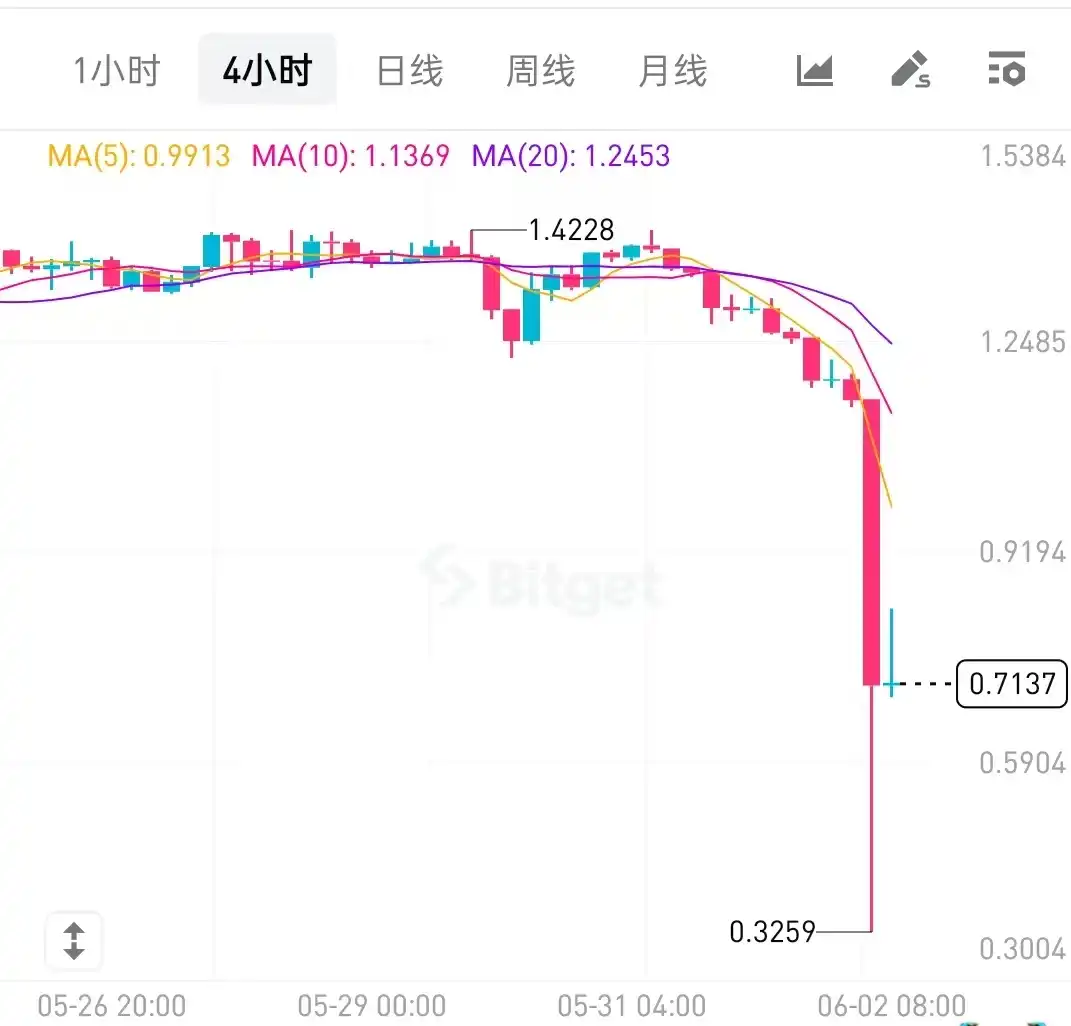
edgeX responded immediately, explicitly ruling out hacking or platform security vulnerabilities, and pointed the finger at "intentional market manipulation by external specific entities."
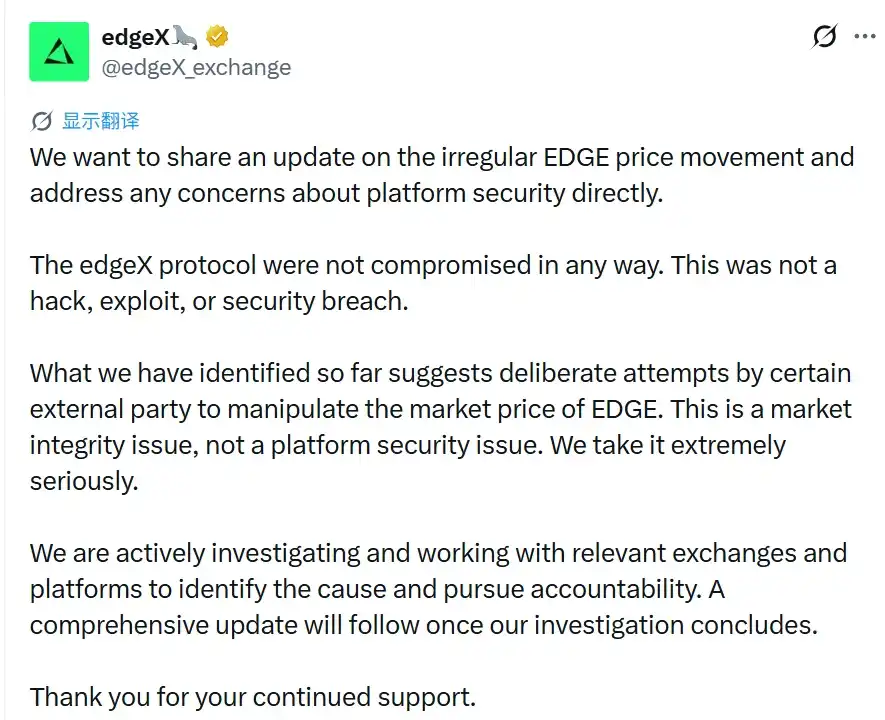
edgeX stated that its protocol was not breached, and there was no hacking or security vulnerability. This price anomaly is suspected to be market manipulation intentionally carried out by external specific entities, making it a market issue rather than a platform security issue. The team is actively investigating and cooperating with relevant exchanges and platforms to trace the responsible parties. Complete investigation results will be announced upon conclusion.

edgeX emphasized that core contracts like SpotVault are operating normally, with no suspicious activity detected, further focusing attention on external market behavior rather than the protocol itself.

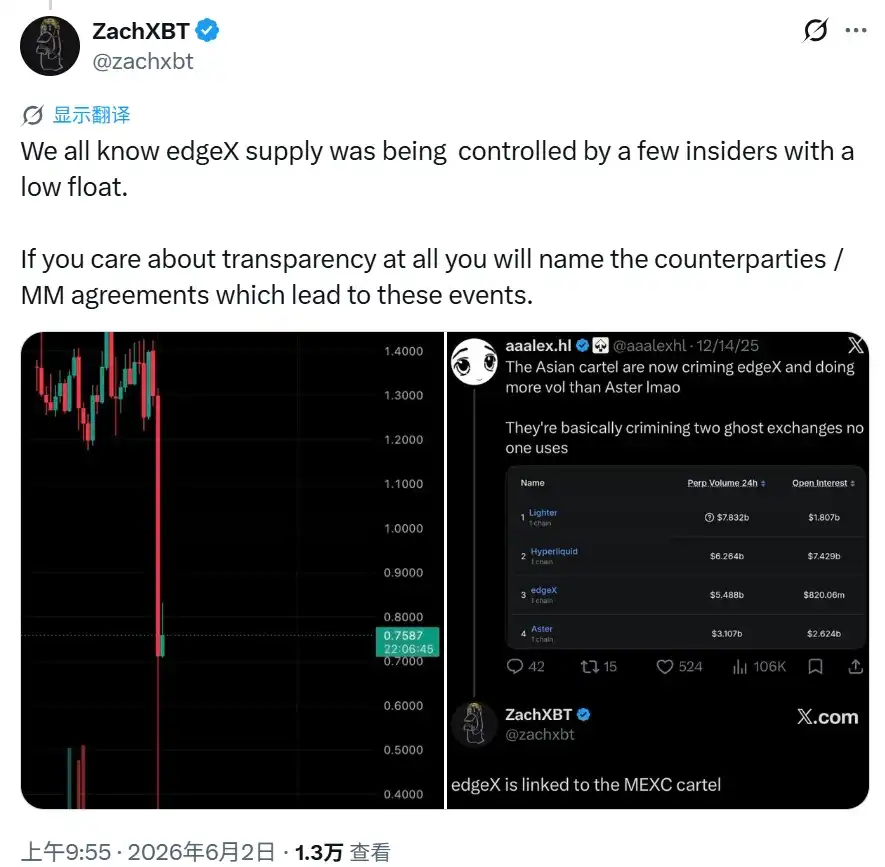
On-chain investigator ZachXBT commented after the incident, pointing out that edgeX supply has long been controlled by a few insiders, with low circulation. He called for the project to disclose market maker and counterparty information to improve transparency.
As the incident developed, many users linked this volatility directly to the project's past operations, expressing disappointment in the team's integrity. One community member bluntly stated: "No one is even discussing the EDGE crash anymore. This project team lacks integrity, goes back on their word, there's really little desire to bottom-fish."

Since its TGE, the EDGE token price rose from $0.7 to $1.5, and subsequently fluctuated around $1.4. The official team also launched a dedicated token website to prove transparency. In late May this year, the protocol launched V2 and adjusted its tokenomics to allocate all profits to repurchasing EDGE. According to its website data, approximately 36.54 million tokens have been repurchased so far, with a total value of around $25 million.
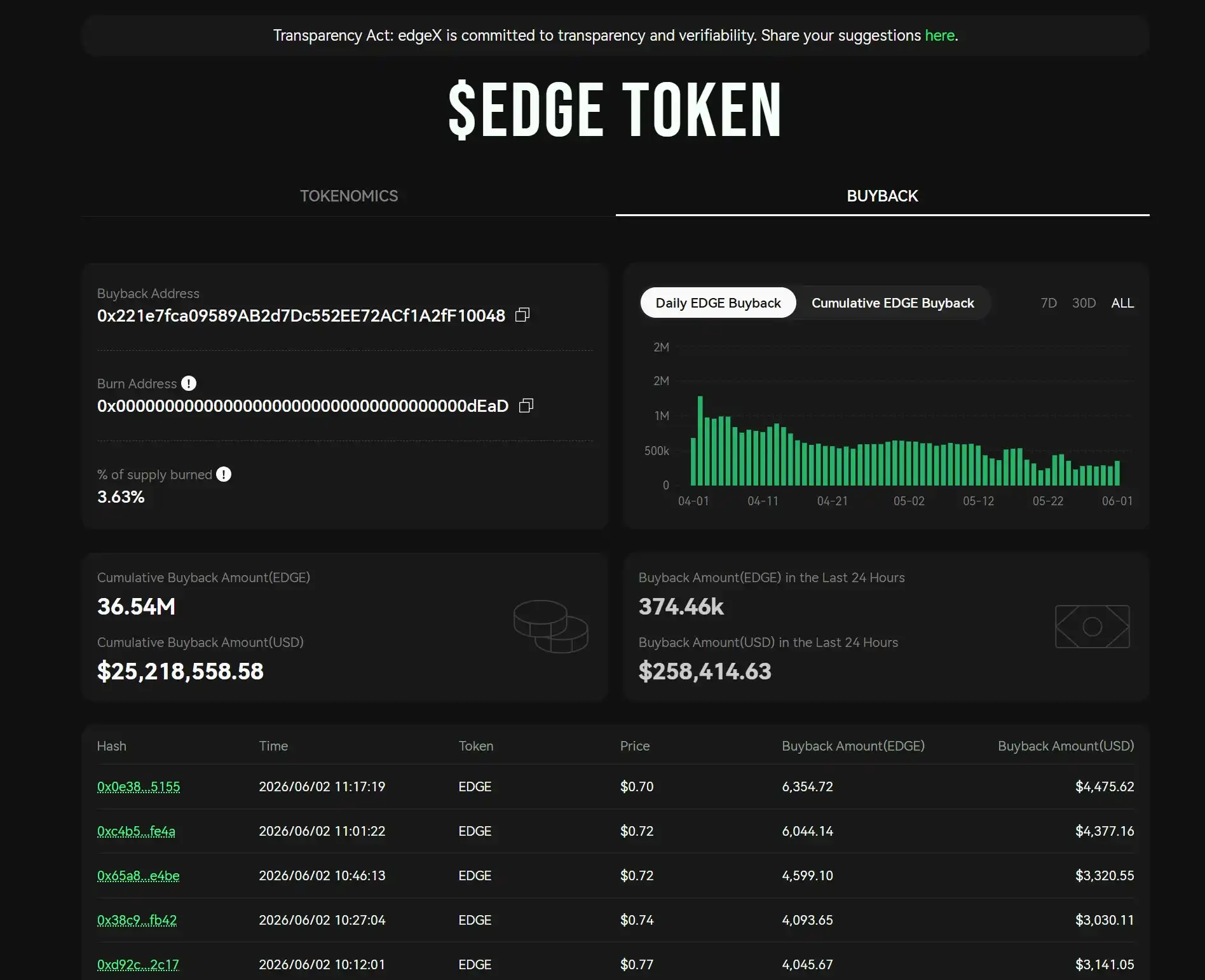
Additionally, related information shows the protocol received investment from Circle Ventures and Amber Group, though specific amounts were not disclosed.

Past Airdrop Controversy Planted Seeds for Subsequent Crash

This incident cannot be separated from the context of edgeX's previous airdrop controversy. In April 2026, the author detailed the entire process of the TGE sparking community dissatisfaction in the article "The Complete Story of the edgeX Airdrop Debacle: An Elaborately Designed Scheme?". The project had promised the community would receive 25% of the token supply, but the actual proportion allocated to ordinary traders was only about 4%, while approximately 14% (valued at around $94.6 million at the time) flowed to partner wallets. Arkham's token flow chart showed at least 80 related addresses were created in 2025, exhibiting consistent behavioral patterns: small test deposits followed by large deposits, and concentrated outflows after TGE, involving about $90 million in token transfers, with some funds flowing to exchanges.

The more core controversy lay in the opaque points exchange mechanism. User feedback indicated huge discrepancies in exchange ratios despite identical trading volumes. Furthermore, the gap between estimated point value (pre-TGE market expectations of $30-40 per point or higher FDV) and actual received amount exceeded 80%. Early contributors and NFT holders also encountered cases of "lowest allocation across the network." Community members flooded the official Twitter account with angry comments, prompting the team to temporarily disable comments.

Afterward, edgeX announced it would lock the controversial 14% share for one year and initiate a buyback, but rejected the community's demand to burn the tokens on Ethereum.
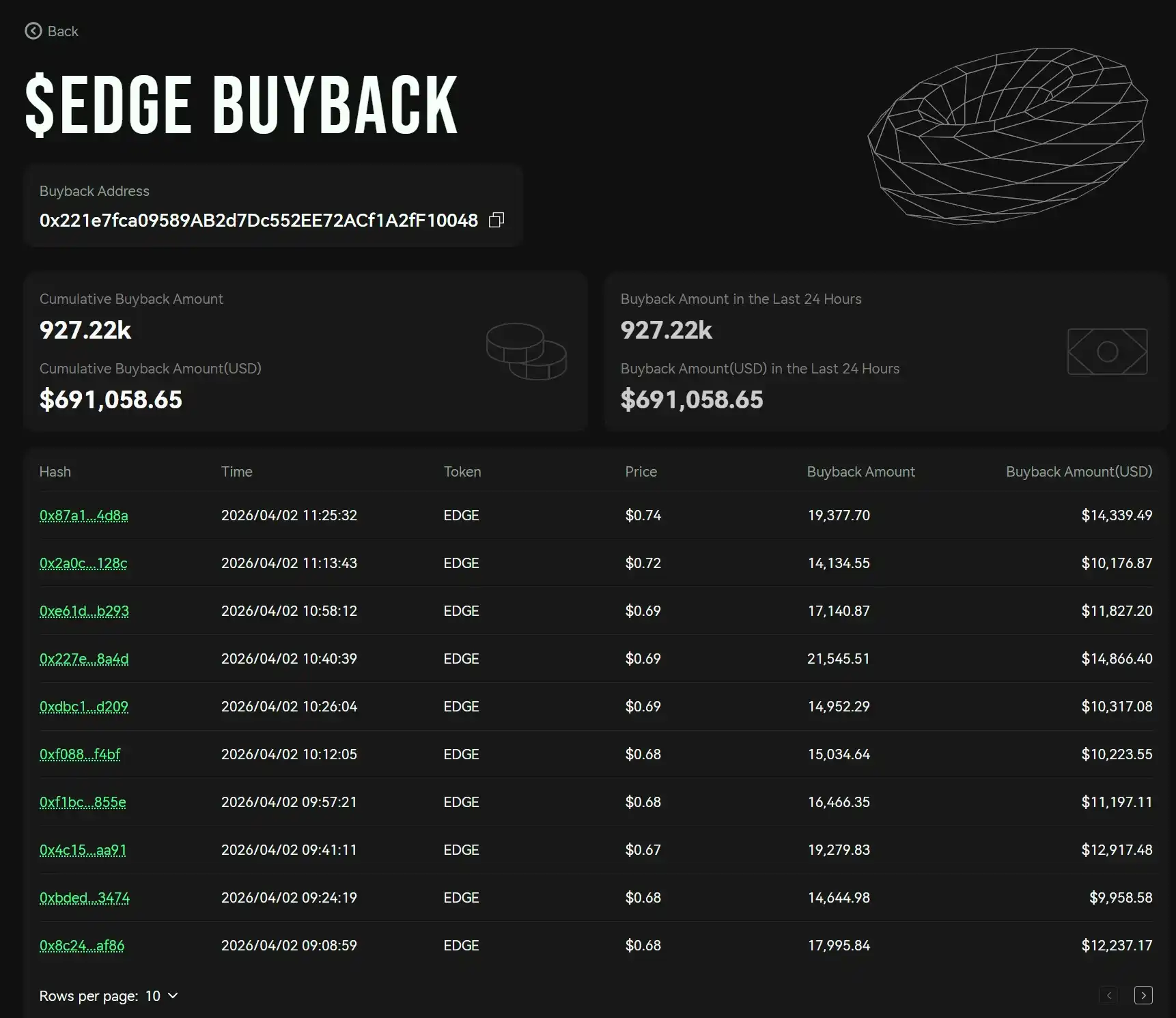
These unresolved issues directly planted the seeds for the current volatility: concentration of chips in a few addresses or related parties makes it easier for external entities to influence prices through large-scale operations. Low circulation is not accidental but an inevitable result of early allocation and lock-up arrangements. When abnormal selling pressure appears in the market, the lack of sufficient depth as a buffer easily triggers a chain reaction.

Structural Risks and Transparency Test

edgeX once carved a niche in the sector with its trading speed, low slippage, and perpetual contract innovation. After TGE, the project experienced a phase of price increase, and its trading volume and fee revenue repeatedly ranked high in DeFi. According to the latest data from DefiLlama, the protocol's total fee revenue over the past 30 days was $10.7 million, and the perpetual DEX's trading volume over the past 30 days reached $42.765 billion.
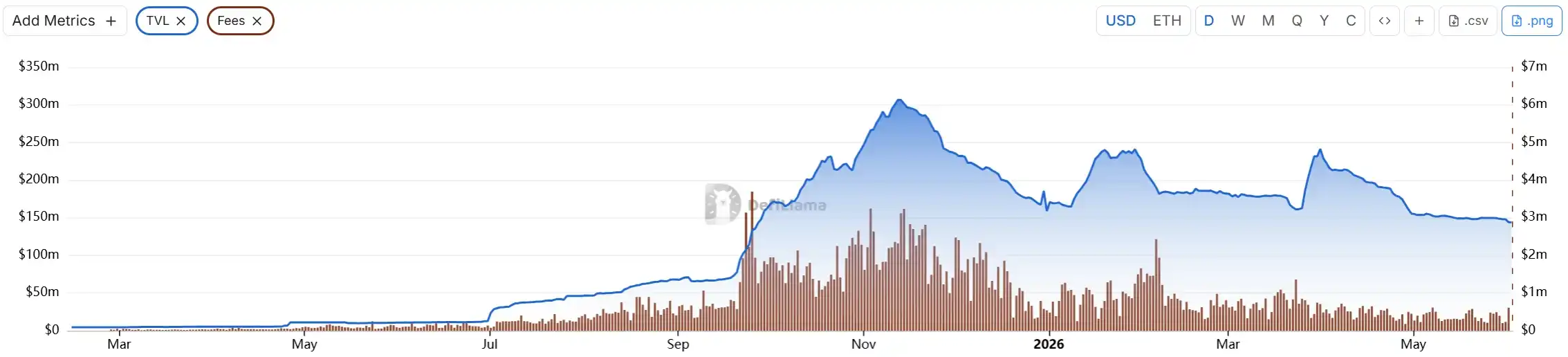
However, from the airdrop allocation controversy to this price anomaly, this model of 'low circulation + high control + opaque market making' has become a tried-and-true 'serial scam scheme' for new projects in recent years. Mouthing 'community first' while wallets honestly dump tokens to related parties is just a single-player game dressed in DeFi clothing.

The accusation of external manipulation is difficult to prove immediately, but the traceable abnormal on-chain transfers are enough to raise community alarm.

Ironically, just as it faces the whirlpool of plummeting token prices, a price prediction market for its EDGE token has quietly launched on Polymarket.
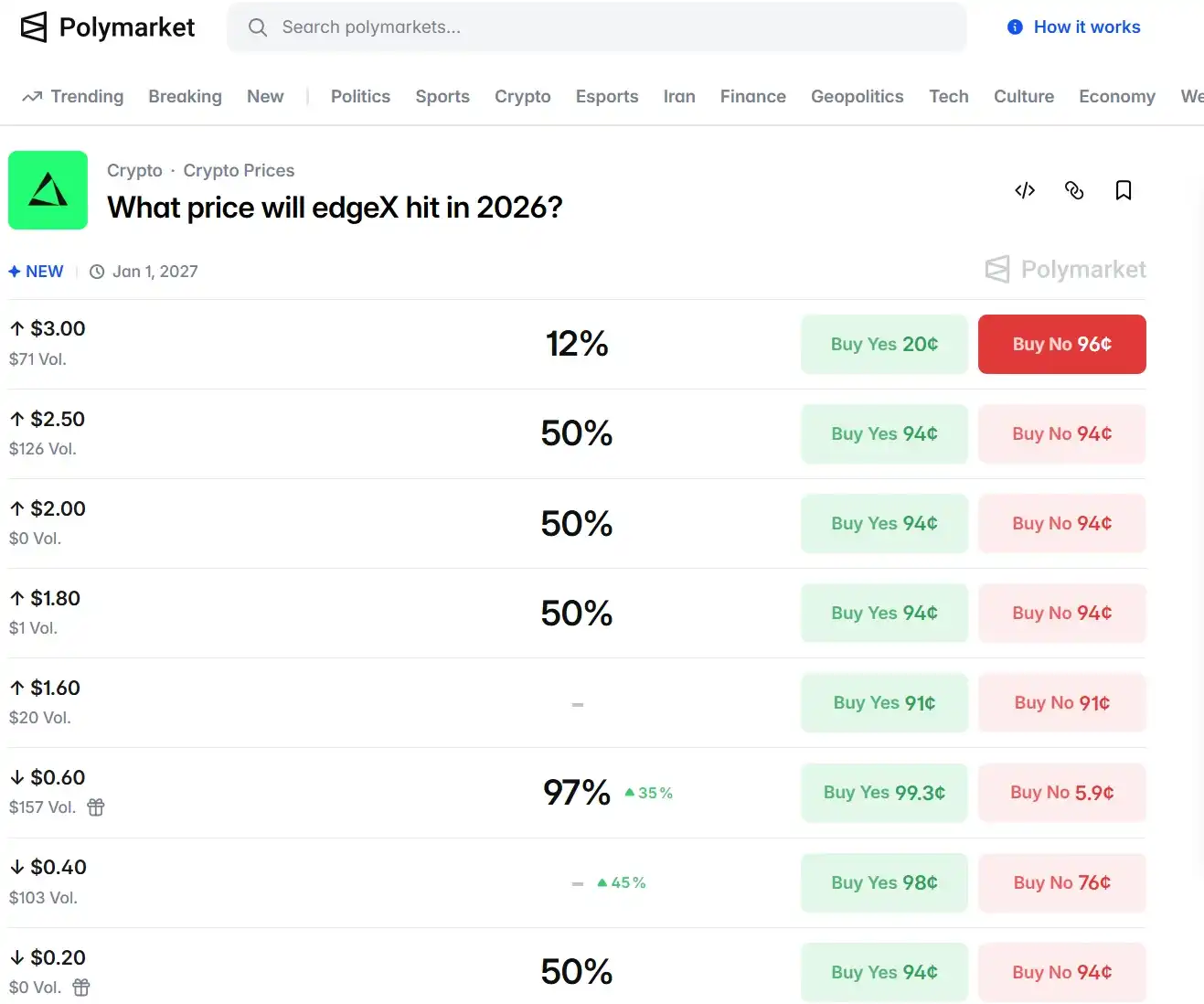
The project team is busy proving its innocence, trapped retail investors are angrily demanding justice. And on Polymarket, some players have already started betting on how much it will rise or fall by this year.


Related Questions

QWhat caused the sharp 77% price drop in EDGE token according to the edgeX team?

AThe edgeX team explicitly ruled out a hack or platform security vulnerability. They attributed the price drop to 'market manipulation intentionally carried out by a specific external entity', framing it as a market problem rather than a security problem with their platform.

QWhat criticism did ZachXBT level against the edgeX project following the price crash?

AZachXBT criticized the project's lack of transparency. He pointed out that the EDGE supply has long been controlled by a small number of insiders with low circulation, and demanded that the project publicly disclose information about its market makers and counterparties.

QWhat past controversy is mentioned as setting the stage for this price volatility event?

AThe article mentions a significant airdrop controversy from April 2026. The project promised 25% of tokens to the community, but only allocated about 4% to regular traders, while about 14% (worth roughly $94.6 million at the time) went to partner wallets, causing major community discontent and distrust.

QWhat structural risk pattern does the article accuse edgeX and similar new projects of following?

AThe article accuses edgeX of following a pattern common in recent new projects: 'low circulation + high control by insiders + non-transparent market making'. It describes this as a 'serial harvesting scheme' that acts like a single-player game disguised as DeFi.

QHow did the edgeX protocol perform in terms of trading activity prior to this incident according to DefiLlama data?

AAccording to DefiLlama data cited in the article, the edgeX protocol had strong performance metrics. Its total fee revenue over the past 30 days was $10.7 million, and the trading volume for its perpetual DEX over the past 30 days reached $42.765 billion.

Related Reads

Pantera Partner: In the Age of Agents, Blockchain is the Inevitable Answer for AI

Summary: AI and blockchain are converging around four key pillars: payment settlement, identity systems, open systems, and resource aggregation, with commercial projects already emerging in each area. The two technologies are fundamentally complementary: AI enables infinite supply (content, agents), while blockchain establishes scarcity and verifiable ownership. AI agents generate content and services, and blockchain handles the verification and value settlement. A significant valuation mismatch exists, with leading AI companies historically overvalued compared to crypto assets, despite their deep underlying integration. The emergence of autonomous AI agents—which require assets, value transfer, and large-scale coordination—creates a need for a non-human-centric financial infrastructure. Blockchain, with its programmability, 24/7 access, and low-trust settlement, is the only suitable foundation. AI agents will not use traditional bank accounts or payment rails; they will transact using stablecoins and on-chain systems. Examples include OpenFX, which settles hundreds of billions in forex trades on-chain for AI agents, and Alchemy, a core development platform. For human identity verification in an age of AI-generated content, projects like World (Worldcoin) use blockchain-based biometric verification, while TransCrypts focuses on self-sovereign identity and verifiable credentials. The current divergence presents a unique investment opportunity. AI valuations are highly elevated, while crypto assets trade at a significant discount, even though the future smart agent economy will be built on blockchain infrastructure. The fusion of AI and blockchain is not a future trend but an ongoing reality, creating a prime environment for entrepreneurs in areas like agent-native finance, decentralized identity, and on-chain AI coordination.

marsbit18m ago

Pantera Partner: In the Age of Agents, Blockchain is the Inevitable Answer for AI

marsbit18m ago

API Stories Can't Support Valuations, AI Giants Start Offering Consulting Services

The AI industry is shifting from simply selling APIs to providing intensive, on-site consulting services, as major players like OpenAI and Anthropic seek new revenue streams to justify high valuations. OpenAI has established "Deploy Co," raising over $40 billion from investors led by TPG at a $140 billion valuation. The deal has an unusual structure, guaranteeing investors a minimum 17.5% return with a profit cap, resembling debt more than equity. OpenAI also acquired the AI consulting firm Tomoro to gain over 150 "Frontline Deployment Engineers" (FDEs). Similarly, Anthropic formed a $15 billion joint venture with Blackstone, Hellman & Friedman, and Goldman Sachs with the same goal: embedding engineers within client companies. A key driver is Anthropic's rapid market share growth, now holding 40% of the enterprise LLM API market compared to OpenAI's 27%, which has put pressure on OpenAI to accelerate its enterprise strategy. Notably, major consulting firms Bain & Company, McKinsey & Company, and Capgemini are among the investors in OpenAI's venture, a move seen as either seeking deeper insight into AI or funding their potential future disintermediation. This pivot is creating a major shift in tech employment. Demand for FDEs—who integrate AI into client workflows on-site—has surged over 800% in the past year, with salaries reaching $350,000-$550,000. Meanwhile, demand for traditional software engineers has declined significantly. The trend marks a strategic inflection point: core AI models are becoming commoditized, while the complex, labor-intensive work of deployment is becoming the new high-value, capitalized service layer. The $55 billion in combined funding represents a bet that hands-on consulting, not just API access, is the future of enterprise AI monetization.

marsbit1h ago

API Stories Can't Support Valuations, AI Giants Start Offering Consulting Services

marsbit1h ago

Trading

Spot
Futures

Hot Articles

How to Buy EDGE

Welcome to HTX.com! We've made purchasing edgeX (EDGE) simple and convenient. Follow our step-by-step guide to embark on your crypto journey.Step 1: Create Your HTX AccountUse your email or phone number to sign up for a free account on HTX. Experience a hassle-free registration journey and unlock all features.Get My AccountStep 2: Go to Buy Crypto and Choose Your Payment MethodCredit/Debit Card: Use your Visa or Mastercard to buy edgeX (EDGE) instantly.Balance: Use funds from your HTX account balance to trade seamlessly.Third Parties: We've added popular payment methods such as Google Pay and Apple Pay to enhance convenience.P2P: Trade directly with other users on HTX.Over-the-Counter (OTC): We offer tailor-made services and competitive exchange rates for traders.Step 3: Store Your edgeX (EDGE)After purchasing your edgeX (EDGE), store it in your HTX account. Alternatively, you can send it elsewhere via blockchain transfer or use it to trade other cryptocurrencies.Step 4: Trade edgeX (EDGE)Easily trade edgeX (EDGE) on HTX's spot market. Simply access your account, select your trading pair, execute your trades, and monitor in real-time. We offer a user-friendly experience for both beginners and seasoned traders.

3.0k Total ViewsPublished 2026.03.31Updated 2026.06.02

How to Buy EDGE

Discussions

Welcome to the HTX Community. Here, you can stay informed about the latest platform developments and gain access to professional market insights. Users' opinions on the price of EDGE (EDGE) are presented below.

活动图片