DEX adoption, HIP-3 fuel $200 HYPE case as rivals threaten Hyperliquid’s dominance

cointelegraphPublished on 2025-12-22Last updated on 2025-12-22

Abstract

Decentralized perpetuals exchange Hyperliquid has emerged as a breakout project in 2025, though it faces growing competition from rivals with lucrative reward systems. Cantor Fitzgerald forecasts that Hyperliquid’s HYPE token could reach $200 by 2035, driven by the implementation of HIP-3 and a token buyback mechanism that returns fees to holders. The report assumes a 15% annual growth rate and a reduction in token supply. However, emerging competitors like Lighter DEX pose a significant threat. Lighter uses a zero-fee model and a points-based farming system, attracting high trading volumes and speculation around an upcoming token launch. Despite Hyperliquid’s strong position, competitor incentives may challenge its dominance.

Decentralized perpetuals exchange Hyperliquid has been among crypto’s breakout projects in 2025, but rivals’ lucrative rewards systems are vying to lure investors away.

Cantor Fitzgerald forecasts Hyperliquid’s HYPE (HYPE) token to surge to $200 by 2035. Hyunsu Jung, CEO of HYPE treasury company Hyperion DeFi argues that the surge will be fueled by the Hyperliquid Improvement Proposal 3 (HIP-3).

"We see HIP-3 as the major driver of Hyperliquid’s next phase of growth, and as a key enabler of the valuation framework proposed by Cantor," Jung told Cointelegraph.

Perpetual swaps are futures derivative contracts that track the price of an underlying asset but have no expiration date. Contracts maintain their price close to the spot assets by a fund mechanism, which transfers payments between long and short position holders.

The market share of perpetual futures DEXs rose from 2.1% in January 2023 to a new all-time high of 11.7% in November 2025, according to a report by data aggregator CoinGecko.
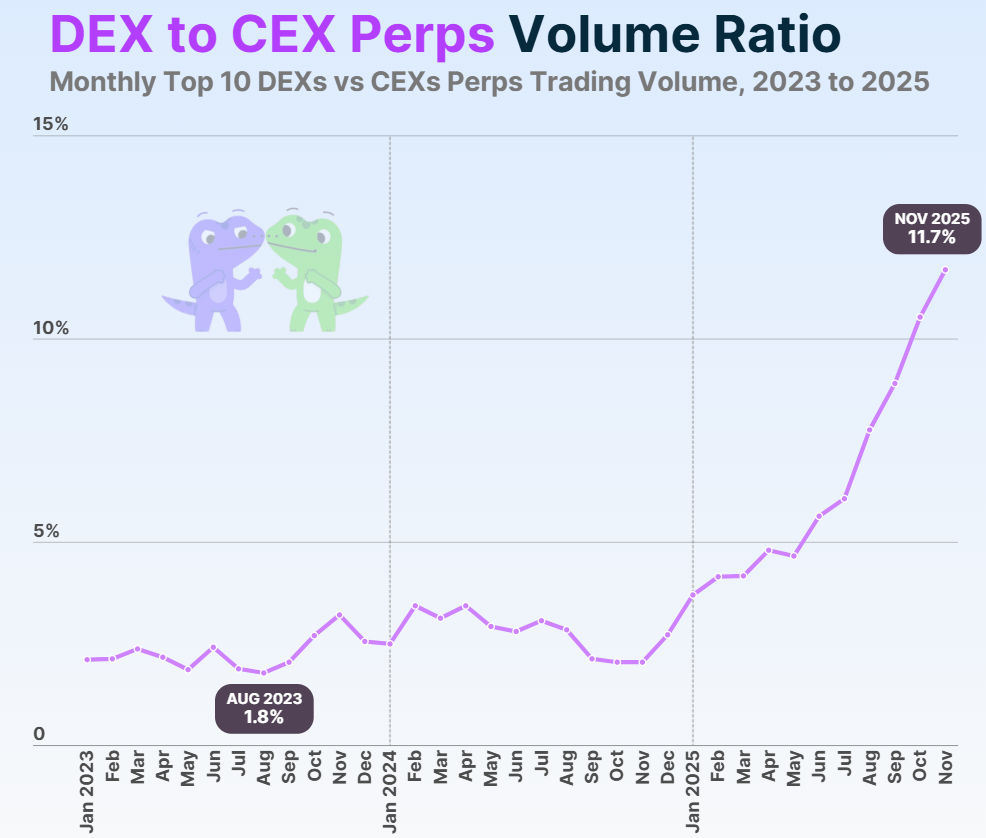
DEX to CEX perps volume ratio. Source: CoinGecko.com

Related: Bitcoin dips below $85K as DATs face ‘mNAV rollercoaster’: Finance Redefined

Cantor Fitzgerald predicts $200 HYPE token price by 2035

Earlier in December, a research note by Cantor Fitzgerald predicted that the growing usage of decentralized trading venues would push the HYPE token to over $200 in the next 10 years.

"Given the fact that all fees are returned to token holders via buybacks, we make the argument that HYPE should trade at closer to 50x,” by 2035, wrote the company in a research note published on Dec. 16, adding:

“Using this methodology, we see a path for HYPE eclipsing $200."

The company's prediction assumed that the token's price will grow at a 15% compound annual growth rate (CAGR) while the Assistance Fund will repurchase about 291 million HYPE tokens, reducing the total supply to 666 million tokens.

The AF is an onchain entity that uses 99% of protocol trading fees to buy back HYPE tokens, aiming to artificially bolster demand for the token.
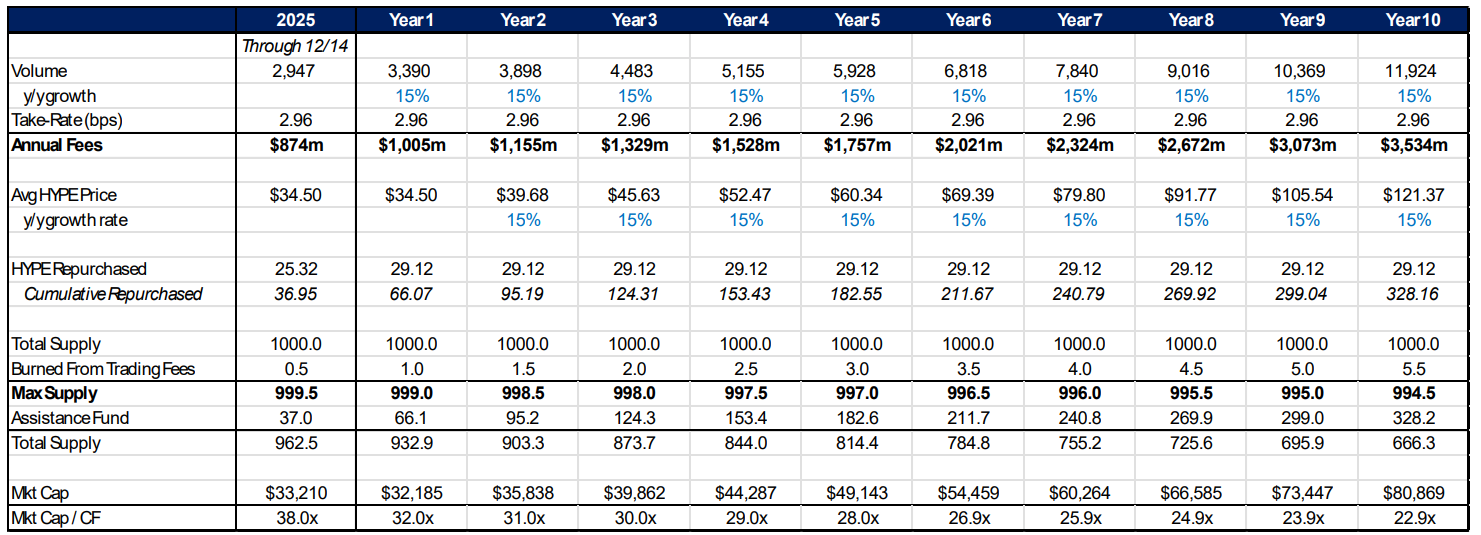
HYPE token predictions, 10-year forecast. Source: Cantor Fitzgerald

The optimistic prediction also assumes that CEXs will lose about 1% of annual market share to DEXs, which is equivalent to an estimated $600 billion in trading volume.

Related: Fidelity macro lead calls $65K Bitcoin bottom in 2026, end of bull cycle

Emerging rivals are the biggest threat to Hyperliquid

Emerging rival DEXs remain the biggest threat to Hyperliquid's forecast growth, particularly the incoming token generation event (TGE) of Lighter DEX.

“In the short term, competition from other perpetual DEXs presents a risk, particularly newer entrants such as Lighter that are using token generation events as incentives to capture market share,” Jung said.

Ethereum-rollup-based DEX, Lighter, started gaining momentum through its zero-fee trading model and exclusive points-based yield farming system, reporting daily trading volumes exceeding $8 billion.
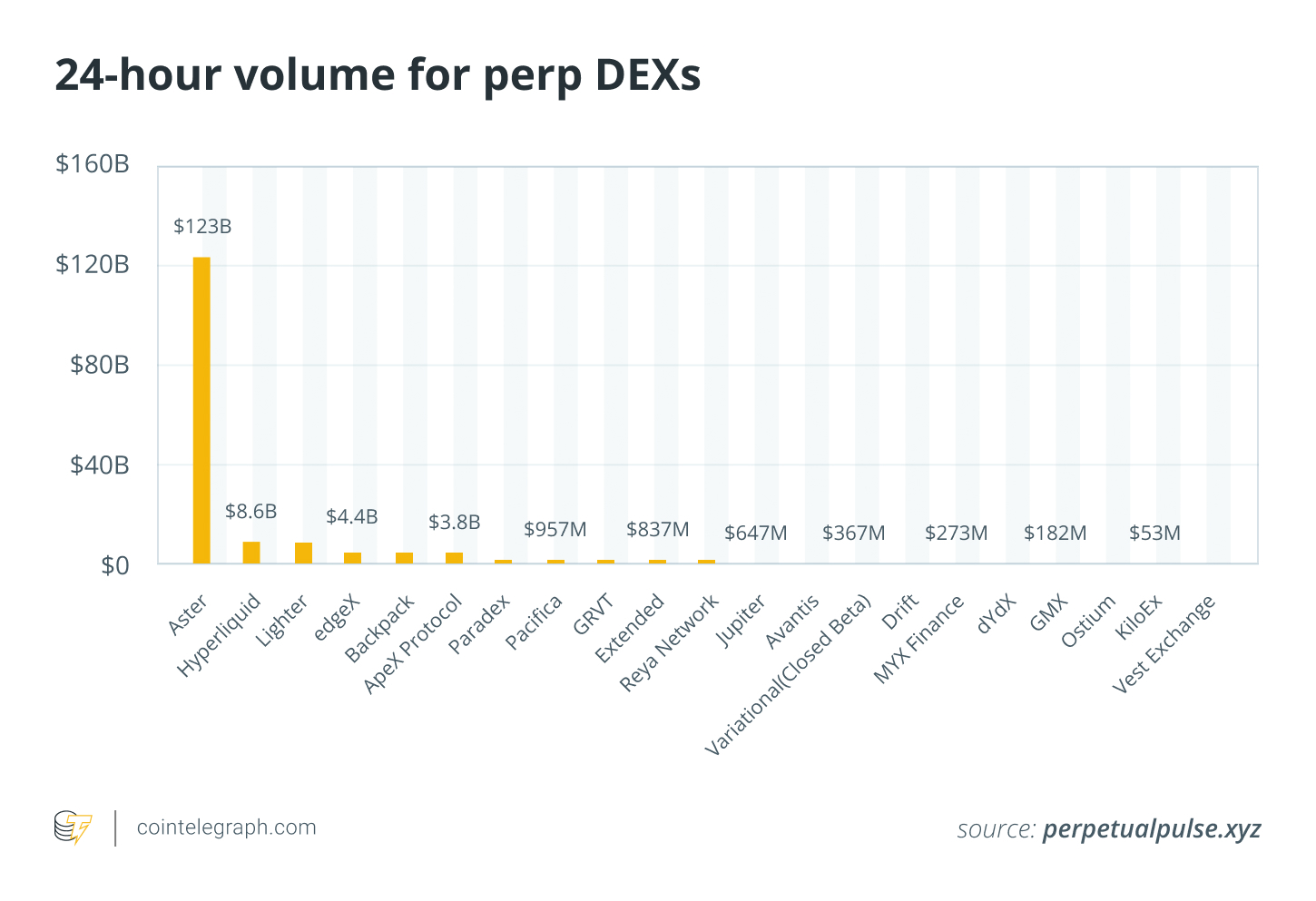
Perp Dex, 24-hour volume. Source: Perpetualpulse/Cointelegraph

Lighter’s reward farming system ignited widespread trader expectations for an incoming TGE, rumored to occur at the end of 2025. While the platform has yet to formally announce a token, Lighter points have been selling for around $12 in over-the-counter markets as of Dec. 20, according to airdrop farming account Legends Trade.

Magazine: If the crypto bull run is ending... it’s time to buy a Ferrari — Crypto Kid

Trending Cryptos

Related Questions

QWhat is the main driver behind Cantor Fitzgerald's prediction that HYPE token will reach $200 by 2035?

AThe main driver is the Hyperliquid Improvement Proposal 3 (HIP-3), which is seen as a key enabler of the valuation framework. Additionally, the prediction assumes a 15% compound annual growth rate and the Assistance Fund's buyback of approximately 291 million HYPE tokens to reduce supply and artificially bolster demand.

QHow has the market share of perpetual futures DEXs changed from January 2023 to November 2025?

AThe market share of perpetual futures DEXs rose from 2.1% in January 2023 to a new all-time high of 11.7% in November 2025.

QWhat is the biggest threat to Hyperliquid's forecast growth according to the article?

AThe biggest threat is emerging rival DEXs, particularly the incoming token generation event (TGE) of Lighter DEX, which uses incentives like zero-fee trading and points-based yield farming to capture market share.

QWhat mechanism does Hyperliquid's Assistance Fund use to support the HYPE token price?

AThe Assistance Fund uses 99% of protocol trading fees to buy back HYPE tokens, aiming to reduce the total supply and artificially bolster demand for the token.

QWhat are some key features of Lighter DEX that make it a competitive threat to Hyperliquid?

ALighter DEX uses a zero-fee trading model and an exclusive points-based yield farming system, which has helped it gain momentum with daily trading volumes exceeding $8 billion. It is also rumored to have an upcoming token generation event (TGE).

Related Reads

Thanks to Dice Rolls, Bitcoin Keys Are Stored Offline, But Not Everyone Will Do It

The article discusses using dice rolls to generate secure Bitcoin wallet seeds, providing entropy independent of potentially flawed hardware random number generators. It explains that each fair dice roll offers about 2.585 bits of entropy, with around 50 rolls needed for a standard 12-word seed phrase and 99+ recommended for higher security. This method gained attention after a vulnerability was revealed in some Coldcard hardware wallets, where a faulty firmware RNG (dating back to 2021) compromised generated keys. The analysis notes that while a dice-generated main seed was safe from this specific flaw, other Coldcard functions (like creating paper wallets, backup keys, or passwords) could still be vulnerable if they used the defective RNG. The piece argues that while dice-based entropy is technically robust, the manual process is error-prone, tedious, and unrealistic for most new users, who might make mistakes in recording or inputting rolls. It concludes that while manual entropy generation should remain an option for advanced users, the long-term goal is to develop reliable, user-friendly hardware and software that securely generates randomness without requiring specialized knowledge. Coldcard users are advised to check their firmware version and replace any secondary secrets (like paper wallet keys) created with vulnerable devices, while also considering multi-signature setups with devices from different manufacturers for added security.

cryptonews.ru4h ago

Thanks to Dice Rolls, Bitcoin Keys Are Stored Offline, But Not Everyone Will Do It

cryptonews.ru4h ago

Trading

Spot

Hot Articles

Discussions

Welcome to the HTX Community. Here, you can stay informed about the latest platform developments and gain access to professional market insights. Users' opinions on the price of S (S) are presented below.

活动图片















