Source: Xiaoyuzhou
Editor: WuBlockchain
The content of this article does not constitute any investment or financial advice. Readers are advised to strictly comply with the laws and regulations of their respective locations.
On January 14, Binance founder CZ (Changpeng Zhao) held a Chinese AMA to engage with the community, delving into the future trends of Bitcoin and the cryptocurrency market, particularly the possibility of a super cycle and investment strategies for the industry. He emphasized the impact of U.S. policies on the market, especially in the interplay between the stock market and cryptocurrencies. He also shared insights on crypto community building, meme coins, and decentralization trends, as well as the importance of compliance in the crypto industry. Additionally, CZ expressed optimism about the potential of future prediction markets and AI code generation while offering advice to investors, especially novice traders, highlighting the importance of risk control and a long-term perspective.
This content represents the personal views of the guest and does not represent the views of WuBlockchain. The audio transcription was completed by GPT and may contain errors. Please listen to the full podcast on Xiaoyuzhou, YouTube, and other platforms.
Are there better methods for user expansion?
CZ: I think it depends on each individual's situation. If your circle is deeply embedded in academia, the business world, or the education sector, the methods will vary. I believe the best way is for everyone to educate the industry in their own way. If each person contributes a little, our collective impact will grow, and eventually, the number of users will increase.
Has the super cycle already begun? Will 2026 be a new starting point?
CZ: When I talk about a super cycle, I usually refer to Bitcoin's traditional four-year cycle, which has been very evident historically. According to this cycle, this year might be a bear market, as 2020 and 2021 were bear markets, 2017 was a bull market, and most of the following years were bear markets.
So, when I mention a super cycle or a super bull market, it is usually measured in years. This year, I think the situation might be different. From a simple logical perspective, although Bitcoin has a four-year cycle, this year might be an exception. The most likely scenario is that the policies currently being introduced in the U.S. are very favorable for Bitcoin, and the U.S. President may implement a series of policies this year to boost the stock market, as they are approaching the midterm elections.
If the U.S. stock market performs better, its influence might outweigh Bitcoin or the traditional four-year cycle of digital currencies. I think this probability is relatively high, but of course, I could be wrong. So, there's no need to take my words too seriously. This is my personal view. By the way, South Korea has just allowed listed companies to engage in cryptocurrency trading this year, which is also a long-term positive trend for the entire industry. My perspective is that I tend to see the positive side, so I am very optimistic about the future.
What are the prospects for prediction markets in 2026?
CZ: I think prediction markets should be a significant sector in the long run, but it's hard to judge how big or small this sector will be. Some people might exaggerate its potential.
In the short term, it's difficult to predict who will win or lose. The prediction market sector is still very new, with projects like Kalshi and Polymarket currently leading. Kalshi isn't deeply involved in the crypto space itself, while Polymarket gained popularity during the last election but faced challenges, such as blocking U.S. users and reacquiring licenses.
These two projects have proven the existence of the market, but many new competitors are likely to emerge—possibly hundreds or even thousands. It's still unclear which format will succeed in each country or which regulatory policies will be more suitable. For example, there are very few market makers in prediction markets currently, mostly limited to traditional market makers who focus on sports events. If other types of predictions are involved, it might be harder to succeed. The industry is still uncertain about how to address these issues.
At this stage, the sector is still in its very early days but we have made many investments in this area, supporting several projects. Although there might be some competition among these projects, we support the success of each one.
Will AI become a mainstream direction in the future?
CZ: I think AI will write a lot of code in the future, which is very evident. With the help of AI, the speed and quality of code writing have significantly improved.
I heard a statistic recently: a traditional financial company wrote about 2 million lines of code over the past seven years, but in the past year alone, using AI, they almost achieved the same volume. Moreover, the code written by AI isn't just copy-pasted; it's very concise and practical. Therefore, I believe AI will greatly enhance human productivity and output.
For developers, this is very positive for humanity, as long as we apply this technology appropriately. Of course, some people use AI to write useless programs, but in every market, about 70% to 80% of attempts fail, while the few successful cases are very successful. Overall, AI will improve code volume, code quality, and our overall output.
Is the meme coin market fair?
CZ: To be honest, meme coins and other on-chain projects are inherently decentralized. In a decentralized environment, there will always be people who are faster than others, and as the sector develops, their efficiency will only increase.
Some retail investors, being non-professional players, are less efficient, and this gap will widen over time. Introducing third-party intervention might have benefits but could also lead to centralization. Moreover, it's hard to define how such intervention should work. When people see my posts about meme coins, they might create their own content based on the angles I mention.
Of course, some people specialize in this and are faster. If others follow them, they might succeed, but if not, there's no value. Early participants take risks and might incur losses. Later participants who feel it's unfair can choose not to follow. Currently, I think this issue doesn't require my intervention; it should be left to the community to develop naturally.
Additionally, my tweets won't change based on what others say. I have my freedom in the decentralized world and won't be influenced by external factors. I'm aware of this situation, but I don't feel capable of interfering.
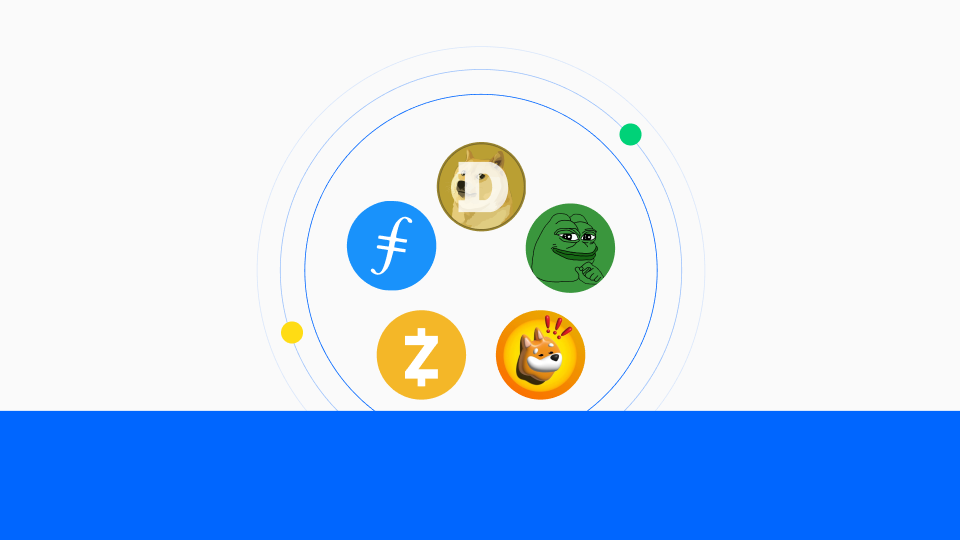
Truly successful meme coins should have long-term cultural relevance, like Doge. Almost none of the new meme coins retain value in the long run.
People can play with them, but they need to be aware that it's their choice. Meme coins are high-risk, with a high probability of failure. While they might make someone rich overnight, the chances of success are low. Everyone needs to take responsibility for their choices. This is my view.
Is there a chance for Bitcoin to reach $200,000?
CZ: Haha, this is a really tough question. The hardest part is the timing. I've always been bullish on Bitcoin, believing that its value will basically have no ceiling over time. So, I think Bitcoin reaching $200,000 is inevitable, it's just a matter of time. But I'm not sure exactly when.
Future Development of Binance Square and Thoughts on Creators
CZ: I can only share some personal thoughts on this; the specific direction depends on the team. I hope Binance Square can become more interactive. As a heavy Twitter user, I feel many social platforms fall short in content filtering and recommendations, especially in accurately推送 interesting content to interested users.
TikTok does this well but sometimes goes overboard, leading to addiction and monotony. Many platforms can improve in content filtering and推送. As for AI-generated content, it might be eye-catching now, but much of it is just a waste of time, lacking substantive content. I hope social media platforms, like Facebook, can also improve in this regard.
Binance Square is different from other platforms because its users are mostly KYC-verified, making transactions and transfers very convenient. In comparison, while Platform X claims to have 700 million users, it's unclear if all have completed KYC. Binance supports KYC in over 180 countries, giving us a natural advantage in this aspect. So, I believe Binance Square has great potential here.
Is community building promising?
CZ: This question is simple. I think community building is definitely useful, especially in the long term. The definition of community building is very broad, but the key is whether what is created has users. Whether it's a product, a meme, or a community, as long as there are users, it has value. If no one pays attention, it has no value.
So, I believe community building will always have value in the long run. This is very straightforward.
What are the short-term and long-term expectations for meme coins?
CZ: My expectations are simple: I hope all sectors can grow hotter, especially the meme coin sector. In the long term, the most important thing is whether these things can be practically used or have followers. So, my view on meme coins is simple: I don't排斥 any sector. In fact, I quite enjoy playing with meme coins personally. However, meme coins aren't really for me; I usually don't participate in short-term speculative plays, like overnight 10x gains. For me, it doesn't hold much meaning, although many people are interested in meme coins.
As builders, we hope to provide better, smoother tools for everyone, especially in meme coin trading, where system requirements are very high. Whether it's real-time data scraping for decentralization or other technical requirements, the challenges for systems and products are significant. So, I hope that within our ecosystem, products and systems can continuously optimize and become more user-friendly. Markets always have cycles, and when our platform and products are better crafted, others will naturally use them more.
Has the meme coin market regressed into a global casino?
CZ: This question is somewhat philosophical and broad, making it hard to answer precisely. Markets have cycles, and it's difficult to judge whether we're at a high or low point currently. I think this year could be a super cycle, or the force of the digital currency four-year cycle might be stronger. It's hard to say for sure.
VC projects do have issues, especially many that perform well at listing but quickly fall into a death spiral. Most VC projects are led by venture capital firms, with early investors often packaging projects meticulously to make them look very good. But VCs have exit pressures; they aren't long-term holders and usually need returns within the fund's cycle. So, when these projects list, there's often strong selling pressure, with retail investors being the main buyers. This phenomenon is common in traditional IPO markets as well, where IPOs used to be for company fundraising but now are more about VCs exiting.
As for meme coins, their situation isn't entirely the same. Some projects have professional teams behind them who buy quickly and drive up prices. So, it's hard to say which method is better; it depends on each project's specific circumstances. My advice is that everyone should learn to assess risks and take responsibility for their decisions. No one is forcing you to buy any particular coin. Risk control is very important, and you must be aware of that.
How to improve customer service efficiency, especially the speed of issue resolution?
CZ: I strongly support improving customer service efficiency. When Binance first started, we set a policy that customers must receive a response within 24 hours, which was a key factor in Binance's success. Later, we aimed to respond within 5 minutes, which is challenging during peak times but we strive to improve. If customer service response times reach two days, it's indeed poor feedback, and I will provide feedback to push for better efficiency.
Advice for female KOLs on dealing with attacks and development?
CZ: Regarding female KOLs, first, understand that the world isn't absolutely fair; there are indeed differences between men and women. About 50% of the workers around me are women, who often have more resilience and endurance but can also be more emotionally affected. As a KOL, especially a female KOL, you need to learn to withstand online criticism and attacks, as there will always be a small portion of people who specifically target women. Accepting these criticisms and ignoring unimportant content is a personal choice.
For KOL career development, I suggest collaborating with promising projects, especially stable large platforms or potential startups. While large platforms like Binance are stable, startup platforms might offer more opportunities, such as equity or tokens.同时, choosing a suitable sector is also important, whether it's meme coins, utility coins, or other areas. The key to career development is selecting an industry with enough growth potential. The crypto circle has such space, while the AI industry doesn't rely much on KOLs.
In summary, choosing the industry first, then selecting quality clients or platforms, is key for KOL development.
What are the future plans for the live streaming section on Binance Square?
CZ: I'm not heavily involved in Binance product planning, but personally, I'd like to see a platform where users can freely communicate with very high-quality interactions. When content creators or streamers can obtain clear revenue sources, and users can enjoy high-quality content, the platform's financial effects will naturally strengthen. I think currently, Binance Square's content leans towards trading and finance, with slightly less entertainment value. It should enhance fun while improving content quality.
Additionally, the platform should allow bloggers to gain obvious benefits, and users should also benefit from supporting this content. Binance Square's natural advantage lies in its trading platform特性, enabling easy implementation of features like tipping, transfers, and social trading. I hope that in the future, live streaming, chatting, trading, payments, and other functions on the platform can fully integrate, becoming a super app.
However, specific planning should be handled by Binance's two CEOs; I will try to involve myself less.
What is the next goal for BNB?
CZ: I won't discuss specific numbers; there's no clear basis. I think BNB's ecosystem is relatively stable and very large. What makes me most proud is the many active developers (builders) and the strong community. Currently, BNB's community development potential is huge, and I personally hold a significant amount of BNB. So, I am very optimistic about BNB's future. Although I don't talk about specific targets, I believe community support will help us do better and better. Thank you for your support!
Views on community live streaming and community coins
CZ: I can't comment on individual coins. As for live streaming room policies, I'm not very familiar with the specific details. Generally, Binance's positioning is to avoid politics and not engage in any inappropriate content (such as pornography). Discussions about cryptocurrency, including technology, coins, market analysis, news, etc., are all acceptable. While political topics might not matter to many retail investors, Binance's official policy has always been to avoid politically related discussions.
Regarding live streaming and community coin content, as a basic principle, we should respect others and avoid doing things that harm ourselves or others. As for specific coins or community coins, how they will develop in the future, I cannot make specific comments.
Will altcoins see another wave of popularity?
CZ: Regarding altcoins, everyone might have different definitions. Overall, in the long run, the crypto space cannot have only Bitcoin as a strong coin. There are thousands of coins now, and the top few hundred by market cap mostly have practical application scenarios or use value. So, altcoin waves will definitely occur in the future.
Currently, Bitcoin is very valuable as the "reserve currency" of digital currencies, but it's not very suitable for daily transactions due to high fees, lower programmability, and lack of features like smart contracts. Therefore, in the short term, many public chains and coins with different functions will continue to emerge. These coins will experience bull and bear markets with market cycles.
As for whether there will be future altcoin waves, there definitely will be, but the specific timing, which coins will stand out, and their scale are hard to predict accurately; no one can foresee these details.
Insights into the risks and opportunities in the crypto industry after U.S. legal events
CZ: This experience has indeed given me new insights into the risks and opportunities in the crypto industry. First, the power of nations is very strong, especially the U.S., so we must be particularly careful with compliance. I've always adhered to the principle of not actively harming others or myself, following basic principles. But sometimes,法律制定 poses challenges. For example, the U.S. Bank Secrecy Act made me deeply realize that even having one U.S. user on the platform could lead to accountability within five years.
When Binance first started, I was in Shanghai with a technical background and knew little about compliance. Therefore, everyone working on projects must ensure they are legal and compliant, respecting the laws of each country. This is the biggest lesson I learned from this experience. As an emerging industry, the crypto sector will always face risks, so we need to learn to protect ourselves and effectively avoid these risks.
Will there be a bull market in the next 3 to 4 months?
CZ: It's very difficult to accurately predict the market movements in the next 3 to 4 months. I don't know anyone who can precisely predict the market changes over the next few months. Perhaps the most influential factor is the U.S. President's policies, which could affect the global economy, but even someone at that level would find it hard to make accurate predictions.
Any advice for newcomers接触合约 (engaging with contracts)?
CZ: For newcomers, I don't recommend touching futures or contracts. This is a high-risk, high-difficulty product. While its returns might be high, it's not suitable for those just entering the industry. If you want to try, I suggest using very small amounts of capital and only increasing it gradually after mastering basic skills. Newcomers generally aren't suited for directly engaging with contracts.