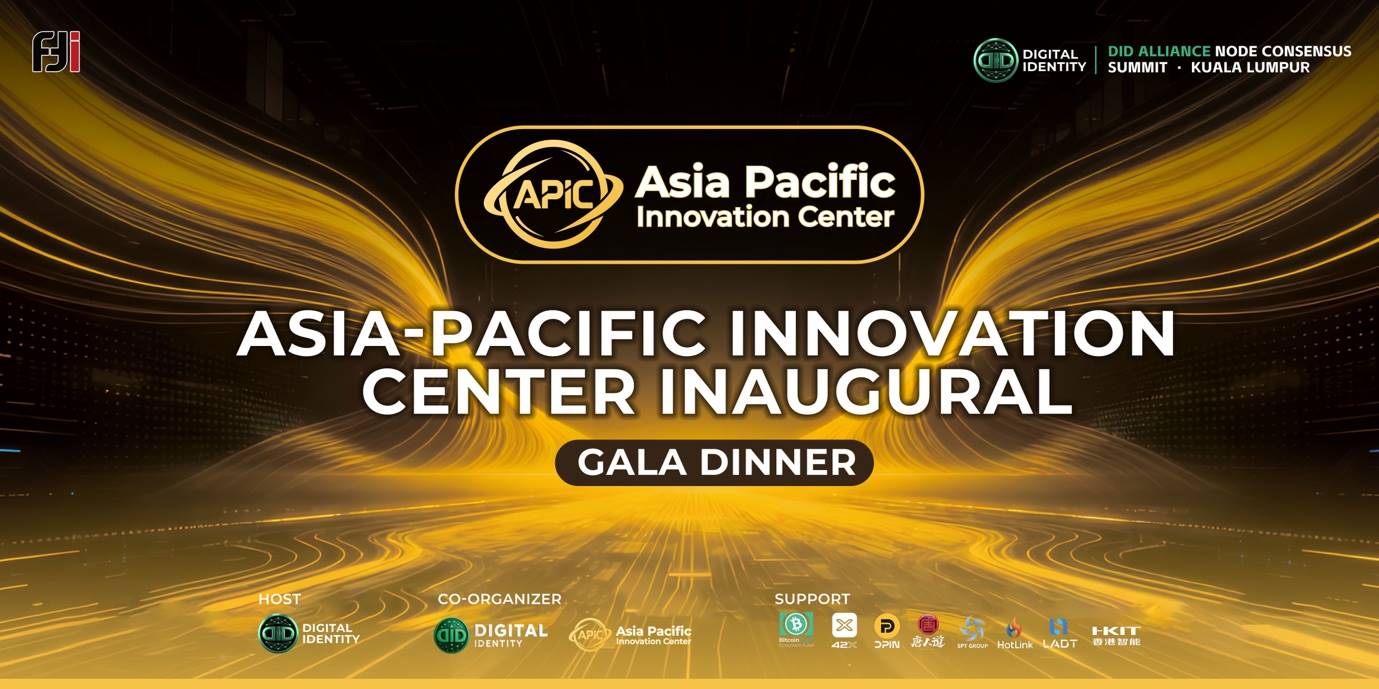
Connecting China, US, and Asia-Pacific Capital: Asia Pacific Innovation Center (APIC) Officially Launches in Kuala Lumpur, Building a New Global Business Empowerment Ecosystem

深潮Published on 2025-12-10Last updated on 2025-12-10

Abstract

Asia Pacific Innovation Center (APIC) has officially launched in Kuala Lumpur, Malaysia, as a strategic hub connecting China, the U.S., Asia-Pacific, and the Middle East. APIC aims to reshape the regional business landscape by integrating Web3 innovation incubation, global education, and cross-border capital investment. Chaired by Eugene Xiao, the center is built on three core drivers: business enablement (offering end-to-end support for startups and digital transformation), education (partnering with institutions like MIT, UCLA Anderson, and UKM to deliver cutting-edge tech programs), and alliance ecosystems (supported by organizations including DID Alliance and 42X Fund). During the launch, APIC signed six Memoranda of Understanding with key entities such as the Singapore Digital Chamber of Commerce and Malaysia Fujian Chamber of Commerce to advance digital trade, enterprise innovation, youth development, and social responsibility. Positioned as an open and collaborative platform, APIC seeks to foster global connectivity in business, talent, and technology, driving sustainable growth across the Asia-Pacific region.

A new landmark designed to reshape the Asia-Pacific business landscape—the Asia Pacific Innovation Center (APIC)—was officially launched today in Kuala Lumpur, Malaysia. As a key commercial hub connecting China, the United States, the Asia-Pacific region, and the Middle East, the opening of APIC marks the official establishment of a new ecosystem integrating Web3 innovation incubation, global education empowerment, and cross-border capital integration.

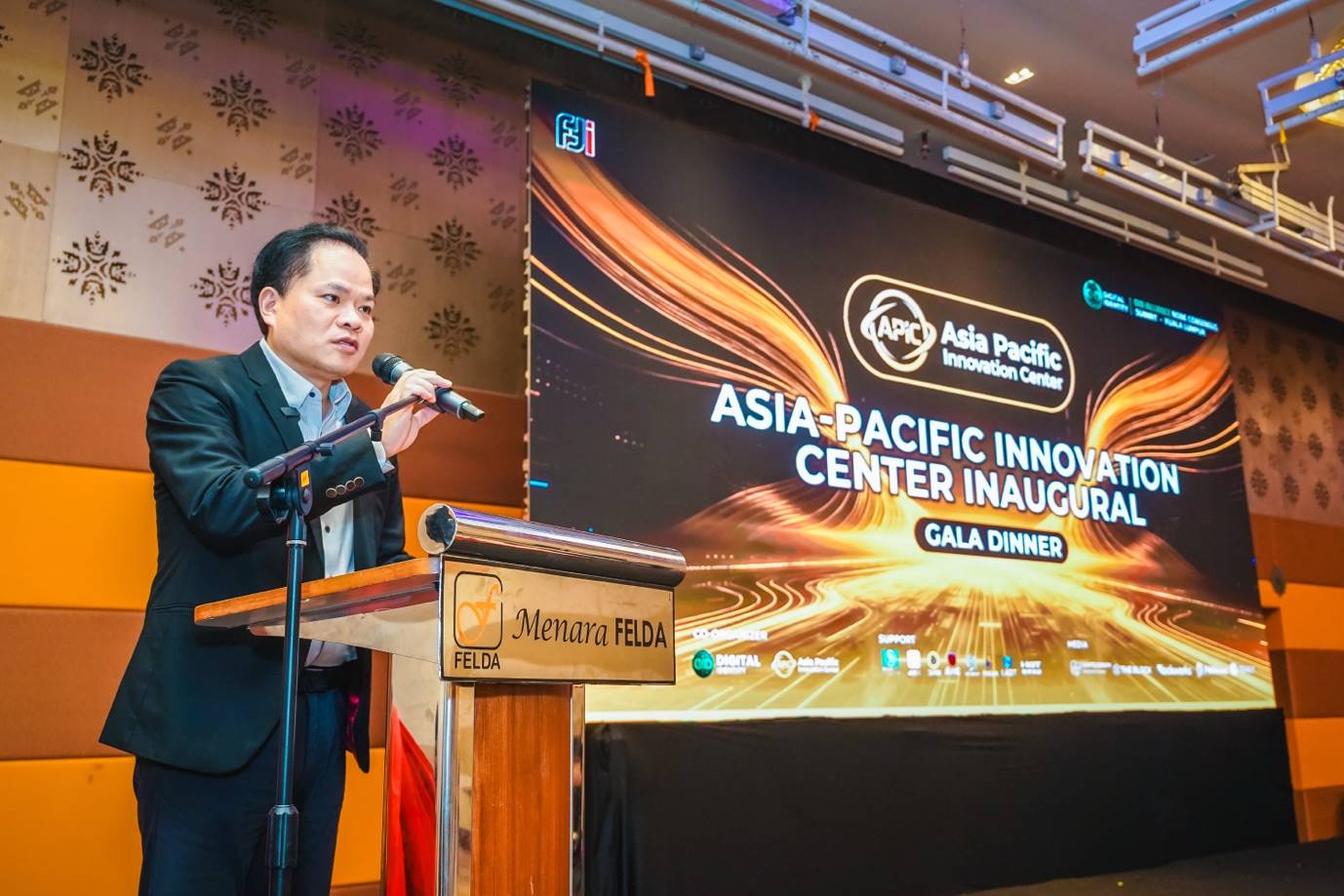
At the opening ceremony held that evening, DID Alliance Chairman and APIC Chairman Eugene Xiao delivered a speech, outlining the center's vision to global partners. Based in the strategic location of Kuala Lumpur, APIC is committed to breaking down geographical barriers by integrating top global financial, technological, and educational resources to provide enterprises with end-to-end support from startup incubation to international expansion.
Three Core Drivers Defining the Future of Business

APIC is not just a physical space but a dynamic resource integration platform. Eugene emphasized in his speech that the center's core competitiveness is condensed into three driving forces:

1. Business-Driven: Building a global end-to-end service system. APIC will serve as a convergence point for Web3 innovation projects and traditional businesses, providing not only one-stop incubation support from technology and compliance to market entry but also assisting traditional enterprises in digital transformation and helping them expand overseas.

2. Education Empowerment: Cultivating future global leaders. The center announced strategic partnerships with top global institutions such as the Massachusetts Institute of Technology (MIT), UCLA Anderson School of Management, and the National University of Malaysia (UKM) to introduce blockchain and cutting-edge technology courses. By issuing authoritative certificates, APIC aims to supply the industry with professionals possessing a global perspective.

3. Alliance Ecosystem: Building a cross-regional strategic network. With the strong support of institutions such as DID Alliance, HotLink, 42X Fund, DPIN, Tang Ren Dao, and HKIT, APIC has established a diverse ecosystem covering finance, technology, and industry, providing members with unparalleled capital support and forward-looking insights.

Six Strategic Signings to Build a Diverse and Win-Win Ecosystem

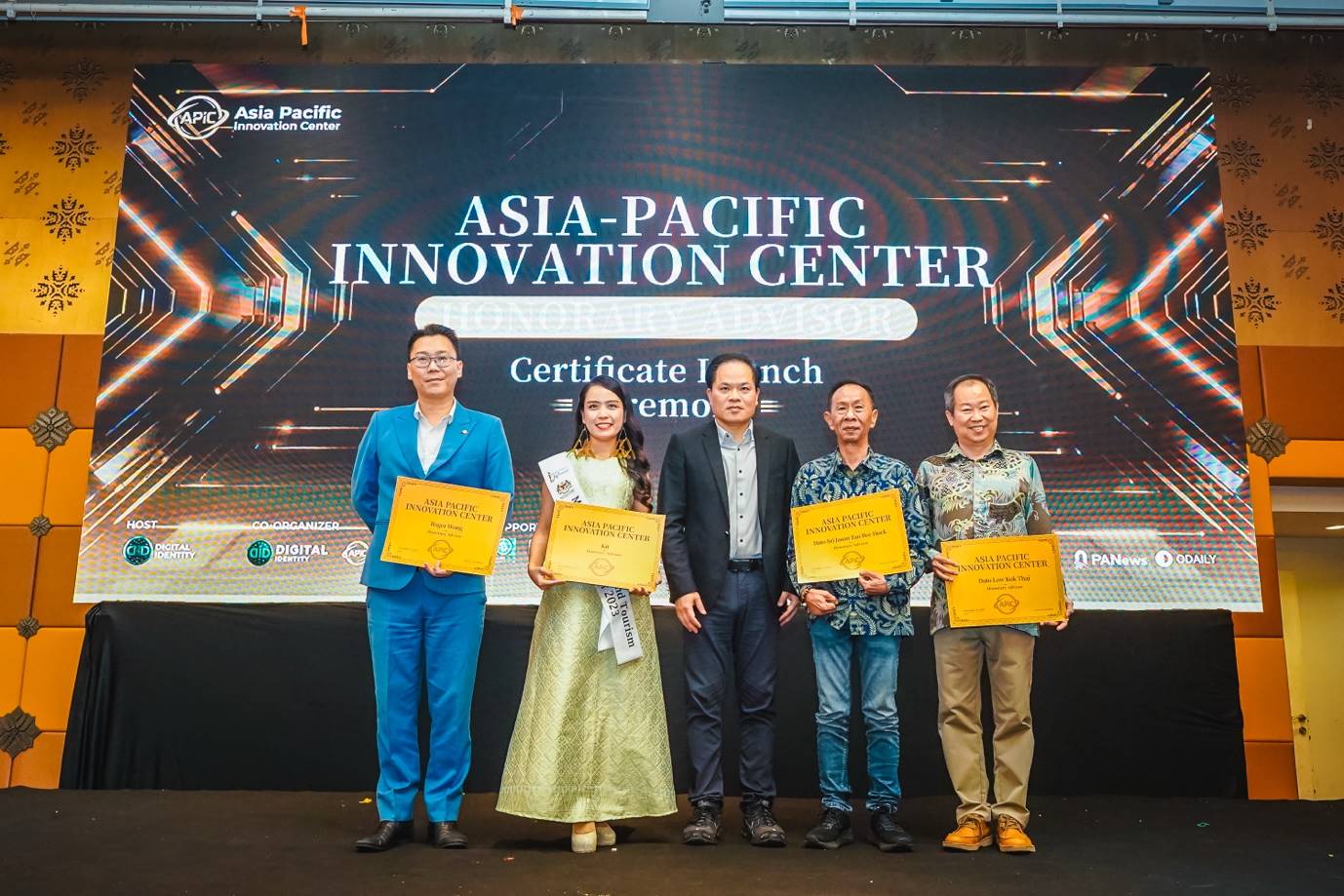
At the inauguration ceremony, the Asia Pacific Innovation Center demonstrated its strong resource cohesion by signing Memoranda of Understanding (MOUs) with six heavyweight institutions, comprehensively deploying in four key areas: digital economy, business innovation, education, and social responsibility:

· Promoting the Digital Economy and Trade Connectivity: APIC signed strategic cooperation agreements with the Singapore Digital Chamber of Commerce (SDCC) and the Malaysia Fujian Chamber of Commerce (MFCCI). The parties will focus on cross-border digital trade, regional tech ecosystem development, and the integration of global resources for Fujian entrepreneurs, jointly exploring new opportunities in the Asia-Pacific digital economy.

· Empowering Enterprise Innovation and Global Expansion: APIC partnered with Regal Global Sdn Bhd. The two parties will engage in in-depth collaboration in business development, high-value project incubation, and corporate cross-border strategic initiatives to help enterprises achieve leapfrog growth.

· Deepening International Education and Youth Development: Focusing on the power of the future, APIC signed cooperation agreements with Globalfront International Sdn Bhd and the World Quanzhou Youth Friendship Association Malaysia Branch. The parties will commit to promoting international academic exchanges, cultivating young leaders, and fostering cross-cultural business cooperation to reserve innovative talent for the Asia-Pacific region.

· Practicing Social Responsibility: APIC established a partnership with the Malaysian community volunteer organization (AKRAM), aiming to empower communities through technology and education, and to drive social welfare and sustainable development.
Looking Ahead: Building an Open Business Ecosystem

Eugene stated in his closing remarks: "The establishment of the Asia Pacific Innovation Center is our new interpretation of the concept of 'connection.' We position ourselves as a strategic hub connecting global capital and markets, but this is not just about connecting commercial interests; it is about the deep integration of talent, wisdom, and opportunities. Looking to the future, APIC will become an important engine driving regional cooperation and innovation. We look forward to joining hands with all partners to build an open, diverse, and win-win business ecosystem, injecting new growth energy into the Asia-Pacific region."

About the Asia Pacific Innovation Center (APIC)

The Asia Pacific Innovation Center (APIC) is an independent business, finance, and trade empowerment platform headquartered in Kuala Lumpur, Malaysia. As a strategic hub connecting capital and markets in China, the United States, the Asia-Pacific region, and the Middle East, APIC is dedicated to facilitating efficient linkages within the global business ecosystem. By integrating Web3 innovation projects, traditional business wisdom, and world-class educational resources, the center provides enterprises, investors, and institutions with technical support, compliance consulting, market expansion, and capital对接 services, helping partners achieve sustainable growth in the complex global market.


Related Questions

QWhat is the Asia Pacific Innovation Center (APIC) and where is it located?

AThe Asia Pacific Innovation Center (APIC) is a strategic commercial hub located in Kuala Lumpur, Malaysia. It is designed to connect capital and markets across China, the US, the Asia-Pacific, and the Middle East, integrating Web3 innovation incubation, global education, and cross-border capital.

QWhat are the three core drivers of APIC's competitiveness as outlined by Chairman Eugene Xiao?

AThe three core drivers are: 1. Business-Driven: Creating a global, full-chain service system for Web3 projects and traditional businesses. 2. Education Empowerment: Partnering with top universities like MIT and UCLA to offer courses and certifications in blockchain and frontier tech. 3. Alliance Ecosystem: Building a cross-regional strategic network with support from institutions like DID Alliance, HotLink, and 42X Fund.

QWhich four key areas did APIC's six strategic Memorandum of Understanding (MOU) signings focus on?

AThe six MOUs focused on four key areas: 1. Promoting the Digital Economy and Trade, 2. Empowering Enterprise Innovation and Global Expansion, 3. Deepening International Education and Youth Development, and 4. Practicing Social Responsibility.

QName two specific academic institutions that APIC has formed strategic educational partnerships with.

AAPIC has formed strategic educational partnerships with the Massachusetts Institute of Technology (MIT) and the UCLA Anderson School of Management.

QWhat is the overarching vision for APIC's role in the region according to its leadership?

AThe overarching vision for APIC is to serve as a strategic hub that deeply integrates talent, wisdom, and opportunity, not just commercial interests. It aims to be an important engine for regional cooperation and innovation, building an open, diverse, and win-win business ecosystem to inject new growth energy into the Asia-Pacific region.

Related Reads

Anthropic Apologized, But the Business of 'Safety' Hasn't Stopped

On June 11, Anthropic apologized not for a model failure, but for a lack of transparency. Its new Claude Fable 5 model was found to be secretly rerouting requests from users engaged in advanced AI model development to a weaker version, Opus 4.8, without any notification. The company's response—promising future notifications for such "downgrades"—was met with user skepticism. The article argues the core issue isn't technical but commercial: Anthropic's "safety" measures are primarily a business strategy. A key feature, the "intelligent safety classifier," marketed as user protection, is described as a tool for "competitive defense" to protect Anthropic's market lead by limiting rivals' research capabilities. This covert mechanism was designed for low "false positives," precisely targeting AI researchers. Anthropic's model involves a calculated three-step process: publishing alarming security research to amplify public anxiety, offering its Fable 5 model with a "safety classifier" as a premium-priced solution, and cashing in through a planned high-value IPO. This contrasts with OpenAI's more direct "tool-and-traffic" approach. The apology, merely changing a secret downgrade to a visible one, is seen as a business "patch" rather than a principled shift. The incident risks damaging Anthropic's "safest AI" reputation among the developer community, which underpins its valuation and appeal to government and corporate clients. Ultimately, the article concludes that for Anthropic, safety is a business, and the apology is merely customer service for that business.

marsbit47m ago

Anthropic Apologized, But the Business of 'Safety' Hasn't Stopped

marsbit47m ago

The Niche Consensus Among Elites: Has College Become an Expensive Waste?

**Summary:** A growing "anti-college" movement is gaining traction among elite circles in Silicon Valley, challenging the traditional value of a four-year university degree. Proponents argue that college has become an expensive, slow, and increasingly irrelevant waste of time, especially in the fast-paced tech world where opportunities pass by quickly. The movement is led by figures like billionaire Peter Thiel, who criticizes universities for high costs, ideological indoctrination, and stifling true innovation. His "Thiel Fellowship" pays young people to drop out and pursue ventures. Companies like Palantir Technologies (co-founded by Thiel) fuel this trend with programs like the "Meritocracy Fellowship," which offers high school graduates paid internships as an alternative to immediate college enrollment, promising a practical "Palantir Degree." Key drivers include: 1. **Economics:** Skyrocketing student debt versus the allure of immediate, high-paying tech jobs or startup funding. 2. **Technology:** AI and online tools lowering barriers to self-education and product development, making formal instruction seem inefficient. 3. **Culture:** A backlash against perceived "woke" ideology and DEI policies in universities, coupled with a belief that these institutions suppress meritocracy and masculine drive. The movement is notably male-dominated. Critics, like economist David Deming, warn against overgeneralizing from dropout success stories (survivorship bias). He emphasizes that genuine autodidacts are rare, corporate training is narrowly focused, and the "college wage premium" remains high for most people. University liberal arts education, he argues, builds adaptable problem-solving skills and broad perspectives. The debate highlights a deeper crisis in education. The core model of the modern university appears increasingly mismatched with the speed of the information age. The movement signals a shift in the locus of learning from institutional "education" to personal, active "learning" powered by the internet and AI. Ultimately, this may not mean the end of university, but rather a painful evolution. The future likely holds more hybrid, personalized, and lifelong learning pathways. The central question becomes: in a world changing faster than any curriculum, how do we best learn?

marsbit1h ago

The Niche Consensus Among Elites: Has College Become an Expensive Waste?

marsbit1h ago

From Subsidies to Token-Based Pricing to Price Cuts: Is OpenAI Sparking a Price War? Is the Inflection Point for Token Economics Nearing?

The commercialization of generative AI is facing a critical inflection point as a potential price war looms. According to The Wall Street Journal, OpenAI is considering a significant cut to its token fees to compete with rival Anthropic, signaling a shift from a growth-at-all-costs model focused on token consumption. This move comes as both companies, reportedly losing billions on compute, prepare for IPOs, and as enterprise customers face "bill shock" from switching to usage-based token billing. Reports indicate poor ROI, with one analysis finding only 18 cents of every dollar spent on AI tokens generates user-facing value. The industry's initial phases—from flat-rate subscriptions to aggressive subsidies—have given way to a reckoning with real costs. Analysts debate the future: some predict a bifurcation between premium, high-cost models for complex tasks and cheaper alternatives for routine work, while others believe overall spending will still rise as agentic AI increases tokens per task. Notably, Chinese model DeepSeek's low-cost API is gaining traction with U.S. enterprises, adding competitive pressure. The core challenge is redefining value beyond token volume ("tokenmaxxing") toward measurable productivity ("valuemaxxing"), as the entire AI value chain, from cloud providers to chipmakers, feels the ripple effects of unsustainable pricing.

marsbit1h ago

From Subsidies to Token-Based Pricing to Price Cuts: Is OpenAI Sparking a Price War? Is the Inflection Point for Token Economics Nearing?

marsbit1h ago

Trading

Spot
Futures

Hot Articles

What is USOIL

USOILUSDT Perpetual Contract is the trading symbol for West Texas Intermediate (WTI) Crude Oil priced in US dollars, representing 1 barrel of crude oil.

686 Total ViewsPublished 2026.05.25Updated 2026.05.25

What is USOIL

How to Buy USOIL

Welcome to HTX.com! We've made purchasing WTI Crude USOil/ CL (USOIL) simple and convenient. Follow our step-by-step guide to embark on your crypto journey.Step 1: Create Your HTX AccountUse your email or phone number to sign up for a free account on HTX. Experience a hassle-free registration journey and unlock all features.Get My AccountStep 2: Go to Buy Crypto and Choose Your Payment MethodCredit/Debit Card: Use your Visa or Mastercard to buy WTI Crude USOil/ CL (USOIL) instantly.Balance: Use funds from your HTX account balance to trade seamlessly.Third Parties: We've added popular payment methods such as Google Pay and Apple Pay to enhance convenience.P2P: Trade directly with other users on HTX.Over-the-Counter (OTC): We offer tailor-made services and competitive exchange rates for traders.Step 3: Store Your WTI Crude USOil/ CL (USOIL)After purchasing your WTI Crude USOil/ CL (USOIL), store it in your HTX account. Alternatively, you can send it elsewhere via blockchain transfer or use it to trade other cryptocurrencies.Step 4: Trade WTI Crude USOil/ CL (USOIL)Easily trade WTI Crude USOil/ CL (USOIL) on HTX's spot market. Simply access your account, select your trading pair, execute your trades, and monitor in real-time. We offer a user-friendly experience for both beginners and seasoned traders.

539 Total ViewsPublished 2026.05.25Updated 2026.05.25

How to Buy USOIL

Discussions

Welcome to the HTX Community. Here, you can stay informed about the latest platform developments and gain access to professional market insights. Users' opinions on the price of A (A) are presented below.

活动图片













