Compound's TVL Drops 90% from Its Peak, Invests $52 Million to Overhaul Team and Seize RWA Market

marsbitPublished on 2026-08-18Last updated on 2026-08-18

Abstract

Compound Finance, a pioneering DeFi lending protocol, is undergoing a major transformation. Its Total Value Locked (TVL) has plummeted 90% from its $12 billion peak in 2021 to $1.2 billion. In response, the protocol has overhauled its management team and approved a record $52 million budget to pivot towards institutional clients and Real-World Assets (RWA). The new leadership, including executives from Near Foundation, Maple Finance, and Coinbase Custody, aims to develop RWA products, partnership integrations, and credit infrastructure that meet the compliance and technical standards of traditional finance. This strategic shift reflects a broader industry trend where DeFi is moving from a retail-centric narrative to servicing financial institutions. Despite a general decline in DeFi TVL due to market downturns and security breaches, analysts project significant growth for tokenized RWAs. Industry observers view Compound's substantial investment and experienced team as a serious commitment to capturing this institutional market, marking a potential turning point for the protocol and the sector.

Author: ahboyashreads

Compiled by: Deep Tide TechFlow

Deep Tide Guide: Compound, the pioneer of DeFi lending, has seen its total value locked (TVL) plummet from a peak of $12 billion to $1.2 billion. Now, it is overhauling its management, approving a $52 million budget, and fully pivoting towards institutional clients and real-world assets. This is not just a rescue attempt by a single protocol; it reflects an industry inflection point where DeFi is shifting from a retail-focused narrative to an institutional one, sending a crucial signal for investors interested in DeFi and RWA.

The protocol pioneered decentralized finance lending, but its locked assets have significantly declined from their peak five years ago. Now, with retail traders losing interest, it is seeking to attract institutions.
Compound Finance has undergone a major management reshuffle and approved a record $52 million budget in a bid to revive growth. This comes after its total value locked (TVL) dropped from a peak of $12 billion in 2021 to $1.2 billion.

The protocol is pivoting towards institutional clients, developing real-world asset products, partnership integrations, and credit infrastructure to meet the compliance and technical standards of traditional finance.

Industry executives say the new management team and substantial budget align with a broader shift in DeFi towards serving financial institutions. The sector's overall asset size had previously declined due to weak markets and security breaches.

Compound Finance was one of the earliest decentralized finance (DeFi) lending protocols. On Monday, the protocol replaced its leadership team and approved a $52 million budget to attract new capital, following a plunge in its platform's locked asset value from a peak of $12 billion in September 2021 to $1.2 billion.

The company stated it will now focus on attracting institutional users and providing real-world assets, partnership integrations, and credit infrastructure for traditional financial markets.

Founded in 2018, Compound pioneered decentralized lending, popularizing the concept of earning yield on crypto deposits "without intermediaries." The company said it has processed approximately $480 billion in deposits and borrowings since its inception. Data from DeFiLlama shows that over the past few years, it has fallen behind competitors like Aave, which holds over $14.8 billion in TVL, more than 11 times that of Compound.

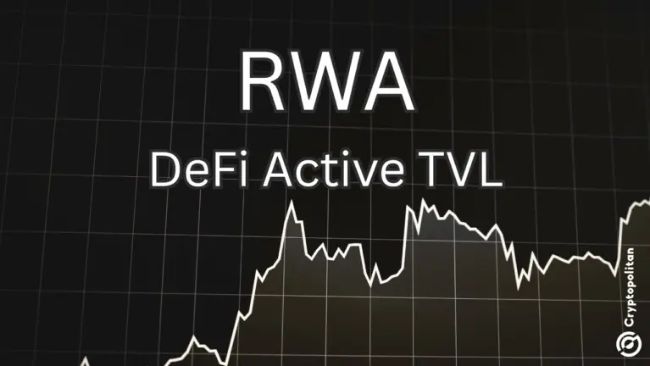
As an industry, DeFi is operating from a weakened starting point. Affected by a broader crypto market downturn, compressed yields, and a series of protocol exploits—including a $292 million hack of KelpDAO in April—the industry's total TVL has fallen by more than a third since the start of the year to around $70 billion. However, Standard Chartered Bank predicts the industry could still reach $2.7 trillion by 2030, with tokenized real-world assets (RWA) being one of the fastest-growing segments.

Gal Stern, Chief Business Development Officer at deBridge, said on Telegram: "It's a good time to push initiatives like this. Real capital will flow to structural work, and it will also bring in smart people from the institutional world who can explain things in language risk committees understand. This combination can restore institutional confidence."

The new team includes Chief Operating Officer Christopher Donovan, who previously held the same role at the Near Foundation. Steven Liu, who grew Maple Finance's assets from $500 million to $5 billion, will join as Chief Product Officer, and former Coinbase Custody CEO Aaron Schnarch will serve as Executive Director. The company said other appointees come from Anchorage Digital, HSBC, Broadridge Financial, and Maple Finance.

Schnarch stated in a release: "DeFi is an incredible innovation, but institutional adoption remains limited. Current products fall far short of traditional finance's thresholds, especially in compliance and technical requirements."

Ran Hammer, Chief Commercial Officer at Orbs, believes this move is a logical response to changes in DeFi's user base.

Hammer said: "Retail participation is just a fraction of what it used to be. On-chain has quietly become a place for settlement, execution, and interaction between financial institutions. The space is completely different since DeFi Summer, essentially becoming a new financial layer for institutions. Therefore, bringing in management that speaks that language is precisely the right direction."

The size of this budget is the largest ever approved by the Compound decentralized autonomous organization (DAO), which may help demonstrate its resolve.

Himanshu Sahay, Co-founder and Chief Technology Officer of crypto lending firm Arch Lending, said: "$52 million plus a team with so much institutional experience is a serious move that should improve execution." However, he also noted that institutions want more than just credentials, "They aren't underwriting the team; they are underwriting the structure."


Trending Cryptos

Related Questions

QWhat is the main strategic shift that Compound Finance is undertaking to revive its growth?

ACompound Finance is undergoing a strategic shift to focus on attracting institutional clients. This involves developing products for real-world assets (RWA), partner integrations, and credit infrastructure that meet the compliance and technical standards of traditional finance.

QBy how much has Compound's Total Value Locked (TVL) fallen from its peak, and how does it compare to its competitor Aave?

ACompound's TVL has fallen by approximately 90%, from a peak of $12 billion to $1.2 billion. In contrast, its competitor Aave currently holds a TVL of $14.8 billion, which is over 11 times larger than Compound's.

QWhat significant budget did the Compound DAO approve to support its new strategy, and what is notable about this approval?

AThe Compound DAO approved a $52 million budget to support its new strategy. This is the largest budget the DAO has ever approved, signifying a serious commitment to its revitalization efforts.

QAccording to industry executives cited in the article, what does the change in Compound's management team reflect about the broader DeFi industry?

AIndustry executives state that the new management team, with its institutional experience, reflects a broader shift in the DeFi industry. The sector is moving from a retail-focused narrative to serving financial institutions, essentially becoming a new financial layer for them.

QWhat are some of the challenges or headwinds facing the overall DeFi sector mentioned in the article?

AThe overall DeFi sector faces challenges including a general crypto market downturn, compressed yields, and a series of protocol exploits (like the $292 million attack on KelpDAO in April). These factors have contributed to a decrease of over one-third in the industry's total TVL since the start of the year, to around $70 billion.

Related Reads

Anthropic, Dario Amodei, and "The Last Private Company"

The article explores the contrasting narratives surrounding Anthropic and its founder, Dario Amodei. He is portrayed as both a cautious "watchman" warning of AI's existential dangers and an ambitious driver racing to build that very future. The core tension lies in Amodei's belief that since powerful AI is inevitable, Anthropic must lead its development to ensure it's done "responsibly." Driven by personal tragedy—his father's death before a cure arrived—Amodei is obsessed with accelerating science. He co-founded Anthropic after leaving OpenAI over governance concerns, aiming to build top models while establishing safety standards. Anthropic developed "Constitutional AI" to align models and proposed risk-based policies, positioning itself as both creator and regulator. Amodei envisions AI bringing immense benefits, like curing diseases within years. However, his roadmap reveals a geopolitical vision: he argues the US and its allies must secure a dominant, "unipolar" advantage in advanced AI to lock in strategic supremacy before sharing benefits. The article critiques this logic. While Amodei eloquently warns of concentrated corporate power and influence, his solutions consistently grant Anthropic more authority. He disqualifies other actors—markets, the public, rival nations—as unfit to steer the future, ultimately positioning Anthropic as the necessary custodian. This culminates in an alleged, unconfirmed internal vision where Anthropic becomes "the world's only private company." The piece concludes that Amodei, sincerely believing he sees the dangers most clearly, has authored his own justification to hold the wheel.

marsbit2m ago

Anthropic, Dario Amodei, and "The Last Private Company"

marsbit2m ago

Trading

Spot

Hot Articles

Discussions

Welcome to the HTX Community. Here, you can stay informed about the latest platform developments and gain access to professional market insights. Users' opinions on the price of S (S) are presented below.

活动图片