Original Author: Shao Jiadian
Introduction
In recent years, "issuing tokens" has become the most sensitive term in the Web3 world. Some have become famous overnight because of it, while others have faced investigations, refunds, or account bans. The issue isn't with "issuing" itself, but with "how to issue." While some projects list on major exchanges, build communities, and establish DAOs, others are deemed illegal securities offerings. The difference lies in whether it's done within a legal framework.
In 2025, utility tokens are no longer a gray area. Regulators are scrutinizing every TGE, every SAFT, and every "airdrop" with a magnifying glass.
This article is for every Web3 project founder: On the journey from Testnet to DAO, the legal structure is the skeleton of your project. Before issuing tokens, learn to build that skeleton.
Note: This article is based on an international legal perspective and does not target or apply to the legal environment of mainland China.
Token "Identity" Isn't Determined by Your Whitepaper
Many teams claim, "Our token is just a utility token with no profit distribution, so it should be fine, right?"
But reality is different. In the eyes of regulators, a token's "identity" depends on market behavior, not how you describe it.
A classic case is Telegram's TON project.
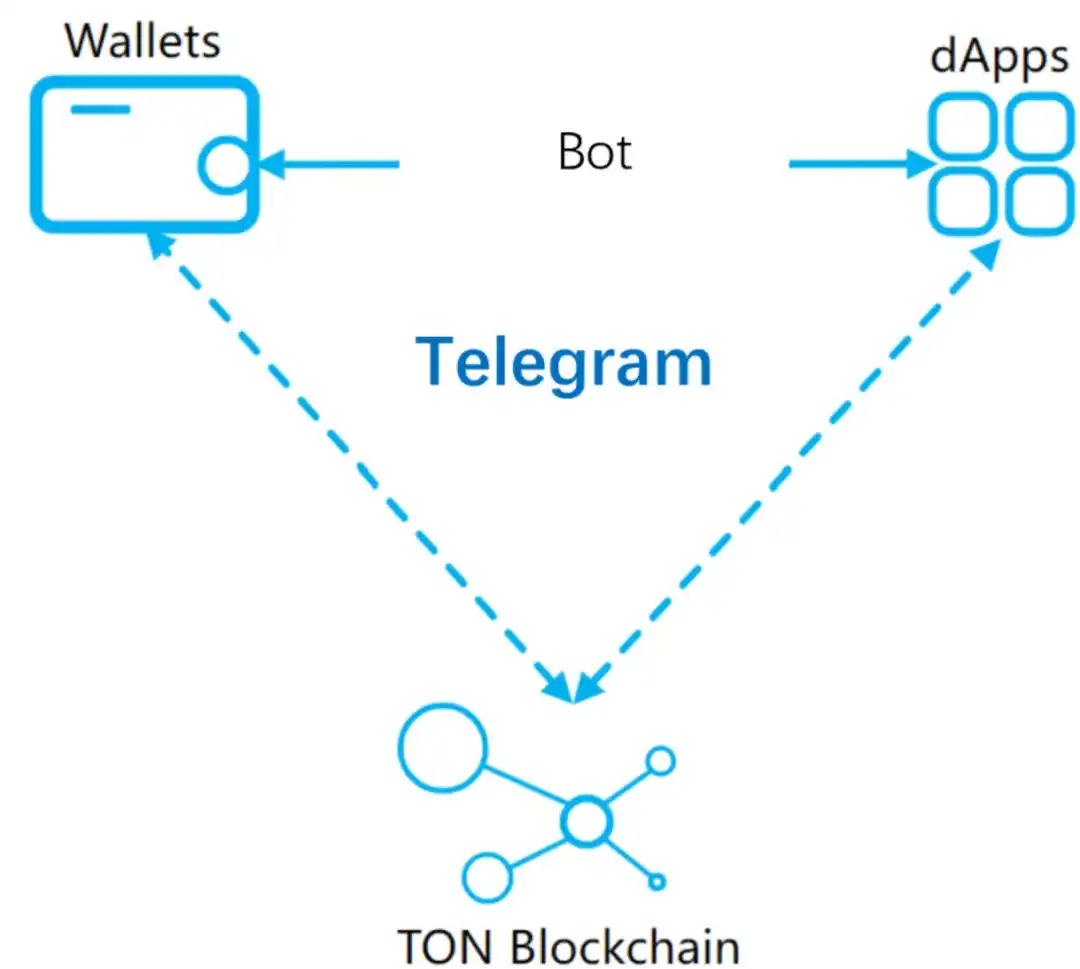
However, the U.S. SEC deemed this financing an unregistered securities offering—because investors' intent was clearly "future appreciation," not "immediate use."
The result: Telegram refunded investors and paid fines, and the TON network was forced to operate independently from Telegram.
Lesson: Regulators focus on "investment expectations," not "technical vision." As long as you use investors' money to build an ecosystem, it carries securities attributes.
So, don't幻想 use the "utility" label to eliminate risks. Token nature evolves dynamically—early stages may constitute investment contracts, and only after mainnet launch can they become genuine usage credentials.
First, Identify Your Project Type
What determines your compliance path is not the token's name or total supply, but the project type.
- Infrastructure (Infra):
Such as Layer1, Layer2, public chains, ZK, storage protocols.
Typically adopt "Fair Launch," with no pre-mining or SAFTs; tokens are generated by node consensus.
Examples include Bitcoin, Celestia, EigenLayer.
Advantages: Naturally decentralized, low regulatory risk; Disadvantages: Difficult to fundraise, long development cycles.
- Application Layer Projects (App Layer):
Such as DeFi, GameFi, SocialFi.
The team pre-mints tokens (TGE) and manages the ecosystem treasury. Typical examples include Uniswap, Axie Infinity, Friend.tech.
Clear business models but high compliance risks: Sales, airdrops, and circulation all require regulatory disclosure and KYC handling.
Conclusion: Infrastructure survives on consensus; application projects rely on structure for survival. Without proper structure, all "Tokenomics" are empty talk.
Testnet Phase: Don't Rush to Issue Tokens; Build the "Legal Skeleton" First
Many teams start seeking investors, signing SAFTs, and pre-mining tokens during the Testnet phase.
But the most common mistake at this stage is:
Taking investors' money while still claiming "this is just a utility token."
The U.S. Filecoin is a cautionary tale. It raised about $200 million via SAFT before mainnet launch. Although it received an SEC exemption, delays in launch and temporary unusability led investors to question its "securities attributes," resulting in massive compliance costs to rectify.
The correct approach:
- Separate two entities:
- DevCo (Development Company) handles technical development and intellectual property;
- Foundation / TokenCo manages ecosystem building and future governance.
- Fundraising method: Use equity + Token Warrant structures instead of direct token sales.
Investors obtain rights to future tokens, not immediate token assets.
This method was first adopted by projects like Solana and Avalanche, allowing early investors to participate in ecosystem building without directly triggering securities sales.
Principle: The legal structure in the early stages is like the genesis block. One logical error, and compliance costs may multiply tenfold.
Mainnet Issuance (TGE): The Moment Most Likely to Attract Regulatory Attention
Once tokens can be traded and have a price, they enter regulatory radar—especially during public distributions like airdrops, LBPs (Liquidity Bootstrapping Pools), or Launchpad events.
- Public Chain Projects:
Such as Celestia, Aptos, Sui, etc., typically generate tokens automatically via validator networks at TGE.
The team doesn't directly participate in sales; the distribution is decentralized, posing the lowest regulatory risk.
- Application Layer Projects:
Such as Arbitrum and Optimism airdrops, or Blur and Friend.tech community distributions,
have drawn attention from regulators in some jurisdictions regarding whether "distribution and voting incentives constitute securities sales."
The safety line at TGE lies in disclosure and usability:
1. Clearly define token use cases and functionality;
2. Disclose token allocation ratios, lock-up periods, and vesting mechanisms;
3. Implement KYC/AML for investors and users;
4. Avoid "expected returns" promotions.
For example, during TGE, Arbitrum Foundation explicitly stated: its airdrop was solely for governance purposes, not representing investment or profit rights; and it gradually reduced foundation control in community governance—key to "de-securitizing" the token.
DAO Phase: Learn to "Let Go" and Truly Decentralize the Project
Many projects end after "issuing tokens," but the real challenge is—how to relinquish control and let tokens become public goods.
Take Uniswap DAO as an example:
- Early development and governance were led by Uniswap Labs;
- Later, Uniswap Foundation managed the treasury and funded ecosystem projects;
- The community votes with UNI to decide protocol upgrades and parameter adjustments.
This structure makes it harder for regulators to identify a "centralized issuer" and boosts community trust.
In contrast, projects that fail to handle the DAO transition well, such as some GameFi or NFT ecosystems, where teams still control most tokens and voting rights, are seen as "pseudo-decentralized" and retain securities risks.
Decentralization isn't about "neglect," but "verifiable exit." A safe DAO architecture balances code, foundation, and community.
What Regulators Look For: Can You Prove "This Is Not a Security"?
Regulators aren't afraid of token issuance; they're concerned when you say "it's not a security" but act like it is.
In 2023, the SEC's lawsuits against Coinbase, Kraken, and Binance.US listed dozens of "utility tokens," asserting that during sales and marketing, they exhibited "investment contract" characteristics. This means that if a project promotes "expected returns" during token sales, even if the token has utility, it may be deemed a security.
Thus, compliance key is dynamic response:
- Testnet → Focus on technology and development compliance;
- TGE → Emphasize use cases and functional attributes;
- DAO → Reduce team control, strengthen governance mechanisms.
Risks vary at each stage; every upgrade requires re-evaluating token positioning. Compliance isn't a stamp but continuous iteration.
Conclusion: Projects That Endure Cycles Rely on "Stability," Not "Speed"
Many projects fail not due to poor technology but flawed structure. While others talk about "gains," "airdrops," and "exchange listings," truly smart founders are already building legal frameworks, writing compliance logic, and planning DAO transitions.
Utility token issuance isn't about bypassing regulation but using law to prove you don't need it. When code takes over rules, law becomes your firewall.