Bringing Web3 to 'Daily Life': Zakk Details the 'Next Phase' of OKX Web3

marsbitPublished on 2026-01-25Last updated on 2026-01-25

Abstract

At the OKX "New Year's Eve Dinner" event on January 24, 2026, Zakk, Head of OKX Wallet, outlined the next phase of OKX Web3’s strategy: making crypto part of everyday life. The vision is built on three core principles: security and self-custody as the foundation, user experience as the bridge, and ecosystem infrastructure as the driving force. Zakk emphasized that a "superior Web3 experience" requires uncompromising security—such as protection against address poisoning scams—coupled with simplicity for users. OKX Wallet supports ~140 blockchains and aggregates ~500 DEXs, using smart routing to improve speed and pricing. Three key products were highlighted: - **Smart Account**: Integrates AA, MPC, and seedless technology with TEE-secured private keys, enabling advanced self-custody trading features like limit orders. - **CeDeFi**: A new wallet blending CEX and DEX functionalities, targeting new users with a TEE-based, non-custodial model that requires no seed phrases. - **OKX Pay**: A payment product designed to merge crypto payments with DeFi, aiming for mass adoption. X Layer, OKX’s blockchain, was positioned as the scalable backbone, targeting 5,000 TPS, 400ms block times, and near-zero fees. Zakk stressed the importance of sustainable ecosystem growth—focusing on project incubation and diverse applications beyond trading, such as RWA and AI. With stablecoins approaching trillion-dollar scale, OKX aims to make Web3 accessible, secure, and practical for billions.

On January 24, 2026, OKX's "New Year's Eve Dinner" event was held as scheduled. For OKX, the "New Year's Eve Dinner" has entered its second year and has gradually become an important annual node connecting the team, the community, and partners. It is not just a "reunion dinner," but more like an end-to-end alignment of industry trends, product roadmaps, and community consensus: OKX aims to clearly explain the things that are "truly going to be implemented" and solidly execute the things that "can be accomplished together."

At the event, Zakk, Head of OKX Wallet, systematically shared the core methodology of OKX Web3 products and the key directions for the next few years: rooted in security and self-custody, bridged by product experience, and driven by ecosystem and infrastructure, ultimately pushing crypto assets from "professional tools" to "daily life."
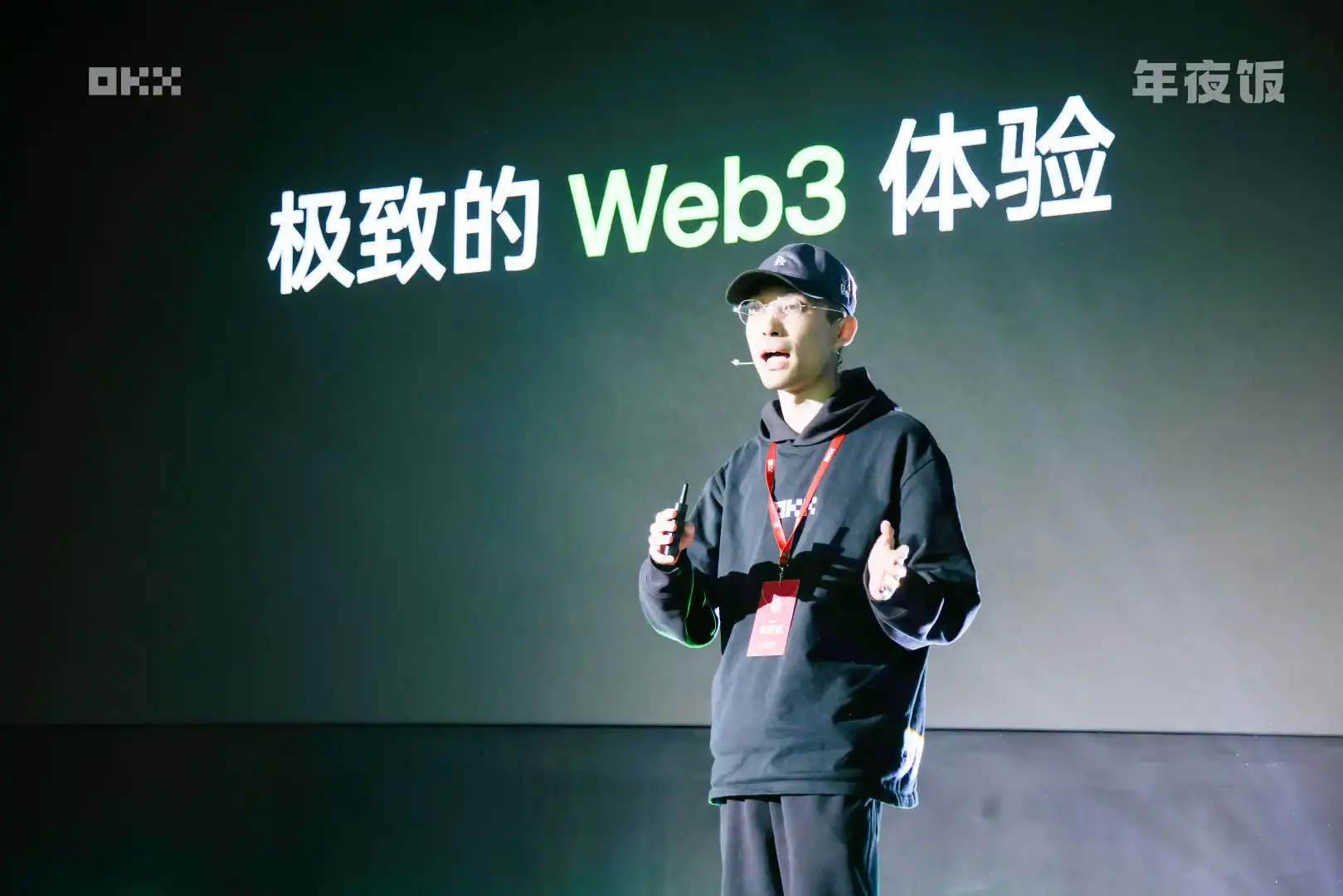
Pushing Web3 Experience to the "Extreme"

In Zakk's explanation, the "extreme Web3 experience" is not a slogan, but a set of verifiable, sustainable, and iterable product standards—firstly, security and self-custody, and secondly, "leaving complexity to the system and simplicity to the user." He emphasized the underlying principle of self-custody: Not your key, Not your asset, which is the long-term criterion for OKX Wallet's design and trade-offs.

More "down-to-earth" was his use of personal experience to explain why security capabilities must be built into the product: for example, the common on-chain "similar address poisoning" scam, which quickly generates highly similar addresses after a large transfer is completed and initiates a small transfer, inducing users to "copy the wrong address" when copying historical records. In response, OKX Wallet has clearly identified "similar address scams" as a key risk in its official security content and provided protective measures such as similar address prompts on the transfer page and address labeling. The core goal is to reduce irreversible losses caused by "misreading a single character."

On the proposition that "self-custody must be more secure and also easier to use," Zakk further broke down OKX Wallet's capabilities into two parts:

First, the "security and self-custody" system, including open source, third-party audits, and continuous security governance; he mentioned that OKX's self-custody system adheres to open source and multi-party audits, which is a core principle. This aligns with the roadmap disclosed on OKX's official "Security Audit Report Collection" page: OKX Wallet's front-end, mobile-end, and SDK components have undergone third-party audits, with relevant reports and audit scopes publicly summarized.

Second, "parsing and aggregation," which involves converting fragmented on-chain information into an integrated experience that users can directly understand and operate. Zakk provided a set of core capability metrics at the event: support for about 140 public chains, aggregation of about 500 DEX protocols, and emphasized that this is not a simple stacking but aims to improve transaction speed and quotation quality through smart routing and global deployment.

Three Product Lines Pointing to One Goal: "Easy to Use" and "Accessible to Everyone"

The information density of this "New Year's Eve Dinner" was reflected in three key products: Smart Account, CeDeFi, and OKX Pay. These three lines are advancing in parallel, pointing to the same goal: making Web3 products "smooth for professionals" while also ensuring "easy for beginners to use."

First, the OKX Wallet Smart Account. Zakk provided a clear generational division of industry wallet evolution: the early stage was based on trust with "end-side direct interaction with the chain, open source and auditable"; followed by a stage of "automatic parsing, more user-friendly experience"; and the third-generation wallet that OKX is exploring aims to integrate "point technologies" such as AA, MPC, and seedless recovery into a practical, integrated product capability, with the core being the introduction of stronger automated trading and strategy capabilities under the premise of self-custody.

The Smart Account emphasizes using TEE to provide an "encrypted vault" level of isolation and protection for private keys and bringing advanced trading capabilities (such as limit orders, take-profit, and stop-loss) that were previously more common on centralized platforms into the self-custody experience. Zakk particularly emphasized the direction of "intent verification": ensuring that user command intent is verified on the client side to avoid tampering when passing through the service layer, with plans to promote open source and drive industry standardization.

The second line is CeDeFi. Zakk's judgment is very "trend-oriented": he believes that 2026 may be the "year of the novice user," as more regional regulatory frameworks are established and stablecoin scale continues to expand, the market will need a more widely accepted product form—it could be Pay, a wallet, or a new entry point connecting CEX and DEX. The first critical product OKX is building is a CeDeFi wallet form for exchange users, allowing them to "embrace the on-chain": based on the TEE architecture, achieving "more decentralized and without needing a mnemonic phrase," and enabling CEX and DEX to work synergistically within the same framework, with plans to expand more on-chain asset types (including Meme, RWA, etc.) in the future.
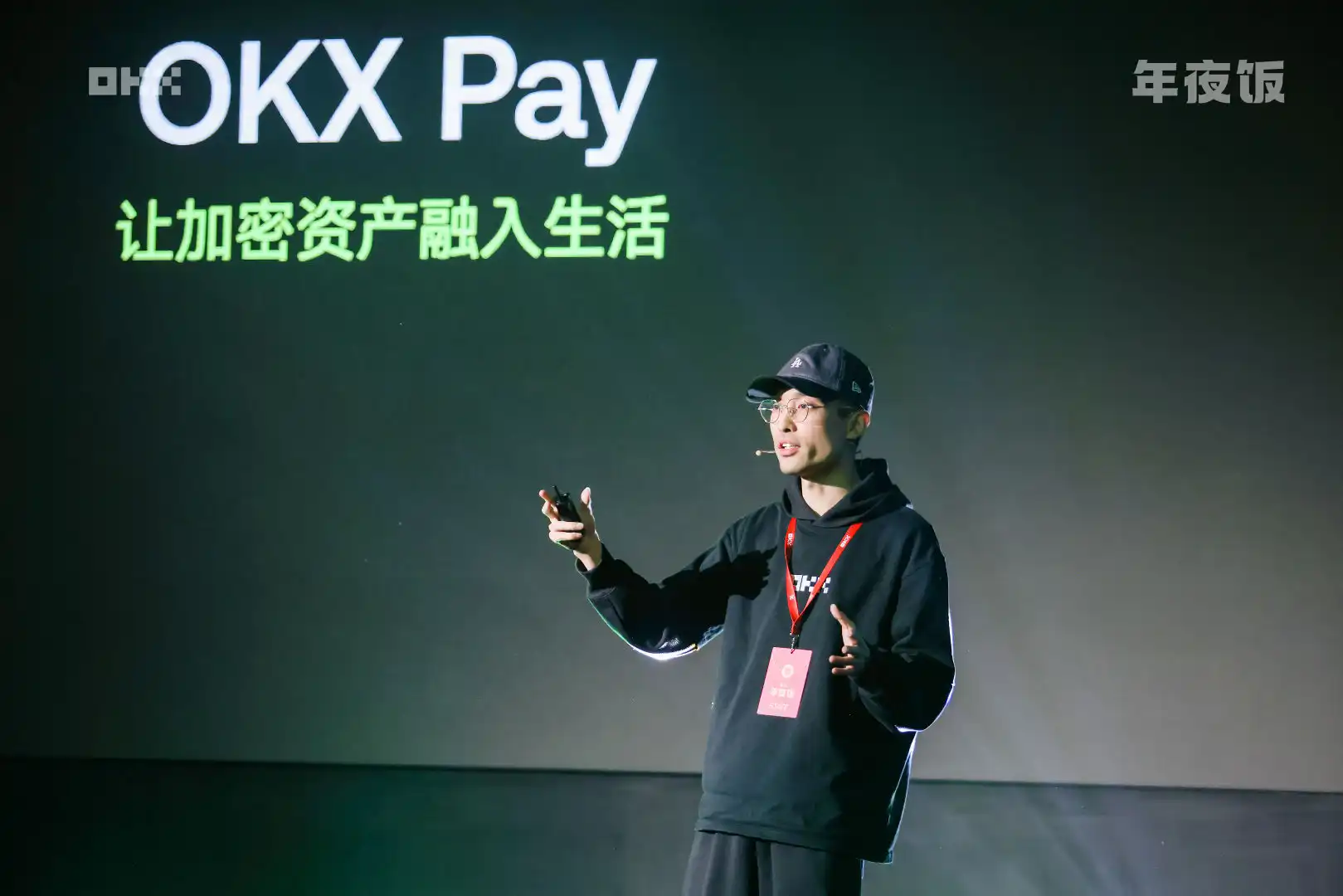
The third line is OKX Pay. Zakk positioned it at the event as a key product to "embrace hundreds of millions of users" and proposed a very everyday product vision: further integrating payment and DeFi, making it possible for crypto products to integrate into daily life—only then can the industry break through the long-term ceiling of its circle.

X Layer and OKX Web3 Ecosystem: The Foundation for Continuous Advancement

If wallets and payments solve the "entry and scenarios," then X Layer solves "speed, cost, and scalability." Zakk was very direct in positioning X Layer at the event: it must first fulfill its "historical responsibility" by solidifying the technical foundation to be responsible to the community in the long term; and summarized the current stage as the "foundation for continuous advancement."

For the three-step process of the "foundation," Zakk provided a more engineering-oriented path at the event: the first step is solid technology and long-term sustainable performance; the second step is to "harden" infrastructure such as Swap and DeFi, making users willing to put real money into on-chain interactions; the third step is to form a combination around payment infrastructure (cards, Pay, etc.), enabling wallets, DApps, payments, and chain resources to work in parallel and synergistically.

In the official description of the upgraded performance, X Layer can achieve 5,000 TPS after the PP upgrade, with a block time of about 400ms and near-zero transaction costs.

What really heated up the audience was "how to make the ecosystem run." During the Q&A session, in response to community questions about the Meme ecosystem and the implementation of support funds, Zakk provided a longer-term answer: rather than relying on constant "hype" to create short-term heat, it is more important to establish a sufficiently large project pool and incubation mechanism, allowing the ecosystem to naturally proliferate like the "AI Season" of the past. Demo Days will also be集中 presented in the future, and fund support will be more transparently implemented after projects and products are judged by the community. At the same time, he clearly welcomed more track-specific applications to grow on X Layer: from Perp DEX and prediction markets to RWA, stablecoins, payments, and AI, the space is far more than just "trading infrastructure."

Moving Towards a New Cycle Where Hundreds of Millions of Users "Use It"

Zakk positioned "stablecoins moving towards a trillion-scale" as an important era anchor at the event. His judgment is not based on a single factor but on the rising infrastructure status of stablecoins in the global financial system. As stablecoins gradually become a universal carrier for cross-border payments, on-chain transactions, and value settlement, more universal, lower-threshold product forms that balance security and recoverability are becoming key to meeting real demand.

For global crypto ecosystem builders and participants, what truly matters is whether technology, products, and the ecosystem can be advanced together: security must be able to combat real on-chain risks, the experience must be able to onboard more new users, and the ecosystem must provide builders with space, a stage, and clear incentive mechanisms to participate. OKX will continue in an open and pragmatic manner, inviting users, developers, and ecosystem partners to together push Web3 from "usable" to "easy to use, commonly used, and accessible to everyone."


Trending Cryptos

Related Questions

QWhat are the three key product lines that OKX Web3 is focusing on to achieve its goal of making Web3 'easy to use' and 'accessible to everyone'?

AThe three key product lines are Smart Account, CeDeFi, and OKX Pay. They aim to provide a seamless experience for both professional users and newcomers by integrating advanced features with user-friendly interfaces.

QAccording to Zakk, what is the core principle behind OKX Wallet's design and long-term approach to self-custody?

AThe core principle is 'Not your key, Not your asset,' emphasizing security and self-custody as the foundation of OKX Wallet's design and decision-making.

QHow does OKX Wallet address the risk of 'similar address poisoning' scams in blockchain transactions?

AOKX Wallet mitigates this risk by providing features such as similar address warnings on the transfer page and address labeling, aiming to prevent irreversible losses caused by copying incorrect addresses.

QWhat role does X Layer play in OKX Web3's strategy, and what are its key technical capabilities after the PP upgrade?

AX Layer serves as the technical foundation for speed, cost-efficiency, and scalability. After the PP upgrade, it achieves 5,000 TPS, approximately 400ms block time, and near-zero transaction costs.

QWhy does Zakk believe that stablecoins reaching trillion-scale is a significant milestone for the industry?

AZakk sees stablecoins as increasingly critical infrastructure in the global financial system, facilitating cross-border payments, on-chain transactions, and value settlement, which drives the need for more accessible and secure product forms.

Related Reads

In Conversation with Ray Dalio: We Are Currently in an AI Bubble, with 1% of My Portfolio in Bitcoin

Ray Dalio, founder of Bridgewater Associates, warns in an interview that the current AI boom shows classic bubble characteristics, which could lead to significant economic downturns as seen in past cycles like 1929 or 2000. He explains that speculative enthusiasm, fueled by debt and overvaluation, often precedes a crash when rising rates or taxation force asset sales, causing widespread losses and recession. Dalio also outlines his "Big Cycle" theory, describing an approximate 80-year pattern where widening wealth gaps, massive government deficits, and shifting geopolitical power (like China's rise) create internal conflict and global instability. He emphasizes that we are in a late-cycle, transitional phase where traditional powers like the US and UK face decline. For personal wealth protection, Dalio advises diversification beyond cash into assets like stocks, bonds, real estate, and particularly gold, which he prefers over Bitcoin. While he holds about 1% of his portfolio in Bitcoin as a non-printable hard asset, he views gold as more secure from technological or governmental threats. Regarding AI's impact, Dalio believes it will disproportionately benefit capital owners, worsening inequality by replacing both physical and cognitive labor. He suggests that human intuition and emotional intelligence, combined with AI, will be key for future workers. On taxation, Dalio argues that wealth taxes are impractical and risk triggering asset sell-offs, reducing productive investment. He points to the UK as a cautionary example of debt, low productivity, and political strife. Geopolitically, Dalio foresees a more regionalized world, with the US showing weakness in prolonged conflicts like with Iran, akin to past imperial declines. The ideal outcome, he suggests, is coexisting powerful blocs (e.g., Americas, China-Asia Pacific) without major war.

marsbit10m ago

In Conversation with Ray Dalio: We Are Currently in an AI Bubble, with 1% of My Portfolio in Bitcoin

marsbit10m ago

Daily 7.2 Trillion KRW: Foreign Capital's Record Net Buying on Friday! Wall Street Says Headwinds for Korean Stock Fund Flows Have Subsided

South Korean stock market sees a dramatic shift in fund flows. On July 31, foreign investors made a record net purchase of approximately KRW 7.2 trillion in KOSPI stocks, marking a fundamental reversal from the persistent large-scale net outflows seen in previous months. This contributed to a significant narrowing of foreign net selling in July to KRW 9.8 trillion, down sharply from KRW 48.4 trillion in June and KRW 44.5 trillion in May. Simultaneously, domestic institutional pressure eased. South Korean pension funds and asset managers turned to a net buying position in July, purchasing KRW 1.0 trillion worth of KOSPI shares, contrasting with net sales in May and June. Market volatility is expected to be dampened by new financial regulations. Effective July 31, the Financial Services Commission tightened access for retail investors to single-stock leveraged ETFs by raising the minimum cash deposit requirement. Trading volumes for these products subsequently dropped to about 50% of their monthly average. Citigroup Research maintains its year-end KOSPI target of 10,000 points. The firm cites several supportive factors: the substantial easing of headwinds from capital outflows, a robust fundamental outlook for the semiconductor sector, historically low market valuations, strong economic fundamentals, and the potential for policy support from financial authorities if needed.

marsbit10m ago

Daily 7.2 Trillion KRW: Foreign Capital's Record Net Buying on Friday! Wall Street Says Headwinds for Korean Stock Fund Flows Have Subsided

marsbit10m ago

Thanks to Dice Rolls, Bitcoin Keys Are Stored Offline, But Not Everyone Will Do It

The article discusses using dice rolls to generate secure Bitcoin wallet seeds, providing entropy independent of potentially flawed hardware random number generators. It explains that each fair dice roll offers about 2.585 bits of entropy, with around 50 rolls needed for a standard 12-word seed phrase and 99+ recommended for higher security. This method gained attention after a vulnerability was revealed in some Coldcard hardware wallets, where a faulty firmware RNG (dating back to 2021) compromised generated keys. The analysis notes that while a dice-generated main seed was safe from this specific flaw, other Coldcard functions (like creating paper wallets, backup keys, or passwords) could still be vulnerable if they used the defective RNG. The piece argues that while dice-based entropy is technically robust, the manual process is error-prone, tedious, and unrealistic for most new users, who might make mistakes in recording or inputting rolls. It concludes that while manual entropy generation should remain an option for advanced users, the long-term goal is to develop reliable, user-friendly hardware and software that securely generates randomness without requiring specialized knowledge. Coldcard users are advised to check their firmware version and replace any secondary secrets (like paper wallet keys) created with vulnerable devices, while also considering multi-signature setups with devices from different manufacturers for added security.

cryptonews.ru5h ago

Thanks to Dice Rolls, Bitcoin Keys Are Stored Offline, But Not Everyone Will Do It

cryptonews.ru5h ago

Trading

Spot

Hot Articles

Discussions

Welcome to the HTX Community. Here, you can stay informed about the latest platform developments and gain access to professional market insights. Users' opinions on the price of S (S) are presented below.

活动图片














