Bitmine's Tom Lee Now Owns 4.8% of Ethereum's Total Supply. Is It Worth Buying ETH Now?

cryptonews.ruPublished on 2026-08-17Last updated on 2026-08-17

Abstract

Tom Lee, founder of Fundstrat Global Advisors and a staunch cryptocurrency bull, now serves as chairman of Bitmine. Under his guidance, Bitmine has evolved from a bitcoin miner into the world's largest corporate holder of Ethereum, owning 5.81 million ETH tokens (4.8% of the total supply) as of August 10, with a target of reaching 5%. Lee, who correctly advised buying Bitcoin in 2017, is similarly bullish on Ethereum. He began recommending ETH in late 2024 at around $3,400; despite its current price near $1,900, he predicts it could reach $22,000 in the coming years and $62,000-$250,000 long-term. His optimism stems from Ethereum's role as the leading smart contract blockchain. He expects growth from increased stablecoin issuance, tokenized real-world assets (RWA), and the need for AI agents to use neutral, secure blockchains like Ethereum for identity verification and machine-to-machine payments. With a market cap of $226 billion, Ethereum remains much smaller than Bitcoin's $1.26 trillion, suggesting significant room for growth once macroeconomic headwinds ease. While past success doesn't guarantee future results, and ETH is down nearly 60% over the past year, the article argues Ethereum has clearer long-term catalysts than many altcoins. These include growing dApp usage, AI integration, and the potential for approved spot ETFs to attract more investors. The conclusion suggests that while not buying as aggressively as Bitmine, accumulating the world's second-largest cryp...

Tom Lee, founder of Fundstrat Global Advisors and a staunch believer in cryptocurrency growth, served as chairman of the board last year. Under his guidance, Bitmine transformed from a bitcoin miner into the world's largest corporate holder of Ethereum.

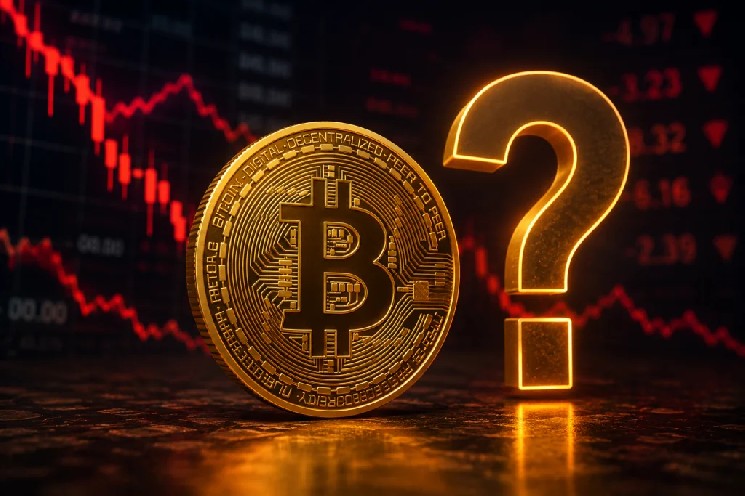
As of August 10, Bitmine held 5.81 million Ether tokens, accounting for 4.8% of its total supply of 120.7 million tokens. The company also reaffirmed its goal to acquire 5% of the total Ether supply. Should investors follow Lee's example and buy more Ether, which has fallen nearly 60% over the past 12 months?

Why is Lee So Bullish on Ether?

Lee's endorsement of Ether carries significant weight, as he was one of the few analysts who advised investors to buy bitcoin in 2017 when its price was around $2,600. Bitcoin has since experienced several sharp fluctuations and is now trading at approximately $63,000.

Lee began recommending investors buy Ether in late 2024 when its price was around $3,400. Ether is now trading at around $1,900, but Lee insists that its price will rise to $22,000 in the next few years and reach $62,000–$250,000 in the long term.

Lee expects this growth to be fueled by several catalysts. As the largest developer-oriented blockchain for smart contracts and decentralized applications, Ethereum will grow as more stablecoins are issued and more tokenized real-world assets (RWAs) are stored on its network. As more artificial intelligence agents take on economic transactions, they will need to use public, neutral, and secure blockchains — such as Ethereum — for identity verification and machine-to-machine payments.

As Ether's value grows, its worth will increase, attracting more attention from institutional investors. With a market capitalization of $226 billion, Ethereum is still minuscule compared to Bitcoin, valued at $1.26 trillion. Currently, concerns about rising interest rates and other macroeconomic challenges are holding back Ether's growth, but it could skyrocket once these factors ease.

Should Investors Follow Lee's Lead?

Lee was right about bitcoin, but it has also experienced massive drawdowns over the past nine years. One shouldn't blindly assume Lee is right about Ether, as past performance never guarantees future returns.

Nevertheless, Ether has much clearer long-term catalysts than many other altcoins and is an attractive long-term investment based on the growing use of decentralized applications, AI agents, and tokenized assets.

Its spot price exchange-traded funds (ETFs), which were initially approved two years ago, could also attract more investors as the cryptocurrency market revives again. Therefore, while I wouldn't buy Ether as aggressively as Bitmine does, I would be willing to accumulate more of the world's second-largest cryptocurrency in this volatile market while the bulls are looking the other way.


Trending Cryptos

Related Questions

QWhat percentage of Ethereum's total supply does Bitmine currently own, and what is their acquisition goal according to the article?

AAccording to the article, Bitmine owns 4.8% of Ethereum's total supply, which equates to 5.81 million tokens. The company has also confirmed its goal of acquiring 5% of the total Ether supply.

QWhat was Tom Lee's price prediction for Ethereum, both in the near and long term?

ATom Lee predicts that Ethereum's price will rise to $22,000 in the coming years and between $62,000 and $250,000 in the long term.

QAccording to the article, what are the key catalysts expected to fuel Ethereum's growth?

AThe key catalysts include the growth of smart contracts and decentralized applications (dApps), the increased issuance of stablecoins, the tokenization of more Real World Assets (RWAs) on its network, and the future need for AI agents to use secure, public blockchains like Ethereum for identity verification and machine-to-machine payments.

QWhy does the article suggest caution about blindly following Tom Lee's optimism regarding Ethereum?

AThe article suggests caution because while Tom Lee was correct about Bitcoin's long-term growth, it also experienced massive volatility and drawdowns over nine years. Past performance does not guarantee future results.

QWhat is the article's concluding recommendation regarding investing in Ethereum?

AThe article concludes that while one should not be as aggressive as Bitmine, Ethereum is an attractive long-term investment based on its growth catalysts. It recommends accumulating more of the world's second-largest cryptocurrency on this volatile market while sentiment is low.

Related Reads

Tencent Reaps a Paper Profit of 50 Billion

A decade ago, China held no share in the global DRAM market. Today, Changxin Technology, after listing on the STAR Market, has become the most valuable A-share company. Its landmark IPO has generated historic returns for investors. Among them, Tencent, which invested approximately 2 billion RMB in 2022 through its entity Beijing Fengyi, now holds an estimated paper gain of around 50 billion RMB based on Changxin's current market valuation of approximately 4 trillion RMB. Alibaba also made significant bets. Its affiliates invested a total of roughly 7.6 billion RMB across two funding rounds in 2022 and 2025. Their combined stake is now worth an estimated 170 billion RMB—a paper profit surpassing Alibaba's entire net profit for fiscal year 2026. The shareholder registry reveals a who's who of Chinese capital. Major state-backed funds like the National Integrated Circuit Industry Investment Fund (Big Fund II) and Anhui provincial capital hold stakes worth hundreds of billions. Early and crucial support came from the Hefei municipal government, which played a foundational role in the company's establishment and growth. Strategic industrial investor GigaDevice, under the same leadership as Changxin, invested about 2.3 billion RMB, now worth roughly 53 billion. Home appliance giant Midea's 1 billion RMB investment has ballooned to an estimated 22 billion RMB. Virtually all major domestic financial institutions, venture capital, and private equity firms participated. However, the story also includes a notable exit: Country Garden's venture arm sold its stake for 2 billion RMB in late 2024 to address its own liquidity crisis. Those shares would be worth approximately 44 billion RMB at the IPO price, highlighting a stark contrast in timing between the downturn of the real estate cycle and the rise of the semiconductor sector.

marsbit7m ago

Tencent Reaps a Paper Profit of 50 Billion

marsbit7m ago

Calterah Races for the STAR Market: 31% Market Share, Over 900 Million in Losses, the Berkeley Mentor-Student Duo's Path to Breakthrough in Millimeter-Wave Radar

Calterah Microelectronics (Calterah), a Shanghai-based automotive chip company specializing in millimeter-wave radar chips, has filed for a listing on China's Sci-Tech Innovation Board (STAR Market), seeking to raise 3.49 billion yuan. Founded in 2014 by Dr. Chen Jiashu, a UC Berkeley PhD, and his professor Ali Niknejad, Calterah pioneered the use of CMOS technology for automotive-grade 77GHz radar chips, challenging the dominance of global giants like Texas Instruments. The company has grown rapidly, with revenue soaring from 206 million yuan in 2023 to 632 million yuan in 2025. It holds a 31.1% share in China's automotive millimeter-wave radar chip market and a 4% global share, with cumulative shipments exceeding 30 million chips for clients including BYD, Geely, NIO, Volvo, and Rivian. Despite strong market traction, Calterah faces significant financial challenges. It has reported cumulative net losses exceeding 900 million yuan over the past three and a half years, driven by massive R&D spending, which accounted for 147.75% of revenue in 2023. Operating cash flow remains negative, and the company relies heavily on external financing. Other risks include high customer and supplier concentration, with its top five distributors accounting for over 99% of revenue and overseas procurement exceeding 50%. Supply chain security is a concern due to reliance on foundries like TSMC. The proceeds from the IPO will fund R&D for high-performance radar chips, ultra-wideband (UWB) chips for applications like digital car keys, and a new technology center. Calterah aims to expand beyond automotive into industrial and consumer sectors. However, it faces intense competition, potential price wars, and the long, costly cycle of automotive-grade certification. Its path forward hinges on achieving profitability, maintaining technological leadership, and building a sustainable business model in a fiercely competitive global market.

marsbit7m ago

Calterah Races for the STAR Market: 31% Market Share, Over 900 Million in Losses, the Berkeley Mentor-Student Duo's Path to Breakthrough in Millimeter-Wave Radar

marsbit7m ago

Burning Through Billions, Market Cap Evaporates 200 Billion: SenseTime Suddenly Turns a Profit

Chinese AI giant SenseTime, once a star in the AI "Four Dragons," recently projected its first-ever profit for H1 2026, sparking a temporary stock surge. However, its current market cap of ~HK$64.6 billion remains over 80% below its peak of ~HK$300 billion in early 2022. The article analyzes SenseTime's dramatic fall from grace. It excelled in the "AI 1.0" era, dominating computer vision for applications like facial recognition and smart cities. However, it was disrupted by the "AI 2.0" generative AI revolution led by ChatGPT, which shifted focus from recognition to creation. Compounded by US sanctions, the death of its founder, a short-seller report, and a decline in its core smart city business, the company faced a perfect storm. Its workforce was cut by nearly 60%. To survive, SenseTime pivoted, actively "killing" its old self. It transitioned from project-based solutions to a generative AI and visual AI dual-engine model. Now, over 70% of its revenue comes from large language models, a more scalable, subscription-like business. Cost-control measures on expensive model training have also contributed to its path to profitability. Yet, significant challenges remain. The current AI race is an ecosystem battle dominated by giants like Microsoft/OpenAI, Google, and Chinese tech firms with integrated clouds, apps, and vast user bases. SenseTime, as an independent AI company, lacks such a super app or traffic gateway. The key question is whether it can build a sustainable moat based solely on model capability and industry deployment in this new competitive landscape.

marsbit11m ago

Burning Through Billions, Market Cap Evaporates 200 Billion: SenseTime Suddenly Turns a Profit

marsbit11m ago

Shanghai Sees a Semiconductor Equipment IPO Emerge, Led by Former Grace Semiconductor Employee

A Shanghai-based semiconductor equipment company, Mifee Technology, has filed for an IPO on the Shanghai Stock Exchange's STAR Market. The company specializes in developing and manufacturing Automatic Material Handling Systems (AMHS), a core automation system in semiconductor wafer fabrication that directly impacts production efficiency and yield. Mifee is one of the few domestic Chinese companies with proprietary AMHS technology, offering both hardware and software systems. While the global AMHS market is dominated by Japanese giants like Daifuku and Murata Machinery, which hold approximately 90% market share, Mifee has captured about 1.6% globally. The company's revenue has grown significantly, reaching 393 million yuan in 2025, and it achieved profitability that year with a net income of 60.45 million yuan, following losses in 2023 and 2024. Its revenue streams include sales of individual AMHS equipment and complete factory AMHS projects, with the latter starting to contribute revenue from 2024. The company faces risks including high customer concentration, with its top five clients accounting for over 90% of revenue in 2025, and significant fluctuations in gross margin, which was 48.97% in 2025 after dropping to 24.67% in 2024. Mifee is controlled by an 80s-born couple, Chairman/CEO Feng Miao and Deputy General Manager Na Ke, who previously worked at Shanghai Grace Semiconductor Manufacturing Co. The company plans to raise approximately 1.191 billion yuan from its IPO to fund production, R&D, overseas expansion, and working capital.

marsbit12m ago

Shanghai Sees a Semiconductor Equipment IPO Emerge, Led by Former Grace Semiconductor Employee

marsbit12m ago

Trading

Spot

Hot Articles

Discussions

Welcome to the HTX Community. Here, you can stay informed about the latest platform developments and gain access to professional market insights. Users' opinions on the price of S (S) are presented below.

活动图片