Bitcoin down 25% in Q1 – Is crypto’s correction turning bearish?

ambcryptoPublished on 2026-03-28Last updated on 2026-03-28

Abstract

Bitcoin fell 25% in Q1 2025, raising concerns that the market correction may be turning bearish. The broader financial landscape has shifted significantly due to the ongoing Iran conflict, with oil surging over 50% and Treasury yields rising 13%. In contrast, crypto’s 0.5% drop appeared muted initially, but underlying pressures are mounting. The Federal Reserve is no longer pricing in cuts until late 2027, with a 51% chance of a hike by March 2027, as rising energy prices could push CPI inflation toward 3.5%. This challenges crypto’s role as an inflation hedge. On-chain data shows panic selling, with 21,700 BTC sold at a loss in 24 hours, and the Crypto Fear & Greed Index is nearing "extreme fear." Weak institutional demand and defensive capital rotation suggest this is more than a routine pullback and could signal the beginning of a broader bear market.

The Iran war has now crossed the one-month mark, and markets seem to be waking up to a reality check.

To understand where things might head next into Q2, it helps to look at where markets currently stand. From a technical standpoint, the past month has been pure volatility, driven by a few key moves: oil prices have surged over 50%, U.S. Treasury yields are up around 13%, while gold has dropped nearly 15%.

Against this backdrop, the crypto market’s 0.5% correction looks relatively muted, suggesting risk assets have held up well so far. But is that resilience now starting to get tested? Looking at the chart below, that scenario doesn’t seem too unlikely.
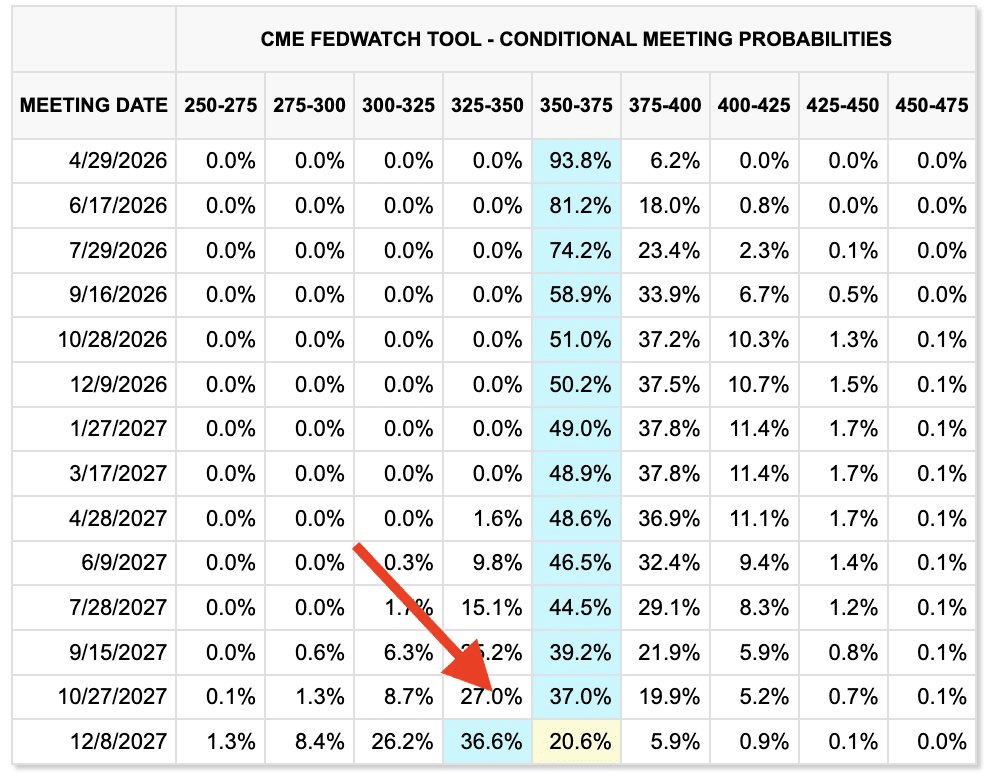
Source: CME FedWatch Tool

According to The Kobeissi Letter, the Federal Reserve is no longer pricing in rate cuts until December 2027. Instead, expectations have shifted toward a 51% probability of a rate hike by March 2027, a sharp sentiment flip in just four weeks, reflecting how quickly macro conditions have changed.

Naturally, the question becomes, what’s driving this shift? As the founder of The Kobeissi Letter noted, with oil and gas prices surging, their models suggest U.S. CPI inflation could climb toward 3.5%, roughly 150 basis points above the Fed’s long-run target.

In that scenario, the argument shifts toward tighter monetary policy, meaning the Fed would lean more toward rate hikes than cuts. For crypto assets, which have so far behaved like an inflation hedge, this raises a key question: Can they continue to hold that narrative as markets rapidly reprice interest rate expectations?

Q2 begins with crypto markets facing a reality check

Compared to Q1’s average 45% ROI, Bitcoin’s [BTC] Q2 return comes in closer to 28%.

Historically, crypto markets have tended to slow down in Q2 following stronger Q1 performance. However, the 2025 cycle broke this pattern, with BTC posting roughly 30% gains in Q2 after a -12% correction in Q1, marking the first such reversal since the 2020 market cycle.

Naturally, the question now becomes: With BTC already correcting nearly 25% in Q1, could markets be setting up for a similar 2025-style move? Notably, this is where shifting interest rate expectations begin to matter. Sentiment clearly shows investors repricing risk, with the Crypto Fear & Greed Index dropping 10 points in under a week and now sitting just three points away from “extreme” fear territory.
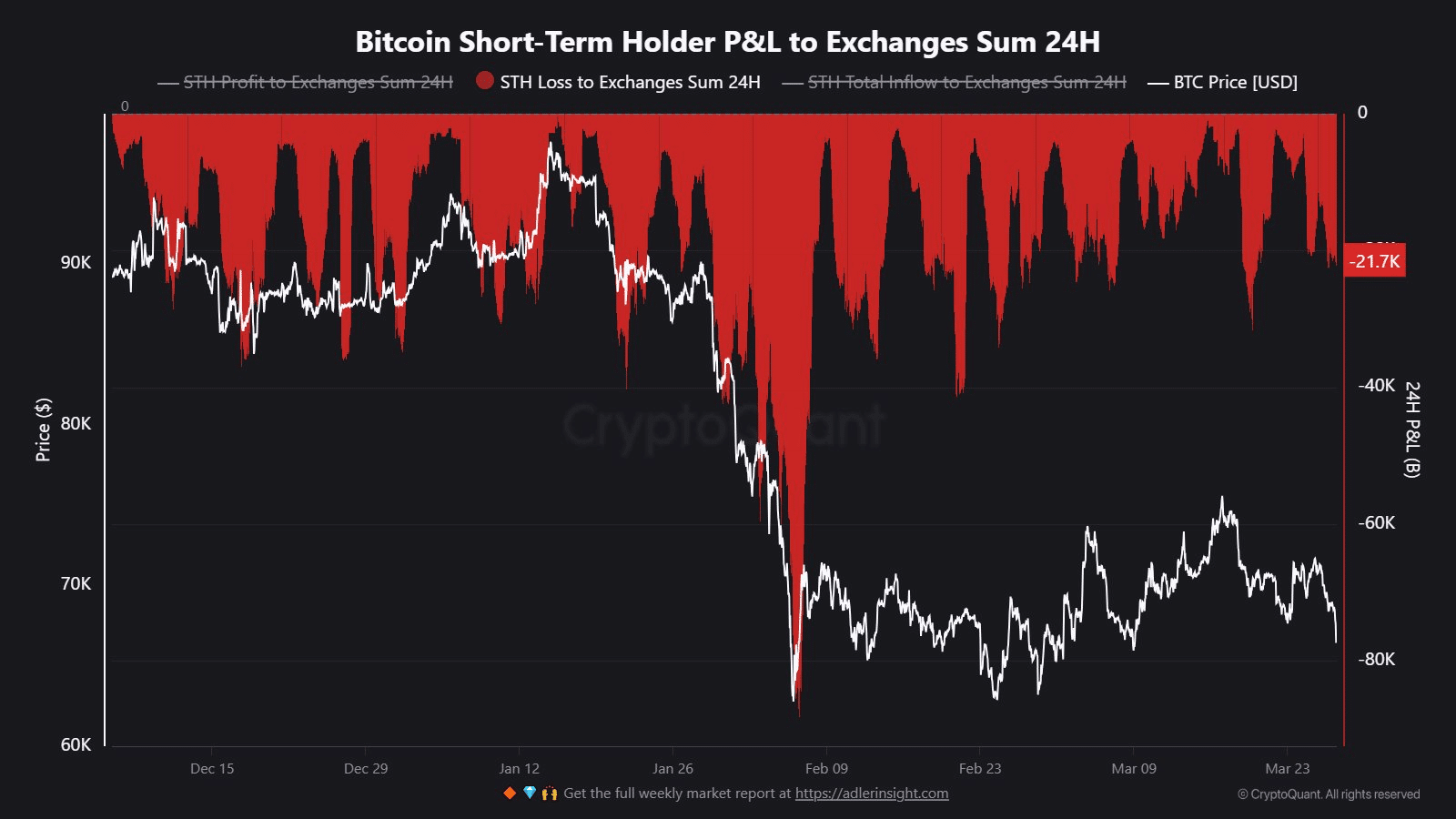
Source: CryptoQuant

Meanwhile, the impact is beginning to show on-chain as well.

As the chart above highlights, around 21,700 BTC from short-term holders flowed onto exchanges over the past 24 hours, all sold at a loss, pointing to increasing panic-driven selling pressure. Paired with a weak institutional bid, this suggests the current crypto correction is more than just a routine pullback.

Instead, capital appears to be rotating defensively, with smart money reducing exposure as fear returns to the market, particularly as the probability of rate hikes continues to rise, a backdrop that has historically weighed on crypto performance.

In that context, a 2025-style Q2 rally looks increasingly unlikely, as the current move feels less like a healthy reset and more like the early transition into a broader bear phase.


Final Summary

  • Inflation is pushing markets to reprice rate hikes, challenging crypto’s inflation-hedge narrative.
  • Panic selling, falling market sentiment, and weak institutional demand suggest the current correction may be shifting from a reset toward an early bear market.


Trending Cryptos

Related Questions

QWhat is the main reason for the shift in Federal Reserve interest rate expectations according to the article?

AThe shift is primarily driven by surging oil and gas prices, which could push U.S. CPI inflation toward 3.5%, roughly 150 basis points above the Fed's long-run target, leading to expectations of tighter monetary policy.

QHow much did Bitcoin correct in Q1, and what historical pattern is being questioned?

ABitcoin corrected nearly 25% in Q1. The historical pattern of crypto markets slowing down in Q2 after a strong Q1 performance is being questioned, as the 2025 cycle broke this pattern with a 30% Q2 gain after a -12% Q1 correction.

QWhat on-chain data suggests increasing selling pressure in the crypto market?

AOn-chain data shows that approximately 21,700 BTC from short-term holders flowed onto exchanges over the past 24 hours and were all sold at a loss, indicating panic-driven selling pressure.

QWhat does the current Crypto Fear & Greed Index level suggest about market sentiment?

AThe Crypto Fear & Greed Index dropped 10 points in under a week and is now just three points away from 'extreme fear' territory, indicating that investor sentiment is rapidly deteriorating and repricing risk.

QWhy does the article suggest the current crypto correction might be more than a routine pullback?

AThe article suggests it's more than a routine pullback due to a combination of panic selling, weak institutional demand, capital rotating defensively, and the rising probability of interest rate hikes—a backdrop that has historically weighed on crypto performance, potentially signaling an early transition into a broader bear phase.

Related Reads

China Business Journal Unveils Cryptocurrency Extortion Scheme

China Business Journal, a state-run Chinese newspaper, has issued a warning about scammers using its name to extort cryptocurrency from companies. According to the publication, fraudsters are sending emails impersonating its journalists. These emails threaten to publish damaging information about a company unless a Bitcoin payment is made. The scammers, using Proton Mail addresses, claim to possess compromising material from a secretive investigation. The newspaper's representatives have clarified that it has no involvement with these messages. They emphasized that the publication does not engage in such practices, never demands payment to suppress stories, and does not negotiate in this manner. The editorial team believes the criminals are exploiting the newspaper's authoritative reputation to pressure companies into making hasty decisions under threat of reputational harm. China Business Journal stated it is collecting evidence of this brand misuse, analyzing the fraudulent emails, and preparing materials for law enforcement. It reserves the right to pursue both civil and criminal liability against the scheme's organizers. Companies are urged to carefully verify any communication purportedly from the newspaper, avoid transferring cryptocurrency to unknown recipients, and report such incidents to the authorities. The newspaper confirmed it will continue its own investigation into the matter.

cryptonews.ru28m ago

China Business Journal Unveils Cryptocurrency Extortion Scheme

cryptonews.ru28m ago

Trading

Spot

Hot Articles

Discussions

Welcome to the HTX Community. Here, you can stay informed about the latest platform developments and gain access to professional market insights. Users' opinions on the price of S (S) are presented below.

活动图片