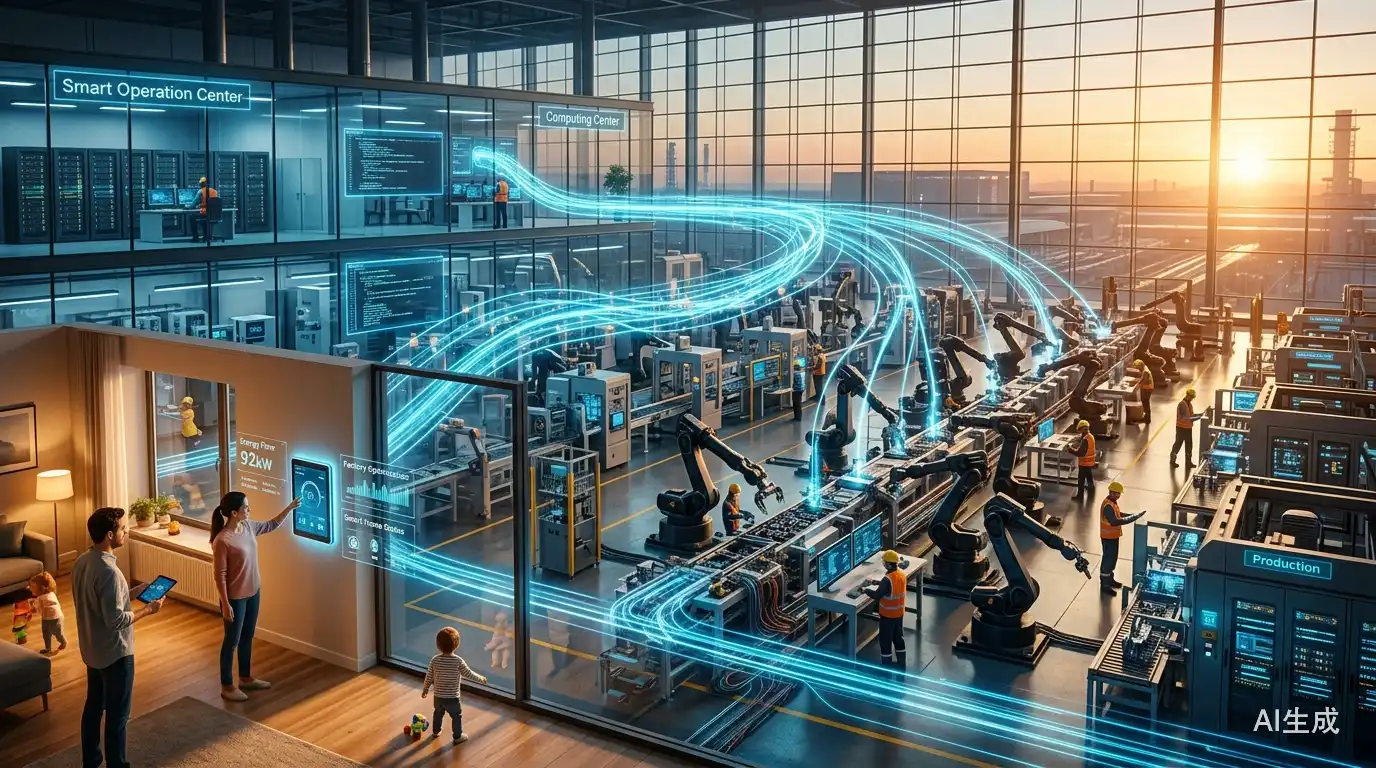
AxBlade × AWS Hong Kong Summit Wraps: Defining Accountability for Physical AI

TheNewsCryptoPublished on 2026-07-08Last updated on 2026-07-08

Abstract

AxBlade, the accountability layer for autonomous AI, co-hosted an exclusive side event, "From Agentic AI to Physical AI: What Gets Funded After the Model Wave?" during AWS Summit Hong Kong Week. The gathering of over 100 founders, researchers, and investors from institutions like AWS, NVIDIA, and Y Combinator examined the infrastructure gap between AI demos and real-world deployment. A key consensus emerged: for Physical AI to move from lab to production, it requires verifiable identity, trusted execution, and cryptographically provable behavior records. Three panels discussed investor shifts toward compliance-native infrastructure, the liability challenges of AI in physical systems, and the technical middleware needed for enterprise adoption. AxBlade showcased its compliance-native Layer 2 blockchain as a solution, combining decentralized identity (DID), Trusted Execution Environments (TEE), and Zero-Knowledge Proof of Behavior (PoB) to create an auditable trust infrastructure for autonomous AI. The event concluded with curated networking and a private dinner, fostering discussions across AI, healthcare, and Web3 sectors.

AxBlade, the accountability layer for autonomous AI, co-hosted the exclusive side event “From Agentic AI to Physical AI: What Gets Funded After the Model Wave?” alongside AWS Summit Hong Kong Week. Held at the Hopewell Hotel, the invitation-only gathering brought together 100+ founders, researchers, enterprise leaders, and investors from AWS, NVIDIA, Y Combinator, Crypto.com, Roche, Pfizer, SNZ, and City University of Hong Kong to examine the critical infrastructure gap between AI demos and real-world deployment.

From Models to Accountability: The Consensus

The event opened with a keynote by Nick Hau, Founder of AxBlade, who argued that the next wave of AI funding will not go to larger language models, but to the infrastructure that makes autonomous AI accountable in physical environments. This was followed by a keynote from Ian Holtz, Head of Agentic AI at AWS, on the enterprise requirements for deploying agentic systems at scale.

Across three panels, a clear consensus emerged: without verifiable identity, trusted execution, and cryptographically provable behavior records, Physical AI cannot move from laboratory to production.

  • Panel 1 — “What Gets Funded After the Model Wave?” explored investor appetite for infrastructure over models, with participants noting that capital is increasingly flowing toward compliance-native stacks and real-world deployment tooling.
  • Panel 2 — “AI Goes Real World” addressed the liability, safety, and governance challenges when AI agents interact with physical systems — from robotic process automation to autonomous diagnostics.
  • Panel 3 — “From Demo to Production” closed the session with a technical deep dive on the missing middleware between proof-of-concept and enterprise adoption, emphasizing auditability as a prerequisite for regulated industries.

Curated Networking and Institutional Access

The afternoon transitioned into a Curated Networking & Demo Matching session, connecting AI infrastructure builders with enterprise operators and institutional investors. The evening concluded with a Private Dinner Reception, fostering closed-door discussions on partnership opportunities across AI, healthcare, Web3, and cloud infrastructure.

Why AxBlade

As the only blockchain-native infrastructure layer represented at the summit, AxBlade demonstrated how its compliance-native Layer 2 public blockchain — combining native AI identity (DID), Trusted Execution Environments (TEE), and Zero-Knowledge Proof of Behavior (PoB) — directly addresses the accountability gap identified by every panel.

“We are not building AI models. We are building the trust infrastructure that makes them auditable,” said Nick Hau. “Events like this prove that the industry is ready to move from ‘what AI can do’ to ‘who is accountable when it does it.'”

Participating Institutions

The event featured representatives from AWS, NVIDIA, Y Combinator, Crypto.com, Roche, Pfizer, SNZ, City University of Hong Kong, BitRock Capital, Gaorong Capital, HongShan, Beyond Ventures, CTFS, Foresee, Savior of Health, ETHHub, PRIMIT, OpenBuild, INFINI, Publish0x, UpHonest Scouts, YOOV, and other leading organizations across AI, healthcare, and Web3.

Media coverage was supported by Techub News, Monster Block, BlockBeats, Foresight News, TinTin, ChainCatcher, TechFlow, CoinMarketCap, FINBOLD, and additional partners.


About AxBlade

AxBlade is the accountability layer for AI Agents, World Models, and Physical AI. As a compliance-native Layer 2 public blockchain, AxBlade enables verifiable identity, trusted execution, and accountable decision-making by combining blockchain, Zero-Knowledge Proofs (ZK), and Trusted Execution Environments (TEE). Every real-world AI action is captured, structured, and anchored on-chain — making autonomous systems auditable, traceable, and compliant at scale.

  • Website: axblade.io
  • X/Twitter: @AxBlade_io
  • Contact: contact@axblade.io

Media Contact:

  • AxBlade Communications
  • Email: contact@axblade.io

Disclaimer: TheNewsCrypto does not endorse any content on this page. The content depicted in this Press Release does not represent any investment advice. TheNewsCrypto recommends our readers to make decisions based on their own research. TheNewsCrypto is not accountable for any damage or loss related to content, products, or services stated in this Press Release.


TagsAxbladePress Release

Trending Cryptos

Related Questions

QWhat is the main argument presented by Nick Hau, Founder of AxBlade, regarding the next wave of AI funding?

ANick Hau argued that the next wave of AI funding will not go to larger language models, but to the infrastructure that makes autonomous AI accountable in physical environments.

QWhat key technological components does AxBlade's infrastructure layer combine to address the accountability gap for Physical AI?

AAxBlade's infrastructure combines native AI identity (DID), Trusted Execution Environments (TEE), and Zero-Knowledge Proof of Behavior (PoB) on a compliance-native Layer 2 public blockchain.

QAccording to the article, what was the clear consensus that emerged across the event's three panels?

AThe consensus was that without verifiable identity, trusted execution, and cryptographically provable behavior records, Physical AI cannot move from laboratory to production.

QWhat was the primary focus of the 'From Demo to Production' panel at the event?

AThe 'From Demo to Production' panel focused on the technical deep dive regarding the missing middleware between proof-of-concept and enterprise adoption, emphasizing auditability as a prerequisite for regulated industries.

QHow does AxBlade define its core purpose or mission, as stated in the article?

AAxBlade defines its core purpose as building the trust infrastructure that makes AI auditable, ensuring accountable decision-making by capturing, structuring, and anchoring every real-world AI action on-chain.

Related Reads

The Signal That Has Appeared Before Every BTC Bottom Since 2014, It Was Close This Time

A valuation model tracking Bitcoin for 12 years has been updated. The new model shows a current score of 24.3, placing BTC in the historical bottom 20% range. However, analysis reveals that since 2014, every Bitcoin bear market bottom has seen this score drop *below 20* for a sustained period before turning around. The current cycle's low so far was 21.5 on July 1st. The author explains the model was rebuilt to address a flaw in its historical baseline, making it a more accurate "map" of current value. Two interpretations are offered: either the historically definitive washout has not yet occurred, or this cycle's bottom will be shallower, as each cycle has been less volatile than the last. The author's action plan involves automated buying triggered at specific score levels. A purchase was made at the cycle's cheapest reading (21.5), with more capital allocated for a potential drop below 20. The strategy emphasizes following a pre-written plan over emotion. Additional market context is provided: Bitcoin reclaimed its 200-week moving average, the BTC/Gold ratio is at a 3-year low showing capital preference for gold, and Bitcoin dominance remains high at 59%, indicating no "altcoin season." The summary concludes by noting the model's inconvenient implication—the market looks less like a bottom now—and poses a question to readers: at what score would they deploy their final capital?

marsbit1h ago

The Signal That Has Appeared Before Every BTC Bottom Since 2014, It Was Close This Time

marsbit1h ago

Qingyan Jingzhun Raises Hundreds of Millions in Funding, with Investment from National Equipment Manufacturing Giants

Qingyan Precision, a provider of physical AI infrastructure, has secured billions of RMB in Series B financing. The investment round, led by prominent automotive industry funds and notably featuring the state-owned China National Machinery Industry Corp. (Sinomach) fund, underscores a strategic shift in the capital market towards companies with proven industrial application capabilities. The company positions itself as the "engineering foundation for physical AI," specializing in enabling embodied intelligence (like humanoid robots) to operate in complex, real-world industrial environments. Its core offering is the "TsingLoop" multi-modal data engineering pipeline, which captures and standardizes data from physical workspaces (like visual, force, and process parameters) to create reusable data assets. This system supports a "Robot-in-the-Loop" testing framework that validates robotic performance in digital twin simulations and real-world conditions before deployment. Qingyan Precision leverages over eight years of experience and a network of 2000+ industrial sensor nodes across sectors like automotive and mining. This provides a crucial "training ground" for embodied AI models. The founding team combines academic pedigree from Tsinghua University and Stanford with deep industry experience from leading robotics firms. The company's vision is to build "one foundation, one brain, and hundreds of vertical applications," using its data platform and industrial world model to deploy scalable physical intelligence across various industrial tasks.

marsbit1h ago

Qingyan Jingzhun Raises Hundreds of Millions in Funding, with Investment from National Equipment Manufacturing Giants

marsbit1h ago

Making a Fortune of $10.32 Million: The World Cup Money-Printing Tactic of a Polymarket Whale

**Earning $10.32 Million: A Polymarket Whale's World Cup Profit Strategy** While teams battle for the World Cup trophy, a hidden whale nicknamed "swisstony" has been quietly making a fortune on the prediction market Polymarket. This account, created around July 2025, boasts total profits of $18.62 million, with $10.33 million earned in the past month alone. With a 52.9% win rate, it has placed over 139,600 predictions, averaging about 380 trades per day—indicating it is likely a high-frequency quantitative bot. The account's signature "trash panda" aptly describes its strategy: sifting through vast market data and tiny price discrepancies to build wealth. Its current holdings are heavily concentrated on the France vs. Spain semi-final, including a roughly $160,000 bet against France. Analysis shows two core tactics driving its success: 1. **High-Volume "Anti-Favorite" Bets:** Placing large wagers (often $400k-$1M) against overvalued favorites like Germany or England, buying "No" shares at favorable prices when market-implied win probability is 46%-64%. It has recorded over 17 individual profits exceeding $1 million using this method. 2. **"Lottery-Ticket" Bets on Extreme Long Shots:** Allocating small amounts (thousands of dollars) to buy shares priced as low as 0.2¢-1.2¢ on outcomes deemed nearly impossible. While most of these bets lose, the occasional win—like those with payouts over 100x—generates significant profits (over $100,000 per hit) that boost overall returns without risking much capital. This dual approach combines consistent, large-scale profit from correcting major market mispricings with opportunistic, high-reward bets on extreme underdogs. The account exemplifies how systematic, high-frequency execution can amplify a small statistical edge into millions in profits on prediction markets.

Foresight News1h ago

Making a Fortune of $10.32 Million: The World Cup Money-Printing Tactic of a Polymarket Whale

Foresight News1h ago

AI Token Factory Explosion: Tsinghua University Team Raises 10 Billion in Half a Year

Qijing Tech, a company founded by a Tsinghua University team of faculty and students, has rapidly become a significant player in China's AI infrastructure sector, focusing on high-quality AI token production. Over the past six months, the startup has secured over 1 billion RMB in funding. The company specializes in AI inference—the efficient use of AI models—positioning itself as a "high-quality AI token factory." Unlike many competitors initially focused on model training, Qijing Tech believes inference is where real economic value is generated. Its core technology optimizes the entire AI token production chain through innovations like "full-system heterogeneous collaboration," aiming for stable, efficient, and low-cost output suitable for enterprise use. This strategy has attracted significant investor interest. Major funding rounds have been led by institutions such as Henan Investment Group Huirong Fund, with continued backing from existing investors. The company's "less models, deeper optimization" approach, concentrating resources on key models and high-value scenarios, is resonating in a market where a few top models dominate token usage. The results are promising. Since early 2026, Qijing Tech reports a threefold increase in token production efficiency per unit of computing power and a thirtyfold increase in total high-quality token output. Monthly revenue for June 2026 alone surpassed its entire 2025 revenue. Operating on a "Token as a Service" (TaaS) model, Qijing Tech engages in both direct token sales and collaborative operations, helping partners like state-owned enterprises transition from traditional computing power leasing to high-value token production. As AI token usage in China surges, Qijing Tech aims to be a key enabler in the emerging AI token economy, building the essential infrastructure for the AI era.

marsbit2h ago

AI Token Factory Explosion: Tsinghua University Team Raises 10 Billion in Half a Year

marsbit2h ago

Trading

Spot

Hot Articles

Discussions

Welcome to the HTX Community. Here, you can stay informed about the latest platform developments and gain access to professional market insights. Users' opinions on the price of AI (AI) are presented below.

活动图片