As analysts turn bullish on Bitcoin, is this the best time to buy BTC’s dip?

ambcryptoPublished on 2026-06-26Last updated on 2026-06-26

Abstract

Analysts are turning bullish on Bitcoin as a recent market flush cleared over $1.8 billion in leveraged positions, primarily longs, resetting excessive leverage. With macro fears easing and potential rotation back into risk assets, some see the current dip as a buying opportunity for Q3. However, significant risks remain. Over 10.8 million BTC are held at a loss, a record high, with 37% of long-term holders underwater. Weak spot demand, increased Fed rate hike expectations, and the threat of long-term holder capitulation suggest the market may be underestimating downside potential. The recovery thesis depends on the return of strong spot demand.

Macro FUD is easing, markets are deleveraging, and Fed policy is shifting.

According to CoinGlass data, roughly $1.8 billion in liquidations have hit the broader crypto market over the past 72 hours, with more than 75% of the total wipeout coming from long positions, in line with Bitcoin’s 5%+ weekly drawdown.

The flush wasn’t entirely unexpected. BTC had been consolidating around $60k for nearly two weeks, allowing leveraged long exposure to accumulate.

Once the price lost that range, the move naturally triggered long liquidations, clearing traders positioned for a bullish continuation. Against this backdrop, Ansem’s Q3 BTC thesis starts to make more sense.


Source: X

According to the analyst, the flush has done what it needed to do, resetting excessive leverage and shaking out weak hands. With positioning now much cleaner, Bitcoin could be in a better spot to reclaim momentum, provided spot demand steps back in.

On the macro side, the analyst argues the backdrop is still supportive. After a four-week run in the U.S. dollar, the rotation into gold has started to fade, while inflows into AI have left many sitting on large unrealized gains.

With macro FUD easing, the market is increasingly leaning toward a rotation back into risk assets.

Against this backdrop, Ansem has flipped his Bitcoin [BTC] stance from bearish to bullish, viewing the start of Q3 as a clean long setup. However, unrealized losses among BTC long-term holders continue to build, raising the question whether the market is underestimating downside risk.

Bitcoin setup: Macro tailwinds vs. LTH stress signals

Is it still too early to call Bitcoin’s current dip a buying opportunity?

Even as macro FUD around the Strait of Hormuz cool, Fed rate hike expectations have jumped to over 27%, up from 11% last month, heading into the upcoming FOMC meeting on the 29th of July. This shift adds another layer of uncertainty to BTC’s setup, even as liquidity conditions show early signs of easing.

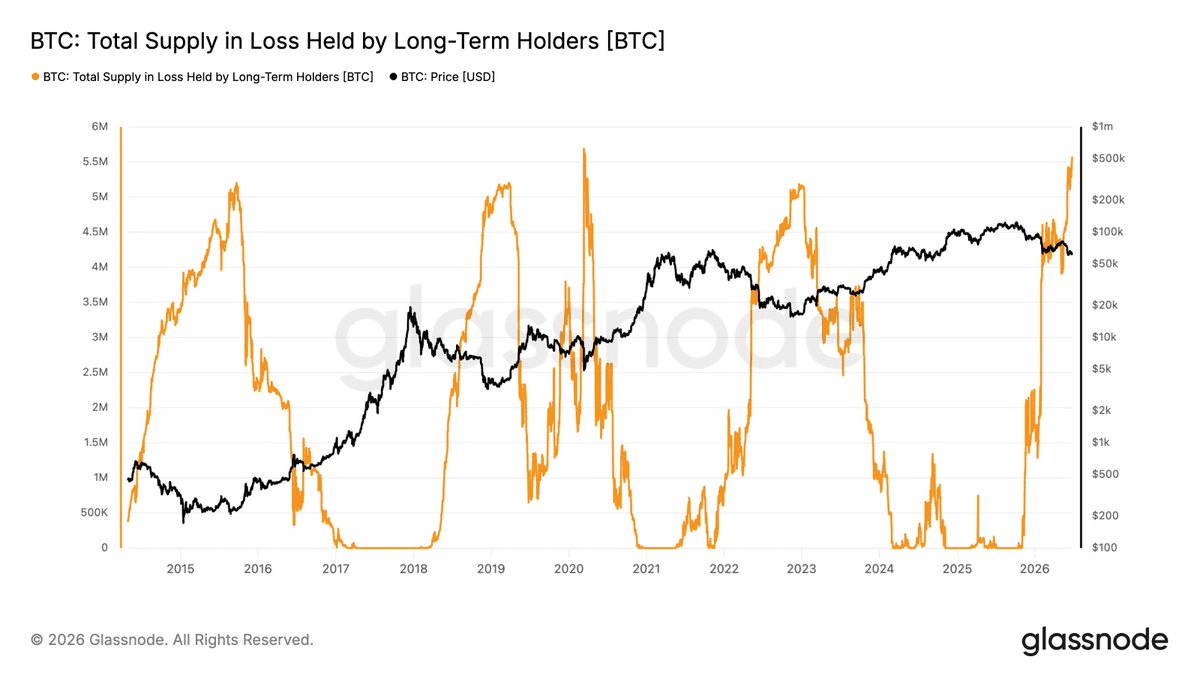
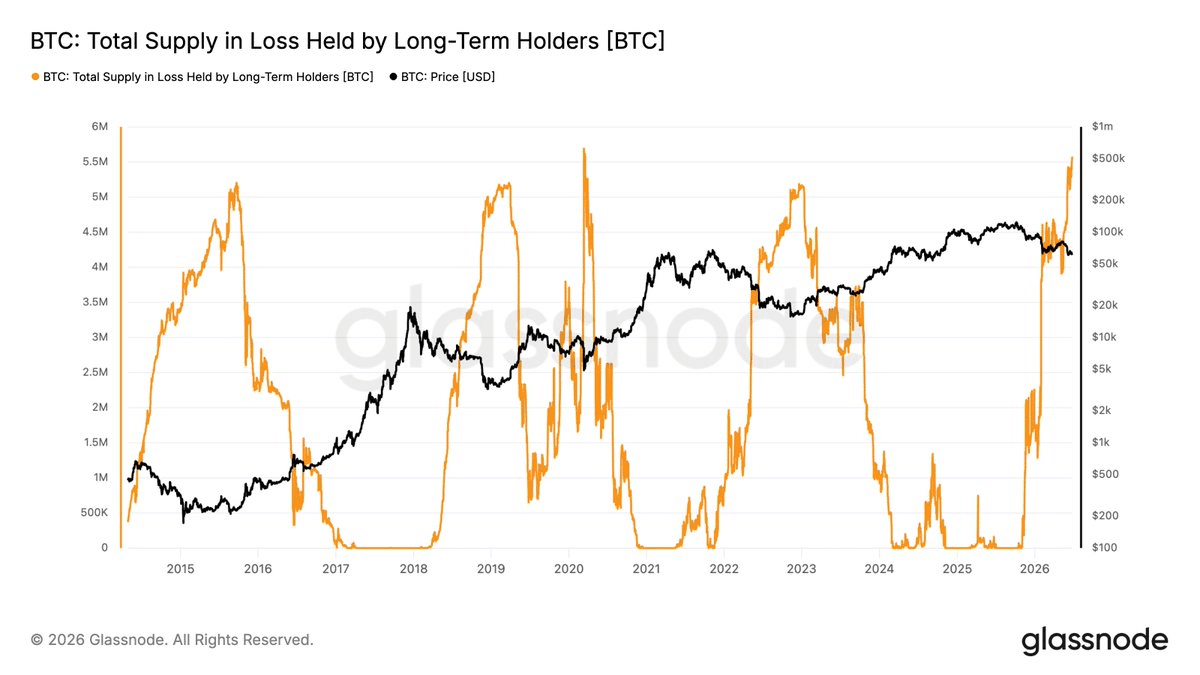
In this context, the growing number of holders sitting in unrealized losses starts to matter more. As the chart below shows, nearly 11 million BTC now sit in loss, marking the highest level on record.

Bitcoin’s drop to $59.1k has pushed 10.83 million BTC underwater, according to Glassnode data. LTHs now hold 14.8 million BTC, roughly 75% of circulating supply, with about 37% currently in the red.
Source: Glassnode

Against this backdrop, Ansem’s call may be a bit early.

With no strong catalysts coming through, Bitcoin’s spot demand still looks weak. In that context, framing the recent pullback as just a short-term deleveraging flush might be premature. Meanwhile, macro FUD continues to weigh on sentiment among long-term holders.

That naturally increases the risk of LTH capitulation. Overall, this makes a strong Q3 Bitcoin setup less convincing for now, with the market potentially underpricing downside risk.


Final Summary

  • Leverage is resetting and macro conditions are improving, so Bitcoin could recover if spot demand returns.
  • Weak demand, Fed uncertainty, and rising LTH losses increase risk of further downside.

Trending Cryptos

Related Questions

QAccording to the analyst Ansem, why is the recent liquidation flush in Bitcoin potentially positive?

AAnsem believes the liquidation flush has done what it needed to do by resetting excessive leverage and shaking out weak hands. With positioning now cleaner, Bitcoin could be in a better spot to reclaim momentum, provided spot demand returns.

QWhat are the two main conflicting factors presented regarding Bitcoin's current setup?

AThe two main conflicting factors are macro tailwinds (easing macro FUD, potential rotation back into risk assets) versus stress signals from Long-Term Holders (LTHs), such as the record number of Bitcoin addresses sitting at an unrealized loss.

QHow has Fed policy uncertainty changed according to the article, and what is its potential impact on Bitcoin?

AMarket expectations for a Fed rate hike have jumped to over 27%, up from 11% last month. This shift adds a layer of uncertainty to Bitcoin's setup, potentially weighing on sentiment and increasing downside risk.

QWhat does the data from Glassnode indicate about the state of Bitcoin's long-term holders (LTHs)?

AGlassnode data indicates that Bitcoin's drop has pushed roughly 10.83 million BTC underwater, a record high. LTHs hold about 14.8 million BTC, with approximately 37% of their holdings currently at an unrealized loss.

QWhat is the core debate posed by the article's title and conclusion regarding buying Bitcoin's current dip?

AThe core debate is whether improving macro conditions and a reset in leverage make this dip a good buying opportunity for a recovery, or if weak spot demand, Fed uncertainty, and mounting LTH losses increase the risk of further price decline, making it premature to buy.

Related Reads

Bitcoin and U.S. Stocks Diverge: BlackRock Sees This as an Important Signal for Investors

Bitcoin and U.S. stocks are increasingly moving out of sync, and BlackRock sees this as a positive signal for investors. According to Robert Mitchnick, BlackRock's head of digital assets, Bitcoin is showing more independent price action rather than simply tracking risky assets like stocks. He cited July as an example, when the AI sector corrected but Bitcoin remained relatively resilient. This decoupling suggests Bitcoin could serve as a portfolio diversification tool, potentially hedging against risks elsewhere in the market. BlackRock acknowledges Bitcoin's high volatility—it has fallen around 30% since early 2026—but notes that ETF investors typically have a long-term, buy-and-hold approach. Key factors influencing Bitcoin's price include investor risk appetite, pressure on equity markets, tech sector corrections, and institutional interest. The asset's technological foundation on blockchain also differentiates it from traditional finance. For portfolio construction, this independent behavior can be more valuable than short-term returns, as it may offset declines in other holdings. Investors also monitor crypto-related stocks like Coinbase and mining companies, and consider tax implications for crypto transactions. While long-term price forecasts for Bitcoin vary widely, BlackRock emphasizes observing its correlation with assets like Ethereum and the S&P 500. The firm recommends tracking official company statements, ETF data, SEC filings, and financial media for ongoing analysis.

cryptonews.ru6m ago

Bitcoin and U.S. Stocks Diverge: BlackRock Sees This as an Important Signal for Investors

cryptonews.ru6m ago

Trading

Spot

Hot Articles

Discussions

Welcome to the HTX Community. Here, you can stay informed about the latest platform developments and gain access to professional market insights. Users' opinions on the price of S (S) are presented below.

活动图片