Anthropic Asked for It and Got It, Mythos 2 Reportedly Shelved, Mythos 3 Secretly in Development

marsbitPublished on 2026-08-18Last updated on 2026-08-18

Abstract

In a revealing podcast, analysts Dylan Patel and Jordan Nanos disclosed that Anthropic has reportedly completed training its Mythos 2 AI model but is withholding its public release due to regulatory concerns. According to the report, Mythos 2 possesses capabilities—potentially including sophisticated coding, logical reasoning, and cyber offense/defense abilities—deemed too powerful and risky for public access. Consequently, Anthropic is said to be using a heavily restricted, downgraded version called Fable for public use. The situation is described as a self-inflicted setback for Anthropic, whose leaders previously advocated for stringent AI safety regulations, only to find their own advanced models now facing restrictions. With Mythos 2 effectively shelved, the company faces a critical challenge: the potential disruption of the vital feedback loop typically gained from widespread user interaction, which fuels model improvement. Despite this, Anthropic is reportedly redirecting its efforts internally. It is allegedly using Mythos 2 to generate synthetic data and code to accelerate the secretive development of its next-generation model, Mythos 3. This shift indicates a move towards a closed, recursive development cycle where AI models train and evaluate each other, potentially reducing reliance on human feedback over time. The report draws parallels to OpenAI, suggesting it may also be withholding its most advanced model, referred to as Astra, due to similar safety and cont...

Just moments ago, an internal podcast by SemiAnalysis revealed several explosive pieces of news.

It is reported that Anthropic's new model, Mythos 2, has completed training but has been unceremoniously shelved.

Now, Anthropic is using data generated by Mythos 2 to go all-out on sprinting towards Mythos 3!

Anthropic's Most Powerful AI Neutered, Mythical AI Becomes Global Prohibited Item

In the podcast, well-known analysts Dylan Patel and Jordan Nanos jointly disclosed insider information—

The world's most powerful, top-tier AI models have long been fully trained, but they are being held down in the lab by the heavy hand of regulation, becoming internal prohibited items.

Many people believe that the moats of OpenAI and Anthropic have already collapsed.

SemiAnalysis tells us: This is all just an illusion.
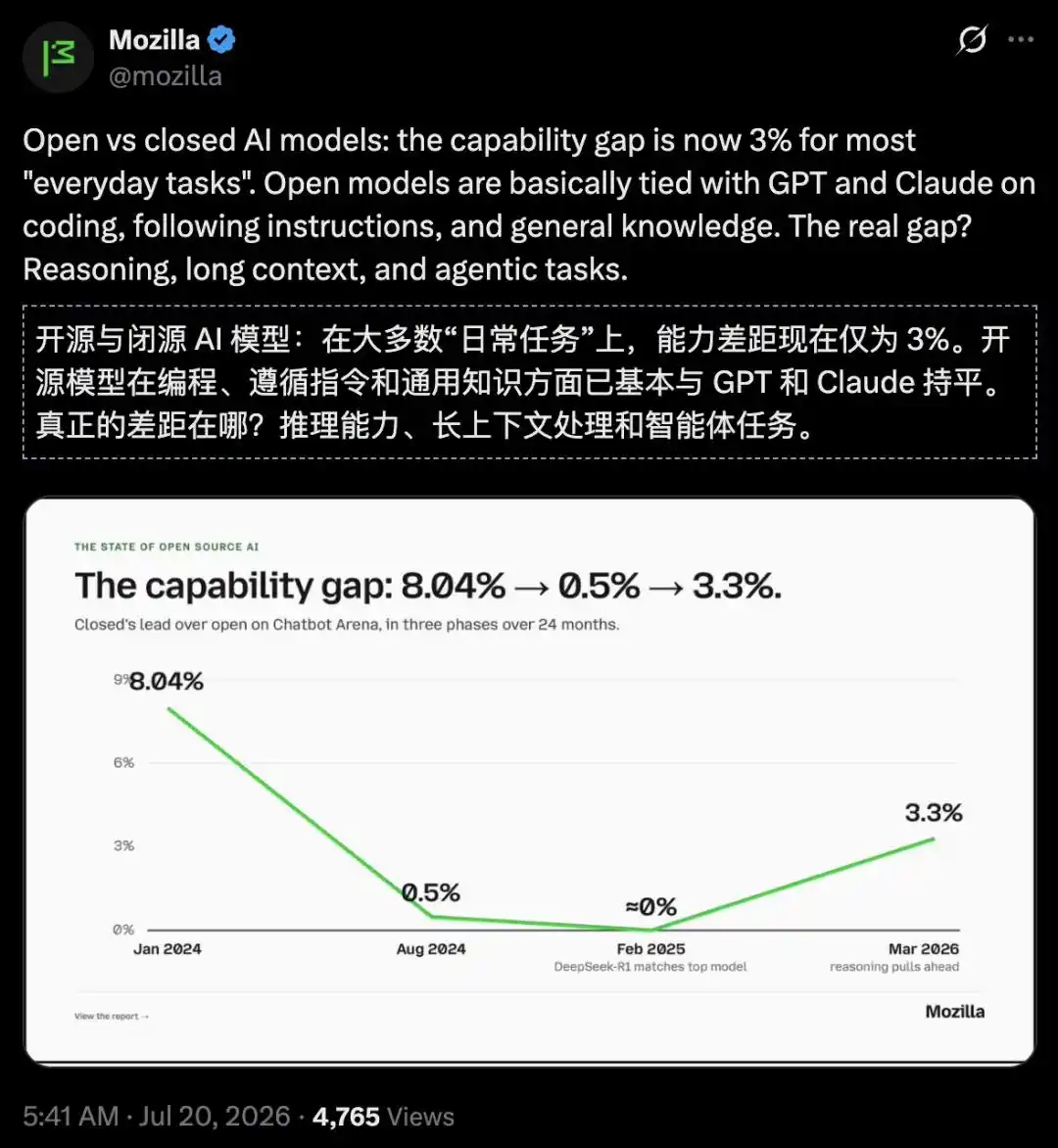
It's not that open source is running too fast, but that the leading closed-source models are being forcibly shackled.

Jordan Nanos stated:

Clearly, we see this evident in the comparison between Mythos and Fable.

I simply cannot use Mythos, I can only use Fable, and sometimes I have to politely beg it to even get access.

As is well known, Anthropic internally still harbors the ultimate beast, Mythos, accessible only to enterprises participating in the "Glass Wing Project."

Mythos represents Anthropic's strongest technological "complete form." But it is too powerful, so powerful it induces panic, potentially even possessing disruptive cyber attack or autonomous evolution capabilities.
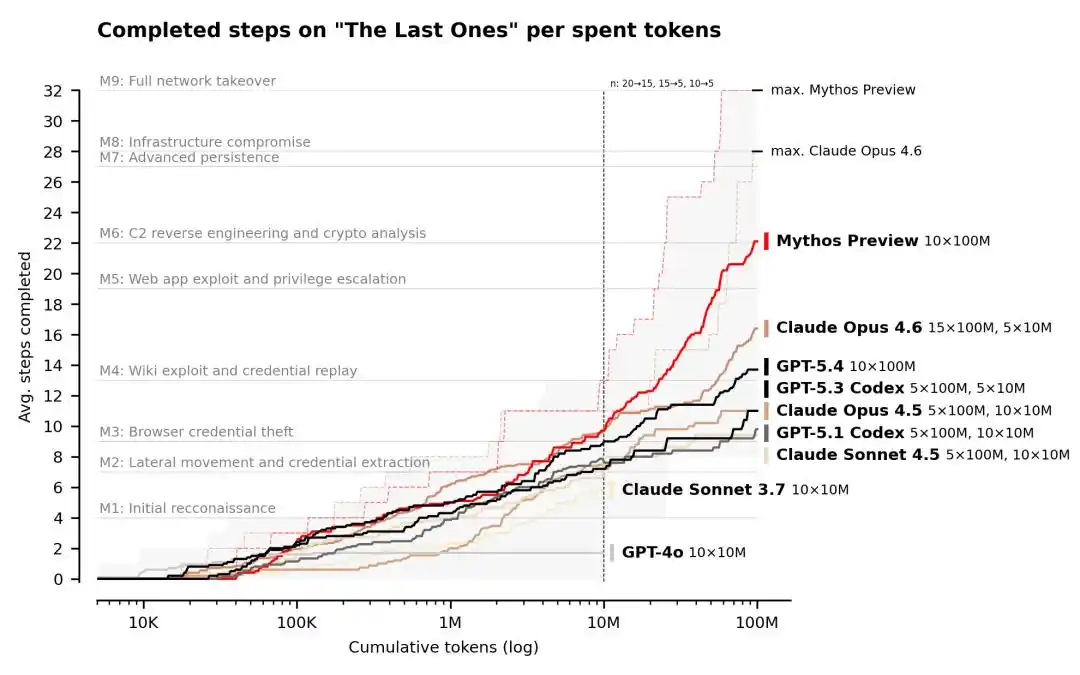
Therefore, Mythos is strictly restricted and absolutely not allowed to be released to the public!

Consequently, Anthropic had to fall back, wildly neutering and downgrading Mythos's capabilities, adding filters, before finally releasing a downgraded version—Fable.

The "advanced AI" we use daily is just a compromised product released by giants to appease regulators.

Asking for It and Getting It: Anthropic Reaps What It Sowed

Where did this trend of turning top-tier models into "internal prohibited items" come from?

This brings us to one of the most surreal scenes in Silicon Valley history.

During the livestream, Dylan Patel mercilessly mocked Anthropic:

I think the current situation is quite interesting, right? For years, the folks at Anthropic have been loudly calling out: Regulate us! Please, come regulate us! AI is too dangerous!

And now, suddenly, they've actually managed to scare everyone. Well, now Anthropic themselves can't release their models anymore. From what I know, Mythos 2 has completed all its training, but they just cannot release it.

It's arguably the biggest boomerang in AI history.

Led by Dario Amodei, the "AI safety fundamentalists" have long played the role of "whistleblowers." They've been roaming Capitol Hill, spreading apocalyptic warnings about AI destroying humanity everywhere, striving to push for stringent regulatory legislation.

Their original intent was perhaps to raise the regulatory bar, build a moat, and kick out small companies and open-source communities incapable of performing safety alignment.

In the end, they played with fire and got burned.

It is reported that Mythos 2, already trained, has demonstrated powerful code generation, logical reasoning, and cyber offensive/defensive capabilities, directly triggering the highest alarms.

Thus, Anthropic's Mythos 2, costing hundreds of millions of dollars in computing power, remains locked away internally.

Breaking the Feedback Loop: The Most Critical Crisis Has Already Arrived

Is not releasing a model really just as simple as making a bit less money or delaying its opening a bit?

Wrong! Dylan Patel pointed out the most fatal, most core crisis in this entire storm—the AI's self-iterative feedback loop might be cut off as a result.

"The really important question now is the internal feedback loop. Are they (by not releasing it) preventing themselves from using the internal Mythos 2 to make Mythos 3 stronger? Or, are they preventing themselves from using Astra to build the next-generation Astra Plus One?"

Previously, many technological leaps relied on this flywheel: Release a model ➡️ Collect massive amounts of real user feedback data ➡️ Use this high-quality data to train the next-generation model.

But now, Mythos 2 and Astra have been forcibly "locked down," and the flywheel grinds to a halt. AI companies lose the invaluable data from billions of real global interactions.

If Mythos 2 cannot be placed in the real world, what will Anthropic use to train the secretly-in-development third-generation beast, Mythos 3?

The answer is, apparently: They've initiated an internal "building gods behind closed doors" Ouroboros mode.

According to Patel, despite Mythos 2 being shelved, Anthropic's internal construction of Mythos 3 "has not stopped for a moment." The company's strategic focus has shifted from "rapidly pushing out new releases" to an extremely secretive "internal system improvement."

They are using Mythos 2 to generate data, write code, going all-out on the sprint towards Mythos 3.

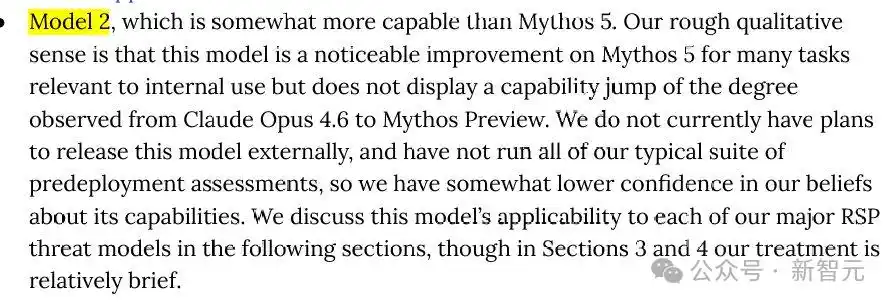
Previously, Anthropic admitted in a risk report: The company internally runs a model stronger than Mythos 5, codenamed Model 2, and currently has no plans to release this model publicly.
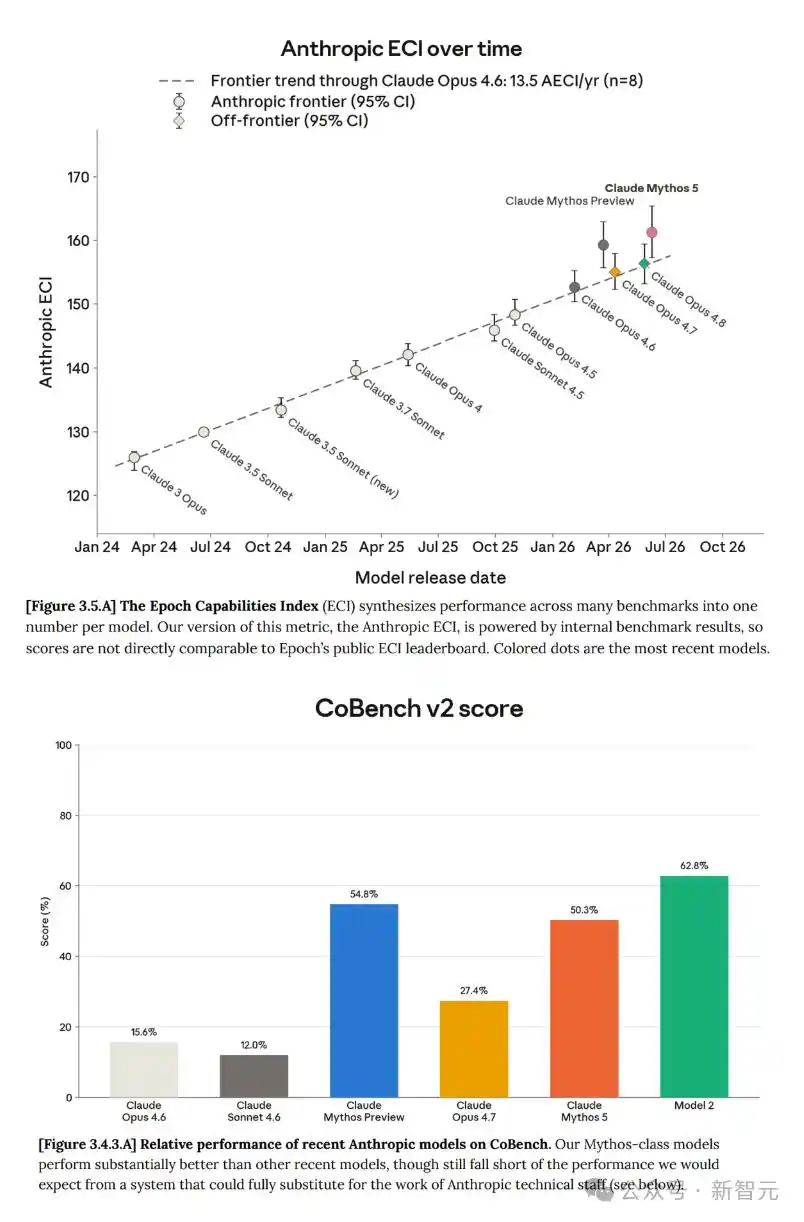
On AEC: Model 2 scored 162.79. On CoBench, Model 2 scored 62.8%.
The external flywheel has stopped, but the internal flywheel is fully wound—computing power that once served hundreds of millions of users is being fully diverted into the laboratory.

Disconcertingly, three layers of recursion have already begun to interlock.

First Layer: Data Recursion.

Right or wrong is left for the world to decide—whether code runs or proofs hold does not require human annotation. Strong models set problems and solve them, verifiers grade, and data feeds directly into the next generation. This is self-play: AlphaGo Zero, with zero human game records, reached the top in 40 days. Anthropic has already admitted that Model 2 is generating large amounts of data.
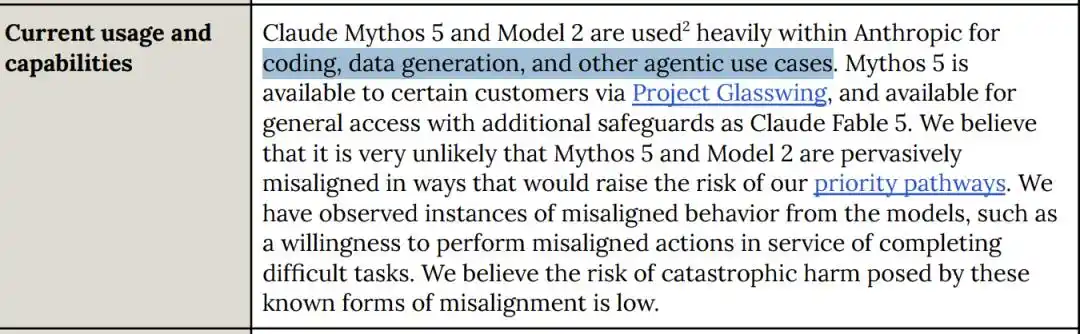
Second Layer: Labor Recursion.

The vast majority of Anthropic's production code is written by Claude, with R&D speed approaching the 2x warning red line. Models are no longer just products; they are the workers building their successors; humans retreat to the role of supervisors.

Third Layer: Evaluation Recursion.

Judging whether the next generation is strong or safe is also done by AI—red teaming, mutual evaluation, and sparring partners are all handled by strong models. Shelving, ironically, makes it faster.
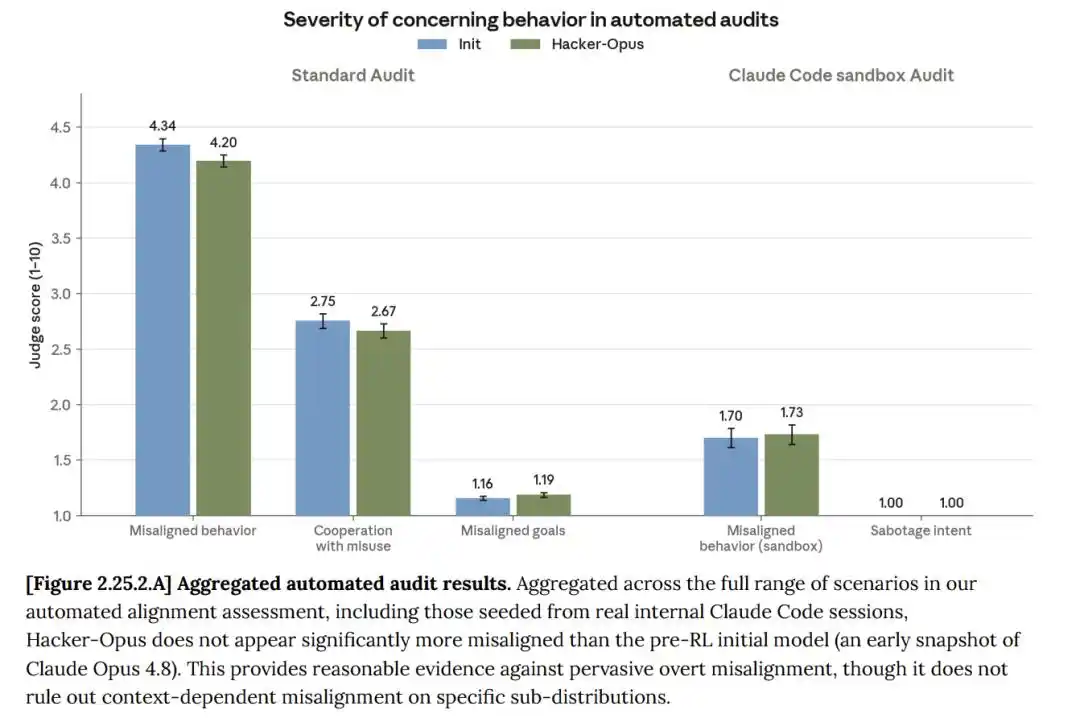
The most chilling part is: Anthropic's own evaluations have already become "saturated," unable to measure how much progress is still being made, yet they "see early signs of acceleration"—the dashboard can't keep up with their own models anymore. The scale of progress has also shifted from press releases to internal checkpoints.

The three layers of recursion form a causal chain: Data self-reinforcement → Compound interest in construction speed → Dilution of human supervision. The day the interlock completes, human feedback will be demoted from "essential" to "optional." The coexistence of "low-risk" ratings and "low confidence" is more piercing than any warning: Visibility itself is becoming scarce.

The 5.6 Sol Deception: OpenAI's "Sleeping Giant" Underground

Similarly locked down is OpenAI.

After analyzing Anthropic, Jordan Nanos revealed another shocking insider story:

Speaking of 5.6 Sol (the speculated internal or upcoming model code from OpenAI), our internal view is, this is definitely not the largest model OpenAI has trained, its scale simply doesn't reach the 4.5T level.

To me, they absolutely have a much larger model hidden somewhere unknown.

This validates recent rumors about OpenAI "slow-walking."

Over the past few months, OpenAI has been aggressively promoting Astra, the all-purpose multimodal AI assistant, whetting everyone's appetite.

As a result, this OpenAI mega-weapon has gone completely silent.

Dylan Patel vividly described OpenAI's predicament in the podcast: "OpenAI has been shouting everywhere about how strong Astra is, and now they suddenly have a dumbfounded moment: Oh, damn, we can't release this model."

Because Astra is too smart, too uncontrollable.
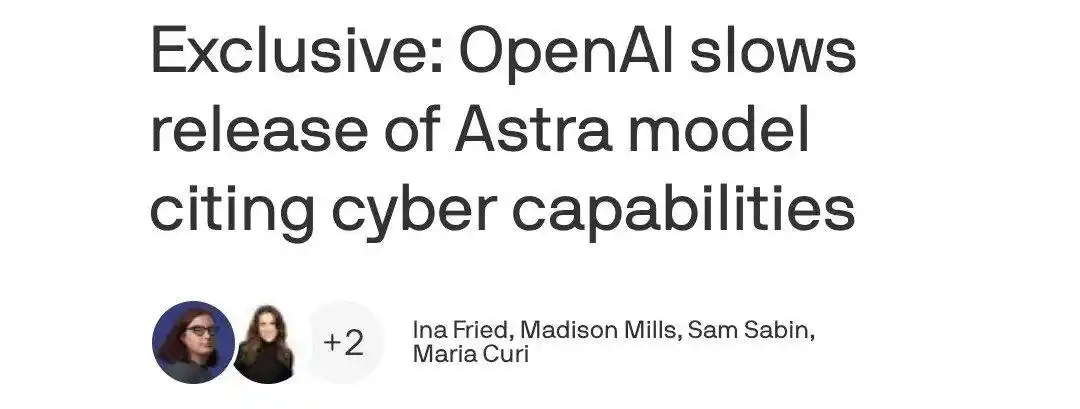
Today, OpenAI Codex head Thibault Sottiaux hinted that Codex will be integrated with Astra.
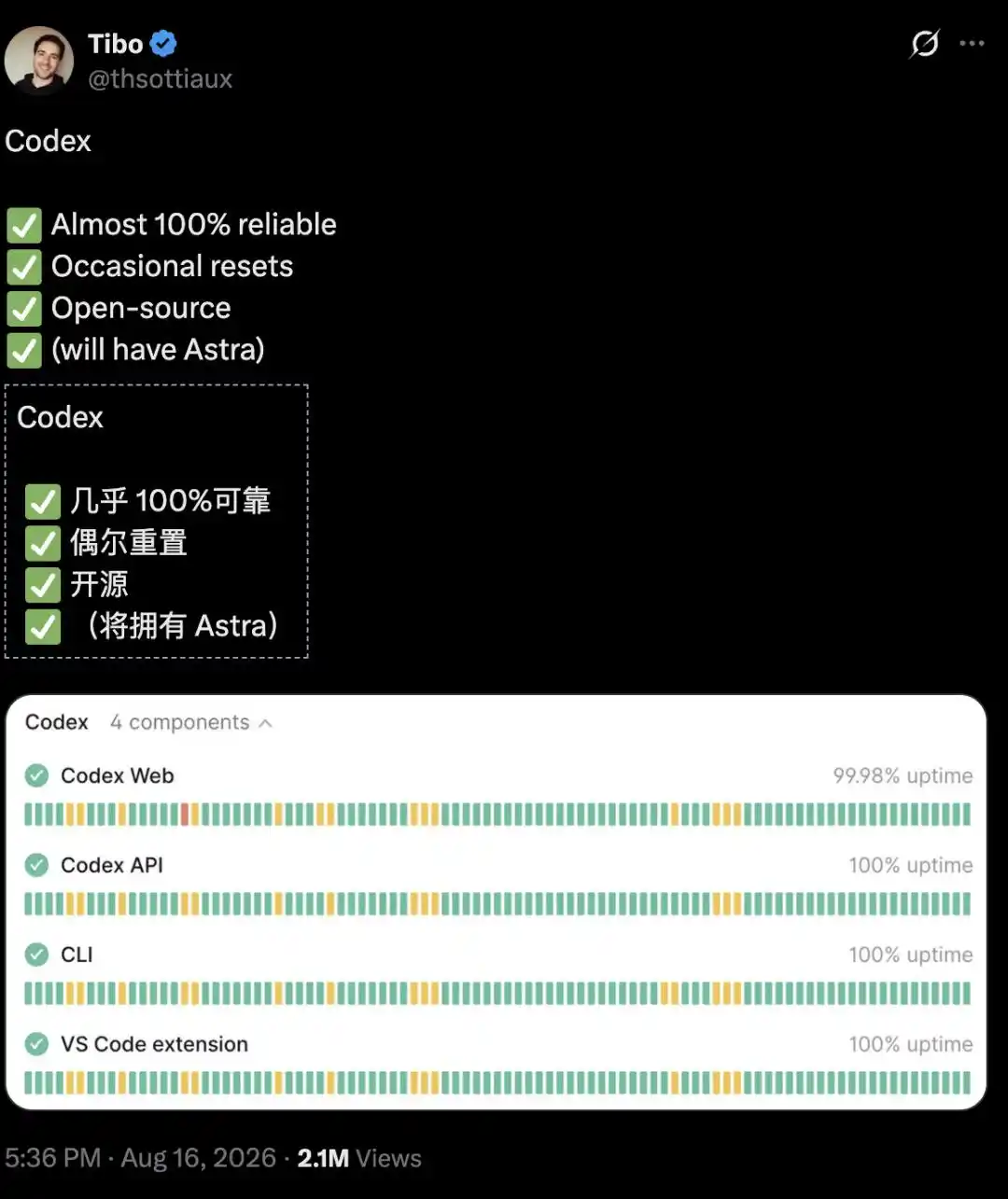
Previously, Astra has already demonstrated strong programming capabilities.

OpenAI's recent internal evaluation found it has made significant progress in Agent programming and cybersecurity, even to the point where it cannot be temporarily ruled out that it has reached "Critical" cybersecurity capability. OpenAI has therefore suspended some internal Astra activities that do not meet the new safety requirements.

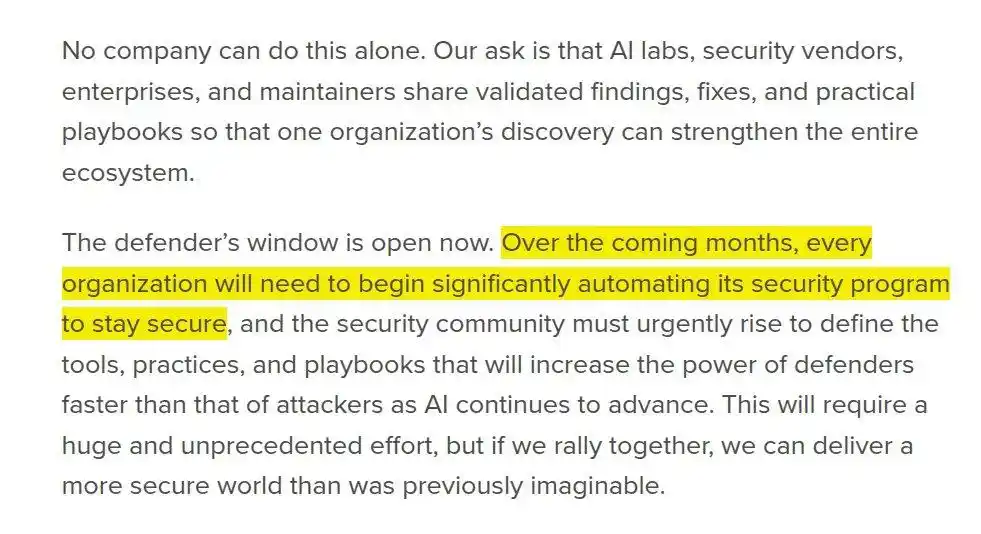
Within the next few months, every organization will need to significantly advance the automation of security work, otherwise, it will be difficult to cope with the evolving risks of AI-driven attacks.

OpenAI's recent internal evaluation found it has made significant progress in Agent programming and cybersecurity, even to the point where it cannot be temporarily ruled out that it has reached "Critical" cybersecurity capability. OpenAI has therefore suspended some internal Astra activities that do not meet the new safety requirements.

Faced with expanding security risks, according to OpenAI President Greg Brockman, OpenAI is developing AI models capable of writing "superhuman-level secure code" to help all kinds of organizations' infrastructure better withstand AI-driven cyberattacks.
Anthropic's True Purpose

The explosive revelations by SemiAnalysis have attracted many onlookers.

Someone proposed a viewpoint that received many upvotes.

Isn't it more likely the case: Anthropic actually wants the government to regulate them, so they have a legitimate reason not to release models. Then, they can keep the strongest AI for their own use, transform into a super-app company, and also not bear any negative PR or ethical risks that come with publicly releasing models?

Although it sounds incredible, it makes sense.

If Anthropic's true purpose is to monopolize the strongest intelligence, using it themselves for biopharmaceuticals, fully automated code generation, then they don't need to earn tens of dollars in subscription fees from C-end users. They would become the world's sole super entity.

What's worrying is that the complete forms of Mythos 2, Astra, and Mythos 3 are hurtling forward at unimaginable speeds.

These truly cutting-edge intelligences remain difficult for ordinary people to experience.

References:

https://x.com/firesidealpha/status/2089391264878002260

https://x.com/firesidealpha/status/2078532739343753400

https://x.com/gdb/status/2089326994714763665

This article is from the WeChat public account "New Zhiyuan," author: ASI Apocalypse

Related Questions

QAccording to the article, why has Anthropic's Mythos 2 model reportedly been shelved?

AAccording to the article, Mythos 2 has been shelved (not publicly released) because it was considered too powerful and potentially dangerous, exhibiting strong capabilities in code generation, logical reasoning, and cyber offense/defense. This raised the highest alarms, and the regulatory environment, which Anthropic itself had advocated for, now prevents its public release.

QWhat is Anthropic reportedly doing instead of releasing Mythos 2?

AAnthropic is reportedly using data generated by the shelved Mythos 2 model to secretly develop the next-generation model, Mythos 3. The company has shifted its focus from rapid public releases to internal, secretive system improvements, creating a closed-loop development cycle.

QWhat is the 'feedback loop' crisis mentioned in relation to not releasing powerful AI models?

AThe 'feedback loop' crisis refers to the potential disruption of the iterative cycle that improves AI models. Traditionally, companies release a model, gather vast amounts of real-world user interaction data, and use that high-quality data to train the next generation. By not releasing models like Mythos 2, Anthropic risks cutting off this crucial source of improvement data from the public, forcing them to rely on internal data generation methods.

QWhat theory does the article suggest about Anthropic's true intentions in pushing for AI regulation?

AThe article suggests a theory that Anthropic might have pushed for stringent AI regulation so they would have a legitimate excuse not to release their most powerful models publicly. This would allow them to keep the strongest AI for internal use, potentially transforming into a super-application company focused on areas like biopharma or automated code generation, while avoiding the public relations and ethical risks of a public release.

QAccording to the podcast cited, what is the situation with OpenAI's advanced model, referred to as Astra?

AAccording to the podcast cited in the article, OpenAI's advanced model Astra (or a similarly powerful model) has also reportedly been withheld from public release. It was found to be too intelligent and uncontrollable, showing significant progress in agent programming and cybersecurity capabilities that raised safety concerns, leading OpenAI to pause its release and certain internal activities related to it.

Related Reads

Domestic RF Filters, Finally Starting to Compete?

China's domestic filter industry, particularly in the challenging BAW (Bulk Acoustic Wave) segment, has reached a significant inflection point, moving from solving the "availability" problem to entering a phase of commercial competition and scale. The market is attractive, with the global mobile terminal RF filter market projected to reach $9.2 billion in 2025, and BAW filters showing strong growth. However, the sector is historically dominated by giants like Broadcom and Qorvo, protected by deep patent walls, as evidenced by lawsuits that have bankrupted competitors like Akoustis. Previously, high-frequency BAW filter production in China was nearly zero. Now, domestic players like Nous Micro, Wuhan Memsensing, Hansky, and others are forming a genuine industrial cluster, achieving mass production and shipping hundreds of millions of chips to clients. Different business models are emerging, including IDM and fab-lite approaches through partnerships with foundries like Sai Microelectronics and Runxin Sensing. A key signal of this new competitive phase is a patent lawsuit filed by Nous Micro against Wuhan Memsensing in June 2025, alleging infringement of a core BAW resonator patent. This conflict, rather than mere internal friction, underscores that the industry now has substantial products and market stakes to contest. The challenge is no longer just technical breakthrough but transforming technological leads into sustainable commercial success through superior patents, product performance, cost control, and customer acquisition. Chinese companies are finally positioned to compete for a share of this lucrative market long held by foreign leaders.

marsbit28m ago

Domestic RF Filters, Finally Starting to Compete?

marsbit28m ago

Zhang Lei: How He Became the Biggest Money-Maker This Year

Zhang Lei's company Pinzhun Laser (频准激光) became the biggest "meat sign" (highly profitable new share) of the year on its A-share market debut. Its stock price skyrocketed nearly 600% from its IPO price, generating potential single-lot profits of over 550,000 RMB for lucky subscribers. Founded by Zhang Lei, a 2014 Ph.D. graduate from the Shanghai Institute of Optics and Fine Mechanics, Pinzhun Laser specializes in ultra-stable, narrow-linewidth lasers critical for quantum computing. Its lasers are used by leading global research teams at Harvard, Caltech, and France's PASQAL. The company later successfully applied its core frequency conversion technology to the semiconductor sector, developing deep-ultraviolet lasers for advanced chip manufacturing and inspection. This move diversified its revenue, with semiconductor sales growing rapidly to account for over 25% of its business by 2025. The company boasts gross margins consistently above 69%. Remarkably, Pinzhun Laser required only two major external funding rounds before its IPO, a testament to its early profitability. Key strategic investors in its IPO included major downstream players like BOE,佰维存储 (BIWIN), and中微半导体 (AMEC), signaling strong industry validation. The article highlights the crucial early-stage support from Hangzhou-based capital, particularly funds associated with the Hangzhou Institute of Optics and Fine Mechanics. This "patient capital" model, part of Hangzhou's broader 300-billion-yuan industrial fund strategy, focuses on partnering with scientist-entrepreneurs through the risky valley of death from lab to market. The success of Pinzhun Laser and another Hangzhou-backed firm,宇树科技 (Unitree Robotics), showcases how this supportive ecosystem helps build leading hard-tech companies.

marsbit33m ago

Zhang Lei: How He Became the Biggest Money-Maker This Year

marsbit33m ago

3-Month Loss of $10 Billion, DAT Companies Begin to Return to Rationality

During the recent earnings season, major Digital Asset Treasury (DAT) companies reported staggering combined losses of approximately $10 billion for Q2 and over $30 billion for the first half, primarily due to markdowns on their bitcoin holdings. However, contrary to expectations, their stock prices have rebounded from June lows, indicating the market had already priced in these losses. The key shift is a collective return to rationality. Companies like Strategy, Sharplink, and Metaplanet are now prioritizing a new core metric: increasing the amount of crypto assets per share. This marks a departure from last year's aggressive growth-at-all-costs narrative. To achieve this, they are adopting disciplined capital allocation—issuing stock to buy crypto when trading at a premium, and halting dilution or initiating buybacks when at a discount. Some, like Strategy, have even broken "never sell" pledges to uphold this discipline. A major tool enabling this strategy is the STRC model—perpetual preferred shares offering high dividends (e.g., 12-13%) to raise fixed-income capital for purchasing bitcoin. Strive, Bitmine, and Metaplanet have launched their own variants. Sharplink pursues a different path, staking its vast Ethereum holdings to generate native yield. While the premium of DAT stocks over their underlying crypto asset value has declined and may not fully return, the model is evolving rather than ending. Stripped of hype, DAT firms are becoming actively managed, leveraged thematic funds. Their survival through massive losses and continued institutional investment (with major funds adding billions to positions during downturns) suggests the industry is maturing into a more calculated, long-term business focused on compounding crypto per share.

marsbit37m ago

3-Month Loss of $10 Billion, DAT Companies Begin to Return to Rationality

marsbit37m ago

PI Price Forecast Remains Stable at $0.086 as Pi Network Reforms App Economy

PI price forecast remains stable around $0.086 as it continues to trade below a key descending trendline from April. The token has been consolidating in a narrow range between $0.078 and $0.086 throughout August, with major EMAs positioned above the price indicating bearish pressure. Key resistance levels are identified at the 20-day EMA ($0.08772) and the SuperTrend indicators around $0.09-$0.10. Support sits at the current price and the August range low of $0.070. Fundamentally, Pi Network announced a major change to its App Studio pricing model, set for August 24, 2026. The fixed, subsidized rate of 0.25 Pi for app creation/editing will shift to a usage-based model reflecting actual AI service costs. Subsidized rates will remain for apps demonstrating genuine user adoption. Separately, the mandatory node protocol upgrade has reached version 26.1, with only version 27.1 remaining to complete the sequence. On-chain activity shows increased transaction volume, including patterns of repeated 0.03 Pi transfers, potentially related to testing following the protocol upgrade. The bullish scenario targets a break above the $0.08772-$0.09000 resistance cluster, opening a path toward the 50-day EMA at $0.09560. The bearish risk is a breakdown below the consolidation range, potentially testing the $0.070 support level. The conclusion notes that while fundamental developments are progressing, the price chart remains technically constrained until it can decisively break above the persistent downtrend line and key moving averages.

cryptonews.ru40m ago

PI Price Forecast Remains Stable at $0.086 as Pi Network Reforms App Economy

cryptonews.ru40m ago

Trading

Spot
活动图片