Aave's Internal Conflict Escalates, Morpho Quietly Doubles: Is the Lending Throne About to Change Hands?

Odaily星球日报Published on 2026-03-01Last updated on 2026-03-01

Abstract

The article discusses the escalating internal conflicts within Aave and the rising prominence of Morpho in the decentralized lending space. While Aave remains the largest lending protocol by total value locked (TVL), it is facing significant governance disputes, including a controversial $51 million funding proposal and accusations of poor fund utilization by its team. These issues have slowed decision-making and created internal division. In contrast, Morpho has gained attention due to its modular, permissionless lending infrastructure, Morpho Blue, which allows for isolated markets with independent risk parameters set by curators rather than relying on slow global governance. This design reduces friction and enables faster adaptation. Morpho’s metrics show strong growth: TVL surpassed $9.5 billion in late 2025, active loans exceeded $3.5 billion, and quarterly active addresses grew from 30,000 to 400,000. Protocol revenue remained stable around $50 million per quarter. A major catalyst for Morpho is the involvement of traditional finance. Apollo Global Management plans to acquire up to 90 million MORPHO tokens (9% of supply) over four years, worth approximately $162 million at current prices. This signals institutional interest, potentially using Morpho’s leveraging RWA (real-world asset) products for higher yields. Despite Morpho’s growth, it still trails Aave in TVL. However, Aave’s governance challenges may provide an opportunity for Morpho to capture market share. Th...

Original | Odaily Planet Daily (@OdailyChina)

Author | DingDang (@XiaMiPP)

Altcoins are dead—this is a consensus that crypto users have been reluctant to admit but have had to face over the past year. Even former blue-chip tokens have fallen into prolonged sideways movement or gradual declines amid the continuous market weakness, showing little sign of recovery.

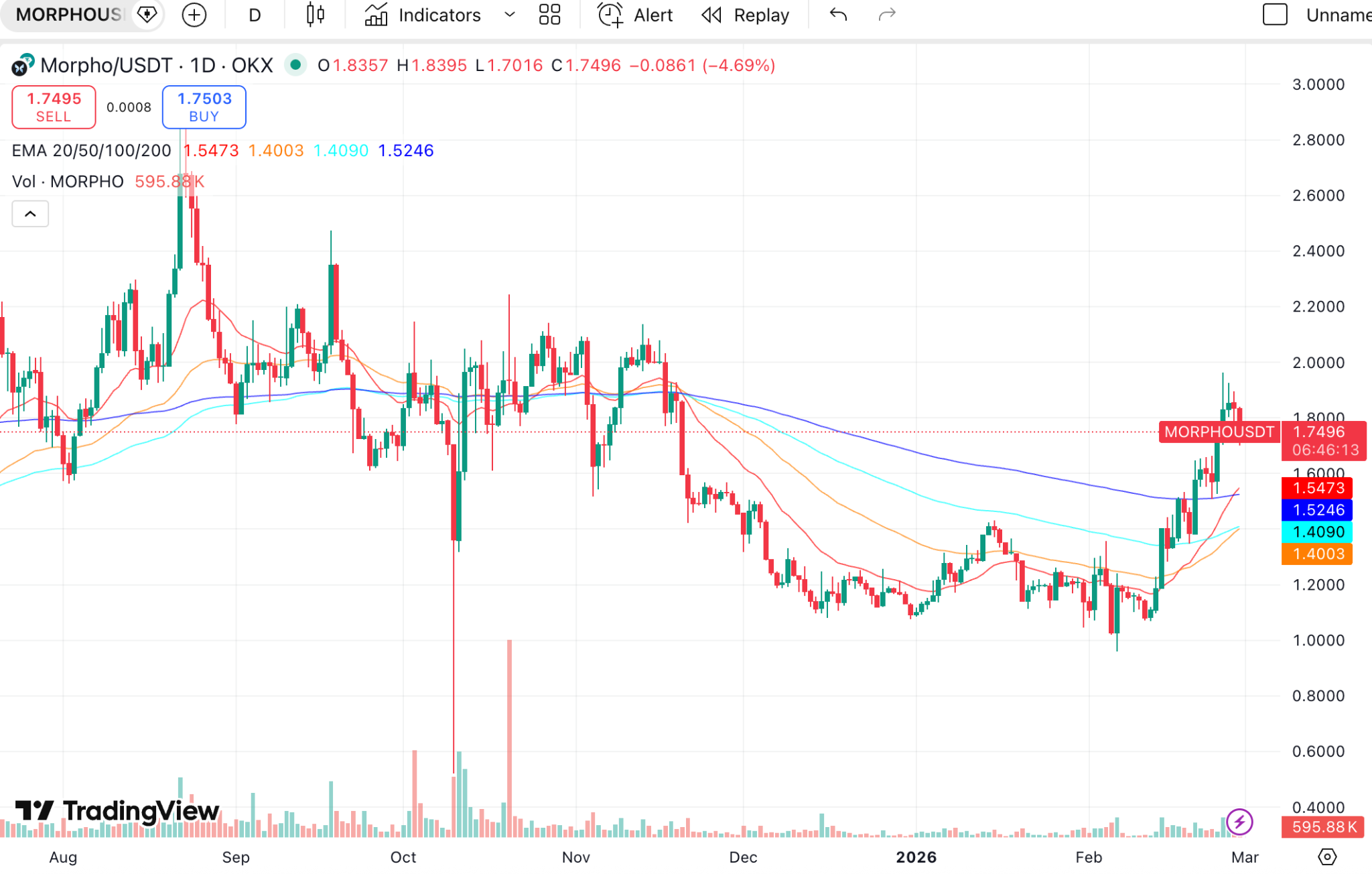
However, amidst this overall slump, the MORPHO token has rebounded from a low of $0.96 in early February to the $1.8-$1.9 range, doubling against the trend. From the daily chart perspective, this rebound has largely formed a rounded bottom pattern, potentially signaling a bottom reversal. Is this surge merely driven by short-term market sentiment, or is it the start of a trend fueled by fundamental and structural factors?

When the Old Dynasty Begins to Consume Itself

Morpho is a lending protocol launched in 2021. Initially, its mechanism was similar to lending protocols like Aave and Compound. However, in 2023, Morpho began rolling out Morpho Blue (now its main version), completely transforming into an independent, permissionless lending base layer, firmly positioning itself among the top lending protocols in the Ethereum ecosystem.

That said, in the lending sector, Aave remains the largest by volume and the strongest in brand—an undeniable fact. But recently, Aave has once again found itself in serious governance controversy due to a $51 million "Aave Will Win" funding framework proposed by its founder, Stani.

This fund was originally intended to support new product development, and the proposal explicitly stated that future related brand revenue would be 100% returned to the DAO treasury—a move that seemed like an ideal operation of "surrendering control and benefiting the community" by the project team. However, it unexpectedly ignited long-simmering internal conflicts within the DAO.

The reason is that DAO governance representative and ACI founder Marc Zeller publicly released an "audit" report on February 25, accusing Labs of low fund utilization, having taken approximately $86 million from the DAO over the past few years without transparent disclosure. Meanwhile, core DAO developer BGD Labs announced it would exit in April 2026 due to governance friction. The founder's high voting power once again dominated the controversial proposal, further pushing the entire DAO into an open tug-of-war over power and fund distribution. As early as December last year, cracks had already appeared within the Aave community. For details, refer to Can You Still Buy AAVE Amid Deep Divisions After the Second-Largest Holder Dumped Their Bag?.

Now, as Aave slows down due to governance friction, the "simplicity" of Morpho's governance model is beginning to catch many people's attention. Aave can be considered the first-generation lending governance paradigm of "DAO-led, global parameter adjustment," where all risk parameters (such as collateral factors and liquidation thresholds) are determined by global DAO voting. While this design ensures overall robustness, it easily leads to governance bottlenecks—any minor parameter adjustment requires broad community consensus, and any disagreement can delay decisions, especially during contentious periods, potentially paralyzing decision-making.

In contrast, Morpho follows a second-generation path of modularity and market-driven mechanisms: the protocol itself is highly permissionless, allowing anyone to create isolated markets at any time. The risk parameters for each market (such as LTV, interest rate curves, and liquidation incentives) are set by independent professional risk managers (curators), rather than relying on全网 DAO voting. This means risks are strictly localized within individual markets, with responsibility分散 to specific curators, significantly speeding up decision-making. Curators can quickly iterate parameters based on actual market conditions without waiting for global consensus. The advantage of this design is that it greatly reduces governance friction and decision delays.

When the old dynasty begins to consume itself, it may be an opportunity for new forces to overtake on the curve.

Data Verification: Does It Deserve This Window?

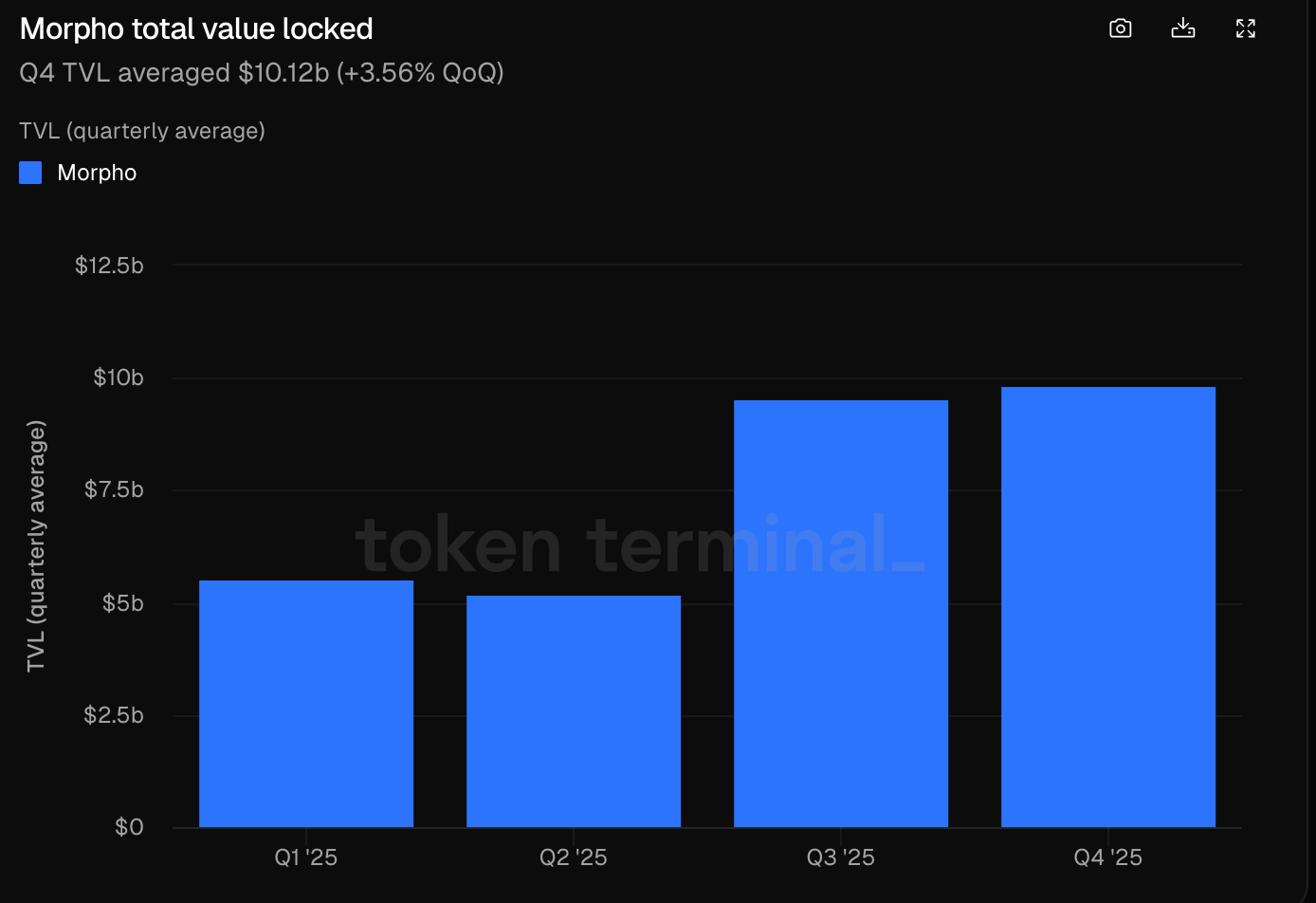
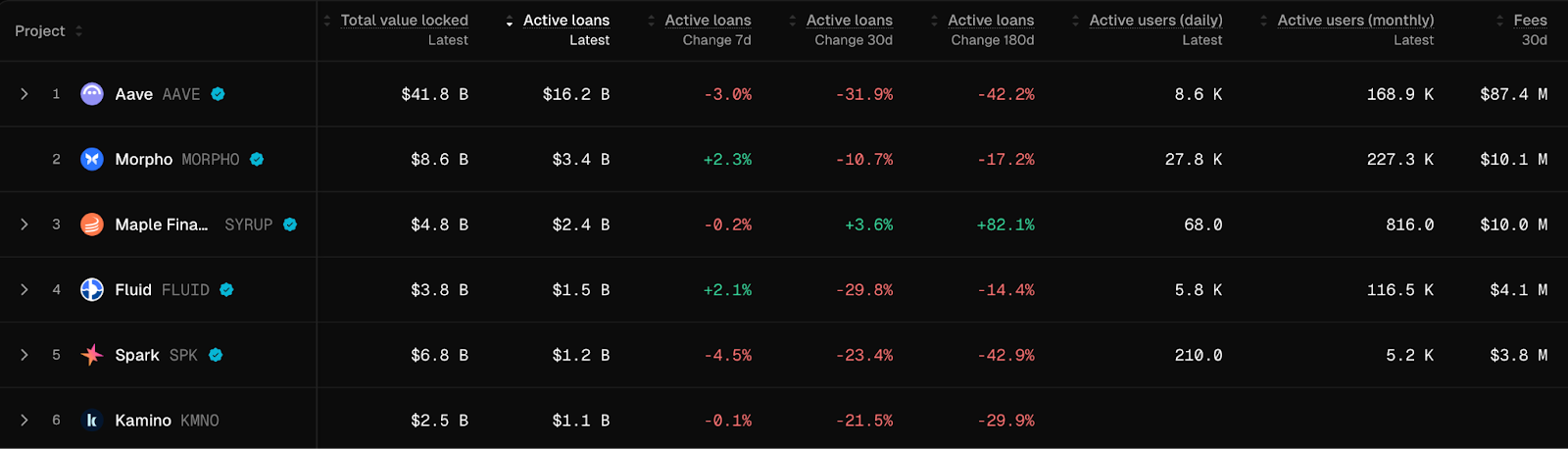
Let's look at Morpho's fundamentals to see if it has the potential to challenge Aave's lending throne. According to Tokenterminal data, in Q3 and Q4 of 2025, Morpho's protocol TVL remained above $9.5 billion, an increase of about 80% compared to the first half of the year.

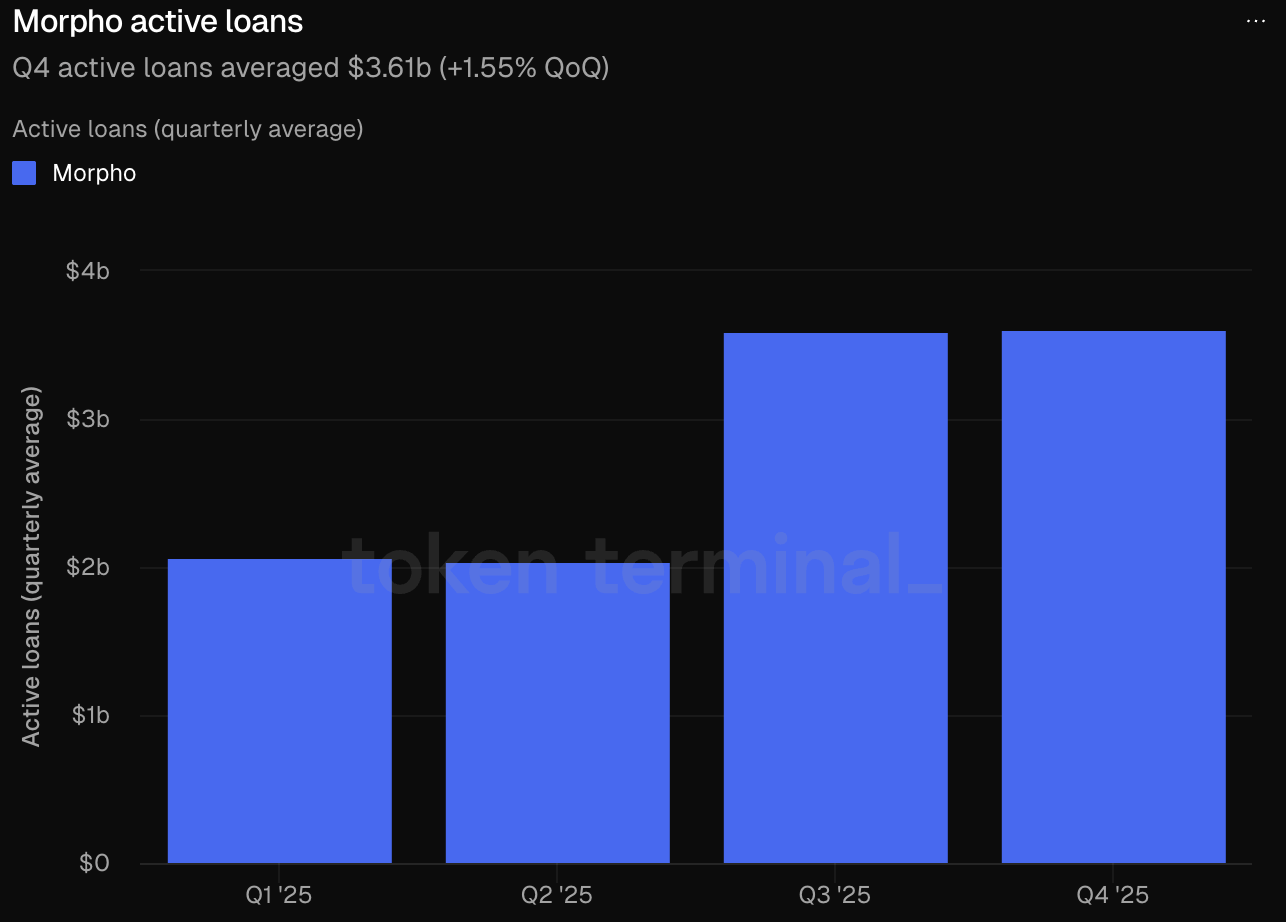
The active loan size within the protocol also stayed above $3.5 billion in both Q3 and Q4, a year-on-year increase of about 80%.

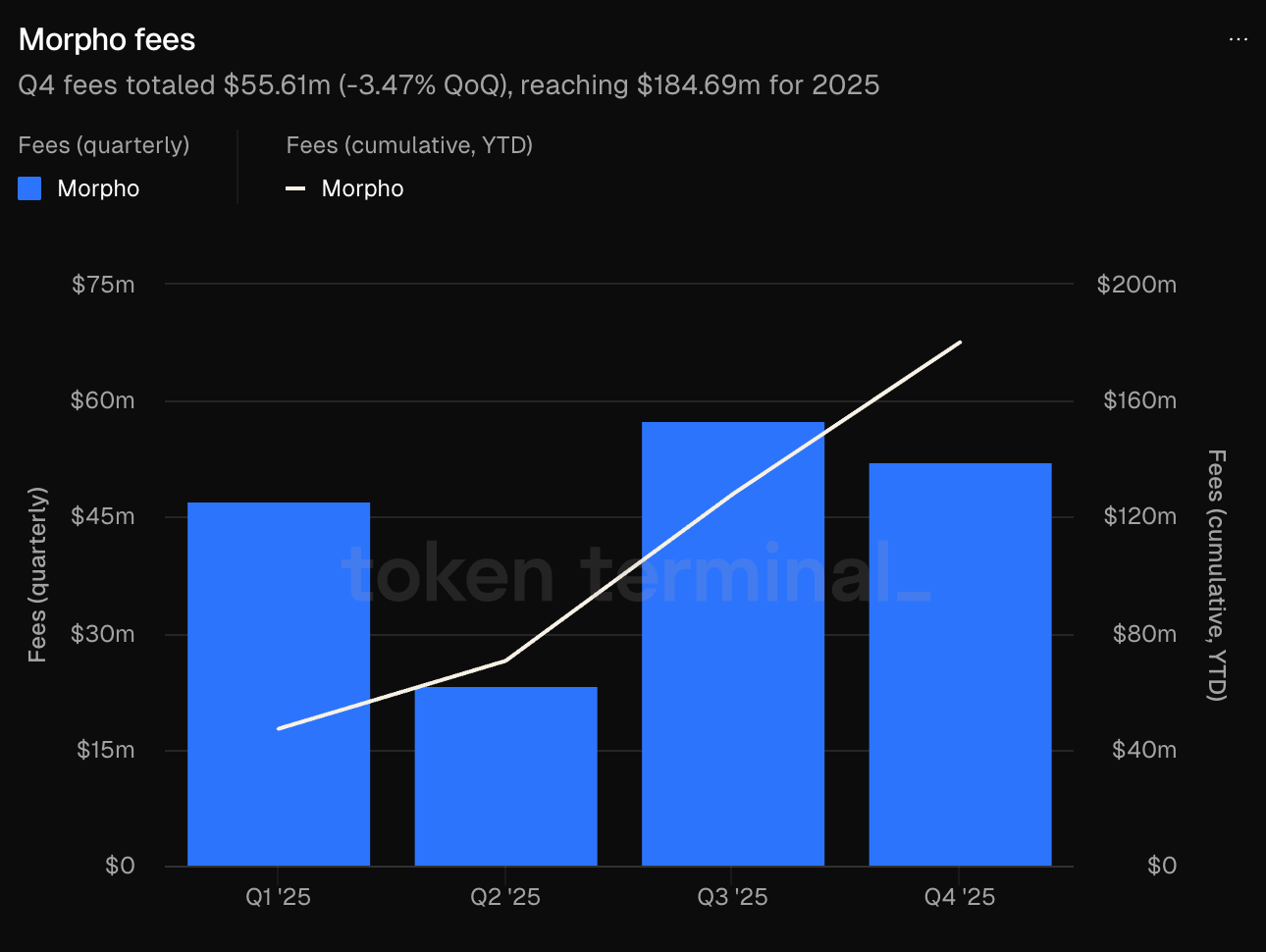
In terms of protocol revenue—one of the core metrics for DeFi protocols—aside from relatively weak performance in Q2, it remained stable at around $50 million in other quarters.

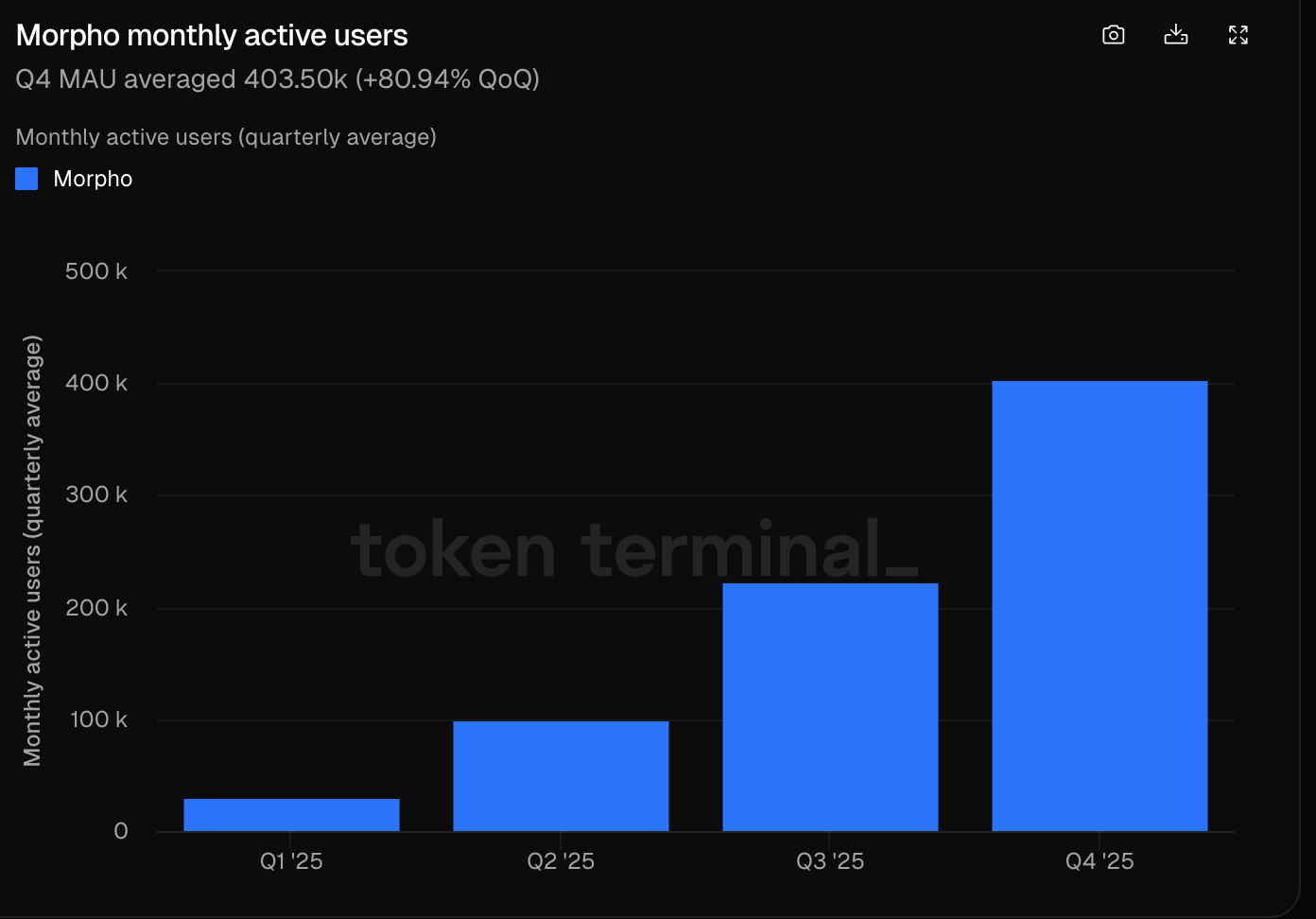
User growth is even more直观, with its quarterly active addresses rapidly expanding from about 30,000 in Q1 to the 400,000 level, showing strong organic growth momentum.

Although Morpho's current TVL and active loan size still lag behind Aave's, its user growth rate has made it one of the most aggressive "dark horses" in the lending sector. Especially against the backdrop of the entire DeFi sector generally under pressure and experiencing阵痛 in 2025, Morpho's performance can be considered achieving counter-trend high growth,足以证明 its product model has withstood market tests. Protocols that can continuously attract funds and users during bear markets often possess stronger爆发力 in the next cycle.

Institutional Variable: When Traditional Capital Starts Betting

Good fundamental data performance only proves that the protocol has a solid foundation, but the bigger catalyst that truly changes the market cap curve is the entry of traditional financial giants.

On February 13, Wall Street asset management giant Apollo Global Management signed a重磅 cooperation agreement with the Morpho Association, the non-profit organization behind Morpho. Specifically,strong> Apollo plans to gradually acquire up to 90 million MORPHO tokens over the next 48 months, equivalent to approximately 9% of Morpho's total supply. At the current price of $1.8, this is worth about $162 million.

From a trading perspective alone, this will bring sustained buying demand for MORPHO. But if you know Apollo, you'll understand that this is more like its strategic penetration into DeFi.

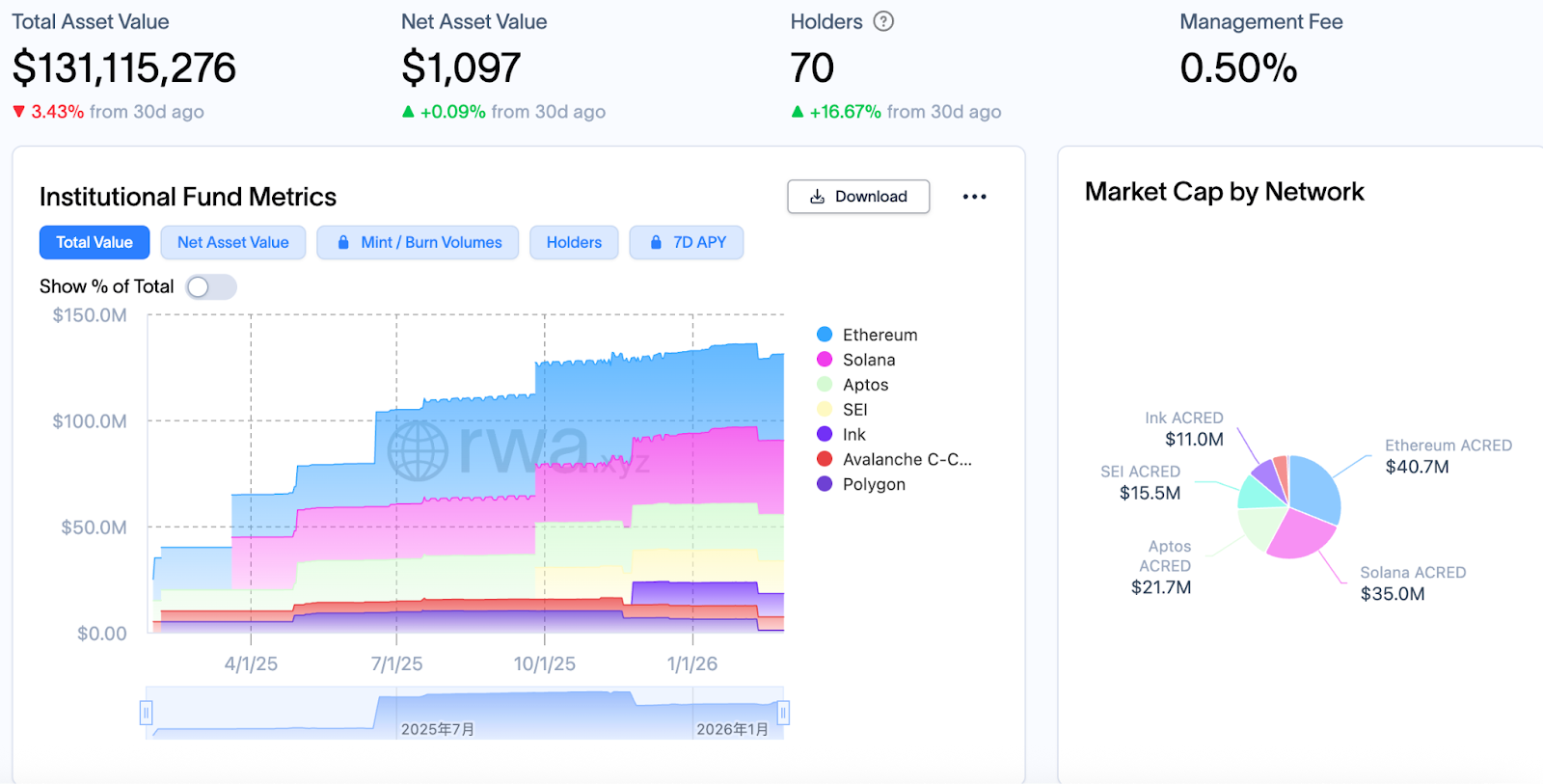
Apollo manages assets close to $940 billion, and its private credit business is known for pursuing high yields. The on-chain world can provide opportunities for leverage amplification and global instant liquidity. Since 2024, it has begun testing the waters in the crypto industry, with RWA as its main battlefield. It partnered with Securitize to tokenize its diversified credit strategy into ACRED, which now reached a scale of $130 million.

However, the core challenge after onboarding RWA has never been issuance but liquidity release. Assets can be tokenized, but without efficient lending markets and leverage environments, their yield potential is difficult to unleash. From Apollo's布局, it is not unreasonable to speculate that it likely intends to use Morpho's lending markets to amplify the yield of its credit products. Because Morpho's modular lending structure provides a天然适配场景 for RWA—isolated markets, independent risk parameters, and customizable leverage environments. These mechanisms are far more attractive to institutions than parameter games under unified governance.

This speculation is not without basis, because although Morpho is highly permissionless, key parameter options still need to be expanded through Morpho DAO governance. If Apollo holds a significant amount of MORPHO tokens, it will gain corresponding voting power and may promote the addition of RWA-friendly parameters. If Apollo's intentions materialize as推测, Morpho's modular design could attract more institutional funds, accelerating inflows and making it key infrastructure for amplifying institutional credit products on-chain. This institutional-level endorsement would not only strengthen Morpho's competitive advantage but also narrow the gap with Aave—especially when Aave is deeply mired in internal governance issues.

Conclusion

Aave's governance crisis may continue to drag down its market cap and liquidity in the short term, while Morpho, leveraging its product structural advantages and institutional catalysts, is quietly rewriting the competitive landscape of the lending sector. However, whether Morpho can truly shake Aave's throne still depends on its continued TVL追赶 and more TradFi players joining the fray. But至少 for now, the power transition for the "second-generation lending leader" has already begun.

Risk提示: MORPHO tokens will undergo a large unlock in March, belonging to the Morpho DAO, Morpho Association reserve, and core contributors. Short-term liquidity impact requires attention.

Related Questions

QWhat is the main reason for the recent governance controversy within Aave?

AThe controversy stems from founder Stani's proposal for a $51 million 'Aave Will Win' funding framework, which ignited existing tensions over fund allocation and transparency, particularly after an audit report accused Labs of low fund utilization and lack of disclosure after receiving approximately $86 million from the DAO.

QHow does Morpho's governance model differ from Aave's approach?

AMorpho uses a modular, market-driven model where independent risk managers (curators) set parameters for isolated markets, reducing governance friction. In contrast, Aave relies on global DAO voting for all risk parameter adjustments, which can lead to decision-making bottlenecks.

QWhat significant partnership has contributed to Morpho's recent growth and potential?

AApollo Global Management signed an agreement to acquire up to 90 million MORPHO tokens (approx. 9% of supply) over 48 months, valued around $162 million at current prices, signaling major institutional backing and potential integration for RWA yield strategies.

QWhat key metric demonstrates Morpho's strong user growth despite market conditions?

AMorpho's quarterly active addresses grew from around 30,000 in Q1 to 400,000 by Q4, showing robust organic user expansion even during a period of general DeFi market pressure.

QWhat is a potential short-term risk for MORPHO token investors mentioned in the article?

AThe MORPHO token faces a significant unlocking event in March, with releases to the Morpho DAO, Morpho Association treasury, and core contributors, which could create short-term liquidity pressure on the price.

Related Reads

Breaking: Google Earth Urgently Pulls Back Nano Banana 2 Image Generation Feature!

Google Earth's newly launched "Create image" feature, powered by the Nano Banana 2 AI image generation model, was abruptly withdrawn shortly after its release due to being "played" by users. The feature allowed users to generate and overlay AI-created visuals directly onto real-world satellite and 3D maps in Google Earth. The tool enabled creative applications like historical recreations (e.g., visualizing ancient Pompeii), generating informational graphics for landmarks, and envisioning architectural projects or futuristic cityscapes on real terrain. It operated under "geospatial grounding," meaning the AI respected the underlying geography, topography, and perspective of the chosen map view. The model also integrated with Gemini to retrieve relevant factual information. However, upon release, users quickly tested its limits. A prominent example involved reimagining Philadelphia's historic Independence Hall as a post-apocalyptic ruin overrun by "happy" zombies, evil clowns, and giant alien mechs. This highlighted both the feature's playful potential and its risks regarding the generation of inappropriate or misleading content on realistic maps, leading to its swift temporary removal. Google stated it would re-release the feature after implementing "enhanced guardrails." Analysts note this move strategically leverages Google's vast proprietary geospatial data, positioning its AI not just for artistic generation but for spatially accurate world visualization—a unique advantage in the competitive AI image generation landscape.

marsbit1h ago

Breaking: Google Earth Urgently Pulls Back Nano Banana 2 Image Generation Feature!

marsbit1h ago

Altman Admits: Overestimated AI Snatching Jobs! Huang Renxun: The Unemployment Narrative Is Completely Backwards

Sam Altman has revised his earlier predictions about AI rapidly replacing jobs, admitting he overestimated the speed at which AI would eliminate entry-level white-collar roles. Speaking on the "Invest Like the Best" podcast, he stated that people do not truly want an AI CEO, as accountability and human connection remain critical. He found that individuals prefer interacting with people who can be held responsible for decisions. Similarly, NVIDIA's Jensen Huang argued that the narrative of AI destroying jobs is misguided. He distinguishes between tasks and jobs, noting that while AI can automate specific tasks, entire jobs—encompassing communication, judgment, coordination, and accountability—are not eliminated. He cited examples like radiologists and software engineers, where demand for these roles has increased as AI handles repetitive tasks, allowing for business expansion and the creation of more positions. Data from a University of Maryland and LinkUp study supports this, showing that U.S. job postings for new graduates have actually risen, countering the fear of vanishing entry-level roles. However, a significant shift is occurring: the traditional entry-level tasks that help newcomers gain experience are being automated, making initial career access more challenging. The key insight is that as AI takes over standardized tasks, the enduring value of human work shifts toward areas of responsibility, trust-building, and final decision-making—aspects that AI cannot replicate. The real "moat" for professionals lies in these irreplaceable human elements.

marsbit1h ago

Altman Admits: Overestimated AI Snatching Jobs! Huang Renxun: The Unemployment Narrative Is Completely Backwards

marsbit1h ago

Weekly Editor's Picks (0725-0731)

Weekly Editor's Picks (0725-0731) provides a curated selection of deep analysis, filtering out market noise. Key themes from this week include: **Macro & Policy:** The Federal Reserve's upcoming meeting is marked by high uncertainty, balancing cooling inflation data against persistent price pressures. Meanwhile, the U.S. crypto regulatory Clarity Act faces critical political hurdles, with its 2026 passage probability seen as low. **Investing & Crypto:** Analysis suggests long-term crypto success depends on conviction through volatile cycles, focusing on assets like Bitcoin and core smart contract platforms. A trend noted is the increasing similarity between global equity markets (especially tech) and crypto, driven by narrative and leverage. Several major crypto protocols show strong revenue growth, but this isn't always translating to token price appreciation due to sell pressure and structural factors. **AI & Semiconductors:** Nvidia's rising credit default swap rates signal market concern over AI infrastructure financing risks. The storage sector experienced volatility as markets began pricing in potential 2027 oversupply. Despite a record profitable quarter, SK Hynix's results were deemed "below expectations," reflecting heightened investor demands for future growth visibility. **Markets & DeFi:** TradeXYZ demonstrated remarkable accuracy in pre-market pricing for a major A股 listing. The token ONDO saw gains, linked to its growing role in the on-chain tokenized stock ecosystem. **Ethereum:** Post-Pectra upgrade, a major structural shift is underway as Lido begins migrating millions of ETH to new validator architectures designed for capital efficiency. **Also Highlighted:** Butian's bullish stock market move; OpenAI's Altman promising major advances; Samsung and SK Hynix securing large AI chip deals; Apple reaching a $5T market cap; and ongoing discussions around exchange security following Poolin's bankruptcy case.

marsbit2h ago

Weekly Editor's Picks (0725-0731)

marsbit2h ago

Low Investment Isn't Apple's Immunity Pass

While Meta and Google face investor scrutiny over ballooning AI capital expenditures, Apple's minimal AI investment has paradoxically become a strength. Its market cap recently reclaimed the global top spot, surpassing $5 trillion. The irony is deep: Apple's own AI efforts have lagged, with "Apple Intelligence" delayed and core talent lost, forcing reliance on partners like Google Gemini and Alibaba's Qianwen. Its Q3 FY2026 (Q2 CY) earnings initially seemed stellar. Revenue hit $109.4B (up 16% YoY), with iPhone and Mac sales, growing 22% and 29% respectively, driving most of the growth. However, the stock fell over 8% post-earnings. The primary concern was a weaker Q4 revenue growth forecast of 9-11%, below expectations, due to looming supply chain constraints. Apple is feeling the indirect cost of the AI boom. Soaring memory and chip prices, fueled by massive data center investments from Microsoft, Amazon, and others, are forcing Apple to raise Mac and iPad prices significantly. The upcoming iPhone launch is also expected to see substantial price hikes. Despite avoiding heavy AI infrastructure spending—its capital expenditures are actually down 28%—Apple cannot escape the industry-wide supply and cost pressures. While Apple's operating cash flow remains robust, its substantial R&D spending (up 32% YoY) has yet to yield major AI breakthroughs. As Tim Cook prepares to step down as CEO, Apple faces a challenging transition: balancing its premium hardware success against the strategic and cost pressures of the AI era it has so far cautiously navigated.

marsbit3h ago

Low Investment Isn't Apple's Immunity Pass

marsbit3h ago

Trading

Spot
活动图片