Huh? Is this still a robot's hand? Where on earth did it bring me.
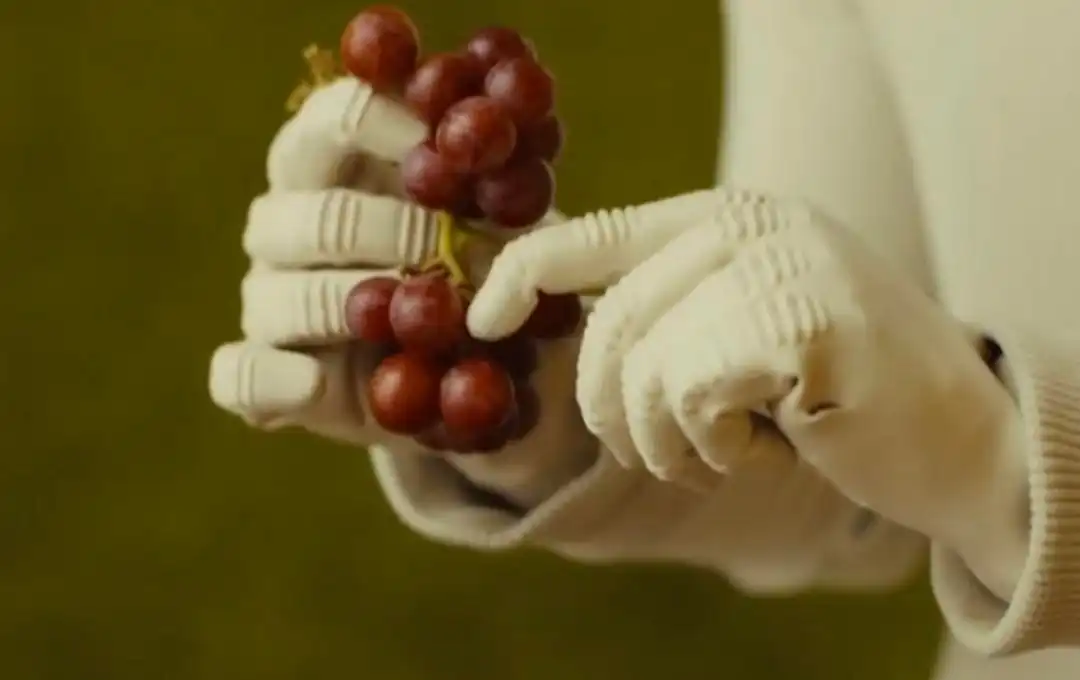
1X Technologies has released its trump card.
A 25-degree-of-freedom, tendon-driven robotic hand, mounted on its humanoid robot NEO, can handle screwing in light bulbs, picking up screws, zipping up zippers, pouring tea, plugging in USB-C cables, and signing in sign language, all with ease.
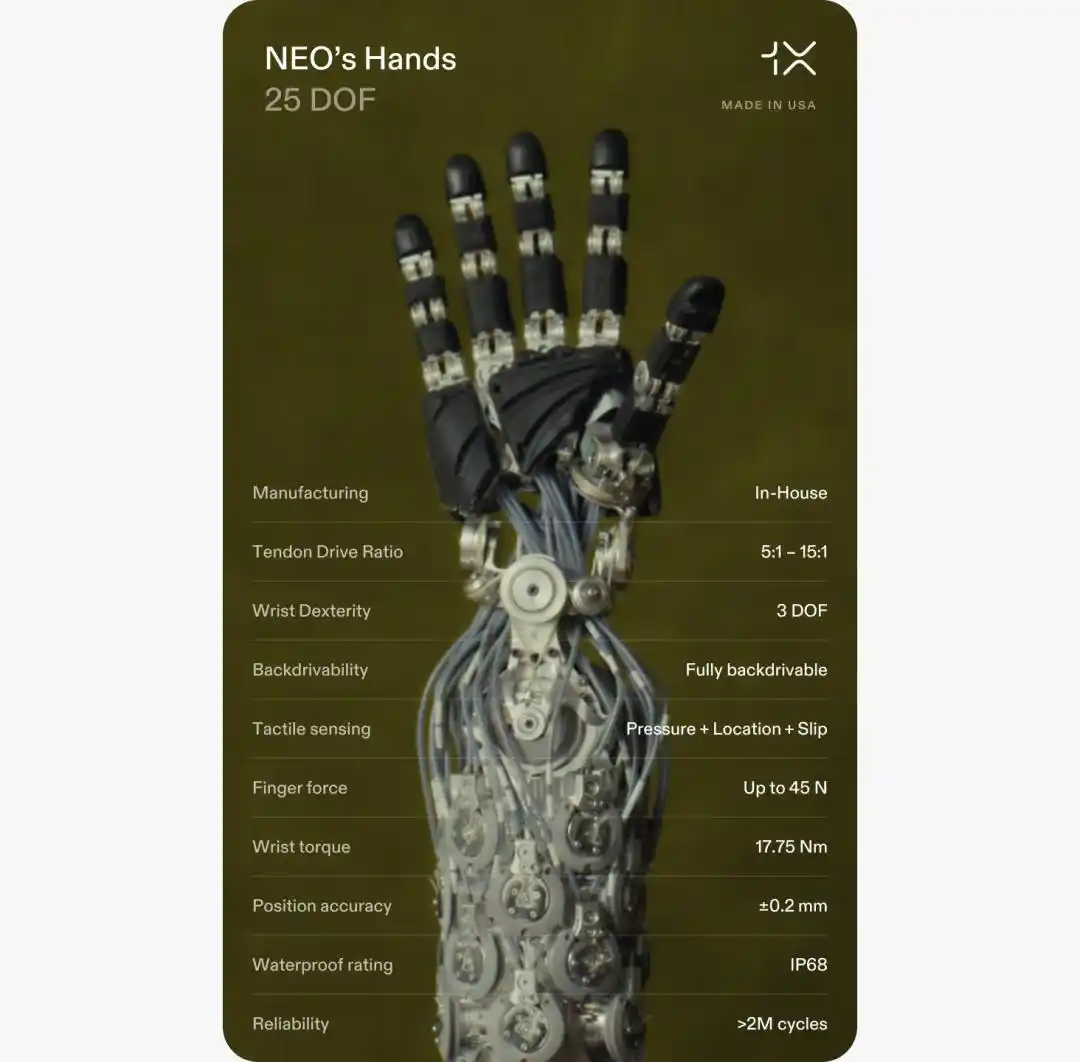
It features force transparency, backdrivability, full fingertip tactile sensing, positioning accuracy of ±0.2mm, a wrist joint that has survived over 2 million cycle tests, IP68 waterproofing, and can even wash itself.
The most crucial part: This year's production capacity is 10,000 units, and they are already running on the production line.
Bernt Børnich, founder and CEO of 1X, said: With these hands, robots can now do the things humans do with their hands every day.
The Joints Themselves Are Sensors
Most robotic hands are "write-only" devices.
Send a position command, the finger moves, but what it touched, how hard it was, whether it's slipping—none of that is known.
The reason lies in the gear ratio:
The industry's common 100:1 or even 200:1 gear reduction ratios swallow contact forces into friction; the signal disappears before it can travel back to the motor.
The result is that the hand itself is numb, forcing engineers to stick cameras on the outside and use vision to guess what's happening at the fingertips.
1X's approach is completely different.
NEO's hand was developed in-house from scratch, using a quasi-direct-drive tendon transmission system, with the transmission ratio compressed to between 5:1 and 15:1.
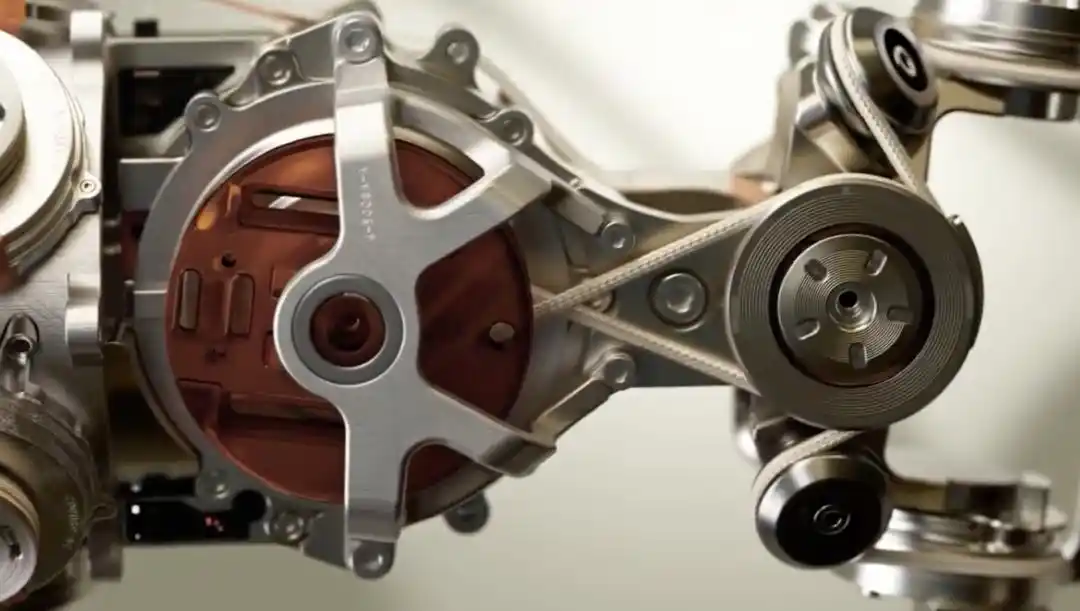
Of the 25 degrees of freedom, the fingers and palm account for 22 fully actuated DOF, with 3 in the wrist, all natively force-controlled and all backdrivable.
If you push its finger, it will compliantly yield, while precisely reporting the force you applied. Force flows out from the fingertip, and information flows back along the same physical path.
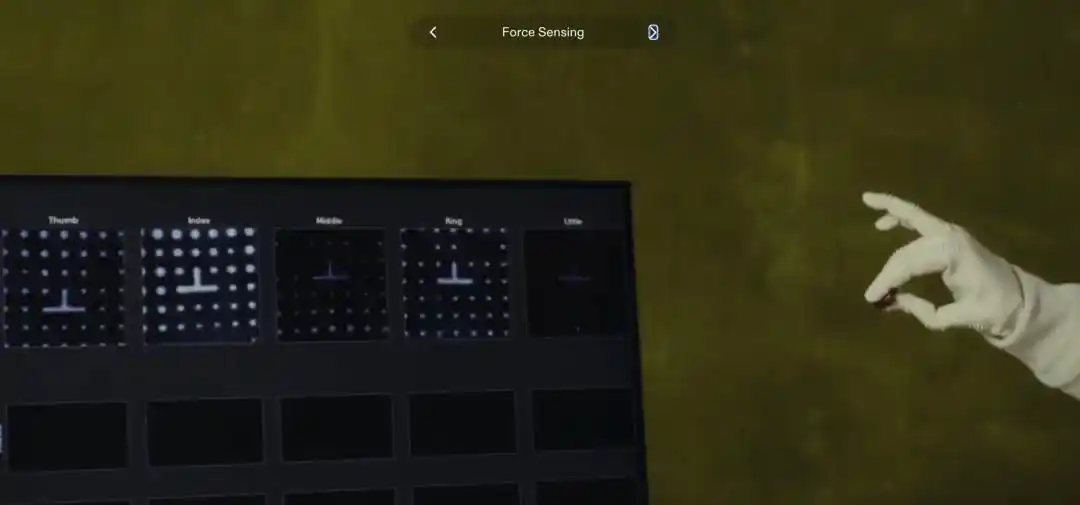
1X calls this "force transparency". It's this characteristic that turns every push, press, and pinch into a measurement.
Beyond force feedback, there is also proprioception because every joint is closed-loop controlled. The hand always knows its configuration without looking, just like a human can touch their two index fingers together with their eyes closed.
What It Can Do: From Picking Up Coins to Signing
What do 25 force-transparent degrees of freedom mean?
It covers a sufficiently rich range of grasping postures and manipulation actions. The distribution of DOF references human hand anatomy, with a key emphasis on strengthening the thumb's opposition ability, which is central to human fine manipulation.
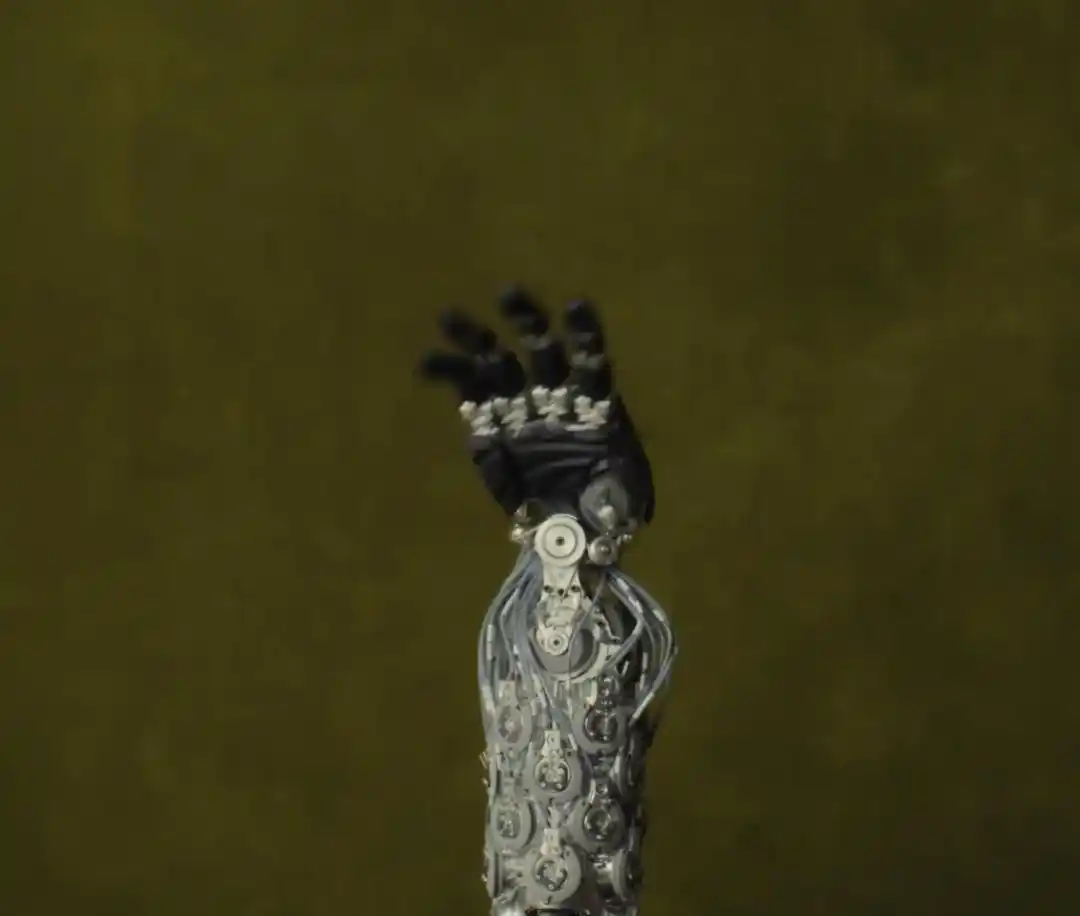
1X states that this configuration represents the optimal balance between operational capability, manufacturability, controllability, and maintainability.
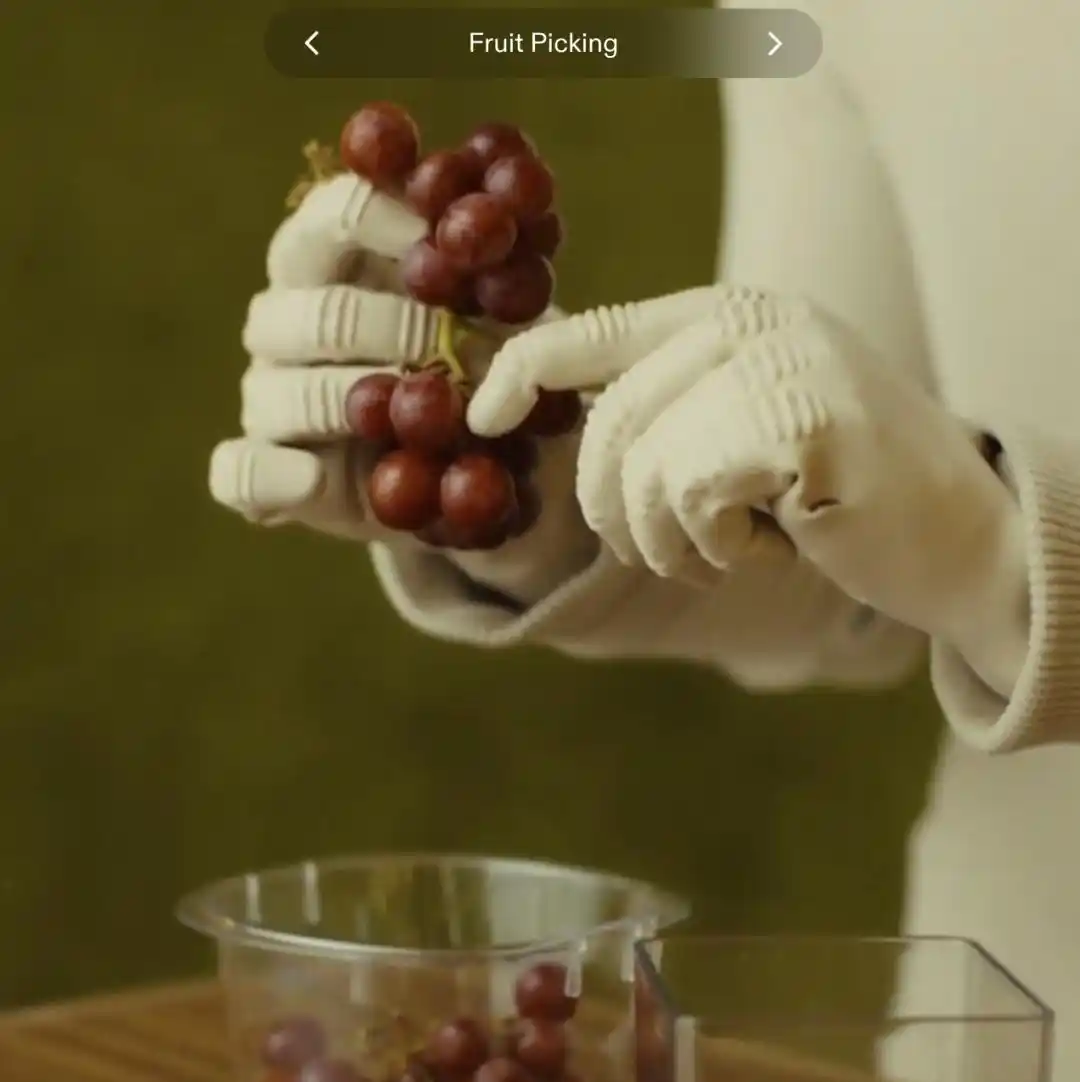
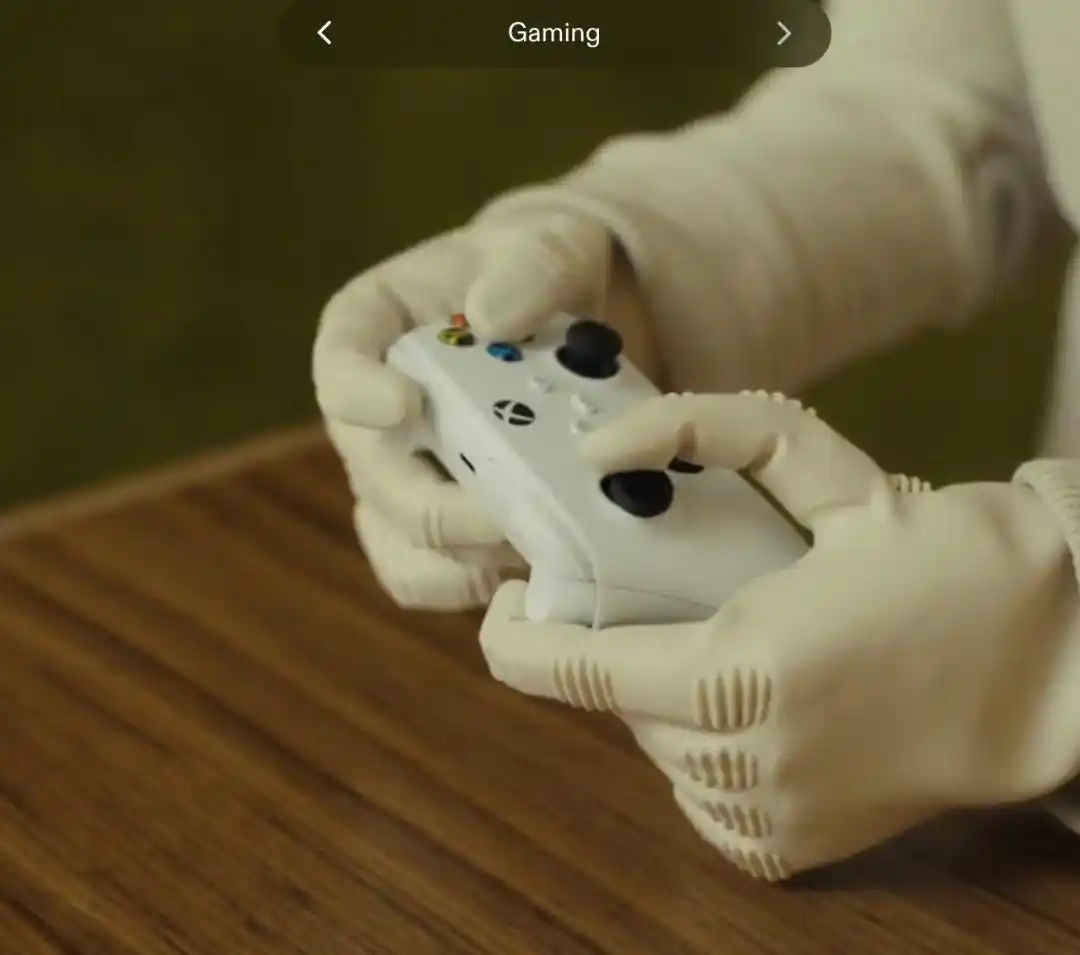
NEO can assemble LEGO bricks, pick out a single coin or screw from a wallet, rotate and install a light bulb, use a screwdriver, rotate objects within the hand, zip up a jacket zipper, sort grapes by color, pour tea from a kettle, catch a soft ball, plug in a USB-C charging cable, pick up a wine glass, wipe a table with a tissue and spray, and sign in sign language.
It's no slouch in strength either. The thumb carpometacarpal joint has a peak torque of 3.5 Nm, the finger metacarpophalangeal joints 2.6 Nm, fingertip flexion force reaches 45N, and wrist torque is 17.75 Nm. Opening doors, pushing loaded carts, lifting heavy objects, and tool operation are all within its capabilities.
Positioning accuracy is ±0.2mm, just covering the most common range for manipulating small objects in daily human labor.
On the tactile level, the fingertips and contact surfaces are covered with high-resolution tactile sensors that can perceive normal force, contact position, and shear force.
When an object begins to slip, the hand can detect it in real-time and re-grasp.
The visualizations released by 1X include contact normal vectors, heat maps of pressure during a handshake, and the process of delicately picking up fragile origami without causing any damage.
This skin is a functional material co-designed with the internal sensors and the underlying tendons. For small, transparent, deformable, or occluded objects, vision alone is simply insufficient.
The Production Line Is Already Running
The hand's motors are hidden in the forearm, similar to the location of human grip muscles, pulling the fingers via proprietary tendons that run through the wrist.
This keeps the hand itself lightweight while allowing it to maintain high output during continuous operation without overheating.
The entire hand is deeply vertically integrated: in-house motors, custom electronics, embedded sensors, proprietary tendon system, compact transmission mechanisms, hand-specific firmware—all designed and manufactured in-house. From tendon material to the outermost soft polymer and tactile sensing layer, everything is done end-to-end internally.
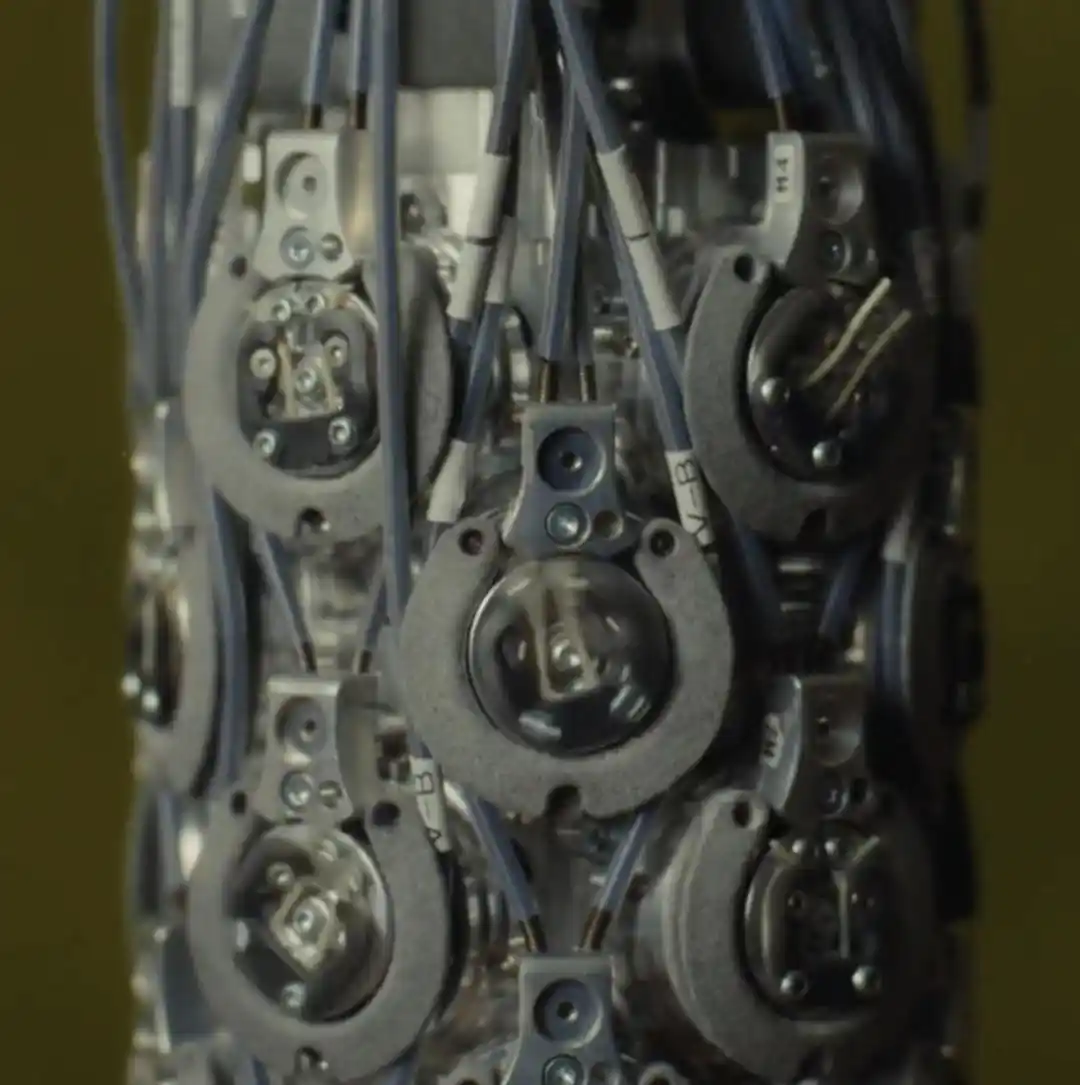
In terms of durability, components and complete finger assemblies have undergone millions of cycle tests, drive units have been validated under extreme temperatures, and the wrist joint passed over 2 million cycles under high load. Protection rating is IP68, materials are food-safe grade, allowing it to work by the sink and wash itself when dirty.
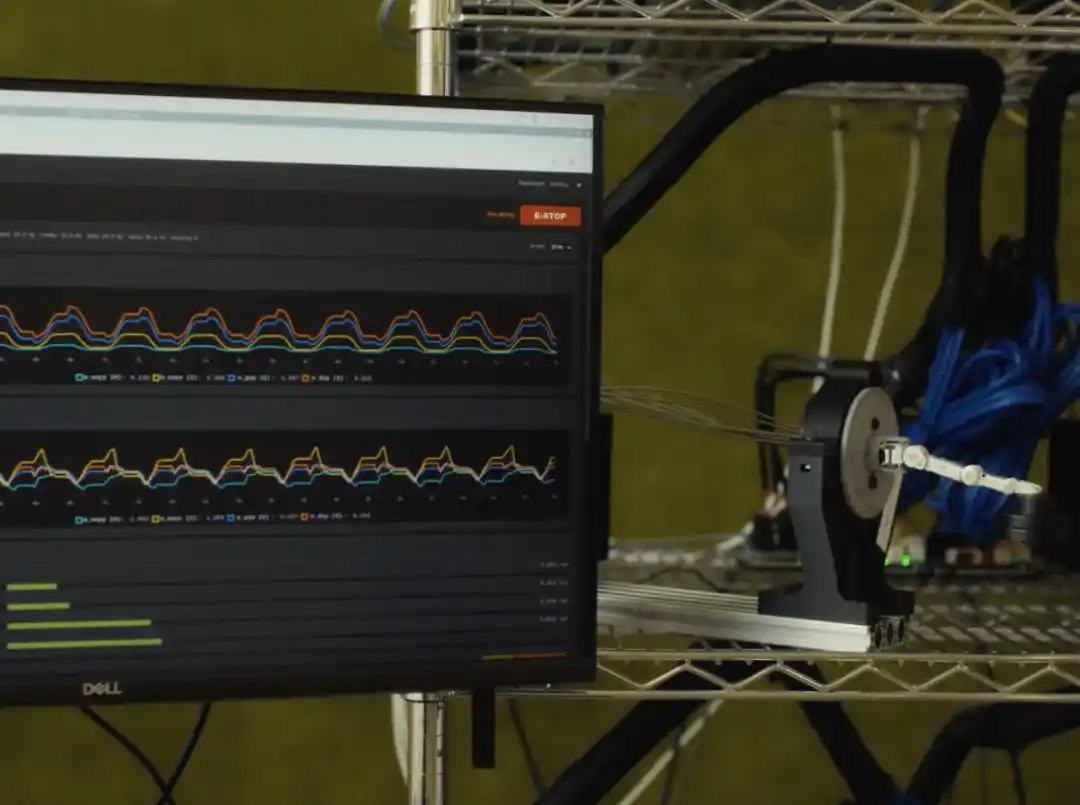
Safety is ensured by the mechanics themselves: the extremely low gear ratio combined with tendon drive and low distal inertia allows external impacts to safely backdrive the fingers.
In slow-motion footage released by 1X, the hand is shown being slapped, hammered, caught in a drawer, and smashed into foam, compliantly yielding without damage.
This hand has already been mass-produced in the hundreds on a scalable production line. The production target for this year is 10,000 units, each undergoing complete end-of-line testing.
A hand that can't be manufactured at scale can't generate data at scale, and without data at scale, there can be no embodied intelligence.
Reference link:[1]https://www.1x.tech/discover/neos-hands
This article is from the WeChat public account "QbitAI", author: Meng Chen