Penulis: Tanay Ved
Kompilasi: Saoirse, Foresight News
Poin Inti
- Sakelar biaya Uniswap menghubungkan token UNI dengan penggunaan protokol melalui mekanisme pembakaran pasokan token. Saat ini, biaya yang dihasilkan protokol akan digunakan untuk mengurangi pasokan UNI. Penyesuaian ini mengubah token UNI dari yang hanya memiliki fungsi tata kelola, menjadi aset yang dapat langsung mengakumulasi nilai.
- Data awal menunjukkan bahwa protokol menghasilkan biaya tahunan sekitar $26 juta, dengan kelipatan pendapatan sekitar 207 kali; sekitar 4 juta token UNI akan dibakar setiap tahun, dan langkah ini telah memasukkan ekspektasi pertumbuhan tinggi ke dalam valuasi token UNI sebesar $5,4 miliar.
- DeFi secara bertahap bertransformasi ke model token 'terkait biaya'. Mekanisme seperti pembakaran token, distribusi pendapatan untuk staker, dan penguncian 'vote-escrowed (ve)' semuanya bertujuan untuk menyelaraskan pemegang token lebih erat dengan sistem ekonomi protokol, sehingga membentuk kembali logika valuasi di bidang ini.
Pendahuluan
Pada akhir 2025, lapisan tata kelola Uniswap menyetujui proposal 'UNIfication', secara resmi mengaktifkan 'sakelar biaya' protokol yang telah lama dinantikan. Ini adalah salah satu perubahan ekonomi token paling berdampak dalam proyek blue-chip DeFi sejak 2020 — pada saat pasar semakin fokus pada 'pendapatan aktual' dan 'akumulasi nilai berkelanjutan yang digerakkan oleh biaya'. Kini, sakelar biaya ini menciptakan hubungan yang lebih langsung antara token UNI dengan pendapatan dan aktivitas perdagangan Uniswap, yang sendiri merupakan salah satu bursa terdesentralisasi (DEX) terbesar di ruang crypto.
Dalam artikel ini, kami akan menyelami sistem ekonomi token Uniswap pasca pengaktifan sakelar biaya, menilai dinamika pembakaran token UNI, mekanisme biaya, dan dampaknya terhadap valuasi, serta mengeksplorasi implikasi transformasi ini bagi lanskap DeFi secara keseluruhan.
Pemisahan Nilai Token DeFi dan Protokol
Salah satu tantangan inti di ruang DeFi adalah adanya pemisahan antara 'protokol yang kuat' dan 'token yang lemah'. Banyak protokol DeFi telah mencapai product-market fit yang jelas, tingkat penggunaan tinggi, dan pendapatan yang stabil, tetapi token yang mereka terbitkan seringkali hanya memiliki fungsi tata kelola, hampir tidak memungkinkan pemegangnya untuk mengakses arus kas protokol secara langsung. Dalam situasi ini, modal semakin cenderung mengalir ke area seperti Bitcoin, blockchain lapisan dasar (L1s), meme coin, sementara sebagian besar token DeFi diperdagangkan pada harga yang sangat terlepas dari kepemilikan aktual dalam pertumbuhan protokol.
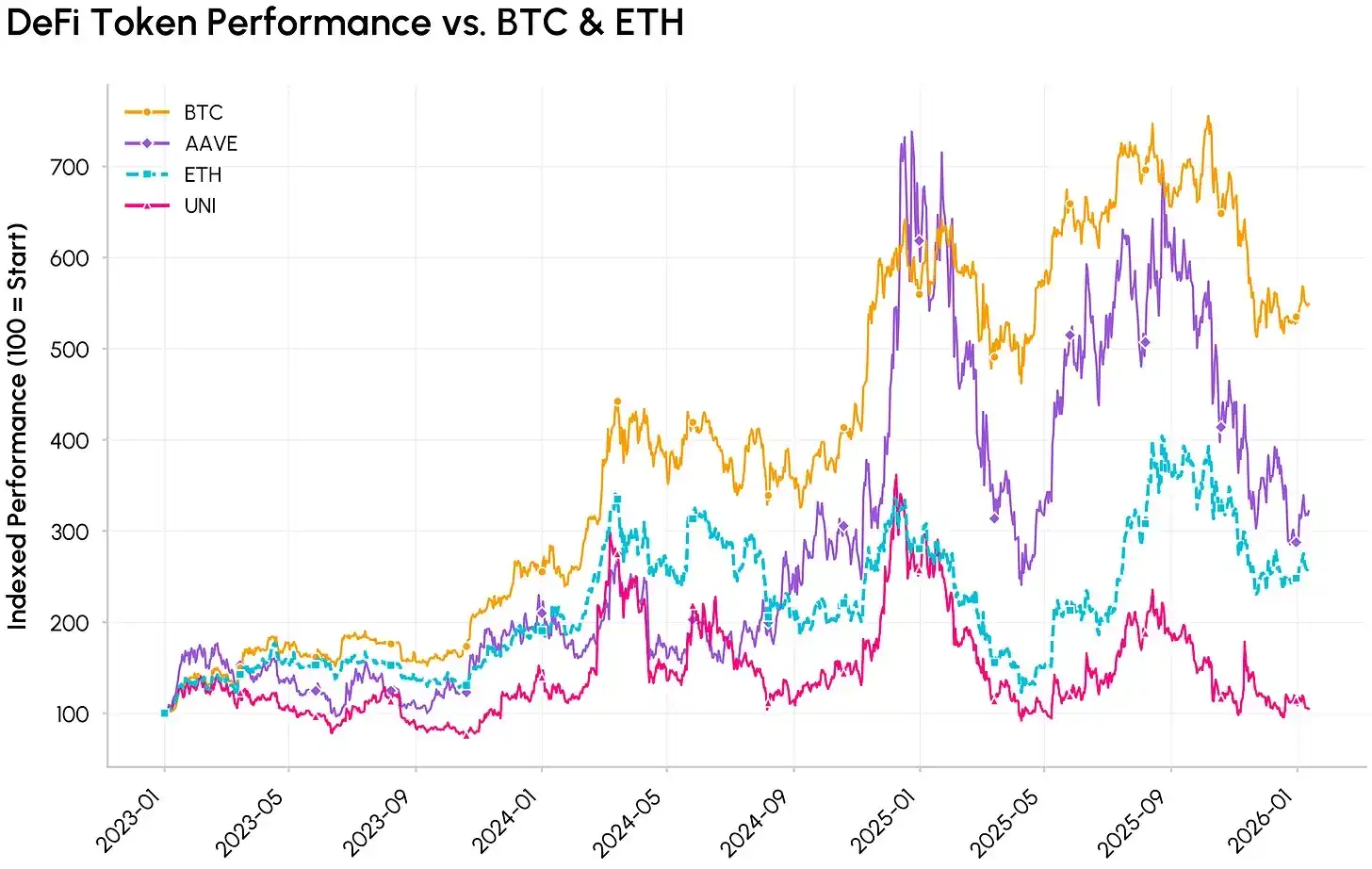
Perbandingan kinerja terindeks token DeFi (AAVE, UNI) dengan cryptocurrency arus utama (BTC, ETH)
Uniswap diluncurkan pada November 2018 sebagai bursa terdesentralisasi (DEX) di jaringan Ethereum, dengan desain awal untuk memungkinkan pertukaran token ERC-20 tanpa order book dan tanpa perantara. Pada tahun 2020, Uniswap menerbitkan token UNI dan memposisikannya sebagai token tata kelola — pendekatan ini sejalan dengan proyek blue-chip DeFi seperti Aave, Compound, Curve, yang tujuan utama penerbitan tokennya adalah untuk voting tata kelola dan insentif pengguna.
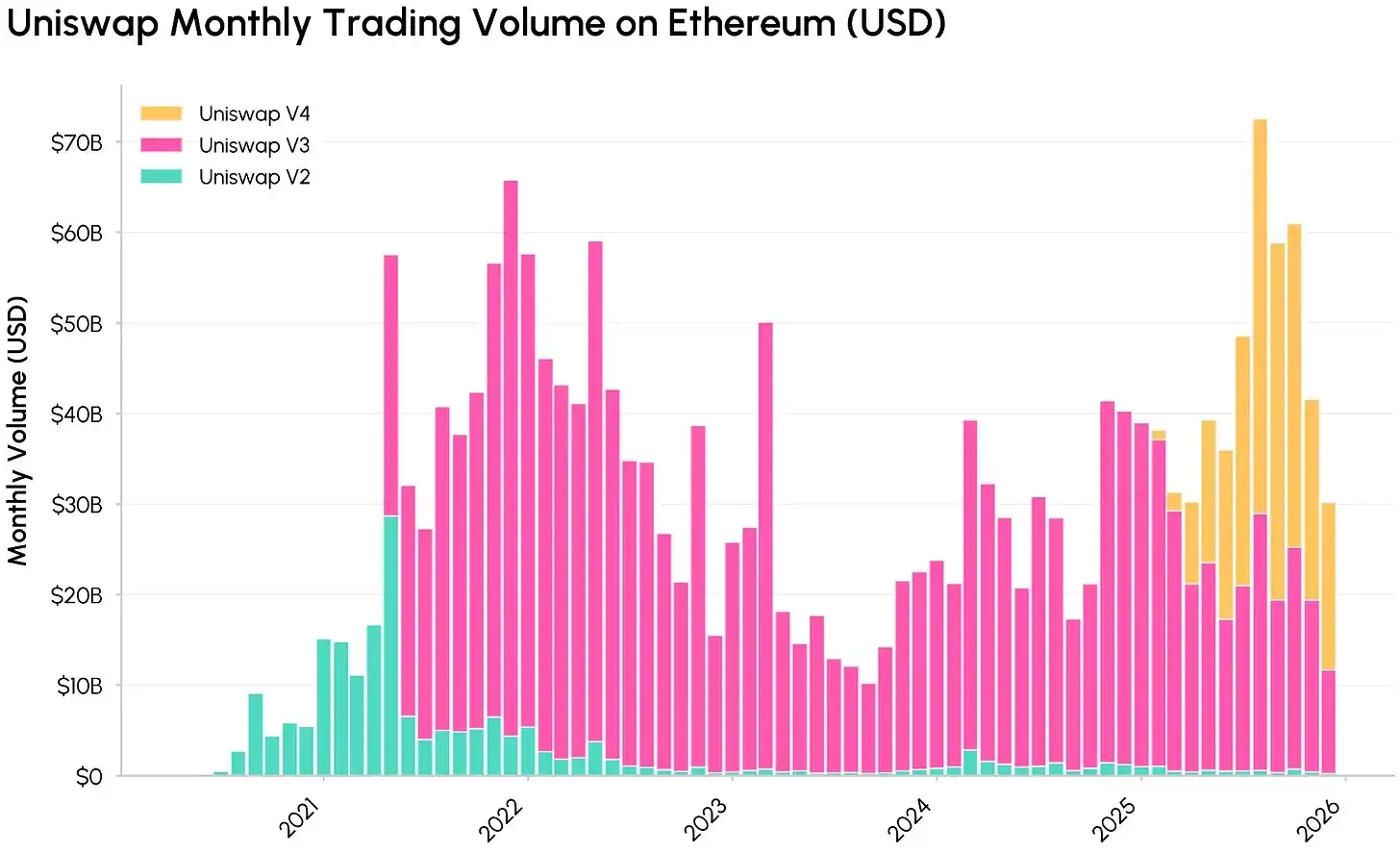
Tren volume perdagangan bulanan (dalam dolar AS) berbagai versi Uniswap (V2, V3, V4) di jaringan Ethereum, Sumber: Coin Metrics Network Data Pro
Seiring iterasi versi, Uniswap telah menjadi komponen inti infrastruktur keuangan on-chain, menangani volume perdagangan miliaran dolar, dan menciptakan pendapatan biaya yang signifikan untuk penyedia likuiditas (LP). Namun, seperti kebanyakan token tata kelola DeFi, pemegang token UNI tidak dapat langsung mendapatkan bagian dari pendapatan protokol, yang menyebabkan kesenjangan yang semakin lebar antara skala arus kas dasar protokol dan kepentingan ekonomi pemegang token.
Sebenarnya, nilai yang dihasilkan Uniswap terutama mengalir ke penyedia likuiditas (LP), peminjam, pemberi pinjaman, dan tim pengembang terkait, sementara pemegang token hanya mendapatkan hak tata kelola dan hadiah inflasi. Kontradiksi antara token 'hanya tata kelola' dan 'kebutuhan akumulasi nilai' inilah yang mendasari peluncuran sakelar biaya Uniswap dan proposal 'UNIfication' — proposal ini secara eksplisit mengaitkan nilai token UNI dengan penggunaan protokol, menyelaraskan pemegang token lebih erat dengan sistem ekonomi bursa terdesentralisasi (DEX).
Sakelar Biaya Uniswap: Mekanisme Biaya dan Pembakaran
Dengan disetujuinya proposal tata kelola 'UNIfication', protokol Uniswap memperkenalkan penyesuaian kunci berikut:
- Mengaktifkan Biaya Protokol dan Mekanisme Pembakaran UNI: Menyalakan 'sakelar biaya' protokol, mengalirkan biaya pool tingkat protokol dari Uniswap V2 dan V3 di mainnet Ethereum ke mekanisme pembakaran token UNI. Dengan membangun hubungan terprogram antara 'penggunaan protokol' dan 'pasokan token', model ekonomi UNI berubah dari 'hanya tata kelola' menjadi 'akumulasi nilai deflasioner'.
- Melaksanakan Pembakaran Token Treasury Retrospektif: Membakar 100 juta token UNI sekaligus dari treasury Uniswap, untuk mengkompensasi pendapatan biaya yang terlewat oleh pemegang token selama bertahun-tahun.
- Memasukkan Pendapatan Unichain: Biaya sequencer yang dihasilkan jaringan Unichain (setelah dikurangi biaya data Layer 1 Ethereum dan bagian 15% Optimism), akan sepenuhnya dimasukkan ke dalam mekanisme penangkapan nilai 'didorong-pembakaran' di atas.
- Menyesuaikan Struktur Insentif Organisasi: Mengintegrasikan sebagian besar fungsi Uniswap Foundation ke dalam Uniswap Labs, dan menetapkan anggaran pertumbuhan tahunan 20 juta UNI, memungkinkan Uniswap Labs fokus pada promosi protokol; secara bersamaan, menurunkan tingkat potongan mereka dalam antarmuka, dompet, dan layanan API menjadi nol.
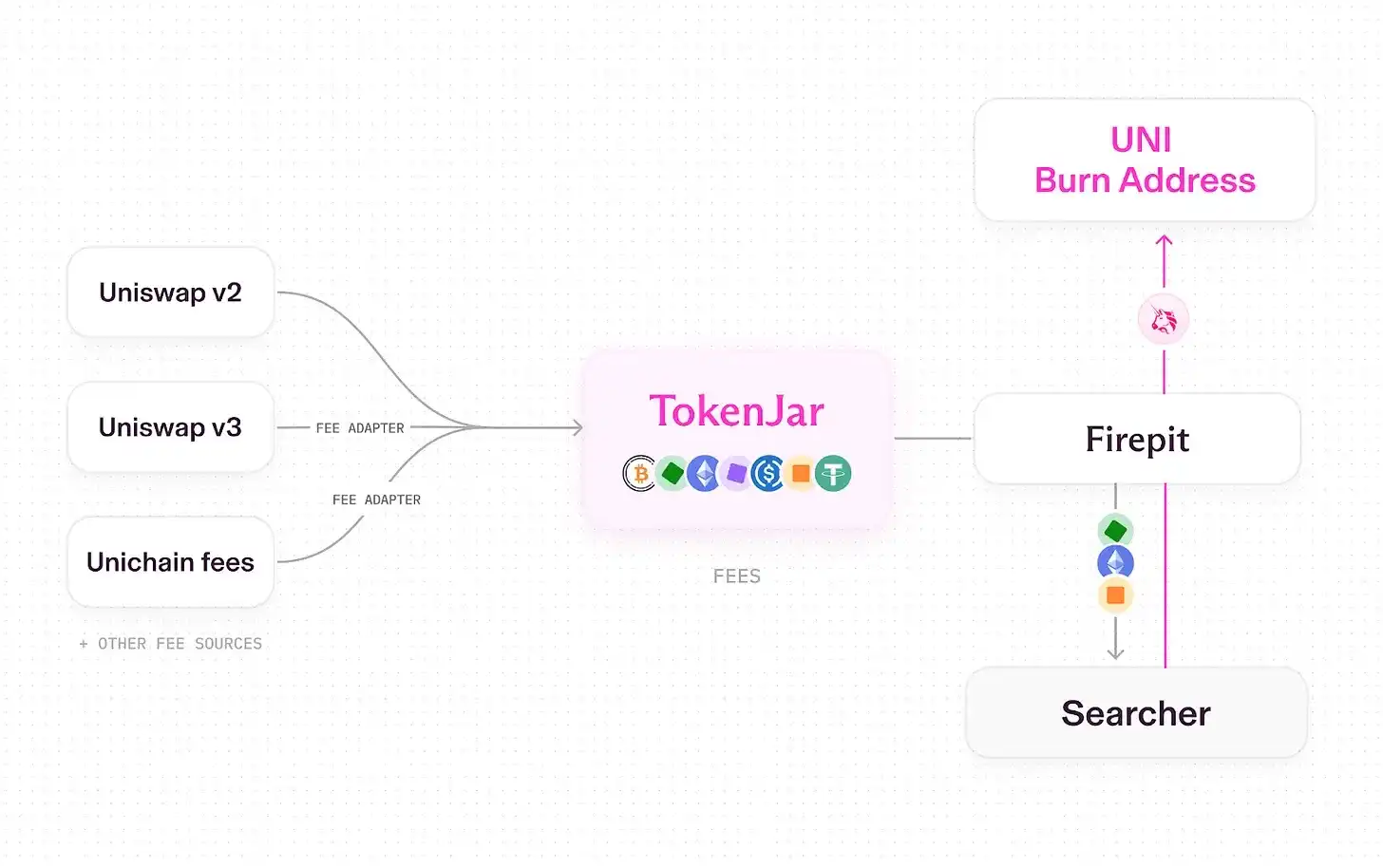
Alur lengkap konversi biaya protokol menjadi pembakaran token UNI setelah sakelar biaya Uniswap diaktifkan, Sumber: Uniswap UNIfication
Saat ini, Uniswap mengadopsi mode operasi 'berpipa', dan menangani pelepasan dan konversi aset (seperti pembakaran token UNI) melalui kontrak pintar khusus. Alur spesifiknya adalah:
- Transaksi di Uniswap V2, V3, dan Unichain menghasilkan biaya transaksi;
- Sebagian dari biaya tersebut menjadi milik protokol (sisanya didistribusikan ke penyedia likuiditas);
- Semua biaya tingkat protokol mengalir ke satu kontrak pintar treasury bernama 'TokenJar' di setiap chain;
- Nilai dalam TokenJar hanya dapat dilepaskan ketika token UNI dibakar melalui kontrak pintar 'Firepit'.
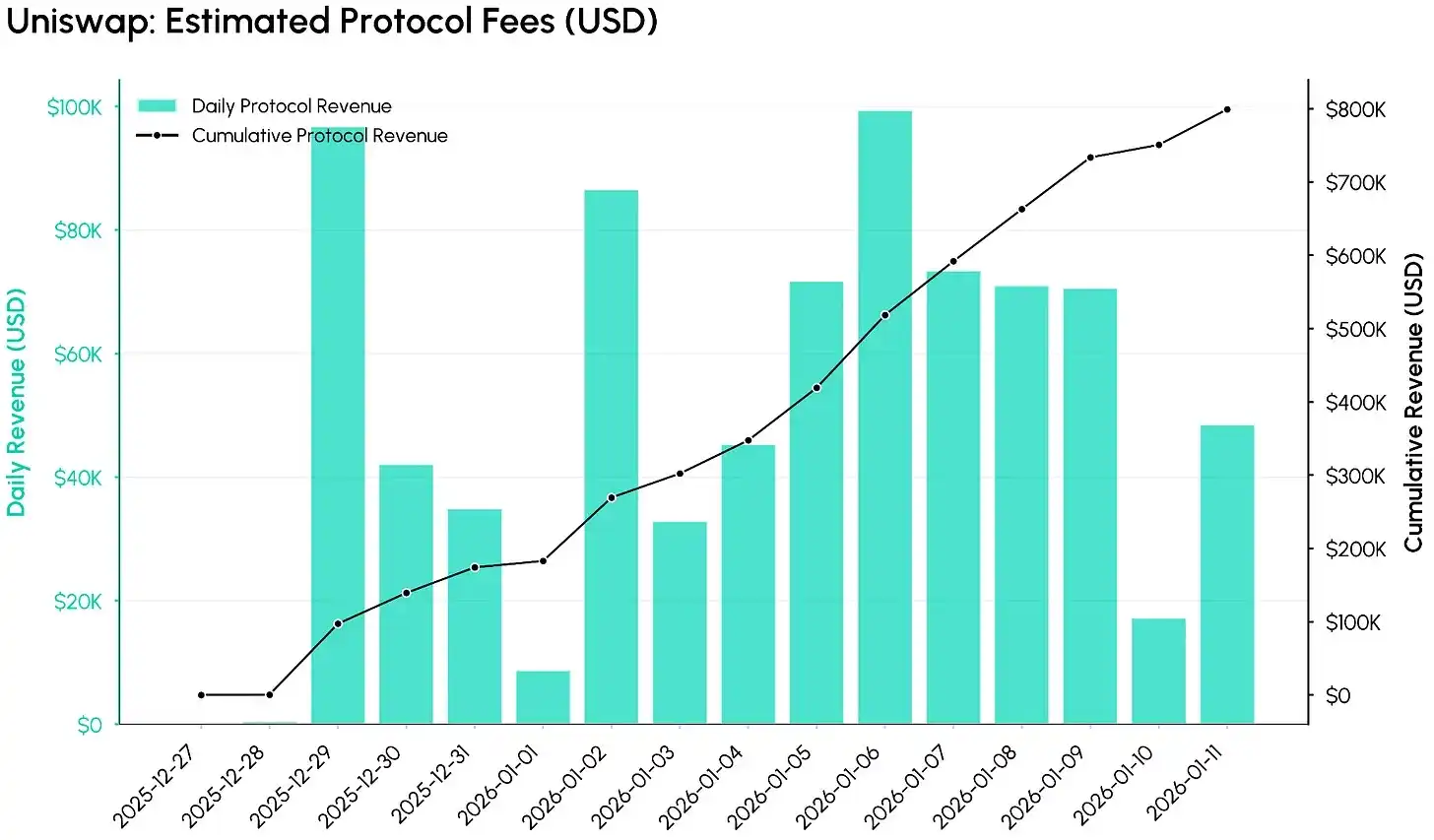
Data biaya protokol setelah sakelar biaya Uniswap diaktifkan (mulai 27 Desember 2025), Sumber: Coin Metrics ATLAS
Menurut data Coin Metrics ATLAS, dalam 12 hari pertama setelah sakelar biaya diaktifkan, biaya protokol dengan skala signifikan telah mengalir ke sistem. Grafik di bawah melacak perkiraan biaya protokol harian (dalam dolar AS) dan total kumulatif, terlihat bahwa dalam konfigurasi awal, sakelar biaya dengan cepat memonetisasi volume perdagangan Uniswap — hanya dalam 12 hari, biaya tingkat protokol kumulatif telah mencapai sekitar $800.000.
Jika kondisi pasar saat ini tetap stabil, pendapatan tahunan protokol diperkirakan sekitar $26 hingga $27 juta (sebagai referensi saja), tetapi pendapatan aktual akan tergantung pada aktivitas pasar dan kemajuan adopsi mekanisme biaya di berbagai pool dan chain.
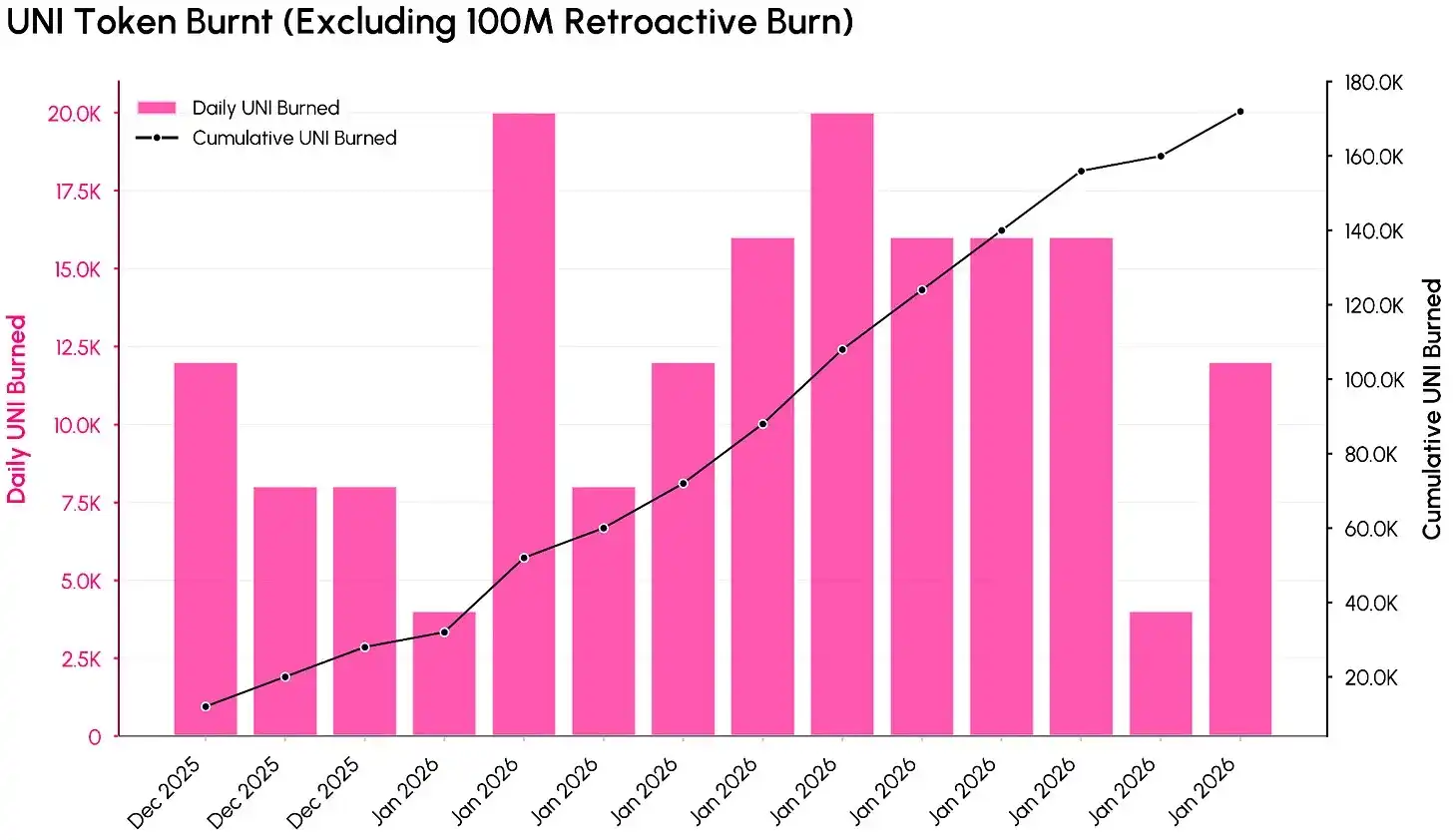
Data pembakaran token UNI setelah sakelar biaya Uniswap diaktifkan (tidak termasuk pembakaran retrospektif 100 juta), Sumber: Coin Metrics ATLAS
Gambar di atas menunjukkan bagaimana biaya protokol diubah menjadi pengurangan pasokan token UNI (tidak termasuk pembakaran retrospektif 100 juta). Pada saat data diambil, total token UNI yang dibakar telah mencapai sekitar 100,17 juta (setara dengan sekitar $557 juta), mewakili 10,1% dari total pasokan awal 1 miliar.
Berdasarkan data pembakaran 12 hari pertama setelah proposal 'UNIfication' berlaku, tingkat pembakaran tahunan token UNI diperkirakan sekitar 4 hingga 5 juta token. Data ini menyoroti bahwa penggunaan protokol kini dapat menghasilkan pembakaran UNI yang 'periodik, terprogram', bukan sekadar penerbitan token yang inflasioner.
Valuasi dan Dampak pada Lanskap DeFi
Dengan diaktifkannya sakelar biaya, valuasi token UNI tidak lagi terbatas pada 'fungsi tata kelola', tetapi dapat dinilai melalui 'perspektif arus kas'. Dengan kapitalisasi pasar UNI saat ini sebesar $5,4 miliar, dibandingkan dengan perkiraan biaya protokol tahunan sekitar $26 juta yang ditunjukkan data awal TokenJar, kelipatan pendapatannya sekitar 207 kali — valuasi ini lebih mendekati aset teknologi pertumbuhan tinggi, daripada bursa terdesentralisasi (DEX) yang matang. Jika bagian pembakaran treasury dikeluarkan, pembakaran tahunan UNI adalah sekitar 4,4 juta token, hanya 0,4% dari pasokan saat ini, yang relatif rendah dibandingkan valuasinya.
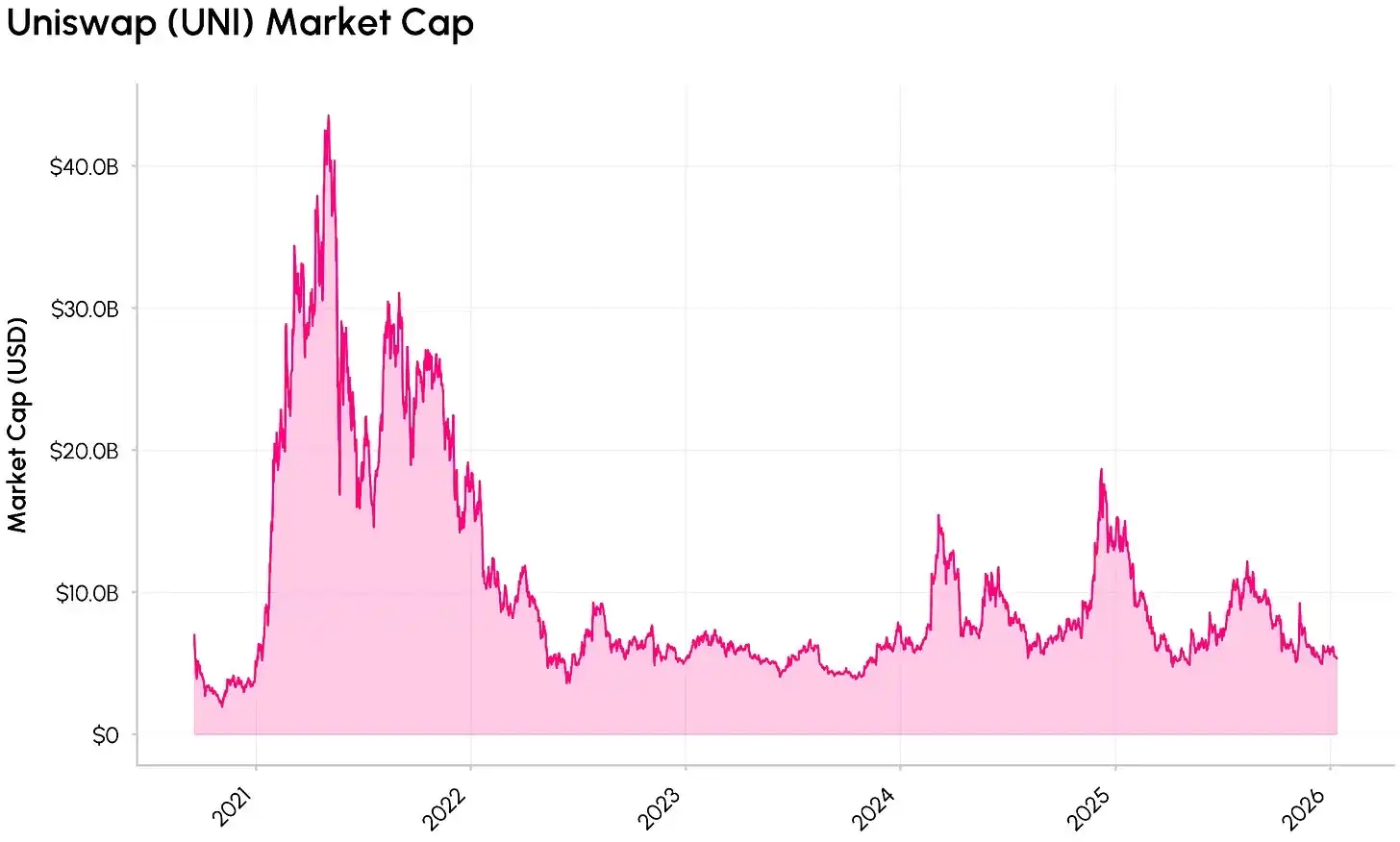
Tren kapitalisasi pasar token Uniswap UNI, Sumber: Coin Metrics Network Data Pro
Situasi ini menyoroti hubungan timbal balik baru: meskipun mekanisme penangkapan nilai yang lebih jelas meningkatkan daya tarik investasi UNI, data saat ini menyiratkan bahwa pasar memiliki ekspektasi yang sangat tinggi terhadap pertumbuhan masa depannya. Untuk menurunkan kelipatan pendapatan ini, Uniswap perlu mengambil langkah-langkah komprehensif: memperluas cakupan penangkapan biaya (seperti mencakup lebih banyak pool, meluncurkan fitur 'hook' V4, mengadakan lelang diskon biaya, mengoptimalkan Unichain), mencapai pertumbuhan volume perdagangan yang berkelanjutan, dan mengimbangi anggaran pertumbuhan tahunan 20 juta UNI dan pelepasan token lainnya melalui mekanisme deflasi.
Dari sudut pandang struktur industri, proposal 'UNIfication' mendorong lanskap DeFi ke arah di mana 'token tata kelola perlu dikaitkan secara jelas dengan ekonomi protokol'. Baik itu pembakaran token Uniswap, 'distribusi biaya langsung untuk staker' Ethena, 'penguncian vote-escrowed + berbagi biaya/suap' dari DEX seperti Aerodrome, atau mekanisme hybrid seperti model kontrak perpetual Hyperliquid, pada dasarnya adalah bentuk berbeda dari 'berbagi biaya protokol', dengan tujuan inti untuk memperkuat hubungan token dan ekonomi protokol. Dengan adopsi desain 'terkait biaya + didorong-pembakaran' oleh bursa terdesentralisasi terbesar di dunia, standar penilaian untuk token DeFi di masa depan tidak akan lagi terbatas pada 'Total Value Locked (TVL)' atau 'demam naratif', tetapi lebih fokus pada 'efisiensi konversi penggunaan protokol menjadi nilai abadi bagi pemegang'.
Kesimpulan
Pengaktifan sakelar biaya Uniswap menandai titik balik kunci: token UNI bertransformasi dari 'aset tata kelola murni' menjadi 'aset yang secara eksplisit terkait dengan biaya dan penggunaan protokol'. Transformasi ini membuat fundamental UNI lebih dapat dianalisis dan dapat diinvestasikan, tetapi juga membuat valuasinya menghadapi pengawasan yang lebih ketat — valuasi saat ini telah memuat ekspektasi kuat terhadap kemampuan penangkapan biaya masa depan dan potensi pertumbuhan.
Ke depan, dua variabel kunci akan mempengaruhi arah jangka panjang UNI: pertama, sejauh mana Uniswap dapat meningkatkan biaya tingkat protokol tanpa membahayakan kepentingan ekonomi Penyedia Likuiditas (LP) dan volume perdagangan; kedua, evolusi sikap regulator terhadap model 'token terkait biaya' dan 'token pembakaran-beli kembali'. Kedua faktor ini akan bersama-sama membentuk karakteristik risiko-imbal hasil jangka panjang token UNI, dan juga akan memberikan referensi penting bagi protokol DeFi lainnya tentang cara berbagi nilai dengan pemegang token.