The 'Crisis Helmsman' of Financial Markets Passes Away: Reflecting on Greenspan's Federal Reserve Career

marsbitPublished on 2026-06-22Last updated on 2026-06-22

Abstract

Former Federal Reserve Chairman Alan Greenspan, known as the 'crisis helmsman' of financial markets, has passed away at 100. His nearly 19-year tenure spanned four presidencies, from the 1987 stock market crash to the internet boom. Initially hailed as the 'Maestro' for his crisis management—famously intervening after Black Monday and during the LTCM collapse—his legacy became intertwined with the 2008 financial crisis. His market-friendly philosophy and the "Greenspan Put," an expectation of Fed support during downturns, were praised for fostering stability and growth in the 1990s but later criticized for encouraging excessive risk-taking and contributing to the housing bubble. Greenspan's career encapsulates the central debate of his era: whether markets can self-correct and if central banks should actively deflate asset bubbles. His passing reignites questions about the fine line between stabilizing markets and inadvertently sowing the seeds for the next crisis.

Former US Federal Reserve Chairman Alan Greenspan passed away on Monday at his home in Washington at the age of 100, due to complications from Parkinson's disease. His wife, Andrea Mitchell, NBC News' chief Washington correspondent, announced the news. To global markets, Greenspan was more than just the name of a former central banker: he presided over the Fed for nearly 19 years, witnessing America's journey from the 1987 stock market crash to the internet boom, and later becoming a central figure in the historical questioning surrounding the 2008 financial crisis after leaving office.
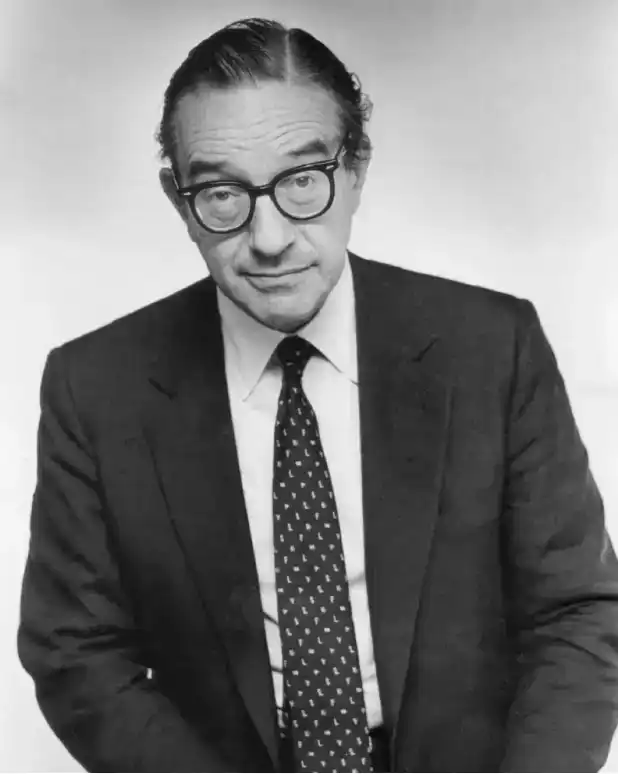
His life almost encapsulates the core debates of the US capital markets over the past few decades: whether markets can truly self-regulate, and whether central banks should actively intervene to prevent bubbles.

Presided over the Fed for Nearly 19 Years, Spanning Four Presidents

Greenspan assumed the role of Federal Reserve Chairman in August 1987 and served until January 2006, a tenure of nearly 19 years, making him the second-longest-serving Fed Chair in US history, second only to William McChesney Martin.

This tenure spanned the administrations of Ronald Reagan, George H.W. Bush, Bill Clinton, and George W. Bush, and covered the late Cold War, the internet wave, accelerated globalization, and the expansion of financial innovation. His ability to secure consecutive appointments across partisan administrations itself spoke to his unique position bridging Washington and Wall Street.

At his peak, Greenspan was often referred to as the "Maestro." This title wasn't merely personal acclaim; it represented the strong confidence in technological progress, free markets, and capital market efficiency that characterized the US in the 1990s. During that period of prolonged economic expansion, with inflation remaining moderate and stock markets and productivity rising in tandem, there was a widespread belief that central banks could sustain growth and stability without heavy-handed market intervention.

Greenspan's public persona was also marked by that of a technocrat. He was known for his cautious, often obscure, speech, yet markets would dissect his every word, searching for hints about the direction of interest rates. This era, where "a single sentence from the Fed Chair could sway global markets," reached its zenith during his tenure.

From the 1987 Crash to 9/11, He Was Once Seen as the Crisis Helmsman

Greenspan faced his first major test shortly after taking office. In October 1987, the US stock market experienced "Black Monday," with the Dow Jones Industrial Average plummeting in a single day. The Federal Reserve's swift injection of liquidity to support the markets was seen as a crucial step in stabilizing the financial system.

Thereafter, he navigated the Asian financial crisis, the Russian debt crisis, the Long-Term Capital Management (LTCM) turmoil, and the market shock following the September 11, 2001 attacks. At these junctures, the Fed's liquidity support and rate cuts reinforced Greenspan's image as a "crisis manager."

This policy style later became known in market parlance as the "Greenspan Put." It wasn't a formal policy but rather a market expectation: when asset prices fell sharply and the financial system was under pressure, the Fed would step in to provide a backstop. For investors, this expectation reduced panic; but from another perspective, it could also encourage higher leverage and more aggressive risk-taking.

Greenspan himself was not simply synonymous with "forever easy" policy. In 1996, he famously warned of stock market excess with the phrase "irrational exuberance," a line that became legendary in financial history. The problem, however, was that the warning did not translate into forceful policy action to suppress the asset bubble. For him, it was difficult for a central bank to accurately judge when a bubble was forming, and equally hard to preemptively burst it without harming the real economy.

This judgment appeared pragmatic during the boom times but became a starting point for controversy after the crisis.

Market-Friendly Philosophy, Re-examined After 2008

The underlying philosophy of Greenspan's policy was market-friendly. He believed market prices aggregated information, that financial innovation dispersed risk, and that excessive regulation would undermine efficiency. He was also a long-term supporter of free trade, deregulation, and technology-driven productivity gains.

This philosophy aligned perfectly with the economic atmosphere of the US in the 1990s. Following the Cold War's end, the expansion of globalization and information technology brought immense optimism. Financial innovation accelerated on Wall Street, with complex derivatives, securitized products, and bank off-balance-sheet activities proliferating. Before the crisis erupted, these instruments were often described as progress that improved capital allocation efficiency and dispersed financial risk.

But the 2008 financial crisis reshaped Greenspan's historical standing.

Critics argued that the Fed maintained low interest rates for too long after the dot-com bubble burst and 9/11, fueling housing market overheating; that regulators were overly tolerant of risk expansion by banks and Wall Street, failing to curb the growth of mortgage-backed securities, leverage, and complex financial products; and that the central bank, aware that asset prices might be deviating from fundamentals, was unwilling to directly confront bubbles.

This criticism does not mean the 2008 crisis can be attributed to Greenspan alone. Its causes were multifaceted, including regulatory structures, institutional incentives, rating systems, housing policies, global capital flows, and more. However, as the preeminent monetary policymaker and a leading proponent of free-market ideology before the crisis, it was perhaps inevitable that he would become a focal point of the debate.

Greenspan defended his policy legacy in his later years. He acknowledged a flaw in his judgment regarding the self-restraint capacity of financial institutions but also emphasized that bubbles are often difficult to accurately identify as they form, and that policymakers cannot possibly grasp the full picture of a crisis in advance.

His Historical Assessment Remains Suspended Between Two Eras

The reason Greenspan's passing still captures global market attention is that the debates surrounding him have not faded with time.

In the eyes of his supporters, he was the central bank helmsman during a prolonged period of American prosperity, maintaining financial system stability through multiple external shocks and helping guide the US economy through a critical transition from high-inflation memories to a low-inflation growth phase. Without the Greenspan era, it would be difficult to understand the optimism of the 1990s US capital markets and the global investor trust in the Federal Reserve.

In the eyes of his critics, he is also an iconic figure of an era of financial permissiveness. Low interest rates, light-touch regulation, and faith in the market's self-correcting abilities ultimately exposed their costs in the housing bubble, subprime crisis, and global financial system imbalances. After 2008, the shift in the Fed and the US regulatory system toward stronger oversight and larger-scale intervention was, in some ways, a reaction against the Greenspan era.

This is precisely the complexity of Greenspan's legacy: he was neither purely a creator of prosperity, nor can he be simply labeled the architect of crisis. He represented an era that believed markets, technology, and financial innovation could continuously improve economic performance; and the conclusion of that era has forced the world to re-examine the boundaries between central banks, regulation, and markets.

For investors today, Greenspan's death is not merely a historical footnote. Whenever markets bet the Fed will pivot to easing in a crisis, whenever rising asset prices coexist with financial stability risks, the questions of the "Greenspan era" resurface: Is the central bank stabilizing the markets, or is it encouraging the next round of risk accumulation? That question still has no definitive answer.


Related Questions

QWho was Alan Greenspan, and what was his role in the U.S. Federal Reserve?

AAlan Greenspan was a former Chairman of the United States Federal Reserve. He served in this role for nearly 19 years, from August 1987 to January 2006, making him the second-longest serving Fed Chair in U.S. history.

QWhat was the 'Greenspan Put' and what did it represent in financial markets?

AThe 'Greenspan Put' was not an official policy, but a market expectation that developed during Greenspan's tenure. It referred to the belief that the Federal Reserve, under Greenspan, would intervene with monetary easing or liquidity support to stabilize markets and asset prices during periods of significant financial stress or decline.

QWhat major criticism did Alan Greenspan face following the 2008 financial crisis?

AFollowing the 2008 financial crisis, Greenspan faced criticism for his market-friendly, deregulatory philosophy. Critics argued that the Fed maintained low interest rates for too long after the dot-com bust and 9/11, which helped fuel the housing bubble, and that regulatory oversight was too lax regarding the expansion of risky financial products and leverage in the banking system.

QHow is Alan Greenspan's legacy viewed in the context of two different economic eras?

AGreenspan's legacy is viewed as complex and straddling two eras. Supporters see him as the 'Maestro' who steered the U.S. through a period of long expansion and managed multiple crises, fostering trust in the Fed. Critics view him as a symbol of an era of financial deregulation and excessive faith in market self-correction, whose policies are seen as contributing to the conditions that led to the 2008 crisis.

QWhat is the enduring question about central bank policy that Greenspan's career highlights?

AGreenspan's career highlights the enduring question of whether a central bank, by acting to stabilize markets during downturns (like through the 'Greenspan Put'), is genuinely ensuring stability or inadvertently encouraging the accumulation of risk for the next financial bubble. The debate continues over the proper boundary between market intervention and non-intervention.

Related Reads

Report Interpretation: J.P. Morgan Details Micron's Pre-Earnings Sentiment, Current Hardware Sector Dynamics

Morgan Stanley analyst Joshua Meyers' report (June 21, 2026) highlights key trends in the hardware and semiconductor sector ahead of Micron's earnings. The core takeaways are: 1. **Micron & Memory:** Memory remains a high-conviction long theme, driven by strong AI demand and rising ASPs. However, investor focus is shifting to the sustainability of Micron's >80% gross margins and the specifics of potential new long-term supply agreements (SCAs). 2. **Hardware Supply Chain:** AI-related demand for servers, networking, and storage remains robust, but company performance is diverging. Celestica (CLS) shows improved margin confidence, Western Digital and Seagate benefit from pricing, Fabrinet (FN) sees predictable AI optics growth, and Teradyne (TER) anticipates a new Google customer. 3. **AI Capex & WFE Forecasts:** JPMorgan increased its Wafer Fab Equipment (WFE) market growth forecasts to 28% in 2026 and 29% in 2027. AI infrastructure financing is evolving, with higher project-level debt reducing constraints on capex expansion. The report signals that while the AI-driven hardware cycle is strong, the market is entering a phase focused on execution verification (e.g., Micron's SCA details, Fabrinet's ramp with Amazon) and valuation sustainability. Key near-term signals include Micron's guidance, Arista Networks' outlook, and the pace of demand normalization post potential tariff-related pull-ins.

marsbit3h ago

Report Interpretation: J.P. Morgan Details Micron's Pre-Earnings Sentiment, Current Hardware Sector Dynamics

marsbit3h ago

Research Report Analysis: The Fed's New Chair's Debut – New Leader, But Same Script?

Report Analysis: Federal Reserve's New Chair Debut – A New Captain, But the Same Script? Morgan Stanley's chief global economist Seth B. Carpenter analyzes the first FOMC meeting under new Fed Chair Kevin Warsh in a June 21 report. Warsh deliberately avoided providing forward guidance on interest rates, aligning with his philosophy. However, market expectations for a rate hike this year were reinforced. Key signals lie elsewhere: inflation may fall more than expected, and quantitative tightening (QT) could be more aggressive than anticipated. The FOMC's "dot plot" suggests only one rate hike in 2026. Carpenter argues that if inflation undershoots forecasts, the logic for even a single hike weakens, especially as projections indicate potential rate cuts in 2027. On QT, Warsh's stance is clear. Carpenter notes that measures like halving the Treasury's account balance could shrink the Fed's balance sheet by around $500 billion with minimal market impact. Combined with adjustments to reserve interest and liquidity rules, the ultimate QT scale may exceed expectations, though its market effect might be less disruptive unless the Fed actively sells Mortgage-Backed Securities (MBS). While Warsh initiated a review of the Fed's policy framework, the 2% inflation target remains intact for now. The report concludes that the market may be overestimating the significance of reduced forward guidance and the near-term rate hike risk, while potentially underestimating the scope and manageable nature of the coming balance sheet reduction. The key debates will hinge on upcoming core PCE data, the specifics of the QT path, and the framework review's findings.

marsbit3h ago

Research Report Analysis: The Fed's New Chair's Debut – New Leader, But Same Script?

marsbit3h ago

Critical Game Week: BTC Retracement Confirmation vs. HYPE Support Battle | Guest Analysis

This weekly analysis outlines a critical juncture for BTC and HYPE markets, focusing on key price level confirmations. **BTC Analysis:** BTC is at a pivotal point after a five-wave rally from the June 5th low of $59,100. The price has broken below a short-term rising channel's lower boundary, with the current move seen as a pullback to test this breakdown. Failure to reclaim this level could lead to a retest of the $59,000-$60,000 support zone. The core scenario hinges on this channel retest outcome. * **Key Levels:** Resistance at $64,500-$65,000 (channel boundary) and $69,500-$70,500. Support at $59,000-$60,000 and $55,000. * **Strategy:** A core bearish stance is maintained (20% short from last week), with short-term plans for tactical trades. Three detailed contingency plans (A/B/C) are provided for short positions on resistance tests or breakdowns, emphasizing strict stop-loss discipline. **HYPE Analysis:** HYPE shows strong momentum but is currently in a corrective phase after hitting a new high of $76.94. The price is retesting the crucial $64-$66 support area. * **Key Levels:** Resistance near $77 and $80-$82. Support at $64-$66 and $52-$54. * **Strategy:** The short-term approach is "buy on dips, avoid chasing rallies." A long position is considered only if clear stabilization signals appear at the $64-$66 or deeper $52-$54 support zones, with tight risk controls. **General Risk Management:** A standardized trailing stop-loss protocol is emphasized: set initial stop, breakeven at +1% profit, then trail stops upward to lock in gains. *Disclaimer: All analysis is presented as a personal trading framework, not investment advice. Market conditions are complex and require dynamic adjustment.*

marsbit3h ago

Critical Game Week: BTC Retracement Confirmation vs. HYPE Support Battle | Guest Analysis

marsbit3h ago

Research Report Interpretation: Citi Attends AWS Summit, Bullish on Cloud Business Acceleration but Data Governance Remains Key Variable

Citi analyst Tyler Radke's team attended the AWS New York Summit (June 17-18), engaging with over 10 clients and partners. In a June 19 report, they highlighted the summit's focus on scaling agent AI for enterprise deployment. Citi maintains a "Buy" rating on Amazon, forecasting AWS revenue growth to accelerate to 37% in FY27 from 30% in FY26, noting this estimate may be conservative. Key takeaways: 1. **AWS Strategy Shift:** AWS is moving from proof-of-concepts to scalable deployment. New offerings like AWS Context (building enterprise knowledge graphs), Amazon Quick (cross-application AI assistant), and security tool Continuum address core enterprise pain points for AI adoption. 2. **Data Infrastructure Beneficiaries:** Data infrastructure companies like Snowflake, Elastic, Oracle, and ClickHouse are seen as direct beneficiaries of scaling AI workloads, as evidenced by strong growth and use cases presented. 3. **Critical Role of Data Governance:** As AI agents scale from hundreds to thousands, effective data governance becomes the key variable for deploying AI in core business processes. AWS Context represents AWS's strategic extension from providing compute/models to offering a data governance infrastructure layer. The report emphasizes that without solving data governance, AI will remain confined to pilot projects. The investment thesis focuses on AWS revenue acceleration and data infrastructure vendors' growth, while monitoring signals like AWS's quarterly revenue growth, Bedrock AgentCore task volume, and pricing impacts on companies like Elastic.

marsbit3h ago

Research Report Interpretation: Citi Attends AWS Summit, Bullish on Cloud Business Acceleration but Data Governance Remains Key Variable

marsbit3h ago

Trading

Spot
Futures
活动图片