Bull Run: Four Key Drivers Behind the Overnight Market-Wide Surge in Crypto

marsbitPublished on 2026-08-20Last updated on 2026-08-20

Abstract

"Crypto markets surged overnight with Bitcoin reclaiming $69,000 and Ethereum jumping nearly 20%. Key drivers include: 1) The U.S. Treasury doubling its long-term bond buyback size, lowering yields and boosting risk appetite. 2) Positive regulatory signals from a White House crypto summit and a new SEC proposal offering funding exemptions. 3) A reversal in Bitcoin ETF outflows, indicating renewed institutional buying. 4) A massive short squeeze, with over 93% of recent liquidations being short positions, amplifying the price moves."

Author|jk

The quiet crypto market suddenly roared "bull run" today, with mainstream cryptocurrencies collectively experiencing a sharp rally. Bitcoin reclaimed the $69,000 mark, Ethereum surged nearly 20% in a single day, and Hyperliquid skyrocketed over 22%. The rapid price surge was accompanied by a large-scale liquidation of short positions.

Mainstream Cryptocurrencies Rise Across the Board

  • Bitcoin: According to Coingecko data, currently trading at $69,165, up 7.4% in 24 hours, with a 24-hour trading range between $64,123.86–$69,892.23, a total market cap of $1.393 trillion, and 24-hour volume of $41.587 billion. After maintaining a narrow range in the morning, the price initiated a rapid rally during the European trading session.
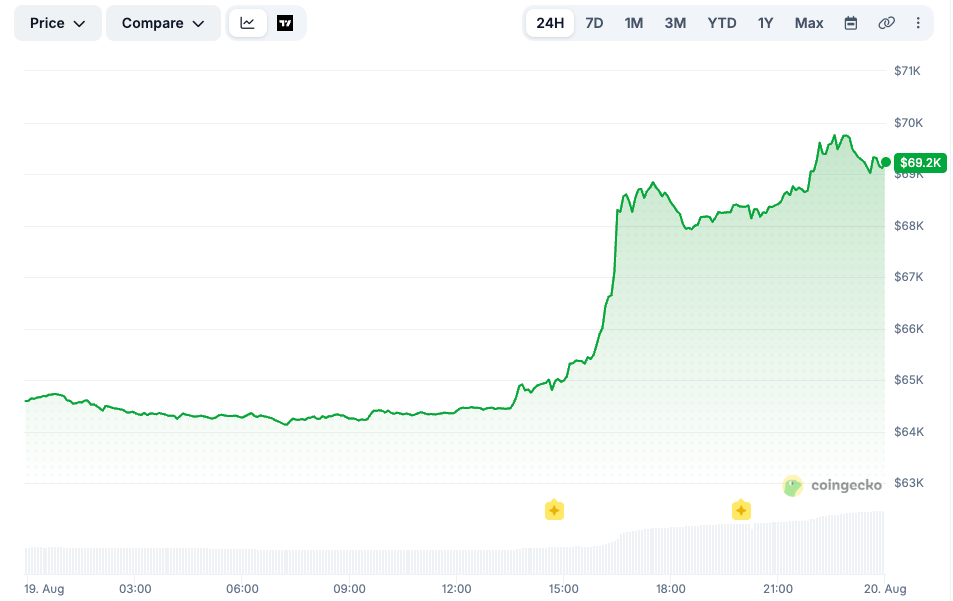
Bitcoin Price Chart, Source: Coingecko

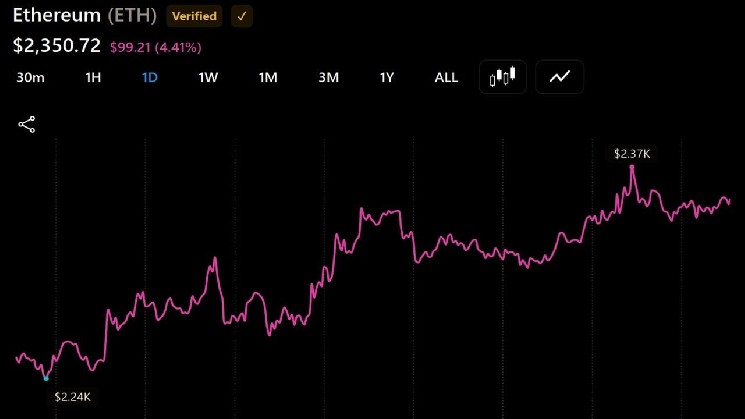
  • Ethereum: Currently trading at $2,269.04, surging 18.6% in 24 hours, with a trading range of $1,905.44–$2,318.66, market cap reaching $274.047 billion. Ethereum's gains in this rally significantly outperformed Bitcoin's, and its exchange rate against BTC also strengthened, indicating accelerated capital inflow back into the Ethereum ecosystem.
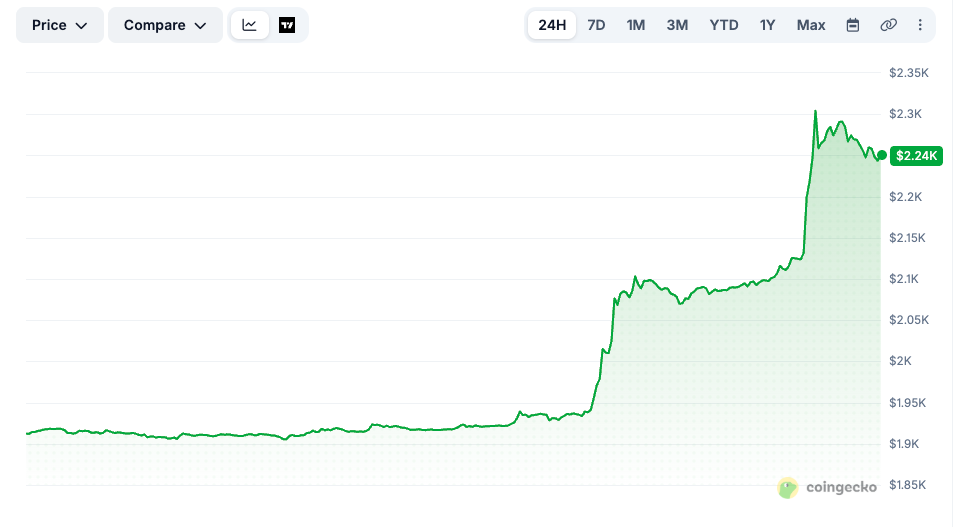
Ethereum Price Chart, Source: Coingecko

  • BNB: Currently trading at $631.92, up 4.9% in 24 hours, with a relatively moderate gain among mainstream large caps, trading range $600.92–$635.85.
  • Solana: Currently trading at $85.65, up 11.2% in 24 hours, trading range $76.59–$86.96, market cap $49.952 billion, the chart shows an accelerated breakout above previous highs.
  • Hyperliquid (HYPE): The most dramatic gainer in this rally, currently trading at $71.41, surging 22.2% in 24 hours, trading range $58.04–$72.28.

Reason Analysis: Macro Spark, Leveraged Structure Amplifies Gains

Considering recent market dynamics and derivatives data, this rally was not driven by a single factor, but rather the combined effect of macro liquidity tailwinds, warmer regulatory signals, and the concentrated unwinding of leveraged short positions.

Reason One: U.S. Treasury's unexpected "injection," lowering long-term rates, boosting risk appetite. On August 19 local time, the U.S. Treasury Department announced it would at least double the size of its long-term Treasury buyback operations, increasing from $2 billion per operation to over $4 billion, covering the period from September 9 to November 4, primarily targeting 10 to 30-year Treasury bonds. This move was seen as a direct response to the recent surge in the 30-year Treasury yield to its highest level since 2007 (briefly reaching 5.34%). Following the announcement, yields on both the 10-year and 30-year Treasuries immediately fell, and U.S. stock futures rose in tandem, with the overall improvement in risk appetite providing a tailwind for the crypto market. The market interpreted the Treasury's operation as a de facto liquidity injection, and its timing aligns closely with the start of the crypto market rally.

Reason Two: White House crypto summit combined with SEC regulatory easing shifts policy sentiment positively. On the same day, Trump met with crypto industry executives from companies like Coinbase, Ripple, Gemini, and leaders from the SEC and CFTC at the White House, reiterating efforts to push the CLARITY Act through the Senate quickly to provide a clearer regulatory framework for the industry. Just one day before the summit, the SEC formally proposed a new draft rule named Regulation Crypto Assets, aiming to provide crypto project teams with a fundraising exemption channel of up to $75 million per year. The intensive release of friendly signals from regulators and the White House within the same week has somewhat alleviated market concerns about previous policy uncertainty, providing a narrative foundation for capital to flow back into crypto assets.
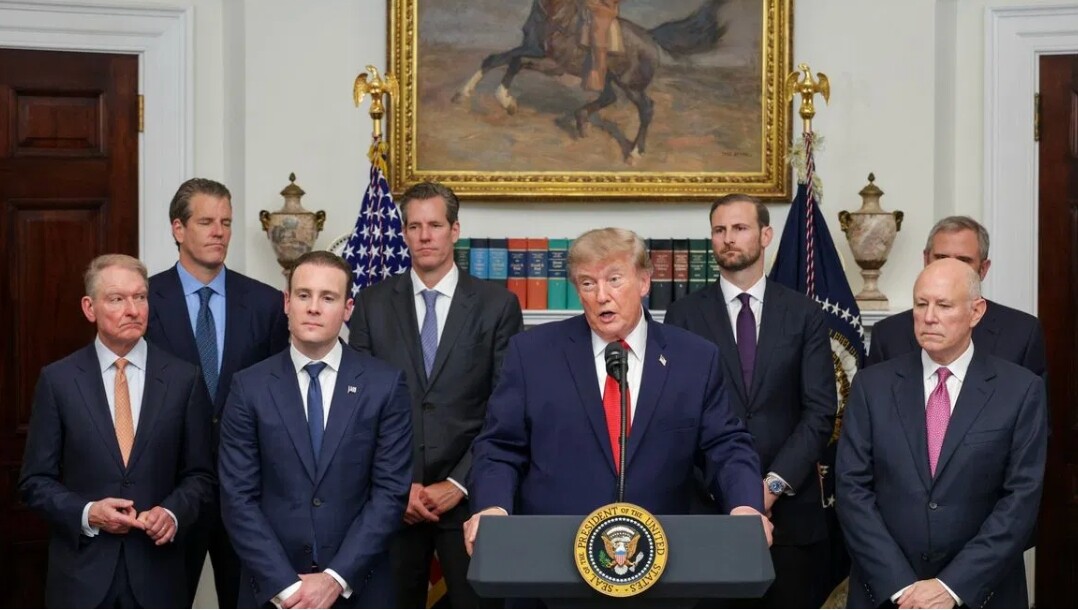
Trump meets industry leaders, Source: ABCNews

Reason Three: Bitcoin Spot ETF outflows trend reverses, whales accumulating on dips. Previously, Bitcoin Spot ETFs had seen consecutive days of net outflows. However, this rally is accompanied by signs of improving fund flows, with leading products like BlackRock's IBIT and Fidelity's FBTC recording net inflows again, indicating institutional capital is returning. Meanwhile, on-chain data shows that large holder addresses, after a period of sustained selling for about 60 days, have begun accumulating again, providing support on the spot side for price stabilization and creating conditions for the subsequent squeeze on leveraged shorts.

Reason Four: Concentrated liquidation of leveraged shorts creates a typical "short squeeze" scenario. Looking at derivatives data, the scale of short liquidations during this rally far exceeded long liquidations. According to Coinglass data, as of publication time, total 24-hour liquidations across all exchanges have expanded to $2.98 billion, with over 170,000 traders liquidated, the vast majority being shorts; in a 4-hour window, short liquidations once accounted for up to 93.3% of the total. The largest single liquidation order across all networks appeared on Hyperliquid's BTC-USD contract, amounting to $48.8 million. The forced liquidation of large short positions often creates an instantaneous vacuum of buy orders in the order book, pushing prices to accelerate away from their previous range, thereby triggering more stop-loss orders and forming a positive feedback loop of "longs squeezing shorts."


Related Questions

QWhat were the four main reasons identified in the article for the sudden surge across the cryptocurrency market?

AThe four main reasons were: 1) The US Treasury's unexpected liquidity injection by doubling its long-term Treasury bond buyback operation, which lowered long-term yields and boosted risk appetite. 2) Positive regulatory sentiment from the White House crypto summit and the SEC's new regulatory draft, easing policy uncertainty. 3) A reversal in the outflow trend of Bitcoin spot ETFs and renewed accumulation by large investors ('whales'). 4) A classic 'short squeeze' where leveraged short positions were liquidated on a large scale, amplifying the price rise.

QAccording to the article, which cryptocurrency posted the highest 24-hour gain, and what was its percentage increase?

AAccording to the article, Hyperliquid (HYPE) posted the highest 24-hour gain, with a surge of 22.2%.

QHow did the article describe the role of the SEC's new regulatory draft in the market rally?

AThe article described the SEC's proposed new rule, 'Regulation Crypto Assets,' as a positive regulatory signal that eased market concerns about policy uncertainty. The draft aims to provide a financing exemption channel for crypto projects, offering up to $75 million per year. This, combined with signals from the White House summit, provided a supportive narrative for capital flowing back into crypto assets.

QWhat specific action by the US Treasury coincided with the start of the crypto market rally, and what was its intended effect?

AThe specific action was the US Treasury's announcement to at least double the size of its long-term Treasury bond buyback operations, increasing from $2 billion to over $4 billion per operation. This was a direct response to high long-term bond yields and was interpreted by the market as a form of liquidity injection. Its intended effect was to lower long-term interest rates (like the 10-year and 30-year Treasury yields), which in turn boosted overall risk appetite among investors.

QWhat data point from Coinglass indicated that a short squeeze was a major factor in the price surge?

AThe data point from Coinglass indicating a major short squeeze was that within a 4-hour window, short liquidations accounted for as high as 93.3% of the total liquidations. Furthermore, over a 24-hour period, the total liquidation amount reached $2.98 billion, with short positions making up the overwhelming majority of that figure.

Related Reads

Haiwei Huaxin's Official Seal Seized by Over a Hundred People, High-Stakes Corporate Battle's 'Nuclear Deterrence' in Action Again

On August 18th, Haowei Huaxin, a semiconductor firm specializing in gallium arsenide and gallium nitride wafers, reported that over a hundred individuals forcibly entered its offices and seized the company's official seals from a safe, including the corporate, contract, and party committee seals. The incident is the latest escalation in a protracted control dispute. Haowei Huaxin, established in 2010, was originally a joint venture. Control became contested after 2021 when Zhenwei Financial Holding injected capital, becoming the largest shareholder (34.01%), while former parent Haite High-Tech's stake was diluted to 33.79%. An agreed-upon governance structure collapsed, leading to mutual accusations. Haite claimed it was locked out of the subsidiary's premises, while also alleging improper management like livestock being kept on the chip fabrication site. After state-owned Qingdao Haiyue Holdings took over Zhenwei's stake in 2023, Haite accused it of illegally seizing control. Despite Haite winning several legal battles in 2024-2026, which affirmed its rights to nominate directors and the chairman, it failed to regain physical control or recover the seals. The stakes are high: market valuations for Haite's stake in Haowei Huaxin are estimated between 3.7 to 5 billion USD, yet it is only valued at about 83 million USD on Haite's books. Losing control effectively jeopardizes a significant portion of Haite's value. In response to the seal seizure, Haite framed it as a "shareholder rights protection" action agreed upon by five shareholders. This mirrors a pattern in Chinese corporate disputes where seizing physical seals becomes a tactic to paralyze the opponent's daily operations, seen in past conflicts at companies like Dangdang and Bitmain. However, such actions don't resolve underlying ownership issues; the opposing party can report the seals stolen, declare them void, and apply for new ones, albeit with significant delay. The incident underscores how fragile corporate governance can devolve into physical confrontations over symbols of authority, with control ultimately determined by law and shareholding, not possession of a seal.

marsbit21m ago

Haiwei Huaxin's Official Seal Seized by Over a Hundred People, High-Stakes Corporate Battle's 'Nuclear Deterrence' in Action Again

marsbit21m ago

Bernstein Interprets MRNA's 177% Surge: What's Fundamentals and What's Hype?

Bernstein's analysis of Moderna's 177% stock surge following positive Phase 3 results for its individualized neoantigen therapy (INT) in melanoma distinguishes fundamental drivers from market speculation. The clinical breakthrough is real: the INTerpath-001 trial met its primary and key secondary endpoints, providing crucial validation for mRNA technology in oncology beyond infectious diseases. However, Bernstein argues the magnitude of the stock move cannot be justified by this single trial's fundamentals alone. The surge was amplified by three key factors: 1) A re-rating of Moderna's mRNA platform potential for expansion into other cancers, 2) A massive short squeeze, given ~15% of shares were sold short pre-announcement, and 3) The compelling "cancer vaccine" narrative that fueled broader investor enthusiasm. While the melanoma success is significant, Bernstein cautions that replication in lung, kidney, and bladder cancers—which have different immunogenicity—is not guaranteed. Furthermore, INT's commercial model faces challenges: it's a personalized treatment, not a mass-market vaccine, implying higher production costs and potential margin pressures despite a projected multi-billion dollar peak sales opportunity. The report also notes sector rotation, with some funds moving from crowded AI/semiconductor trades into defensive healthcare stocks, adding further momentum. In conclusion, Bernstein maintains a "Market-Perform" rating and a $45 price target, far below the post-surge price. It views the current valuation as pricing in an optimistic multi-cancer platform success and efficient commercialization that are yet to be proven. The clinical inflection point is clear, but the earnings inflection point awaits validation across future trials and commercial execution.

marsbit21m ago

Bernstein Interprets MRNA's 177% Surge: What's Fundamentals and What's Hype?

marsbit21m ago

Trading

Spot
活动图片