A Major Bitcoin Developer Presents a Quantum Defense Scheme. What's the Essence

cryptonews.ruPublished on 2026-08-28Last updated on 2026-08-28

Abstract

Blockstream, a major Bitcoin solutions developer, has introduced a draft proposal for a new quantum-resistant digital signature scheme called SHRINCS. The scheme aims to protect Bitcoin transactions from potential attacks by quantum computers while aiming to maintain network throughput. This marks the second technical proposal for Bitcoin quantum defense in recent days, following a similar initiative from StarkWare. A quantum attack on blockchain typically involves deriving a private key from a public one. Currently considered computationally infeasible, quantum algorithms could potentially solve this problem far more efficiently. This threat presents two primary scenarios: an attacker could target addresses where the public key is already exposed, or intercept a transaction before it is confirmed, extract the public key, derive the private key, and replace the transaction. Blockstream's SHRINCS is designed to counter the latter, "in-flight" attack scenario. The SHRINCS signature is built upon the SHA-256 hash function, the same one already used in Bitcoin mining, allowing developers to leverage well-tested, familiar mechanisms. A key design goal was to preserve network capacity. Blockstream estimates Bitcoin could process about three transactions per second using SHRINCS, compared to the current rate of roughly seven, noting that some alternative quantum-resistant schemes could reduce throughput to as low as 0.36 transactions per second. Currently, the security proof for ...

Researchers from Blockstream, a major developer of Bitcoin-based solutions, have published a draft of a new digital signature scheme called SHRINCS. It aims to make Bitcoin transactions resistant to hacking by quantum computers while maintaining the network's throughput.

This is the second technical solution proposed to protect Bitcoin from the quantum threat in recent days. Earlier, StarkWare developed its own method to protect a Bitcoin transaction from a potential attack using a special signature.

A quantum attack on a blockchain essentially boils down to recovering a private key from a public key. In existing systems, this is considered a computationally infeasible task; however, quantum algorithms potentially allow it to be solved significantly more efficiently.

In practice, this implies two scenarios. In the first, an attacker finds addresses where the public key has already been exposed and gains access to the funds by calculating the private key. In the second scenario, they intercept a transaction before it is included in a block, extract the public key, calculate the private key, and replace the transaction. In the second case, not only old or inactive wallets are at risk but also ordinary transfers. Blockstream's development addresses this second scenario.

The new defense method from Blockstream involves a special signature called SHRINCS, which is based on the SHA-256 hash function—the very same one already used in Bitcoin mining. The developers chose an option to protect Bitcoin using already proven and familiar mechanisms.

One of the key goals of SHRINCS was preserving the network's throughput. Blockstream estimated that Bitcoin could process about three transactions per second using this variant, compared to the current network capacity of about seven transactions. They noted that some alternative options reduce this figure to 0.36 transactions per second.

The security proof for Blockstream's variant is currently in a "pending" status, and the corresponding software has not been audited and is not intended for production use. However, in March, the company conducted tests with such transactions on the Liquid sidechain—one of the largest Layer 2 networks based on Bitcoin, also developed by Blockstream.

Over the past year, Bitcoin developers have been discussing various paths for migrating to post-quantum cryptography. Work is underway not only in Bitcoin but across the entire crypto market, and the seriousness of the threat is confirmed by the tens of millions of dollars directed towards developing protection measures for the leading cryptocurrency.

end-content

Related Questions

QWhat is the name of the new digital signature scheme proposed by Blockstream researchers, and what is its primary goal?

AThe new digital signature scheme is called SHRINCS. Its primary goal is to make Bitcoin transactions resistant to hacking by quantum computers while preserving the network's transaction throughput.

QAccording to the article, what are the two main scenarios of a quantum attack on a blockchain?

AThe two main scenarios are: 1) An attacker finds addresses where the public key has already been revealed, calculates the private key, and gains access to the funds. 2) An attacker intercepts a transaction before it is included in a block, extracts the public key, calculates the private key, and replaces the transaction.

QWhich existing Bitcoin mechanism does the SHRINCS signature scheme utilize as its foundation?

AThe SHRINCS signature scheme is built on the SHA-256 hash function, the same function already used in Bitcoin mining.

QHow does the SHRINCS scheme's estimated transaction throughput compare to Bitcoin's current rate and other proposed alternatives?

ABlockstream estimates that using SHRINCS, Bitcoin could process about three transactions per second, compared to the current rate of about seven. They noted that some alternative post-quantum schemes could reduce this throughput to as low as 0.36 transactions per second.

QWhat is the current status of the SHRINCS proof of security and its software implementation?

AThe proof of security for the SHRINCS scheme is currently in an 'expectation' status. The corresponding software has not undergone an audit and is not intended for production use, although Blockstream has tested similar transactions on its Liquid sidechain in March.

Related Reads

Solana's Historic First Governance Vote Concludes: Why Did SGP-003 Spark Massive Controversy?

Solana has completed its first-ever formal on-chain governance vote, marking a shift towards decentralized decision-making. Three proposals, SGP-0001, SGP-0002, and SGP-0003, were voted on. SGP-0001, establishing the foundational governance framework, and SGP-0002, accelerating the reduction of SOL's inflation rate, both passed. However, the most contentious proposal, SGP-0003, failed to reach the required supermajority. SGP-0003 proposed a significant change to Solana's fee structure, introducing a variable "Resource Fee" based on computational unit (CU) consumption, which would be entirely burned. Supporters, including some core developers, argued it would create fairer resource pricing and increase SOL's deflationary pressure. Opponents, led by major DeFi applications like Jupiter and Drift, criticized it as an effective tax on complex applications, warning it would unpredictably increase operational costs and undermine business models built on Solana's low fees. The vote outcome highlights a critical tension within Solana's growing ecosystem: balancing the interests of SOL holders (through deflationary mechanisms), validators (through rewards), and application developers (through cost predictability). As Solana evolves from a high-performance blockchain to one hosting substantial economic activity, governance is becoming central to its future development and competitiveness.

marsbit1h ago

Solana's Historic First Governance Vote Concludes: Why Did SGP-003 Spark Massive Controversy?

marsbit1h ago

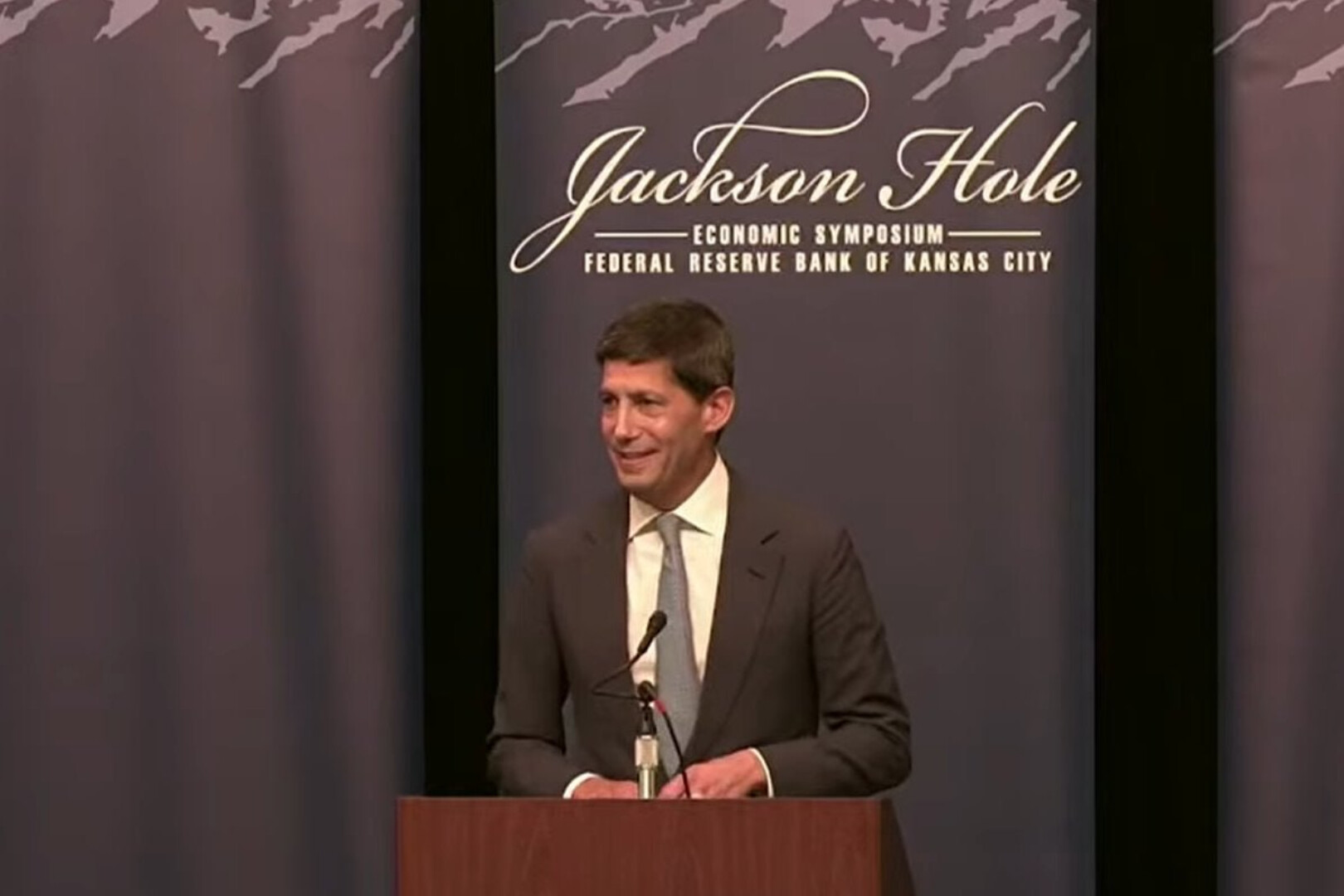
Wash's Jackson Hole Debut: Bidding Farewell to 'Forward Guidance', Reshaping Fed Discipline Amidst the Squeeze Between AI and Inflation

In his first Jackson Hole speech, new Fed Chair Kevin Warsh signaled a significant shift in monetary policy communication. He declared that "forward guidance," a tool heavily used since the financial crisis, has outlived its usefulness in normal times and should be retired. He cautioned that over-reliance on it can distort market signals and constrain the Fed's flexibility. Instead, Warsh emphasized a return to data-dependence and decision-making discipline. Warsh outlined seven key principles to guide policy: anchoring the 2% inflation target, pursuing the employment mandate, using short-term rates as the primary tool, acknowledging the importance of money, and maintaining purposeful, restrained communication. He stressed that policy should focus on trends, not single data points. On the current economic outlook, Warsh noted that the labor market is consistent with full employment but inflation remains "far above" the Fed's target. He highlighted that over half of the PCE basket's components are still rising above 3% annually. While acknowledging AI's transformative potential for productivity and capital allocation, he admitted its full economic impact remains uncertain and is not a factor in current policy decisions. His core message was a commitment to policy discipline rather than pre-set decisions. Warsh stated the Fed's primary focus must be on restoring price stability, vowing, "We still have work to do," until there is clear evidence inflation is moving decisively toward 2%. He concluded by framing effective monetary policy as crucial for economic prosperity and U.S. global leadership.

Odaily星球日报1h ago

Wash's Jackson Hole Debut: Bidding Farewell to 'Forward Guidance', Reshaping Fed Discipline Amidst the Squeeze Between AI and Inflation

Odaily星球日报1h ago

Trading

Spot
活动图片