The Most Mysterious Boss Lady: She Founded a VC Firm

marsbitPublished on 2026-08-17Last updated on 2026-08-17

Abstract

"The Most Mysterious 'Boss's Wife' Who Started a VC" Recently, a name has been frequently mentioned among investors—Yang Jingting, the founder behind XINHE Capital. While not widely known herself, her husband is Liu Sheng, Chairman of trillion-dollar market cap company Zhongji Innolight. The couple entered the public eye during a Tsinghua University donation ceremony in April. However, Yang has been quietly building a significant investment portfolio through XINHE Capital since 2021, where she holds a 90% stake. With a background starting in 2014 across various investment firms, she now focuses XINHE Capital on upstream photonics and semiconductor sectors like materials, chips, and equipment, targeting data centers, smart devices, and automotive. The fund has accelerated its pace in 2024. Yang's broader activities include direct investments (e.g., Suzhou Suna Optoelectronics) and acting as an LP in funds like those from Yongxin Fangzhou and Qianrong Holdings. Her investments are strategically separate from her husband's core business. Her story is part of a larger trend: China's industrial tycoons are increasingly moving into tech VC. Examples include "Glass Queen" Zhou Qunfei (Lens Technology) investing in AI, Zhu Xingming (Inovance Technology) via family office Minghui Investment targeting brain-computer interfaces, and Luxshare Precision's family office. Liu Yi (Andon Health) recently participated in DeepSeek's funding round. These entrepreneurs leverage their industr...

"Do you know the fund run by the wife of Zhongji Innolight's boss? Looking for an introduction."

Recently, while networking with investors, one name has been mentioned frequently—Xinhe Capital, backed by a female investor: Yang Jingting.

The outside world might not be familiar with this name, but mention her husband—Liu Sheng, Chairman of Zhongji Innolight—and everyone recognizes him. This past April, the couple made a public appearance together at a donation ceremony at Tsinghua University, marking the first time Yang Jingting stepped into the public eye.

But in fact, over the years, she has been quietly leading Xinhe Capital and has already built a hidden investment portfolio.

The Wife of Zhongji Innolight's Boss, Runs a VC Firm

Unraveling the story starts with a donation.

In April this year, Tsinghua University's Schwarzman College announced a donation—Liu Sheng, a 1989 alumnus and Chairman of Zhongji Innolight, and his wife Yang Jingting donated to Tsinghua University to support the construction and development of Schwarzman College. A group photo from the ceremony included key figures such as Liu Sheng and Yang Jingting, and Stephen Schwarzman, head of Blackstone.
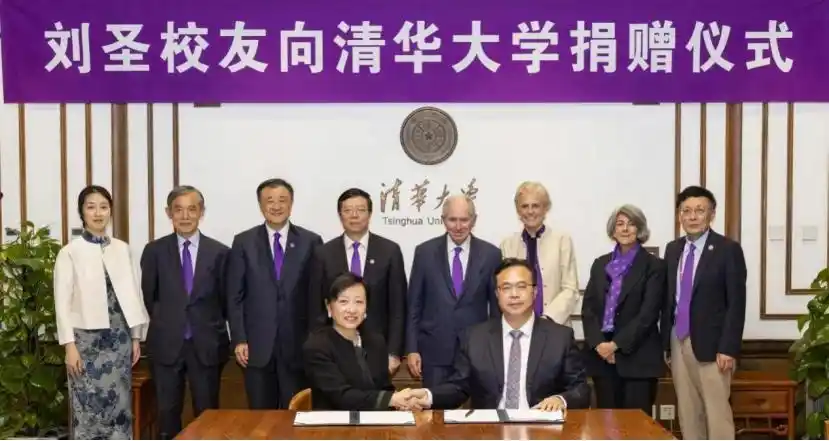
Image Source

Liu Sheng is no stranger to the public. According to Zhongji Innolight's previous H-share listing prospectus, Liu Sheng graduated with a bachelor's degree in Mechanical Engineering from Tsinghua University in 1994, then pursued a master's degree in Industrial Automation at the Chinese Academy of Sciences' Institute of Automation. The company he leads, Zhongji Innolight, broke the trillion-yuan market capitalization mark this year.

His spouse—Yang Jingting—is extremely low-profile, with almost no past information about her available online. This donation to Tsinghua University is likely the first time the public has seen her openly.

Tianyancha (a Chinese corporate data platform) shows that Yang Jingting is associated with nearly 20 companies. These include direct investments in single projects, LP investments in venture capital funds, and a fund she personally operates—Xinhe Capital.

The private fund manager for Xinhe Capital is Hainan Xinhe Private Fund Management Partnership (Limited Partnership) (abbreviation: Hainan Xinhe). According to information disclosed by the Asset Management Association of China, the executive partner of Hainan Xinhe is Zhu Rui, holding 10% of the shares, while Yang Jingting holds 90%. Zhu Rui previously served as Investment Director in the Investment Department of Zhongji Innolight.
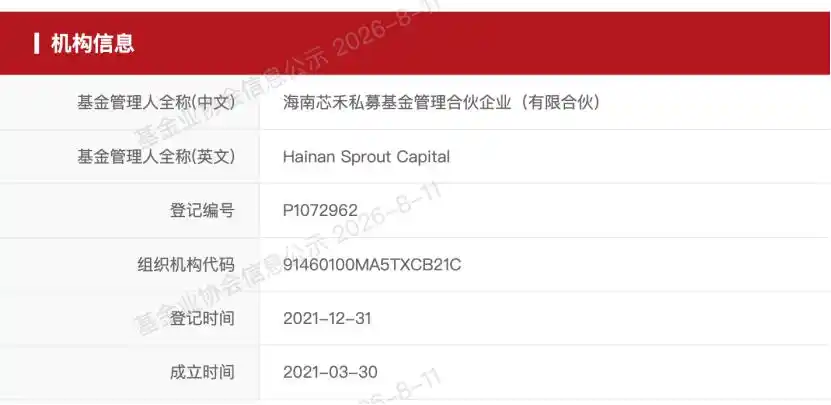
Yang Jingting's resume also emerges. According to AMAC information, from July 2009 to June 2013, she served as Assistant to the Chairman in the President's Office of Shanghai Xintaiyang Real Estate Co., Ltd.

Starting in February 2014, she officially began her professional investment career, working successively at Suzhou Garden Construction Industry Equity Co., Ltd., Changzhou Qizhi Investment Management Co., Ltd., Suzhou Industrial Park Jimu Growth Investment Management Partnership (Limited Partnership), and Changzhou Naxin Venture Capital Partnership (Limited Partnership). She held positions such as Deputy General Manager of Marketing, Risk Control Director, Senior Advisor and Member of the Investment Decision Committee.

In March 2021, Hainan Xinhe was registered and established, with the institution type being Private Equity and Venture Investment Fund Manager, managing assets of 1-2 billion RMB. In August of the same year, Yang Jingting joined, serving as Partner, Information Filing Responsible Person, and Deputy General Manager in the General Office of Hainan Xinhe.
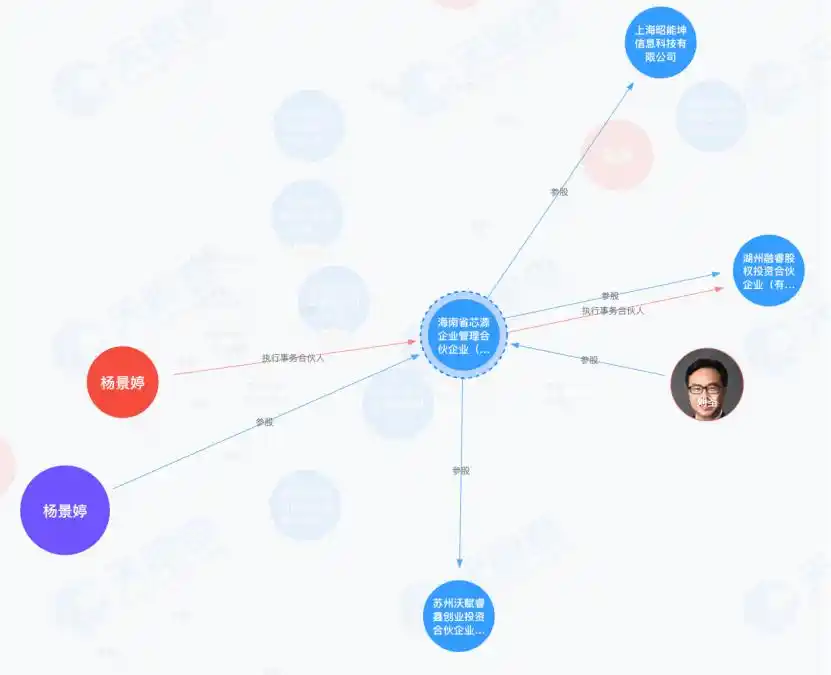
Overall, Yang Jingting does not have many direct business connections with her husband Liu Sheng; they jointly hold shares in only two companies: Hainan Province Xinyuan Enterprise Management Partnership (Limited Partnership) and Shanghai Changge Enterprise Management Co., Ltd., both with Yang Jingting holding 51% and Liu Sheng holding 49%. The former has invested in a sub-fund under Wofu Capital.

Unveiling the Investment Portfolio

Peeling back the layers reveals a hidden investment map.

First, direct investments. Yang Jingting directly invested in Suzhou Suna Optoelectronic Co., Ltd.. Founded in 2014 by technology professionals from Tsinghua University and the Chinese Academy of Sciences, the company focuses deeply on the fields of optical communication and optical sensing chips. Backers include SDIC Capital, Forise Fund, Yongxin Ark, Wofu Capital, among others. Suna Optoelectronic has now initiated its IPO process.

As an LP, Yang Jingting has invested in Yongxin Ark's sub-fund "Suzhou Yongxin Ronghui Venture Capital Partnership (Limited Partnership)", as well as two sub-funds under Qianrong Holdings.

Recall in April this year, Wei Yong, Managing Partner of Yongxin Ark, mentioned to us the origin of their connection with Zhongji Innolight—as early as 2016, Yongxin Ark invested in Zhongji Innolight, which was Wei Yong's first deal after founding the fund, a single investment exceeding 180 million RMB.

Yang Jingting's core investment platform, however, is still Xinhe Capital.

This institution focuses on upstream core segments such as optoelectronic semiconductor materials, chips, components, and equipment parts, primarily investing in cutting-edge fields like data centers, smart terminals, and smart vehicles. Since its establishment in 2021, Xinhe Capital hasn't made many investments, but this year has been particularly active, investing in about 13 projects since the beginning of the year, double that of last year.

In July 2026, fourth-generation semiconductor company Mingjia Semiconductor completed a Pre-B round of financing exceeding 150 million RMB, with Xinhe Capital participating. In the same month, Hefei Jiusi Electronics completed its A+ round of financing, led by Xinhe Capital. Earlier, Xinhe Capital also invested in semiconductor companies like Vertilite.

In the field of optical interconnection and photonics, Xinhe Capital participated in the nearly 500 million RMB Series A financing of Guanglian Xinke in June this year. In the power semiconductor field, it just invested in Xizhi Technology, which specializes in automotive-grade power and power supply modules. Additionally, Xinhe Capital has invested in tech companies like Qinghe Jingyuan and JBD (Jade Bird Display) and, last year, signed an agreement with Huaian to establish the Xinhe Ningrui Fund to promote regional industrial upgrading and advanced manufacturing project landing.
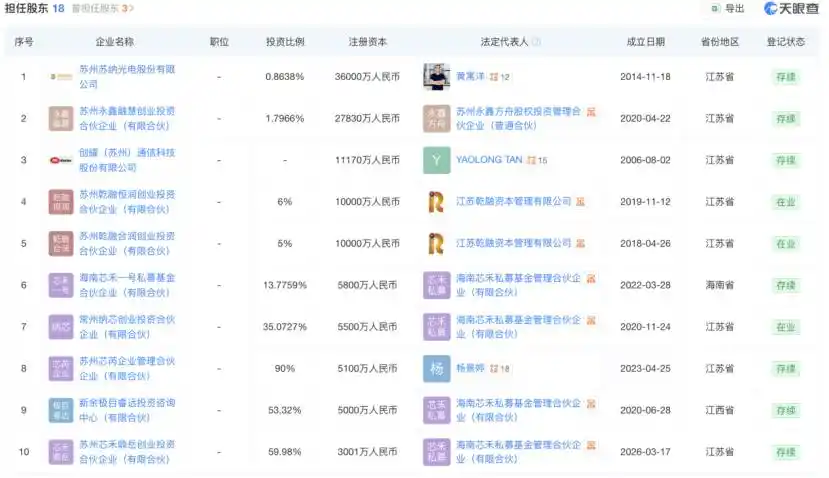
From semiconductor materials to optical interconnection, from power devices to equipment components, Xinhe Capital's path is distinct—making systematic strategic investments around key nodes of the optoelectronic semiconductor industry chain.

Betting on the Next Future

Looking from this perspective, a trend is becoming increasingly clear: Chinese tycoons who built their fortunes in industry are collectively turning their attention to the technology sector. They are no longer content with just being LPs but are getting directly involved, using family offices or their own capital to bet on the next generation of technology.

A look at this year's batch of star AI companies reveals the dense presence of Lens Technology behind them. Behind this is a female leader, Zhou Qunfei, who wrote a legendary entrepreneurial story with a piece of glass, becoming the "Glass Queen" presiding over a hundred-billion-yuan market cap. In recent years, she and Lens Technology have begun appearing in the VC circle, investing in a batch of star companies like BrainCo, Star Atlas, Qingtian Zu, Kuawei Intelligence, Zuji Dynamics, and Gestalt Technology.

Zhu Xingming, Chairman of Inovance Technology, which commands a market cap of hundreds of billions, has been deploying in frontier technology through the family office "Minghui Investment", mainly investing in areas like brain-computer interfaces and AI computing. Earlier this year, it invested in the hundred-billion embodied intelligence unicorn Qianxun Intelligence. Luxshare Precision, with a market cap close to 500 billion, also established a family office—Liling Fund, investing in tech companies like Winanor Chip, SMIC Integration, and Xinlian Power.

Not long ago, in the first round of financing for DeepSeek, the unexpected appearance of Andon Health was noted. At its helm is Liu Yi, who built Andon Health, a 30-billion-yuan market cap company, from scratch. After achieving financial freedom, he extended his reach into the venture capital circle: acting as an LP investing in funds like MiraclePlus and 9F Capital, and also directly investing in star projects like Moonshot AI (Kimi), Stepfun, Zhiyuan Robot, and Independent Variable Robot.

Summarizing, these entrepreneurs share common traits: they have accumulated deep industrial knowledge and massive wealth in the industrial sector, and are now using that knowledge and wealth to define the next generation of technology. Compared to financial investment, they offer not just money, but also orders, application scenarios, and industrial chain synergy.

The flow of money is always profoundly influential.

For a long time in the past, the money of China's wealthy often flowed into real estate and traditional manufacturing. Now the tide is turning, with large amounts of capital collectively rushing into frontier hard-tech fields like AI, semiconductors, embodied intelligence, brain-computer interfaces, and controlled nuclear fusion. After all, this is the direction of the future; falling behind means being out of the game.

This article is from the WeChat public account "PEdaily" (ID: pedaily2012), author: Zhou Jiali.

Trending Cryptos

Related Questions

QWho is Yang Jingting and what is her main business role as described in the article?

AYang Jingting is the wife of Liu Sheng, the chairman of Zhongji Innolight. She is a low-profile investor who leads Xinhe Capital, a venture capital firm focused on upstream segments of the optoelectronic semiconductor industry.

QWhat company does Yang Jingting directly invest in, according to the article?

AShe directly invests in Suzhou Suna Optoelectronic Co., Ltd., a company in the optical communication and sensing chip field that is preparing for an IPO.

QWhat are the main investment areas of Xinhe Capital, the VC firm led by Yang Jingting?

AXinhe Capital focuses on upstream core areas of the optoelectronic semiconductor industry, including materials, chips, components, and equipment. It invests in sectors like data centers, smart terminals, and smart vehicles.

QAccording to the article, what is a common trend among China's wealthy entrepreneurs who built their fortunes in traditional industries?

AThey are increasingly shifting their capital from real estate and traditional manufacturing to invest directly in cutting-edge hard tech sectors like AI, semiconductors, embodied intelligence, and brain-computer interfaces, often through family offices or personal funds.

QApart from Yang Jingting, which other female entrepreneur is mentioned as having entered the VC space with her company's investments?

AZhou Qunfei, the chairwoman of Lens Technology, known as the 'Glass Queen,' has led her company to invest in AI startups like BrainCo, Singularity, and LimX Dynamics.

Related Reads

Tencent Reaps a Paper Profit of 50 Billion

A decade ago, China held no share in the global DRAM market. Today, Changxin Technology, after listing on the STAR Market, has become the most valuable A-share company. Its landmark IPO has generated historic returns for investors. Among them, Tencent, which invested approximately 2 billion RMB in 2022 through its entity Beijing Fengyi, now holds an estimated paper gain of around 50 billion RMB based on Changxin's current market valuation of approximately 4 trillion RMB. Alibaba also made significant bets. Its affiliates invested a total of roughly 7.6 billion RMB across two funding rounds in 2022 and 2025. Their combined stake is now worth an estimated 170 billion RMB—a paper profit surpassing Alibaba's entire net profit for fiscal year 2026. The shareholder registry reveals a who's who of Chinese capital. Major state-backed funds like the National Integrated Circuit Industry Investment Fund (Big Fund II) and Anhui provincial capital hold stakes worth hundreds of billions. Early and crucial support came from the Hefei municipal government, which played a foundational role in the company's establishment and growth. Strategic industrial investor GigaDevice, under the same leadership as Changxin, invested about 2.3 billion RMB, now worth roughly 53 billion. Home appliance giant Midea's 1 billion RMB investment has ballooned to an estimated 22 billion RMB. Virtually all major domestic financial institutions, venture capital, and private equity firms participated. However, the story also includes a notable exit: Country Garden's venture arm sold its stake for 2 billion RMB in late 2024 to address its own liquidity crisis. Those shares would be worth approximately 44 billion RMB at the IPO price, highlighting a stark contrast in timing between the downturn of the real estate cycle and the rise of the semiconductor sector.

marsbit16m ago

Tencent Reaps a Paper Profit of 50 Billion

marsbit16m ago

Calterah Races for the STAR Market: 31% Market Share, Over 900 Million in Losses, the Berkeley Mentor-Student Duo's Path to Breakthrough in Millimeter-Wave Radar

Calterah Microelectronics (Calterah), a Shanghai-based automotive chip company specializing in millimeter-wave radar chips, has filed for a listing on China's Sci-Tech Innovation Board (STAR Market), seeking to raise 3.49 billion yuan. Founded in 2014 by Dr. Chen Jiashu, a UC Berkeley PhD, and his professor Ali Niknejad, Calterah pioneered the use of CMOS technology for automotive-grade 77GHz radar chips, challenging the dominance of global giants like Texas Instruments. The company has grown rapidly, with revenue soaring from 206 million yuan in 2023 to 632 million yuan in 2025. It holds a 31.1% share in China's automotive millimeter-wave radar chip market and a 4% global share, with cumulative shipments exceeding 30 million chips for clients including BYD, Geely, NIO, Volvo, and Rivian. Despite strong market traction, Calterah faces significant financial challenges. It has reported cumulative net losses exceeding 900 million yuan over the past three and a half years, driven by massive R&D spending, which accounted for 147.75% of revenue in 2023. Operating cash flow remains negative, and the company relies heavily on external financing. Other risks include high customer and supplier concentration, with its top five distributors accounting for over 99% of revenue and overseas procurement exceeding 50%. Supply chain security is a concern due to reliance on foundries like TSMC. The proceeds from the IPO will fund R&D for high-performance radar chips, ultra-wideband (UWB) chips for applications like digital car keys, and a new technology center. Calterah aims to expand beyond automotive into industrial and consumer sectors. However, it faces intense competition, potential price wars, and the long, costly cycle of automotive-grade certification. Its path forward hinges on achieving profitability, maintaining technological leadership, and building a sustainable business model in a fiercely competitive global market.

marsbit16m ago

Calterah Races for the STAR Market: 31% Market Share, Over 900 Million in Losses, the Berkeley Mentor-Student Duo's Path to Breakthrough in Millimeter-Wave Radar

marsbit16m ago

Burning Through Billions, Market Cap Evaporates 200 Billion: SenseTime Suddenly Turns a Profit

Chinese AI giant SenseTime, once a star in the AI "Four Dragons," recently projected its first-ever profit for H1 2026, sparking a temporary stock surge. However, its current market cap of ~HK$64.6 billion remains over 80% below its peak of ~HK$300 billion in early 2022. The article analyzes SenseTime's dramatic fall from grace. It excelled in the "AI 1.0" era, dominating computer vision for applications like facial recognition and smart cities. However, it was disrupted by the "AI 2.0" generative AI revolution led by ChatGPT, which shifted focus from recognition to creation. Compounded by US sanctions, the death of its founder, a short-seller report, and a decline in its core smart city business, the company faced a perfect storm. Its workforce was cut by nearly 60%. To survive, SenseTime pivoted, actively "killing" its old self. It transitioned from project-based solutions to a generative AI and visual AI dual-engine model. Now, over 70% of its revenue comes from large language models, a more scalable, subscription-like business. Cost-control measures on expensive model training have also contributed to its path to profitability. Yet, significant challenges remain. The current AI race is an ecosystem battle dominated by giants like Microsoft/OpenAI, Google, and Chinese tech firms with integrated clouds, apps, and vast user bases. SenseTime, as an independent AI company, lacks such a super app or traffic gateway. The key question is whether it can build a sustainable moat based solely on model capability and industry deployment in this new competitive landscape.

marsbit21m ago

Burning Through Billions, Market Cap Evaporates 200 Billion: SenseTime Suddenly Turns a Profit

marsbit21m ago

Shanghai Sees a Semiconductor Equipment IPO Emerge, Led by Former Grace Semiconductor Employee

A Shanghai-based semiconductor equipment company, Mifee Technology, has filed for an IPO on the Shanghai Stock Exchange's STAR Market. The company specializes in developing and manufacturing Automatic Material Handling Systems (AMHS), a core automation system in semiconductor wafer fabrication that directly impacts production efficiency and yield. Mifee is one of the few domestic Chinese companies with proprietary AMHS technology, offering both hardware and software systems. While the global AMHS market is dominated by Japanese giants like Daifuku and Murata Machinery, which hold approximately 90% market share, Mifee has captured about 1.6% globally. The company's revenue has grown significantly, reaching 393 million yuan in 2025, and it achieved profitability that year with a net income of 60.45 million yuan, following losses in 2023 and 2024. Its revenue streams include sales of individual AMHS equipment and complete factory AMHS projects, with the latter starting to contribute revenue from 2024. The company faces risks including high customer concentration, with its top five clients accounting for over 90% of revenue in 2025, and significant fluctuations in gross margin, which was 48.97% in 2025 after dropping to 24.67% in 2024. Mifee is controlled by an 80s-born couple, Chairman/CEO Feng Miao and Deputy General Manager Na Ke, who previously worked at Shanghai Grace Semiconductor Manufacturing Co. The company plans to raise approximately 1.191 billion yuan from its IPO to fund production, R&D, overseas expansion, and working capital.

marsbit21m ago

Shanghai Sees a Semiconductor Equipment IPO Emerge, Led by Former Grace Semiconductor Employee

marsbit21m ago

Trading

Spot

Hot Articles

Discussions

Welcome to the HTX Community. Here, you can stay informed about the latest platform developments and gain access to professional market insights. Users' opinions on the price of S (S) are presented below.

活动图片