Now, you can completely distill yourself into a Skill through screen recording + voice explanation.
On July 21, Anthropic added a "Record a Skill" option to the + menu in the Claude desktop Cowork: record your screen, operate while explaining with voice, and after recording, Claude automatically converts the demonstration into a reusable Skill.
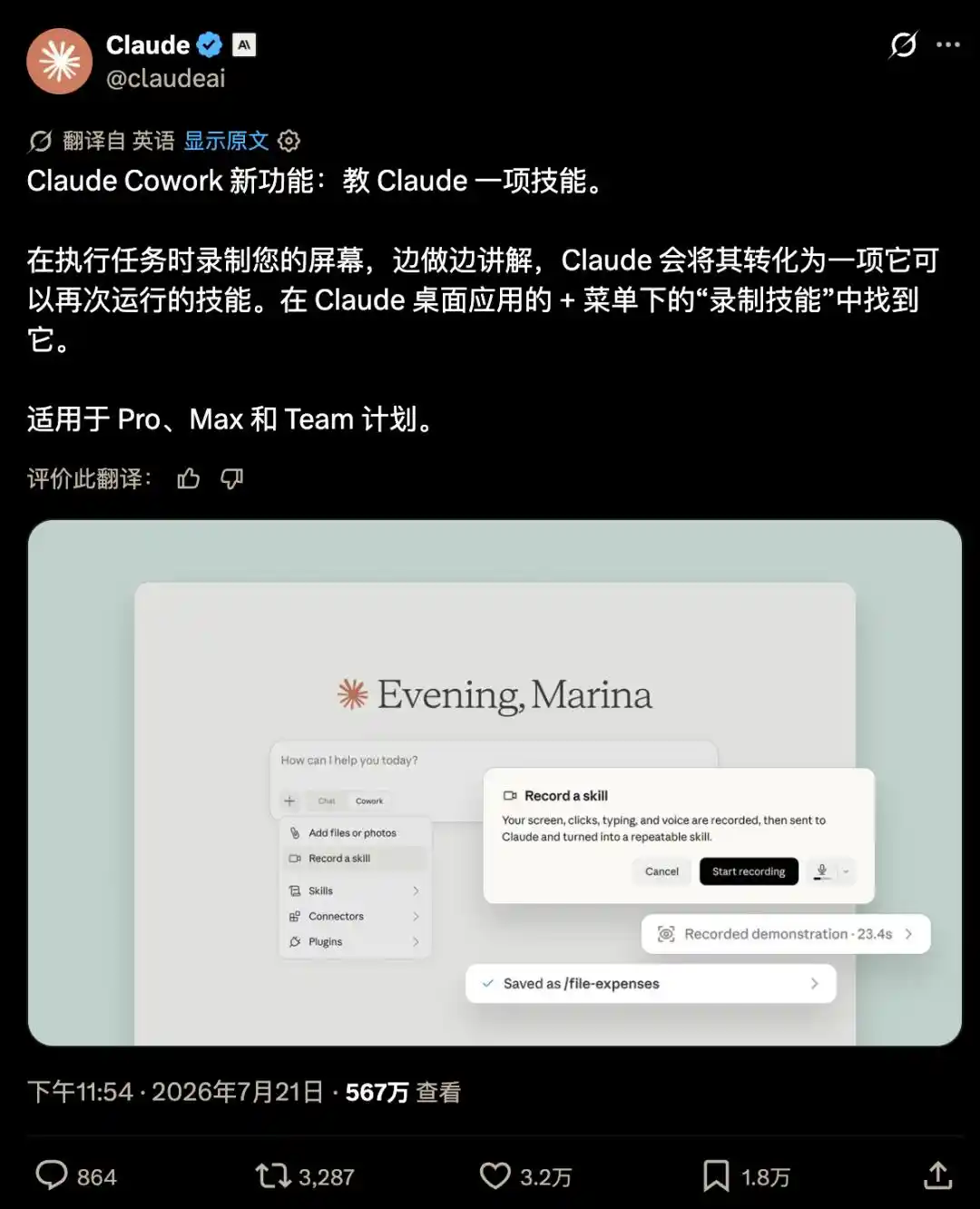
https://x.com/claudeai/status/2079595988998554047
This feature is currently open to Pro, Max, and Team users.
First-hand Test: It Actually Works
We conducted a simple test of this feature immediately.
Open the Claude client, click the 【+】 in the lower left corner of the chat box -> Skills -> Manage skills -> Add -> Record your screen, and you can start using this new feature.
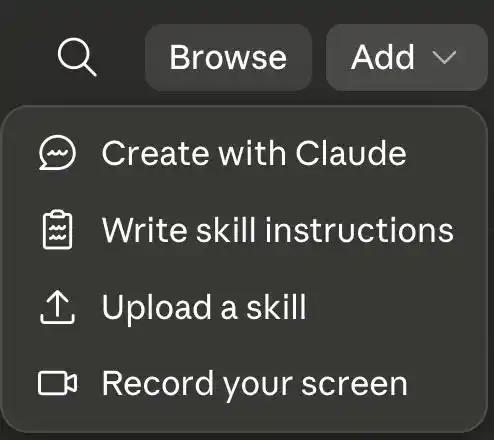
Be careful to avoid recording plaintext passwords, secret keys, API Keys, credit card information, and other sensitive personal information during the screen recording process.
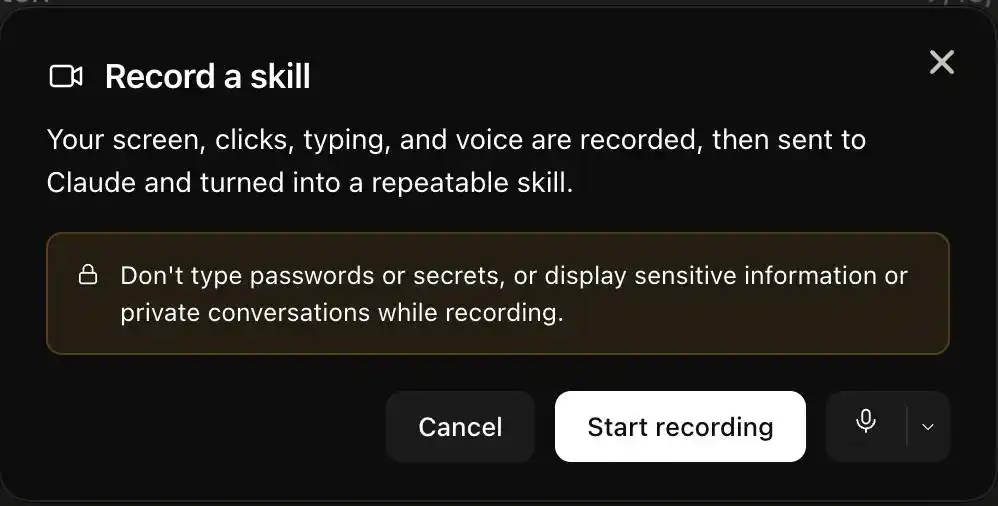
For the first time, you may need to grant screen recording and audio recording permissions. After allowing, click 【Start Recording】 to begin recording.
Simply repeat your complete workflow on the computer, verbally supplementing the necessary implicit operational logic, while avoiding irrelevant operations (like watching a short video or slacking off while waiting for results). Click to end the recording, and it will automatically return to the Claude Cowork interface for analysis and Skill extraction.
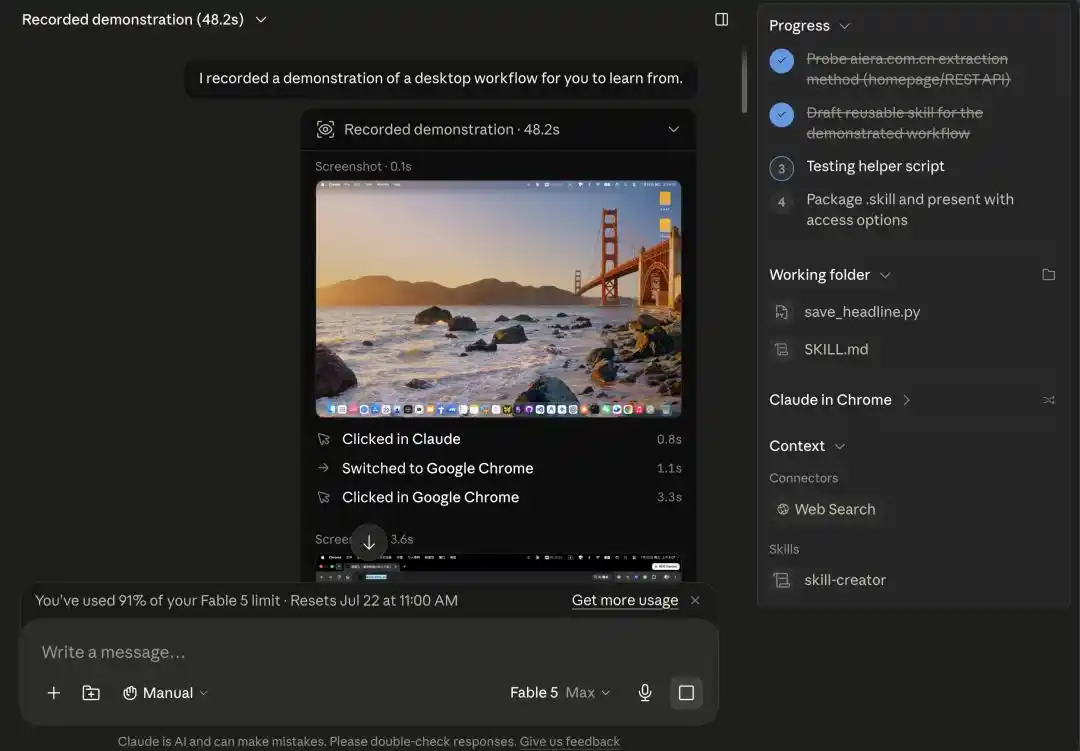
After waiting a while, your exclusive Skill is ready. Click 【Save Skill】 to directly deploy it to Claude.
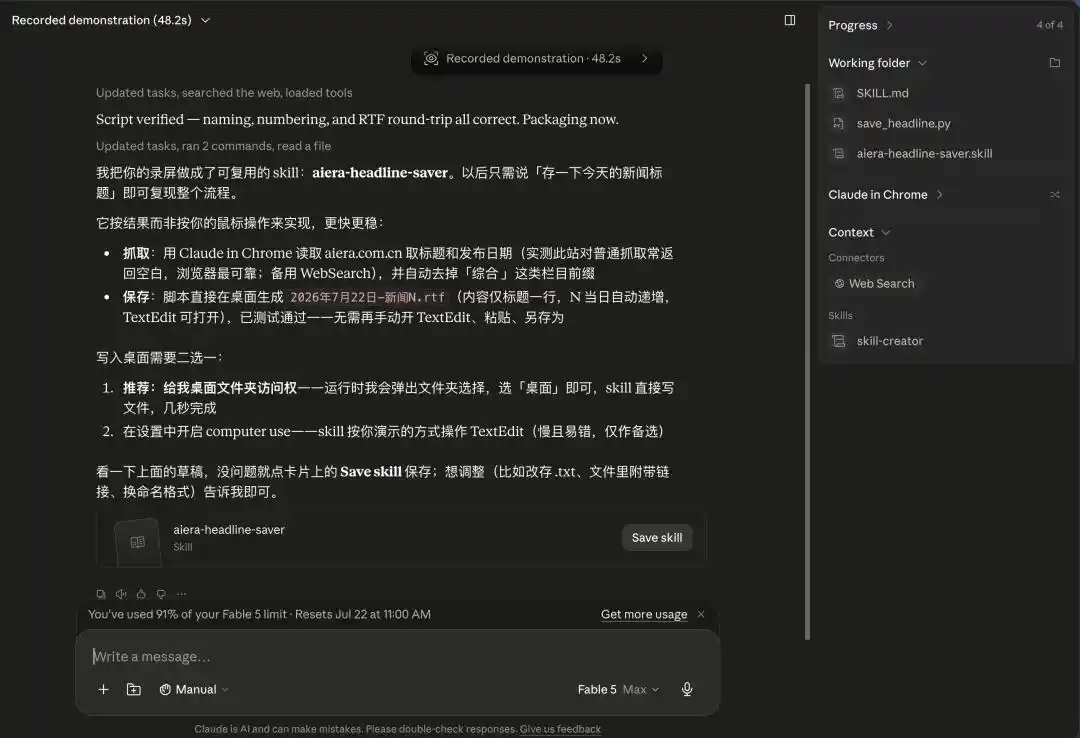
Use the slash command (/) in chat to call this Skill to work.
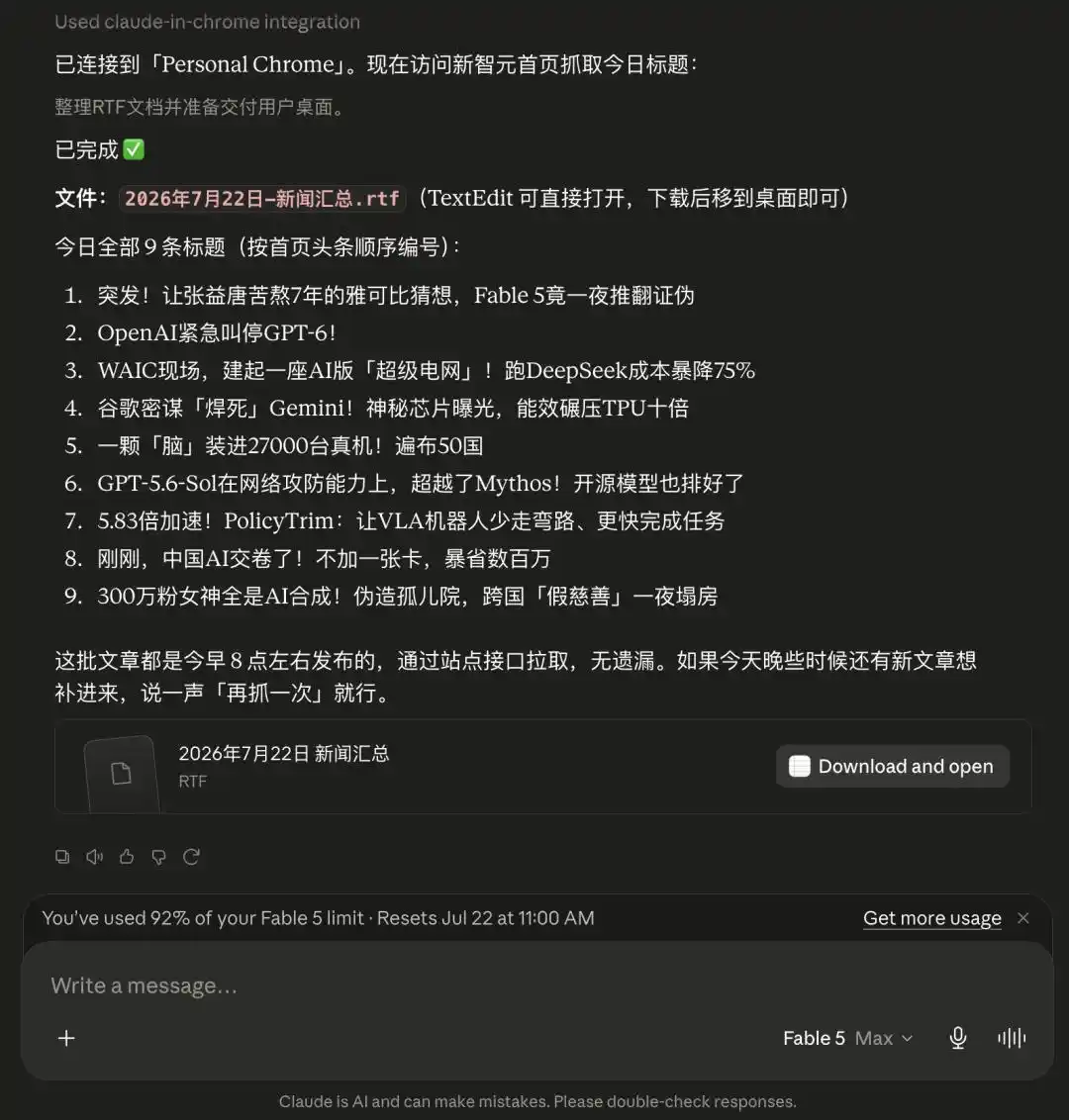
No extra fine-tuning over and over, the fresh exclusive Skill is ready to use out of the box.
Far More Than Just an Efficiency Tool
Most reports categorize "Record a Skill" (screen recording to generate Skill) as a "more convenient way to create automated workflows," but this understanding only scratches the surface.
Previously, creating a Skill required writing a SKILL.md file manually, using Markdown to clearly write the steps, trigger conditions, and metadata.
Non-technical people had to think like process designers to accomplish this.
The barrier was translating tacit experience into explicit instructions.
Now, "Record a Skill" skips the translation step.
It captures both screen operations and voice explanations, with the latter being key: the operator naturally reveals judgment logic during the explanation—which situations to skip, which format is a client's hard requirement, which number abnormality needs manual review.
These things are difficult to write into a manual, but can be fully preserved by a screen recording.
"Record a Skill" bypasses the step of "writing."
For decades, enterprise knowledge management has spent a fortune building knowledge bases, writing SOPs, and compiling best practice libraries. The core pain point has always been one: experts are unwilling to write documentation, and if written, no one maintains it.
The barrier to screen recording with explanation is an order of magnitude lower than writing documentation, and the produced Skill can be read by humans and directly executed by AI.
The Other Side of Screen Recording
The tech media MakeUseOf reported a case in March this year:
A freelance writer, during a handover period after resignation, used Claude Cowork to build a content generation workflow, feeding in brand documents, style guides, and historical articles, and outputting a monthly content calendar according to the Skill process.
During the handover, the client said:
Since you're leaving, can you set this up so we can run it ourselves?
A five-year cooperative relationship was replaced by a Skill folder.
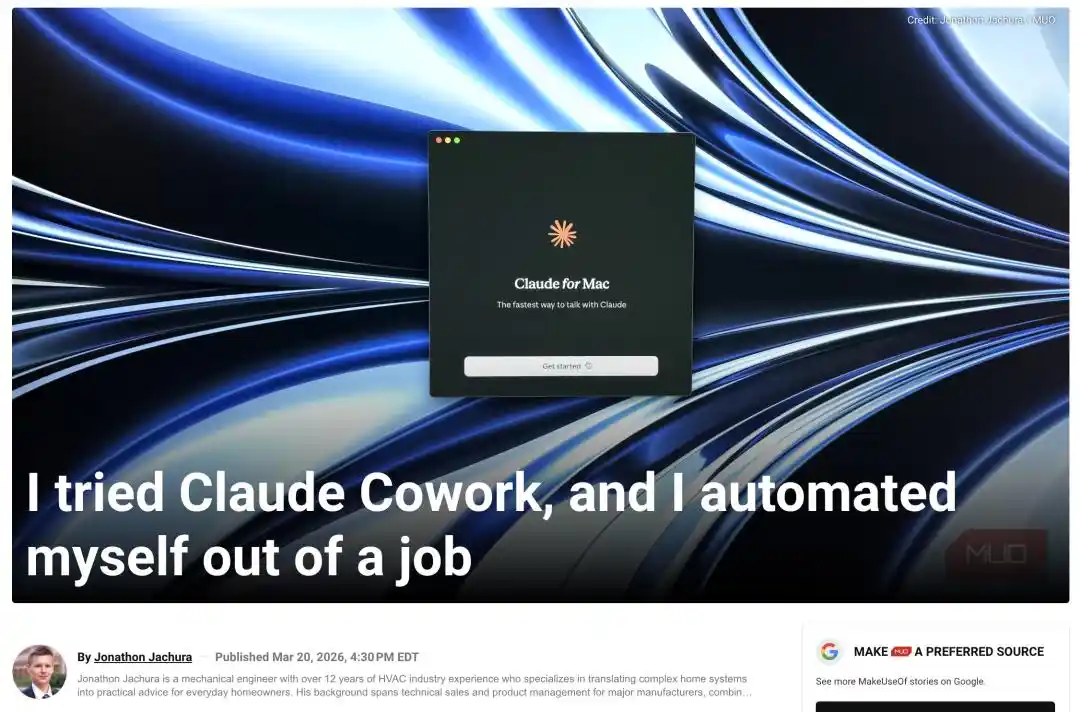
https://www.makeuseof.com/claude-cowork-automated-away-job/
This story happened before "Record a Skill" was launched, using the handwritten Skill method.
Screen recording teaching lowers the operational cost of the same thing another notch: no need to understand Markdown, no need to abstract the process, just do it once and explain it once.
Harvard Business School research data from March 2026 can serve as a footnote for the other side: recruitment for positions with the highest AI exposure decreased by 17%, while recruitment for positions requiring human-machine collaboration increased by 22%.
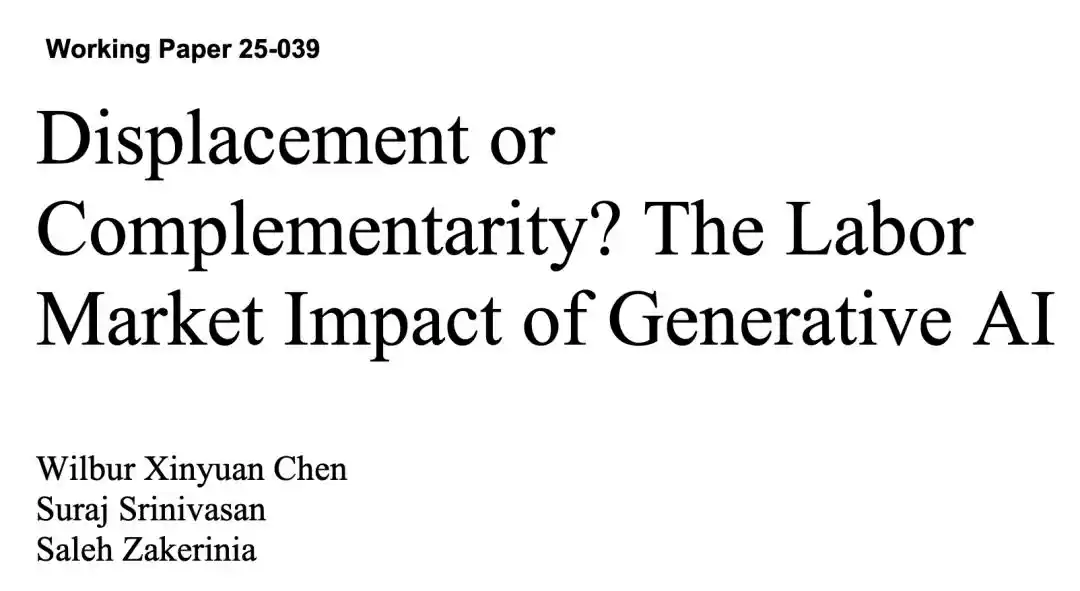
https://www.hbs.edu/ris/Publication%20Files/25-039_05fbec84-1f23-459b-8410-e3cd7ab6c88a.pdf
But the direction "Record a Skill" promotes is clear: the moat of work is shifting from "being able to do" to "being able to do what others cannot."
Reference: https://x.com/claudeai/status/2079595988998554047
This article is from the WeChat public account "New Zhiyuan" (新智元), author: ASI启示录; editor: Ma Ke





















