Original|Odaily Planet Daily (@OdailyChina)
Author|Wenser(@wenser2010 )

For a long time, the insurance industry has held a dominant 'ballast' position in the economic system with its monopolistic posture. However, with the emergence of prediction markets, this status quo is poised for a change.
In early June, the NBA Finals concluded, with the Knicks ultimately defeating the Spurs 4-1 to win the championship, bringing joy or sorrow to countless participants in game predictions. Among the happiest individuals might be Andy Freedman, owner of The Jeffrey bar in New York's Upper East Side. Before the series began, he launched a marketing campaign promising "free drinks for all customers if the Knicks win Game 1," while simultaneously hedging the risk with a $5,000 bet on the prediction market platform Kalshi. In the end, the Knicks secured victory in the first game. The Jeffrey bar used the prediction winnings to cover the beverage costs, and the bar patrons enjoyed free drinks, concluding the story with a 'triple-win' outcome.
This is just a microcosm of how prediction market platforms function in risk hedging and property insurance. With the World Cup attracting tens of billions of dollars in participation, the real-world insurance industry now faces a 'barbarian at the gate.'
Prediction Market Platforms Can Also 'Buy Insurance,' Do You Believe It?
Yes, you read that correctly. To some extent, prediction market platforms like Kalshi and Polymarket are now encroaching on the business territory of insurance companies, covering not only conventional marketing but also sports insurance, weather disasters, and more.
When Prediction Markets Steal Sports Insurance Clients: Kalshi Partners with Game Point Capital
In February of this year, professional sports insurance broker Game Point Capital announced a partnership with Kalshi. The latter will provide the former with NBA team performance bonus hedging (e.g., playoff advancement bonuses).
As a professional company issuing hundreds of millions of dollars in sports insurance annually, Game Point Capital's shift is clearly not merely to align with the development of the prediction market industry but is a comprehensive consideration based on business and cost factors.
From a market demand perspective, sports insurance has always existed. It is understood that since championship bonuses are typically paid by the teams themselves, professional sports teams often purchase insurance in advance to cover these expenses. Due to the substantial amounts involved, teams traditionally turned to conventional insurance companies for support—such as Lloyd’s, Munich, Swiss, and other established U.S. insurers.
From an insurance cost perspective, prediction market platforms offer more competitive pricing. According to reports, Kalshi provides significantly lower pricing than traditional over-the-counter markets (e.g., approximately 6% for a certain bonus hedge vs. the traditional 12-13%). It is estimated that the platform could handle tens of millions of dollars in hedging funds through this partnership, marking a direct example of prediction markets entering the traditional insurance and reinsurance fields. Kalshi CEO Tarek Mansour describes this as "a better way to hedge risk and insure," emphasizing that "the pricing will be more transparent."
When Prediction Markets Become 'Housing Price Hedging Tools': Polymarket Teams Up with Parcl to Launch a 'New Model for Property Speculation'
In January of this year, the on-chain real estate platform Parcl announced a partnership with Polymarket, introducing Parcl's daily home price indices into Polymarket's new real estate prediction markets. The initial markets will focus on major U.S. cities (New York, Los Angeles, Miami, Austin, etc.). Users can predict the rise, fall, or threshold outcomes of specific city home price indices on a monthly, quarterly, or annual basis.
The news caused Parcl's native token PRCL to surge over 100% on the day. For Americans unable to purchase homes due to high prices, they can now participate in "property speculation" without actually buying a house. Joel Berner, Senior Economist at Realtor, believes that "beyond speculating on housing prices, homeowners and potential buyers can also use these markets to protect their market interests."
For sellers concerned about falling prices, they can buy "Under" predictions on Polymarket; if prices subsequently fall, the corresponding gains can partially offset actual property losses, serving an insurance-like effect. For buyers, or those planning to purchase a home, if they fear rising prices, they can predict "Over," and the corresponding gains can help cover the increased purchase costs.
When NBA Games Are Linked to Free Drinks: The Cross-Marketing of a New York Bar and Kalshi
In early June, Kalshi officially announced that The Jeffrey bar in New York had placed a $5,000 bet predicting "the Knicks will win Game 1," with the slogan—"If the New York Knicks win, then all customer bills will be covered by the bar." Notably, Kalshi's official statement used the phrase—"place a $5,000 hedge on Kalshi" (Odaily Planet Daily note: Insuring $5,000), emphasizing the insurance value of prediction markets.
In this official press release, Kalshi also revealed greater ambitions—to become a "small business insurance provider," offering services such as sports event predictions, weather condition predictions, and import/export policy change predictions to hotels and inns affected by seasonal fluctuations due to sports events, clothing stores and restaurants whose customer traffic is impacted by weather, other commercial venues, and small businesses reliant on imported goods—thereby enabling insurance hedging.
Kalshi's Head of Business, Nicolas Hull, believes, "Small businesses face various real-world risks daily—issues related to weather, politics, sports, the economy, etc. Traditional insurance methods are both expensive and inefficient, failing to effectively address such operational risks. Kalshi changes this: we provide a liquid, transparent market platform that allows any business to take action against risks affecting their operational outcomes. This marks a fundamental shift in how small businesses manage risk."

Various cases indicate that the insurance value of prediction markets can be widely applied across multiple fields, not limited to sports events, brand marketing, etc. Furthermore, successful cases of traditional sports betting have already existed in practical applications.
Old Wine in a New Bottle, But the New Bottle Is Better: The Insurance Value of Prediction Markets Lies in Transparency and Liquidity
In 2018, the home appliance brand Vatti created a massive marketing campaign with the gimmick "full refund if the French national team wins the World Cup." Although it ended in a farce with excuses like "tight schedule, cumbersome process, coupons instead of cash," it left a deep impression on many regarding "freebie marketing."
Coincidentally, such tactics are not new.
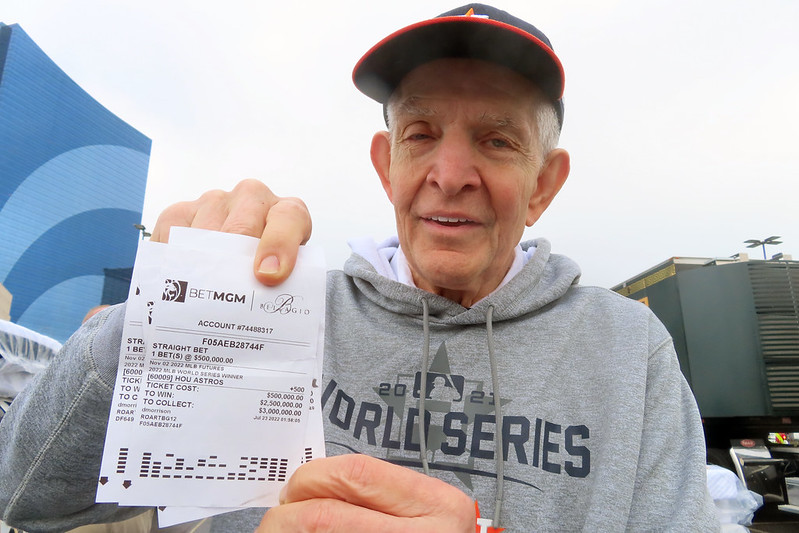
In 2017, Houston home furnishings magnate Jim McIngvale (AKA "Mattress Mack") staged a "refund marketing" campaign worth up to $12 million, with the gimmick "if the Houston Astros win the championship."
Five years later in 2022, "Mattress Mack" repeated the trick. From May to July that year, he invested a total of $10 million across six different betting companies in Louisiana, Iowa, Las Vegas, etc., again predicting "the Astros will win the championship," and explicitly stated he would "refund every penny" of the winnings to the approximately 3,000 customers who had previously participated in his furniture store's promotional activities. (Odaily Planet Daily note: The promotion targeted customers purchasing furniture worth over $3,000, offering a full refund or even a double refund depending on the participation time).
Ultimately, the 71-year-old "Mattress Mack" emerged victorious once more, winning $72.6 million in prizes, setting a record for sports betting winnings at the time.
However, compared to sports betting, the "insurance" function of prediction markets has undergone significant updates.
First, monetization of information. This brings two major advantages: (1) Broader market scope. Compared to betting with limited, narrow options, prediction markets offer a wider "range of choices"; (2) More flexible exit strategies. Unlike betting activities where at most one can get a refund, prediction market events more directly reflect the potential impact of information changes, allowing participants to make timely decisions.
Second, the neutral role of the platform. Unlike the "platform," "house," or "whales" in sports betting events, prediction market platforms serve as neutral entities, providing only trading channels and not directly acting as counterparties to traders.
Third, transparency of trading information. Odds in sports betting are typically determined by the companies based on their own algorithms and internal information. Many companies even adopt a "copy trading" model, directly copying odds changes from larger platforms, making odds fluctuations and order transaction information extremely opaque. Furthermore, event determination criteria often face disputes or involve insider last-minute bets.
Fourth, participant access systems. In the U.S., most sports betting operators adopt a "ban or bankrupt" operational model—a business strategy that "restricts high-win-rate clients from trading while encouraging losing and average players to trade." In 2024, legendary gambler Billy Walters, "Spanky" Kyrollos, and former casino executive Richard Schuetz co-founded a nonprofit advocacy group called American Bettors Voice (ABV). Its core advocacy is against the "ban or bankrupt" model, demanding reasonable regulation of betting limits to ensure market fairness.
Compared to traditional sports betting, the insurance value of prediction markets is undoubtedly more attractive and secure. SIG CEO Jeff Yass, a prominent market-making institution, previously mentioned in a Forbes interview: "Prediction markets allow parties to share risk more efficiently based on specific parameters. For example, a homeowner in Florida facing hurricane risk could choose to buy a contract that 'pays off for sure,' based on the latest weather data, providing insurance protection when wind speeds exceed a specified threshold. Compared to buying annual insurance, this method can more effectively address potential property loss risks."
Of course, at present, the insurance value of prediction markets is not yet fully developed or widely promoted, still facing the following challenges:
- Insufficient liquidity. A wide range of choices does not guarantee sufficient market depth.
- Blurred regulatory boundaries. Whether platforms like Kalshi and Polymarket can sustainably serve insurance functions awaits regulatory recognition.
- Decentralized democratic risks. For instance, the incident on Polymarket's weather prediction market where someone used a hair dryer to influence the observation machine for profit serves as an example. Sometimes, event determination criteria can be unpredictably influenced by external forces, and platform judgment rules may contain various vulnerabilities.
Regardless, the first step has been taken. Whether the insurance industry acknowledges it or not, prediction market platforms threaten not only sports betting platforms but also many traditional insurance business companies.
Recommended Reading
Not Speculation But a Necessity: The 4 Unique Values of Prediction Markets
The Prediction Markets Are Coming For Risk Markets and Insurance