Dell Soars, Which Stocks Will This Wave of AI Sentiment Spread To?

marsbitPublished on 2026-05-29Last updated on 2026-05-29

Abstract

Dell's stock surged in after-hours trading after the company reported a strong earnings beat and significantly raised its full-year guidance, driven by soaring demand for AI-optimized servers. First-quarter revenue jumped 88% to $43.84 billion, far exceeding expectations. The company increased its fiscal 2027 AI server revenue forecast from $50 billion to approximately $60 billion, citing intense demand from clients like CoreWeave and tech giants Alphabet and Amazon who are making massive AI infrastructure investments. This indicates the AI boom is expanding beyond chips and models to downstream hardware and data center infrastructure providers. Dell's infrastructure unit, which includes servers and storage, saw revenue grow 181%. The company also announced a $9.7 billion U.S. Department of Defense contract, boosting confidence in its order pipeline. Dell's performance highlights its position as a key beneficiary in the AI supply chain, leveraging its scale, supplier relationships, and ability to navigate component shortages.

Editor's Note: Dell's after-hours stock surge is not merely due to earnings beating expectations, but rather the market is re-pricing the value of the AI infrastructure chain.

Driven by demand for AI data center construction, Dell's first-quarter revenue increased 88% year-over-year to $43.84 billion, and the company raised its fiscal 2027 AI server revenue expectation from $50 billion to approximately $60 billion. After the earnings release, the company's stock price rose about 39% in after-hours trading.

This indicates that the AI boom is further extending from models and chips to servers, memory, storage, and data center equipment. As tech giants like Alphabet and Amazon continue to increase their investments in AI infrastructure, hardware vendors like Dell, which possess supply chain capabilities, customer relationships, and delivery strength, are becoming direct beneficiaries in this new cycle of AI capital expenditure.

Additionally, a subsidiary of Dell securing a $9.7 billion contract with the U.S. Department of Defense has further strengthened market expectations for its order growth and revenue certainty. For investors, Dell's rise signifies that the AI trade is entering a more downstream and tangible phase: those who can turn chips into deliverable data center infrastructure are likely to receive the next round of valuation re-rating.

The following is the original text:

TL;DR

Dell raises full-year AI server revenue expectation to $60 billion

The company's Q2 guidance is higher than market expectations

Q1 revenue grew 88% YoY to $43.84 billion

Stock price rose about 39% in after-hours trading

A Dell subsidiary secures a $9.7 billion contract from the U.S. Department of Defense

Dell (Dell) on Thursday raised its full-year revenue and profit forecasts, showing that customer data center expansion is driving demand for its AI-optimized servers. These servers are equipped with Nvidia's advanced chips.

Dell's clients include CoreWeave, Honeywell International, and Samsung Electronics. After the earnings release, the company's stock rose about 39% in after-hours trading.

U.S. tech giants including Alphabet and Amazon plan to invest over $700 billion in AI infrastructure this year, which will boost demand for servers and data center equipment from suppliers like Dell and Super Micro Computer.

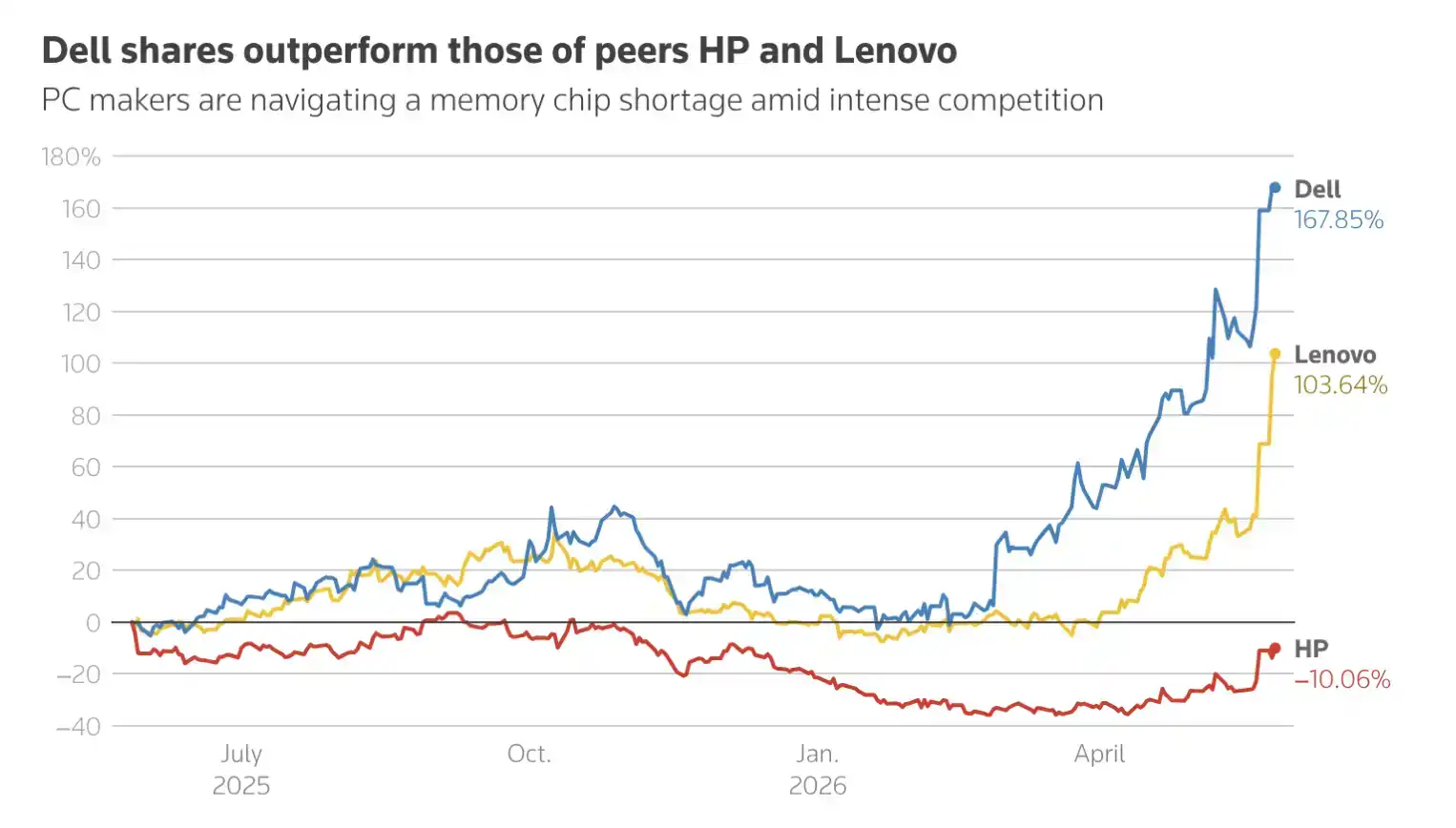
The strong results show that Dell has become one of the biggest beneficiaries of the generative AI boom. The company has navigated the memory chip shortage crisis relatively well through price increases and supply chain adjustments.

Dell's Chief Operating Officer, Jeff Clarke, said on the earnings call: "We feel like we're repricing almost daily. I think customers feel that too. Unfortunately, I don't think that's going to change, given the inflationary environment we're in."
Dell stated that it now expects fiscal 2027 AI server revenue to be approximately $60 billion, up from its previous expectation of $50 billion.

The company also raised its full-year revenue forecast to $165 billion - $169 billion, a significant increase from the previous forecast of $138 billion - $142 billion.
Concurrently, Dell raised its full-year adjusted EPS forecast from $12.90 to $17.90.

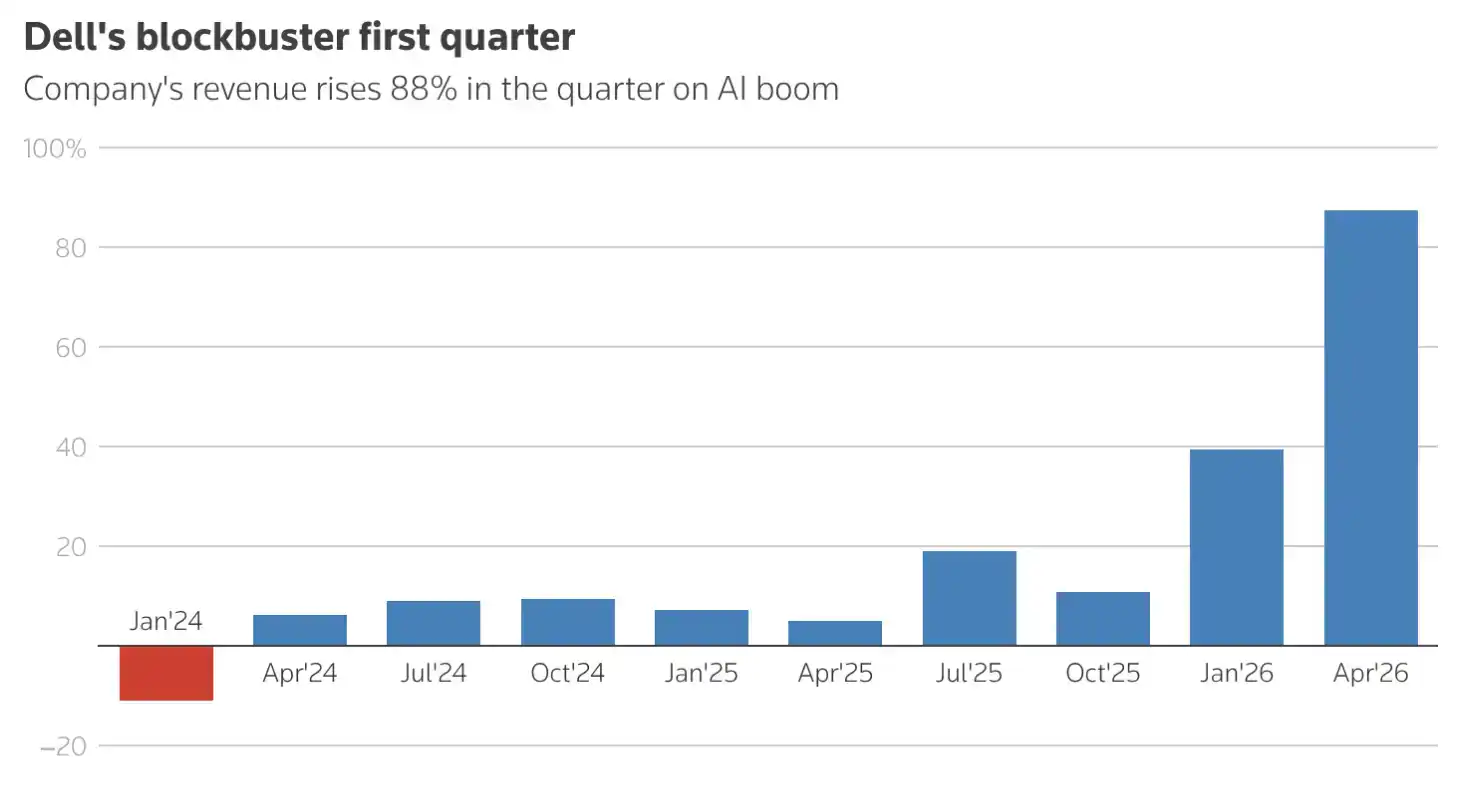
In the first quarter, Dell's revenue grew 88% year-over-year to $43.84 billion, significantly higher than the LSEG consensus analyst estimate of $35.43 billion. Adjusted EPS was $4.86, also above the market expectation of $2.94.
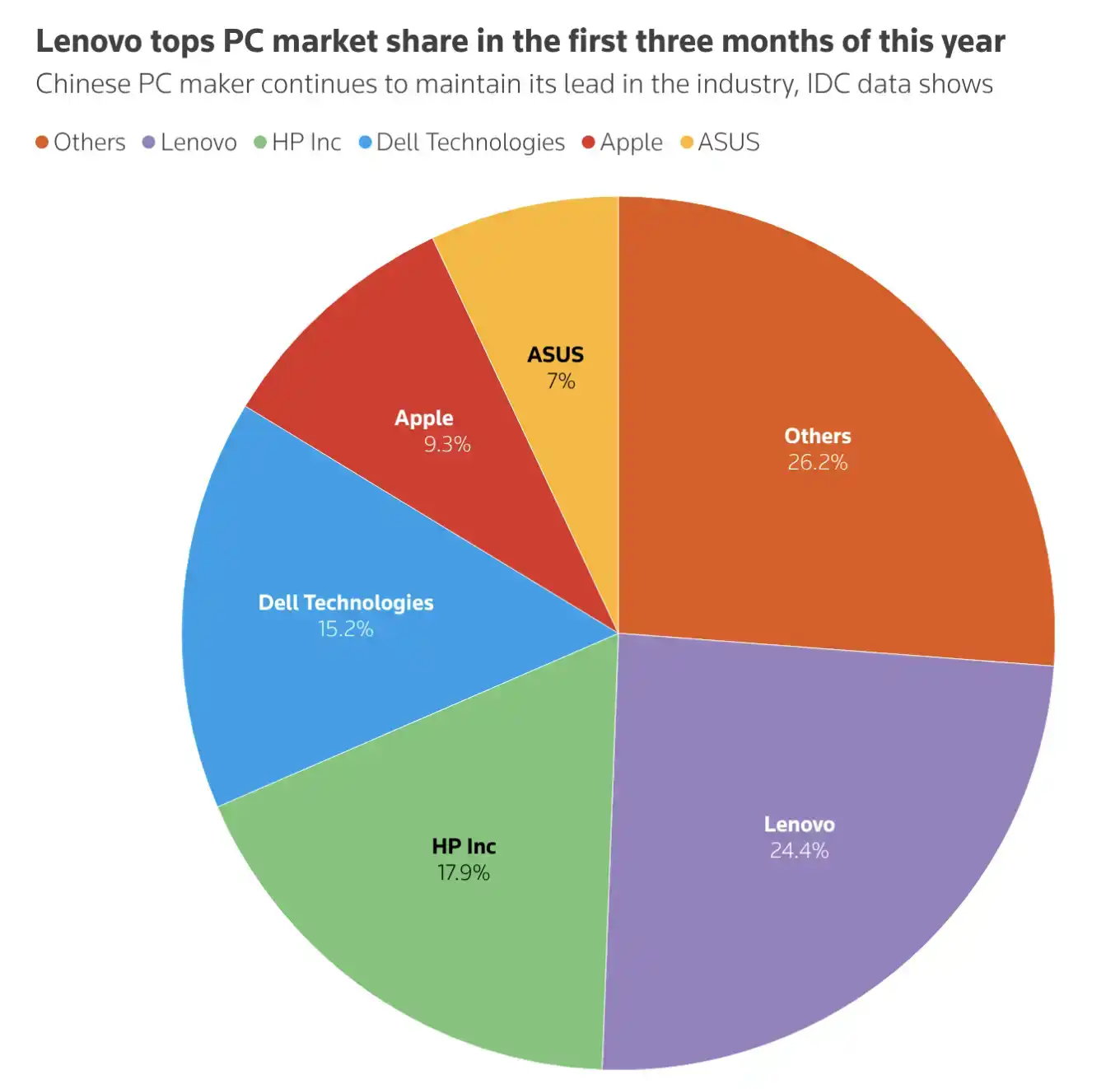
Melissa Otto, Head of Research at S&P Global Visible Alpha, said: "Dell is in a better position relative to competitors due to its scale, supplier relationships, and ability to prioritize demand, which has helped it gain market share during the memory shortage."

Revenue for Dell's Infrastructure Solutions Group, which includes storage, software, and server businesses, grew 181% for the quarter. Meanwhile, sales for the Client Solutions Group, which includes the PC business, increased 17%.

The company also provided Q2 revenue and adjusted EPS guidance that exceeded market expectations.

On Wednesday, the U.S. Department of Defense awarded a five-year, $9.7 billion contract to a Dell subsidiary to assist with managing Microsoft software licenses.
Related Questions

QWhy did Dell's stock surge after its earnings report?

ADell's stock surged because its first-quarter revenue grew 88% to $43.84 billion, significantly exceeding expectations, and the company raised its full-year revenue and profit guidance. This was driven by strong demand for AI-optimized servers, leading the company to also raise its fiscal 2027 AI server revenue expectation from $50 billion to about $60 billion.

QWhat does Dell's performance indicate about the current AI market trend?

ADell's performance indicates that the AI boom is expanding downstream from models and chips to servers, memory, storage, and data center equipment. It shows that hardware companies with supply chain, customer relationships, and delivery capabilities are becoming direct beneficiaries of the new cycle of AI capital expenditure.

QWhat are Dell's updated financial expectations for fiscal 2027?

AFor fiscal 2027, Dell now expects AI server revenue to be about $60 billion, up from a prior expectation of $50 billion. The company also raised its full-year revenue forecast to $165 billion to $169 billion and its adjusted earnings per share forecast to $17.90.

QWhich other companies are mentioned as beneficiaries of increased AI infrastructure spending?

AThe article mentions that increased AI infrastructure spending by tech giants like Alphabet and Amazon (planning over $700 billion) will boost demand for suppliers including Dell and Super Micro Computer.

QWhat major contract did a Dell subsidiary recently secure?

AA subsidiary of Dell was recently awarded a five-year, $9.7 billion contract by the U.S. Department of Defense to help manage Microsoft software licenses.

Related Reads

Biology's Paradigm Shift: Zuckerberg's New Open-Source Model Completely Overturns Google's AlphaFold Throne

The AlphaFold era faces a major challenge. A new open-source AI model, ESMFold2, from Meta CEO Mark Zuckerberg's Biohub, has been released alongside a massive database of 11 billion predicted protein structures—surpassing the AlphaFold database by 8 billion entries. Published in Nature, the model is reported to outperform AlphaFold3 in key areas, particularly in predicting protein complexes. Crucially, it is fully open-source with no commercial restrictions. ESMFold2 takes a different technical approach, building on a protein language model trained on billions of sequences, including microbial data from diverse environments like soil and ocean—areas less covered by AlphaFold. The team validated its utility by designing and successfully synthesizing novel functional proteins in the lab. The decision to open-source everything is seen as a strategic move, similar to Meta's approach with its Llama models, aiming to build an ecosystem and accelerate global research. While scientists welcome the resource, some urge caution, noting the need for independent validation of predictions and questioning its performance on entirely novel protein folds. The development signals intensified competition in protein AI, rapidly evolving much like the large language model field, and represents a significant step forward in using AI to decode and engineer the machinery of life.

marsbit6h ago

Biology's Paradigm Shift: Zuckerberg's New Open-Source Model Completely Overturns Google's AlphaFold Throne

marsbit6h ago

Trading

Spot
Futures

Hot Articles

Discussions

Welcome to the HTX Community. Here, you can stay informed about the latest platform developments and gain access to professional market insights. Users' opinions on the price of S (S) are presented below.

活动图片