The DeepSeek Financing Story

链捕手Published on 2026-06-18Last updated on 2026-06-18

Abstract

DeepSeek's financing round, totaling approximately 3 billion USD, concluded recently, revealing details about the process and key investors. The round was initiated around April with strict initial terms: a minimum commitment of 5 billion RMB, no syndication, and a pure RMB structure. These were later relaxed, with the minimum ticket size reduced to 1.5 billion RMB. A pivotal four-hour online investor meeting in mid-May served as the primary interaction for many backers with DeepSeek's founder, Liang Wenfeng. Despite not being a naturally eloquent speaker, Liang's philosophy deeply resonated. He consistently emphasized the company's singular focus on AGI (Artificial General Intelligence), the principle of "less is more," extreme caution in spending, and the paramount importance of team stability. His notable quotes included describing the team as "ordinary people doing extraordinary things" and stating that "AGI is a big enough thing; everything else is just process." The final investor list featured 10 entities, but underlying fund structures indicate participation from nearly 100 institutions and individuals. Notable lead investors include Monolith Capital (increasing its commitment from 1.5 to 3 billion RMB), Zhenxingu Capital, IDG Capital, and state-affiliated investors like Guozhitou. Conspicuously absent were major firms like Sequoia China and Hillhouse Capital, despite earlier speculation about their involvement. A core condition set by Liang Wenfeng for all investo...

Author:@Liu Jing, elsewhere

Information about DeepSeek's financing is already everywhere.

Known information will not be repeated by "elsewhere." Below are some untold stories or details we have learned about.

The Legendary Four-Hour Meeting

First, let's talk about that investor meeting, the one whispered about as the "four-hour meeting."

In mid-May, DeepSeek organized this online meeting using the Tencent Meeting system. At that time, the investors were largely finalized, with each institution having two spots to attend.

Liang Wenfeng spoke first, followed by a Q&A session where he addressed investors' questions.

Legend has it that one CVC investor spent ten minutes just asking questions: first a lengthy self-introduction, then three lengthy questions. The atmosphere became awkward for a moment—a scene easy to imagine. Some people whispered among themselves, asking who this person was.

But Liang was unfazed and answered each question seriously. Although after answering the second question, he momentarily forgot the third one and had the investor repeat it.

Prior to this, most of these investors who eventually got in had never met Liang Wenfeng offline, so this was essentially their first real interaction with him. After the meeting, many were left with a lingering impression, a feeling that the essence of the discussion remained with them.

Liang Wenfeng's memorable quotes and spirit began circulating in the market.

Restraint and AGI

Liang Wenfeng is not an exceptionally articulate speaker, and his pace of speech isn't fast, but several quotes from that meeting are often mentioned (paraphrased, the exact wording may vary slightly)—

"We have no fame or influence; we are a group of very ordinary people."

"The narrative I like is that a group of ordinary people accomplished something extraordinary. For DeepSeek, our core is to ensure team stability—this is more important than money or resources. This is the biggest risk and also the greatest challenge."

"Assuming AGI will account for 20% of GDP, those who want 5% of it will lose to those who want 1%; those who want 1% will lose to those who want 0.1%."

"We will focus on things related to enhancing intelligence; we won't do anything else."

"AGI is a significant enough goal; everything else is just a process."

Throughout the four hours, the themes Liang Wenfeng repeatedly emphasized were consistent: focusing solely on AGI; 'less is more'; restraint, and so on.

From 5 Billion to 1.5 Billion

Formal fundraising began around April this year. There was reportedly a so-called "fund white list" consisting of institutions with strong investment capabilities and good reputations.

Initially, DeepSeek required a minimum ticket size of 5 billion RMB, no syndication of shares, and a pure RMB structure.

Against this backdrop, a prominent investor who was initially rumored to definitely participate but ultimately didn't, is widely believed in the industry to have been excluded because they had reportedly marketed shares to Middle Eastern LPs.

However, in China, there are very few market-oriented funds capable of a single investment of 3 billion RMB. Therefore, some VCs repeatedly negotiated whether it could be split among multiple fund entities.

So, looking at the result, the minimum ticket size for a fund was lowered to 1.5 billion RMB, and the fund-raising method became more flexible.

There was also a rumor that participating institutions should preferably not have invested in other large language models. This was probably unrealistic for a simple reason—finding a top-tier fund that hasn't invested in large models is contradictory.

During the investor meeting, Liang Wenfeng also expressed that DeepSeek is willing to help other companies—even including other LLM companies. Of course, the premise remains that they don't poach his people.

Monolith

Monolith Capital appeared early on the investor list. The change was that initially it was 1.5 billion, but it ended up being 3 billion.

The change in numbers is said to be related to the adjustment in Guozhitou's allocation, freeing up some shares—the latter's figure of 980 million RMB suggests it was kept below the 1 billion integer.

Regardless, being willing to place big bets is indeed Cao Xi's distinctive style. He has proven it once with Kimi.

Monolith is probably the youngest VC among the participating institutions in this round.

Zhengxingu

Zhengxingu might be the most surprising presence in the final list.

Many interpret it as Zhengxingu having not invested in any Chinese LLM company during this wave, thus being more eager to get on board. However, according to our knowledge, they did invest in Kimi, likely between $6 billion and $10 billion valuation. But compared to their fund size, the investment amount is relatively limited.

One market interpretation is that the founder of Zhengxingu comes from a secondary market background and seems to have more connections with quantitative funds like Huafang. But in reality, in the secondary market, quantitative investing and fundamental investing are two distinct circles, even with different values.

According to our understanding, this investment happened not only because of Lin Lijun and his partnerYe Chunyan, but also due to the efforts of a newly joined investor.

Zhengxingu was also one of the earliest VCs to start communicating with DeepSeek.

Will DeepSeek Be Sequoia and Hillhouse's Biggest Miss?

Now to the most surprising part of this deal.

In the initial rumors, Hillhouse would participate and invest 5 billion. Zhang Lei also reportedly mentioned to friends multiple times that since 2025, he and Liang Wenfeng had occasional exchanges, and when in Beijing, he would visit Liang's home.

But this story later evolved into: Hillhouse wouldn't participate, but Zhang Lei personally would invest. Reasons cited include Hillhouse's fundraising cycle and regulatory considerations.

Ultimately, neither Zhang Lei nor Hillhouse appeared on the list.

Sequoia China, on the other hand, was almost considered a non-participant from the beginning. The most widespread version cited concerns about overseas LPs. We asked several people close to Sequoia, and they expressed similar sentiments. Of course, other explanations are also circulating.

The bottom line is that Sequoia and Hillhouse, the two institutions that seemed almost certain to be involved, ultimately were not. A senior lawyer told us that for companies with an RMB structure, theoretically, investors cannot be hidden.

Among the established VCs, only IDG invested.

So someone asked us a question in return: Could DeepSeek potentially become Sequoia and Hillhouse's biggest miss?

It's hard to say. However, based on our understanding, DeepSeek might not just raise this one round.

100 Institutions and Individuals

Looking at the investor list, only 10 parties are listed as participating. But "elsewhere" did a simple look-through of the fund entities and found that the actual number of participants is quite high.

For example, the external CVC related to the CATL system—Puyuan Capital's backers include: state-owned assets from Xiamen, Ordos, and other regions; entities related to CATL; and the National Green Development Fund.

Several IDG Capital funds related to this transaction have strong insurance capital characteristics and account for a very high proportion of the 30 billion. Additionally, there are entities related to Nongfu Spring, Septwolves, etc.

Monolith's current LPs are mainly state-owned assets from Zhejiang and Shanghai, as well as listed companies like By-health and Yanghe Distillery.

Furthermore, iHealth Labs is also a participant. In fact, iHealth is also an LP behind many GPs.

A rough estimate, after a shallow look-through and simple deduplication, suggests that nearly 100 institutions or individuals participated in this round of DeepSeek's financing.

The Key Requirement: Don't Poach Talent

We won't reiterate DeepSeek's investment terms here. Just one addition: whether dealing with large corporations or VC funds, Liang Wenfeng's most important requirement is: do not poach DeepSeek's people or encourage them to start their own ventures.

"China's Largest Listed Company"

Returning to viewing this as an investment, what kind of odds does DeepSeek really have?

One participating investor once worriedly said, could this be an investment with too much consensus? According to the experience of the investment industry, consensus outcomes are often mediocre.

But it's hard to say that about DeepSeek. Or rather, we cannot simply understand it through a conventional investment lens, whether in terms of its significance for China's AGI industry or its spiritual meaning.

As one investor put it: "They are doing all this with immense goodwill. He seems to be telling us: this is how the world should be."

So while some hesitated, others believed, "there's no reason not to invest"—if it does IPO as some expect, could DeepSeek potentially become China's largest listed company by market cap on the A-share market?

Low Profile and Ambition

While following DeepSeek's financing progress, one prominent feeling stood out: for most people, DeepSeek was probably a completely unexpected answer. Even for the most competitive investors, they never imagined it would open up for fundraising one day.

So as mentioned, most of the well-known investment veterans only recently connected with the company. Objectively, Liang Wenfeng has indeed long avoided meeting with investors.

When news of the fundraising spread, many institutions didn't even attempt to compete for an investment opportunity. But looking at the result, some got their ticket based on synergy, some on insight, some on brand spirit, and some simply on persistence.

"elsewhere" tried to ask some investors, but most didn't want to discuss this investment much. The sensitivity of the deal is one reason, but more so, it seems to be a conscious desire to maintain this low profile, stemming from a sense of shared honor.

One participating investor said that throughout the process, he cherished every document, hoping to have them framed someday. Another investor repeated twice the 16-character phrase released with the DeepSeek V4 preview:"Not lured by praise, not frightened by slander; act according to the Way, upright and correct oneself."

Trending Cryptos

Related Questions

QWhat is the main topic of the article 'DeepSeek Financing Story'?

AThe main topic of the article is the details and background stories behind the latest financing round of the AI company DeepSeek, highlighting key events, investor meetings, and the company's philosophy.

QWho is Liang Wenfeng and what is his core message during the four-hour investor meeting?

ALiang Wenfeng is the founder of DeepSeek. During the four-hour meeting, his core message was to focus solely on AGI, emphasize team stability, and advocate for a 'less is more' and 'restrained' approach, stating that 'our core is to ensure team stability—this is more important than money and resources.'

QWhy were venture capital giants like Sequoia China and Hillhouse Capital absent from DeepSeek's investor list according to the article?

ASequoia China was reportedly absent due to concerns related to its overseas LPs. Regarding Hillhouse Capital and its founder Zhang Lei, various reasons are mentioned, including the firm's fundraising rhythm and regulatory factors, but ultimately neither participated in this round.

QWhat was the primary non-financial requirement DeepSeek had for its investors?

ADeepSeek's primary non-financial requirement was that investors, including large corporations and VC funds, must not poach DeepSeek's employees or encourage them to leave to start their own ventures.

QWhat is the article's perspective on the broader significance of DeepSeek beyond just an investment opportunity?

AThe article suggests DeepSeek's significance extends beyond a simple investment. It highlights its importance for China's AGI industry and its inspirational value, describing the team as acting with 'great goodwill' and potentially becoming 'the largest listed company in China's A-share market' if it IPOs.

Related Reads

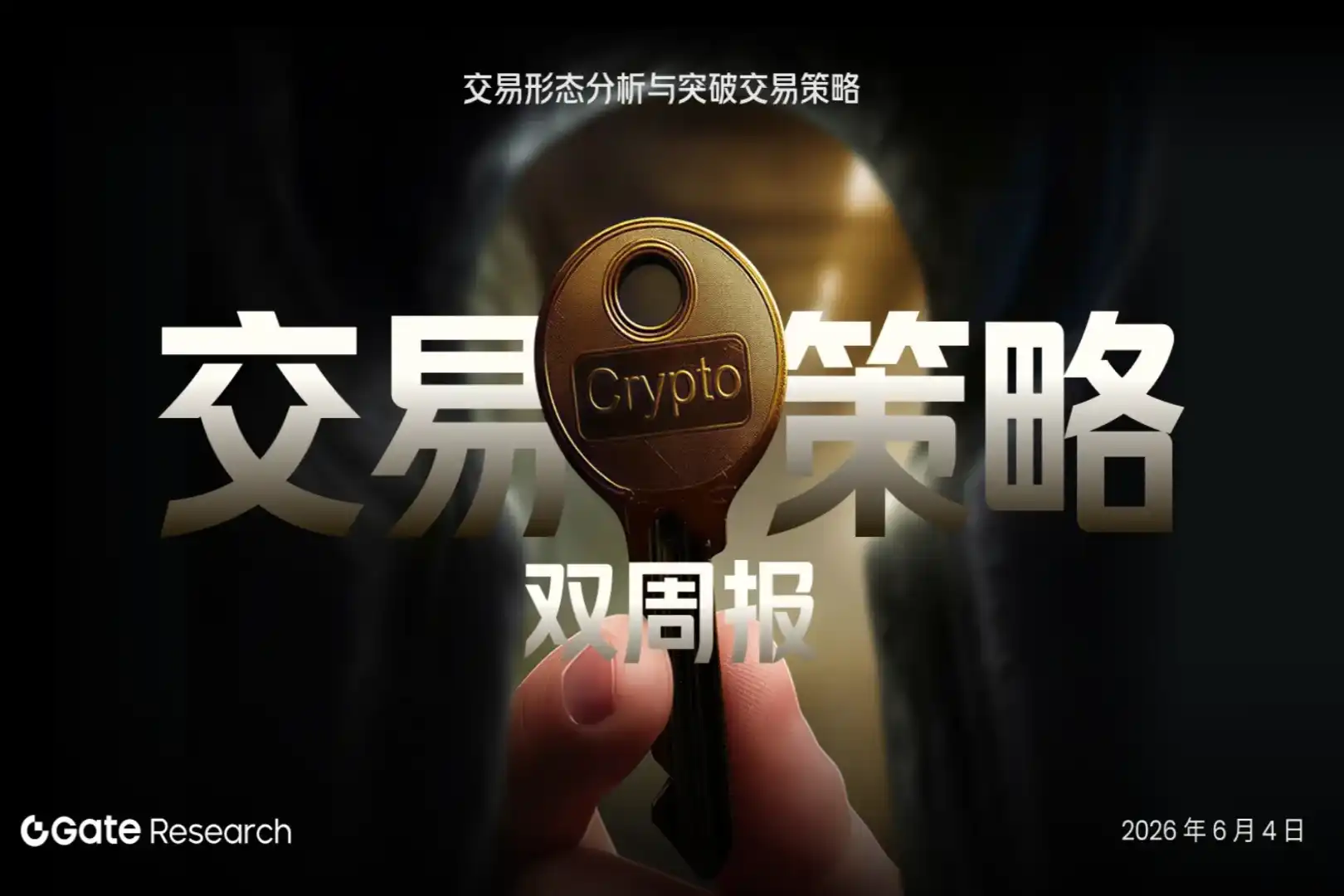
Gate Research Institute: Analysis of Chart Patterns and Breakout Trading Strategies

Gate Research Institute: Chart Pattern Analysis and Breakout Trading Strategies Chart patterns are crucial tools in technical analysis for observing market supply and demand shifts, trend continuations, and reversals. This analysis involves a comprehensive evaluation of trend, volume, support/resistance, time cycles, and breakout validity, not just rote pattern recognition. Patterns are broadly categorized into reversal patterns (e.g., Double Tops/Bottoms, Head and Shoulders) and continuation patterns (e.g., Flags, Triangles, Rectangles). An effective breakout, key for trading, requires clear support/resistance, prolonged consolidation, a prevailing trend backdrop, and volume confirmation. However, breakouts are not guaranteed, as false breakouts are common. Risk must be managed through position sizing, stop-loss orders, pullback confirmations, and profit-taking in stages. Key pattern types discussed include: * **Rectangle Patterns:** Indicate market indecision within parallel support and resistance, with breakouts projecting a move equal to the pattern's width. * **Flag & Pennant Patterns:** Short-term continuation patterns following sharp price moves ("flagpoles"). * **Triangle Patterns:** Symmetrical, Ascending (bullish bias), and Descending (bearish bias) triangles, representing consolidation before a directional move. * **Head and Shoulders Patterns:** Major reversal patterns signaling trend exhaustion. The article details breakout trading strategies, defining valid breakouts by price closing beyond a key level with increased volume and minimal immediate re-entry into the prior range. It contrasts range trading with breakout trading and outlines entry methods (immediate entry, pullback entry, scaling in), stop-loss placement (based on pattern failure), and profit-taking techniques (target-based, structure-based, trend-following). It further classifies breakout outcomes: 1. **Valid Breakouts:** Strong, sustained moves in the breakout direction. 2. **Pullback Breakouts:** Price breaks out, retests the breakout level as support/resistance, then resumes the trend—offering a lower-risk entry. 3. **False Breakouts:** Price briefly breaches a level but quickly reverses back into the prior range, a common risk managed by strict stop-losses. Key validation tools for breakouts include volume analysis, the principle of support/resistance role reversal, and momentum indicators like ATR, Moving Averages, Bollinger Bands, and RSI. In conclusion, while chart patterns and breakout analysis provide a structured framework, their effectiveness relies on multiple confirming factors—trend context, volume, and proper risk management. They should be integrated into a broader trading system rather than used as standalone signals.

marsbit27m ago

Gate Research Institute: Analysis of Chart Patterns and Breakout Trading Strategies

marsbit27m ago

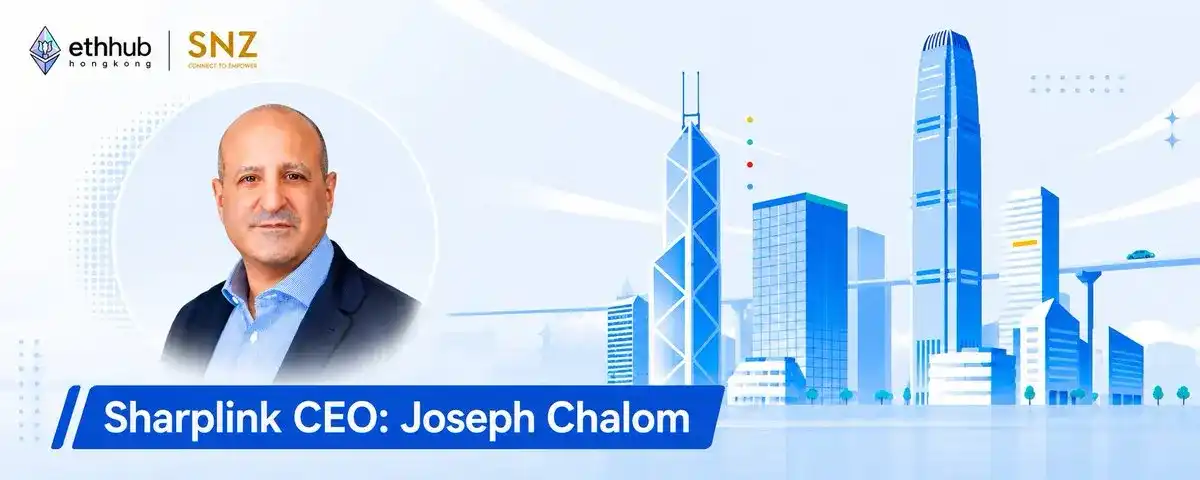
Joseph Chalom: Ethereum is Becoming the "Settlement Layer of Trust" for Global Finance

In a speech titled "The Industrialization of Trust," Sharplink CEO Joseph Chalom (former BlackRock digital assets head) discussed the future transformation of global finance. Drawing from 20 years at BlackRock, where he led the launch of Bitcoin/ETH ETFs and tokenized funds, Chalom highlighted the immense hidden costs of establishing trust in traditional finance—estimated at over $9.3 trillion annually in the US alone due to fragmented systems, multi-day settlements, and countless reconciliations. He argued that Ethereum is emerging as the global financial "settlement layer for trust," with its robust, decentralized infrastructure securing over $300 billion in on-chain assets and most stablecoins and tokenized assets. The future, he stated, will be driven by three accelerating pillars: stablecoins (evolving beyond crypto gateways to become efficient cross-border payment rails), tokenized assets (enabling 24/7 trading and reshaping capital markets), and DeFi (providing automated, accessible financial services). A potential game-changer, Chalom added, is the fourth pillar: "Agentic Finance," where AI agents autonomously execute programmable financial transactions via smart contracts and stablecoins. He envisions individuals soon having AI-powered "CFOs in their pockets" to optimize idle capital and manage tokenized portfolios. This shift, facilitated by Ethereum's trustless settlement, could multiply on-chain transaction volume 1000x within a year, moving finance toward a seamless, digitized future.

marsbit27m ago

Joseph Chalom: Ethereum is Becoming the "Settlement Layer of Trust" for Global Finance

marsbit27m ago

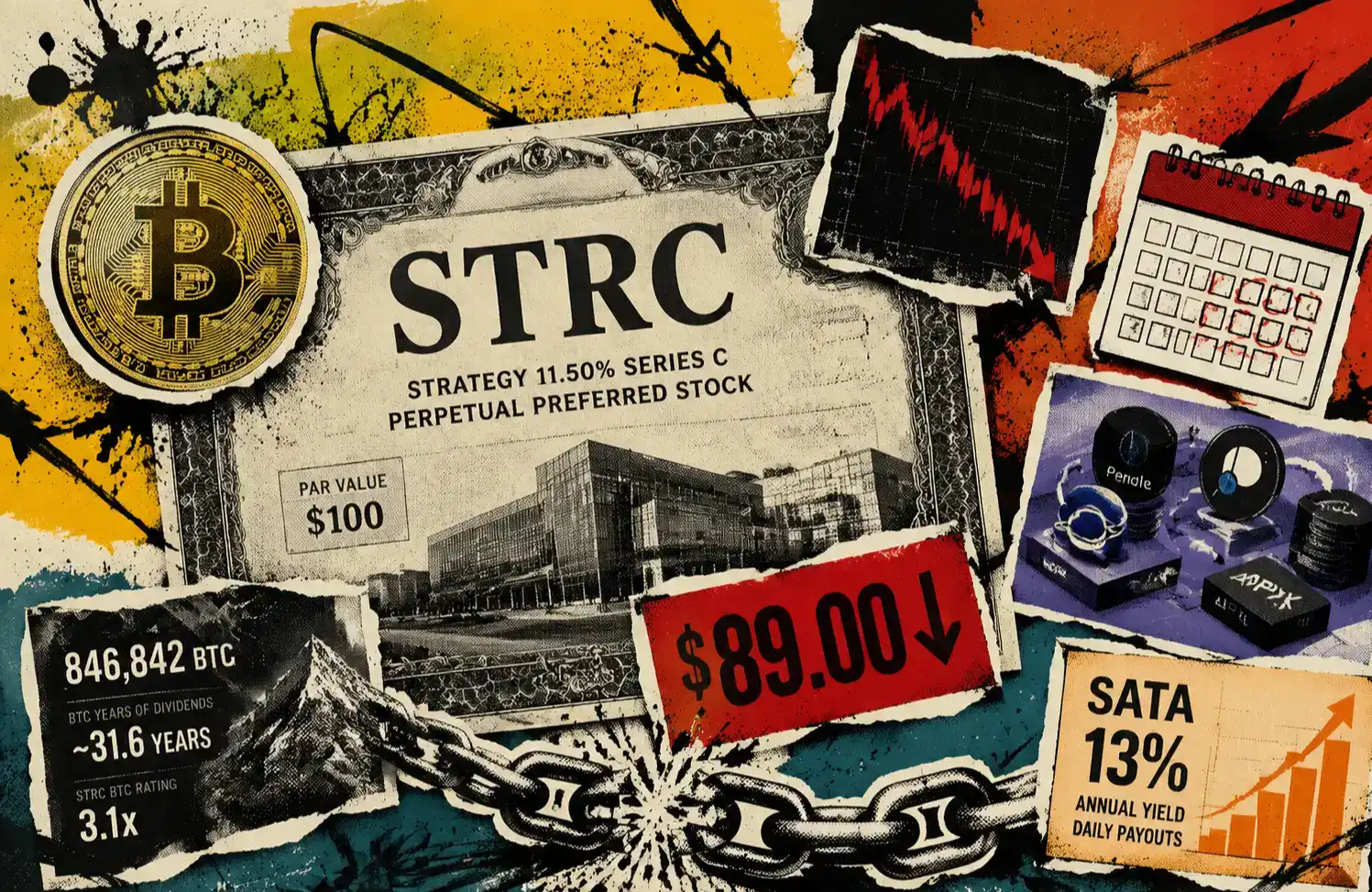
STRC Severely Unpegged, What Risks Is the Market Pricing In?

The article analyzes the recent significant de-pegging of Strategy's perpetual preferred stock, STRC, whose price fell to approximately $89, far below its $100 face value. This discount has pushed its simple yield to around 12.9%, creating a paradox. The stock was designed as a high-yield instrument trading near par, and Strategy maintains an 11.5% annual dividend, even recently switching to semi-monthly payments to support the price. The author explores several reasons why the high yield hasn't attracted enough buying pressure to restore the par value. A key factor is potential reverse deleveraging from carry trades, where leveraged investors may be forced to sell due to margin calls as the price falls, creating a self-reinforcing downward spiral. Additionally, the tokenization and integration of STRC into DeFi protocols (like Apyx, Saturn, Pendle) have introduced faster, more transparent, and potentially more volatile price adjustment mechanisms through leverage and yield-splitting products. The emergence of a competing product, Strive's SATA, offering a 13% yield with daily dividends, has also changed the yield benchmark, challenging STRC's unique high-yield narrative. Furthermore, the market is questioning the distinction between Strategy's substantial Bitcoin reserves, which provide long-term balance sheet coverage, and the certainty of stable near-term cash flow for dividends. Ultimately, the price dip represents a stress test for this type of BTC-backed, high-yield financing tool. The future path of STRC depends on whether Strategy acts to reinforce the $100 peg (e.g., by adjusting dividends), whether DeFi-related leverage unwinds further, and how investors ultimately price the risks of leverage, competition, and cash flow uncertainty against the offered yield.

marsbit38m ago

STRC Severely Unpegged, What Risks Is the Market Pricing In?

marsbit38m ago

LIT Token Hits Six-Month High: How Long Can the Buyback Flywheel Keep Burning Fuel?

The LIT token of decentralized perpetual exchange Lighter surged to a six-month high above $1.90 on June 18th, with a market cap of $425 million. After a price correction earlier this year, the recent rebound is attributed to its core "buyback flywheel" mechanism. All protocol fee revenue is used for programmatic, hourly market buybacks of LIT. Since its TGE in December 2025, approximately 15 million LIT (6% of circulating supply) has been repurchased for around $21 million. Additional price support comes from the LLP (Lighter Liquidity Pool), where providers must stake LIT worth 10% of their deposited USDC, locking significant token supply. However, challenges persist. Trading volume has declined amidst a sluggish market, with total volume at $1.68 trillion, significantly lower than leading competitor Hyperliquid's $4.37 trillion. While Lighter focuses on perpetual contracts, RWA, and Pre-IPO markets, Hyperliquid has expanded into prediction markets and boasts a U.S. spot ETF, attracting institutional investment and influencer endorsements like from Arthur Hayes. In contrast, LIT currently lacks similar high-profile backing. With 75% of LIT's total 1 billion supply still locked (team and investor tokens begin a 3-year linear unlock in December 2026), there is no immediate unlock selling pressure. The token's future performance hinges on sustaining trading volume growth, successful product iteration, and executing its transparent buyback strategy against a dominant competitor.

Foresight News58m ago

LIT Token Hits Six-Month High: How Long Can the Buyback Flywheel Keep Burning Fuel?

Foresight News58m ago

Trading

Spot
Futures

Hot Articles

Discussions

Welcome to the HTX Community. Here, you can stay informed about the latest platform developments and gain access to professional market insights. Users' opinions on the price of S (S) are presented below.

活动图片