Blockchain Platform WEMIX Hacked for $6.25 Million

cryptonews.ruPublished on 2026-07-27Last updated on 2026-07-27

Abstract

Hackers exploited administrator privileges of a smart contract on the WEMIX blockchain platform, minting approximately 5.23 million unbacked $WEMIX tokens worth about $5.22 million. These tokens were swapped on a decentralized exchange for 30,736 $WEMIX and 724,198.27 $USDC.e, a version of USDC native to the WEMIX3.0 network. The attackers then bridged the $USDC.e to Ethereum and BNB Smart Chain, converting the funds to ETH and USDT and distributing them across multiple wallets, with some reportedly sent to centralized exchanges. Total losses are estimated at $6.25 million. In response, WEMIX halted nearly all services, suspended cross-chain bridges, and froze trading in affected liquidity pools. The platform is seeking to have the withdrawn assets frozen on exchanges. The incident caused the WEMIX stablecoin to depeg, plummeting 98% to $0.01. This follows a previous hack in February 2023, where attackers stole $8.65 million worth of $WEMIX from the Play Bridge.

Hackers used administrator privileges of a smart contract and minted approximately 5,225,525 unbacked $WEMIX tokens worth about $5.22 million. The freshly issued tokens were then passed through a decentralized exchange and swapped for 30,736 $WEMIX and 724,198.27 $USDC.e — this is a version of the stablecoin $USDC circulating on the mainnet of the WEMIX3.0 project.

Then the attackers withdrew the $USDC.e to the Ethereum network and the BNB Smart Chain. There, the funds were converted into ETH and USDT and distributed across numerous wallets. Representatives of $WEMIX reported that some of these assets were later sent to centralized exchanges. The total damage from the hack is estimated at $6.25 million.

$WEMIX has disabled almost all of its services, suspended the operation of all bridges connecting the WEMIX3.0 mainnet to external blockchains. In addition, trading in the affected liquidity pools has been frozen, including for the pairs $WEMIX$USDC.e, $WEMIX$WEMIX, CROW–$WEMIX, TIPO–$WEMIX$ and PLAY–$WEMIX$. On the $WEMIX PLAY platform, trading and staking on the $NFT marketplace have been disabled.
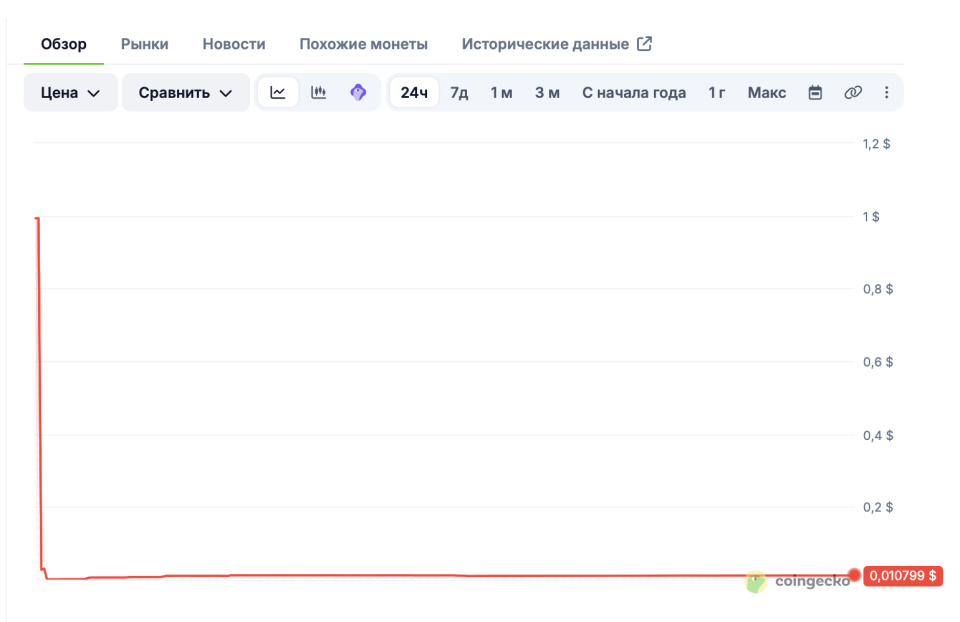
The platform is now trying to get exchanges to freeze the withdrawn assets. The WEMIX stablecoin lost its peg to the dollar, falling by 98% to $0.01.

In February of last year, attackers withdrew approximately $8.65 million worth of $WEMIX from the Play Bridge vault — at that time, the token's value was about $6.15 million. The incident was related to the compromise of authentication keys used for monitoring the $NFT platform Nile. According to the investigation, the hackers spent nearly two months in the system before withdrawing the funds.

end-content

Related Questions

QHow did the hackers exploit the WEMIX platform to steal funds?

AThe hackers exploited administrator privileges of a smart contract to mint approximately 5,225,525 unbacked $WEMIX tokens, worth about $5.22 million. They then swapped these tokens on a decentralized exchange for other assets.

QWhat actions did the WEMIX platform take immediately after discovering the hack?

AWEMIX disabled nearly all its services, suspended all bridges connecting its mainnet to external blockchains, and froze trading in affected liquidity pools, including several key trading pairs. It also disabled trading and staking on its NFT marketplace.

QWhat was the total estimated financial damage from the WEMIX platform hack?

AThe total estimated damage from the hack is $6.25 million.

QWhat happened to the WEMIX stablecoin's price following the security incident?

AFollowing the hack, the WEMIX stablecoin lost its peg to the US dollar, plummeting by 98% to a value of $0.01.

QHas WEMIX experienced a similar security breach in the past?

AYes, in February of the previous year, attackers withdrew approximately $8.65 million worth of $WEMIX (valued at about $6.15 million at the time) from the Play Bridge vault. That incident was linked to compromised authentication keys.

Related Reads

Sales Director Consulted with DeepSeek, Lost Job and 5 Million Rubles

Babuskinsky District Court of Moscow upheld the lawful dismissal of Ekaterina Remizova, sales director at GK Energoprof, for disclosing trade secrets. The employee was found to have forwarded company documents, including tender participation details and colleagues' salary data, to her personal email. Furthermore, she uploaded confidential reports with sales statistics, financial metrics, and cash flow data from the company's internal PowerBI resources into the external AI service DeepSeek. The court ruled that uploading such protected information into the DeepSeek AI system itself constitutes disclosure. An additional ground for dismissal was her disclosure of strategic company plans to a supplier, after which the counterparty ceased communication. The employer also cited systematic failure to meet sales targets. Following her dismissal, Remizova sued, demanding the termination be declared illegal, changed to "by mutual agreement," and seeking a contractual "golden parachute" of 5 million rubles. The court rejected the 5 million ruble claim, as such payment was only stipulated for mutual agreement or redundancy. While one disciplinary penalty was deemed unjustified, ordering the company to pay 10,000 rubles in moral compensation, the court largely sided with the employer, refusing to recognize the dismissal as unlawful. The case highlights risks associated with using external AI services. A security expert noted that DeepSeek's "Share" function creates links that can be indexed by search engines like Google, potentially turning temporary shares into permanent, publicly accessible digital traces containing corporate data.

cryptonews.ru43m ago

Sales Director Consulted with DeepSeek, Lost Job and 5 Million Rubles

cryptonews.ru43m ago

Trading

Spot
活动图片