On August 22nd, the price of HYPE broke through $80, once again setting a new all-time high. Capital and attention subsequently returned to Hyperliquid, and a long-absent meme craze also emerged on HyperEVM, featuring two high-market-cap tokens: egg and joff.
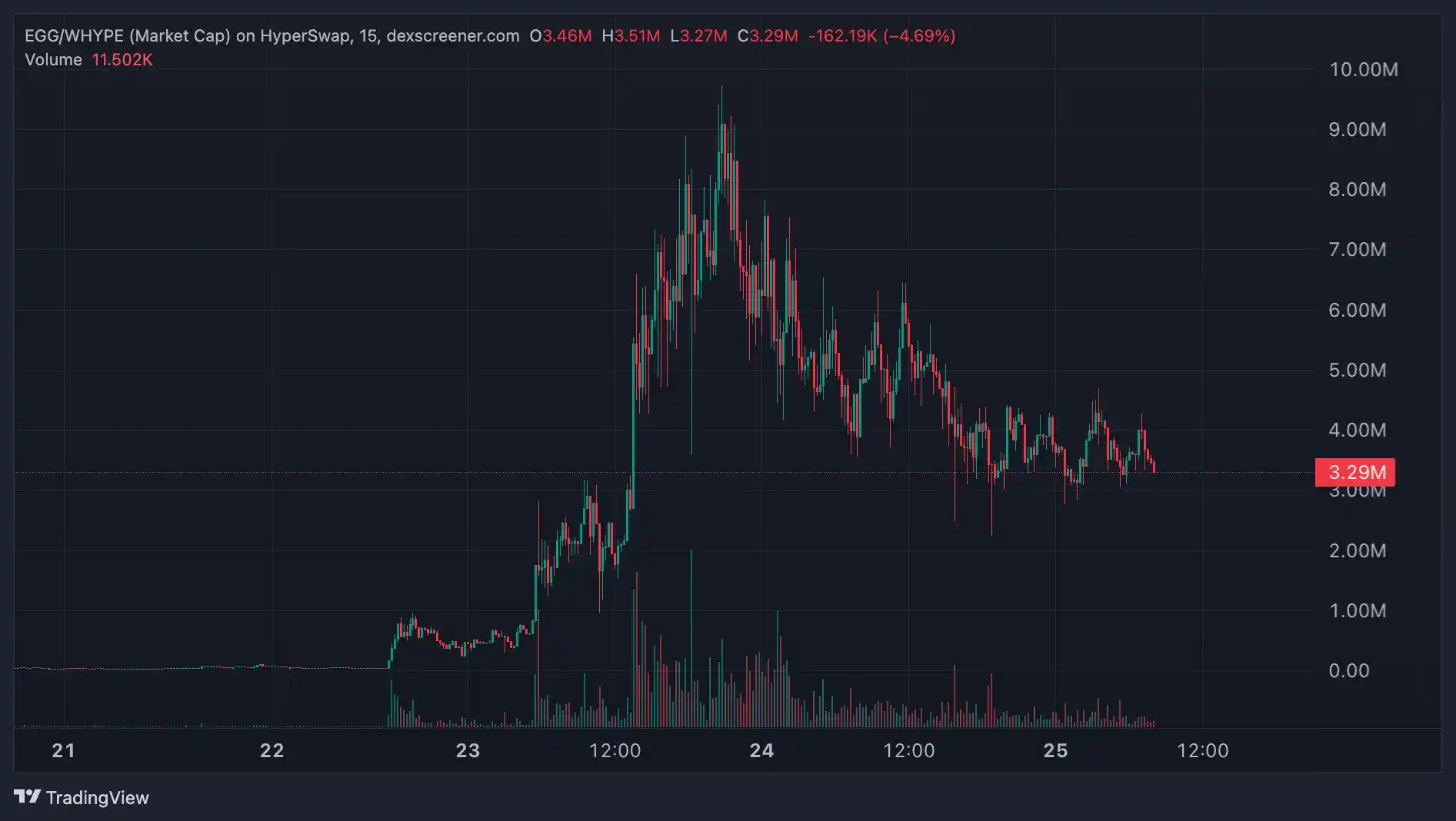
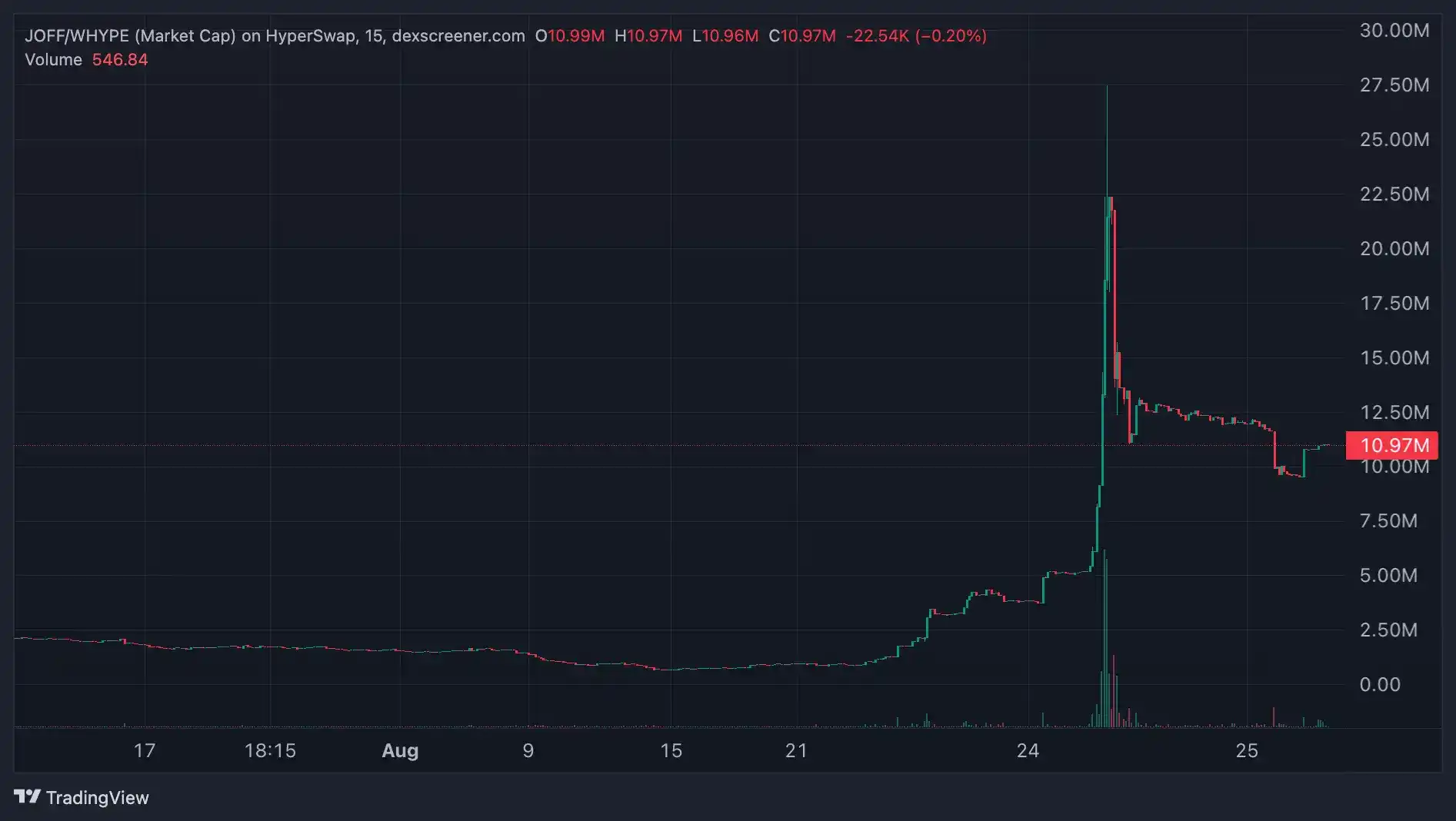
The hype comes fast and fades even faster.
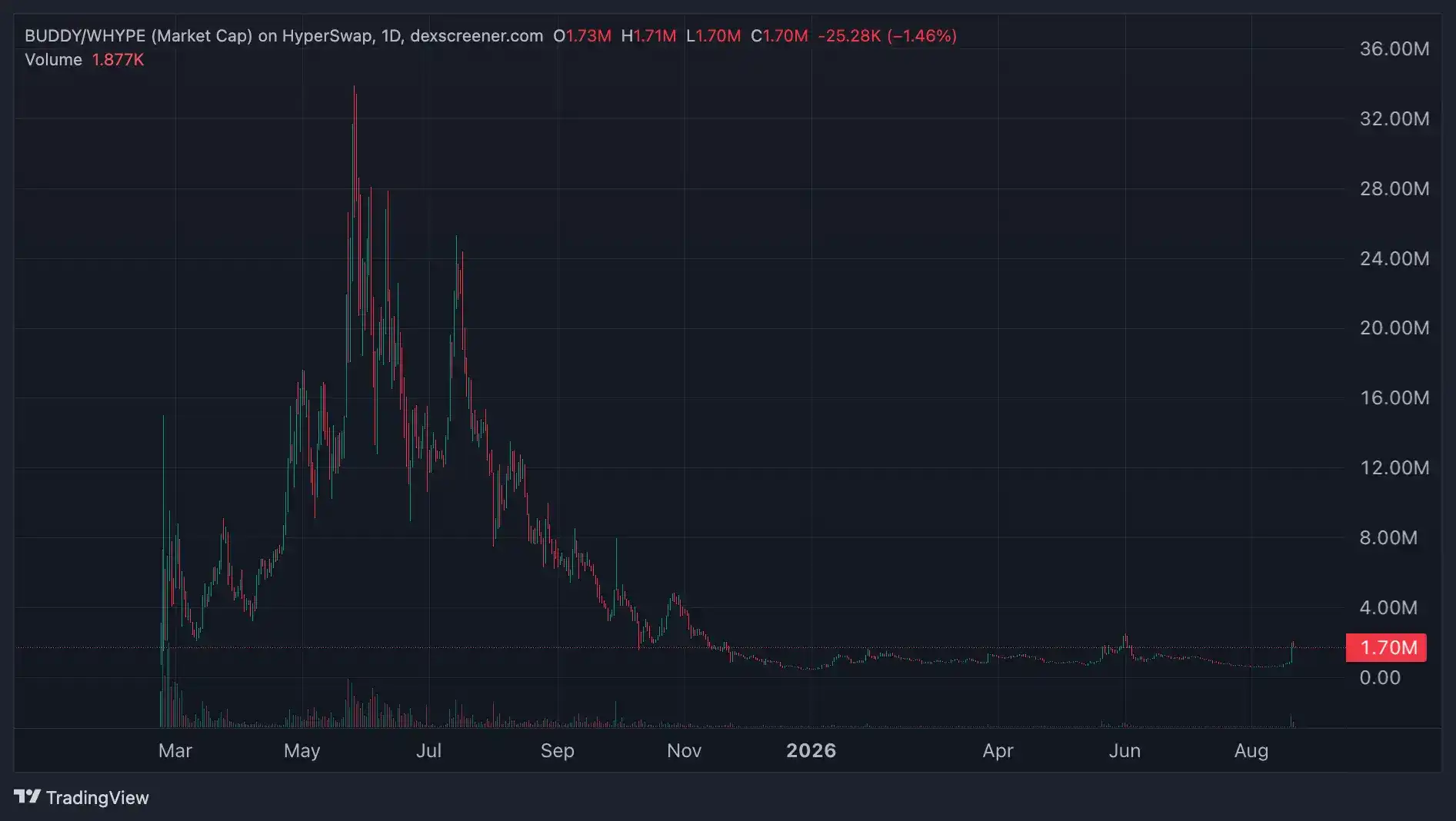
This has almost become the fixed script for memes on HyperEVM. During the first meme season in June last year, the market cap of BUDDY once reached $35 million, but since then it has been difficult to find another project that can sustain momentum. HyperEVM has never lacked retail investors willing to place bets; what it lacks is a set of trading infrastructure capable of supporting this speculative demand.
HyperEVM employs a dual-block architecture, connecting to HyperCore while also leaving complexity for developers and traders. During network congestion, gas for a simple swap can exceed $10, and in extreme cases, even reach $20. After a new token is launched, one must separately find an AMM, spot liquidity, and perpetual futures markets. There is also no unified token launch platform on HyperEVM to connect these steps.
Kinetiq saw this gap. As the largest liquid staking protocol on Hyperliquid, it announced the launch of Elysium, Hyperliquid's L2. Following the announcement, discussions rapidly spread within the community regarding the revaluation of KNTQ, HYPE value capture, and the migration of new applications.
From Staking Protocol to Hyperliquid Infrastructure
Kinetiq initially addressed the liquidity problem after HYPE staking. Users stake their HYPE with the protocol and receive kHYPE, which accrues staking rewards; kHYPE can then be used in DeFi scenarios like lending and yield strategies, allowing the same asset to simultaneously serve staking and liquidity functions.
Currently, Kinetiq's TVL is approximately $1.214 billion. In addition to kHYPE, Kinetiq has also launched products like Earn, kmHYPE, Launch, and Markets.
According to Kinetiq's disclosed design, Elysium will continue to use HYPE as gas. Users won't need to purchase another base asset to access the new network, and the transaction demand generated on Elysium will directly increase the utility scenarios for HYPE.
Performance is the first area of improvement. Kinetiq claims that Elysium's block speed and throughput at launch will be orders of magnitude higher than HyperEVM's, with the long-term goal of bringing block times close to HyperCore's. Clearly, Kinetiq aims to create an execution environment suitable for high-frequency spot trading, automated market making, and applications requiring continuous state updates.
An even more critical aspect is Elysium's connection to HyperCore.
HyperEVM's existing L1 Read precompile contract allows smart contracts to read HyperCore data, but the order book information visible is primarily the best bid and ask prices. Elysium plans to enhance L1 Read, providing developers with richer market depth and more up-to-date quotes closer to the block top.
For ordinary traders, this just means seeing a few more levels of the order book. For market makers, the significance is entirely different. They can continuously provide quotes within Elysium's AMM while simultaneously reading HyperCore's depth and prices to execute hedges.
Kinetiq views Prop AMMs as the type of application Elysium needs to attract first. These AMMs use professional market makers' proprietary capital for quoting and are highly sensitive to latency and hedging efficiency. According to data disclosed by Kinetiq, spot volume handled by Prop AMMs on Solana has long far exceeded that on HyperCore. Elysium aims to capture precisely this spot trading demand that Hyperliquid has been missing.
Reconstructing the Token Lifecycle
The shortcomings of Hyperliquid in spot trading currently extend far beyond just transaction speed.
Launching a spot asset on HyperCore requires participating in a Ticker auction and re-establishing an order book; launching a token on HyperEVM requires developers to separately find a launchpad, AMM, and market makers. Even if a new token gains short-term attention, it's difficult to channel that liquidity into HyperCore afterward. Spot and perpetual futures, while appearing to belong to the same ecosystem, actually follow two separate paths.
Elysium proposes a complete pipeline: new tokens are first created on Elysium, achieving cold start through long-tail AMMs; after liquidity expands, they move into Prop AMMs; then they can choose to establish a HyperCore spot order book; finally, via HIP-3, they can list on the perpetual futures market.
This is also what Kinetiq calls a "Value-Added L2." L2s on Ethereum are often criticized for siphoning activity and fees from the mainnet, while Elysium attempts to send new on-chain activity back to HyperCore. It uses HYPE as gas, assets establish spot markets on HyperCore, and derivatives return via HIP-3. The more active Elysium is, the more trading volume HyperCore should theoretically receive.
Kinetiq's token, KNTQ, also has its own value capture path. Elysium's sequencer revenue plans to allocate 25% to applications consuming block space, 25% to the Kinetiq treasury, with the remaining 50% used for open market repurchases of KNTQ, which are then sent to the Hyperliquid Assistance Fund for burning.
Supporting Complex Application Scenarios
Among Elysium's potential use cases, memes are just the easiest to understand. What can truly test this chain's limits are new types of Perp DEXes like PaperTrade, which involve complex settlement logic.
We have previously introduced PaperTrade. It reads the Hyperliquid order book price, allowing users to directly settle profits and losses with a public LP pool. Trades do not go into HyperCore for matching; profit queues, LP balances, and the minting logic of the PAPER token all run within HyperEVM smart contracts.
This design inherently relies on high-frequency state updates. Every position open, close, profit queuing, and subsequent disbursement requires on-chain execution, and HyperEVM's slow transaction confirmations and high gas fees directly undermine the product experience. A more practical issue is that any high-performance chain connected to an external price oracle can replicate PaperTrade's mechanism, offering lower gas and more aggressive token incentives. PaperTrade chose Hyperliquid based on native pricing and a native user base; yet HyperEVM's performance weakens these two advantages.
Elysium presents another possibility. PaperTrade can continue reading HyperCore prices, utilize the enhanced L1 Read for richer order book information, while placing settlement and token logic into a faster execution environment. It wouldn't need to leave Hyperliquid for performance nor hand over its most critical price source to an external oracle.
No wonder Kinetiq's founder, Omnia, specifically mentioned PaperTrade after announcing Elysium: "It now has a home."
Similar opportunities will emerge for options, automated trading, and lending protocols requiring real-time hedging. HyperCore already hosts some of the most active traders and deepest liquidity on-chain. What Elysium aims to do is enable developers to run more complex financial logic alongside this liquidity.