Central Bank of Russia Establishes Rules for Cryptocurrency Trading

cryptonews.ruPublished on 2026-07-28Last updated on 2026-07-28

Abstract

The Central Bank of Russia has unveiled new draft regulations for trading cryptocurrencies, signaling a move towards strict state-controlled oversight of the industry rather than simple legalization. The framework establishes a privileged, state-appointed exchange to control organized trading, dictate transaction rules, and set official asset prices. A key element is the introduction of "digital depositories," which face prohibitively high capital requirements ranging from 50 to 250 million rubles. These funds must be held in highly liquid, top-tier credit-quality assets, effectively barring independent crypto startups and paving the way for major banking intermediaries. Similar high barriers are set for electronic platform operators handling settlements. The regulations impose significant surveillance on an industry built on principles of privacy. Digital depositories are required to collect extensive client and asset information, functioning as overseers akin to those in the traditional securities market. The Central Bank retains exclusive authority to maintain the registry of authorized depositories. Critics argue these rules transform the once-accessible crypto market into a closed, elite club. By creating a tightly regulated "legal arena," the central bank is seen as stripping away the very advantages—like accessibility and privacy—that originally attracted enthusiasts to the space.

Updated: 2026-07-27

The new initiatives from the Bank of Russia confirm that the state is not simply legalizing the industry but is imposing strict rules on the sector. The published draft regulatory acts paint a picture of a future where the rules of the game are dictated by financial monopolists.

The first step toward this monopolization is establishing control over the trading itself. The regulator has prepared the groundwork for organized trading of digital currencies, where all conditions will be dictated by an exchange appointed from above. This privileged platform will receive the right to define the operational regime and officially calculate the market and weighted average value of assets.

The Central Bank is introducing the institution of so-called digital depositories. As evident from the published requirements for these structures, the market entry threshold has skyrocketed from 50 to 250 million rubles, depending on whether the company works with open blockchains or only facilitates settlement after trading. Importantly, these substantial funds must be highly liquid assets of impeccable credit quality.

It is obvious that no independent crypto startup can meet such conditions. The market is being deliberately cleared for intermediaries in the form of banking giants. Precisely the same prohibitive barriers have been erected for operators of electronic platforms that will conduct settlements for digital financial assets through nominal accounts.

An industry that grew on the principles of privacy will now face serious oversight. In the regulatory act on accounting rules, the regulator meticulously prescribes requirements for opening digital accounts and the set of information that must be collected about each client and their assets. The digital depository becomes a supervisor operating according to the templates of the securities market, where every step is recorded in a database. To ensure the system operates without failures, the Bank of Russia has reserved the exclusive right to maintain the register of such authorized depositories.

An industry that once gave every person with small capital the opportunity to become part of the global economy is transforming into a closed, elite club. In caring for the creation of a 'legal arena,' the Central Bank is essentially depriving ordinary crypto enthusiasts of the very advantages that brought them to this market.

end-content

Trending Cryptos

Related Questions

QWhat is the main objective of the new regulatory initiatives announced by the Bank of Russia according to the article?

AThe main objective is not just to legalize the crypto industry, but to establish strict rules for it, effectively creating a future where financial monopolists dictate the terms. This includes centralized control over trading and the creation of high entry barriers.

QHow does the Bank of Russia plan to control cryptocurrency trading as per the published draft regulations?

AIt plans to establish a controlled, centralized platform for organized trading. A privileged exchange appointed by authorities will set the operational rules and officially calculate the market and weighted average prices of digital assets.

QWhat are the key requirements for 'digital depositories' introduced by the Central Bank, and what is their intended impact on the market?

AThe capital requirements for digital depositories are set between 50 and 250 million rubles (depending on services), which must be highly liquid assets of impeccable credit quality. This creates a prohibitively high barrier, clearing the market for major banking giants and sidelining independent crypto startups.

QHow will the new rules affect user privacy in the cryptocurrency industry based on the article?

AThe rules will significantly reduce privacy. Digital depositories must collect detailed information about every client and their assets, effectively acting as overseers. This transforms the system to resemble the heavily regulated securities market, where every transaction is recorded.

QWhat is the article's overall critique of the Central Bank's new regulatory framework for cryptocurrencies?

AThe article critiques that the framework transforms the once-open, accessible crypto industry into a closed, elite club. By creating a 'legal arena' with centralized control and high barriers, it strips away the key advantages of decentralization and accessibility that initially attracted ordinary enthusiasts.

Related Reads

Why P2P and Exchangers Are Becoming Obsolete, and What Will Replace Them

Titled "Why P2P and Exchanges Are Becoming Obsolete, and What Will Replace Them," this article discusses the evolution of stablecoins, particularly USDT, from a trading tool to a global payment method. However, converting crypto back to fiat for daily expenses remains a challenge. The process of using P2P platforms or crypto exchanges has become increasingly risky and complex due to stricter banking anti-fraud measures, new legislation in Russia, and rampant fraud schemes like "triangles," where sellers can inadvertently receive stolen funds. The article highlights that while P2P was convenient, banks now scrutinize frequent peer-to-peer transfers, often freezing accounts. Exchanges also pose risks like unfavorable rates and unclear compliance. The market is therefore shifting towards integrated services that eliminate the manual conversion step. It cites OneSix as an example—a crypto wallet accessible via Telegram and web that embeds currency conversion directly into payment and withdrawal scenarios. Users can pay bills or send money as if using a bank app, with the crypto-to-fiat exchange happening seamlessly in the background. It also offers invoicing for freelancers and conducts AML checks, returning suspicious transactions instantly instead of freezing them. In conclusion, as crypto integrates into everyday finance, the demand for manual, risky exchange methods is declining. The future lies in unified platforms that combine storage, compliance, conversion, and payments into a single, secure user experience.

cryptonews.ru37m ago

Why P2P and Exchangers Are Becoming Obsolete, and What Will Replace Them

cryptonews.ru37m ago

The CEO of MARA Holdings Compares AI Operations to Bitcoin Mining! Which is More Profitable?

Fred Thiel, CEO of MARA Holdings (a major Bitcoin mining company), states that the rapid growth of the artificial intelligence (AI) sector is transforming mining companies' business models. He claims that powering data centers for AI is significantly more profitable than Bitcoin mining. In a recent interview, Thiel explained why many mining firms are diversifying into AI infrastructure. According to Thiel, the energy demands of data centers are surging, especially due to the spread of generative AI applications. This creates new revenue opportunities for Bitcoin mining companies with robust power infrastructure. MARA Holdings is among those monitoring this shift and aims to develop its energy and infrastructure services for AI data centers. Thiel emphasized that this move toward AI does not mean the end of Bitcoin mining. He stated that Bitcoin mining remains a sustainable business model, especially for miners in regions with low electricity costs, and it is still a crucial field for utilizing excess or idle power capacity. In recent years, many Bitcoin mining companies have begun using their energy-intensive infrastructure not just for block production but also for high-performance computing (HPC) and AI applications. This strategy aims to diversify revenue sources and increase resilience against cryptocurrency market volatility. Analysts note that the growing energy demand in the AI sector presents significant transformation opportunities for mining companies. The need for high-power, uninterrupted electricity supply, particularly for large data centers, gives Bitcoin miners with existing energy infrastructure expertise a considerable advantage.

cryptonews.ru47m ago

The CEO of MARA Holdings Compares AI Operations to Bitcoin Mining! Which is More Profitable?

cryptonews.ru47m ago

Ratio's CEO Says Multi-Currency Stablecoins Could Eliminate Costly FX Conversions in Asia

The CEO of Ratio, John Cho, argues that multi-currency stablecoins could save Asia billions by eliminating costly foreign exchange conversions in regional trade. While USD stablecoins like USDT and USDC work for global settlements, local Asian trade is conducted in local currencies like the Korean won or Singapore dollar. Forcing these transactions through USD intermediaries creates unnecessary costs and currency risk. Cho envisions a complementary ecosystem where local-currency stablecoins work alongside USD stablecoins, enabling seamless cross-border settlements without conversion friction. A key pain point in traditional banking is the need for pre-funded Nostro and Vostro accounts, which lock up vast amounts of working capital. Blockchain-based settlement layers like Ratio offer a 24/7 alternative, using on-chain liquidity to enable instant execution even when traditional channels are closed. Modern Web3 infrastructure providers are focusing on pragmatic integration with existing corporate systems like ERPs, allowing businesses to gradually shift volumes to digital channels for better speed, cost, and reduced slippage. Clear regulation is cited as the critical catalyst for widespread institutional adoption. As jurisdictions like the U.S. advance legislation (e.g., the CLARITY Act) and Asian countries are expected to pass their own stablecoin laws within 12-24 months, regulatory uncertainty is receding. The ultimate vision is for regulated stablecoins to become an invisible settlement layer integrated into national payment systems, where payments simply happen on-chain, erasing the boundary between traditional banking and digital assets.

cryptonews.ru1h ago

Ratio's CEO Says Multi-Currency Stablecoins Could Eliminate Costly FX Conversions in Asia

cryptonews.ru1h ago

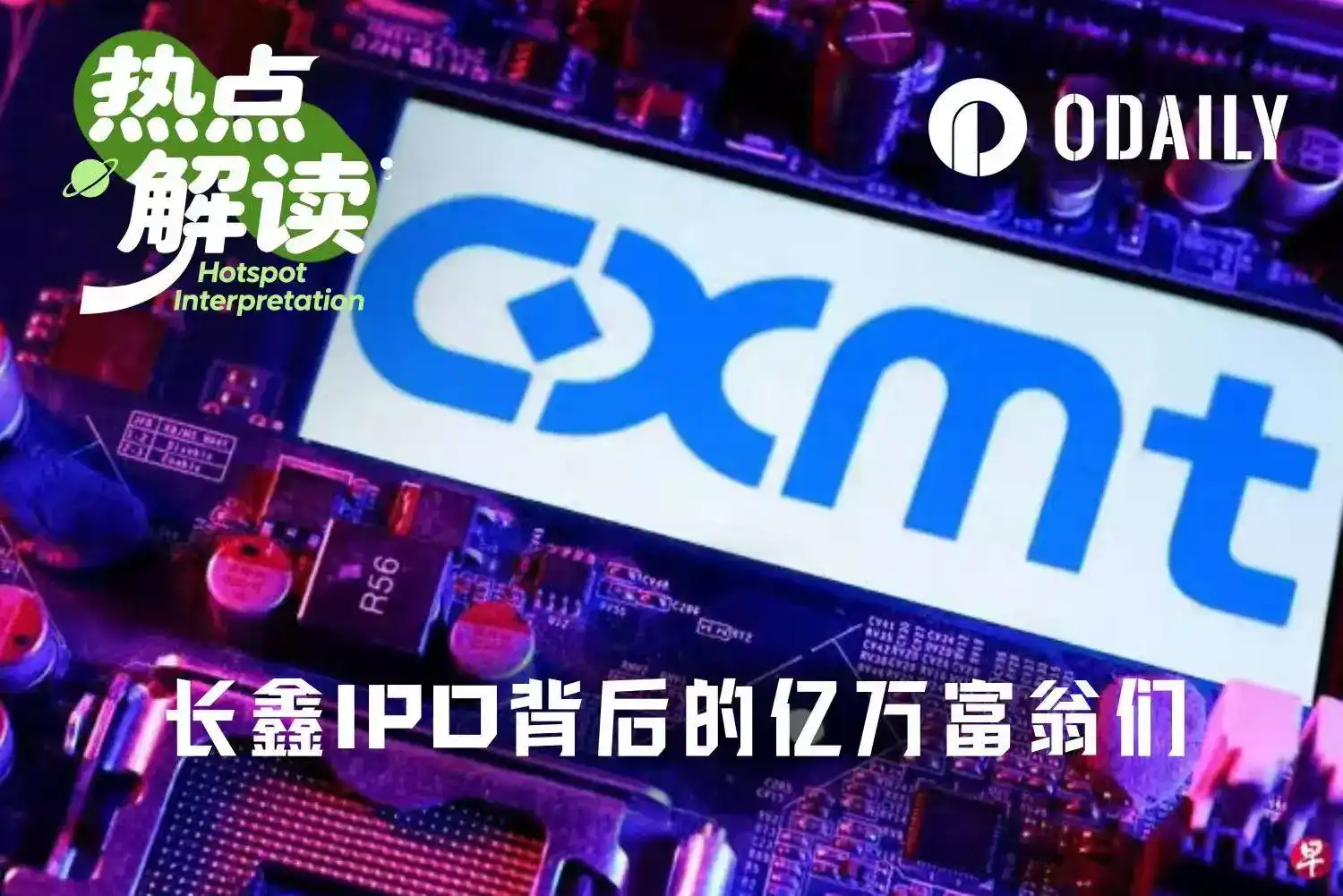
Huang Xiaoming, Li Bin, Lei Jun, Liang Wenfeng... Who Are the Biggest Winners in the CXMT IPO Feast?

Changxin Technology, a leading Chinese memory chip manufacturer, successfully listed on the Shanghai Stock Exchange's STAR Market (科创板) on July 8, 2026. Its share price surged from the IPO price of 8.66 yuan to close at 49 yuan on the first day, catapulting its market capitalization to 3.28 trillion yuan, making it the most valuable A-share company and triggering a massive wealth creation event. The biggest winners were the company's founder, Zhu Yiming, and its employees. Zhu Yiming's family wealth skyrocketed nearly 300% to approximately $13.9 billion, with his direct stake in Changxin valued at around 80 billion yuan. Additionally, over 6700 employees benefited from stock ownership plans, creating at least 237 new millionaires (in CNY). Zhu also pledged to donate 768 million shares, worth over 37.6 billion yuan, for future employee incentives over a ten-year period. Several prominent investors and corporate clients also reaped significant paper gains from the IPO. Notable figures include: * **Liang Wenfeng**, founder of DeepSeek, whose funds netted a paper profit of approximately 827 million yuan. * **Kong Jianping**, founder of Nano Labs, saw his indirect holdings valued at roughly 940 million yuan. * **Li Bin**, founder of Nio, whose company's strategic investment of 158 million yuan is now worth about 740 million yuan. * **Lei Jun**, founder of Xiaomi, whose subsidiary holds shares currently showing a paper gain of over 736 million yuan. Xiaomi clarified this is a corporate investment, not direct personal wealth. The article notes that while this IPO created immense wealth for insiders and large investors, retail investors who were lucky enough to win an allotment in the lottery typically profited by around 20,000 yuan. The listing solidifies Changxin's position as China's premier domestic memory chipmaker.

marsbit1h ago

Huang Xiaoming, Li Bin, Lei Jun, Liang Wenfeng... Who Are the Biggest Winners in the CXMT IPO Feast?

marsbit1h ago

Trading

Spot

Hot Articles

What is $BANK

Bank AI: A Revolutionary Step in the Future of Banking Introduction In an era marked by rapid advancements in technology, Bank AI stands at the intersection of artificial intelligence (AI) and banking services. This innovative project seeks to redefine the financial landscape, enhancing operational efficiency, security measures, and customer experiences through the power of AI. As we embark on this exploration of Bank AI, we will delve into what the project entails, its operational dynamics, its historical context, and significant milestones. What is Bank AI? At its core, Bank AI represents a transformative initiative aimed at integrating artificial intelligence into various banking operations. This project harnesses the capabilities of AI to automate processes, improve risk management protocols, and enhance customer interaction through personalized services. The primary objectives of Bank AI include: Automation of Banking Functions: By leveraging AI technologies, Bank AI aims to automate routine tasks, reducing the burden on human resources and enhancing efficiency. Enhanced Risk Management: The project utilises AI algorithms to predict and identify risks, thereby fortifying security measures against fraud and other threats. Personalization of Banking Services: Bank AI focuses on offering tailored financial products and services by analysing customer data and behaviours. Improving Customer Experience: The implementation of AI-driven solutions, such as chatbots and virtual assistants, aims to provide users with more human-like interactions, revolutionising the way customers engage with banks. With these goals, Bank AI positions itself as a crucial player in rendering banking more efficient, secure, and user-centric. Who is the Creator of Bank AI? Details regarding the creator of Bank AI remain unknown. As such, no specific individual or organisation has been identified in the available information. The anonymity surrounding the project's inception raises questions but does not detract from its ambitious vision and objectives. Who are the Investors of Bank AI? Similar to the project's creator, specific information regarding the investors or supporting organisations of Bank AI has not been disclosed. Without this information, it is challenging to outline the financial backing and institutional support that might be propelling the project forward. Nevertheless, the importance of having a robust investment foundation is pivotal for sustaining development in such an innovative field. How Does Bank AI Work? Bank AI operates on several innovative fronts, focusing on unique factors that differentiate it from traditional banking frameworks. Below are key operational features: Automation: By applying machine learning algorithms, Bank AI automates various manual processes within banks. This results in reduced operational costs and allows human workers to redirect their efforts towards more strategic activities. Advanced Risk Management: The integration of AI into risk management practices equips banks with tools to accurately predict potential threats such as fraud, ensuring that customer information and assets remain secure. Tailored Financial Recommendations: Through continuous learning from customer interactions, the AI systems develop a nuanced understanding of user needs, enabling them to offer tailored advice on financial decisions. Enhanced Customer Interactions: Utilizing chatbots and virtual assistants powered by AI, Bank AI enables a more engaging customer experience, allowing users to have their queries resolved quickly, thus reducing wait times and improving satisfaction levels. Together, these operational features position Bank AI as a pioneer in the banking sector, establishing new benchmarks for service delivery and operational excellence. Timeline of Bank AI Understanding the trajectory of Bank AI requires a look at its historical context. Below is a timeline highlighting important milestones and developments: Early 2010s: The conceptualization of AI integration into banking services began to gain attention as banking institutions recognised the potential benefits. 2018: A marked increase in the implementation of AI technologies occurred when banks started using AI tools like chatbots for basic customer service and risk management systems for improved security handling. 2023: The sophistication of AI continued to advance, with generative AI being introduced for more complex tasks such as document processing and real-time investment analysis. This year marked a significant leap in the capabilities afforded to banks by AI technology. 2024-Current Status: As of this year, Bank AI is on an upward trajectory, with ongoing research and developments poised to further enhance capabilities in banking operations. Continued exploration of AI applications hints at exciting developments yet to come. Key Points About Bank AI Integration of AI in Banking: Bank AI focuses on adopting artificial intelligence to streamline banking processes and improve user experiences. Automation and Risk Management Focus: The project strongly emphasizes these areas, aiming to shift the burden of routine tasks while enhancing security frameworks through predictive analytics. Personalized Banking Solutions: By harnessing customer data, Bank AI enables tailored banking services that cater to individual user needs. Commitment to Development: Bank AI remains committed to ongoing research and development efforts, ensuring its adaptability and ongoing relevance as technology continues to evolve. Conclusion In summary, Bank AI exemplifies a crucial step forward in the banking industry, leveraging artificial intelligence to reshape operational paradigms, enhance security, and promote customer satisfaction. Despite gaps in information surrounding the creator and investors, the clear objectives and functional mechanisms of Bank AI provide a strong foundation for its ongoing evolution. As AI technology continues to advance and merge with the banking sector, Bank AI is well-positioned to significantly impact the future of financial services, enhancing the way we understand and interact with banking.

1.4k Total ViewsPublished 2024.04.05Updated 2024.12.03

What is $BANK

How to Buy BANK

Welcome to HTX.com! We've made purchasing Lorenzo Protocol (BANK) simple and convenient. Follow our step-by-step guide to embark on your crypto journey.Step 1: Create Your HTX AccountUse your email or phone number to sign up for a free account on HTX. Experience a hassle-free registration journey and unlock all features.Get My AccountStep 2: Go to Buy Crypto and Choose Your Payment MethodCredit/Debit Card: Use your Visa or Mastercard to buy Lorenzo Protocol (BANK) instantly.Balance: Use funds from your HTX account balance to trade seamlessly.Third Parties: We've added popular payment methods such as Google Pay and Apple Pay to enhance convenience.P2P: Trade directly with other users on HTX.Over-the-Counter (OTC): We offer tailor-made services and competitive exchange rates for traders.Step 3: Store Your Lorenzo Protocol (BANK)After purchasing your Lorenzo Protocol (BANK), store it in your HTX account. Alternatively, you can send it elsewhere via blockchain transfer or use it to trade other cryptocurrencies.Step 4: Trade Lorenzo Protocol (BANK)Easily trade Lorenzo Protocol (BANK) on HTX's spot market. Simply access your account, select your trading pair, execute your trades, and monitor in real-time. We offer a user-friendly experience for both beginners and seasoned traders.

5.8k Total ViewsPublished 2025.05.09Updated 2026.06.02

How to Buy BANK

Discussions

Welcome to the HTX Community. Here, you can stay informed about the latest platform developments and gain access to professional market insights. Users' opinions on the price of BANK (BANK) are presented below.

活动图片