Russia Advances Bill To Regulate Crypto Market, Eyes July 1st Implementation

bitcoinistPublished on 2026-04-23Last updated on 2026-04-23

Abstract

Russia has advanced a key crypto bill, "On Digital Currency and Digital Rights," through its first parliamentary reading, aiming to establish a regulatory framework by July 1, 2026. The legislation recognizes digital assets as property and grants the Central Bank of Russia authority to license and oversee the market, permitting only licensed entities like exchanges and brokers to operate. It prohibits using crypto for domestic payments but allows it for cross-border settlements to bypass sanctions. The bill also introduces investor protection measures, including annual purchase limits for non-qualified investors and stricter oversight of mining activities.

Russia has advanced a key crypto bill on its first reading, as part of its efforts to establish a framework and fully bring the digital assets market out of the shadows in the next few months.

Russia Moves To Regulate Crypto Market By Summer

On Tuesday, the State Duma, the lower house of Russia’s legislature, advanced a key bill to legalize cryptocurrencies and establish a framework to regulate the digital assets in the country’s market.

According to the state news agency TASS, lawmakers passed the bill “On Digital Currency and Digital Rights” on its first reading, with 327 deputies voting in favor. The Russian government first introduced the draft in December 2025, seeking to establish the regulatory framework by summer 2026.

After clearing its first review, the bill still needs to clear the second and third readings in the State Duma. Then, it would proceed to the Federation Council, the upper chamber of the Federal Assembly, for consideration before reaching the President’s desk for signature. If passed, the bill will take effect on July 1, 2026, except for provisions with different effective dates, TASS reported.

The draft will recognize digital assets as property and grant the Central Bank of Russia (CBR) the authority to license, regulate, and oversee the local crypto market. Under the proposed legislation, only licensed professional participants supervised by the Bank of Russia will be allowed into the market.

“No anonymous exchanges or ‘black’ brokers. Exchanges, brokers, and depositories will receive licenses, and the Central Bank will monitor compliance. Transactions conducted through underground platforms will automatically be at risk of being blocked and of losing funds,” Kaplan Panesh, deputy chairman of the State Duma Committee on Budget and Taxes, explained.

The bill also defines the entities authorized to facilitate the circulation of crypto assets in the country, including exchanges, brokers, trust managers, and digital depositories holding the relevant licenses from the central bank.

The proposed draft establishes rules and requirements for authorized entities, and a simplified access procedure for entities already operating under the CBR’s experimental legal regime. It also introduces a simplified procedure for banks and brokers wanting to dive into crypto.

Discussing the regulation of crypto mining activities using Russian information infrastructure facilities, the deputy highlighted that “It is now a legal activity, but with clear rules: the use of only Russian infrastructure, and the reporting of equipment and currency produced.”

Digital Assets Allowed For Cross-Border Settlements

Notably, the bill will prohibit the use of crypto for paying for goods, services, or labor within the country, the report noted. However, it will allow its use for cross-border settlements to bypass sanctions restrictions.

“We have a national currency—the ruble—and it must remain the sole legal tender,” Deputy Panesh emphasized. “But we are making an exception for foreign trade. This allows Russian companies to settle accounts with foreign counterparties using cryptocurrency, bypassing sanctions restrictions. In effect, we are creating a legal instrument for cross-border settlements.”

The legislation will also introduce a tiered system that would limit the investor’s access depending on classification, aiming to “protect ordinary people from losing all their savings in a volatile market.”

As Bitcoinist previously reported, non-qualified investors would be limited to purchasing up to 300,000 rubles annually, worth around $3,800, in the most liquid cryptocurrencies after passing a knowledge test. Meanwhile, qualified investors would be able to purchase unlimited amounts of any digital asset after passing a risk-awareness test.

Panesh noted that the digital asset market in Russia has been in a gray area for years, creating risks for both citizens and the economy, adding that the legislation marks a crucial step for the local market.

“Now we are clearly defining: digital currency is property. This means it can be defended in court, included in the bankruptcy estate, and taken into account in divorce proceedings. This is a crucial step for the legal protection of millions of people who already own such assets,” he concluded.
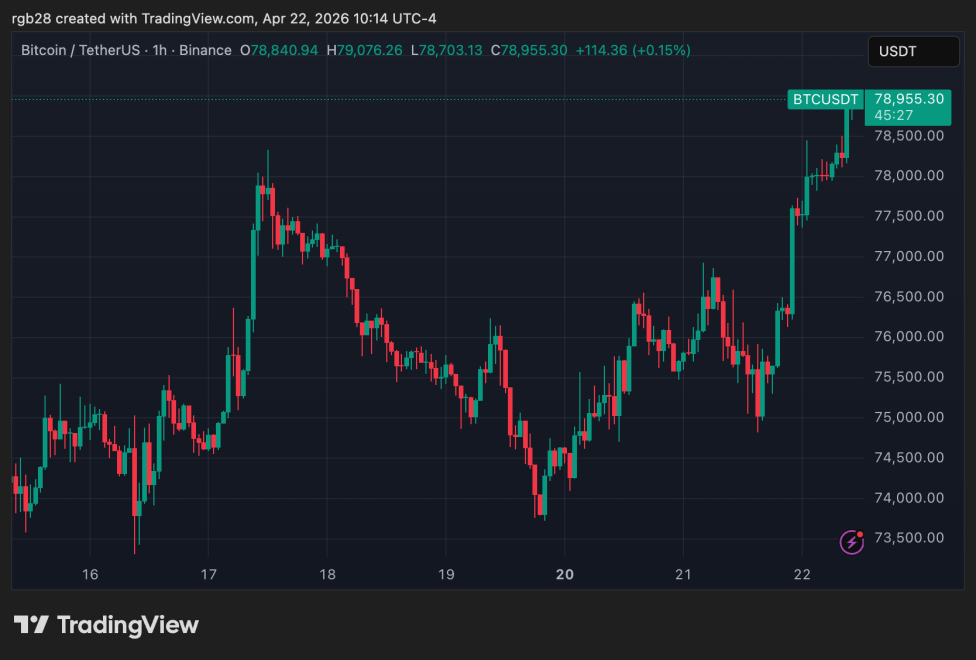
Bitcoin (BTC) trades at $78,955 in the one-week chart. Source: BTCUSDT on TradingView


Related Questions

QWhat is the main purpose of the crypto bill advanced by Russia's State Duma?

AThe main purpose of the bill is to legalize cryptocurrencies and establish a regulatory framework to bring the digital assets market out of the shadows, recognizing crypto as property and granting the Central Bank of Russia authority to license, regulate, and oversee the market.

QBy what date is the bill expected to take effect if passed, and what is one key exception to this date?

AThe bill is expected to take effect on July 1, 2026, except for provisions that have different effective dates.

QHow does the bill propose to regulate the use of cryptocurrency for payments within Russia and for international trade?

AThe bill prohibits the use of cryptocurrency for paying for goods, services, or labor within Russia, but allows its use for cross-border settlements to bypass sanctions restrictions in foreign trade.

QWhat are the investment limits for non-qualified investors under the proposed tiered system?

ANon-qualified investors would be limited to purchasing up to 300,000 rubles (approximately $3,800) annually in the most liquid cryptocurrencies after passing a knowledge test.

QWhich government body will be granted the authority to license and oversee the local crypto market according to the bill?

AThe Central Bank of Russia (CBR) will be granted the authority to license, regulate, and oversee the local crypto market.

Related Reads

AI "Transfer Station" Earning Millions Monthly? Five Questions Uncover the Truth of Token Arbitrage

The article "AI 'Transfer Station' Earns Millions Monthly? Five Questions Uncover the Truth of Token Arbitrage" explores the emerging business of API token transfer stations, which profit from global AI service price disparities and access barriers. These intermediaries purchase low-cost tokens from overseas AI providers (e.g., OpenAI, Claude) through grey-market methods—such as exploiting enterprise credits, bulk accounts, or subscription benefits—and resell them to Chinese users at a markup. Key drivers include the high cost of using top AI models (e.g., Claude Code costs ~$5 per million tokens), the performance gap between domestic and foreign models, and mismatches between subscription and API pricing. However, the practice carries significant risks: upstream token sources may be unstable or illegal; user data passing through intermediaries can be harvested or injected with hidden prompts; and models might be downgraded without disclosure. The market is evolving, with some operators now exporting cheaper Chinese models (e.g., Qwen3.5 at ~$0.11 per million tokens) to overseas users, leveraging price gaps. Yet, sustainability is low due to compliance crackdowns, instability, and reputational risks. Users are advised to employ detection methods (e.g., prompt adherence tests) and avoid sensitive data usage. The authors caution that while transfer stations offer short-term arbitrage, they lack long-term reliability and security compared to official APIs.

marsbit32m ago

AI "Transfer Station" Earning Millions Monthly? Five Questions Uncover the Truth of Token Arbitrage

marsbit32m ago

The Cost of an 11.5% Annualized Return: Will MicroStrategy's STRC Face a Moment of Reckoning?

This article analyzes the potential risks associated with MicroStrategy's (MSTR) use of structured financial products like STRC to leverage its BTC exposure. While these tools have enabled impressive returns (e.g., 11.5% annualized) and fueled significant capital inflows ($13.5B outstanding), they also create substantial annual dividend obligations (~$400M). The author argues that this structure, while effective in a bull market, could become a liability if BTC price stagnates or declines. The core risk is a potential negative feedback loop: the growing dividend burden from continued STRC issuance may eventually outweigh the benefits of increased BTC holdings. To meet these obligations, MicroStrategy might need to use new issuance proceeds for dividends instead of buying more BTC, which could disappoint equity investors. If the market capitalization (mNAV) falls below the value of its BTC holdings, the company could be forced to sell BTC instead of issuing new shares, potentially triggering a panic. The author estimates a potential inflection point in 6 months, where annual dividend costs reach $3-4B. At that stage, CEO Michael Saylor might face a difficult choice: sell BTC to meet obligations or sacrifice the credibility of the preferred shares by halting dividends. The article concludes that this financial engineering, while powerful, could ultimately "backfire" on MicroStrategy if market conditions turn.

marsbit1h ago

The Cost of an 11.5% Annualized Return: Will MicroStrategy's STRC Face a Moment of Reckoning?

marsbit1h ago

Trading

Spot
Futures
活动图片