Strategy a utilisé son appel sur les résultats du T4 2025 pour mettre en lumière ce que Michael Saylor a présenté comme le prochain programme de sécurité à long horizon pour le Bitcoin : la coordination d'un « programme de sécurité Bitcoin » mondial visant la préparation quantique, tout en mettant en garde contre les modifications précipitées du protocole qui pourraient créer plus de risques qu'elles n'en suppriment.
Ces remarques sont intervenues alors que Strategy rapportait un trimestre marqué par la dépréciation du Bitcoin en comptabilité à la juste valeur, même si l'entreprise a continué à ajouter à son trésor. Le directeur financier Andrew Kang a déclaré que la société avait clôturé l'année 2025 avec 713 502 Bitcoins — soit environ 3,4 % de tous les Bitcoin qui existeront jamais — après en avoir acheté 32 470 supplémentaires au T4 pour environ 3,1 milliards de dollars.
Kang a ajouté que Strategy avait levé plus de 25 milliards de dollars de capitaux totaux au cours de l'année 2025 et avait constitué une réserve de trésorerie de 2,25 milliards de dollars conçue pour couvrir environ 2,5 ans d'intérêts et d'obligations de dividendes.
Strategy Va Lancer Un Programme de Sécurité Bitcoin
Saylor a abordé directement l'informatique quantique à la fin de l'appel, la qualifiant de dernière en date d'une longue série de récits existentiels récurrents autour du Bitcoin. Son message était double : prendre le risque au sérieux, mais résister à un « mouvement de panique » vers des changements prématurés.
« La préoccupation aujourd'hui est l'informatique quantique et beaucoup de gens demandent si les ordinateurs quantiques représentent une menace pour le Bitcoin », a déclaré Saylor, avant d'affirmer que le débat suit un schéma familier. « Ce que je dirais, c'est que chaque fois que nous traitons de ces préoccupations, nous devons les prendre au sérieux... mais nous devons nous souvenir de deux choses. Un... 'Ne paniquez pas.'... La deuxième observation, le serment d'Hippocrate, est de ne pas nuire... Vous ne voulez pas d'une intervention iatrogène où le remède est pire que le mal. »
De son point de vue, le timing est aussi important que l'ingénierie. « Notre position sur l'informatique quantique... nous pensons que la menace est probablement à 10 ans ou plus. C'est le consensus », a-t-il déclaré. Saylor a ajouté que des travaux de résistance quantique sont en cours dans tous les secteurs qui dépendent de la cryptographie conventionnelle, et que la R&D spécifique au Bitcoin est déjà en cours, mais a souligné qu'il n'y a pas encore de « consensus mondial sur le fait que les bibliothèques cryptographiques existantes sont en danger ».
Ce manque de consensus, a-t-il soutenu, est précisément la raison pour laquelle Strategy ne préconisera pas aujourd'hui une feuille de route quantique spécifique. « Se précipiter vers une solution hypothétique avant qu'il n'y ait consensus introduirait de nouvelles surfaces d'attaque, une nouvelle complexité et de nouveaux modes de défaillance qui n'existent pas actuellement », a déclaré Saylor.
Interrogé par Tom Lee de Fundstrat sur la manière dont le Bitcoin pourrait gérer les types de portefeuilles vulnérables au quantique, Saylor a réitéré que Strategy n'essaierait pas d'orienter le résultat technique. « Je ne pense pas qu'il soit approprié pour nous de préconiser une solution particulière, une approche particulière ou un calendrier particulier », a-t-il déclaré. « Notre rôle est de soutenir toutes les différentes communautés et de faciliter l'évolution du consensus sur ce qui devrait être fait, comment cela devrait être fait, quand cela devrait être fait. »
L'annonce la plus concrète a été un engagement à formaliser ce soutien en un effort organisé. « Strategy va initier un programme de sécurité Bitcoin qui coordonne avec la communauté mondiale de la cybersécurité, la communauté mondiale de la sécurité crypto et le comité mondial de sécurité Bitcoin... pour contribuer au consensus et aux solutions pour faire face à la menace de l'informatique quantique ainsi qu'à toute autre menace de sécurité émergente qui évolue », a déclaré Saylor.
JUST IN: MICHAEL SAYLOR VIENT D'ANNONCER QUE STRATEGY LANCERA UN EFFORT MONDIAL POUR METTRE À NIVEAU #BITCOIN POUR LE QUANTIQUE
LÉGENDAIRE 🔥 pic.twitter.com/TPoWMb9rj1
— The Bitcoin Historian (@pete_rizzo_) 5 février 2026
Il a présenté cette initiative comme une responsabilité à la hauteur de l'échelle de Strategy en tant que détenteur, mais aussi comme un problème de coordination : l'objectif est d'impliquer « des esprits très brillants », de s'aligner sur le travail déjà effectué et d'aider les solutions à émerger « au bon moment et de manière responsable ».
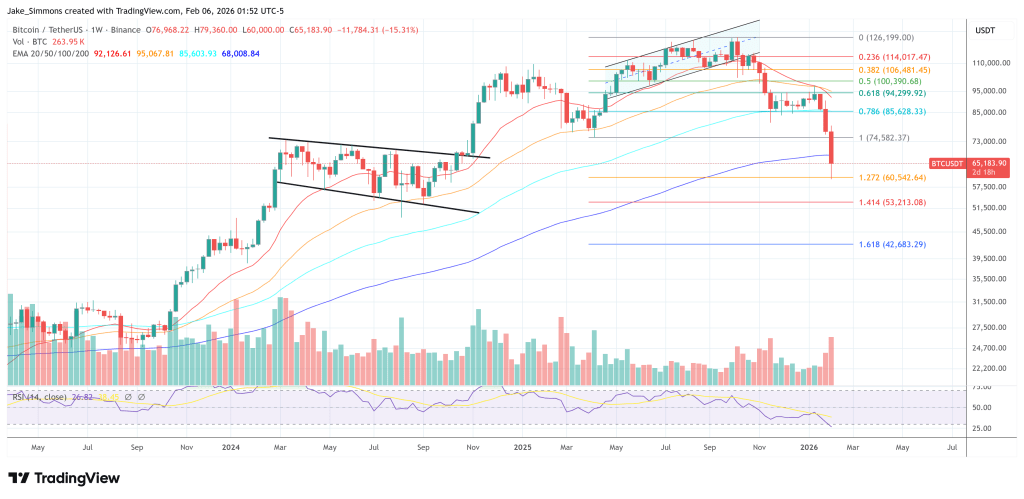
Au moment de la rédaction, le BTC s'échangeait à 65 183 $.