"Ce sont des faits graves et votre inquiétude est légitime." (These are serious incidents, and your concerns are legitimate.)
On June 30, when French Interior Minister Laurent Nuñez spoke these words to the Association of Digital Asset Holders (Adan), his tone was graver than usual.
On his desk lay a set of data: In the first half of 2026, France recorded 77 cases of kidnapping, unlawful confinement, extortion, or attempted acts related to cryptocurrency.
For comparison, the figure for the entire year of 2025 was 45 cases. Six months exceeding the entire previous year, an increase of 71%.
This means that in France, on average, a violent crime targeting a cryptocurrency holder occurs every 2.3 days.
From "Wrench Attacks" to Finger-Severing Extortion: Criminal Methods Are Evolving
The term "Wrench Attack" originates from a famous webcomic—it satirizes a brutal truth: the most secure wallet cannot withstand the threat of physical violence.
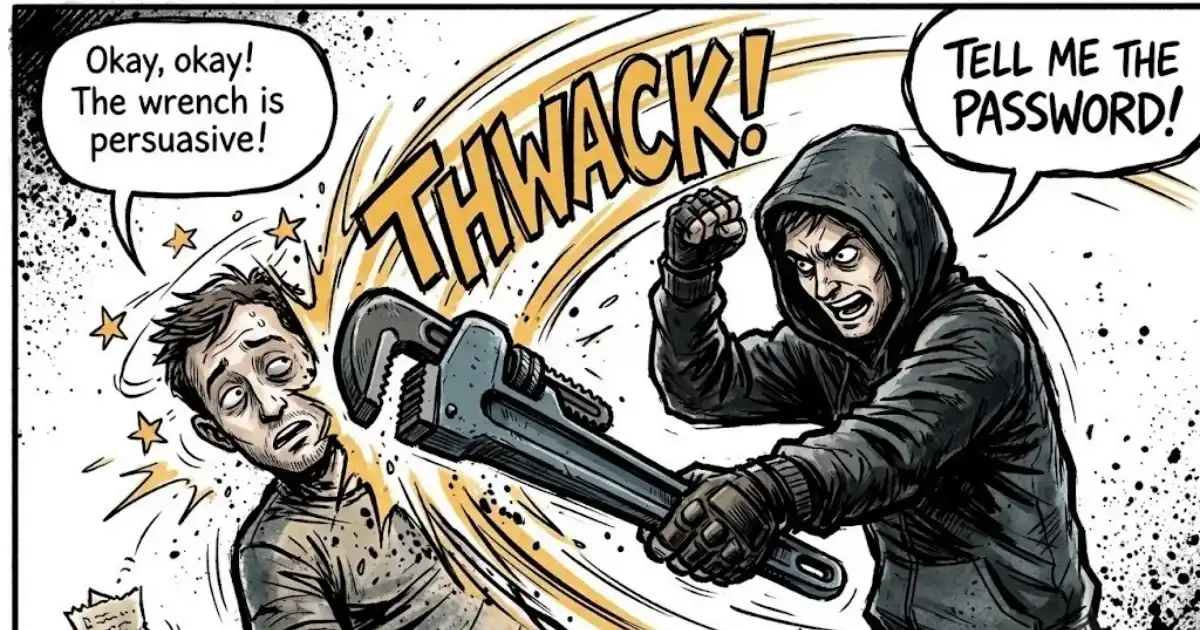
In France, this threat has evolved from an internet meme into a tragic reality.
January 2025: David Balland, co-founder of the crypto hardware wallet company Ledger, and his partner were kidnapped from their home in the Cher department in central France. The kidnappers sent a video to another Ledger co-founder—the video showed Balland's severed finger. The ransom was demanded in cryptocurrency. He was eventually rescued by elite police forces.
May 13, 2025, 11th arrondissement of Paris, in broad daylight. Three masked men attempted to drag the daughter and grandson of Pierre Noizat, co-founder and CEO of the French cryptocurrency exchange Paymium, into a white van. Passers-by intervened, with one wielding a fire extinguisher to force the attackers back. This attempted kidnapping shocked the entire French crypto community.
April 13, 2026, Burgundy region. The wife and 10-year-old son of a cryptocurrency entrepreneur were kidnapped from their home and taken to a hotel room in the Val-de-Marne department. The criminal gang demanded a ransom of "hundreds of thousands of euros."
These are not isolated incidents. Data from France's National Prosecutor's Office for Combating Organized Crime (PNACO) shows: 18 cases in 2024, 67 in 2025, 47 by April 2026. Eighty-eight people have been indicted, including more than 10 minors.
PNACO prosecutor Vanessa Perrée pointed out that behind these crimes are structured criminal networks, not isolated cases.
Why France?
France has become one of the world's largest hotspots for "wrench attacks."
According to government estimates, approximately 7.3 million French people (about 11% of the population) hold some form of cryptocurrency. This large base of holders means criminals have ample "prey" to choose from.
In its analysis, CertiK cites three reasons why France has become an attack center: the presence of several major crypto companies and their executives in the country, a "show-off culture" and the habit of voluntarily disclosing identities within the community, and multiple sensitive data leaks.
Telegram founder Pavel Durov recently even suggested that some such attacks in France might stem from leaked tax data—a former tax official is suspected of leaking information about cryptocurrency investors. While authorities have not confirmed this, it highlights the vulnerability of personal information protection in the digital asset era.
Criminal methods are also becoming more sophisticated. They typically identify victims through social media, cryptocurrency forums, or even personal networks, having already gathered intelligence before carrying out physical attacks.
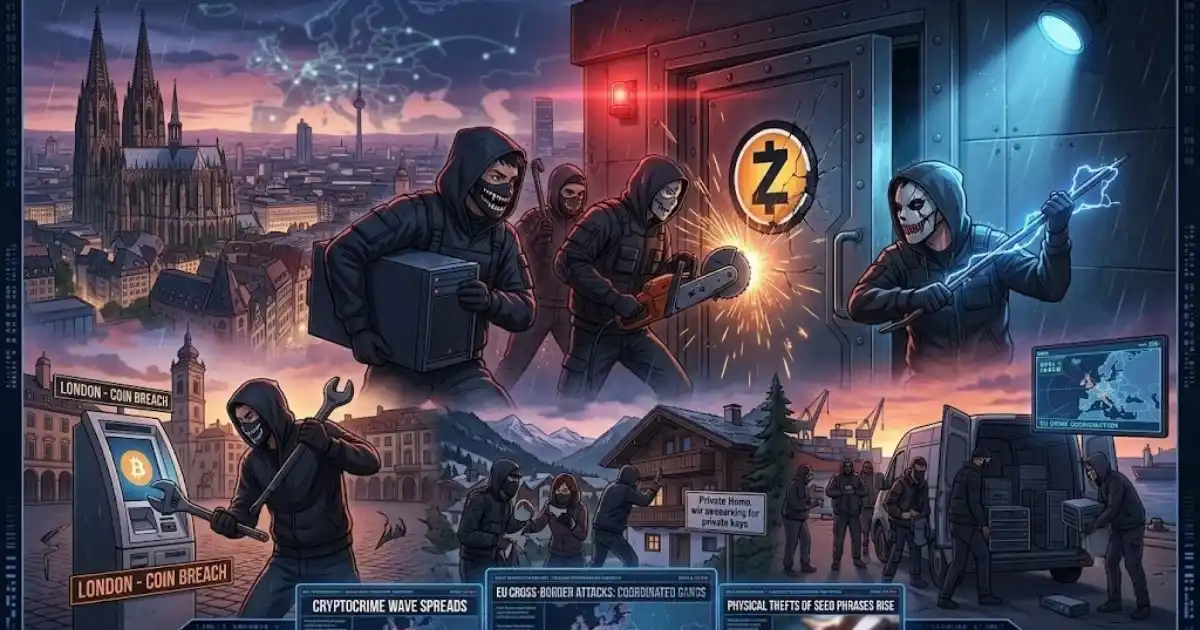
A Crime Wave Spreading Across Europe
Cryptocurrency-related violent crime in France is not an isolated phenomenon.
Similar cases have been reported in Belgium, Spain, and Germany. Since 2026, at least 33 crypto-related kidnappings have occurred globally, spanning multiple countries including Spain, Estonia, Germany, Canada, Japan, South Korea, Uganda, Pakistan, and the United States.
WTW (Willis Towers Watson) noted in a risk report that crypto-related attacks occurring between July 2024 and November 2025 accounted for over one-third of all such attacks since late 2014. Europe has become the largest hotspot region for global crypto-related violent crime, accounting for over 40% of incidents worldwide.
According to blockchain security company CertiK, global "wrench attack" cases increased by approximately 75% year-on-year in 2025, causing over $40.9 million in confirmed losses.
Another noteworthy trend: Research by Chainalysis found a correlation between "wrench attacks" and Bitcoin price movements such attacks increase significantly during periods of high prices. Criminals are more incentivized to commit violent crimes when prices are high.
The Interior Ministry's Three-Pillar Plan
Facing the rapidly deteriorating security situation, Minister Nuñez described the situation as "extremely serious".
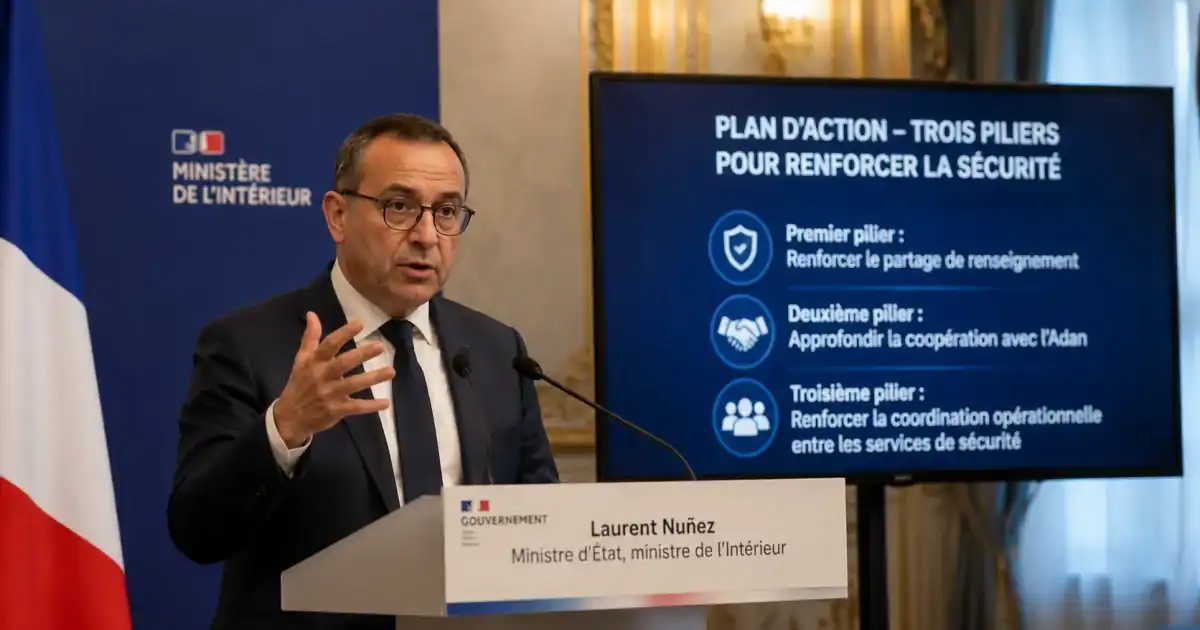
He announced an action plan he called "more ambitious," consisting of three pillars:
Pillar One: Strengthen Intelligence Sharing. Nuñez noted that the masterminds are "sometimes abroad," necessitating enhanced intelligence gathering on these criminal networks.
Pillar Two: Deepen cooperation with Adan, establishing an expert network that brings together industry players and relevant national departments.
Pillar Three: Strengthen operational coordination among security services, and cross-border cooperation with the countries where the masterminds are located.
Nuñez revealed that emergency measures taken over the past year have shown "results"200 people have been arrested, some after incidents, others in preventive operations. In a recent case in the Somme department, suspects were arrested within 8 hours of the incident.
Currently, 724 professionals in the crypto industry have registered with a rapid identification and alert platform.
A Warning to Holders: Security Is Not Just a Digital Issue
For the 7.3 million French cryptocurrency holders, this data sends a clear signal: the security risks of digital assets have extended from the digital world into the physical world.
Prosecutor Perrée called on cryptocurrency holders to enhance personal security measures, specifically warning that "overexposure on social networks can make them targets."
Security experts offer specific advice:
Use hardware wallets and store them in a secure location. Avoid publicly disclosing cryptocurrency holdings—you never know who is watching. Enable multi-factor authentication. Report any suspicious activity to law enforcement immediately. Do not share portfolio details on social media.
Trends to Watch For...
Whether the French government's action plan can effectively curb the spread of violent crime remains to be seen.
But three trends deserve the industry's continued attention:
First, the professionalization of criminal organizations is increasing. PNACO investigations show these networks use social media to recruit accomplices and organize operations. This means the difficulty of combating them is rising.
Second, cross-border collaboration will be key. The masterminds of kidnappings are sometimes located abroad, requiring France to establish closer cooperation mechanisms with law enforcement agencies in other countries.
Third, an industry culture shift is urgently needed. The "show-off culture" and voluntary disclosure of identities—behaviors once seen as signs of industry confidence—are becoming sources of intelligence for criminals. Shifting from "showing off" to "keeping a low profile" may be a necessary cultural transition for the crypto industry.
The wave of crypto-related violent crime in France reveals a deeper problem: when digital wealth grows to a certain magnitude, physical-world security protections must keep pace. This is not just a challenge for France, but a common issue facing the global cryptocurrency industry.
FAQ
Q1: What is a "Wrench Attack"?
A "Wrench Attack" refers to a criminal act where perpetrators use physical violence, coercion, or kidnapping to force a cryptocurrency holder to surrender wallet private keys or transfer assets. The term originates from a webcomic satirizing the brutal reality that "even the most secure digital wallet cannot withstand physical threats." Such attacks typically include home invasions, kidnappings, and extortion.
Q2: How serious is crypto-related violent crime in France?
In the first half of 2026, France recorded 77 cases of kidnapping, extortion, or attempts related to cryptocurrency, a 71% increase from the 45 cases recorded for the entire year of 2025. France has become one of the world's largest hotspots for "wrench attacks." PNACO data shows 18 cases in 2024, 67 in 2025, and 47 by April 2026, with both the number of cases and the level of violence continuing to rise.
Q3: How can cryptocurrency holders protect themselves from physical attacks?
Security experts advise: Use hardware wallets and store them in a secure location; avoid publicly disclosing holdings information on social media; enable multi-factor authentication; report suspicious activity to law enforcement immediately. The PNACO prosecutor specifically warns that "overexposure on social networks can make holders targets for crime." Maintaining a low profile is an important self-protection strategy.