【龙虎榜】LUNA冲高回落 WAVES再次飙升

火必研究院Published on 2022-03-16Last updated on 2022-03-17

Abstract

BTC日K线价格表现相对纠结,冲高回落表现持续以后,振幅小幅回升到了7.36%。

1、大盘走势:

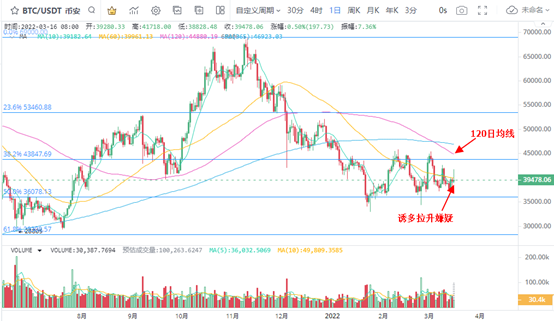
BTC日K线价格表现相对纠结,冲高回落表现持续以后,振幅小幅回升到了7.36%。虽然从价格上看,BTC并未持续调整信号,但是目前低波动率阶段价格冲高回落,发出了相对弱势的调整信号。压力位方面,120日均线继续向下移动,点位上达到了44879美元。60日均线为39959美元,BTC反弹面临近期成本价压制。

具体到波动期间看,目前BTC运行在斐波那契50%对应的36078美元上方,波幅收窄意味着方向选择机会增加。缩量运行阶段,仍然警惕价格可能的破位下跌信号。
2、消息面解读:

研究表明,虽然有俄乌冲突和大宗商品价格上涨对通胀前景预测带来不确定性。但是预期美联储仍将在本次会议以加息25个基点启动加息周期,并且布《缩减美联储资产负债表规模原则》附录,发出美联储准备在5月启动量化紧缩(QT)的强烈信号。

对美联储加息周期中值提前,预计今明后三年分别加息5次、4次和1次。

加息预期较强,金融市场动荡不安,美国股市三大指数悉数反弹,大宗商品继续调整,BTC也迎来短线波动机会,但是方向确认需要时间。预计首次加息对金融市场影响逐步消退,加息周期BTC面临调整压力,依然需要关注调整预期。

3、龙虎榜前10涨跌表现
涨幅榜:

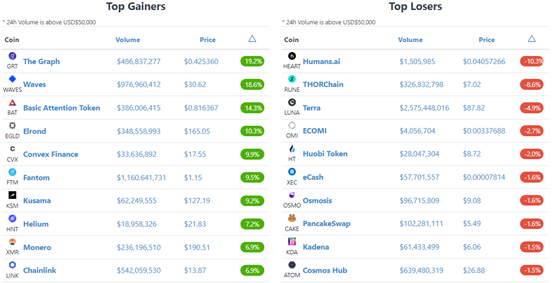
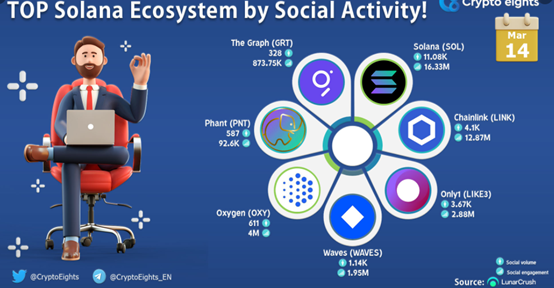
作为SOLANA生态重要的币种,GRT和WAVES在社交热度方面的避险值得关注。推特数据显示,WAVES热度仅低于Chainlink,说明投资者对其关注点很高。热点方面,WAVES作为有俄罗斯概念的币种,近期走势非常强,伴随俄乌局势延续,WAVES也受到了一些影响。

The Graph:WEB3.0概念里,GRT市值19.7亿美元,排名在DOT和FIL下边。而排名第四的BAT,也同样成为涨幅龙虎榜的第三位币种。
跌幅榜:

LUNA

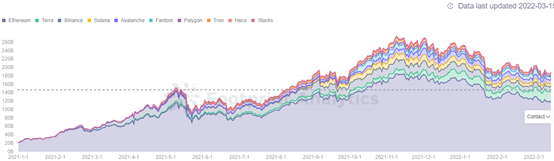
LUNA的锁仓增长非常迅速,并且在整体公链中占比空间不断提升。数据显示,最新的LUNA的TVL增长到了245.5亿美元。同时,LUNA波段涨幅高达80%以上,短线调整不改变价格强势。
RUNE:

新平台功能的推出和即将到来的讨论支持,对RUNE价格提升有明显的意义。但是经过一轮炒作后价格累计涨幅110%以后,价格短线回撤,跌幅排名靠前,但是强势依旧。
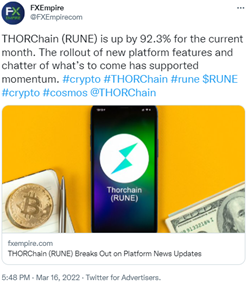
令RUNE社区振奋的一项发展是将Terra ( LUNA )集成到THORChain协议中。这种集成还使该平台能够支持所有基于Cosmos的项目。Terra集成将LUNA代币以及TerraUSD (UST) 稳定币带入THORChain生态系统,并为用户提供更多交易和质押选择。

作为Terra和Cosmos SDK推出的一部分,THORChain将通过硬分叉进行更新。

对RUNE越来越关注的第二个原因可能是即将在THORChain上推出的主网。该活动自2021年末原计划推出但因各种因素推迟发布后就备受期待。主网启动的具体日期尚未公布,但社区成员一直保持乐观,他们在过去一年和黑客的斗争中始终未离开。

Related Reads

Microsoft CEO Satya Nadella's Latest Warning: Betting Entirely on a Single AI Model Hands Over a Company's Lifeblood

Microsoft CEO Satya Nadella warns that companies relying solely on a single AI model could jeopardize their survival. He argues that over-dependence leads to "vendor lock-in," where businesses risk ceding control over their core data, memory, contextual history, and AI usage patterns. This dependence essentially outsources a company's critical thinking and operational know-how to an external provider. The deeper a company integrates with one AI system—feeding it prompts, internal data, and workflows—the more it reveals its unique business methods and competitive edge. This accumulated knowledge could become accessible to the AI supplier. Furthermore, switching providers becomes extremely costly and complex, as companies would need to rebuild their entire AI-augmented workflow, memory, and tool integrations from scratch. Nadella's solution is "decoupling." Companies should separate their proprietary data, memory, and control layer (or "harness") from the underlying AI models. By retaining metadata from every AI interaction, businesses can preserve their operational "brain" or institutional knowledge. This allows them to flexibly use different AI models (e.g., from OpenAI, Anthropic, Microsoft) for specific tasks without losing their accumulated expertise. The core idea: companies can rent the smartest models available, but they must keep their own "brain" and operational control firmly in-house.

marsbit36m ago

Microsoft CEO Satya Nadella's Latest Warning: Betting Entirely on a Single AI Model Hands Over a Company's Lifeblood

marsbit36m ago

Miners Advised Not to Buy GPUs for AI and to Focus on Infrastructure

A founder at an energy investment forum advises bitcoin miners not to purchase GPUs for AI themselves, but to instead focus on infrastructure like power and data center space. Mike Alfred of Alpine Fox stated that while AI infrastructure demand is a long-term, 20-30 year trend, it presents a key choice for miners. The first, riskier model involves owning and operating GPUs, which requires financing expensive hardware that quickly becomes obsolete. The second, more conservative model is akin to real estate: providing colocation services where clients bring their own servers, and the miner sells space, power, cooling, and water. Alfred noted this model is easier to finance. Most existing bitcoin mining sites are difficult and expensive to convert for AI, as AI data centers require far higher construction costs, redundant fiber connections, backup power, complex cooling, and near 100% uptime. A hybrid model, where mining acts as a flexible load to use excess power during AI data center construction or from generation facilities, was discussed. However, participants concluded this is only viable with very cheap power; otherwise, developers are better off focusing solely on AI. Miners are increasingly being evaluated for their available power capacity and project portfolios rather than just bitcoin output. Panelists also warned of risks in the AI sector, predicting at least one major default or contract breach among AI tenants, lenders, or landlords before bitcoin's next halving in 2028.

cryptonews.ru45m ago

Miners Advised Not to Buy GPUs for AI and to Focus on Infrastructure

cryptonews.ru45m ago

Millisecond 'Pay-to-Cut': How Did Hyperliquid's Priority Fee Turn into a Multi-Million Dollar Business?

"Millisecond 'Paid Queue-Jumping': How Hyperliquid's Priority Fee Became a Multi-Million Dollar Annual Business" In traditional finance, high-frequency trading firms spend millions on infrastructure for millisecond advantages. Hyperliquid has translated this race onto the blockchain with its "Priority Fee" system, creating an open economic game for speed. This system auctions two types of priority: **Gossip Priority** for faster data feeds (via a Dutch auction every 3 minutes), and **Order Priority** for front-of-queue trade execution (users bid a fee for lower latency). This converts a hardware race into a transparent, market-priced mechanism. Since launch, this feature has generated over $5M in protocol revenue. Projected annualized buybacks from this income exceed $30M, accounting for ~7% of total protocol revenue. The demand stems from large traders and market makers on Hyperliquid, for whom milliseconds can mean the difference between profit/loss or avoiding liquidation. Market makers pay these fees as "protection" to ensure their orders execute first, which in turn improves liquidity for all users. Crucially, Hyperliquid internalizes Maximum Extractable Value (MEV) that typically leaks to external validators or searchers, creating a new revenue stream beyond trading fees. The mechanism also strengthens HYPE's tokenomics. While 97% of trading fees fund secondary market buybacks (via the Assistance Fund), Priority Fees are **directly burned**, adding a second deflationary engine. Furthermore, fees for order priority are deducted from users' undelegated HYPE balances, encouraging large traders to hold and lock up tokens, reducing circulating supply. However, a key challenge remains: balancing the speed needs of institutional players with fair market access for retail users, as those who cannot pay high fees may suffer worse slippage during volatility. In summary, Hyperliquid's Priority Fee is a novel model that monetizes latency, captures MEV for the protocol, and enhances its native token's value through burning and lock-ups.

marsbit51m ago

Millisecond 'Pay-to-Cut': How Did Hyperliquid's Priority Fee Turn into a Multi-Million Dollar Business?

marsbit51m ago

Trading

Spot
活动图片