Fidelity to offer bitcoin trading to its $34.4 million investorsFidelity to offer bitcoin trading to its $34.4 million investors

cryptodailyPublished on 2022-09-13Last updated on 2022-09-13

Abstract

A simply huge move is afoot for the crypto sector as Fidelity Investments

According to Mike Novogratz, CEO of Galaxy Digital, and other people familiar with the matter, Fidelity Investments is working towards offering bitcoin trading to its 34.4 million retail investor base.
The word is out
A simply huge move is afoot for the crypto sector as Fidelity Investments, the U.S. multinational financial services corporation and one of the largest asset managers in the world, is planning to offer bitcoin trading services to its retail investor base.
Even though the company has not officially announced the move, the word is out, and Mike Novogratz, the CEO of Galaxy Digital, told a conference audience on 12 September that the move was imminent:
“A bird told me that Fidelity, a little bird in my ear, is going to shift their retail customers into crypto soon enough. I hope that bird is right. So we are still [on] this institutional march, and that gives crypto its floor.”
Others also suggest the move
According to an article on CoinTelegraph, there are others who picked up on the impending move. CEO and founder of Eight Global, Michael Van de Poppe, gave his view that Fidelity would likely launch its retail trading for bitcoin in November.
In addition, the Wall Street Journal reported on 12 September that Fidelity was “weighing a plan” for the offering of bitcoin trading for retail customers on its brokerage platform.
In a statement on 12 September, Fidelity Investments didn’t clarify the move, but it did go as far as to say:
"While we have nothing new to announce, expanding our offerings to enable broader access to digital assets remains an area of focus."
Fidelity's crypto 401k
For Fidelity, this is not the first move into bitcoin-related products. It announced at the beginning of June this year that it would allow customers to add crypto to their 401K pensions
However, Treasury Secretary Janet Yellen stated that “crypto isn’t a suitable retirement option", and Senator Elizabeth Warren, a well-known sceptic of crypto, together with Senator Tina Smith, sent a joint letter to Fidelity CEO Abigail Johnson voicing their concern at the “risky and speculative” decision.

Related Reads

Latin America's Payments Landscape Is Not What You Think It Is

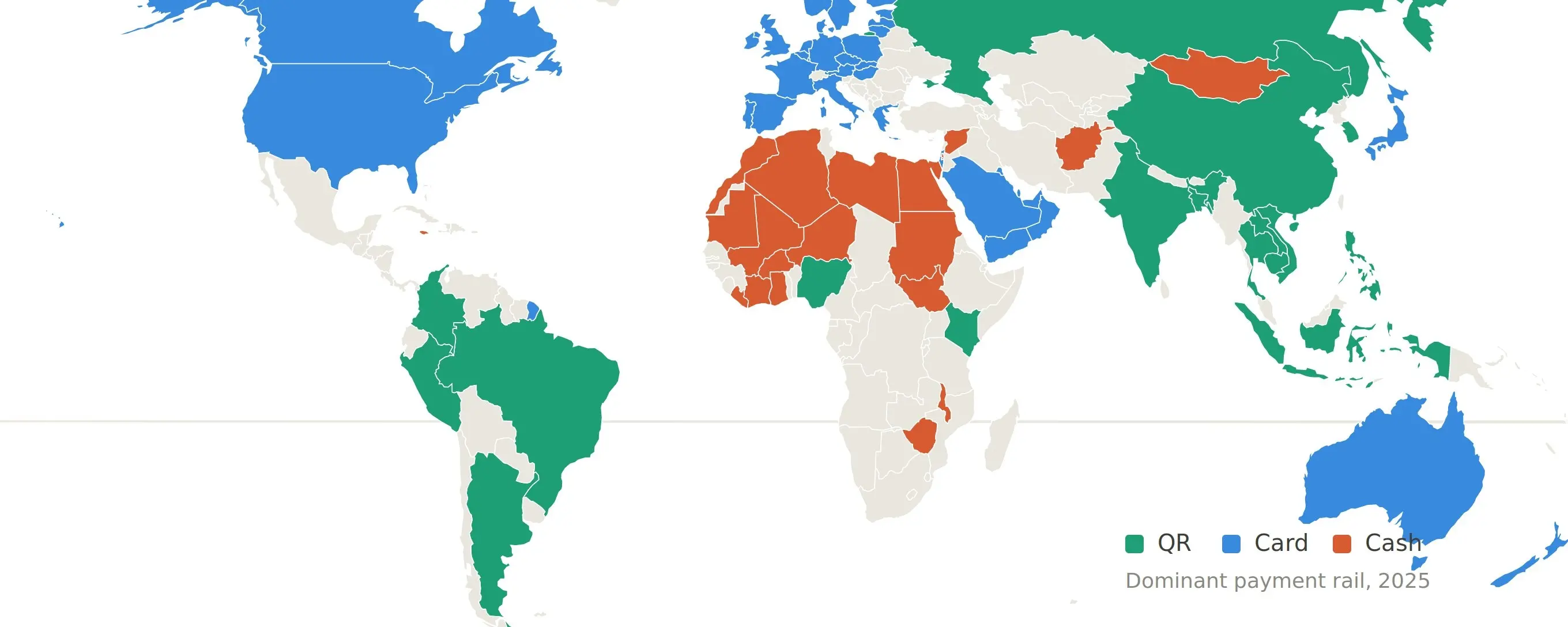
This report challenges common misconceptions about Latin America's payment landscape, based on over 500 hours of firsthand research. Key findings include: 1) Crypto card transaction volume primarily comes from high-net-worth individuals receiving USDT salaries, not retail spending. 2) QR code payments (e.g., Brazil's Pix, Argentina's Mercado Pago) are the dominant payment method across most emerging markets, not cards. 3) A major untapped opportunity lies in enabling cross-border interoperability between domestic instant payment systems. 4) Payment competition is shifting from customer acquisition to owning the settlement layer (e.g., acquiring banks). 5) Latin America is not a single market; Brazil, Mexico, Argentina, and smaller "forgotten five" countries (e.g., Guatemala, Honduras) have vastly different dynamics. 6) Stablecoin-to-fiat conversion margins are collapsing toward zero, pushing companies to build value-added services on top. 7) Future payment winners will be multi-country brands, not single-corridor specialists. 8) Marketing must target specific user segments (e.g., digital nomads, unbanked immigrants) with tailored messaging, not a generic "Brazilian" audience. 9) Contrary to perception, Latin American regulators are often ahead of the US in creating frameworks for digital assets and instant payments, with clear licensing deadlines. The core takeaway is that the region's payment rules are being rewritten, moving beyond cards and stablecoin arbitrage towards integrated, cross-border QR-based solutions.

链捕手6m ago

Latin America's Payments Landscape Is Not What You Think It Is

链捕手6m ago

Vitalik's Algorithmic Stablecoin Vision: Interpreting the Mechanism and Challenges from an Options Perspective

Vitalik Buterin's recent algorithmic stablecoin proposal envisions using an option-like mechanism to create a stablecoin without the liquidation risks inherent in traditional collateralized debt position (CDP) models. The design splits one unit of ETH into two components: a 'stable' leg (P) that maintains value up to a certain strike price, and an 'upside' leg (N) that captures any appreciation above that price. Together, they always sum to one ETH, eliminating the need for debt or liquidation mechanisms. From an options perspective, the stable leg essentially functions as a synthetic, covered call position. However, significant challenges exist. For the stable asset to maintain its peg, it must continuously roll deep in-the-money call options, leading to potential rollover slippage, predictable trading paths vulnerable to front-running, and liquidity issues. Crucially, the system's scalability depends on a constant demand for the upside leg—a form of leveraged ETH long position without funding rates or liquidation risk. It's unclear if such persistent, specific demand will materialize from speculators or market makers who have simpler alternatives like perpetual swaps. The author, drawing from experience with Rysk, argues that DeFi options have struggled as standalone trading products due to complexity and fragmented liquidity. Their potential lies instead as foundational infrastructure underpinning more complex financial primitives like stablecoins, structured yields, or index products—transforming from a direct product into a core pricing and risk distribution engine for the next generation of on-chain finance.

marsbit1h ago

Vitalik's Algorithmic Stablecoin Vision: Interpreting the Mechanism and Challenges from an Options Perspective

marsbit1h ago

Trading

Spot
Futures
活动图片