ETF Bitcoin và Ethereum thu hút 706 triệu USD trong bối cảnh nhu cầu tiền mã hóa tăng mạnh

cryptonews.ruPublished on 2026-08-20Last updated on 2026-08-20

Abstract

Giá Bitcoin vượt mốc 70.000 USD và Ethereum vượt 2.000 USD đã kích hoạt làn sóng đầu tư mạnh mẽ vào các quỹ ETF. Tám quỹ ETF Bitcoin tại Mỹ đã hút dòng vốn ròng 706 triệu USD, không có quỹ nào ghi nhận dòng tiền rút ra. BlackRock dẫn đầu với 517 triệu USD chỉ riêng cho Bitcoin. ETF Ethereum cũng ghi nhận dòng tiền vào mạnh, đặc biệt là từ BlackRock và Fidelity. Tổng khối lượng giao dịch ETF Bitcoin đạt 6,89 tỷ USD, trong khi ETF Ethereum đạt 2,14 tỷ USD. Các quỹ ETF cho XRP và Solana cũng có dòng tiền vào nhỏ, trong khi quỹ HYPE là ngoại lệ với dòng tiền ra. Sự phục hồi giá và nhu cầu thể chế trùng hợp đã tạo ra một trong những phiên mạnh nhất cho thị trường ETF tiền mã hóa trong những tháng gần đây.

Đột phá về giá nhanh chóng dẫn đến sự bùng nổ hoạt động của ETF.

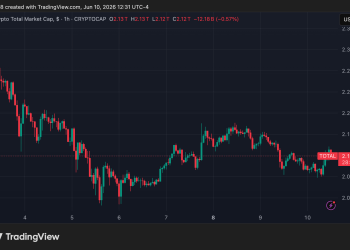
Việc Bitcoin vượt qua mốc 70.000 USD đã thu hút trở lại một lượng lớn đầu tư thể chế: tám quỹ ETF spot tại Mỹ đã hút thêm vốn mới và không có quỹ nào báo cáo dòng tiền rút ra. Ethereum cũng tham gia vào đà tăng trưởng khi giá $ETH vượt quá 2.000 USD, giúp tạo ra một trong những phiên giao dịch kết hợp mạnh mẽ nhất cho hai thị trường ETF tiền mã hóa lớn nhất trong nhiều tháng qua.

Blackrock dẫn đầu dòng vốn chảy vào Bitcoin với 517 triệu USD

ETF IBIT của Blackrock vẫn là công cụ phổ biến nhất, thu hút 284,74 triệu USD, chiếm hơn một nửa khối lượng dòng vốn chảy vào Bitcoin trong ngày. Quỹ ARKB của ARK 21Shares thu hút 77,71 triệu USD, trong khi FBTC của Fidelity thu hút 62,41 triệu USD. Tiếp theo là BITB của Bitwise với 35,60 triệu USD.

GBTC và Bitcoin Mini Trust của Grayscale lần lượt thu hút 21,18 triệu USD và 19,66 triệu USD. MSBT của Morgan Stanley thu hút 9,98 triệu USD, còn EZBC của Franklin Templeton hoàn thành danh sách dòng vốn chảy vào với 5,92 triệu USD.

Trong bối cảnh biến động giá, hoạt động giao dịch đã tăng mạnh. Doanh thu giao dịch ETF Bitcoin đạt 6,89 tỷ USD, và tài sản ròng tổng hợp tăng lên 84,31 tỷ USD, cao hơn khoảng 5 tỷ USD so với mức của thứ Ba. Trong tuần này, ETF Bitcoin đã thu hút chính xác 1 tỷ USD trong ba phiên giao dịch.
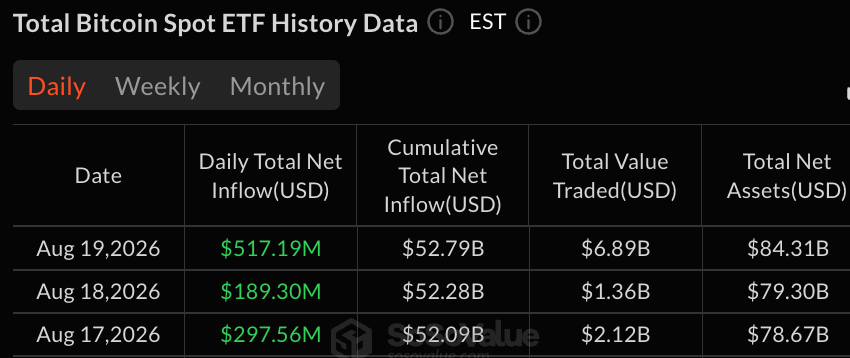
Sau ba ngày liên tiếp có dòng vốn chảy vào, ETF Bitcoin đã thu hút được 1 tỷ USD.

ETF Ethereum cũng cho thấy mức tăng trưởng đáng kể tương tự. Quỹ ETHA của Blackrock thu hút 122,12 triệu USD, trong khi quỹ FETH của Fidelity thu hút 36,54 triệu USD. Quỹ Ether Mini Trust của Grayscale thu hút 16,04 triệu USD, và quỹ ETHB của Blackrock thu hút 9,71 triệu USD.

Các dòng vốn nhỏ hơn thuộc về MSSE của Morgan Stanley, ETHE của Grayscale và EZET của Franklin Templeton. Không có quỹ ETF Ethereum nào ghi nhận dòng tiền rút ra. Tổng khối lượng giao dịch đạt 2,14 tỷ USD và tài sản ròng tăng lên 12,06 tỷ USD.

$XRP và Solana tăng trưởng trong bối cảnh bán tháo $HYPE

ETF $XRP thu hút 2,35 triệu USD, được phân bổ gần như bằng nhau giữa quỹ $XRP của Bitwise và quỹ XRPZ của Franklin Templeton. Tài sản ròng một lần nữa vượt mốc một tỷ USD và đạt 1,01 tỷ USD.

Các ETF Solana kết thúc ngày với dòng vốn chảy vào trị giá 2,10 triệu USD. Quỹ BSOL của Bitwise thu hút 5,63 triệu USD, bù đắp cho dòng tiền rút ra 3,12 triệu USD từ GSOL của Grayscale và khoảng 415.000 USD từ QSOL của Invesco.

Các quỹ ETF $HYPE đi ngược lại xu hướng chung, ghi nhận dòng tiền rút ra 1,97 triệu USD.

Làn sóng bán tháo này diễn ra trong bối cảnh tín hiệu thuận lợi từ cơ quan quản lý đối với Hyperliquid. Phát biểu tại một sự kiện ở Nhà Trắng với sự tham gia của các nhà lãnh đạo ngành công nghệ, Tổng thống Donald Trump tuyên bố rằng Chủ tịch CFTC Mike Selig đang làm việc để đưa Hyperliquid vào Mỹ "một cách hoàn toàn tuân thủ pháp luật". Sau những tuyên bố này, giá $HYPE đã tăng vọt trong thời gian ngắn từ khoảng 62 USD lên 72,30 USD, tương ứng với mức tăng khoảng 16%.

Phiên giao dịch ngày thứ Tư cho thấy động lực tăng trưởng có thể quay trở lại nhanh chóng như thế nào khi giá cả và nhu cầu thể chế trùng khớp. Phần lớn vốn được thu hút bởi Bitcoin và Ethereum, trong khi $XRP và Solana cũng được hưởng lợi từ sự gia tăng chung trong khuynh hướng mạo hiểm.

end-content

Trending Cryptos

Related Questions

QTổng cộng có bao nhiêu triệu đô la đã chảy vào ETF Bitcoin và Ether được đề cập trong tiêu đề bài viết?

AETF trên Bitcoin và Ether đã hút 706 triệu đô la.

QTại sao bài viết cho rằng có sự tăng trưởng mạnh mẽ của ETF Bitcoin và Ether? Nêu hai nguyên nhân chính.

AHai nguyên nhân chính là: 1) Giá Bitcoin đã vượt mốc 70.000 USD, thu hút lại các khoản đầu tư tổ chức lớn. 2) Giá Ethereum (ETH) cũng đã vượt quá 2.000 USD, kích thích thị trường.

QETF Bitcoin của công ty nào dẫn đầu về dòng tiền ròng, và số tiền cụ thể là bao nhiêu?

AETF IBIT của Blackrock đã dẫn đầu, thu hút 517 triệu đô la dòng tiền ròng trong ngày được báo cáo.

QTrong số các ETF được liệt kê, loại ETF nào duy nhất ghi nhận dòng tiền ra (outflow) và số tiền là bao nhiêu?

ACác ETF trên Hyperliquid (HYPE) là nhóm duy nhất ghi nhận dòng tiền ra, với số tiền 1,97 triệu đô la.

QSự kiện gì liên quan đến cơ quan quản lý đã khiến giá token Hyperliquid (HYPE) tăng vọt tạm thời?

AGiá HYPE tăng vọt sau khi cựu Tổng thống Donald Trump tuyên bố rằng Chủ tịch CFTC Mike Selig đang làm việc để đưa Hyperliquid vào Hoa Kỳ 'một cách đầy đủ và tuân thủ pháp luật' tại một sự kiện ở Nhà Trắng.

Related Reads

Kaito Reboots 'Talk-to-Earn Economy', but Many Are Hesitant to Install the New Plugin

Kaito AI has launched a new browser extension called Kaito Pulse, aiming to revitalize what the community terms the "talk-to-earn" or "social-fi" economy on X (formerly Twitter). The plugin displays users' on-chain trading activity, such as positions from platforms like Polymarket, directly within the X timeline. This aims to create a new "attention + behavior verification" system, shifting focus from who generates the most discussion to whose discussions are backed by credible, verifiable actions. However, the launch quickly sparked significant privacy concerns within the crypto community. Critics, led by an analysis from user "Ultra," allege the extension's code enables deep data collection. This includes potential device fingerprinting (using GPU, hardware, and audio data), tracking of X user behavior (browsing paths, clicks, engagement), and verification processes that could access sensitive data from third-party accounts like ChatGPT, Claude, and trading platforms. The debate centers on whether such extensive verification is necessary to combat fake engagement and AI-generated content, or if it constitutes an unacceptable privacy sacrifice. In response, Kaito founder Yu Hu stated the design follows data minimization principles. He claimed Kaito Pulse does not collect or store users' raw data but instead uses verification techniques, including zkTLS, to generate proofs of identity or behavior without exposing the underlying information. Yu Hu acknowledged that some permission descriptions could be misleading and promised improvements in future versions. The controversy highlights a core dilemma for social-fi projects: platforms need more user data to distinguish real influence from artificial hype, but users must decide how much privacy they are willing to trade for potential rewards and ranking within these new incentive systems.

Odaily星球日报6m ago

Kaito Reboots 'Talk-to-Earn Economy', but Many Are Hesitant to Install the New Plugin

Odaily星球日报6m ago

After Two and a Half Years of Entrepreneurship and Full AI Adoption, the Company Has Actually Become More 'Traditional'

"After 2.5 years of running my company, achieving near 100% AI adoption with Agents in roles like finance, HR, and operations, we've paradoxically become more 'traditional.' We learned that establishing a thick AI middle layer creates bottlenecks. Instead, we advocate for a 'thin platform, thick frontline' model, empowering employees closest to problems to use AI tools themselves, fostering ownership and initiative. The true foundation isn't the AI models, but the unique data and context a company accumulates—our most vital, irreplaceable asset, requiring diligent governance. As AI handles repetitive, describable tasks, human roles revert to their core: building genuine relationships, trust, and brand reputation through authentic communication, which AI cannot accelerate. A critical question is where the time saved by AI goes. It must be returned—to clients, to creative work, to employees' own lives—rather than just fueling higher output demands. For managers, AI strips away execution-focused busywork, exposing the necessity to define clear goals, make tough judgments, and take ultimate responsibility. Onboarding newcomers presents a challenge: while AI can generate 80% solutions instantly, we must deliberately design paths for them to develop judgment, understand context, and safely learn from mistakes. Ultimately, AI's organizational value isn't about replacing people but removing unnecessary friction, allowing more meaningful human connection. The real test of an 'AI-era' company isn't its tech stack, but how it treats people: delegating creative power, returning saved time, fostering growth, and upholding accountability. The core luxury and purpose of our work remains authentic human relationships."

marsbit14m ago

After Two and a Half Years of Entrepreneurship and Full AI Adoption, the Company Has Actually Become More 'Traditional'

marsbit14m ago

US Stock Market Trends (August 21): Long-Term Bond Repo Fails, Walmart's Warning Drags Dow Down 700 Points

**U.S. Market Trends (Aug 21): Long-Term Bond Relief Fizzles, Walmart Drags Dow Down 700 Points** U.S. stocks fell sharply, with the Dow plunging over 700 points, as relief from the Treasury's long-term bond buyback plan proved fleeting. Major indexes declined as long-end Treasury yields and oil prices resumed their upward climb, reigniting inflation fears and pressure on high-valuation assets. The key catalyst was the rapid reversal in the bond market. The Treasury's expanded buyback program briefly calmed markets, but 30-year yields quickly rebounded near 5.26%, approaching recent 20-year highs. This signaled that liquidity interventions cannot overcome structural pressures from massive U.S. debt, fiscal deficits, and competing capital demands from AI infrastructure spending. Simultaneously, rising oil prices (WTI +2.3%) on geopolitical tensions renewed inflation concerns, squeezing consumer spending power. This pressure was highlighted by Walmart's 9% stock plunge. Despite beating earnings estimates, its weak U.S. same-store sales growth and lowered annual guidance exposed caution among lower-income consumers. Tech stocks faced broad pressure. The "Magnificent Seven" giants broadly declined, with Moderna crashing over 23% a day after a massive rally on vaccine trial news, exemplifying swift profit-taking. However, select semiconductor names (e.g., Marvell, Micron) gained on specific AI-related catalysts, indicating a more discerning market moving beyond hype to scrutinize real cash flows and capital expenditure sustainability. Bitcoin surged past $72,000, while gold seesawed near $4,500/oz. Alibaba's earnings showed strong AI cloud revenue growth but significant cash outflow due to infrastructure investments. The market's core takeaway is that Treasury actions provide only temporary relief, not a trend reversal. Focus now shifts to whether long-term yields can stabilize below 5.3% and to upcoming Federal Reserve commentary for clues on the rate path. Sustainable equity recovery hinges on the bond market calming and major tech stocks showing concurrent strength.

marsbit16m ago

US Stock Market Trends (August 21): Long-Term Bond Repo Fails, Walmart's Warning Drags Dow Down 700 Points

marsbit16m ago

547 Million OP Tokens Transferred from User Airdrop to Ecosystem Fund: DAO Voting Becoming Sham Democracy

An Optimism governance vote approved the controversial transfer of 546.9 million OP tokens (12.7% of total supply, ~24% of circulating supply) from the remaining "User Airdrop" allocation to the Foundation-controlled "Strategic Ecosystem Fund." The vote passed with a decisive 849,000 OP vote from "Test in Prod," a core development team fully funded by the Optimism Collective, cast just 17 minutes before the deadline. The Foundation argued that broad user airdrops are ineffective for the current institutional expansion phase and that the funds are needed as a flexible "war chest" to secure enterprise clients like Bitpanda and Dunamu. Critics, including L2BEAT and researcher Polynya, opposed the move. They cited the Foundation's overly broad mandate, a lack of clear link to token holder interests, insufficient assessment of past ecosystem fund expenditures (~686M OP spent), and the rewriting of the original distribution promise made to users. The incident highlights deeper governance concerns beyond low voter turnout. It raises questions about the independence of votes from entities financially dependent on the Foundation and the ethical limits of DAO governance—specifically, whether a majority vote can legitimately redefine foundational promises and minority expectations. The move signals a shift from community-focused airdrops to enterprise-driven strategy, eroding user trust amid OP's significant price decline.

marsbit36m ago

547 Million OP Tokens Transferred from User Airdrop to Ecosystem Fund: DAO Voting Becoming Sham Democracy

marsbit36m ago

Trading

Spot

Hot Articles

Discussions

Welcome to the HTX Community. Here, you can stay informed about the latest platform developments and gain access to professional market insights. Users' opinions on the price of ETH (ETH) are presented below.

活动图片