The Return of the Greenspan 'Conundrum'? Could Walsh Push Long-Term Rates Down by Raising Rates?

marsbitPublished on 2026-07-27Last updated on 2026-07-27

Abstract

A resurgence of the "Greenspan Conundrum" is being discussed as a potential policy option for new Fed Chair Wash. Market logic suggests that by raising short-term interest rates, Wash could strengthen the Fed's anti-inflation credibility, thereby compressing the inflation premium embedded in long-term yields and ultimately lowering borrowing costs like mortgage rates—a key goal of the Trump administration. This theory is bolstered by historical precedent. In the mid-2000s, as then-Chair Alan Greenspan raised the federal funds rate, long-term bond yields and 30-year mortgage rates fell—a phenomenon later termed the "Greenspan Conundrum." Analysts note this reflects forward-looking market pricing, where credible rate hikes can lower inflation expectations and long-term rates. Since taking office in May, Wash has consistently signaled a hawkish stance. Following his recent Senate testimony where he emphasized his independence, the 10-year Treasury yield fell sharply, mirroring the conundrum dynamic. Historical analysis shows new Fed chairs often begin with hawkish moves to establish credibility. While an immediate rate hike this week is not the base case, several FOMC members have hinted at the potential need for further tightening. Even without an immediate move, the prevailing market view is that Wash is systematically building his inflation-fighting credibility, which in itself may be the most powerful precondition for pushing long-term rates lower.

Author: Wall Street News

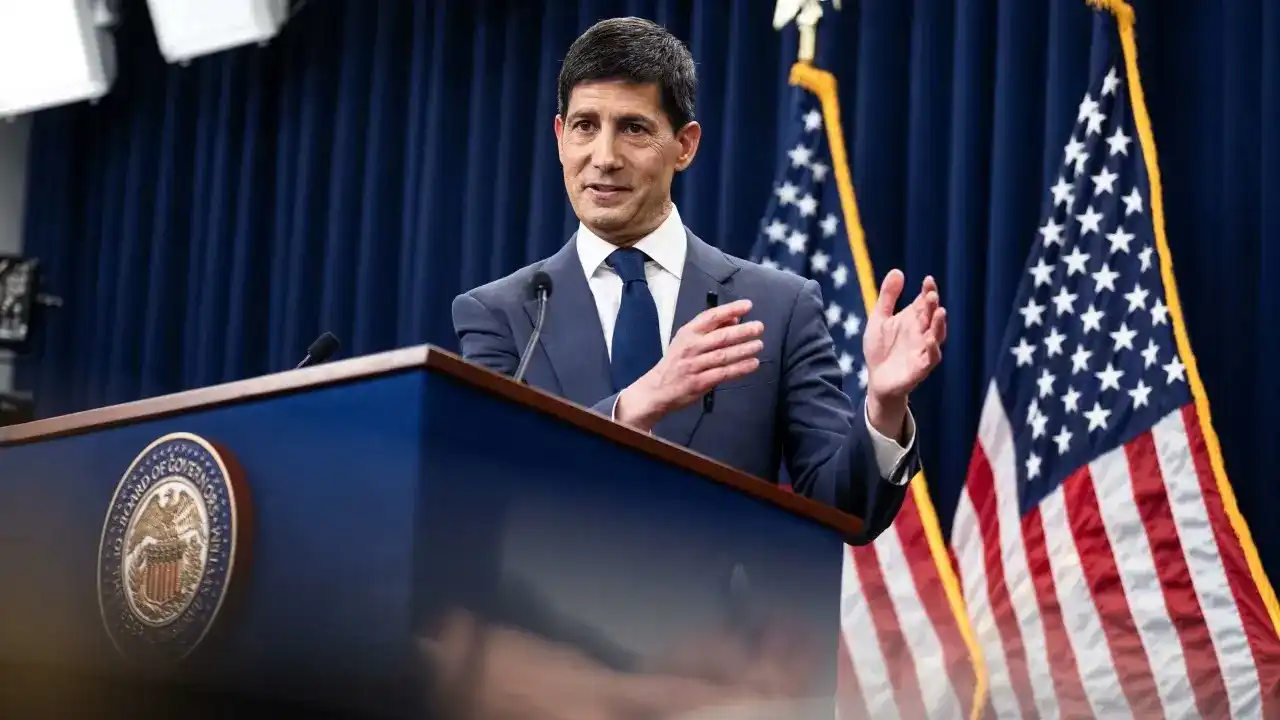
The new Federal Reserve Chair, Kevin Walsh, is facing a policy choice with a distinct historical echo: raising interest rates might actually push long-term rates down, thereby achieving the Trump administration's much-desired goal of lowering mortgage rates.

As the Federal Reserve's policy meeting convenes this week, bond markets have priced in a 38% probability of a target increase in the federal funds rate, a significant jump from less than 10% before Walsh's testimony at the Senate Banking Committee hearing. Bloomberg Economics' Fed Official Sentiment Index indicates that the overall hawkishness of policymakers is currently at its highest since the start of the 2023 tightening cycle, with a marked hawkish tilt among the seven voting members.

Although a rate hike is not the base case this time, this logic chain is quietly circulating in the market: If Walsh uses a rate hike to reinforce his anti-inflation credibility, it could squeeze the inflation premium embedded in long-term rates, thereby pushing down real borrowing costs like mortgage rates and auto loan rates—precisely the outcome the White House truly desires.

This logic is not without precedent; history provides an example. The late Fed Chair Alan Greenspan faced a similar situation in 2004: The Fed raised its federal funds rate target from 1% to 4.75% by early 2006, yet long-term bond yields fell instead of rising, with the 30-year mortgage rate declining from a mid-2004 high of 6.34% to a low of 5.47% a year later. This phenomenon later became known as the Greenspan "Conundrum."

However, Bloomberg Opinion Executive Editor Robert Burgess points out that this is less of a "conundrum" and more a manifestation of the market's forward-looking pricing mechanism—each rate hike strengthens investors' assessment of the credibility of the central bank's commitment to fighting inflation, putting downward pressure on long-term rates.

Treasury Secretary Bessent is no stranger to the aforementioned logic. He explicitly stated early last year that his and President Trump's policy focus was on lowering long-term rates, not pushing the Fed to cut short-term target rates. Wells Fargo Securities Chief Economist Tom Porcelli highlighted this line of thinking in a research note to clients last week:

"We frequently hear from those who believe the Fed will raise rates soon that, by doing so, Walsh could achieve what he and Bessent truly want—lower long-term rates. The logic is that a rate hike would strengthen Walsh's anti-inflation credibility and compress the inflation premium embedded in the long-end of the yield curve."

Since taking over from Powell as Fed Chair in May, Walsh has consistently signaled a tough stance. At the July 15 Senate Banking Committee hearing, when pressed on whether he maintains communication with President Trump, Walsh stated clearly:

"I have said the same thing repeatedly to the President and the Treasury Secretary: They chose an independent person to do an independent job, and that is exactly what I plan to do."

Bloomberg Economics' assessment of the hearing noted that Walsh "showed his hawkish side unapologetically," believing the task of price stability is more severe than that of full employment after 63 consecutive months of inflation exceeding the Fed's 2% target. Walsh also pointed out that AI infrastructure construction is exacerbating inflationary pressures because demand-side shocks materialize faster than supply-side responses.

Notably, as Walsh spoke, the yield on the 10-year Treasury note fell, posting its largest single-day decline in three weeks—a miniaturized replay of the "Greenspan Conundrum," where hawkish talk actually lowered long-term rates.

Historical precedent is also worth examining. According to research by TS Lombard strategist Dario Perkins, Paul Volcker initiated rate hikes less than two months after becoming Fed Chair; Alan Greenspan, Ben Bernanke, and Jerome Powell all acted within one month of taking office. Only Janet Yellen was an exception—she didn't raise rates until 22 months into her tenure. Perkins wrote in a research note to clients:

"Newcomers always start hawkish; it helps build anti-inflation credibility. Volcker once summed up this atmosphere in one sentence, welcoming Greenspan's first rate hike with the words: 'Congratulations—you are now a real central banker.'"

However, practical constraints cannot be ignored. The latest inflation data show price pressures have moderated somewhat. The five working groups Walsh announced to conduct a comprehensive review of the Fed's operations are expected to release their findings by year-end—the timing of abruptly tightening monetary policy before these conclusions are announced is delicate. Furthermore, Walsh holds only one vote on the FOMC; changing the policy rate requires support from seven votes.

Still, with several members already hinting that further policy tightening may be needed, this threshold might not be as difficult to cross as it appears. Even if no hike occurs this week, the prevailing market judgment is: Walsh is systematically reinforcing his anti-inflation credibility, and that in itself may already be the most powerful precondition for pushing long-term rates down.


Trending Cryptos

Related Questions

QWhat is the 'Greenspan Conundrum' mentioned in the article, and why is it relevant to current Fed policy?

AThe 'Greenspan Conundrum' refers to the phenomenon, observed in 2004-2006, where the Federal Reserve raised the federal funds rate from 1% to 4.75%, but long-term bond yields and 30-year mortgage rates fell instead of rising. The article suggests this is relevant today because it presents a potential policy path for new Fed Chair Waller: raising short-term rates to reinforce the Fed's inflation-fighting credibility, which could subsequently lower the inflation premium embedded in long-term rates, thereby reducing borrowing costs like mortgage rates—an outcome desired by the administration.

QAccording to the article, what is the logic behind the argument that Chair Waller might raise rates to lower long-term interest rates?

AThe logic is that by raising the federal funds rate, Chair Waller would solidify the Federal Reserve's credibility in fighting inflation. A stronger anti-inflation commitment would reduce the inflation risk premium that investors demand in long-term bond yields. This compression of the long-term yield would lead to lower rates for mortgages, auto loans, and other long-term borrowing, which is a stated goal of the Trump administration.

QHow did financial markets react to Chair Waller's hawkish testimony before the Senate Banking Committee, according to the article?

AFollowing Chair Waller's notably hawkish testimony before the Senate Banking Committee, the 10-year U.S. Treasury yield fell, marking its biggest one-day drop in three weeks. The article describes this as a mini-version of the 'Greenspan Conundrum,' where a hawkish stance (signaling potential rate hikes) paradoxically led to a decrease in long-term interest rates.

QWhat historical pattern regarding new Fed Chairs and interest rate hikes does the article cite?

AThe article cites research showing a historical pattern where new Federal Reserve Chairs often begin their tenure with a hawkish move. Paul Volcker raised rates within two months of taking office. Alan Greenspan, Ben Bernanke, and Jerome Powell all implemented their first rate hikes within one month of becoming Chair. Janet Yellen was the exception, waiting 22 months before her first hike. This pattern is seen as a way for new chairs to establish anti-inflation credibility early on.

QWhat are some of the practical constraints that might prevent an immediate rate hike by Chair Waller, as noted in the article?

AThe article notes several practical constraints: recent inflation data has shown some moderation in price pressures; Chair Waller has initiated a comprehensive review of the Fed's operations via five working groups, with results expected by year-end—making a policy shift before the review's conclusion seem delicate; and he holds only one vote on the Federal Open Market Committee (FOMC), requiring support from six other members to change the policy rate, though the article suggests this threshold may not be as high as it seems given other members' hints at needing further tightening.

Related Reads

UNI Doubles in Two Months Against the Trend: A 5-Year-Overdue Value Realization

Amidst a generally stagnant crypto market in June and July, UNI, the governance token of Uniswap, saw a significant surge, nearly doubling in price from around $2.3 to $4.6. This rally represents a delayed but significant value reassessment, triggered by the practical implementation of its long-debated "fee switch" mechanism. The key turning point was the on-chain execution of the UNIfication proposal in December 2025. It activated a protocol fee on select pools, directed Unichain sequencer revenue (net of costs) to a communal treasury, executed a one-time burn of 100 million UNI, and established a system where all protocol revenue flows into a "TokenJar" contract. This treasury has a single exit: purchasing and permanently burning UNI via a "Firepit" contract. Initially, the market reacted tepidly as the generated revenue and corresponding burn rate were modest. The narrative shifted dramatically in July 2025 with two major developments. First, the launch of Robinhood Chain, tailored for tokenized stocks, rapidly became a primary source of volume and fees for Uniswap, at one point contributing nearly half of its weekly fees. Second, governance votes successfully expanded the fee mechanism to v4 pools and initiated a temperature check for fees on Robinhood Chain. The activation of v4 fees caused the protocol's daily revenue earmarked for UNI burns to nearly triple. The core of UNI's recent price action is the transition from a pure governance token to a cash-flow asset with a permanent, protocol-funded buyer. Its effectiveness is amplified by UNI's mature and widely distributed supply, with no major impending unlocks to dilute the impact of the buybacks. The sustainability of this rally now hinges on whether the transaction volume, particularly on Robinhood Chain, persists after its initial gas subsidies expire, determining if this is a genuine value realization or a subsidy-fueled spike.

marsbit1h ago

UNI Doubles in Two Months Against the Trend: A 5-Year-Overdue Value Realization

marsbit1h ago

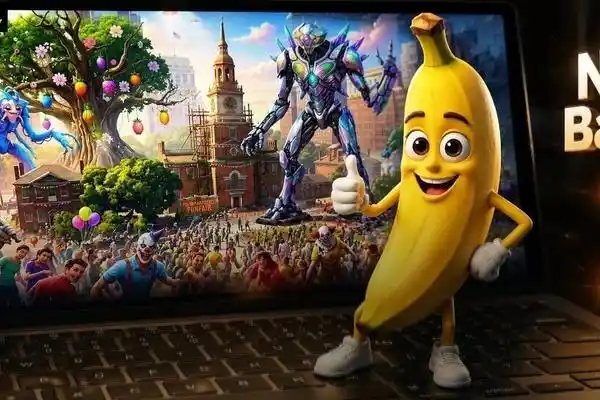
Breaking: Google Earth Urgently Pulls Back Nano Banana 2 Image Generation Feature!

Google Earth's newly launched "Create image" feature, powered by the Nano Banana 2 AI image generation model, was abruptly withdrawn shortly after its release due to being "played" by users. The feature allowed users to generate and overlay AI-created visuals directly onto real-world satellite and 3D maps in Google Earth. The tool enabled creative applications like historical recreations (e.g., visualizing ancient Pompeii), generating informational graphics for landmarks, and envisioning architectural projects or futuristic cityscapes on real terrain. It operated under "geospatial grounding," meaning the AI respected the underlying geography, topography, and perspective of the chosen map view. The model also integrated with Gemini to retrieve relevant factual information. However, upon release, users quickly tested its limits. A prominent example involved reimagining Philadelphia's historic Independence Hall as a post-apocalyptic ruin overrun by "happy" zombies, evil clowns, and giant alien mechs. This highlighted both the feature's playful potential and its risks regarding the generation of inappropriate or misleading content on realistic maps, leading to its swift temporary removal. Google stated it would re-release the feature after implementing "enhanced guardrails." Analysts note this move strategically leverages Google's vast proprietary geospatial data, positioning its AI not just for artistic generation but for spatially accurate world visualization—a unique advantage in the competitive AI image generation landscape.

marsbit2h ago

Breaking: Google Earth Urgently Pulls Back Nano Banana 2 Image Generation Feature!

marsbit2h ago

Altman Admits: Overestimated AI Snatching Jobs! Huang Renxun: The Unemployment Narrative Is Completely Backwards

Sam Altman has revised his earlier predictions about AI rapidly replacing jobs, admitting he overestimated the speed at which AI would eliminate entry-level white-collar roles. Speaking on the "Invest Like the Best" podcast, he stated that people do not truly want an AI CEO, as accountability and human connection remain critical. He found that individuals prefer interacting with people who can be held responsible for decisions. Similarly, NVIDIA's Jensen Huang argued that the narrative of AI destroying jobs is misguided. He distinguishes between tasks and jobs, noting that while AI can automate specific tasks, entire jobs—encompassing communication, judgment, coordination, and accountability—are not eliminated. He cited examples like radiologists and software engineers, where demand for these roles has increased as AI handles repetitive tasks, allowing for business expansion and the creation of more positions. Data from a University of Maryland and LinkUp study supports this, showing that U.S. job postings for new graduates have actually risen, countering the fear of vanishing entry-level roles. However, a significant shift is occurring: the traditional entry-level tasks that help newcomers gain experience are being automated, making initial career access more challenging. The key insight is that as AI takes over standardized tasks, the enduring value of human work shifts toward areas of responsibility, trust-building, and final decision-making—aspects that AI cannot replicate. The real "moat" for professionals lies in these irreplaceable human elements.

marsbit3h ago

Altman Admits: Overestimated AI Snatching Jobs! Huang Renxun: The Unemployment Narrative Is Completely Backwards

marsbit3h ago

Trading

Spot

Hot Articles

How to Buy PUSH

Welcome to HTX.com! We've made purchasing Push Protocol (PUSH) simple and convenient. Follow our step-by-step guide to embark on your crypto journey.Step 1: Create Your HTX AccountUse your email or phone number to sign up for a free account on HTX. Experience a hassle-free registration journey and unlock all features.Get My AccountStep 2: Go to Buy Crypto and Choose Your Payment MethodCredit/Debit Card: Use your Visa or Mastercard to buy Push Protocol (PUSH) instantly.Balance: Use funds from your HTX account balance to trade seamlessly.Third Parties: We've added popular payment methods such as Google Pay and Apple Pay to enhance convenience.P2P: Trade directly with other users on HTX.Over-the-Counter (OTC): We offer tailor-made services and competitive exchange rates for traders.Step 3: Store Your Push Protocol (PUSH)After purchasing your Push Protocol (PUSH), store it in your HTX account. Alternatively, you can send it elsewhere via blockchain transfer or use it to trade other cryptocurrencies.Step 4: Trade Push Protocol (PUSH)Easily trade Push Protocol (PUSH) on HTX's spot market. Simply access your account, select your trading pair, execute your trades, and monitor in real-time. We offer a user-friendly experience for both beginners and seasoned traders.

4.1k Total ViewsPublished 2024.03.29Updated 2026.06.02

How to Buy PUSH

Discussions

Welcome to the HTX Community. Here, you can stay informed about the latest platform developments and gain access to professional market insights. Users' opinions on the price of PUSH (PUSH) are presented below.

活动图片