Derive [DRV] 因 Upbit 上线消息上涨 40% – 此区域成下一主要阻力

ambcryptoPublished on 2026-07-14Last updated on 2026-07-14

Abstract

Derive(DRV)因即将在韩国头部交易所Upbit上线KRW、BTC和USDT交易对的消息而大幅上涨,涨幅约40%,价格从0.1147美元升至0.19美元,随后回落至约0.1471美元。市场反应热烈,24小时交易量激增1744.3%,市值升至约1.0964亿美元。然而,相对强弱指数(RSI)高达84.43,显示市场短期内可能过热,部分投资者选择获利了结。 此次上线有望为DRV带来韩国活跃零售市场及更广泛的全球参与,从而提升流动性并加强价格发现。但关键挑战在于,价格上涨能否在上市初期的炒作消退后持续。未来需关注持有者增长、交易量稳定性和市场深度改善等指标,以判断需求是否坚实。若价格能维持在0.131美元以上,表明买盘仍在吸收抛压;若失守,则可能意味着投机性需求正在消退。

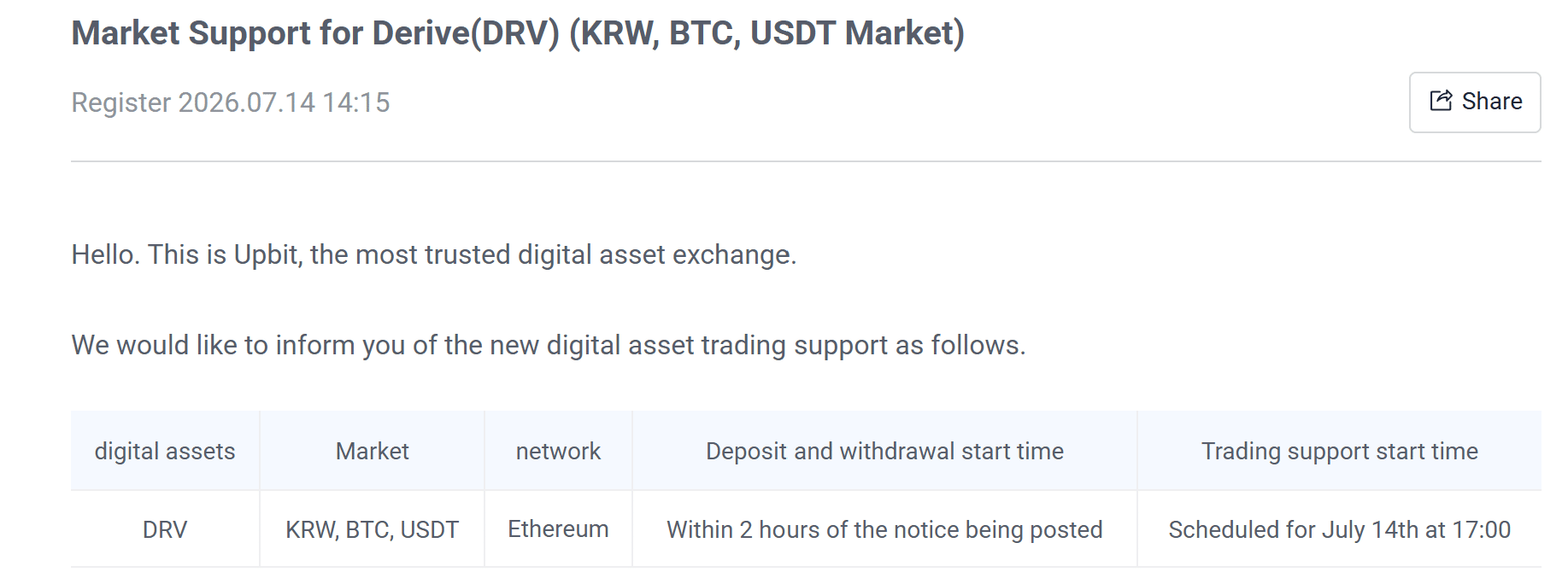
在 Upbit 宣布开放韩元 (KRW)、比特币 [BTC] 和泰达币 [USDT] 交易对后,Derive [DRV] 即将进入亚洲最大的加密货币市场之一。交易将于 7 月 14 日开始,继 Derive 从 Lyra Finance 迁移后进一步扩大了市场准入。

此次上线向韩国活跃的零售市场开放了该协议,并可能吸引更广泛的全球参与。更强的可及性可能有助于加深流动性,并强化其在多个交易对上的价格发现能力。
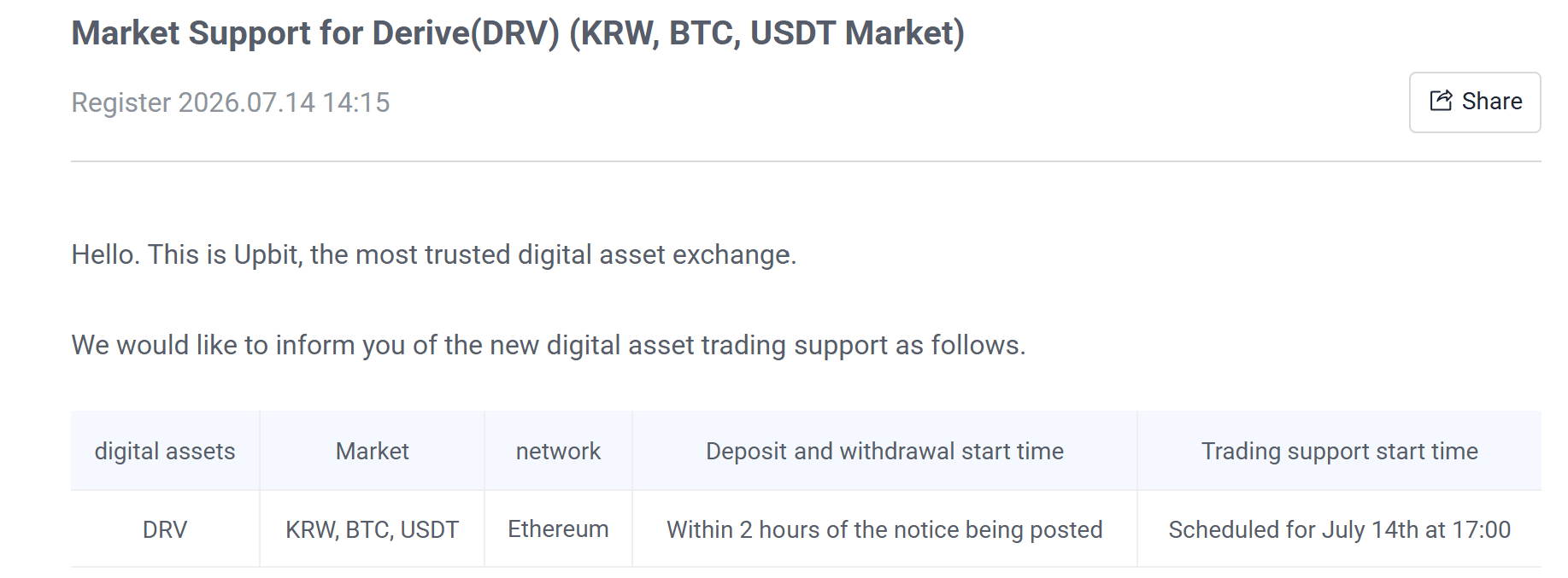
来源:UPbit

继 2024 年品牌重塑后,Derive 持续扩展其链上期权和永续期货生态系统。

然而,仅获得额外的交易所支持不太可能帮助创造长期需求。

交易者需要提供更强的交易量、更深的订单簿以及持续的参与度。这些指标将揭示更广泛的市场准入能否在初始上线后持续增强 Derive 的市场地位。

DRV 为何上涨?

该公告迅速改变了 DRV 的市场动态。买家并未等待交易开始,而是预期流动性将增强、市场参与将更广泛,从而积极地对该代币进行了重新定价。

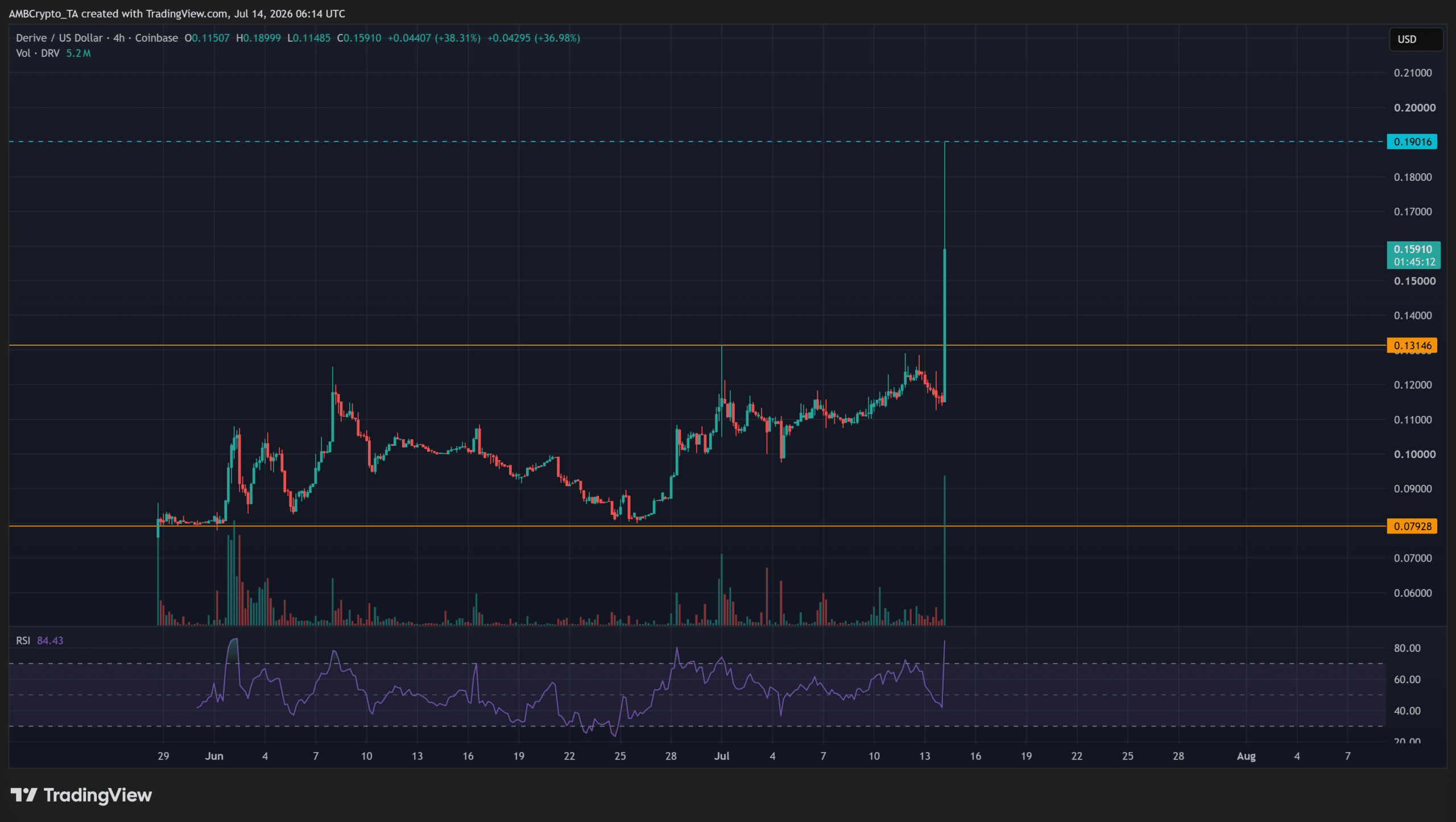
价格从 0.1147 美元上涨约 40%,至 0.19 美元,随后回落至 0.1486 美元。同时,市值升至约 1.0964 亿美元。

值得注意的是,24小时交易量增长了 1744.3%,达到 938 万美元。这些变化表明,此轮上涨吸引了新的资金流入,而非孤立的买单。
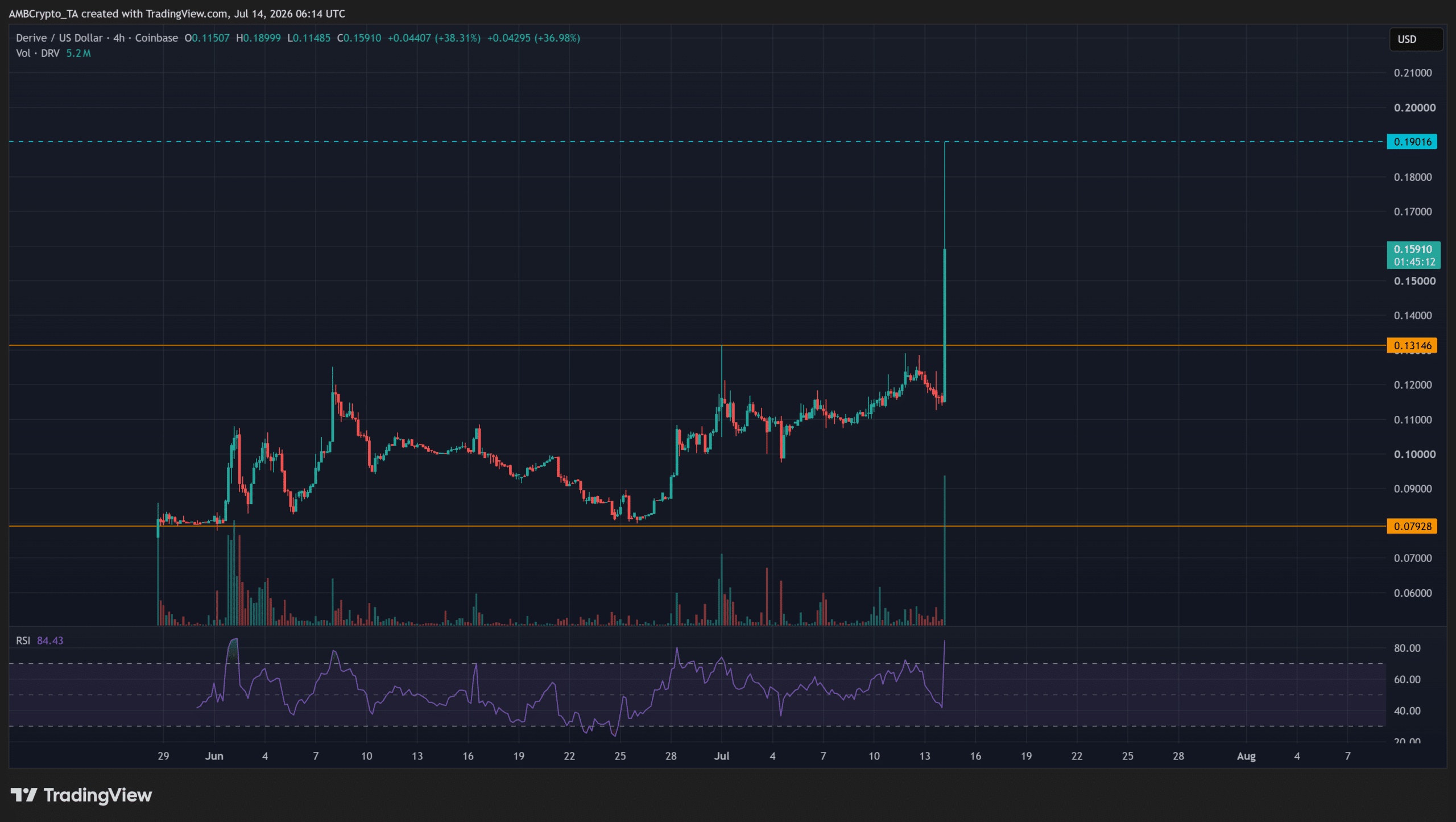
来源:TradingView 上的 DRV/USD 图表

然而,相对强弱指数 (RSI) 达到了 84.43。

因此,由于动量过热,引发了早期的获利了结。

这种反应意味着交易者是在锁定利润,而非完全放弃突破。截至发稿时,该代币交易价格在 0.1471 美元附近。

尽管如此,若能持稳在 0.131 美元上方,将确认买家仍在持续吸收卖压;若失守该水平,则暗示投机性需求正在消退。

DRV 能否延续上线引发的涨势?

投资者对该代币的早期热情已在近期价格走势中显现。下一个挑战是证明需求能超越上线催化剂本身。

在许多情况下,短期交易者的投机性买入驱动了早期的价格波动。然而,持续的上涨需要在上线引发的直接热度消退后,仍有资金随着时间的推移继续投入。

持币者数量的增长将表明投资者正在积累而非抛售代币。同时,稳定的交易量和不断改善的市场深度将暗示流动性正变得更具韧性。

更重要的是,交易所资金净流动数据也将揭示买家是在持续吸收供应,还是早期参与者主导了抛售。

综合来看,这些指标将决定 DRV 是会建立一个更坚实的市场基础,还是会重蹈上线后价格回落的常见覆辙。


最终总结

  • 随着 Upbit 准备开放韩元 (KRW)、比特币 (BTC) 和泰达币 (USDT) 交易对,Derive [DRV] 将获得更广泛的流动性和市场准入。
  • Derive 现在的重点已从确保在主要交易所上线,转向证明此轮上涨反映了持久的需求。

Related Questions

QDerive [DRV] 宣布将在哪个交易所上线,并开启哪些交易对?

ADerive [DRV] 宣布将在韩国交易所 Upbit 上线,并开启韩元(KRW)、比特币(BTC)和泰达币(USDT)交易对。交易将于7月14日开始。

Q根据文章,DRV 的价格在公告发布后经历了怎样的变化?

A在公告发布后,DRV 的价格在买家预期流动性增强和更广泛的市场参与下,急剧上涨了约40%,从0.1147美元涨至0.19美元,随后回落至约0.1486美元。发稿时,价格在0.1471美元附近。

Q文章中提到,DRV 要确认持续的买盘,需要守住哪个关键价格水平?

A根据文章,DRV 需要守住0.131美元的水平,以确认买家继续吸收供应。如果跌破该水平,则表明投机性需求正在减弱。

Q除了价格,还有哪些指标可以衡量 DRV 在上市热潮后的实际需求是否可持续?

A文章指出,衡量可持续需求的指标包括:持币者数量的增长、稳定的交易量、市场深度的改善以及交易所的资金净流入情况。这些可以揭示投资者是在囤积还是抛售代币。

Q文章认为,仅获得交易所支持是否能创造对 DRV 的长期需求?

A文章明确指出,仅获得额外的交易所支持不太可能帮助创造长期需求。长期的、可持续的需求需要交易者带来更强的交易量、更深的订单簿以及持续的市场参与。

Related Reads

New Fire Group Chief Economist Fu Peng's Latest Speech: Crypto Assets Deeply Bound to Liquidity, Global Assets 'Shrink Circle' with Widening Divergence

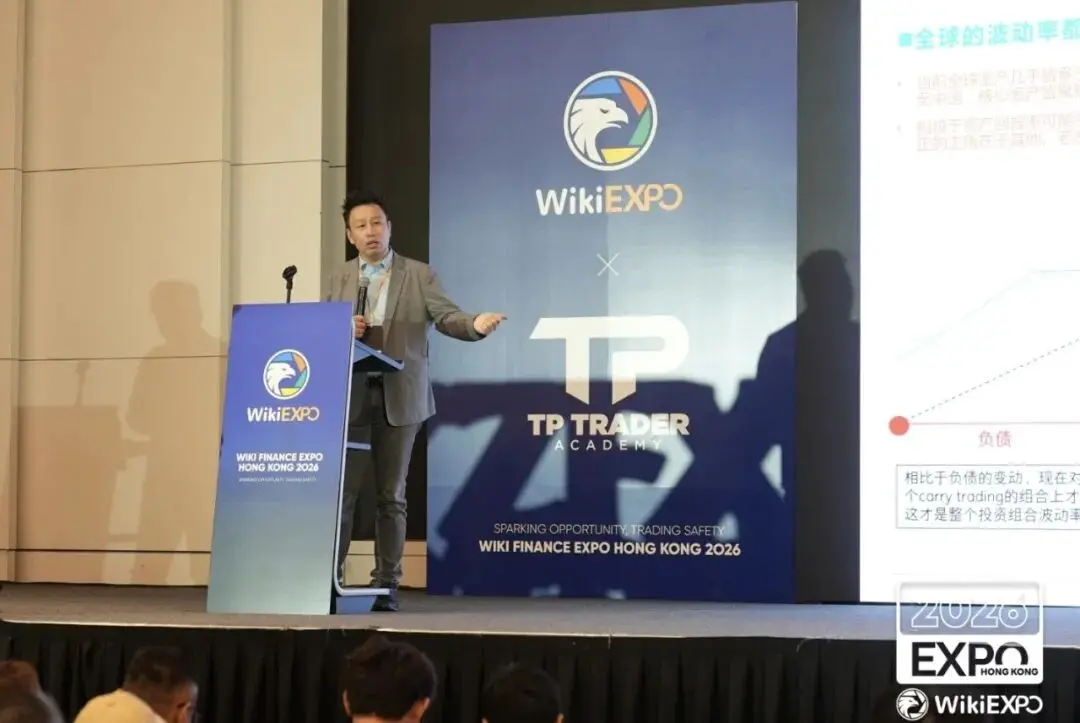
The chief economist of Sinovation Group delivered a speech at Wiki Finance EXPO Hong Kong 2026, analyzing the global market through the lens of liquidity. He argues that all major assets, including cryptocurrencies, are fundamentally tied to global liquidity, which is now shifting from an era of extreme post-2008 ease to sustained tightening under new Fed leadership. This marks the end of widespread "asset flooding" and ushers in a "shrinking circle" dynamic: capital is abandoning speculative, low-quality assets and concentrating in a few high-conviction, value-driven core holdings. The only dominant global investment theme is AI, viewed as a 20-25 year productivity cycle. However, a critical inflection point has been reached in Q2, where major tech firms' free cash flow has turned negative. The market narrative has pivoted from rewarding pure capital expenditure growth to demanding proof of future revenue generation and returns. While the AI super-cycle's long-term thesis remains intact, the initial hardware-driven phase (e.g., Nvidia, memory chips) is maturing. The speaker warns of significant volatility risk not from industry fundamentals, but from excessive financial leverage built up in these "certain" assets. He emphasizes that investment strategy must evolve from broad diversification to focused, cyclical allocation within the AI value chain (upstream hardware, midstream, downstream applications), avoiding blind long-term holds on single names. For crypto, this liquidity paradigm shift means the era of speculative "air coin" mania is over; the market is maturing, with institutional participation increasing and volatility stabilizing for core assets like Bitcoin and Ethereum. The core takeaway is that understanding the top-down liquidity framework is essential for navigating the current era of market分化 and focused capital allocation.

链捕手3m ago

New Fire Group Chief Economist Fu Peng's Latest Speech: Crypto Assets Deeply Bound to Liquidity, Global Assets 'Shrink Circle' with Widening Divergence

链捕手3m ago

4 Hours, 118 Responses: Liang Wenfeng’s Internal Q&A Addresses Everything

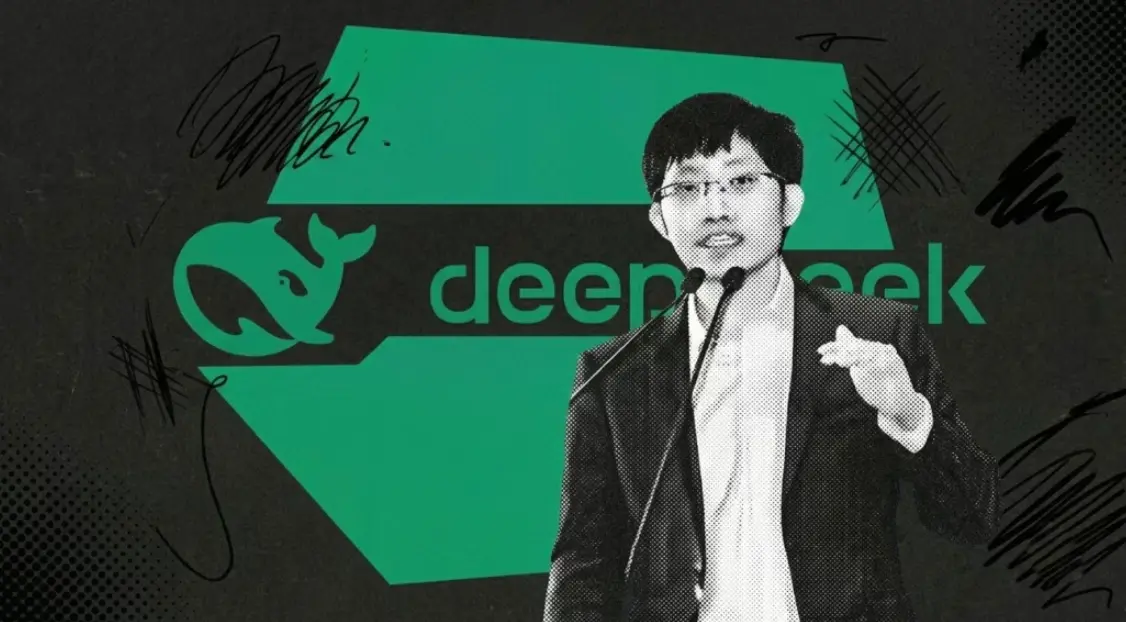
**DeepSeek Founder Liang Wenfeng's Candid Reflections on the Company's Path to AGI** DeepSeek has recently completed its first external funding round, raising over 500 billion RMB (approx. $74B) at a pre-money valuation of 3.675 trillion RMB ($543B). Founder Liang Wenfeng personally invested 200 billion RMB. This marks a strategic shift from its initial "no financing, no IPO, no commercialization" principle. In a recent investor Q&A, Liang articulated DeepSeek's core philosophy and roadmap. The company is driven by a powerful, unwritten vision for beneficial AGI rather than pure commercial maximization. He emphasizes "strategic restraint"—avoiding unnecessary conflicts, prioritizing long-term AGI success over short-term gains, and maintaining an open, cooperative stance even with competitors. Liang outlined the AGI technical roadmap: current focus on Agent capabilities, followed by solving "continual learning," which he sees as the key to unlocking models that can learn and adapt like humans. This could lead to a gradual "singularity" where AI accelerates its own research, and eventually to embodied intelligence. DeepSeek will strictly focus on this "AGI mainline," avoiding distractions like video generation which, while commercially viable, don't directly advance core intelligence. He identifies team stability as the single most critical factor for success, now bolstered by the recent funding. While talent is not a bottleneck, the primary constraint compared to the US is compute resources. Liang is optimistic about domestic AI chips, stating that Nvidia's CUDA moat is eroding and that within a year, the viability of the Chinese chip ecosystem will be proven, with Huawei's offerings being key. The main issue is production capacity. On competition, Liang believes the final differentiators will be cost, time-to-market, and user experience. He foresees Chinese companies playing a major role by offering systematically lower-cost AI services globally. DeepSeek's commercialization strategy involves offering API services at a "reasonable profit" and focusing on coding Agents. He remains committed to open-sourcing even their strongest models, seeing no downside as the barriers to effective deployment remain high. The company operates with a unique dual management structure combining top-down direction with significant bottom-up, unstructured research time for employees. Data quality and post-training are identified as major current challenges, with half of core researchers involved in data labeling efforts. Liang concludes that DeepSeek aims to be one of several trillion-dollar companies in the AI era, achieved through extreme focus on its chosen path.

链捕手10m ago

4 Hours, 118 Responses: Liang Wenfeng’s Internal Q&A Addresses Everything

链捕手10m ago

After Three Consecutive Quarters of Decline, Can the Crypto Market Find a Window for Stabilization in Q3?

The cryptocurrency market has just concluded its worst-performing quarter since 2022, with total capitalization dropping 12.6% to $2.1 trillion. All core metrics indicate capital is leaving the sector, not just rotating within it. Bitcoin fell 14.2% and Ethereum dropped 25.4% in Q2, breaking their previous correlation with US tech stocks. A key driver is the reversal in US spot Bitcoin ETF flows, which saw a net outflow of approximately $4.67 billion in Q2, including a record monthly outflow near $4.5 billion in June. While recent data suggests long-term holders are accumulating again, sustained ETF outflows mean continued selling pressure. Market focus is now singularly on the Federal Reserve. The upcoming July FOMC meeting is seen as the most critical event for Q3. A dovish signal could support Bitcoin reclaiming a $68,000-$84,000 range, while a hawkish stance might establish a new trading band around $50,000-$56,000. Additionally, regulatory uncertainty persists, with the progress of the crucial *CLARITY Act* stalling in the Senate, reducing its perceived 2026 passage probability to 40-45%. Despite the broad downturn, a few sectors showed growth. Prediction markets saw nominal volume surge 48.7% year-over-year to $113.8 billion, and tokenized collectibles transaction volume rose 143% quarterly to $1.4 billion. The Real-World Asset (RWA) tokenization sector also continued steady growth, now representing ~$28.1 billion in on-chain value. The market's foundation for an extreme crash appears limited, with Bitcoin price hovering near its 200-week moving average. However, the trading paradigm has shifted from narrative-driven speculation to decisions based on price action, policy developments, and interest rate expectations, making a broad sentiment-driven rally unlikely in the near term.

marsbitYesterday 08:36

After Three Consecutive Quarters of Decline, Can the Crypto Market Find a Window for Stabilization in Q3?

marsbitYesterday 08:36

Trading

Spot
活动图片