Fed's Internal Doves Flock to Hawkish Stance, Warsh's Debut "Between a Rock and a Hard Place"

marsbitPublished on 2026-06-17Last updated on 2026-06-17

Abstract

U.S. Federal Reserve officials who previously advocated for rate cuts, including Governor Christopher Waller, have recently shifted their stance, with many now not ruling out the possibility of future rate hikes. This sets a challenging stage for new Fed Chair Kevin Warsh's first policy meeting. Appointed by President Trump based on his dovish views, Warsh now faces a committee where the debate has pivoted from "when to cut" to "whether to hike," driven by persistent inflation above 3%, a strong labor market, and supply-side pressures from AI infrastructure demands and geopolitical tensions. Key figures illustrate the shift. Governor Waller, once concerned about employment, now says data has pushed him toward considering rate increases. Even moderate voices like Governor Lisa Cook, while expecting inflation to ease, have indicated readiness to hike if it fails to do so. Long-time hawks such as regional Fed presidents Beth Hammack, Lorie Logan, and Neel Kashkari have grown more vocal, arguing that the real policy rate is effectively falling and that action may soon be needed. The upcoming Fed meeting is expected to keep rates steady but will likely remove the "easing bias" from its statement, signaling a neutral stance between cuts and hikes. The quarterly "dot plot" is anticipated to show most officials projecting no cuts this year, with some potentially indicating hikes. Chair Warsh, a critic of the Fed's reliance on forward guidance like the dot plot, must navigate commun...

Author: Long Yue

Source: Wall Street Insights

Key Federal Reserve officials who previously advocated for rate cuts, including Waller and others, have recently signaled openness to potential rate hikes, leaving almost no one on the committee still arguing for cuts. The debut meeting chaired by Warsh is likely to send a signal — the Fed's next move could be a rate hike.

Trump appointed him to cut rates, but shortly after he took office, his colleagues began discussing raising them.

The Wall Street Journal recently published an in-depth report by veteran reporter Nick Timiraos, timed just before the first interest rate meeting chaired by new Fed Chairman Kevin Warsh. Timiraos has long specialized in Fed coverage and is seen by the market as a "Fed mouthpiece."

Timiraos wrote that Warsh enters this meeting room at an extremely awkward moment. He publicly argued for rate cuts last year, a stance that won him Trump's favor. Yet, shortly after he formally assumed the role, the direction of discussion within the Fed has quietly reversed — shifting from "when to cut" to "whether to raise."

This reversal is not sudden. Since the start of the year, U.S. inflation has risen instead of falling, breaking above 3%; the job market has strengthened again; supply bottlenecks from the AI construction boom and higher oil prices fueled by the Iran war continue to add fuel to price pressures. The reasons that previously supported expectations for rate cuts have disappeared one by one.

Warsh faces a committee he did not assemble himself, a set of forecasting tools he has long criticized, and a policy direction that runs counter to the wishes of the president who appointed him. This debut is destined to be challenging.

How Did the Doves Turn Hawkish?

The most telling illustration is the change in stance by Fed Governor Christopher Waller.

Waller spent all of last year worrying about a weakening job market, even voting in favor of a rate cut in January against the majority of his colleagues. But just last month, he publicly stated that recent data "pushed me in the other direction." He explicitly supported removing the "easing bias" from the statement and bluntly said, "I can no longer rule out the possibility of a rate hike at some point in the future."

Regarding market discussions still focused on a September rate cut, Waller's response was quite direct: "You can't seriously be talking about it as a serious central banker."

The Middle Ground Is Also Shifting

If Waller represents the dovish faction's pivot, then the shift by Governor Lisa Cook shows that even the "middle ground" is loosening.

Cook is not a hawk; last month she still said holding rates steady was the right choice, with the baseline scenario being that inflation would cool on its own. But she added a condition — one that would have been almost unthinkable coming from her a year ago: she said she was "prepared to raise rates" if the decline in inflation "does not materialize in a timely manner."

The underlying concern is that five years of persistently above-target inflation may have begun to influence how businesses set prices and workers negotiate wages, creating self-reinforcing expectations.

The Hawks Have Been Waiting for This Day

The hawks on the committee have long been dissatisfied.

When the Fed cut rates late last year, Cleveland Fed President Beth Hammack, Dallas Fed President Lorie Logan, and Minneapolis Fed President Neel Kashkari voiced dissent, arguing the rationale for easing was shaky to begin with.

In April, the trio teamed up again. This time, they opposed not the rate decision itself, but the phrase in the statement hinting that "the next move is more likely to be a cut" — they demanded its removal to signal that a rate hike is also a possible option.

Now, the data is tilting further in their favor. Hammack said this month that holding steady is appropriate for now, "but if recent trends persist, action may be needed soon." Logan went further: "I'm increasingly concerned that a rate increase may be necessary later this year."

The hawks also raise a noteworthy argument: As inflation rises, the inflation-adjusted "real interest rate" is actually falling, meaning the Fed's policy may be less restrictive to the economy than the headline number suggests. In other words, merely "holding steady" is, in a sense, already a form of easing.

Warsh's Dilemma

This Wednesday, the Fed is expected to hold the benchmark rate steady at 3.5% to 3.75%. But the real focus is on two areas.

First, the wording of the statement. The phrase "easing bias"—which for months has hinted the next move is more likely to be a cut—is expected to be removed, signaling that cuts and hikes are now seen as equally likely.

Second, the quarterly "dot plot." In March, over a dozen officials still projected at least one rate cut this year. This time, most officials are expected to show rates holding steady this year, with some even penciling in a hike.

Warsh himself has long criticized the Fed's over-reliance on "forward guidance," including tools like the dot plot. He could choose not to submit his own projections or strip such hints from the official statement. But Timiraos notes that such operational distinctions matter little to investors — they will read the substance directly. The one who truly cares about this distinction is the president who wants to see low rates.

A comment last month by Chicago Fed President Austan Goolsbee perhaps best captures the current predicament: "We now have a fairly serious inflation problem that is forming, but the job market is basically stable."

The result is this: There is almost no one left on the committee arguing for rate cuts. The debut meeting chaired by Warsh is likely to send a signal — the Fed's next step could be a rate hike. And all this will be communicated using the very tools he has criticized, by a committee he did not personally select, and will point in a direction his appointer does not wish to see.


Trending Cryptos

Related Questions

QWhat is the main shift in the Federal Reserve's internal discussion as described in the article?

AThe main shift is that the discussion has reversed from 'when to cut interest rates' to 'whether or not to raise them'. Previously dovish officials have adopted a more hawkish stance, and the possibility of a rate hike is now being considered.

QWhy is the new Fed Chairman, Kevin Warsh, in a difficult position according to the article?

AKevin Warsh is in a difficult position because he was appointed by President Trump based on his dovish stance favoring rate cuts. However, shortly after his appointment, the economic data and the stance of the Federal Open Market Committee (FOMC) shifted towards potentially raising rates, putting him at odds with the president's wishes and the committee he did not personally assemble.

QWhich specific official's recent comments are highlighted as a significant example of a dove turning hawkish?

AThe article highlights Federal Reserve Governor Christopher Waller as a prime example. He spent last year worrying about a weakening labor market but recently stated that new data 'pushed me in another direction,' and he can no longer rule out the possibility of a future rate hike.

QWhat are the two key focal points for the upcoming Federal Reserve meeting mentioned in the article?

AThe two key focal points are: 1) The wording of the official statement, specifically whether the 'easing bias' (suggesting the next move is more likely a cut) will be removed. 2) The quarterly 'dot plot,' which shows individual officials' interest rate projections. It is expected to shift significantly, showing fewer or no cuts in 2024, and possibly signaling a hike.

QWhat argument do the hawkish members of the FOMC make regarding the real interest rate?

AHawkish members argue that as inflation rises, the inflation-adjusted 'real interest rate' is actually falling. This means that by merely holding the nominal rate steady, the Federal Reserve's policy may be less restrictive on the economy than it appears, effectively constituting a form of easing.

Related Reads

Why Didn't Oil Prices Stabilize Above $100 as Traffic Through the Strait of Hormuz Plunged Again?

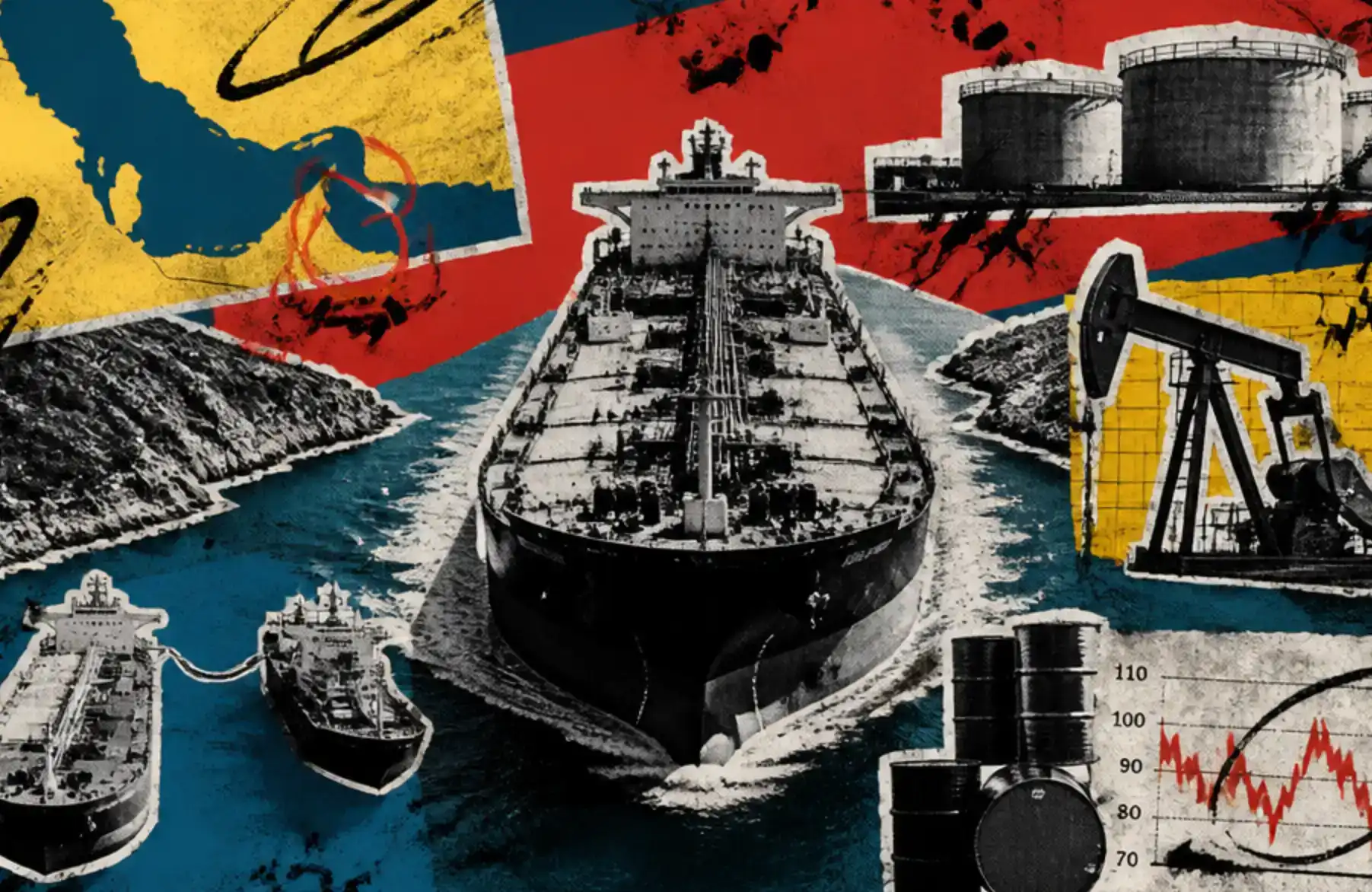
Despite a significant drop in daily oil tanker traffic through the critical Strait of Hormuz in August, Brent crude oil prices have failed to stabilize above $100 per barrel, instead hovering around $90. This contrasts with traditional market logic, where a threat to a chokepoint handling roughly 20 million barrels per day (27% of global seaborne oil) should trigger a sustained supply risk premium. The article explains that the market is pricing in increased transit costs rather than an imminent, complete supply cutoff. Investors currently believe multiple buffers can absorb the shock: strategic and commercial inventories, the potential for coordinated stock releases, available OPEC+ spare capacity, and alternative export routes from the Gulf. Furthermore, workarounds like ship-to-ship transfers outside the Strait and route adjustments by buyers and shippers add resilience, though at a higher cost for insurance, financing, and longer voyages. The underlying U.S.-Iran tensions frame this reassessment as a problem of cost allocation across the supply chain. The price action suggests traders are awaiting clearer signals—such as a military escalation, sustained Iranian attacks, or stricter enforcement of secondary sanctions on buyers—before pricing in a worst-case, long-term disruption scenario. In the longer term, the episode is accelerating investments to reduce dependency on the Strait, such as expanded storage and pipeline infrastructure, which will embed higher costs into the energy system. While Brent may remain range-bound for now, the real-time impact of the Hormuz risk is likely appearing first in freight rates, insurance premiums, and regional product spreads like diesel crack margins. The stability of current prices depends on how much longer these existing buffers can effectively absorb the mounting transit costs and logistical friction.

marsbit29m ago

Why Didn't Oil Prices Stabilize Above $100 as Traffic Through the Strait of Hormuz Plunged Again?

marsbit29m ago

BONK Crypto Treasury Company Has Only $2.14 Million Cash Left, 70% of Revenue Comes from Founder's Own Platform

BONK Inc. (BNKK), the NASDAQ-listed company associated with the Solana meme coin BONK, reported stark financials for the first half of the year. While revenue skyrocketed 6,218% year-over-year to $5.5 million, the company posted a net loss of $7.88 million and its cash reserves plummeted to just $214,000. Its auditors issued a "going concern" warning, citing cumulative losses of $191.4 million, negative operating cash flow, and critically low liquidity. A critical detail is that $3.92 million, or 71%, of its revenue came from an "affiliate revenue share" with LetsBonk.fun, a meme coin launchpad. This platform is linked to founder Mitchell Rudy, whose entity, Lucky Dog Holdings, beneficially owns approximately 40.2% of common stock and all C Series preferred shares. These preferred shares grant the holder the right to elect half of the company's board. The company's financial structure is further intertwined with Rudy; it sold $50 million worth of stock to his entities, accepting payment in BONK tokens. Fluctuations in the value of these and other held digital assets led to an $8.17 million unrealized loss, the primary driver of the net loss. With operating cash outflows of $4.17 million for the half-year, the remaining cash covers roughly nine days of operations at the current burn rate, highlighting severe financial strain despite top-line growth.

marsbit1h ago

BONK Crypto Treasury Company Has Only $2.14 Million Cash Left, 70% of Revenue Comes from Founder's Own Platform

marsbit1h ago

CryptoQuant Noted a Signal of a Bitcoin Reversal

CryptoQuant has highlighted a potential reversal signal for Bitcoin, suggesting the bearish phase might be nearing its end as on-chain metrics show initial signs of spot demand recovery. Their analysis indicates that the 30-day spot demand metric has recovered from -206,000 BTC in late July to approximately -5,000, close to turning positive for the first time since February 2026. Historically, such a reversal has been followed by a median 60-day price gain of 18.1%, with a win rate of 78% (increasing to 87% when valuations are depressed). However, they caution that this is a favorable sign, not a guarantee. Analysts from Bitfinex Alpha note that two of three conditions for a sustainable Bitcoin recovery are already met: improved Federal Reserve rate expectations and relatively accommodative financial conditions, thanks to easing inflation and reduced odds of a near-term rate hike. The missing third catalyst is a capital rotation from traditional markets (like stocks and AI infrastructure) into cryptocurrencies. If this occurs, Bitcoin could reclaim $70,000. Conversely, continued negative flows might see support tested around $57,000. Current headwinds include significant weekly outflows from US spot Bitcoin ETFs (roughly $385 million) and reduced stablecoin supply. Wintermute offers a more cautious outlook, pointing to the same large ETF outflows and ongoing miner selling pressure. They note that Bitcoin has failed to rally despite the improved Fed outlook, which is typically bullish for risk assets. As an example, they cite miner Riot Platforms, which sold a substantial portion of its Bitcoin reserves in Q2 as its mining cost (~$91,000 per BTC) remains far above the current market price, forcing sales for liquidity. This combination of ETF outflows and miner selling is suppressing new demand.

cryptonews.ru1h ago

CryptoQuant Noted a Signal of a Bitcoin Reversal

cryptonews.ru1h ago

Is a Strong Ruble Good? Not for the Budget: Treasury Already Short 1.5 Trillion

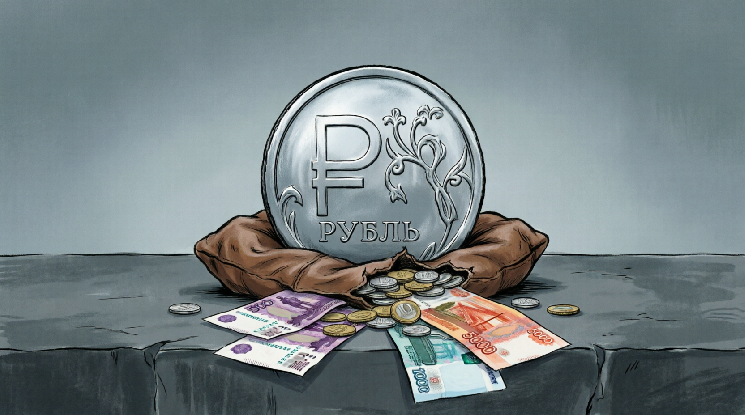
The Russian budget has lost about 1.5 trillion rubles in revenue since the start of 2026 due to the ruble being stronger than the government's planned exchange rate. The budget was based on an average annual rate of 92.2 rubles per US dollar, but the actual average for the first seven and a half months was just 76.9 rubles. This discrepancy creates a significant shortfall, as every ruble of appreciation against the dollar reduces annual budget revenues by 140–160 billion rubles. When accounting for oil and gas revenues, the sensitivity is even higher, with potential annual losses reaching up to 2.5 trillion rubles. So far this year, the budget has already missed out on roughly 1.7 trillion rubles. The ruble's exchange rate has shown considerable volatility in 2026, ranging from a low near 71 rubles per dollar in May to over 85 rubles by mid-August. Despite this recent weakening, the year's average remains well below the budget target, creating a structural deficit in oil and gas revenues. Forecasts suggest the final average rate for 2026 will be around 80–82 rubles, which would result in a budget shortfall of about 1.6 trillion rubles. A strong ruble reduces import costs and inflation but also cuts the ruble earnings of exporters and threatens the funding of social obligations. The gap between the planned and actual rate is attributed not only to oil price dynamics but also to the fiscal rule mechanism, which can influence the currency's direction. The Ministry of Finance recently halted foreign currency sales under this rule, removing dollar supply from the market and contributing to pressure on the exchange rate. The budget policy is now forced to adapt to a stronger ruble than originally planned.

cryptonews.ru1h ago

Is a Strong Ruble Good? Not for the Budget: Treasury Already Short 1.5 Trillion

cryptonews.ru1h ago

Trading

Spot

Hot Articles

Discussions

Welcome to the HTX Community. Here, you can stay informed about the latest platform developments and gain access to professional market insights. Users' opinions on the price of S (S) are presented below.

活动图片