Transaksi Merger dan Akuisisi di Pasar Kripto Sedang Sangat Aktif

marsbitPublished on 2026-06-16Last updated on 2026-06-16

Abstract

Pasar kripto mengalami peningkatan aktivitas merger dan akuisisi (M&A) yang signifikan, dengan proporsinya mencapai rekor tertinggi sekitar 42% dari total transaksi primer menurut data RootData. Lonjakan ini terutama didorong oleh lesunya pasar pendanaan, di mana jumlah putaran pendanaan turun drastis dari sekitar 100 menjadi 50 per bulan. Kondisi ini menciptakan peluang bagi perusahaan besar untuk mengakuisisi tim, teknologi, lisensi, dan aset strategis lainnya dengan harga yang lebih rendah dan persaingan yang lebih sedikit. Pemain utama seperti Coinbase, Kraken, Ripple, dan MoonPay aktif melakukan akuisisi untuk memperkuat kemampuan inti mereka, seperti infrastruktur perdagangan (terutama derivatif), pembayaran & stablecoin, kepatuhan regulasi, serta distribusi dan penerbitan aset (RWA). Pergeseran ini mengubah logika keluar (exit) di pasar primer, dari ketergantungan pada penerbitan token menuju nilai strategis yang dapat diintegrasikan ke dalam platform yang lebih besar. Meski memberi jalan keluar baru bagi startup, tren ini juga mengindikasikan industri kripto yang semakin terpusat, dengan hambatan masuk yang lebih tinggi karena dominasi platform besar dan kompleksitas regulasi.

Penulis: Gu Yu, ChainCatcher

Pasar primer kripto sedang menunjukkan sinyal langka: transaksi merger dan akuisisi (M&A) hampir menyamai setengah dari transaksi pendanaan.

Menurut data statistik RootData, sejauh bulan ini, kasus akuisisi di industri kripto telah mencapai 10 transaksi, sementara jumlah putaran pendanaan pada periode yang sama hanya 14 transaksi. Dihitung berdasarkan total transaksi pasar primer, pangsa M&A telah mencapai sekitar 42%, level tertinggi dalam sejarah.
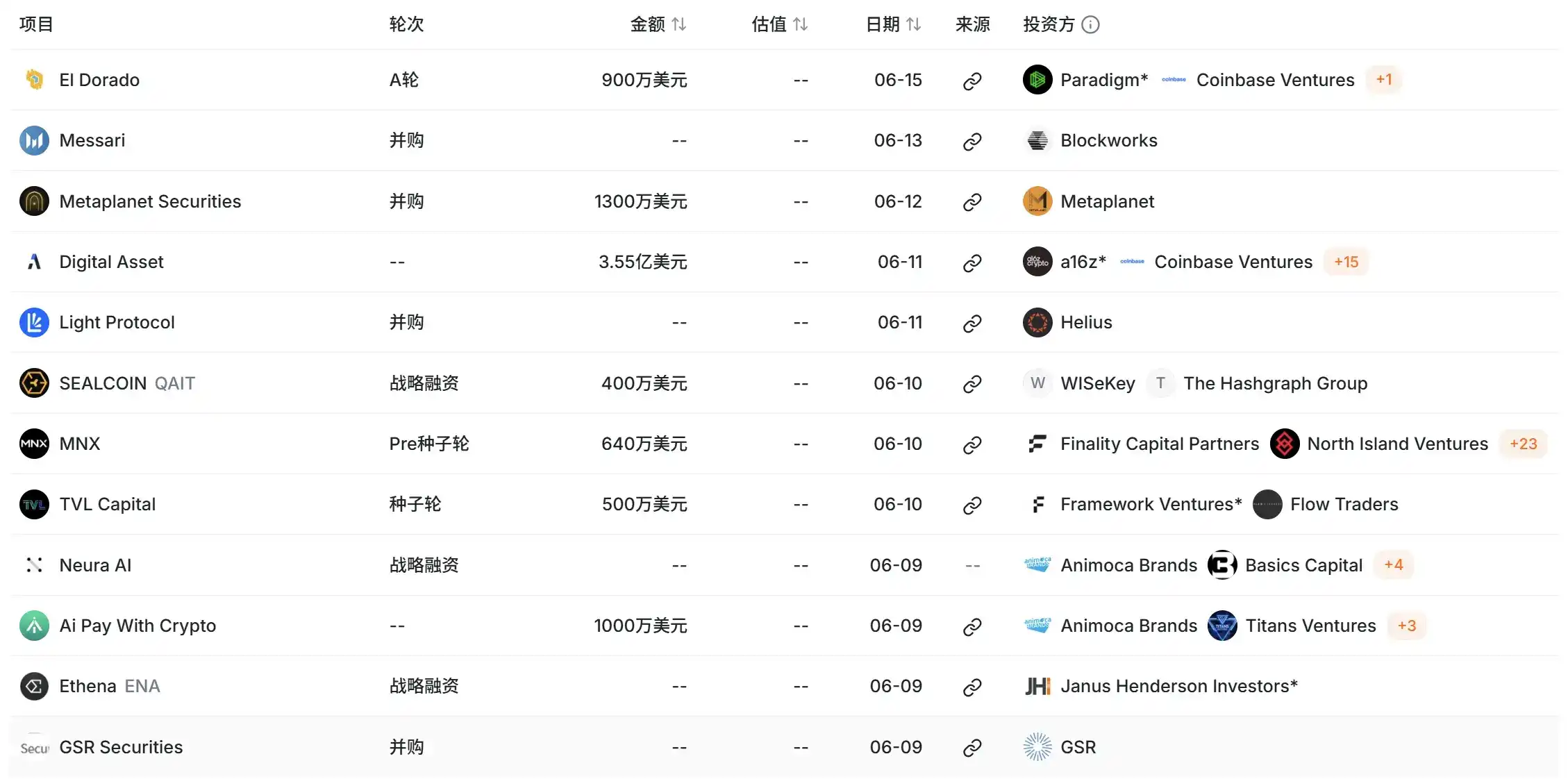
Makna dari data ini cukup jelas: di masa lalu, pendanaan adalah pemeran utama di pasar primer kripto; sekarang, semakin banyak transaksi berubah menjadi akuisisi.

Ini tidak berarti industri tiba-tiba memasuki siklus kemakmuran. Justru sebaliknya, peningkatan cepat pangsa M&A pertama-tama mencerminkan kelesuan berkelanjutan pasar pendanaan. Sejak November 2024, jumlah transaksi M&A bulanan di industri kripto pada dasarnya bertahan di kisaran 10-20 transaksi, sementara jumlah transaksi pendanaan turun drastis dari sekitar 100 transaksi menjadi sekitar 50 transaksi, bahkan bulan ini mungkin akan mencapai rekor terendah baru.

Dengan kata lain, transaksi M&A tidak benar-benar menggantikan panasnya pasar pendanaan, tetapi menjadi bentuk transaksi yang paling stabil di pasar primer setelah pasar pendanaan menyusut.

Bagi para pelaku proyek, ini berarti jalur yang sebelumnya mengandalkan narasi pendanaan, ekspektasi token, dan subsidi ekosistem untuk mempertahankan valuasi semakin sempit. Bagi perusahaan-perusahaan besar, ini berarti sebuah jendela langka: membeli tim, lisensi, teknologi, likuiditas, dan pintu masuk pasar dengan harga yang lebih rendah, persaingan yang lebih sedikit, dan daya tawar yang lebih kuat.

Setelah gelombang pendanaan surut, pasar primer kripto tidak berhenti beroperasi, hanya saja kekuatan penetapan harga sedang beralih dari tangan VC ke tangan raksasa pembeli.

一、Mengapa Jumlah M&A Terus Tinggi

Dalam setahun terakhir, pembeli yang telah melakukan beberapa kali aksi termasuk Coinbase, Kraken, Ripple, MoonPay, Polymarket, Kaiko, Sol Strategies, GSR, Keyrock, Jupiter, Paxos, Ondo Finance, dan lain-lain.

Perusahaan-perusahaan ini berada di jalur yang berbeda, ada bursa, perusahaan pembayaran, market maker, penyedia layanan data, pasar prediksi, platform RWA, perusahaan perbendaharaan Solana, juga ada perusahaan stablecoin dan infrastruktur keuangan. Namun, logika M&A mereka sangat konsisten: di masa lesu industri, melengkapi kemampuan kunci dengan biaya yang lebih rendah.

Pertama, valuasi sudah cukup murah.

Ketika lingkungan pendanaan mengencang, banyak proyek tidak dapat lagi menggunakan valuasi putaran sebelumnya untuk terus menggalang dana. Bagi pembeli, ini berarti harga akuisisi yang lebih baik, pesaing penawaran yang lebih sedikit, dan daya tawar yang lebih kuat. Bagi penjual, meski harga tidak ideal, diakuisisi oleh perusahaan besar mungkin lebih pasti daripada terus-menerus melakukan dilusi, PHK, atau pivot.

Contohnya adalah Messari yang baru-baru ini diakuisisi. Proyek ini sebelumnya memiliki valuasi tertinggi mencapai 300 juta dolar AS, dengan total pendanaan lebih dari 70 juta dolar AS. Namun, karena bisnis inti riset investasinya sangat terdampak oleh AI dan pesaing, sehingga berulang kali melakukan PHK dan mengecilkan bisnis, akhirnya harga akuisisi oleh Blockworks hanya sedikit lebih dari 10 juta dolar AS.

Kedua, menghemat biaya waktu dan biaya trial and error.

Jendela peluang di industri kripto seringkali sangat singkat. Ketika celah regulasi terbuka, model produk baru berjalan lancar, atau kelas aset tertentu memanas, pasar tidak akan memberi perusahaan waktu dua atau tiga tahun untuk membangun tim dari nol. Mengakuisisi tim yang matang seringkali lebih cepat daripada inkubasi internal, dan menghindari biaya trial and error yang tidak perlu.

Akuisisi Deribit oleh Coinbase senilai 2,9 miliar dolar AS adalah contoh kasus yang khas. Deribit adalah salah satu platform opsi kripto utama global, dengan volume perdagangan 2024 mencapai sekitar 1,2 triliun dolar AS. Coinbase melalui transaksi ini langsung masuk ke pasar inti derivatif kripto global, alih-alih membangun platform perdagangan opsi dari nol.

Ketiga, memperoleh lisensi dan sumber daya kepatuhan.

Seiring kerangka regulasi di AS, Uni Eropa, Hong Kong, Singapura, dan lainnya semakin jelas, lisensi sedang menjadi aset inti perusahaan kripto. Perdagangan, kustodian, pembayaran, stablecoin, broker, kliring, derivatif, setiap tahap memerlukan pintu masuk yang patuh.

Logika akuisisi NinjaTrader oleh Kraken persis seperti itu. NinjaTrader adalah platform perdagangan berjangka untuk pengguna ritel, dengan nilai perdagangan mencapai 1,5 miliar dolar AS; transaksi ini membantu Kraken memperluas bisnis perdagangan multi-aset dan derivatif yang diatur.

Keempat, menghubungkan rantai industri hulu dan hilir.

Raksasa kripto sedang bergerak dari produk titik tunggal menjadi grup keuangan. Bursa tidak hanya melakukan pemasangan, tetapi juga derivatif, dompet, kustodian, pembayaran, RWA, penerbitan token, data, dan layanan institusional; perusahaan stablecoin tidak hanya menerbitkan koin, tetapi juga jaringan pembayaran, AI Agent, dan infrastruktur keuangan; platform RWA juga tidak hanya menerbitkan aset, tetapi juga menguasai kepatuhan, distribusi, likuiditas, dan pintu masuk data.

Jalur akuisisi raksasa pembayaran kripto MoonPay cukup khas. Pada tahun 2025, MoonPay mengakuisisi perusahaan rintisan pembayaran kripto Helio, dengan nilai transaksi sekitar 175 juta dolar AS; kemudian mengumumkan akuisisi platform infrastruktur stablecoin Iron, untuk memperluas kemampuan pembayaran perusahaan dan stablecoinnya.

二、Arah Mana yang Menjadi Fokus M&A?

Dilihat dari arah M&A terkini, area di mana raksasa kripto paling bersedia mengeluarkan uang terutama terkonsentrasi pada empat kategori: infrastruktur perdagangan, pembayaran & stablecoin, lisensi kepatuhan, penerbitan & distribusi aset.

Infrastruktur perdagangan masih menjadi medan pertempuran terbesar.

Akuisisi Deribit oleh Coinbase dan akuisisi NinjaTrader oleh Kraken, di baliknya adalah penilaian yang sama: pertumbuhan perdagangan spot terbatas, derivatif, opsi, berjangka, perdagangan multi-aset, dan layanan institusional adalah kolam keuntungan yang lebih bernilai. Terutama setelah ETF, RWA, tokenisasi saham, dan pasar prediksi perlahan-lahan bangkit, batas platform perdagangan sedang berkembang dari "bursa mata uang kripto" menjadi "pintu masuk perdagangan aset global".

Pembayaran dan stablecoin adalah jalur utama kedua.

Perusahaan-perusahaan seperti MoonPay, Ripple, Paxos, Tether semuanya sedang berekspansi di sekitar pembayaran, kliring stablecoin, akuisisi pedagang, penyelesaian perusahaan, dan transfer lintas batas. Aksi akuisisi Ripple dalam beberapa tahun terakhir sangat agresif, termasuk akuisisi perusahaan kustodian Metaco senilai 250 juta dolar AS pada tahun 2023, dan kemudian berekspansi di sekitar pembayaran stablecoin, prime brokerage, dan manajemen dana perusahaan.

Ini menunjukkan bahwa perang stablecoin bukan lagi hanya perang skala penerbitan, tetapi perang jaringan pembayaran, saluran kepatuhan, klien institusional, dan pintu masuk skenario.

RWA dan penerbitan aset juga sedang menjadi sorotan M&A baru.

Perusahaan-perusahaan seperti Ondo Finance, Jupiter, Polymarket, Coinbase semuanya sedang memperluas penerbitan aset, distribusi likuiditas, dan pintu masuk perdagangan mereka melalui akuisisi atau integrasi. Akuisisi Liquifi dan Echo oleh Coinbase adalah tata letak di sekitar kemampuan penerbitan token dan pembentukan modal on-chain. Nilai transaksi Echo adalah 375 juta dolar AS, membantu Coinbase berekspansi ke platform pembentukan modal on-chain; Liquifi menyediakan alat distribusi dan manajemen token, sesuai dengan taruhan Coinbase pada jalur penerbitan token yang patuh.

Signifikansi strategis dari M&A semacam ini adalah, siapa yang menguasai penerbitan aset, dialah yang akan menguasai sumber perdagangan.Dulu, bursa terutama menghasilkan biaya transaksi dari aset yang ada; di masa depan, platform besar lebih berharap menghasilkan uang dari seluruh rantai mulai dari kelahiran aset, pendanaan, listing, distribusi, market making, kustodian, hingga perdagangan. M&A adalah cara tercepat untuk menghubungkan rantai ini.

三、M&A Sedang Mengubah Logika Exit Pasar Primer

Memanasnya M&A, bagi para wirausahawan, tidak selalu buruk.

Di masa lalu, jalur exit proyek kripto terlalu bergantung pada token. Keberhasilan sebuah proyek seringkali tergantung pada apakah dapat menerbitkan token, listing di bursa, mempertahankan kapitalisasi pasar, dan menciptakan likuiditas. Namun, mekanisme ini dalam beberapa tahun terakhir menciptakan banyak masalah: pelaku proyek exit lebih awal, tekanan jual VC yang terbuka, retail mengambil alih, valuasi tinggi dengan peredaran rendah, bisnis nyata justru menjadi sandera harga token.

M&A menyediakan jalur lain. Sebuah tim meskipun tidak dapat tumbuh menjadi raksasa secara independen, asalkan dapat membentuk kemampuan nyata di suatu tautan, seperti lisensi, teknologi, likuiditas, kepatuhan, pengguna, data, manajemen risiko, market making, jaringan pembayaran, ada kemungkinan untuk diakuisisi oleh platform yang lebih besar.

Ini akan mengubah cara bertindak para wirausahawan. Di masa lalu, banyak proyek menerbitkan token demi token, mengemas narasi demi pendanaan; di masa depan, lebih banyak tim mungkin akan kembali menghargai produk, pendapatan, klien, dan nilai strategis yang dapat diintegrasikan.

Inilah mengapa aktifnya M&A sampai batas tertentu akan memberikan suntikan semangat kepada pasar primer. Ini menunjukkan bahwa industri kripto masih memiliki pembeli aset, masih ada penilaian ulang nilai, dan masih ada kemungkinan exit.

Hanya saja, pasar sedang menyaring nilai dengan cara yang lebih ketat. Yang dapat dibeli, bukan lagi narasi besar di PPT, melainkan kemampuan nyata yang dapat langsung digabungkan ke dalam peta bisnis.

四: Industri Kripto Sedang Menjadi Lebih Terpusat

Di balik memanasnya M&A, adalah lesunya pasar pendanaan, penurunan valuasi proyek, meningkatnya tekanan exit tim wirausaha. Namun, ini juga menunjukkan bahwa industri kripto tidak kehilangan vitalitas modal, tetapi sedang menyelesaikan restrukturisasi sumber daya dengan cara lain.

Masalah lain yang harus dilihat adalah: industri kripto sedang menjadi lebih terpusat.

Ketika penerbitan aset, perdagangan, market making, kustodian, pembayaran, dan data perlahan-lahan terkonsentrasi di tangan segelintir perusahaan, keterbukaan dan anti-monopoli yang ditekankan industri kripto pada awalnya, mungkin akan dibentuk kembali oleh logika bisnis nyata.

Terutama setelah kepatuhan menjadi hambatan inti, kesulitan wirausahawan baru memasuki pasar akan semakin meningkat. Di masa depan, industri kripto mungkin muncul pola mirip keuangan tradisional: beberapa platform besar menguasai lisensi, klien, dan likuiditas, tim kecil dan menengah hanya dapat menjadi pemasok teknologi, plugin ekosistem, atau objek akuisisi potensial.

Oleh karena itu, makna lain dari meningkatnya pangsa M&A adalah: industri kripto sedang mengucapkan selamat tinggal pada era kewirausahaan dengan hambatan rendah.

Wirausahawan masa depan tidak hanya harus menghadapi persaingan pasar, tetapi juga batas ekosistem raksasa dan hambatan regulasi.


Related Questions

QApa yang menyebabkan peningkatan tajam dalam proporsi transaksi M&A di pasar primer kripto?

APeningkatan tajam proporsi M&A terutama disebabkan oleh lesunya pasar pendanaan. Data menunjukkan jumlah pendanaan turun drastis dari sekitar 100 per bulan menjadi 50, sementara transaksi M&A tetap stabil di kisaran 10-20. Hal ini membuat M&A menjadi bentuk transaksi yang lebih dominan dibandingkan pendanaan tradisional.

QApa saja alasan utama perusahaan-perusahaan besar di industri kripto untuk melakukan akuisisi?

APerusahaan besar melakukan akuisisi terutama karena empat alasan: 1) Valuasi target akuisisi yang lebih murah, 2) Menghemat biaya waktu dan trial-and-error, 3) Memperoleh lisensi dan sumber daya kepatuhan regulasi, 4) Meneruskan dan memperluas rantai industri mereka.

QBidang atau area apa saja yang menjadi fokus utama dalam gelombang M&A industri kripto saat ini?

AFokus utama M&A saat ini adalah pada empat bidang: 1) Infrastruktur perdagangan (seperti derivatif dan platform multi-aset), 2) Pembayaran dan stablecoin, 3) Lisensi kepatuhan regulasi, 4) Penerbitan dan distribusi aset (RWA, penerbitan token).

QBagaimana tren M&A yang aktif ini mengubah logika keluar (exit) bagi startup dan investor di pasar primer kripto?

AM&A menawarkan jalur keluar alternatif selain bergantung pada peluncuran token dan IPO. Ini mendorong startup untuk lebih fokus pada penciptaan nilai nyata seperti produk, pendapatan, pelanggan, dan kemampuan strategis yang dapat diintegrasikan ke dalam platform yang lebih besar, alih-alih hanya mengejar narasi untuk pendanaan.

QApa implikasi dari meningkatnya aktivitas M&A terhadap struktur dan sentralisasi industri kripto secara keseluruhan?

AAktivitas M&A yang meningkat menunjukkan konsolidasi sumber daya ke tangan sejumlah kecil perusahaan besar (seperti Coinbase, Kraken, Ripple). Hal ini dapat meningkatkan sentralisasi, membuat industri lebih mirip dengan keuangan tradisional di mana platform besar menguasai lisensi, likuiditas, dan pelanggan. Ini juga meningkatkan hambatan masuk bagi wirausaha baru.

Related Reads

Under the Shock of Oil Prices and Inflation, Which Country Will Be the First to Sell Off Its Gold Reserves?

The article draws a parallel between the 2003 North American blackout and the potential collapse of the global financial system, framing the US dollar and Treasury market as the world's economic "power grid." It argues that the closure of the Strait of Hormuz is creating a shockwave, starting with oil-importing emerging markets like Turkey, India, and Indonesia. As oil prices rise, these nations are forced to sell dollar-denominated assets—first US Treasuries, then potentially their gold reserves—to afford fuel. Turkey is highlighted as a key case, having sold nearly 90% of its Treasuries and begun tapping gold reserves when oil was between $70-$105/barrel. The article warns that if prices spike to $150-$160/barrel, global buffers like oil inventories and strategic reserves will be depleted. This could trigger a cascade: vulnerable nations, having exhausted assets, could face economic and political collapse (like Sri Lanka in 2022). Their forced asset sales would drive US Treasury yields higher, potentially past a critical threshold (around 5%), forcing the US to choose between a bond market crash or hyperinflation through massive money printing. Ultimately, the piece posits that the dollar's long-term decline is inevitable. The first domino to fall will likely be a fragile emerging market, signaling the start of a chain reaction that eventually threatens the core of the dollar system. The conclusion advises holding tangible assets like gold and energy, which cannot be printed, as a hedge against currency devaluation.

marsbit12m ago

Under the Shock of Oil Prices and Inflation, Which Country Will Be the First to Sell Off Its Gold Reserves?

marsbit12m ago

Behind HYPE's Repeated Record Highs, the 'Minions' in the Ecosystem Can't Keep Up

While HYPE, the native token of the Hyperliquid ecosystem, surges to new all-time highs above $76 and attracts significant institutional ETF inflows, a starkly different reality unfolds within its HyperEVM application layer. Multiple core DeFi protocols across lending, NFTs, stablecoins, and DEXs have announced shutdowns between May and June. The article argues HYPE functions more like an "application stock" than a traditional ecosystem token. Its value is anchored to the trading fees from Hyperliquid's core perpetual contracts platform (HyperCore), which boasts a diversified revenue stream from crypto, commodities, and indices. Approximately 97% of protocol fees fund buybacks and burns of HYPE. This means HYPE's price is largely decoupled from the health of projects built on HyperEVM. The closures of significant projects like lending protocol HypurrFi (peak TVL >$300M) and NFT marketplace Drip.Trade highlight a structural tension. Hyperliquid's minimalist philosophy offers infrastructure without official grants, liquidity support, or marketing coordination for HyperEVM projects. This forces protocols into a fiercely competitive environment from day one. Furthermore, the success of HyperCore creates a liquidity vacuum, and mechanisms like HIP-3 (allowing direct perpetual market deployment) divert user attention and capital away from application-layer projects. The stronger the core perpetual trading business becomes, the more difficult it is for peripheral "DeFi lego" projects to survive and capture value, despite the flagship token's rising price.

Foresight News1h ago

Behind HYPE's Repeated Record Highs, the 'Minions' in the Ecosystem Can't Keep Up

Foresight News1h ago

Conversation with Arthur Hayes: AI Has Drained Market Liquidity, BTC Will Be Below 100k by Year-End

In this June 2026 podcast interview, BitMEX co-founder Arthur Hayes explains his decision to sell his major crypto holdings (HYPE, NEAR, Worldcoin, Zcash). His rationale is based on a macro view linking oil prices, the Iran conflict, US politics, and an impending AI bubble burst. Hayes argues that high oil prices, driven by the ongoing war, will pressure domestic US inflation. To salvage the Republican Party's chances in the midterm elections, he believes Donald Trump may pivot to a populist, anti-AI stance—advocating for taxes and regulation—which would deflate the AI investment narrative. He sees the AI sector, particularly massive capital expenditure on data centers, as having absorbed nearly all excess market liquidity (around $1.5 trillion in debt issuance since 2025), starving other assets like Bitcoin. He highlights the upcoming SpaceX IPO at a ~$1.8 trillion valuation and 100x price-to-sales ratio as a potential tipping point. If these hyped IPOs underperform, it could shatter market confidence in AI. In such a scenario, all risk assets, including crypto, would fall together as correlations converge to 1 during a broad correction. Hayes has moved his portfolio into Treasuries and energy stocks (like ExxonMobil), predicting Bitcoin will be below $100k by year-end. He sees a potential crypto bull market only after the AI frenzy cools, liquidity stops flowing exclusively into AI, and possibly after a significant market downturn prompts new monetary stimulus.

marsbit1h ago

Conversation with Arthur Hayes: AI Has Drained Market Liquidity, BTC Will Be Below 100k by Year-End

marsbit1h ago

Trading

Spot
Futures

Hot Articles

What is DOGE M

Doge Matrix ($doge m): The New Breed of Community-Driven Cryptocurrency Introduction In the ever-evolving landscape of cryptocurrency, new projects constantly emerge, each aiming to capture the interest of investors and enthusiasts alike. One of the latest entrants to this domain is Doge Matrix, represented by the ticker symbol $doge m. This project has attracted attention thanks to its roots in the popular meme culture surrounding Dogecoin, establishing its place within the web3 space. This article aims to provide a comprehensive analysis of Doge Matrix, covering its overview, creator, investors, functionality, timeline, and notable aspects. What is Doge Matrix ($doge m)? Doge Matrix is a community-driven cryptocurrency project that seemingly builds upon the widespread appeal of Dogecoin, a digital currency known for its Shiba Inu mascot and its meme origins. While the overarching objectives of Doge Matrix are not extensively defined, it is characterized by a commitment to harnessing community involvement and support. Unlike traditional cryptocurrencies that often emphasize utility or intrinsic value through underlying technologies, Doge Matrix positions itself within a space that embraces the cultural phenomenon of cryptocurrencies, particularly appealing to those who resonate with the ethos of meme-based assets. Drawing on the strengths of the Dogecoin community, Doge Matrix operates as part of a broader ecosystem, inviting participation and engagement from users who share an interest in cryptocurrency and the digital landscape. Who is the Creator of Doge Matrix ($doge m)? The identity of the creator of Doge Matrix remains unknown. This lack of transparency is not an uncommon occurrence in the cryptocurrency space, where some projects are launched without revealing the identities of their founders. The absence of information regarding the founding team can raise questions among potential investors about the project’s accountability and direction. Who are the Investors of Doge Matrix ($doge m)? As it stands, there is no publicly available information detailing the investors or investment foundations that back Doge Matrix. The project appears to rely primarily on community support rather than institutional investment. This model aligns with the community-driven nature of the initiative, fostering an environment where the direction of the project is shaped by its participants rather than being dictated by a select few financial backers. How Does Doge Matrix ($doge m) Work? The specifics regarding the operational mechanisms of Doge Matrix are somewhat vague, reflecting a broader trend of projects in the meme coin space where innovative functionalities are not always clearly articulated. Nonetheless, Doge Matrix seems designed to tap into the existing cryptocurrency ecosystem by encouraging user participation while tapping into the familiar cultural references associated with Dogecoin. Its potentially unique characteristics derive from community interactions rather than technological advancements, emphasizing shared experiences and collaboration among token holders. While the exact innovations have not been explicitly outlined, the project appears to create a space where community members can engage, share ideas, and propel the project's potential forward. Timeline of Doge Matrix ($doge m) Reflecting on the project’s timeline reveals notable events that have defined its journey thus far: November 25, 2024: Doge Matrix reached its all-time high value, marking a significant milestone in its early history. January 1, 2025: Conversely, Doge Matrix hit its all-time low value, illustrating the volatility often associated with cryptocurrencies, especially in the early stages of a project's lifecycle. Ongoing: The project continues to be actively traded and supported by its community, although specific future milestones or objectives have yet to be disclosed. Key Points About Doge Matrix ($doge m) Community Focus At the heart of Doge Matrix is a commitment to community engagement. The project thrives on the premise of collaboration and shared objectives among its members, emphasizing the importance of collective effort. Unlike centralized projects that often have a defined leadership structure, Doge Matrix at present showcases a more fluid approach to governance, where every community member's voice matters. Volatility The cryptocurrency market is notorious for its volatility, and Doge Matrix is no exception. Its price history reflects significant fluctuations between high and low values, which is typical of many new cryptocurrencies but underscores the risks associated with investment in emerging tokens. Lack of Detailed Information One of the most striking features about Doge Matrix is the scarcity of detailed information regarding its technological underpinnings and operational mechanisms. This ambiguity necessitates that potential investors conduct thorough due diligence before engaging with the project. Conclusion In summary, Doge Matrix ($doge m) illustrates a new wave of cryptocurrency projects that lean heavily on community engagement and cultural relevance. While lacking in certain specifics—such as clear leadership, defined objectives, and detailed functionality—the project has managed to generate interest within the crypto community, leveraging the established appeal of meme culture. As with any investment in the cryptocurrency space, understanding the inherent risks and conducting comprehensive research is essential for potential participants. Doge Matrix stands as a reminder of the dynamic, sometimes unpredictable nature of the crypto industry, marked by constant evolution and enthusiasm for community-driven initiatives.

3.8k Total ViewsPublished 2025.02.03Updated 2025.02.03

What is DOGE M

What is $M

Understanding Mantis ($M): A New Era in Cross-Chain Interoperability In the continually evolving landscape of Web3 and cryptocurrency, new projects strive to offer innovative solutions aimed at enhancing the user experience and expanding functional possibilities within the decentralized financial ecosystem. One such project garnering attention is Mantis ($M), a pioneering protocol founded on the principles of cross-chain interoperability and intent-based settlements. This article delves into the essential aspects of Mantis, including its core functionality, creators, investment backing, innovative features, and critical milestones. What is Mantis ($M)? Mantis is described as a multi-domain intent settlement protocol that simplifies cross-chain interactions, enabling users to execute complex financial transactions across various blockchain platforms seamlessly. The protocol operates through three primary layers: Intent Expression: Users can articulate their transaction goals using natural language facilitated by the DISE LLM, an advanced AI language model. For instance, a user might express a desire to swap Ethereum (ETH) for Solana (SOL) with a specific slippage tolerance of 1%. Execution: This layer employs a network of solvers that compete to fulfill user intents. Transactions are executed using mechanisms such as Coincidence of Wants (CoWs) and Order Flow Auctions (OFAs), which ensure that user demands are met optimally. Settlement: Leveraging the Inter-Blockchain Communication (IBC) protocol, Mantis enables atomic cross-chain transactions, allowing users to operate across various supported chains, including Ethereum, Solana, and Cosmos. Mantis is engineered to introduce native yield generation for idle assets, employing cryptographic proofs to maintain the integrity of transactions throughout the entire process. Creators & Development Team Mantis was conceived by the Composable Foundation, a research-driven organization notable for its emphasis on blockchain interoperability solutions. This foundation collaborates with esteemed academic institutions, including Harvard University and the University of Lisbon, contributing to extensive research and development efforts that inform Mantis's architecture and functionality. The Composable Foundation’s commitment to fostering innovation in the blockchain space positions Mantis as a robust solution for the growing demand for interoperability among multiple blockchain networks. Investors & Backing While specific details about individual investors have not been publicly disclosed, Mantis enjoys substantial backing from various entities, including: Ecosystem grants from IBC-enabled chains, which support the protocol's growth and integration within decentralized finance ecosystems. Strategic partnerships with infrastructure providers that enhance Mantis's network capabilities and deployment strategies. Funding through the Composable Foundation's treasury, ensuring sustained financial support for ongoing development and operational costs. These collaborative efforts reflect a consensus among stakeholders about the importance of enhancing cross-chain functionality and the potential utility of Mantis's infrastructural innovations. Key Innovations Mantis sets itself apart through several pioneering innovations that enhance its functionality and utility: Chain-Agnostic Intents: Users can initiate transactions from any supported chain while settling on another. This flexibility empowers users, driving increased interaction among different platforms. AI-Powered Interface: The integration of DISE LLM allows users to conduct complex DeFi operations using natural language, thereby simplifying interactions and making blockchain technology accessible to a broader audience. Cross-Domain MEV Capture: Mantis creates an internal market for maximal extractable value (MEV) through competitions among solvers. This innovative approach allows for greater efficiency and value extraction in complex transactions. Modular Settlement Layer: The protocol supports various verification methods, including zero-knowledge proofs and optimistic rollups, providing a versatile framework that can adapt to emerging blockchain technologies. Historical Timeline Mantis's development is marked by several critical milestones that chart its trajectory and growth: | Year | Milestone | |————|————————————————————————-| | 2022 | Initial concept development within the Composable Foundation's research division. | | Q3 2024 | Launch of the testnet with bridging capabilities between Solana and Ethereum. | | Q1 2025 | Anticipated Token Generation Event (TGE) alongside the mainnet launch. | | Q2 2025 | Expected integration of DISE LLM and expansion of cross-chain capabilities. | | 2025 H2 | Planned support for over 15 chains through further IBC upgrades. | This timeline outlines Mantis's evolution, from conceptual discussions to active implementation and future growth phases. Ecosystem Growth Strategy Mantis's strategy for ecosystem growth includes several initiatives designed to encourage user participation and developer engagement: Credits System: Users can earn protocol credits by providing liquidity and engaging in referral programs. These credits are redeemable for incentives in the future, fostering a robust user community. Modular Software Development Kit (SDK): This toolkit empowers developers to create applications based on intent-driven models utilizing Mantis's infrastructure, thus promoting innovation within its ecosystem. Governance Model: As the protocol matures, $M token holders will have a voice in protocol governance, allowing them to vote on proposed upgrades and changes, thereby enhancing community engagement and decentralization. Mantis represents a significant advancement in the realm of cross-chain architecture. By seamlessly integrating advanced AI algorithms with a robust settlement framework, Mantis seeks to tackle the problems of fragmentation within multi-chain ecosystems. Its innovative approach prioritizes improved user experiences while adhering to the foundational principles of decentralization and security, setting a new standard for the future interoperability of blockchain technologies. As Mantis continues its journey of growth and implementation, it promises to be a project to watch closely in the competitive landscape of Web3 and decentralized finance. With its focus on crossing boundaries and elevating user engagement, Mantis is poised to be an integral part of the future developments in the cryptocurrency space.

250 Total ViewsPublished 2025.03.18Updated 2025.03.18

What is $M

How to Buy M

Welcome to HTX.com! We've made purchasing MemeCore (M) simple and convenient. Follow our step-by-step guide to embark on your crypto journey.Step 1: Create Your HTX AccountUse your email or phone number to sign up for a free account on HTX. Experience a hassle-free registration journey and unlock all features.Get My AccountStep 2: Go to Buy Crypto and Choose Your Payment MethodCredit/Debit Card: Use your Visa or Mastercard to buy MemeCore (M) instantly.Balance: Use funds from your HTX account balance to trade seamlessly.Third Parties: We've added popular payment methods such as Google Pay and Apple Pay to enhance convenience.P2P: Trade directly with other users on HTX.Over-the-Counter (OTC): We offer tailor-made services and competitive exchange rates for traders.Step 3: Store Your MemeCore (M)After purchasing your MemeCore (M), store it in your HTX account. Alternatively, you can send it elsewhere via blockchain transfer or use it to trade other cryptocurrencies.Step 4: Trade MemeCore (M)Easily trade MemeCore (M) on HTX's spot market. Simply access your account, select your trading pair, execute your trades, and monitor in real-time. We offer a user-friendly experience for both beginners and seasoned traders.

7.3k Total ViewsPublished 2025.07.02Updated 2026.06.02

How to Buy M

Discussions

Welcome to the HTX Community. Here, you can stay informed about the latest platform developments and gain access to professional market insights. Users' opinions on the price of M (M) are presented below.

活动图片