Entrée totale dans l'ère de l'IA : Alipay mise sur la conversation, WeChat maintient le social

marsbitPublished on 2026-06-15Last updated on 2026-06-15

Abstract

En mai 2026, Alipay annonce avoir traité plus de 300 millions de paiements via IA. Peu après, WeChat ouvre l'accès à l'IA pour ses mini-programmes, suscitant des débats sur la confidentialité du code source. Ces annonces marquent deux visions divergentes de l'intégration de l'IA. Alipay teste "Project Treasure", une version redéfinie centrée sur l'interface conversationnelle. L'utilisateur formule une demande complexe (ex: commander un taxi et un café) en une phrase, et l'IA exécute toutes les étapes en arrière-plan. Après un échec avec une application autonome, Alipay a opté pour une transition en douceur au sein de son application existante, visant à "changer l'oiseau sans vider la cage". Pour les services non adaptés, l'IA utilise une technique de "lecture d'écran" pour simuler les actions utilisateur. WeChat adopte une approche plus prudente et intégrée. Son agent IA sera étroitement lié aux fonctionnalités sociales (chats, comptes officiels, Chaînes) plutôt que d'avoir une interface dédiée. L'IA agit comme un assistant contextuel au sein des conversations de groupe, préservant l'expérience sociale centrale. Pour comprendre les mini-programmes, WeChat propose deux modes aux développeurs : l'analyse du code source ("Mode automatique") ou la création d'interfaces standardisées ("Mode développement"), deux options exigeantes. La divergence est cruciale pour l'écosystème des mini-programmes. La solution "lecture d'écran" d'Alipay intègre passivement tous les services, pous...

En mai 2026, Alipay a annoncé que le nombre de paiements par IA dépassait les 300 millions. Un mois plus tard, WeChat a ouvert aux développeurs l'accès à l'IA pour les mini-programmes, suscitant une controverse avec une exigence : l'autorisation pour la plateforme de lire le code source des mini-programmes.

Ces deux événements sont séparés de moins de 30 jours, mais ils représentent deux voies divergentes depuis plus d'un an. Selon le média LatePost, Alipay teste en interne une version IA de son application, portant le nom de code "Projet Bao". Il ne s'agit pas d'ajouter un assistant, mais de permettre aux utilisateurs de basculer d'un simple clic vers une interface entièrement nouvelle, axée sur le dialogue. Quant à WeChat, lors d'un appel aux résultats financiers, son président Liu Chi Ping a fixé la ligne directrice : "Un agent IA sera finalement intégré, mais en connexion profonde avec les relations sociales, les comptes officiels et les chaînes vidéo, sans calendrier précis."

Ces deux plateformes, chacune avec plus d'un milliard d'utilisateurs et des millions de mini-programmes, ont donné des réponses opposées à la même question : lorsque l'IA peut exécuter des services pour l'utilisateur, l'entrée doit-elle être réécrite ou dissimulée ?

Alipay ne modifie pas seulement l'interface

Pour comprendre ce qu'Alipay fait réellement, il faut examiner une action utilisateur concrète.

Auparavant, pour commander trois lattes avec moins de sucre et appeler un taxi pour l'aéroport dans Alipay, le processus standard était le suivant : trouver l'entrée du mini-programme de Didi, entrer la destination, confirmer la course ; quitter, trouver l'entrée du mini-programme de Luckin, choisir le produit, modifier la quantité de sucre, ajouter au panier, régler ; passer d'un mini-programme à l'autre pour effectuer les paiements. Chaque étape représentait un clic, un changement de page, une attente.

L'objectif du "Projet Bao" est de condenser tout cela en une phrase. L'utilisateur dit au dialogue : "Appelez-moi un taxi pour l'aéroport, et commandez trois lattes avec moins de sucre à proximité". L'IA prend en charge toutes les étapes suivantes : comprendre l'intention, décomposer la tâche, appeler les services de transport et de restauration correspondants, combiner les commandes, effectuer le paiement. L'interface d'interaction n'est plus une série d'entrées de mini-programmes, mais une fenêtre de chat.

Ce changement est si radical qu'il se voit dans le processus de conception interne. Selon LatePost, pour déterminer la nouvelle forme d'interaction, l'équipe du projet a produit plus de 100 versions de conception. Le choix final d'une solution centrée sur le dialogue repose sur le constat que le langage naturel est devenu le mode d'interaction dominant de l'IA, et que la distribution des services doit reconstruire son entrée dans cette direction, plutôt que de coller un patch IA sur l'ancien cadre.

Cette approche radicale n'a pas été le premier choix d'Alipay. À la fin de l'année 2023, lorsque la direction de la division Alipay a lancé une discussion sur "Comment évoluer vers l'intelligence", la première question posée était : modifier l'application existante ou en créer une nouvelle ? L'équipe du projet a initialement choisi la seconde option. En septembre 2024, lors de la conférence "The Bund Summit", Alipay a lancé l'application IA indépendante "Zhi Xiaobao", positionnée comme un assistant de vie IA.

Zhi Xiaobao n'a pas fonctionné comme prévu. Selon des sources informées, l'application indépendante n'a pas atteint le nombre d'utilisateurs actifs quotidiens (DAU) de l'assistant intelligent intégré à l'application principale. Cet assistant de dialogue, présent dans Alipay et bénéficiant du trafic de la page d'accueil, a maintenu un DAU de plusieurs millions et a accumulé bien plus de données d'interaction que l'application indépendante.

Une contrainte plus pratique existait également : à l'époque, le groupe Ant concentrait ses efforts sur le développement de l'application de santé "Ant Afu" et de l'IA générale "Ling Guang", avec des ressources informatiques et de développement limitées. Créer une autre application indépendante aurait non seulement concurrencé ces projets pour les ressources, mais aurait aussi entraîné des coûts énormes pour migrer les utilisateurs.

En mars 2025, l'équipe a changé de cap, abandonnant l'idée d'une application indépendante. Une conviction interne s'est progressivement formée : mieux servir la base existante de plus d'un milliard d'utilisateurs d'Alipay, en leur offrant des services IA sans coût de migration, était plus efficace que de créer une nouvelle application externe. En décembre 2025, le projet de version IA d'Alipay a été officiellement lancé, avec une équipe initiale provenant des équipes de l'assistant intelligent intégré, rejointes ensuite par des équipes d'algorithmes, de produits grand public et de mini-programmes.

La voie produit finale n'est ni une application native indépendante, ni un assistant intégré dans l'application existante, mais bien un basculement en un clic. Après le lancement de la nouvelle version, l'application Alipay standard s'ouvrira par défaut, mais l'utilisateur pourra choisir de définir la version IA comme interface principale. LatePost rapporte que cette approche progressive, "laissant une porte de sortie", est décrite en interne comme "changer l'oiseau en déplaçant la cage".

WeChat ne laisse pas l'IA s'interposer entre les personnes

La voie de WeChat en matière d'IA a, depuis le début, suivi une autre logique.

La déclaration du président de Tencent, Liu Chi Ping, lors de l'appel aux résultats du T3 2025, était pratiquement sans ambiguïté : L'agent IA que WeChat déploiera sera profondément connecté aux relations sociales, aux capacités de communication, aux comptes officiels et aux chaînes vidéo. C'est un Agent unique. Pas de calendrier agressif, et la société a même démenti à deux reprises des rumeurs concernant un assistant IA.

Pourquoi WeChat ne peut-il pas basculer vers une interface conversationnelle comme Alipay ? La raison n'est pas technique, mais liée à la nature du produit. L'interface principale de WeChat est la liste des conversations, la page de téléphone la plus fréquemment ouverte chaque jour par des milliards de personnes. Toute tentative de superposer une entrée de dialogue IA sur cette interface pourrait être perçue par les utilisateurs comme une perturbation des relations sociales. La page d'accueil d'Alipay est une entrée de services ; la transformer en fenêtre de dialogue demande aux utilisateurs de s'adapter à une nouvelle habitude opérationnelle. La page d'accueil de WeChat est celle des dialogues interpersonnels ; remplacer ou empiéter sur ces dialogues par des dialogues IA touche au territoire psychologique le plus important pour l'utilisateur.

La solution de WeChat se rapproche davantage d'une logique "parasite". L'assistant IA ne remplace aucune interface ; il se cache dans les conversations de groupe et les comptes officiels, attendant d'être invoqué en tant qu'Agent. On peut imaginer ce scénario : dans un groupe familial WeChat, quelqu'un partage un long article de compte officiel sur un terrain de camping familial. Les autres membres n'ont pas besoin de l'ouvrir ; ils demandent directement à l'assistant IA, dans le groupe, de résumer les points clés et de coordonner les agendas des membres pour réserver le terrain recommandé. L'Agent digère le contenu de l'article, appelle le service de réservation du mini-programme, coordonne les disponibilités des membres du groupe et renvoie le résultat de la réservation dans la conversation.

Pendant tout ce processus, l'IA opère toujours dans le contexte de la conversation de groupe ; l'utilisateur voit toujours ce groupe, ces personnes, ces conversations. Les "tâches" exécutées par l'Agent sont intégrées dans le tissu social, plutôt que de surgir sur une interface séparée pour afficher sa propre présence.

Cette retenue a un prix. Dans WeChat, les services sont fournis sous forme de mini-programmes, des millions. Pour que l'IA les exécute à la place de l'utilisateur, elle doit comprendre non seulement l'intention de l'utilisateur, mais aussi la structure des données, la logique des pages et les flux d'interaction de ces services. Alipay fait face au même problème, et leurs solutions ont donné lieu à la divergence la plus fondamentale dans cette course.

Lecture d'écran vs lecture du code source : quelle solution est la plus difficile ?

La communauté ouverte de WeChat a publié en juin 2026 le "Guide d'accès (bêta) au mode de développement IA pour mini-programmes", proposant deux modes.

Le premier est le "mode automatique". Le développeur autorise la plateforme à lire le code source du mini-programme lors de la soumission pour examen. L'IA analyse le code source pour comprendre la structure des pages et la logique opérationnelle, et manipule directement le mini-programme. Le second est le "mode de développement". Le développeur encapsule son service selon un protocole défini par WeChat en tant que Skill, comprenant des interfaces et composants atomiques. L'IA exécute les tâches en appelant ces interfaces standardisées.

La solution d'Alipay est un "système à double voie". D'après LatePost, d'un côté, la plateforme encourage les commerçants volontaires à s'intégrer activement, en transformant leurs services en MCP ou Skills directement appelables par l'IA. De l'autre, avec l'autorisation de l'utilisateur, l'IA peut prendre en charge les services non encore adaptés via des opérations de "lecture d'écran" sur l'interface existante du mini-programme.

La différence fondamentale est la suivante : pour adapter les mini-programmes existants non préparés, WeChat exige que le développeur fournisse le code source, tandis qu'Alipay choisit de laisser l'IA effectuer des opérations basées sur la reconnaissance visuelle pour le compte de l'utilisateur.

Selon la documentation de la communauté ouverte de WeChat, le "mode automatique" est techniquement une solution plus radicale. Après lecture du code source, la compréhension de la page par l'IA est structurée, les chemins d'opération sont clairs et contrôlables, et les risques d'erreur sont moindres que pour la lecture d'écran, qui dépend de la reconnaissance visuelle et de la simulation d'interface. Cependant, cette approche transfère la pression sur les développeurs. Le code source est un actif essentiel pour eux ; le fournir signifie exposer complètement leur logique métier, structure de données et conception d'interaction à Tencent. Pour les petites et moyennes entreprises qui dépendent des mini-programmes, cela représente non seulement un souci de sécurité, mais aussi un risque commercial : une fois que la plateforme maîtrise entièrement le processus de service, quelle marge de manœuvre reste-t-il en termes de distribution de trafic et de pouvoir de négociation ?

Si le "mode automatique" n'est pas choisi, le mode de développement n'est pas non plus facile. Les développeurs doivent réorganiser leurs processus métier, les décomposer en capacités atomiques, les encapsuler en Skills selon le protocole de WeChat, puis passer par un nouveau processus d'approbation. Pour un mini-programme de restauration, le travail de décomposition et d'encapsulation pour la commande, le paiement, la validation des coupons, les points de fidélité pourrait représenter une part importante du développement initial. Qui supportera ce coût ? WeChat n'a pas encore proposé de plan d'incitation, du moins pas pour l'instant.

La solution de lecture d'écran d'Alipay contourne ces problèmes. Elle ne nécessite pas la coopération du commerçant, ni de modifications de code. Le commerçant peut même ignorer que son mini-programme est manipulé par l'IA. L'utilisateur dit à l'interface conversationnelle : "Achetez-moi un billet de train pour Shanghai". L'IA ouvre l'interface du mini-programme 12306, reconnaît le lieu de départ, la destination, la liste des trains, les boutons de sélection de sièges, la page de confirmation de paiement, et simule étape par étape les actions de l'utilisateur. Pour les commerçants déjà intégrés via MCP ou Skill, l'IA peut appeler directement les interfaces standardisées, offrant une expérience plus fluide. Pour la multitude de services non adaptés, la lecture d'écran offre un chemin de compatibilité à très faible seuil.

Le problème de la lecture d'écran est direct : sa stabilité n'a pas été vérifiée à grande échelle. Les interfaces des mini-programmes sont très diverses. Le chargement dynamique, les publicités pop-up, les modifications de mise en page dues aux mises à jour peuvent augmenter la probabilité d'échec de reconnaissance de l'IA. Un bouton de confirmation de paiement décalé de quelques pixels sera-t-il identifié avec précision ? En cas d'erreur lors de la lecture d'écran (ex : montant mal lu, adresse de livraison erronée), qui est responsable ? Alipay n'a pas encore rendu public les clauses de non-responsabilité et les mécanismes de règlement des litiges associés.

La logique de cette voie est de laisser les utilisateurs commencer à l'utiliser d'abord. Lorsque les commerçants verront l'augmentation des commandes générée par l'IA, ils s'intégreront naturellement via les interfaces standard pour optimiser l'expérience. Le côté grand public pousse le côté entreprises.

Que démontrent les 300 millions de transactions ?

Au-delà du produit et de l'écosystème, Alipay a fait autre chose, lié à la manière dont l'IA paie.

Lors de la conférence sur l'écosystème des paiements par IA en mai 2026, Alipay a révélé que le nombre de paiements par IA dépassait les 300 millions, supportant 95 % des frameworks d'agents intelligents généraux, et a lancé Token Pay et le Portefeuille IA. Ces deux produits sont essentiels pour comprendre l'infrastructure économique des Agents.

Token Pay résout le problème des paiements de très faible montant et haute fréquence. Lorsque l'IA compare les prix entre deux plateformes de livraison de repas, elle peut avoir besoin d'effectuer une transaction de vérification de 0,01 € pour confirmer la validité d'un compte. Lorsqu'elle filtre les combinaisons de coupons les plus avantageuses, la validation de chaque coupon est une action de paiement. Ces transactions sont infimes, mais leur fréquence est bien supérieure à celle d'un utilisateur humain. Les anciens systèmes de paiement étaient conçus pour le schéma "confirmation humaine, paiement humain". Token Pay confie cette action à l'Agent.

Le Portefeuille IA ressemble davantage à une carte de budget attribuée à l'Agent. L'utilisateur définit des règles et une limite, et l'IA effectue les paiements de manière autonome dans ces limites. Le PDG d'Ant Group, Han Xinyi, a émis un constat lors de la conférence : "À l'avenir, d'innombrables Agents pourraient être actifs dans l'activité économique. Les interactions passeront des interactions personne-à-personne aux interactions personne-Agent, et même Agent-à-Agent."

En valeur absolue, le chiffre de 300 millions n'est pas énorme par rapport au volume annuel total de transactions d'Alipay, mais sa signification est de démontrer une chose : les utilisateurs autorisent déjà l'IA à exécuter de véritables engagements commerciaux en leur nom, au-delà de la simple consultation ou comparaison de prix. De la commande verbale de transport et de repas au paiement et débit par l'IA, la chaîne technologique et le processus d'autorisation utilisateur pour cette boucle de service complète ont été établis.

WeChat Pay n'a pas encore dévoilé de plan spécifique pour l'adaptation à l'IA. WeChat Pay couvre également une vaste base d'utilisateurs, mais ses scénarios sont davantage liés aux transferts sociaux, aux enveloppes rouges et aux paiements marchands. La forme de l'économie des Agents pourrait être différente. La question de savoir si des différences émergeront dans l'infrastructure de paiement dépendra de la capacité de paiement Agent que WeChat intégrera éventuellement à son assistant IA lors de son lancement officiel.

L'écosystème se fissure en suivant deux voies

Alipay et WeChat convergent tous deux vers une entrée de service Agent, mais leurs chemins différents vont créer deux fissures distinctes dans l'écosystème des mini-programmes.

La solution de lecture d'écran d'Alipay rend passivement compatibles avec l'IA une multitude de mini-programmes à longue traîne. Sans rien faire, les commerçants voient leurs services utilisables via l'IA. Cela peut provoquer deux types de réactions : une partie des commerçants, constatant une augmentation des commandes grâce à l'IA, s'intégrera activement via MCP ou Skill pour optimiser l'expérience et obtenir plus de trafic. Une autre partie pourrait montrer une résistance, car la source des commandes devient floue. Auparavant, chaque clic de l'utilisateur dans le mini-programme était traçable. Maintenant, pour la partie manipulée par l'IA via lecture d'écran, le commerçant n'a pas accès aux données comportementales de l'utilisateur.

Alipay a visiblement anticipé cela. Selon LatePost, après le lancement de la version IA d'Alipay, une plateforme ouverte IA pour les commerçants et développeurs sera bientôt publiée. Cette plateforme devra très probablement résoudre la question suivante : comment permettre aux commerçants de bénéficier de l'augmentation des commandes due à l'IA, tout en conservant une visibilité et un contrôle sur leurs processus de service, leur accès aux utilisateurs et la répartition de leurs revenus.

La pression du côté WeChat est différente. Le seuil d'accès via l'autorisation du code source va diviser les développeurs en deux groupes. Les grands développeurs, avec leurs équipes techniques et leur pouvoir de négociation commercial, seront prêts à fournir le code source ou à investir des ressources pour encapsuler leurs Skills, en échange d'une distribution prioritaire du trafic via l'assistant IA de WeChat. Mais de nombreuses petites et moyennes entreprises pourraient être réticentes à fournir le code source et incapables de supporter les coûts d'encapsulation. Si, après le lancement de l'assistant IA de WeChat, le trafic favorise effectivement les commerçants autorisés, les mini-programmes non autorisés risquent d'être marginalisés dans le canal de distribution des services IA. À long terme, l'écosystème des mini-programmes de WeChat pourrait se concentrer davantage vers les acteurs majeurs, ce qui créerait une tension avec le discours habituel de WeChat sur un écosystème "décentralisé".

Un problème plus subtil réside dans les standards techniques. Alipay promeut le MCP, et WeChat a défini son propre protocole MCP pour mini-programmes. Bien que le nom soit similaire, les implémentations spécifiques ne sont pas entièrement compatibles. Un restaurateur voulant que l'IA d'Alipay et celle de WeChat puissent appeler son service de commande devra peut-être encapsuler selon deux spécifications différentes. Ce n'est pas un défi technique insurmontable, mais c'est un coût supplémentaire. Celui qui prendra d'abord l'avantage en termes d'échelle aura un plus grand pouvoir de négociation pour imposer un standard de facto dans l'industrie. Au moment où les paiements IA d'Alipay dépassent les 300 millions, cet avantage est temporairement du côté d'Alipay.

Du point de vue de l'utilisateur final, le résultat de cette transformation pourrait redéfinir la relation entre l'homme et son téléphone. Si l'interface conversationnelle d'Alipay fonctionne, la fréquence et les scénarios d'ouverture d'Alipay changeront. On ne l'ouvrira plus seulement pour payer, mais pour exprimer une demande par une simple phrase. Si l'Agent de WeChat fonctionne, la manière dont les utilisateurs accomplissent des tâches dans les conversations de groupe changera. Ils n'auront plus besoin de quitter l'interface de discussion pour chercher un service ; tout se fera via l'Agent dans le groupe.

La "bataille des enveloppes rouges" des deux plateformes, la veille du Nouvel An chinois 2014, a changé l'endroit où les utilisateurs gardent leur argent. Cette fois, l'enjeu est de savoir à qui l'utilisateur confiera la phrase "Aide-moi à faire ça".

Il y a douze ans, les enveloppes rouges de WeChat ont été qualifiées par Jack Ma d'"attaque de Pearl Harbor". Douze ans plus tard, alors que les rumeurs sur l'IA de WeChat circulent depuis des mois, Alipay s'est avancé en premier sur scène. Laquelle de ces deux voies se rapproche le plus des besoins réels de l'ère des Agents ? La réponse ne se trouve pas dans les conférences de presse, mais dans la manière dont des millions de mini-programmes seront réactivés, et dans l'expérience des milliards d'utilisateurs qui, pour la première fois, diront à leur téléphone : "Aide-moi".

Related Questions

QQuel est le changement majeur introduit par le 'Projet Bao' d'Alipay dans l'interaction utilisateur ?

ALe 'Projet Bao' remplace l'interface traditionnelle par une fenêtre de dialogue. L'utilisateur exprime sa demande en langage naturel, et l'IA décompose la tâche, appelle les services appropriés et effectue le paiement, compressant ainsi un processus complexe en une seule phrase.

QPourquoi WeChat ne peut-il pas adopter une interface de dialogue en plein écran comme Alipay, selon l'article ?

ALa page d'accueil de WeChat est une liste de conversations sociales. Ajouter une interface de dialogue IA en première place pourrait être perçu comme une perturbation des relations sociales. L'IA de WeChat fonctionne donc comme un Agent 'parasite', intégré dans les chats de groupe et les comptes officiels, sans remplacer l'interface existante.

QQuelles sont les deux approches principales pour permettre à l'IA d'exploiter les mini-programmes, et quels sont leurs avantages et inconvénients respectifs ?

AWeChat propose le mode 'automatique' (analyse du code source) et le mode 'développement' (encapsulation en Skill). Le premier est plus précis mais soulève des problèmes de sécurité et de propriété pour les développeurs. Le second nécessite un important travail de refonte. Alipay adopte une approche 'bi-modale' : Skill/MCP pour les services volontaires et 'lecture d'écran' pour les autres, évitant ainsi de forcer les développeurs mais avec un risque de stabilité moindre.

QQue représentent les 300 millions de transactions IA annoncées par Alipay, au-delà du simple chiffre ?

ACe chiffre valide le fait que les utilisateurs autorisent déjà l'IA à accomplir pour eux des transactions commerciales réelles (achat, réservation, paiement), et pas seulement des consultations. Il prouve que la boucle technologique et d'autorisation est bouclée, de la commande vocale au paiement automatisé via des outils comme Token Pay et le portefeuille IA.

QComment les approches divergentes d'Alipay et de WeChat pourraient-elles affecter l'écosystème des mini-programmes ?

ALa lecture d'écran d'Alipay pourrait 'AI-iser' passivement de nombreux mini-programmes, poussant ensuite les commerçants à s'adapter activement. La demande d'accès au code source de WeChat pourrait créer une fracture, favorisant les gros développeurs capables de se conformer et marginalisant potentiellement les petits acteurs, ce qui pourrait aller à l'encontre de l'idée d'un écosystème décentralisé.

Related Reads

Sharplink CEO: One Million Ethereum Developers, Who Can Compete?

Etherean Ecosystem: One Million Developers and a Formidable Moat The Ethereum network has surpassed a significant milestone: over one million unique lifetime developers, with approximately 232,000 active in the past year. This vast and growing talent pool is Ethereum's core advantage, far more critical than transient metrics like speed or transaction fees. The central question is not which blockchain is fastest, but where the best builders choose to build long-term. Ethereum's answer lies in a decade-long accumulation of infrastructure, standards, tools, liquidity, and collaborative culture that is exceptionally difficult to replicate. It has become the default operating system for programmable finance. This massive developer base is actively working on complex, high-risk challenges that deepen Ethereum's strategic moat: * **Glamsterdam Upgrade (2026):** Focused on core protocol scalability (ePBS, parallel execution) while preserving core values like credible neutrality. * **Synchronous Composability:** Aims to make numerous Rollups interoperate like a single chain, directly addressing fragmentation concerns. * **Quantum Resistance:** Ethereum leads mainstream ecosystems in coordinated preparation for post-quantum cryptography, with a targeted migration plan around 2029. This developer advantage is self-reinforcing, fueled by: * **Deep Composability:** Applications interact like interoperable financial Lego bricks via shared standards (e.g., EVM, Solidity). * **Credible Neutrality:** Secured by over 900,000 validators, making it trusted by major institutions. * **Modularity:** Rollups (Base, Arbitrium, etc.) expand, rather than fracture, the ecosystem into a tightly connected modular internet economy. * **Culture:** Attracts top-tier researchers and standard-setters who guide the entire industry. In essence, while other chains generate activity, Ethereum is consolidating as the trusted, long-term coordination layer for internet-native finance. Its future is being built now by the architects of the next-generation financial infrastructure.

Odaily星球日报31m ago

Sharplink CEO: One Million Ethereum Developers, Who Can Compete?

Odaily星球日报31m ago

Ethereum Reaches the Milestone of One Million Developers, Sharplink CEO Delves Deep into Ethereum's Future Possibilities

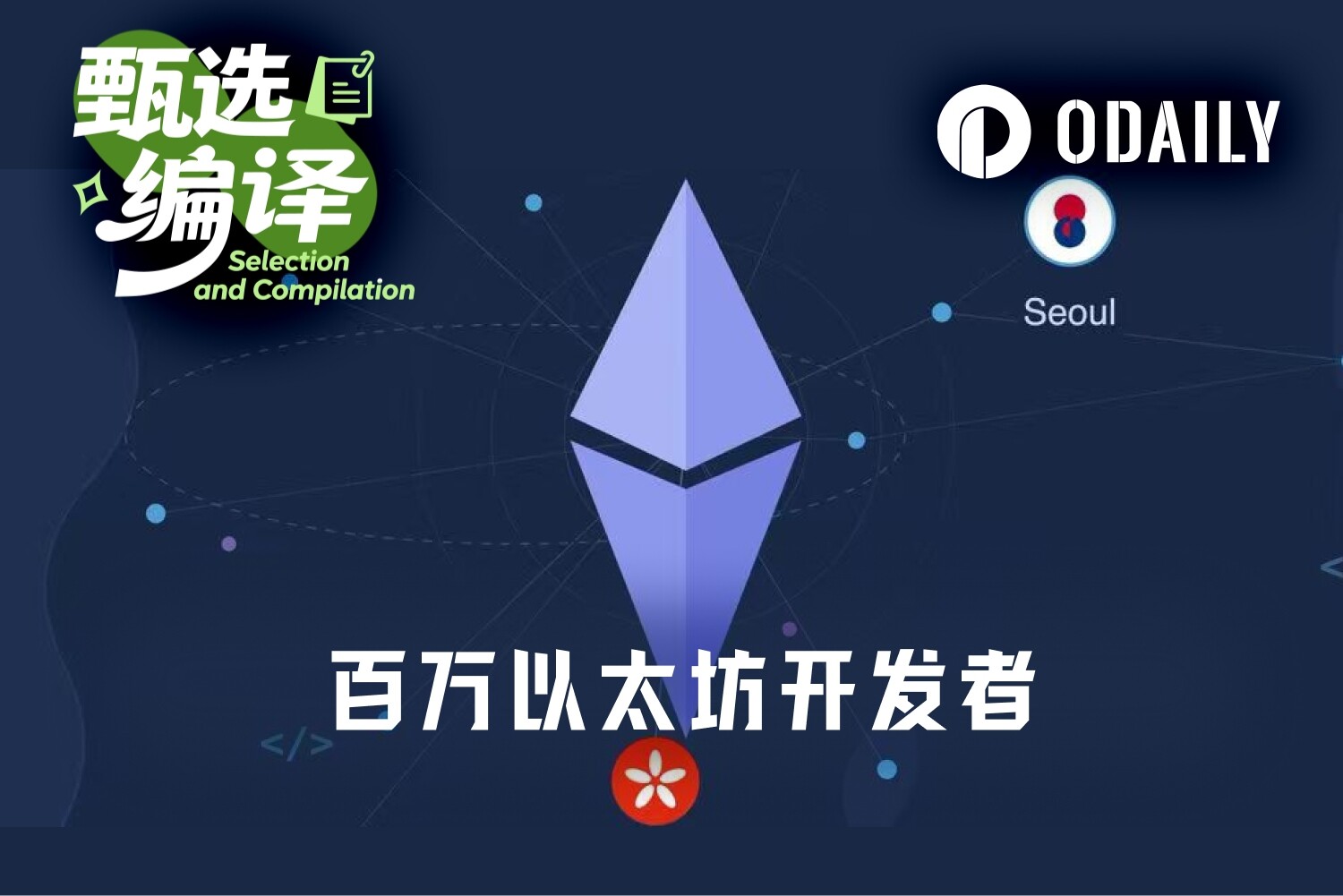
Ethereum Surpasses One Million Developers Milestone: A Look at Its Unshakeable Dominance and Future Joseph Chalom, CEO of Sharplink, reflects on his recent Asia trip where he engaged deeply with Ethereum developers and ecosystem leaders. The most striking takeaway was not just the industry's vibrancy, but the rigorous, long-term vision of local builders. This context brings to life a pivotal statistic: Ethereum has now surpassed one million cumulative developers (1,012,824), with approximately 232,000 remaining active in the past year—a talent pool unmatched by any other crypto ecosystem. The critical question isn't which blockchain is fastest, but where top developers choose to build long-term. Ethereum's answer is unequivocal. Its decade-long lead stems from a unique convergence of technology, institutional culture, economic systems, and composability, cementing its role as the foundational operating system for programmable finance. This massive developer base is tackling the industry's hardest problems, continuously strengthening Ethereum's moat. Key initiatives include: * **The Glamsterdam Upgrade (planned 2026):** Introducing ePBS and Block-level Access Lists for parallel execution and higher throughput while preserving core values like credible neutrality and fair MEV distribution. * **Synchronous Composability:** Projects are working to enable atomic transactions across dozens of Rollups, making them function as one unified chain and eliminating ecosystem fragmentation. * **Post-Quantum Security:** Ethereum is far ahead in preparing for quantum computing threats, with a dedicated foundation working group and testnets targeting a full migration by ~2029—a crucial factor for institutional adoption. Beyond developers, Ethereum's core network effects are its unparalleled composability and unified standards (like EVM and Solidity), which create a powerful flywheel: more developers → better tools → greater liquidity → more institutional participation. Its other decisive advantages include credible neutrality (over 900k validators), a secure modular architecture with interconnected Rollups, and a deeply entrenched culture shaped by top-tier researchers. Ultimately, there's a vast difference between generating short-term activity and becoming the trusted, long-term coordination layer for global native finance. Major institutions prioritize security, trust, and liquidity—areas where Ethereum holds dominant mindshare. The industry's trajectory shows resources consolidating around unified standards, deep liquidity, and developer consensus. After meeting the builders in Seoul and Hong Kong, Chalom is more convinced than ever: Ethereum's unshakeable future is being built right now.

Foresight News42m ago

Ethereum Reaches the Milestone of One Million Developers, Sharplink CEO Delves Deep into Ethereum's Future Possibilities

Foresight News42m ago

Saylor's Latest Long Read: Bitcoin is Not Money, It's Digital Capital, and Money is Built Upon It

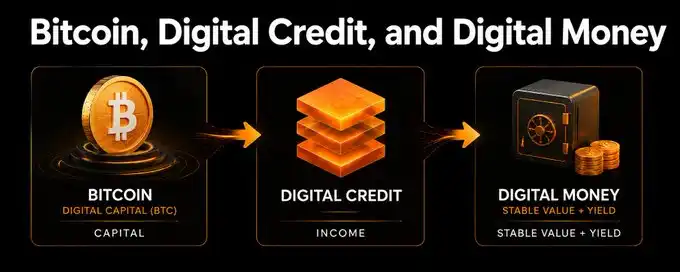
Michael Saylor presents his "Digital Asset Stack" theory, positioning Bitcoin as the foundational layer of digital capital. He argues Bitcoin itself should remain unchanged—no staking, inflation, or protocol alterations. Instead, a five-layer financial architecture should be built atop it: Digital Capital (BTC), Digital Credit (e.g., yield instruments like STRC), Digital Currency (stable, yield-bearing instruments pegged to fiat), Digital Yield (leveraged/structured products), and Digital Equity (e.g., MSTR stock, absorbing residual volatility). Saylor asserts this stack transforms Bitcoin's high-volatility, high-energy capital into tailored products: stable currencies for payments/savings, yield instruments for income seekers, and equity for growth investors. This approach meets diverse needs—corporate treasuries, banks, retirees, emerging market users—without compromising Bitcoin's core properties (scarcity, decentralization). The "killer use case" is rebuilding global money, credit, and capital markets on Bitcoin, bridging the fiat world with a superior digital asset foundation. The system leverages traditional finance principles (risk layering, structured products) while using Bitcoin as the ultimate collateral. This expands Bitcoin's utility, drives adoption, and offers a better monetary experience: digital, yield-bearing, stable-value tools for everyday use.

marsbit55m ago

Saylor's Latest Long Read: Bitcoin is Not Money, It's Digital Capital, and Money is Built Upon It

marsbit55m ago

Can SK Hynix's Stock Double Again in This Rally?

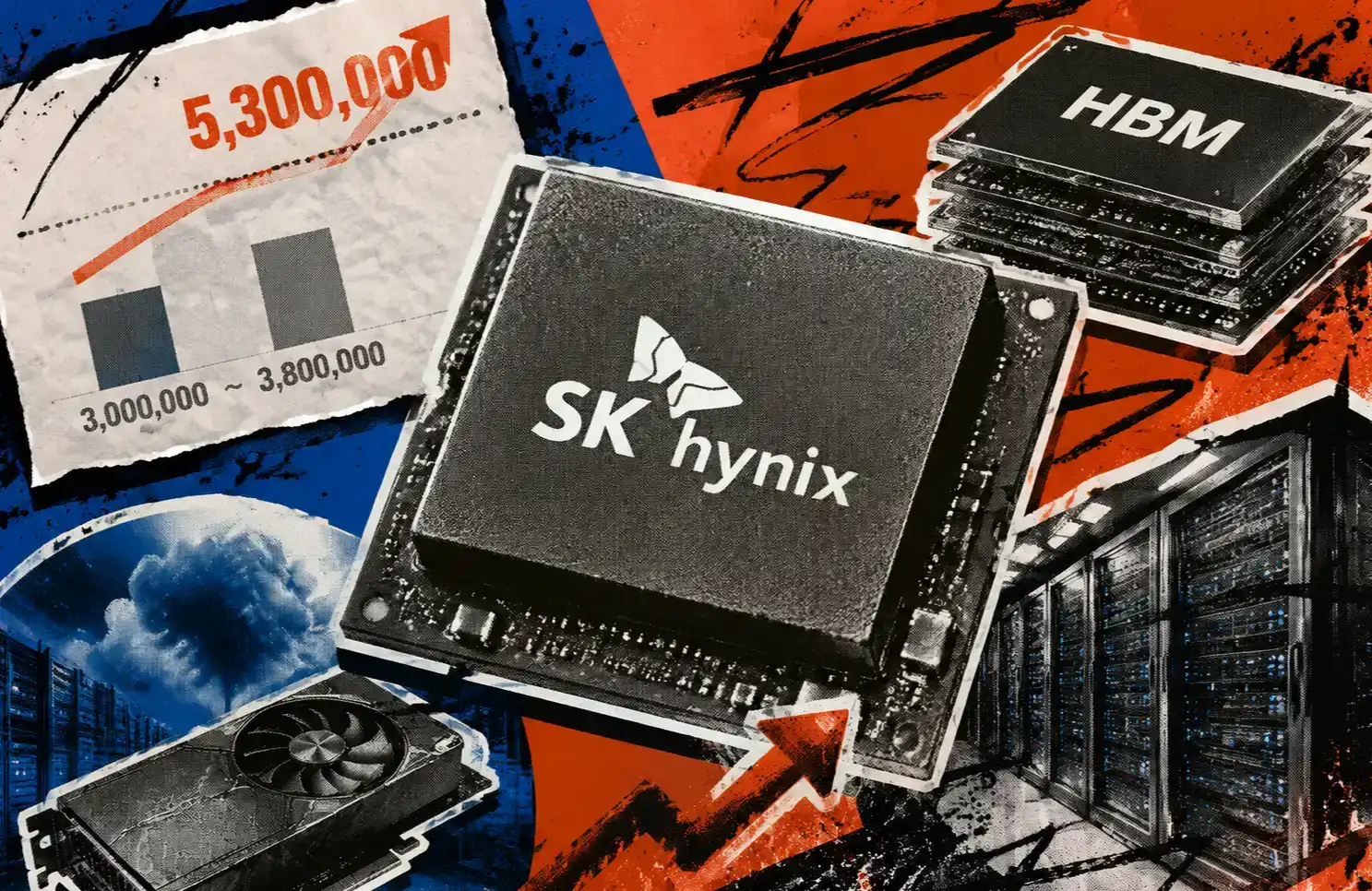
The article discusses the highly optimistic price target of approximately $3,500 for SK Hynix stock, set by Aletheia Capital. This target is significantly above the consensus range of $2,000-$2,520 from major brokerages. The core debate is whether SK Hynix deserves a fundamental re-rating beyond its traditional cyclical discount, based on the long-term impact of AI-driven demand. The $3,500 target hinges on three key assumptions holding simultaneously until at least 2027: 1) Continued shortage and high pricing for HBM (High Bandwidth Memory), a critical component for AI chips; 2) Sustained high prices for standard DRAM, as HBM production consumes capacity and constrains general supply; and 3) Strong AI server demand generating substantial, above-expectation free cash flow. SK Hynix's leading ~58% market share in HBM and its early certification with key clients like Nvidia provide a competitive advantage, allowing it to capture significant supply chain premiums. The HBM shortage is seen not just as a niche growth driver but as a catalyst that amplifies profitability across the entire memory business by tightening overall DRAM supply. However, the article cautions that this target represents an optimistic "tail scenario." Key risks include potential supply increases from competitors (Samsung, Micron) by 2027, a possible slowdown in HBM price growth, and high capital expenditures that could erode the projected free cash flow. The divergence in analyst targets reflects the market's uncertainty over whether the current AI-driven boom will temporarily elevate earnings or permanently raise the memory industry's profit baseline.

marsbit58m ago

Can SK Hynix's Stock Double Again in This Rally?

marsbit58m ago

Trading

Spot
Futures

Hot Articles

What is LINON

Linde plc Tokenized Stock (Ondo): Revolutionizing Traditional Equity Access Through Blockchain Innovation The emergence of Linde plc Tokenized Stock (Ondo), represented by the ticker $LINON, signifies a monumental shift in the fusion of traditional financial structures and decentralized finance (DeFi). This innovative financial instrument showcases the tremendous potential of blockchain technology to democratize access to traditional equity markets while ensuring the security and regulatory compliance necessary for institutional-grade financial products. Through Ondo Finance's pioneering tokenization platform, $LINON provides a seamless pathway for global investors to engage with one of the world's leading industrial gas companies, Linde plc, creating a blockchain-native representation of the underlying equity. Introduction to Linde plc Tokenized Stock The landscape of financial markets is witnessing a groundbreaking transformation through the tokenization of real-world assets. Linde plc Tokenized Stock (Ondo) epitomizes this revolutionary approach by bridging the gap between conventional stock ownership and blockchain-enabled financial infrastructure. The $LINON token allows investors to gain exposure to one of the prominent industrial companies worldwide through decentralized technology. Operating within Ondo Finance's comprehensive ecosystem, $LINON symbolizes a practical application of tokenization technology that enhances accessibility, efficiency, and global connectivity in traditional financial markets. By leveraging blockchain infrastructure, this tokenized stock enables international investors to participate in U.S. equity markets, overcoming traditional barriers associated with cross-border investing. The significance of $LINON goes beyond technological innovation; it represents a fundamental shift in asset structuring, distribution, and trading in the digital age. This tokenized stock maintains all the economic benefits associated with traditional Linde plc shares while offering improved liquidity, programmable compliance features, and seamless integration with decentralized finance protocols. The development of $LINON indicates a growing acceptance of blockchain technology as a viable means for traditional finance, exemplifying how even well-established assets like Linde plc can integrate into blockchain systems. This approach preserves the core attributes that appeal to investors while introducing advanced capabilities that enhance the overall investment proposition. Project Overview and Objectives Linde plc Tokenized Stock (Ondo) encapsulates a strategic effort to democratize access to traditional equity markets through advanced blockchain technologies. The primary objective of $LINON is to provide approved global investors seamless access to the economic exposure associated with Linde plc shares, furthering an effort to create a more inclusive financial ecosystem. Beyond the digital representation of traditional assets, $LINON endeavors to eliminate barriers of geography and time zones that limit investor participation. Its design ensures that blockchain technology can elevate traditional investment vehicles without undermining the security or compliance requirements expected by investors. Key goals of the project include enhanced liquidity provision, programmable compliance mechanisms, and interoperability with other blockchain networks. Each $LINON token is fortified by actual Linde plc securities housed at U.S.-registered broker-dealers, allowing holders to reap economic advantages akin to traditional stockholders, such as dividend reinvestment. Furthermore, $LINON aims to establish new industry standards for institutional-grade tokenized securities, paving the way for traditional assets to embrace blockchain technology while remaining compliant with regulatory frameworks. By associating itself with a company as reputable as Linde plc, the project opens avenues for exploring tokenized equities catering to both conservative institutional players and daring retail investors. Project Creator and Development Team The vision for Linde plc Tokenized Stock (Ondo) comes from Nathan Allman, founder and CEO of Ondo Finance. His background in traditional finance coupled with expertise in blockchain technology positions him uniquely to navigate the complexities of asset tokenization. Allman's academic journey began at Brown University, focusing on Economics and Biology, equipping him with valuable analytical skills. His time at Goldman Sachs in the Digital Assets division strengthened his understanding of the interplay between financial institutions and emerging technologies, laying the groundwork for his later endeavors in alternative investment strategies. Under Allman's guidance, Ondo Finance has emerged as a leader in asset tokenization, launching $LINON as a flagship example of the company's larger mission towards revolutionizing traditional financial systems using blockchain technology. His commitment to leveraging blockchain for creating institutional-grade financial products has shaped the landscape of real-world asset tokenization. Investment and Funding Structure The growth of Ondo Finance, the platform powering Linde plc Tokenized Stock (Ondo), is bolstered by robust financial backing from prestigious venture capital firms and strategic investors. This strong investment foundation underpins the development of the key infrastructure essential for compliant tokenized securities like $LINON. In August 2021, Ondo Finance secured $4 million in seed funding led by a major venture capital firm, which enabled the company to commence platform development and establish the necessary regulatory processes for tokenizing real-world assets. This early investment cemented Ondo Finance's credibility within the industry. The Series A funding round followed, garnering $20 million with participation from renowned firms committed to transformative technology companies. This backing demonstrated substantial institutional confidence in Ondo Finance's vision, allowing it to hone its approach to asset tokenization through mechanisms that ensure compliance and accessibility. Noteworthy contributors, including institutional investors and experienced partners, have added significant value to Ondo Finance’s development efforts. Their involvement underscores the confidence across sectors in Ondo Finance's approach to bridging traditional finance with blockchain innovations. Technical Infrastructure and Innovation The technical architecture that underpins Linde plc Tokenized Stock (Ondo) represents a sophisticated melding of traditional finance systems and cutting-edge blockchain technology. The architecture's foundation is built on the Ethereum network, renowned for its security and programmability—both critical for intricate financial instruments. The $LINON tokenization process comprises creating a blockchain-native representation of Linde plc shares that preserves economic benefits while augmenting investor capabilities. Each token corresponds to actual shares held at U.S.-registered broker-dealers, creating a compliant custody structure that legitimizes the asset's existence and value. Automated compliance systems are integrated into the tokenization process, managing critical components such as know-your-customer (KYC) verification and anti-money laundering (AML) protocols. This incorporation of programmable compliance empowers $LINON to uphold regulatory standards essential for institutional proliferation. Cross-chain interoperability characterizes the advanced technical features of $LINON. While initially deployed on Ethereum, the framework is designed for expansion to other networks such as Solana and BNB Chain. This adaptability enhances liquidity and accessibility, allowing investors to select their preferred blockchain ecosystems. Historical Timeline and Development Crafting the history of Linde plc Tokenized Stock (Ondo) unfolds in parallel with the evolution of Ondo Finance's tokenization platform. The timeline's inception dates back to March 2021 when Nathan Allman laid the foundations for creating institutional-grade financial products on blockchain infrastructure. The initial funding round in August 2021 provided crucial resources for developing the platform and establishing partnerships necessary for effective tokenization. By January 2023, Ondo Finance launched its tokenized treasury products, establishing mechanisms that would facilitate future tokenized equities such as $LINON. A pivotal milestone arose in February 2025 when Ondo Chain—a Layer 1 blockchain designed specifically for asset tokenization—was introduced. This infrastructure enhances capabilities vital for institutional markets, demonstrating Ondo Finance's long-term commitment to tokenization. Subsequently, the launch of Ondo Global Markets in September 2025 marked the official debut of $LINON. This milestone showcased the successful transition from development to active trading, enabling investors around the world to access American financial markets seamlessly. Ongoing development plans include a targeted expansion of available tokenized assets to over 1,000 by the end of 2025, pointing to a bright future for Ondo Finance's ecosystem and its mission to broaden tokenized equity accessibility. Regulatory Compliance and Legal Framework The legal architecture governing Linde plc Tokenized Stock (Ondo) emphasizes a sophisticated approach to regulatory compliance, allowing tokenized securities to be implemented within a blockchain-based framework. The legal structure governing $LINON spans multiple jurisdictions while maintaining a robust legal footing. Compliance systems ensure that only eligible investors can access the token, enforced through automated verification that aligns with international regulations. This innovative regulatory technology promises real-time enforcement of complex requirements, considerably enhancing efficiency in operating within the regulatory landscape. The custody framework undergirding $LINON ensures that the underlying shares are securely held at U.S.-registered broker-dealers, complying with necessary regulations while delivering blockchain-driven access to investors. The token maintains its economic equivalency and security through this carefully structured custody arrangement. KYC and AML compliance systems are embedded within the smart contract architecture, ensuring integrity and adherence to regulatory practices while fostering transparency for investors. The jurisdictional restrictions mark a commitment to navigating the evolving landscape of international securities laws. Market Impact and Industry Significance The advent of Linde plc Tokenized Stock (Ondo) holds profound implications for the broader financial landscape, symbolizing a clear shift towards blockchain-enabled markets. $LINON serves as a proof-of-concept for integrating traditional companies into blockchain ecosystems, showcasing the potential benefits such as broader accessibility and improved efficiency. The market's response to $LINON indicates a growing acceptance of tokenization among institutional investors, contributing to the emergence of an expanding sector wherein traditional assets can be interconnected with blockchain innovations. The success of $LINON further solidifies market confidence, indicating an overarching shift towards recognizing asset tokenization as a transformative force in finance. Future Development and Expansion Plans The future trajectory for Linde plc Tokenized Stock (Ondo) centers around the expansion of the tokenization ecosystem and enhanced infrastructure supporting blockchain-enabled financial services. Plans for cross-chain integration usher in new opportunities for liquidity and flexibility within the investment framework, with existing capabilities poised for continuous enhancement. With the introduction of Ondo Chain, Ondo Finance aims to transition $LINON to an optimized blockchain environment specifically designed for asset tokenization. This new infrastructure heralds exciting prospects for the development of institutional-grade financial products, ensuring ongoing compatibility with contemporary investment strategies. Further integration with decentralized finance protocols signifies a commitment to empowering $LINON holders through advanced financial strategies. The anticipated expansion of available tokenized assets promises to broaden investor access, enhancing the utility and appeal of the platform. In alignment with ambitions for regulatory expansion, ongoing efforts to secure approvals for new jurisdictions will enhance investor access, further positioning $LINON at the forefront of the burgeoning tokenization market. Conclusion Linde plc Tokenized Stock (Ondo), as represented by the $LINON token, stands at the intersection of traditional finance and blockchain innovation. It embodies a transformative milestone in how financial assets are structured, distributed, and engaged within modern investment ecosystems. The technical sophistication behind $LINON, combined with its regulatory compliance framework, illustrates that asset tokenization can improve financial infrastructure rather than simply digitizing existing products. This pioneering effort not only enhances investor access to U.S. equity markets but also signifies an evolution of how traditional financial services can integrate blockchain technology. As the asset tokenization market grows exponentially, with prospects suggesting significant valuation increases, $LINON paves the way for a future where tokenized securities become standard fixtures in the financial landscape. The trajectory of $LINON will undoubtedly influence how traditional finance adapts to a transformed, blockchain-powered world.

3.2k Total ViewsPublished 2025.12.05Updated 2025.12.05

What is LINON

What is CRMON

Salesforce Tokenized Stock (Ondo): Revolutionising Traditional Equity Access Through Blockchain Innovation The emergence of Salesforce Tokenized Stock (CRMON) marks a pivotal advancement in integrating traditional financial markets with blockchain technology. This innovative approach offers investors unprecedented access to equity exposure through tokenisation. Developed by Ondo Finance, CRMON provides tokenholders with economic exposure equivalent to holding Salesforce stock (CRM) while automatically reinvesting dividends. This effectively bridges the gap between conventional equity markets and decentralised finance (DeFi). Introduction and Comprehensive Overview of Salesforce Tokenized Stock In recent years, the financial landscape has dramatically transformed due to blockchain technology, fundamentally altering how investors access and interact with traditional assets. The development of Salesforce Tokenized Stock (CRMON) is a prime example of this evolution, representing a sophisticated fusion of conventional equity markets with cutting-edge distributed ledger technology. CRMON is a tokenised version of Salesforce stock, emerging from the innovative work of Ondo Finance, a leading platform in the real-world asset tokenisation sector that positions itself as a bridge between traditional finance and decentralised systems. Designed to provide tokenholders with economic exposure that mirrors the performance of the underlying Salesforce stock, CRMON incorporates automatic dividend reinvestment mechanisms. This eliminates many traditional barriers associated with international equity investment, such as complex brokerage relationships, currency conversion challenges, and restricted trading hours. The tokenisation process reimagines stock ownership as a blockchain-native asset while maintaining its economic equivalence with the underlying security, offering enhanced portability and integration capabilities within decentralised finance ecosystems. CRMON transcends its individual utility as an investment instrument to represent a fundamental shift in how financial markets can operate in an increasingly digital world. By maintaining full backing through U.S.-registered broker-dealers and implementing robust compliance frameworks, CRMON demonstrates that tokenised securities can achieve the regulatory standards necessary for institutional adoption while delivering the technological advantages of blockchain infrastructure. Understanding Tokenized Real-World Assets and CRMON's Strategic Position Tokenised real-world assets signify one of the most significant innovations in modern finance, fundamentally reimagining how traditional securities are represented, traded, and utilised within digital ecosystems. CRMON operates as a tokenised equity instrument correlating directly with Salesforce stock while optimising accessibility and efficiency. This aligns with Ondo Finance's broader mission to democratise access to institutional-grade financial products through innovative tokenisation strategies. The tokenisation process guarantees complete economic equivalence with the underlying Salesforce equity. Each CRMON token represents a proportional claim on Salesforce stock held by qualified custodians, with dividend payments automatically reinvested to maintain continuous exposure to total return performance. This structure simplifies dividend management and ensures that tokenholders receive the full economic benefit of their equity exposure, encompassing both capital appreciation and income generation. Ondo Finance's strategy in tokenising Salesforce stock demonstrates its expertise in creating compliant, institutional-grade products that meet traditional financial markets' stringent requirements. The platform’s focus on merging regulatory compliance with blockchain benefits positions it at the forefront of decentralised finance, captivating both institutional and retail investors seeking blockchain-native solutions. The Technology and Innovation Framework Behind CRMON The technological infrastructure supporting CRMON integrates blockchain technology with traditional financial mechanisms, delivering institutional-grade security and compliance while maintaining the operational advantages of decentralised systems. Built on the Ethereum blockchain, CRMON utilises robust smart contract capabilities to ensure transparent, secure operations. The smart contract architecture incorporates layered security and compliance mechanisms, enabling automated compliance checks and real-time asset backing verification. Integration with oracle services maintains accurate pricing and dividend information, ensuring CRMON reflects the underlying Salesforce stock's accurate performance. This architecture delivers automated dividend reinvestments and other corporate actions, eliminating manual processing requirements and directly enhancing tokenholder benefits. Ondo Finance ensures CRMON's security structure includes daily third-party verification of holdings, independent collateral agents, and a multiple-layer custody system through partnerships with established financial institutions. This framework safeguards tokenholder interests against operational risks while providing robust asset backing. The user interface enhances integration capabilities, allowing seamless interaction between CRMON and various decentralised finance protocols, as well as cryptocurrency exchanges. This interoperability enables users to leverage their tokenised equity across multiple platforms, creating sophisticated investment strategies that marry traditional equity characteristics with blockchain-native innovation. Leadership and Corporate Structure of Ondo Finance The leadership team behind CRMON and Ondo Finance blends expertise from traditional finance and blockchain technology, presenting a robust combination of skills essential for successfully bridging conventional markets with decentralised finance. Nathan Allman, the founder and CEO, emerged from a distinguished financial background before establishing Ondo Finance in 2021. Allman's experience includes notable roles at major financial institutions, including significant contributions to developing cryptocurrency market services. His insights into regulatory compliance were paramount in developing products like CRMON that successfully unify traditional securities with blockchain technology. With a team of professionals boasting substantial experience in both conventional finance and blockchain sectors, Ondo Finance's leadership comprises diverse expertise that covers every aspect of tokenised asset development. Justin Schmidt serves as President and COO, contributing unique operational expertise, while Chris Tyrell brings essential compliance knowledge. Investment Landscape and Funding History The investment landscape surrounding Ondo Finance reflects significant institutional confidence in its mission to tokenise real-world assets. The company has raised substantial funds through various investment rounds, attracting leading venture capital firms and strategic investors that recognise the transformative potential of tokenised securities like CRMON. Notably, Ondo Finance completed a successful Series A funding round in 2022, led by well-known venture capital firms. This funding success validates Ondo Finance's innovative approach to creating compliant, institutional-grade tokenised products. In total, Ondo Finance has successfully secured substantial funding, raising significant capital for product development and market expansion, including a noteworthy token sale that reinforced its governance structure through the establishment of the ONDO token. The diverse composition of investors reflects broad market confidence in Ondo Finance's business model, demonstrating support from both traditional and blockchain-native organisations. Operational Mechanics and Technical Implementation The operational framework supporting CRMON exemplifies sophisticated integration of traditional financial mechanisms with blockchain technology. The technical implementation introduces multiple layers of security, compliance, and operational efficiency to meet institutional standards while enhancing accessibility. The tokenisation process begins by acquiring actual Salesforce stock through U.S.-registered broker-dealers, ensuring each CRMON token maintains direct correlation with the underlying equity performance. Smart contracts automate operational processes, including dividend reinvestment and corporate action processing, facilitating a streamlined user experience. The Minting and redemption processes allow authorised participants to manage CRMON tokens effectively. During U.S. trading hours, institutions can mint new tokens by depositing stablecoins that are used to purchase corresponding Salesforce equity. This structure maintains a tight correlation with underlying assets, enhancing liquidity and price discovery. Additionally, the infrastructure supports twenty-four-hour token transfer capabilities, providing CRMON holders with operations outside traditional market hours. This represents a significant advantage over conventional securities ownership, thus promoting integration with decentralised finance applications. Plans for cross-chain compatibility through partnerships signal further ambitions for CRMON's market reach. By expanding to other blockchain networks, Ondo Finance aims to enhance accessibility and user engagement with tokenised equity products. Timeline and Historical Development of Tokenized Equity Innovation The timeline of CRMON's development and Ondo Finance's broader tokenised capabilities demonstrates a systematic innovation process beginning with the company's founding in 2021. 2021: Ondo Finance is founded by Nathan Allman and co-founders, launching initial products focused on structured vault offerings on the Ethereum blockchain. 2022: The company completes substantial funding rounds—both equity and token sales—totaling significant capital and launching initial tokenised U.S. Treasury products. 2023-2024: Ondo Finance experiences substantial growth, establishing partnerships with major financial institutions while expanding its product offerings beyond fixed-income securities. February 2025: Ondo Global Markets is announced, marking the transition into equity tokenisation with plans for accessing over one hundred U.S. stocks and ETFs. September 2025: The official launch of Ondo Global Markets includes CRMON alongside other tokenised equity offerings, marking a significant evolution in Ondo Finance's product ecosystem. This timeline highlights the organisation's rapid growth and its capability to adapt its technological and compliance frameworks to accommodate different asset classes effectively while maintaining security and regulatory integrity. Regulatory Framework and Compliance Approach Ondo Finance's regulatory framework showcases a sophisticated compliance strategy, essential for achieving institutional adoption in the tokenised securities market. The company's strong partnerships with U.S.-registered broker-dealers promote adherence to Securities and Exchange Commission regulations and apply robust investor protections. Acquisitions, such as Oasis Pro—a registered broker-dealer—significantly enhance Ondo Finance's compliance capabilities, ensuring thorough alignment with existing regulatory structures. The company employs independent verification procedures that foster transparency, aiming for a solid performance standards reputation. Furthermore, Ondo Finance's commitment extends to international regulatory compliance, ensuring token access remains restricted to eligible investors while adhering to pertinent cross-border securities regulations. Comprehensive attention to tax implications and reporting requirements fortifies the security and compliance landscape of CRMON, ensuring that investor obligations remain manageable. Future Prospects and Market Positioning The forward-looking landscape for CRMON and Ondo Finance illustrates substantial growth opportunities driven by institutional adoption of blockchain technology and escalating demand for efficient alternatives to conventional securities ownership. Market projections indicate the tokenised asset sector could value multiple trillion dollars by 2030. With plans to scale CRMON offerings significantly and integrate it with a dedicated blockchain infrastructure—Ondo Chain—Ondo Finance aims to elevate its institutional-grade tokenised asset operations. Additionally, the development of strategic partnerships enhances distribution capabilities while establishing the company's credibility in the financial market. Furthermore, the integration of tokenised equity with decentralised finance protocols offers new potential for innovative financial products and strategies previously impossible with traditional securities. These factors underscore CRMON's positioning to effectively capture increased market share and deliver innovative solutions for international investment exposure. Conclusion Salesforce Tokenized Stock (CRMON) symbolises a transformative development within financial markets, successfully bridging traditional equity ownership with blockchain technology to create unprecedented accessibility for global investors. Through Ondo Finance's sophisticated tokenisation framework, CRMON provides complete economic exposure to Salesforce equity performance while enhancing operational advantages that exceed traditional ownership. The launch of CRMON reflects the broader evolution of financial markets towards blockchain infrastructures that maintain regulatory compliance while delivering increased efficiency. Ondo Finance's extensive approach to regulatory adherence, institutional-grade security, and technological innovation solidifies CRMON as a model for future tokenised securities, delivering access previously unattainable in conventional brokerage structures. As the tokenised asset sector continues to develop, CRMON is well-positioned to address historical inefficiencies in capital markets while providing investors with innovative solutions for accessing traditional securities. The outlook for CRMON looks exceptionally promising, supported by ambitious expansion plans, technological innovations, and strategic partnerships, thereby representing a pioneering model of modern financial infrastructure evolving through blockchain integration.

3.3k Total ViewsPublished 2025.12.05Updated 2025.12.05

What is CRMON

What is SHOPON

Shopify Tokenized Stock (Ondo): A Comprehensive Analysis of Real-World Asset Tokenization in Web3 This article delves into the Shopify Tokenized Stock (Ondo), recognised by its ticker symbol $SHOPON, exploring its implications at the intersection of traditional finance and blockchain technology. As a part of Ondo Finance's tokenized securities platform, Shopify’s tokenized stock exemplifies advancements in democratizing access to global capital markets through innovative digital assets. Introduction and Overview of Shopify Tokenized Stock (Ondo) Shopify Tokenized Stock (Ondo), or $SHOPON, portrays a pivotal innovation in the realm of tokenized securities, allowing investors to gain economic exposure akin to directly owning shares of Shopify Inc. This token, developed under the umbrella of Ondo Finance, not only provides investors with the ability to hold digital representations of the company’s stock but also integrates features such as automatic reinvestment of dividends. This advancement represents a substantial shift in the landscape of decentralized finance (DeFi), linking conventional equity markets with blockchain solutions designed to enhance accessibility, transparency, and liquidity. By eliminating geographical barriers and enabling 24/7 trading capabilities, $SHOPON is positioned as a bridge connecting traditional financial instruments and the emerging Web3 ecosystem. What is Shopify Tokenized Stock (Ondo), $SHOPON? The $SHOPON token serves as a digital manifestation of Shopify Inc.'s shares, engineered to provide a direct correlation to the underlying asset's performance. Through the utilization of blockchain technology, the token gives holders a mechanism to participate in the economic benefits associated with equity ownership, including capital appreciation and dividend distribution. The unique aspect of $SHOPON lies in its automatic dividend reinvestment mechanism, which allows returns to compound without necessitating active management by the investor. This feature inherently enhances its attractiveness as an investment vehicle, particularly for individuals seeking passive income growth alongside exposure to high-performing equities. The tokenization process is facilitated by the custody of actual Shopify shares through regulated intermediaries, ensuring that every $SHOPON token is verifiably backed by real equity. This structure empowers investors with the dual advantages of both traditional financial characteristics and the innovative benefits tied to blockchain technology. Who is the Creator of Shopify Tokenized Stock (Ondo)? The creator of Shopify Tokenized Stock (Ondo), Nathan Allman, is an experienced figure in the finance sector, formerly associated with Goldman Sachs. His rich background includes significant expertise in digital asset development, bridging the gap between traditional finance and cryptocurrencies. Allman’s educational journey, marked by studies at Brown University, provided him with a deep understanding of economics and biology, equipping him with analytical skills that inform his strategic vision. In 2021, he founded Ondo Finance, committing to developing tokenized securities that meet institutional-grade standards while leveraging blockchain's transformative capabilities. Under Allman's leadership, Ondo Finance has focused on creating compliant and innovative financial products that empower a diverse investor base. Who are the Investors of Shopify Tokenized Stock (Ondo)? The investment landscape surrounding Shopify Tokenized Stock (Ondo) is notably robust, underpinned by significant institutional support. Primarily, Pantera Capital stands out as a strategic partner through the Ondo Catalyst initiative, a $250 million commitment aimed at accelerating the development of on-chain capital markets. This partnership not only signifies institutional confidence in the potential of tokenized assets but also reinforces Ondo Finance's operational capabilities and market positioning. The funding pathways have included earlier rounds that amassed millions in seed funding and further structural investments, solidifying relationships with both venture capital firms and private investors. Moreover, the financial framework is complemented by strategic partnerships with established financial institutions and technology companies, enhancing Ondo’s infrastructure and operational expertise. How Does Shopify Tokenized Stock (Ondo), $SHOPON Work? At the core of $SHOPON's operational framework is a sophisticated system integrating traditional finance mechanisms with blockchain technology. The custody of actual Shopify shares ensures that token holders retain authentic economic exposure, safeguarding their investments in line with recognized legal structures. The smart contracts employed in managing $SHOPON handle various functions, including automatic dividend reinvestment and ownership transfer, offering instant settlement and increased liquidity, marking a significant departure from conventional trading systems plagued by multi-day settlement delays. By providing interoperability with other decentralized finance applications, $SHOPON empowers holders with potentially lucrative opportunities for advanced investment strategies, including lending and automated market making. This complex integration presents a unique value proposition, catering to both traditional and crypto-native investors. The innovative structure of $SHOPON also allows for real-time settlements and transactions documented on the blockchain, delivering unparalleled transparency and security—a major advancement over standard equity trading practices. Timeline of Shopify Tokenized Stock (Ondo) March 2021: Nathan Allman establishes Ondo Finance, initially focusing on decentralized finance yield optimization. August 2021: Completion of a $4 million seed funding round led by Pantera Capital. January 2023: Launch of initial tokenized treasury security products, laying the groundwork for future equity tokenization. July 2025: Announcement of the Ondo Catalyst initiative, a strategic investment program valued at $250 million, aimed at propelling the development of tokenization in capital markets. September 3, 2025: Launch of Ondo Global Markets featuring over 100 tokenized U.S. stocks and ETFs, including $SHOPON. Technical Implementation and Blockchain Infrastructure Shopify Tokenized Stock (Ondo) operates on a technical architectural framework that marries blockchain protocols with traditional financial custody arrangements. The ecosystem leverages Ethereum's smart contract capabilities, providing seamless transaction management while ensuring compliance with regulatory standards through established financial custodians. Central to this architecture are security measures and transparent transaction records that affirm the legitimacy of each tokenholder's economic stake. With automated features managed by intricate smart contracts, $SHOPON not only streamlines ownership transfers but also allows for the tactical reinvestment of dividends—a hallmark of modern investment strategies. Moreover, the incorporation of LayerZero technology facilitates cross-chain interoperability, making $SHOPON accessible across multiple blockchain environments while preserving its functional robustness. This forward-thinking technical design positions $SHOPON as an adaptable asset within the larger DeFi milieu. Regulatory Framework and Compliance Architecture $SHOPON's regulatory framework is built upon the meticulous navigation of existing financial regulations that govern securities. The custody arrangements for the underlying Shopify shares are managed by U.S.-regulated broker-dealers, ensuring compliance and protection for investors. By maintaining a separation between the blockchain tokenization process and traditional custody, $SHOPON adheres to legal requirements while offering innovative functionalities that challenge conventional constraints. This dual-layered compliance approach enhances investor confidence and underscores Ondo Finance's commitment to regulatory integrity. Notably, the availability of $SHOPON is tailored to international investors from regions such as Asia-Pacific, Europe, and Africa, as regulatory parameters in the U.S. and U.K. present challenges in accessing tokenized securities. Market Access and Global Distribution Strategy The distribution strategy of $SHOPON is keenly designed to optimize global access while conforming to regulatory standards. The platform aims to establish comprehensive coverage for eligible investors across multiple regions, effectively dismantling traditional barriers through the implementation of blockchain technology. Integration with various cryptocurrency wallets and exchanges also promotes user-friendliness and accessibility, establishing a streamlined experience for investors to manage their holdings. Moreover, the 24/7 trading capabilities afforded by the tokenized model allow participants to react promptly to market shifts, fundamentally transforming how global equities are accessed and traded. Technology Integration and Cross-Chain Functionality The remarkable technological underpinnings of $SHOPON propagate its multi-chain functionality, set to expand its reach beyond Ethereum to networks such as Solana and BNB Chain. Such cross-chain capabilities allow users flexibility when navigating between blockchains, concurrently leveraging distinct network attributes to optimize their trading experience. LayerZero serves as the backbone for ensuring decentralized transfers between networks while providing the requisite security and speed, quintessential for maintaining investor trust. This comprehensive interoperability illustrates $SHOPON's commitment to being a versatile, user-centric asset in the evolving investment landscape. Ecosystem Integration and DeFi Compatibility Incorporating $SHOPON into broader DeFi protocols signifies its potential beyond traditional stock ownership. Token holders can leverage their holdings for various sophisticated strategies and applications, enhancing investment returns and liquidity management. By establishing a presence in lending protocols and automated trading systems, $SHOPON effectively democratizes access to advanced financial strategies previously limited to institutional investors. Such integration contributes to a more competitive and dynamic financial landscape, where individual investors can capitalize on tools typically reserved for larger entities. Risk Management and Security Framework Security remains paramount in the operational infrastructure of $SHOPON. The tokenization framework employs multiple layers of protection—beginning with regulated custody of the underlying Shopify shares. The operational protocols establish rigorous auditing, key management, and transaction monitoring standards, thus safeguarding against potential vulnerabilities. Moreover, meticulous adherence to evolving regulatory requirements provides an extra layer of security, fortifying investor protections and institutional compliance. Market Impact and Industry Implications The introduction of Shopify Tokenized Stock (Ondo) heralds a transformative shift in how financial markets operate, emphasizing the potential of tokenized securities to reshape traditional investment paradigms. The successful integration of $SHOPON encapsulates the efficiencies inherent in blockchain technology and opens avenues for new user demographics previously barred from extensive market participation. The impact extends beyond the immediate benefits to token holders, indicating broader trends that may challenge the status quo of investment services, particularly in addressing geographic restrictions and operational costs typically associated with traditional brokerage platforms. Undeniably, $SHOPON encapsulates the potential for traditional institutions to innovate further, leveraging the increasing demand for seamless blockchain access to complement existing financial infrastructure. Future Development Roadmap and Strategic Vision As Ondo Finance looks forward, the trajectory of $SHOPON rests on ambitious goals aimed at broadening the spectrum of available tokenized assets significantly. Over the next few years, plans are in place to expand to more than 1,000 tokenized securities, further enhancing market participation and investment options for individuals worldwide. Continued integration with traditional financial actors, development of specialized institutional products, and enhancements in automated trading capabilities will ensure that $SHOPON maintains its position at the forefront of financial innovation. Regulatory collaboration will also remain a focal point, establishing a framework that not only supports the compliance requirements but also promotes a healthy environment for tokenized asset proliferation. Conclusion and Market Significance In summary, Shopify Tokenized Stock (Ondo), represented by the ticker $SHOPON, is more than merely a tokenized equity offering; it embodies the innovation possible when traditional finance collides with modern blockchain applications. With a robust technical architecture, a commitment to compliance, and a clear strategic vision, $SHOPON exemplifies the potential for tokenized assets to enhance liquidity, accessibility, and functionality in capital markets. As the global investment landscape evolves, the transformative implications of $SHOPON extend beyond individual investors to revolutionize how financial instruments are perceived, traded, and utilized within both traditional and decentralized frameworks.

3.2k Total ViewsPublished 2025.12.05Updated 2025.12.05

What is SHOPON

Discussions

Welcome to the HTX Community. Here, you can stay informed about the latest platform developments and gain access to professional market insights. Users' opinions on the price of ERA (ERA) are presented below.

活动图片