Over $31 Million Stolen from Humanity, Is the Team Behind It Paving the Way for a New Project?

Odaily星球日报Published on 2026-06-09Last updated on 2026-06-09

Abstract

The article reports a major security incident involving Humanity Protocol (H), resulting in over $31 million stolen. The team attributes the hack to a private key leak from a Humanity Foundation member, leading to a rapid sale of H tokens and a 90% price drop. However, prominent on-chain investigator ZachXBT suggests the event might be an "exit scam" orchestrated by the team, rather than an external hack. This suspicion is fueled by the team's controversial history, including past management failures, legal issues, and previous scandals like outsourced technology and problematic airdrops. Further investigation reveals that the core team behind Humanity is already involved with a new project called "Everything," which recently secured funding. This has led to community speculation that the alleged hack is a deliberate scheme to abandon the H project while shifting focus and resources to their new venture, leaving investors to bear the losses. The article questions whether this is a genuine security failure or a premeditated "rug pull" strategy.

Original | Odaily Planet Daily(@OdailyChina)

Author | Wenser(@wenser 2010)
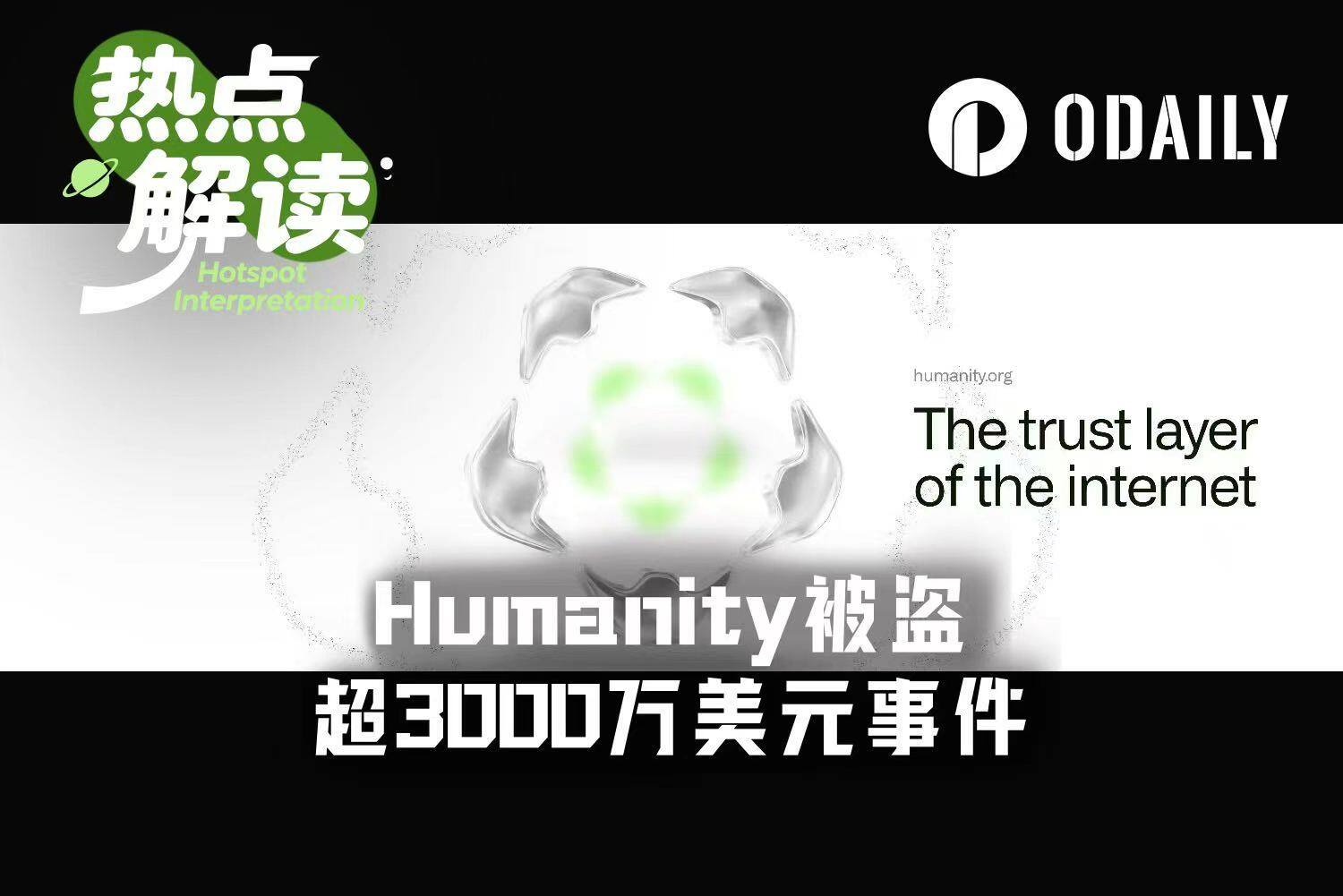
When it rains, it pours. The crypto market has once again been hit by a major security incident with over $30 million in stolen funds.

In the early hours this morning, on-chain monitoring showed that the Humanity Protocol was hacked, with over 17 wallets holding H tokens compromised, resulting in total losses exceeding $19 million. Subsequently, the scale of the lost funds expanded to over $31 million. After the successful attack, the hacker quickly swapped the H tokens for ETH to facilitate subsequent money laundering.

Terence, the founder of Humanity, later confirmed that the incident was due to the private key of a Humanity Foundation member being leaked and exploited by hackers. Following this news, the price of the H token plummeted below $0.08, with a 24-hour drop of over 90%.

Against the backdrop of a minor rebound in the broader market, the "bear market staple" has played out once again. Is it hackers being unpreventable, or is there more to the story?

When a "Human-Induced Security Incident" Occurs at Humanity: Team Member Private Key Leak OR Project Team's Deliberate Plot?

According to the latest official response from Humanity, project founder Terence confirmed that the private key of a Humanity Foundation member had been leaked. As a precaution, please do not interact with cross-chain bridges or any liquidity pools until safety is confirmed. The Foundation is working with security experts and exchange partners to handle the matter and will provide ongoing updates. Furthermore, the official advises users to temporarily revoke permissions granted to the project's contract addresses until the official investigation results are disclosed.

Meanwhile, the "hack" continues. According to LookonChain monitoring, the Humanity hacker minted an additional 100 million H tokens on BSC, valued at $11.4 million, indicating that the sell-off may continue.

As of the time of writing, the address associated with the Humanity hacker holds over 31.35 million H tokens, valued at approximately $3.82 million; holds about 18,000 ETH, valued at over $30.11 million; its BNB holdings have also increased to 2,443, worth nearly $1.5 million; and it continues to mint more H tokens.

On-chain address monitoring information for the hacker can be found at: https://arkm.com/explorer/entity/dcfac174-1b67-46d6-8cab-5b8e955ca921.
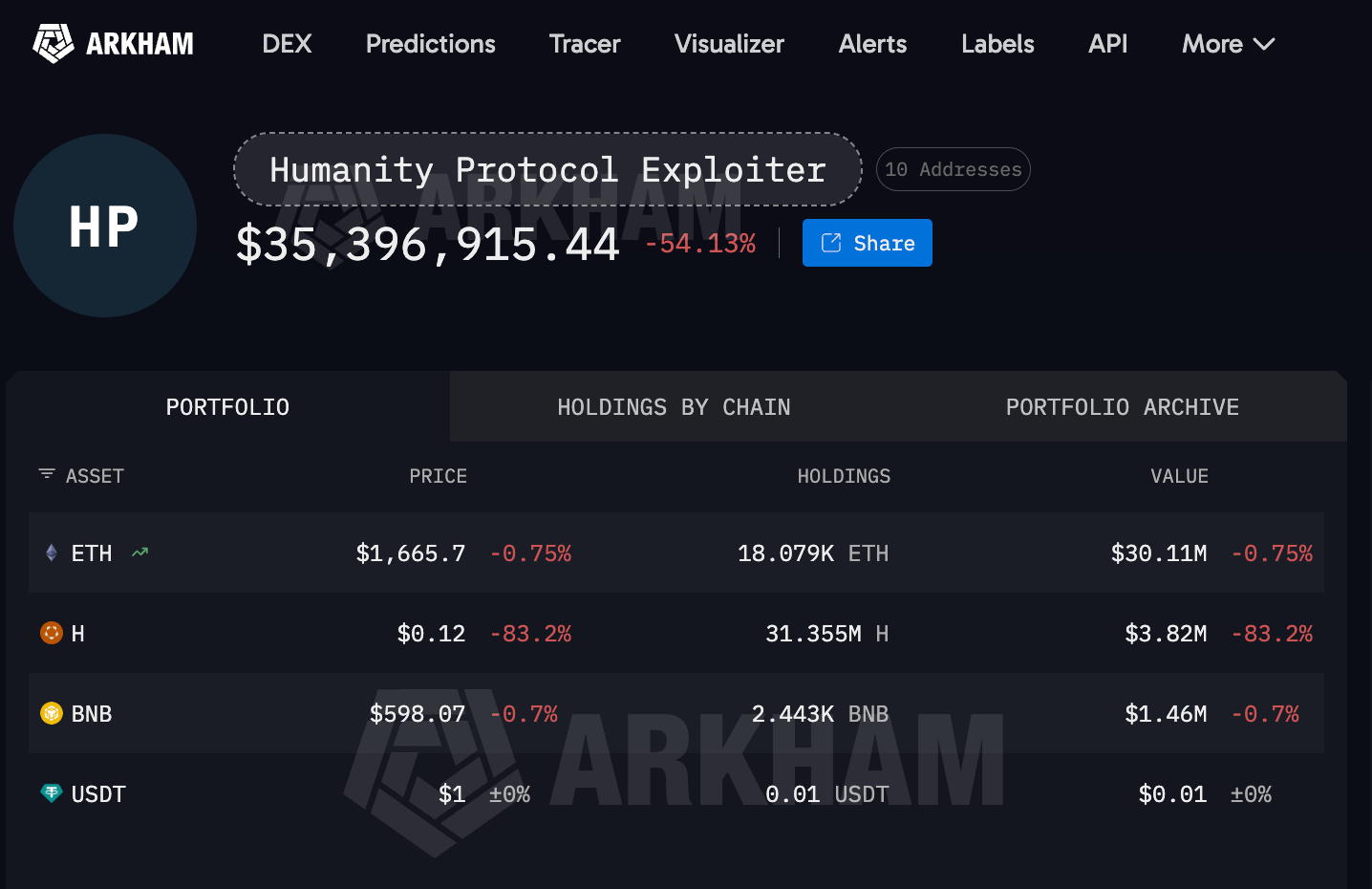
Regarding this major security incident with over $30 million in stolen funds, on-chain detective ZachXBT also offered his preliminary investigation conclusions:

He first posted, "Unclear if hack or team maliciously rugged. Looking at the chart and the concentrated supply, the H team was likely working with an active market maker. However, all H tokens were sold on (on-chain) DEXs, not CEXs."

Subsequently, he gave a preliminary conclusion, stating: "This 'security incident' was likely planned. I don't believe the team's corresponding story at all; it's just an excuse made by ill-intentioned people to get away." It's worth mentioning that the Humanity project team does indeed have a "dark history."

Humanity Team's Dark History: Technical Outsourcing, Airdrop Drama, and Team Scandals

In fact, the crypto community's dissatisfaction with Humanity is not without reason.

Previously, when WorldCoin gained fame as a "human iris identity verification project," Humanity, as a "palm print verification identity security protocol," quickly capitalized on the hot concept and rose to prominence. At that time, it was highly sought after as a partner for KYC or identity verification in numerous crypto project airdrops. However, on the other hand, its background team, its promoted "palm print security verification technology," and its token airdrop process all sparked market controversy. For more details, see "From Palm Print 'Revolution' to Access Control Manufacturer, Tearing Apart Humanity's Two-Faced 'Technological' Charade."

Not only that, in June last year, on-chain investigator Specter pointed out in a post: "After understanding the team composition of Humanity, it's concerning: Among the 4 team leaders, 3 have problematic past records involving mismanagement, lawsuits, or financial irregularities."
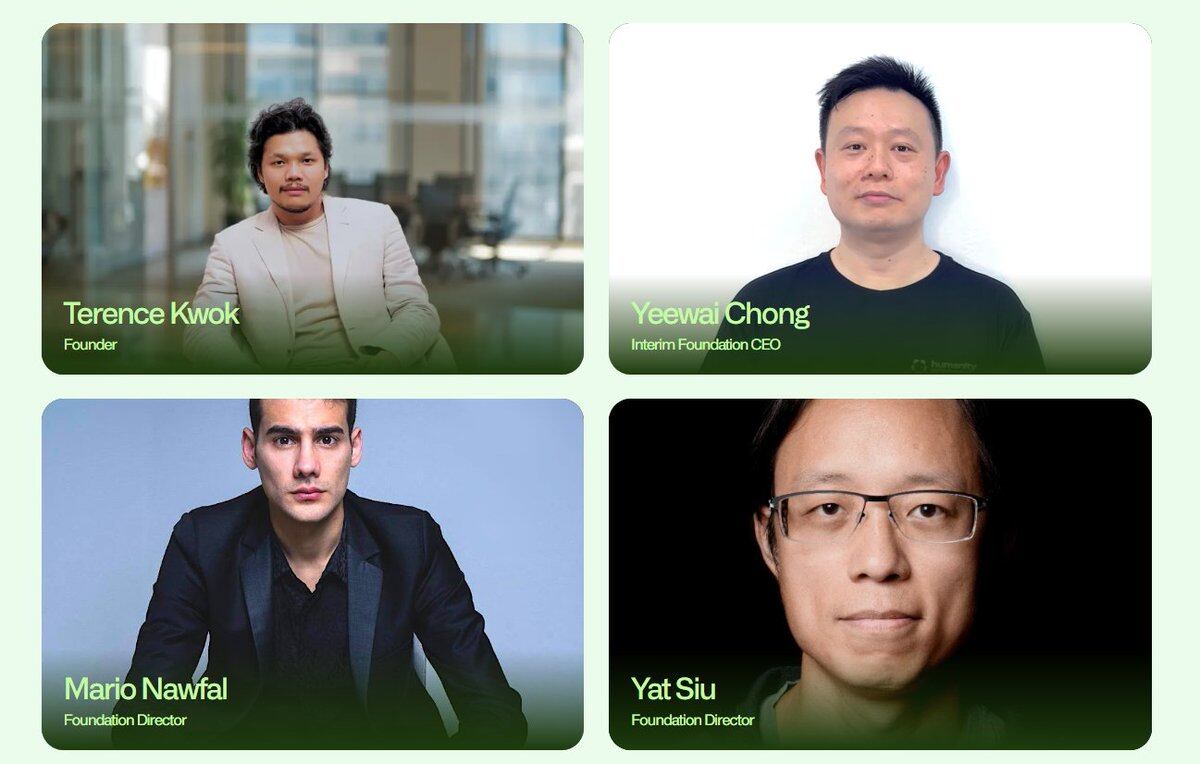
Among them, project founder and CEO Terence Kwok has a previous "entrepreneurial history." He founded Tink Labs, which once raised $200 million and reached a peak valuation of $1.5 billion, but ultimately went bankrupt in 2019 due to "mismanagement."

Foundation head Mario Nawfal has previously been accused of withholding wages and is implicated in improper financing, false promises, and coercing whistleblowers into silence. He also has a series of "blemished histories": the project Froothie was fined in Australia for false advertising; sued by Juicero; accused of invoice manipulation during his tenure at NFT Tech; and engaged in controversial behavior with BitClout token trading.

As for Yat Siu, founder of Animoca Brands, one of Humanity's backers, he was previously involved in violations related to blockchain and crypto investments, leading to his company being delisted from the Australian Securities Exchange.

Coupled with Humanity's past incidents being exposed, such as "Shenzhen technical outsourcing," large-scale sybil attacks in token airdrops, and airdrops worth single-digit amounts for loyal users, this theft incident is hard not to be seen as having ulterior motives.

Appearing Hacked, Actually a Golden Cicada Shedding Its Shell? Humanity Team Accused of Already Shifting to a New Project

Soon, more information was revealed by the crypto community and on-chain detective ZachXBT.

After suggesting that the Humanity theft might be a planned event, ZachXBT again posted, questioning Humanity's official account: "You chose to hype your token for weeks without any real substance and think the crypto community would blindly believe your story? Please disclose all your active market-making agreements with related entities in Hong Kong first."

Subsequently, he even shared a previous tweet from crypto KOL Irene Zhao, which mentioned: "2 years ago, I made a 100x return on my KOL round investment in H tokens; now, I have also participated in the KOL round financing for Everything, a new project incubated by the Humanity team."
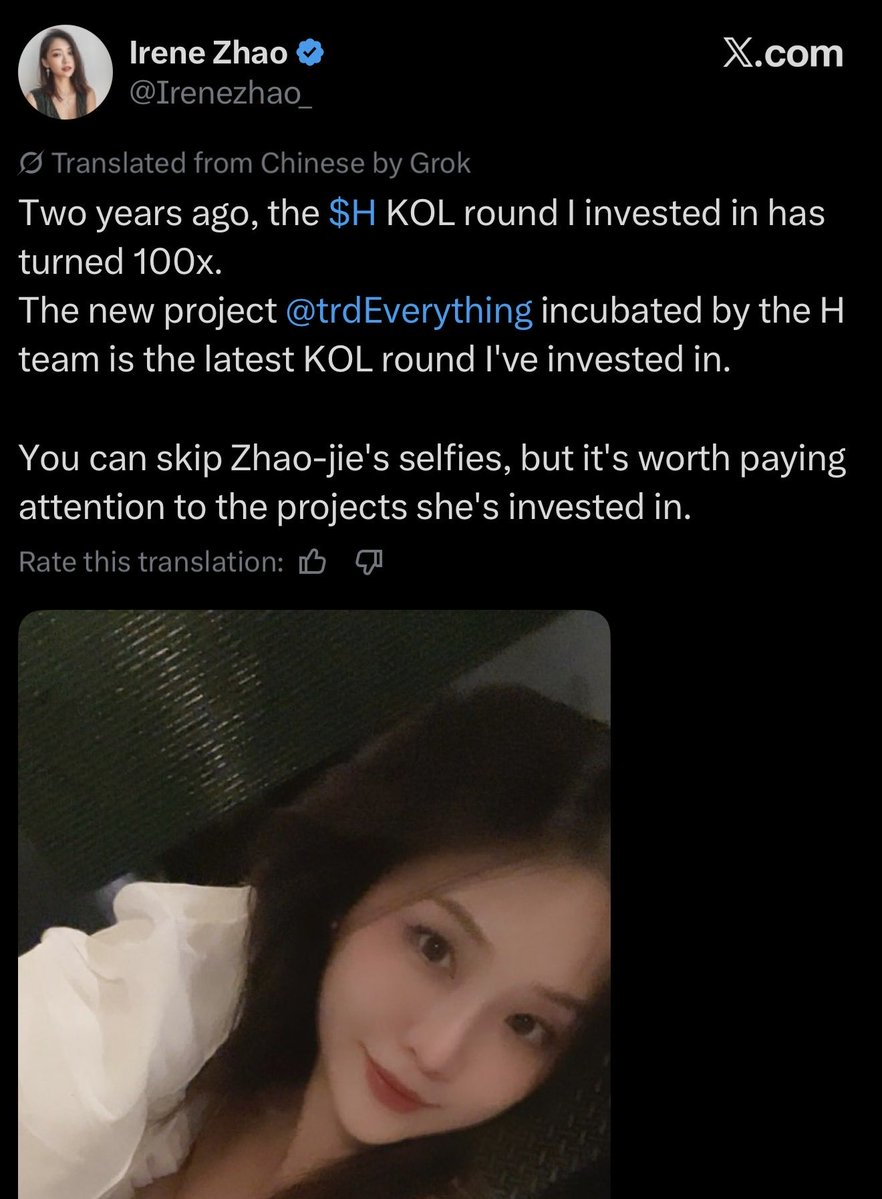
In January this year, Everything, which promotes the concept of an "all-in-one exchange," announced the completion of a $6.9 million seed round. The round was led by Humanity's venture capital arm, Humanity Investments, with participation from Animoca Brands, Hex Trust, WallStreetBets creator Jamie Rogozinski, and Three Point Capital. The platform emphasizes its advantage in integrating perpetual contracts, spot markets, prediction markets, and payment functions.

Looking at it now, it's a familiar taste (combining current hotspots), a familiar recipe (similar investor team composition). Often, we have to admire the keen sense and superb execution of these "entrepreneurial veterans." As for the KOLs and investors involved, perhaps all benefits have already been divided behind the scenes, leaving the losses for the token traders on stage.

Of course, in the crypto market, projects and token prices are always two sides of the same coin. As for how the H token price performs subsequently, it may still depend on the handling plan of the Humanity project team and the stage performance of the market makers.

Related Questions

QAccording to the article, what was the official explanation given by the Humanity Protocol team for the massive security breach?

AThe official explanation, as confirmed by Humanity founder Terence, was that a private key belonging to a member of the Humanity Foundation was compromised and exploited by hackers.

QWhat was the estimated total loss from the Humanity Protocol attack as detailed in the report?

AThe estimated total loss from the attack exceeded $31 million. Initially, over 17 wallets holding H tokens were drained for over $19 million, and the scale later expanded to over $31 million.

QWho is ZachXBT and what was his preliminary conclusion about the nature of the incident?

AZachXBT is a well-known on-chain investigator. His preliminary conclusion was that the security event was likely a deliberate, man-made scheme, suggesting it was an exit strategy rather than a genuine hack.

QWhat new project is mentioned as being incubated by the Humanity team, according to the article?

AThe new project mentioned is called 'Everything', a platform described as an all-in-one exchange. It was announced in January and raised $6.9 million in seed funding, led by Humanity's venture arm, Humanity Investments.

QWhat are some of the alleged 'black histories' or past controversies associated with key members of the Humanity team mentioned in the article?

AThe article mentions several controversies: Founder Terence Kwok's previous venture Tink Labs collapsed due to mismanagement; Foundation lead Mario Nawfal allegedly had issues with unpaid wages, false promises, and questionable financial practices; and investor Yat Siu's company was delisted from the Australian Stock Exchange for irregularities in blockchain investments.

Related Reads

US Government Suddenly Halts Anthropic's Strongest Model, "Quasi-IPO Stock Price" Plunges 3.7% Overnight

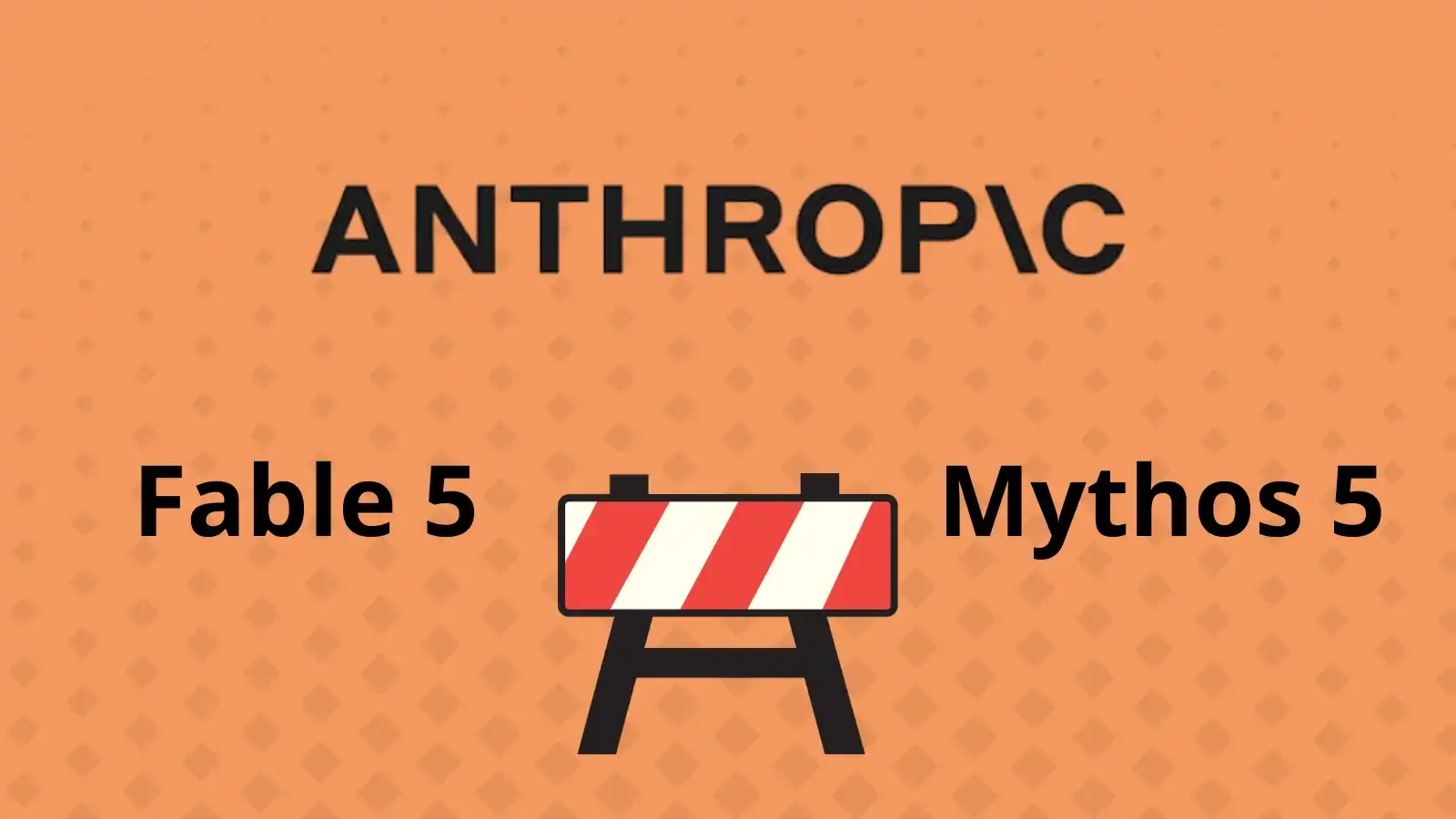
U.S. Government Halts Anthropic's Top AI Models, 'Pre-IPO' Price Drops 3.7% On June 12, the U.S. government ordered Anthropic to shut down access to its two most powerful AI models, Claude Fable 5 and Claude Mythos 5, citing national security concerns. The directive, issued by the Department of Commerce, required Anthropic to block access for all foreign nationals, leading the company to disable the models globally for all users. Anthropic strongly opposed the move, arguing the government's basis was a "narrow jailbreak vulnerability" and warning that applying such a standard industry-wide would effectively halt all frontier model deployments. The news impacted Anthropic's implied valuation in speculative markets. The Anthropic perpetual contract on Hyperliquid fell approximately 3.7% to around $1,627, down from highs above $1,800 following the models' release. Unauthorized tokenized products linked to Anthropic on Solana also saw significant declines. The models, launched just days earlier on June 9, represented a major capability leap for Anthropic. Fable 5 was its first public release of a "Mythos"-tier model above its flagship Claude Opus. The shutdown creates an ironic situation for Anthropic, a company founded on "AI safety" principles, and adds uncertainty to its ongoing IPO preparations. The company is actively engaging with regulators to resolve what it calls a "misunderstanding" and restore service.

marsbit5m ago

US Government Suddenly Halts Anthropic's Strongest Model, "Quasi-IPO Stock Price" Plunges 3.7% Overnight

marsbit5m ago

SpaceX IPO Creates Trillion-Dollar Billionaire: Musk's Wealth Equals Half of Crypto Market

SpaceX's record-breaking IPO has propelled Elon Musk to become the first modern billionaire with a personal net worth exceeding $1 trillion, reaching $1.11 trillion according to Bloomberg. This staggering wealth surpasses the total market capitalization of all cryptocurrencies excluding Bitcoin and equals roughly half of the entire crypto market's value. The milestone highlights extreme wealth concentration and the significant devaluation of the altcoin market, whose total cap has nearly halved since late 2025 as capital flows into large tech stocks. SpaceX's Nasdaq debut saw its valuation hit $2.2 trillion, with shares soaring from a $135 offer price to close at $161. Its first-day trading volume of $85 billion set a new global IPO record. Musk owns 42% of the company. Despite his wealth dwarfing the altcoin sector, Musk maintains deep ties to digital assets. He personally holds Bitcoin, Ethereum, and Dogecoin, while his companies, SpaceX and Tesla, collectively hold over 30,000 Bitcoin, ranking among the top corporate BTC holders globally. His acquisition and integration of financial data tools into X (formerly Twitter) further connect his ecosystem to the markets. Ultimately, Musk's trillion-dollar status underscores the immense wealth controlled by tech founders, though this fortune remains largely tied to volatile stock prices rather than liquid assets.

Foresight News13m ago

SpaceX IPO Creates Trillion-Dollar Billionaire: Musk's Wealth Equals Half of Crypto Market

Foresight News13m ago

Hardcore First Look | Ocean Embodied Intelligence Company 'Shihang Intelligence' Secures Record-Breaking 1 Billion in Funding, Zhu Xiaohu, Temasek Place Bets

Breaking News | Ocean Embodied Intelligence company "Shihang Intelligent" secures a record-breaking 1 billion RMB (approximately 10 billion yuan) in Series A financing, with investment from Zhu Xiaohu and Temasek. Author: Qiu Xiaofen | Editor: Yuan Silai Ocean Embodied Intelligence company "Shihang Intelligent" has completed its Series A funding round, raising over 1 billion RMB. This marks the largest single funding round in the global marine robotics field to date. Investors include upstream momentum funds from chip companies "Moore Thread" and "Kunlunxin," Singapore's state-owned investment platform Vertex Growth, and listed company Dyneo, among others. Existing investors like GSR Ventures (whose founder Zhu Xiaohu has invested for the fifth time), Vertex Ventures China, Hua Ying Capital, and Long Capital also significantly increased their investments. Founder and CEO Chen Xiaobo, a 1989-born alumnus of Harbin Engineering University, is a long-time expert in underwater robotics. He received the National Defense Science and Technology Progress Award at age 28 (the youngest recipient) and led the development of China's first commercial underwater cleaning robot. The funds will be used for core technology R&D, global market expansion, and building the industry chain ecosystem to scale the application of marine robots in complex underwater scenarios. The ocean is considered one of the most challenging environments for robotics due to low light, high turbidity, complex currents, limited communication, high pressure, and corrosion. "Shihang Intelligent" focuses on developing core underlying technologies for marine robots, covering six key systems: power, control, sensing, navigation, sealing, and deployment. Its robots are capable of operating at depths from 0 to 10,000 meters with full degrees of freedom, performing complex maneuvers, autonomous navigation, and multi-robot collaboration. Applications include ship cleaning, underwater security, offshore wind power, marine ranching, and seabed inspection. The company's order value for the first half of 2026 alone has exceeded 1 billion RMB. Its "Orca Robot" is used by major shipping companies and has performed maintenance on over a thousand large vessels. In April of this year, the company launched its ocean embodied large model "Cangqiong CEORION." Unlike traditional remote-controlled or pre-programmed robots, this model integrates environmental perception, task understanding, and action generation into a single end-to-end architecture. Trained on millions of hours of commercial operation data and simulation data, it covers 12 major underwater operation scenarios. In simulations, it achieved over 90% task success rate and over 70% zero-shot adaptation capability to unseen environments. A built-in physics reasoning module reduces collision risk by 80%, enabling autonomous operation even with weak or no communication. Recently, "Shihang Intelligent" was selected as a core technology partner for Singapore's Maritime and Port Authority national hull inspection and cleaning program. These advancements indicate marine robotics is moving from pilot projects to scaled applications, with real-world operations generating valuable data to continuously improve robot capabilities. CEO Chen Xiaobo stated the company will continue investing in core marine robotics technology, the embodied intelligence model, and global application scenarios to expand into more high-risk, high-difficulty, and high-value underwater operations.

marsbit38m ago

Hardcore First Look | Ocean Embodied Intelligence Company 'Shihang Intelligence' Secures Record-Breaking 1 Billion in Funding, Zhu Xiaohu, Temasek Place Bets

marsbit38m ago

Three Months, 35 Billion Yuan: Investors Rush to Grab the OpenAI of the Physical World

Investors flock to a physical AI startup as the race for the "OpenAI of the physical world" heats up. Ji Jia Shi Jie (GigaWorld), a company dedicated to developing Artificial General Intelligence (AGI) for the physical world, has raised 3.5 billion RMB (approximately $490 million) in just three months, according to a report from investment media outlet Touzijie. The latest B2 funding round of 1 billion RMB attracted a wide range of top-tier investors, including sovereign wealth funds, industrial capital, and financial institutions. This brings the total funding for the young company, now valued over 10 billion RMB, to 3.5 billion RMB across three recent rounds. The company is led by Huang Guan, a post-90s Tsinghua University PhD with extensive experience in AI, autonomous driving, and entrepreneurship. Its core innovation is a "dual-pyramid" system comprising a five-layer data pyramid (from internet videos to real-world robot data) and a three-layer algorithm pyramid focused on world simulation, action alignment, and reinforcement learning. This system underpins its key models: the "World Action Model" (e.g., GigaBrain series for robot control) and the "World Generation Model" (e.g., GigaWorld series for simulating and understanding the physical world). Its models have reportedly achieved top rankings in global robotics benchmarks. Ji Jia Shi Jie argues that while current digital AGI excels in information processing, the next frontier is physical AGI—systems that can understand and interact with the real world. The company believes the field is approaching its "GPT-3 moment," a key inflection point in capability scaling. To achieve this, the company is pursuing a dual-market strategy. For the consumer (C) market, it launched the "SeeLight" brand and its S1 general-purpose humanoid robot, which has secured initial orders for deployment in real homes. For the business (B) market, it focuses on industrial automation with its Maker series robots, having signed agreements for large-scale deployment in factories, and its DriveDreamer world model for autonomous driving, which is already in use with over 30 automakers and tech companies. The report concludes that by bridging the gap between digital intelligence and physical action, Ji Jia Shi Jie aims to unlock a new wave of productivity, ultimately bringing physical AGI into everyday life.

marsbit1h ago

Three Months, 35 Billion Yuan: Investors Rush to Grab the OpenAI of the Physical World

marsbit1h ago

What's the Connection Between Pinduoduo's Huang Zheng and Blockchain?

This text explores the unexpected connection between Pinduoduo founder Colin Huang and blockchain, as suggested in his article *Turning Capitalism Upside Down*. Huang argues Pinduoduo's core business is about managing "uncertainty." He posits that wealth flows to the rich because they absorb life's uncertainties (e.g., illness, job loss) that devastate the poor, who pay a premium for certainty through insurance or stable prices. Pinduoduo's model attempts a "reverse insurance": by aggregating consumer demand via group-buying and flash sales, it creates a large, predictable order for manufacturers. This certainty allows factories to remove risk premiums, passing savings back as lower prices, thus partially reversing the wealth flow. The key obstacle, Huang notes, is that an individual's buying intent is an unreliable promise. He then asks if blockchain is the natural solution for this "reverse insurance." The text elaborates that blockchain, through smart contracts with binding deposits, could transform casual intent into a costly-to-break, enforceable commitment. This replaces interpersonal trust with coded rules, making promises credible, pricable, and resistant to fraud. Finally, the author draws a parallel to Bitcoin, framing two paths to creating certainty: the "Pinduoduo path" of aggregating decentralized will into scale, and the "Bitcoin path" of locking rules into immutable code. Both sacrifice something—personal freedom or system flexibility—to manufacture trust and predictability.

链捕手2h ago

What's the Connection Between Pinduoduo's Huang Zheng and Blockchain?

链捕手2h ago

Trading

Spot
Futures
活动图片