Anthropic 高喊狼(AGI)来了,是为了人类还是IPO?

marsbitPublished on 2026-06-05Last updated on 2026-06-05

Abstract

Anthropic发布题为《当AI自我构建时》的长文,探讨AI“递归自我改进”的潜在可能。文章指出,Claude已深度参与自身研发:截至2026年5月,公司代码库80%以上的代码由Claude编写;在开放式复杂工程任务中,Claude成功率半年内提升50个百分点;它还能进行代码审查、优化训练代码(实现52倍加速),并在某些研究任务中表现优于人类研究员。 Anthropic展示了AI在研发中的参与度演进:从人类主导,到AI辅助,再到AI智能体自主编码与协作。公司警告,若AI进入“闭合回路”实现自我持续改进,将带来重大风险,因此呼吁社会考虑建立前沿AI开发的减速或暂停机制,以协调技术进步与安全对齐。 然而,文章发布时间点恰逢Anthropic筹备IPO,其论述也被视为一种市场叙事:强调Claude不仅是产品,更是驱动公司研发飞轮的核心工具,通过加速自身迭代(模型更新周期已缩短至42天)来构建竞争壁垒。此前OpenAI也在政策文件中提及AI自我改进的早期迹象,但Anthropic通过具体数据突出了自身在该路径上的领先地位,既警示风险,也展示了技术实力。

文 | 字母AI

Anthropic昨晚发布了一篇长文,标题为《When AI builds itself》(当AI自我构建时),听起来像是阿西莫夫的某本科幻小说,主题也确实是一个很科幻的概念:recursive self-improvement(递归自我改进)。
简单说,过去是人类研究员写代码、跑实验、训练模型,然后把AI做得更强。可如果AI自己开始参与设计、训练、测试、优化自己的后继版本,那么AI进步的速度就不再只是由人类推动,可能开始由AI“自我进化”。

为此,Anthropic发出呼吁:

“我们认为,如果世界能够选择放缓或暂时中止前沿AI的开发,让社会结构和对齐研究跟上技术进步,这对世界大有裨益。”

这句话听起来像安全警告,但放在Anthropic准备IPO的时间点上,它也很难不被看作另一种叙事预演:Claude实在太好用了,甚至开始自己创造下一代Claude了。

新的风暴已经出现

为了说明AI正在越来越多地参与AI研发本身。Anthropic拿出了大量内部数据。

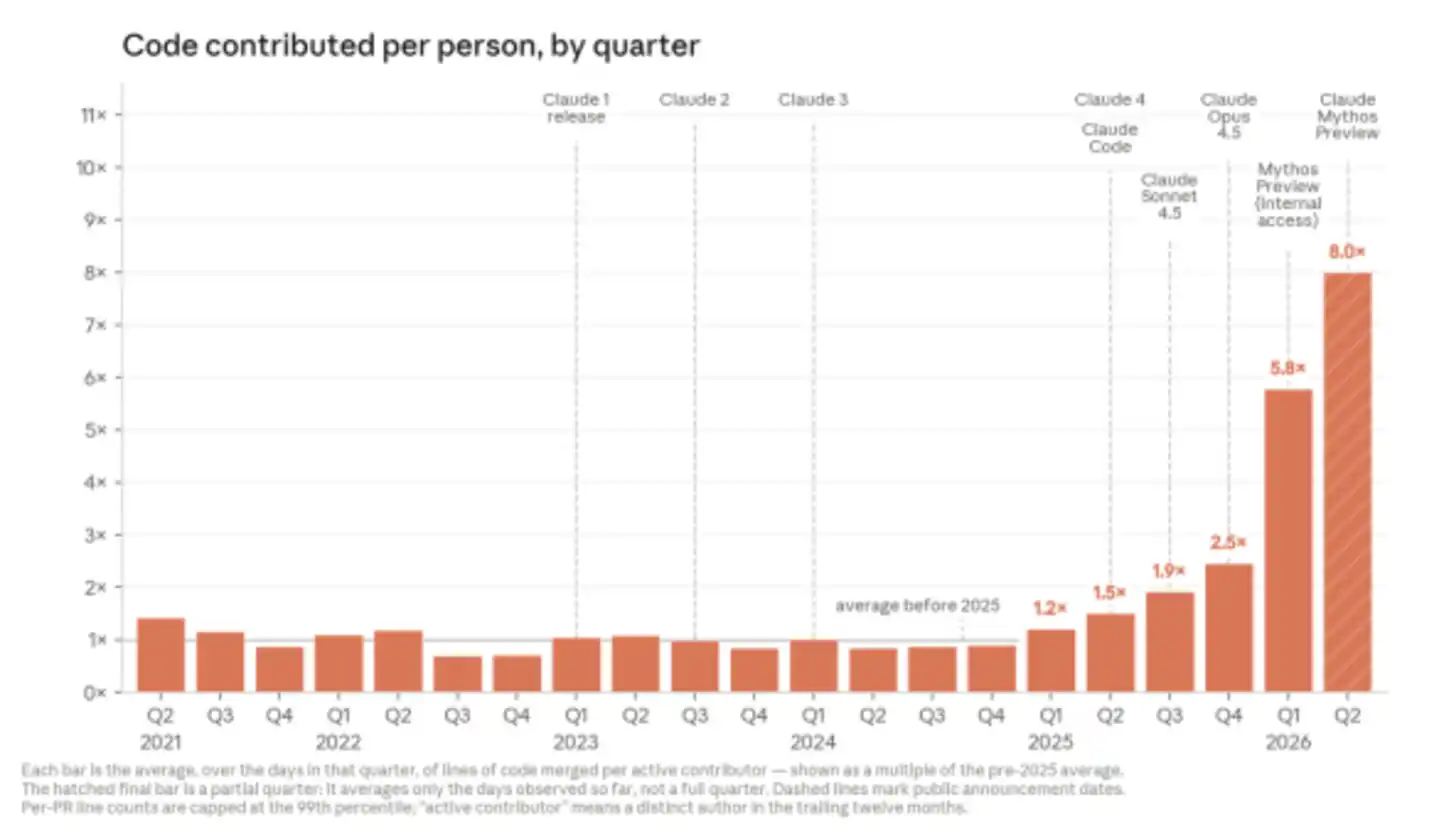
比如,截至2026年5月,Anthropic合并进代码库的代码中,超过80%由Claude编写。而在Claude Code发布之前,这个数字还仅是个位数。

到2026年第二季度,按Anthropic的统计,工程师每天合并的代码量已经比2024年高出约8倍。
比代码量更值得注意的是,Claude正在处理更开放的工程问题。

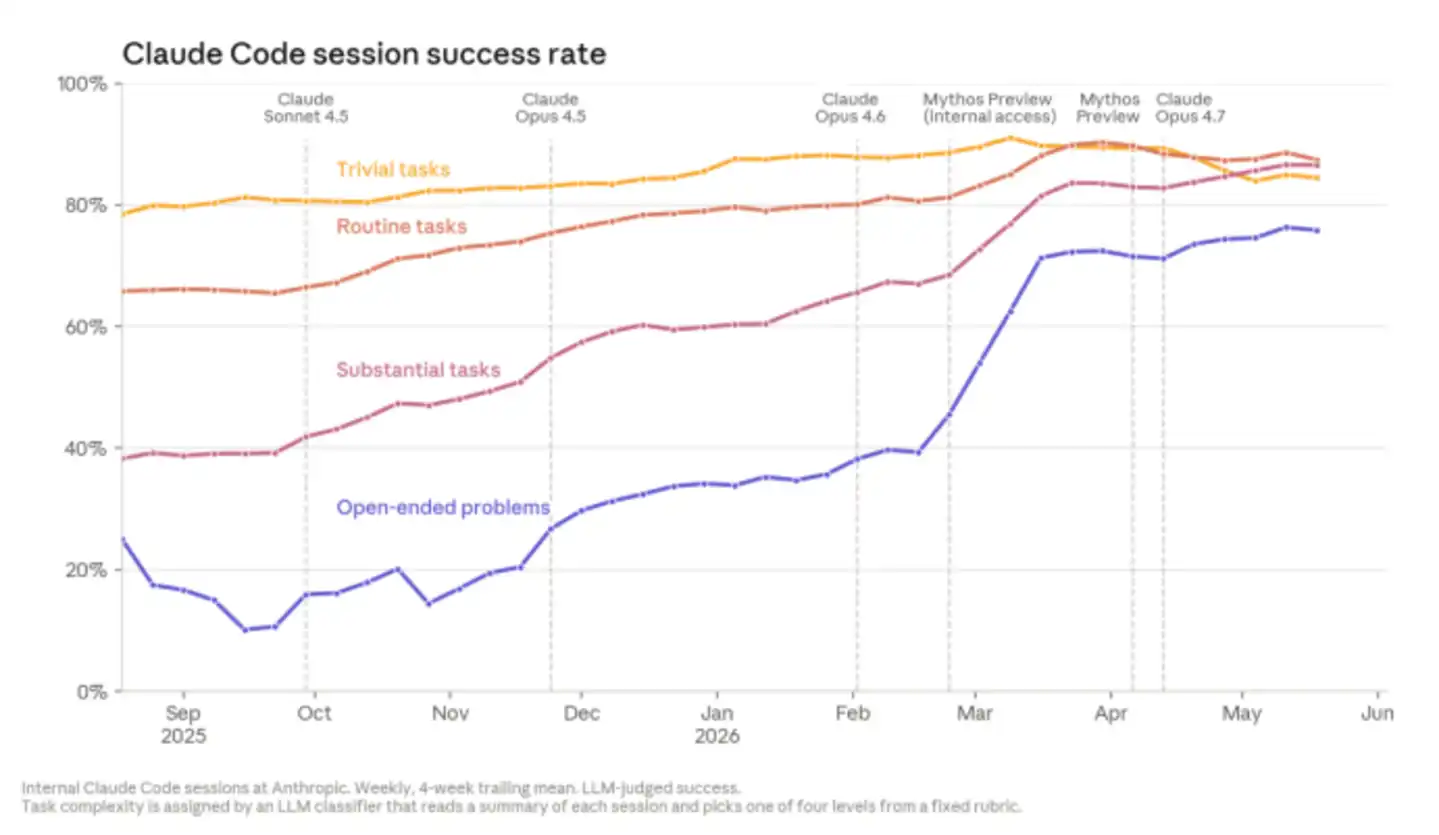
Anthropic在文中说,过去一年里,员工纠正Claude、把Claude拉回正轨,或者中途接手任务的频率一直在下降。这个变化不只发生在简单任务上,也发生在最复杂的开放任务上。

所谓开放任务,就是没有明确说明书的问题。比如系统崩了、训练任务挂了,工程师自己一开始也不知道答案长什么样,只能一边排查一边判断。

这类任务过去最依赖人的经验,而在那些最开放的任务里,Claude的成功率到2026年5月已经达到76%,六个月内提高了50个百分点。
不只是写代码,Anthropic还用Claude做代码审查,检查bug、安全漏洞和其他缺陷,他们回溯分析发现,如果过去每次代码变更都经过Claude自动审查,大约三分之一导致claude.ai线上事故的bug,本可以在上线前被拦下来。

更进一步,Claude已经开始参与研究流程。

Anthropic有一个固定测试:给Claude一段训练小模型的代码,让它在不改错结果的前提下,想办法把代码跑得更快。2025年5月,Claude Opus 4大概能跑出3倍加速;到了2026年4月,Claude Mythos Preview已经把这个数字推到了约52倍。

Anthropic还提到一个开放式AI安全研究案例。他们把一个问题交给Claude驱动的智能体:一个较弱模型能不能可靠监督一个更强模型?

这个过程需要提出假设、测试假设、和并行智能体共享发现、反复迭代。

两位人类研究员花了一周时间,弥合了大约23%的差距;而Claude在累计约800小时、约1.8万美元算力消耗下,弥合了97%。

这项结果当然有局限,问题是人类选的,评分标准也是人类定的,结果也没有完全迁移到生产规模模型上。但它仍然说明,Claude已经可以在一个人类设定好方向的研究框架里,自己设计实验、自己执行、自己迭代。

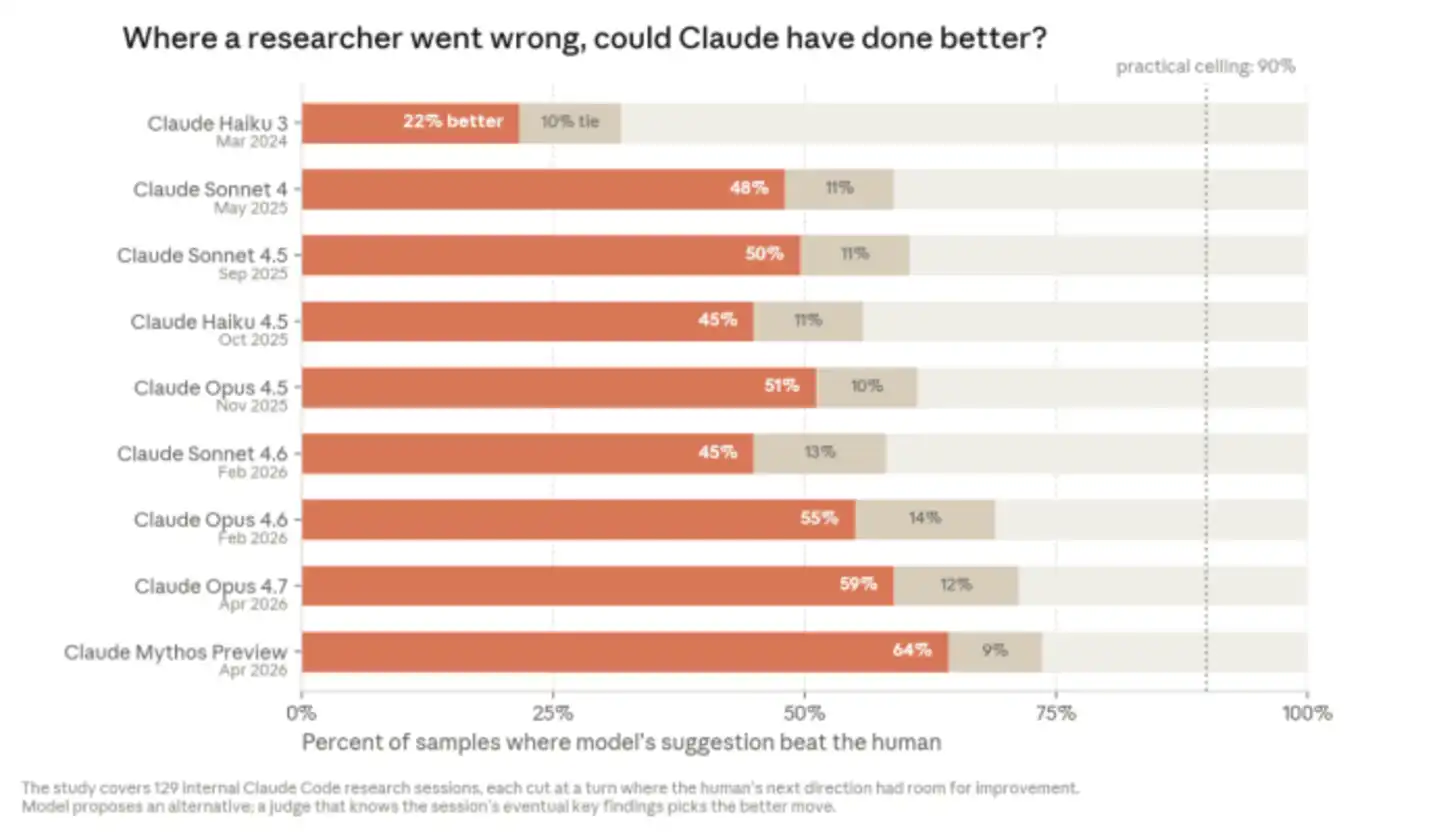
另外,在人类研究员“走错路”的时候,Claude还能给出更好的下一步判断。

Anthropic找了129个内部Claude Code研究会话,这些会话里,人类研究员和Claude一起解决开放式研究问题。Anthropic挑出其中一些“人类后来证明绕了弯路”的节点,然后把这个节点之前的上下文给不同版本的Claude,看它会建议下一步怎么做。再由另一个知道完整会话结局的Claude judge来判断:模型建议和人类当时的选择,哪个更好。

结果表明,在那些人类研究员已经被事后证明有改进空间的节点上,Claude越来越能提出更好的下一步。
过去,AI模型的进步主要靠人类研究员和工程师推动。人类决定做什么实验、写代码,训练模型、推动AI的功能迭代。

现在,这条链条里越来越多的环节,开始被Claude接走。

Anthropic给出了一个很直观的阶段表:
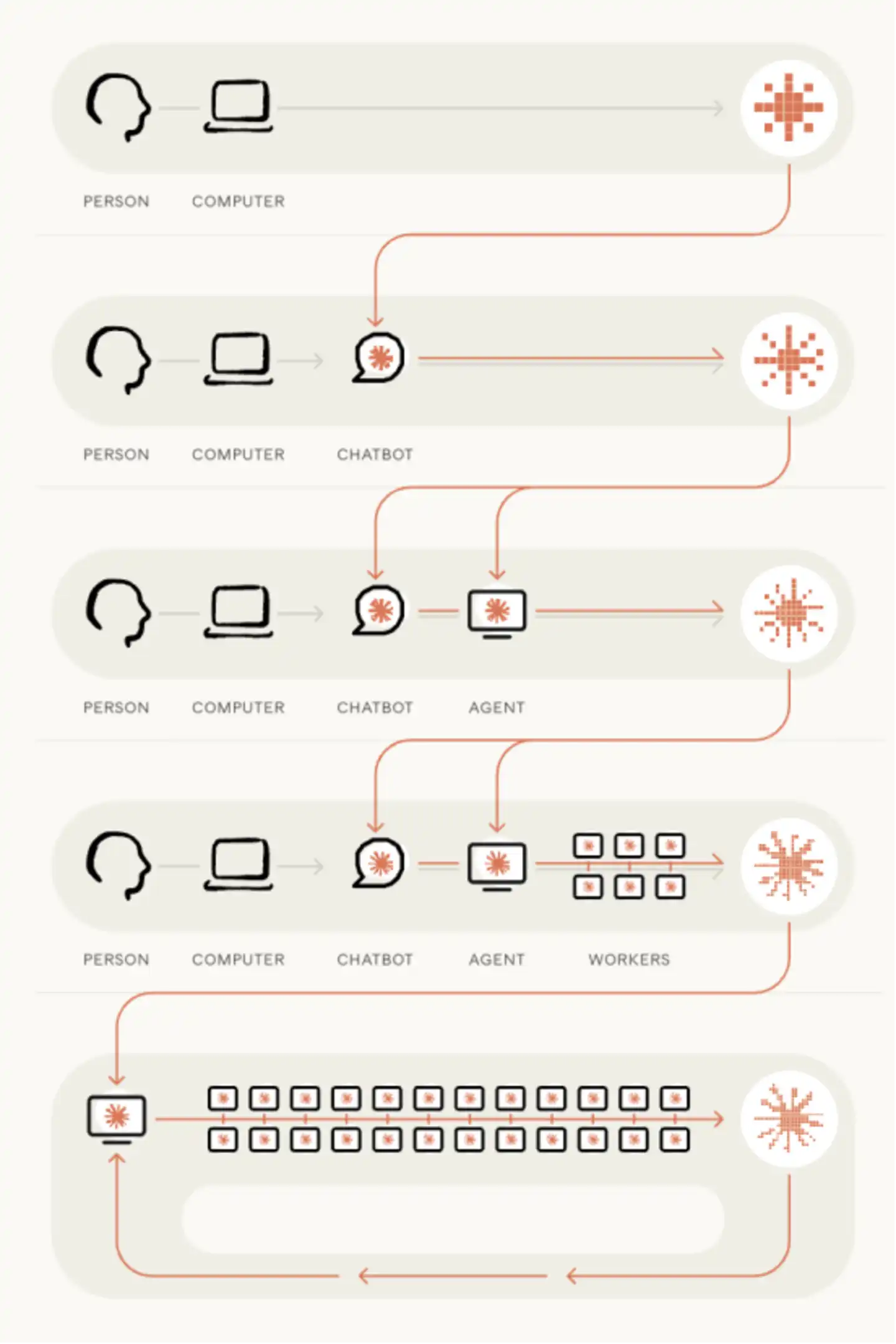
2021到2023年,Anthropic和普通科技公司没什么区别,都是人类在笔记本电脑上写代码、写文档。

2023到2025年,聊天机器人开始进入工作流。工程师让模型生成代码片段,再复制到编辑器里。

2025到2026年,编程智能体出现,Claude开始能自主编写和修改代码,有时甚至能独立完成整个文件。

到了今天,智能体已经可以自己运行代码,还能把长达数小时的工作委派给其他智能体。

再往后,就是Anthropic真正担心的那个阶段:闭合回路

如果这一天到来,Claude的后续版本,就可能由Claude自身持续改进——这就是recursive self-improvement,递归自我改进。

Anthropic在文中说得很谨慎:我们还没有走到那一步,递归自我改进也不是必然发生。但它依然在强调,通往那一步的路径,已经开始变得可见。

所以Anthropic才会在文章最后谈到减速,甚至暂停。它的意思不是现在所有AI公司立刻停工,而是说,如果未来AI自我改进风险继续上升,前沿实验室需要一套协调、可验证的减速机制。

换句话讲,“奇点”就要到了,人类必须加以控制。

势不可挡的Claude

如果只看表面,这是一篇非常具有前瞻意识的安全文档。Anthropic在讲递归自我改进,讲AI可能越来越快地改进自己,讲人类社会需要提前准备减速和暂停机制。

但放在Anthropic准备IPO的时间点上,这篇文章就有了另一层意思。

某种意义上,A厂最近的动态很像班上那种欠儿欠儿的优等生——它确实有能耐,但也确实很装。

它想说的不只是“我们有一个很强的Claude”,比这更前一步,它想说“Claude正在帮助我们制造更强的Claude”。

如果Anthropic只是卖一个模型或者卖一个工具,它就很难彻底摆脱横向比较:Anthropic有Claude,OpenAI有GPT;Anthropic有Claude Code,OpenAI有Codex;Anthropic抢企业客户,OpenAI也抢企业客户。两家公司的竞争非常胶着,就看谁能向市场讲出更大的故事。

需要注意的是,就在3天前,OpenAI前脚在一份关于前沿AI治理的文件里写道:

“我们也在今天的系统中看到了递归自我改进的早期迹象:AI的发展本身正在被AI加速。

这将加剧开发者和国家之间的竞争压力,并带来现有机构无法应对的治理挑战。”

3天后,Anthropic后脚就说:Claude通往递归自我改进的路径,已经开始变得可见。
要是Claude真如它所期待的那样发展,就不是普通产品叙事了,它会变成一个研发飞轮。

Claude写代码、跑实验、优化训练流程,再反过来减少Anthropic自己产品里的事故……一旦这套系统跑起来,Claude就不只是Anthropic的一个产品,也是Anthropic的重要生产工具。

用户看到的是Claude这个产品,企业客户买的是Claude的能力,但Anthropic真正想让资本市场注意的是:Claude已经嵌入了前沿模型研发的底层流程,它被放到了Anthropic的发动机舱里。

资本市场最喜欢听飞轮的故事,像聚宝盆一样财源滚滚:更强的Claude让Anthropic的工程师能合并更多代码,更多代码让产品和基础设施迭代更快,更快的迭代让研究员能跑更多实验,更多实验又反过来帮助下一代Claude变强。下一代Claude变强后,再继续加速Anthropic的研发。

Claude的迭代速度也在支撑这个飞轮。从公开发布时间看,2023年到2025年初,Claude的主要模型更新大多是三四个月一轮,但在进入Claude 4之后,Anthropic的模型更新明显变密。

Claude 4在2025年5月发布,Opus 4.1在8月发布,Sonnet 4.5在9月发布,Haiku 4.5在10月发布,Opus 4.5在11月发布。

到了2026年,Opus 4.6在2月5日发布,Sonnet 4.6在2月17日发布,Opus 4.7在4月15日发布,Opus 4.8在5月28日发布。Opus 4.7到Opus 4.8,只隔了42天。

Anthropic表面上是在说“这件事可能很危险,我们要提前准备刹车”,但它同时也在暗示:“我们已经看见油门踩下去之后会发生什么。”

IPO叙事的微妙之处就在于此。它一边把风险讲得很重,一边也把自己的技术位置抬得很高。

不是所有AI公司都有资格讨论递归自我改进,你得先让外界相信,你的AI已经进入了AI研发流程,才有资格说这件事可能需要全球协调。

OpenAI:怎么可以这样?

前面提到,就在Anthropic发这篇长文之前,OpenAI刚刚把递归自我改进摆上了桌。

但两家公司的讲法很不一样。

OpenAI那篇《Democratic Governance of Frontier AI》,是一份写给华盛顿的政策蓝图,它关心的不是“模型怎么变强”,而是当前沿AI继续往前冲,该如何加以约束。

那篇报告里面提到的大多内容不太适合加以赘述,唯独一句话关键:OpenAI说,今天的系统中,已经可以看到递归自我改进的早期迹象。

这句话和Anthropic这篇长文,其实指向同一个方向。

只不过OpenAI在讲制度,Anthropic在讲自己。

OpenAI的意思是:AI发展太快,现有治理结构可能跟不上,所以需要一套新的规则。

而Anthropic直接把那个系统亮了出来,告诉市场:Claude已经进入了我们的研发流程,所以我们看见了AI自我加速的路径。

这一手玩得很高明,感觉OpenAI内部指不定已经开始蛐蛐了——这简直是剽窃创意!明明是我们先来的!

开个玩笑,不过OpenAI确实需要加把劲了,快点把GPT 5.6抬上来吧。

Related Questions

QAnthropic在文章中提到的“递归自我改进”是什么概念?

A“递归自我改进”指的是AI系统能够主动参与到自身后续版本的设计、训练、测试和优化过程中,从而可能实现AI自我进化,而非仅依靠人类研究员的推动。Anthropic在文章中表明,他们看到Claude正在向这个方向发展,但尚未实现。

Q根据文章,Claude在Anthropic内部代码开发中扮演了什么角色?有什么具体数据支持?

A根据文章,Claude已成为Anthropic代码开发的核心工具。具体数据包括:截至2026年5月,Anthropic代码库中超过80%的代码由Claude编写;工程师每日合并的代码量比2024年高出约8倍;在最开放的工程问题上,Claude在2026年5月的成功率已达到76%,在六个月内提高了50个百分点。

QAnthropic发表这篇关于AI“递归自我改进”文章的背后,可能有什么商业意图?

A文章分析认为,Anthropic在准备IPO的时间点发表此文,除了探讨AI安全风险,也是一种商业叙事策略。其意图在于向资本市场展示Claude不仅是一个强大的AI产品,更已深度嵌入其自身研发流程,形成了一个加速AI进步的“飞轮”,从而提升了公司的技术壁垒和长期价值预期。

QOpenAI和Anthropic对“递归自我改进”的讨论有何不同?

A文章指出,两家公司讨论的侧重点不同。OpenAI在其政策蓝图中,主要从宏观治理角度出发,指出递归自我改进的早期迹象带来了现有机构难以应对的治理挑战,呼吁建立新规则。而Anthropic则更侧重于展示自家Claude系统的实际能力与数据,以此来强调他们正亲身经历并目睹这条技术路径,从而提升自身的行业话语权和市场叙事地位。

QAnthropic文章中提到的“闭合回路”阶段意味着什么?

A“闭合回路”是Anthropic描绘的、比当前阶段更进一步的未来场景。它意味着Claude的后续版本将能够完全由Claude自身持续地、自动化地进行改进和迭代,即实现完全的“递归自我改进”。文章强调他们尚未走到那一步,但通往该阶段的路径已变得可见,因此需要提前为潜在的风险和治理挑战做好准备。

Related Reads

Uncovering the Truth About Agent Commerce, Payments, and Infrastructure

Decoding Agent Commerce, Payments, and Infrastructure: The Reality Over the past year, I've been building infrastructure for the Agent economy, engaging with major players like Stripe, Visa, Coinbase, Google, and dozens of startups. A clear conclusion emerges: true, large-scale demand does not yet exist. Startups face structural challenges. Data points illustrate this gap. Stripe's Agent commerce platform has over 1,000 merchants but only single-digit transacting agents. Visa's Agent payment token requires 9-month KYC and a $250M revenue threshold, accessible only to giants like Amazon. On-chain analysis reveals actual daily Agent transaction volume is around $17k, half of which are test transactions. The article analyzes four potential markets: **1. Agent-to-Merchant (A2M):** Current AI shopping UX is often inferior to traditional e-commerce for visual, comparison-heavy purchases (clothing, electronics). Chat interfaces are a step back. Real merchant interest is defensive "Agent Engine Optimization," fearing future obsolescence, not current demand. Potential exists in high-frequency, low-decision purchases (e.g., food delivery) or simplifying terrible UX (complex checkouts, non-native shoppers), but these require massive consumer distribution channels dominated by giants like DoorDash and Amazon. **2. Agent-to-API (A2A):** Developers already have subscriptions and billing for core APIs (compute, data). The argument for micro-payments via crypto for sub-dollar API calls is addressed by pre-paid balances today. The deeper issue is supplier resistance; major SaaS firms rely on enterprise contracts, not fractional cent pricing. Opportunity lies in the long tail of niche services, but this is a smaller market catering to developers, a historically low-paying group. **3. Agent-to-Agent (A2A):** This remains a theoretical long-term vision with near-zero current transaction volume. It involves unique challenges: discovery, trust, negotiation, dispute resolution. When it materializes, it will require a fundamentally new settlement infrastructure for high-speed, variable-value, multi-party transactions. It's a real long-term bet, but not the current market. **4. Agent-to-Finance (A2F):** This is the only category with existing, paying demand. Integrating AI into financial workflows (trading, portfolio management) is a natural evolution and enables new capabilities like autonomous rebalancing. However, competition favors incumbents with regulatory licenses, compliance infrastructure, and existing client relationships. **The Real Issue:** Why is infrastructure still being built? Incumbents can afford long-term bets, and payment companies see every problem as a nail for their payment hammer. However, payment is just one piece. The core challenge is *coordination*—orchestrating work between Agents and humans, verifying outcomes, and settling results. Payment is part of settlement, which is part of coordination. Companies that solve the coordination problem will subsume payments, not the other way around. Startups lack the infinite runway of giants and must find today's real market, which, after a year of exploration, lies outside these four categories—in an area with real, growing, and underserved activity.

marsbit1h ago

Uncovering the Truth About Agent Commerce, Payments, and Infrastructure

marsbit1h ago

Kalshi, MTS, and a16z's Ambition

The article "Kalshi, MTS, and a16z's Ambition" explores prediction markets as a focal point of excitement in 2025 for investors, crypto enthusiasts, and media. It traces their intellectual lineage from Friedrich Hayek's ideas on dispersed knowledge and market coordination to Robin Hanson's Logarithmic Market Scoring Rule (LMSR), which incentivizes truthful information sharing. The piece argues that a16z's significant investment in prediction market platform Kalshi (valued at $220B) transcends mere financial speculation. a16z frames prediction markets as a new form of "media" that provides "presence"—a way for individuals to actively engage with and influence world events through financial stakes, countering postmodern detachment. By wagering on outcomes, users become "super observers," and the market's aggregated probabilities gain authoritative power to define event truth and importance. The article uses media company MTS ("Monitoring The Situation") as a case study of a16z's "new media" strategy: rapidly producing high-intensity, multi-format content to "take over the timeline." However, prediction markets like Kalshi are presented as the ultimate piece in this media empire. Their real-money, crowd-sourced probabilities possess a unique "reality distortion field" and perceived objectivity, potentially swaying public opinion and granting a private company unprecedented interpretive power over reality. Ultimately, Kalshi's immense valuation is attributed not just to its exchange model, but to its role as a foundational component in a16z's envisioned new media landscape, where prediction markets define narrative and truth.

链捕手1h ago

Kalshi, MTS, and a16z's Ambition

链捕手1h ago

Trading

Spot
Futures

Hot Articles

How to Buy NIGHT

Welcome to HTX.com! We've made purchasing Midnight (NIGHT) simple and convenient. Follow our step-by-step guide to embark on your crypto journey.Step 1: Create Your HTX AccountUse your email or phone number to sign up for a free account on HTX. Experience a hassle-free registration journey and unlock all features.Get My AccountStep 2: Go to Buy Crypto and Choose Your Payment MethodCredit/Debit Card: Use your Visa or Mastercard to buy Midnight (NIGHT) instantly.Balance: Use funds from your HTX account balance to trade seamlessly.Third Parties: We've added popular payment methods such as Google Pay and Apple Pay to enhance convenience.P2P: Trade directly with other users on HTX.Over-the-Counter (OTC): We offer tailor-made services and competitive exchange rates for traders.Step 3: Store Your Midnight (NIGHT)After purchasing your Midnight (NIGHT), store it in your HTX account. Alternatively, you can send it elsewhere via blockchain transfer or use it to trade other cryptocurrencies.Step 4: Trade Midnight (NIGHT)Easily trade Midnight (NIGHT) on HTX's spot market. Simply access your account, select your trading pair, execute your trades, and monitor in real-time. We offer a user-friendly experience for both beginners and seasoned traders.

3.4k Total ViewsPublished 2025.12.08Updated 2026.06.02

How to Buy NIGHT

Discussions

Welcome to the HTX Community. Here, you can stay informed about the latest platform developments and gain access to professional market insights. Users' opinions on the price of NIGHT (NIGHT) are presented below.

活动图片