ETH 价格猛涨超 9%,多项指标指向 2800 美元,上涨空间能否打开?

ambcryptoPublished on 2026-03-18Last updated on 2026-03-18

Abstract

对称三角形突破和未解决的供应过剩正增强以太币在三月份可能升至2800美元的预期。

以太币(ETH)看涨方正关注三月份价格重返2800美元,至少有三项指标显示ETH价格有望继续走高。

要点:

以太币价格周一上涨逾9%,接近2280美元。

包括对称三角形在内的多项指标暗示价格有望持续上扬,逼近2800美元。

以太币打破看跌图形

周日,以太币价格走势否定了日线图上最初显现出的看跌三角旗形态。

ETH/USD价格对突破了三角旗上沿趋势线(2100美元),周一飙升9.8%,创下六周以来新高2287美元。此次突破伴随着成交量放大,显示出本轮反弹的信心更为强劲。
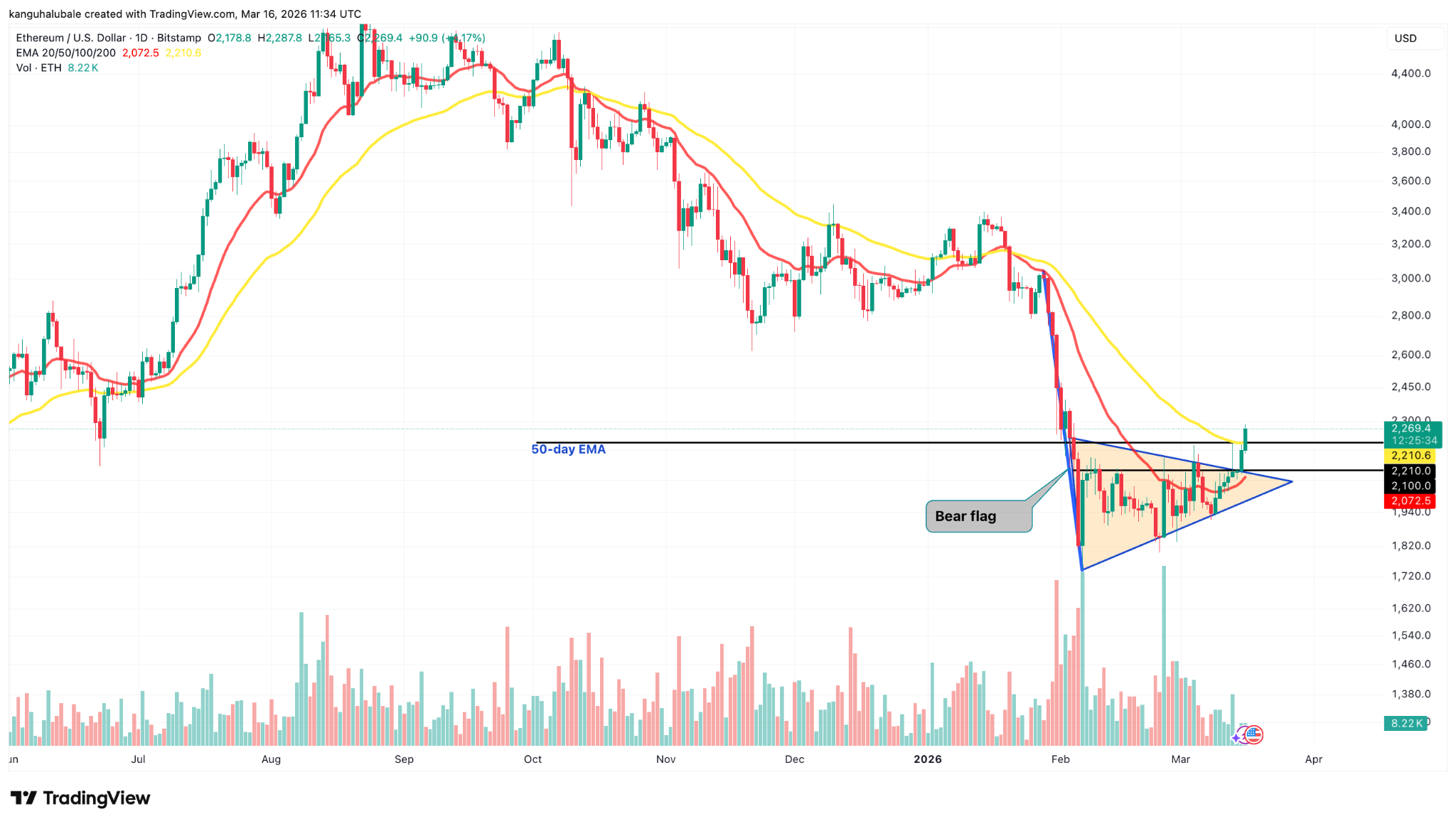
价格还重新站上了两条重要支撑线,分别是20日指数移动平均线(EMA,红线)和50日EMA(黄线),对应位置分别为2072美元和2210美元。

同时,这也提升了对称三角形看涨反转的概率。

对称三角形是指价格形成更低高点与更高低点,区间逐渐收敛。当价格突破任意一条趋势线后,通常会按该形态最大高度出现相应幅度的突破。
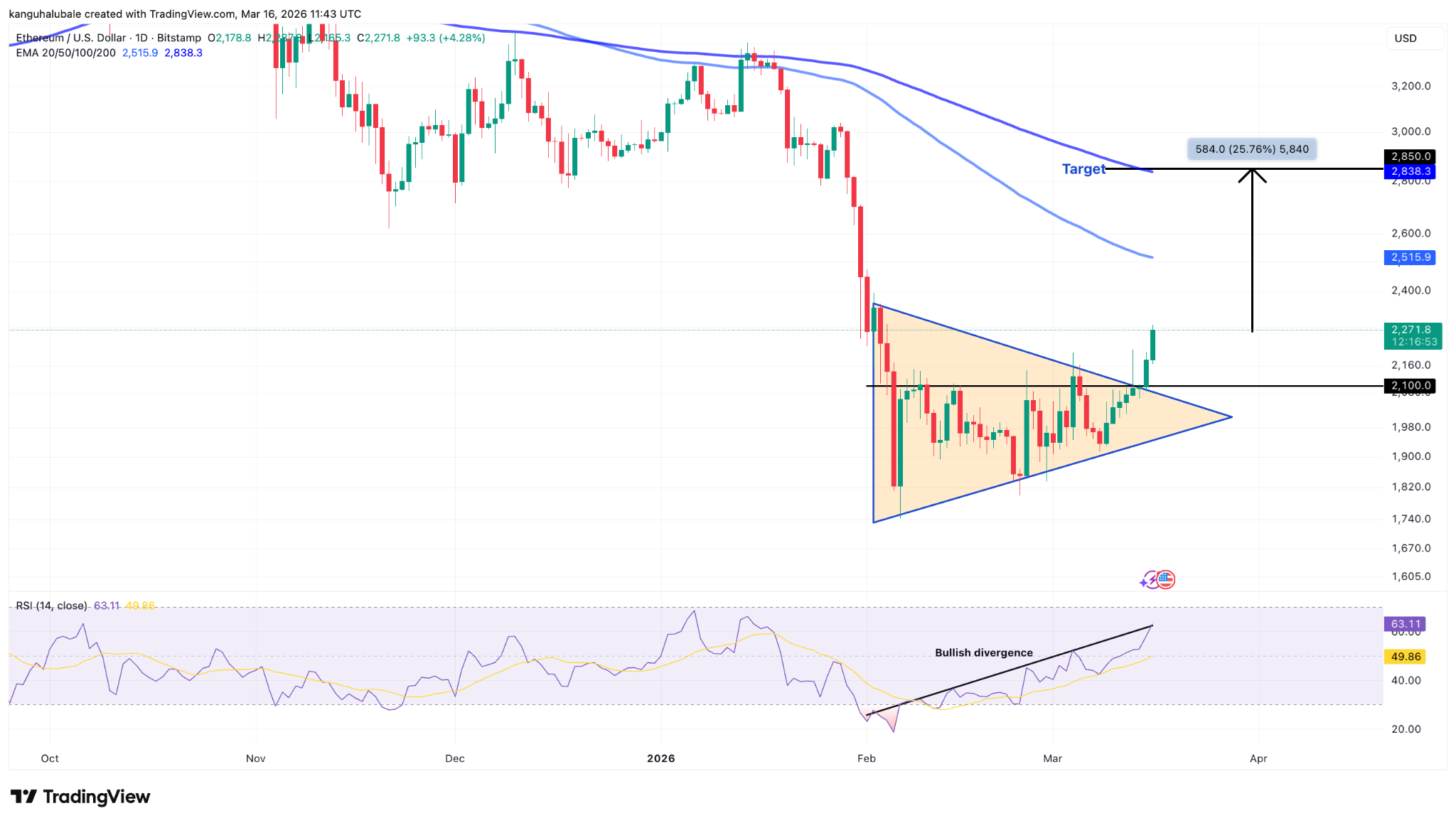
以太币本轮突破上沿趋势线后的目标测算在2850美元,较当前价位高出26%。该水平与图中紫色线所示的200日EMA相吻合。

以太币接下来的阻力位在100日EMA(蓝色)附近,即2500美元。

正如Cointelegraph报道,若在此处遭遇回调,突破行情将减弱,并提升回调的概率。

链上数据限制以太坊上涨空间至2800美元

ETH始终在由2350美元实现价格上限与1650美元MVRV最低区间形成的宽幅区间内震荡。

下图显示,ETH最近一轮从MVRV最低区间的反弹,与2022年第二季度市场结构颇为相似,当时价格突破实现价格后,被第一个MVRV区间(实现价格之上)压制。
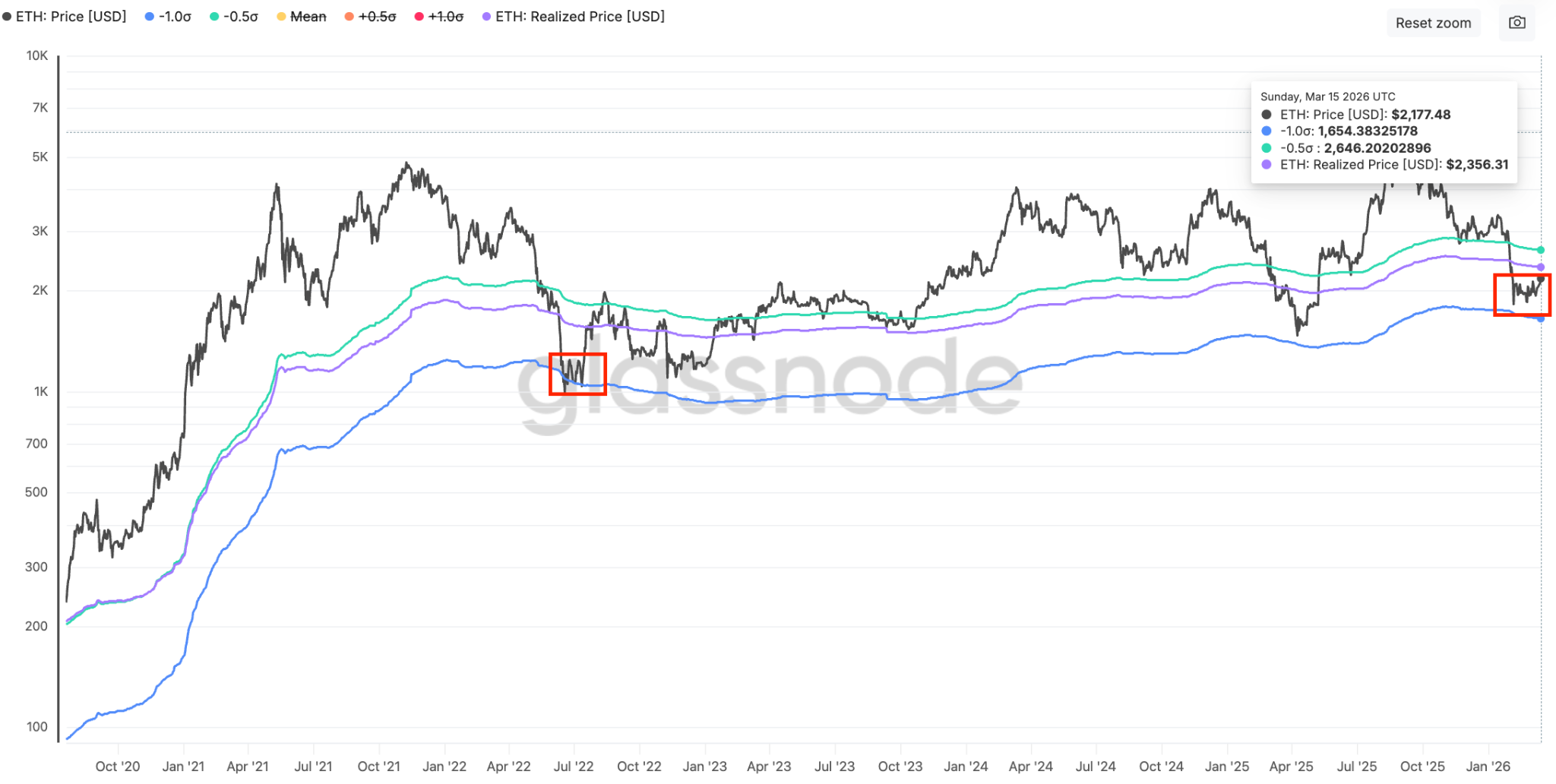
这一相似性强化了当前反弹或将在2650美元附近戛然而止的判断,该处正是实现价格上方的首个MVRV区间。

Glassnode的经实体调整的UTXO实现价格分布(URPD)显示,当前ETH UTXO在2770-2880美元形成了大量供应,是长期持有者逐步累积的区间。投资者在此买入了超790万枚以太坊。

该未消化的供应堆积依然构成持续抛压,极有可能限制价格在2800美元附近的进一步冲高。
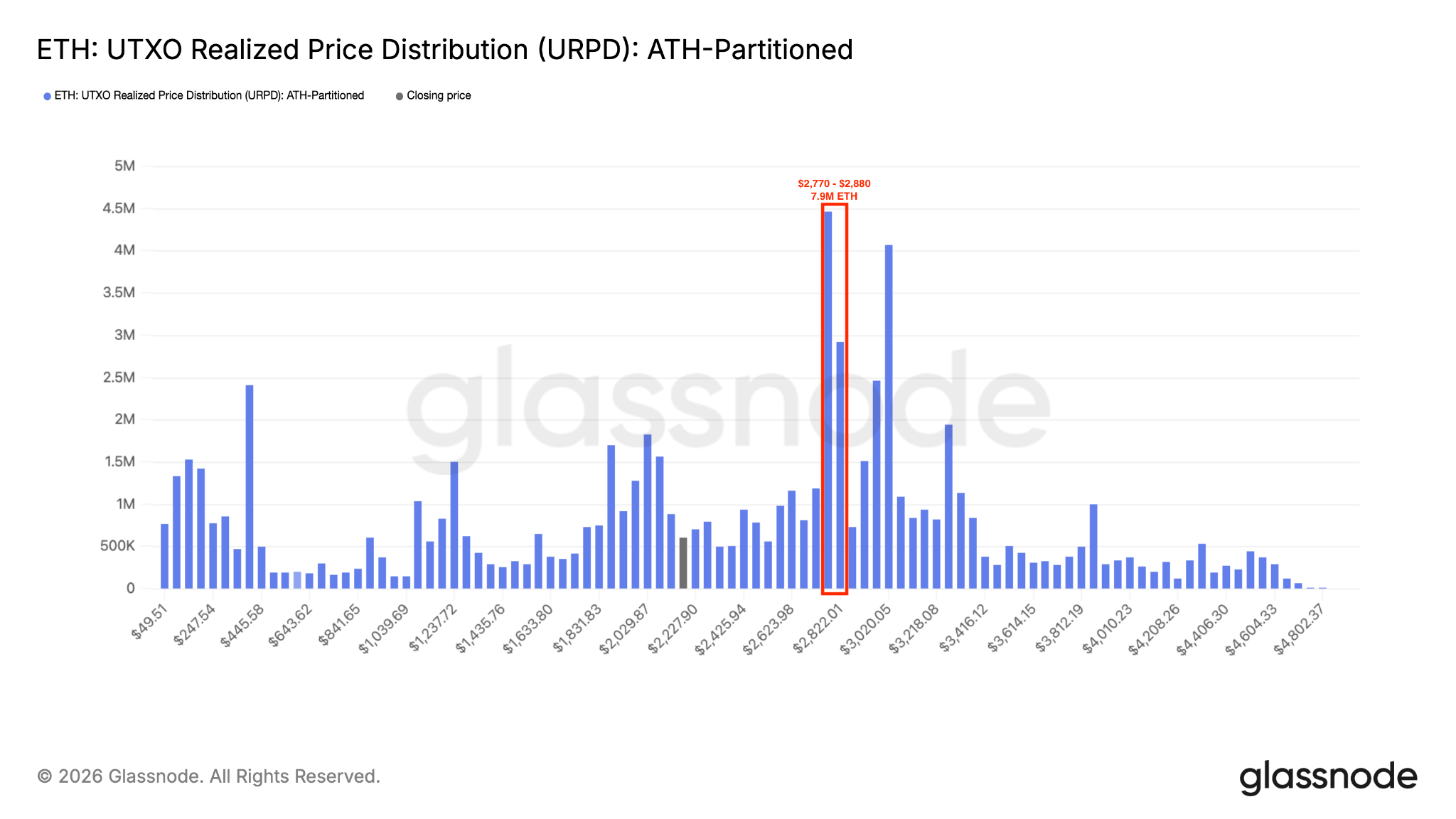
与此同时,ETH的成本分布热力图显示,2800美元附近有大量累积,此前超300万枚ETH在此区间买入,暗示短期内有望向该水平靠近。

Polymarket平台三月ETH触及2800美元概率提升

基于加密货币的预测市场Polymarket显示,以太坊三月份看涨氛围明显提升,用户可交易与现实结果相关的合约。

交易者目前给予ETH在三月触及2800美元概率为13%,较过去24小时上升10个百分点。2600美元和2400美元目标位的看涨信心更强,分别为32%和69%。
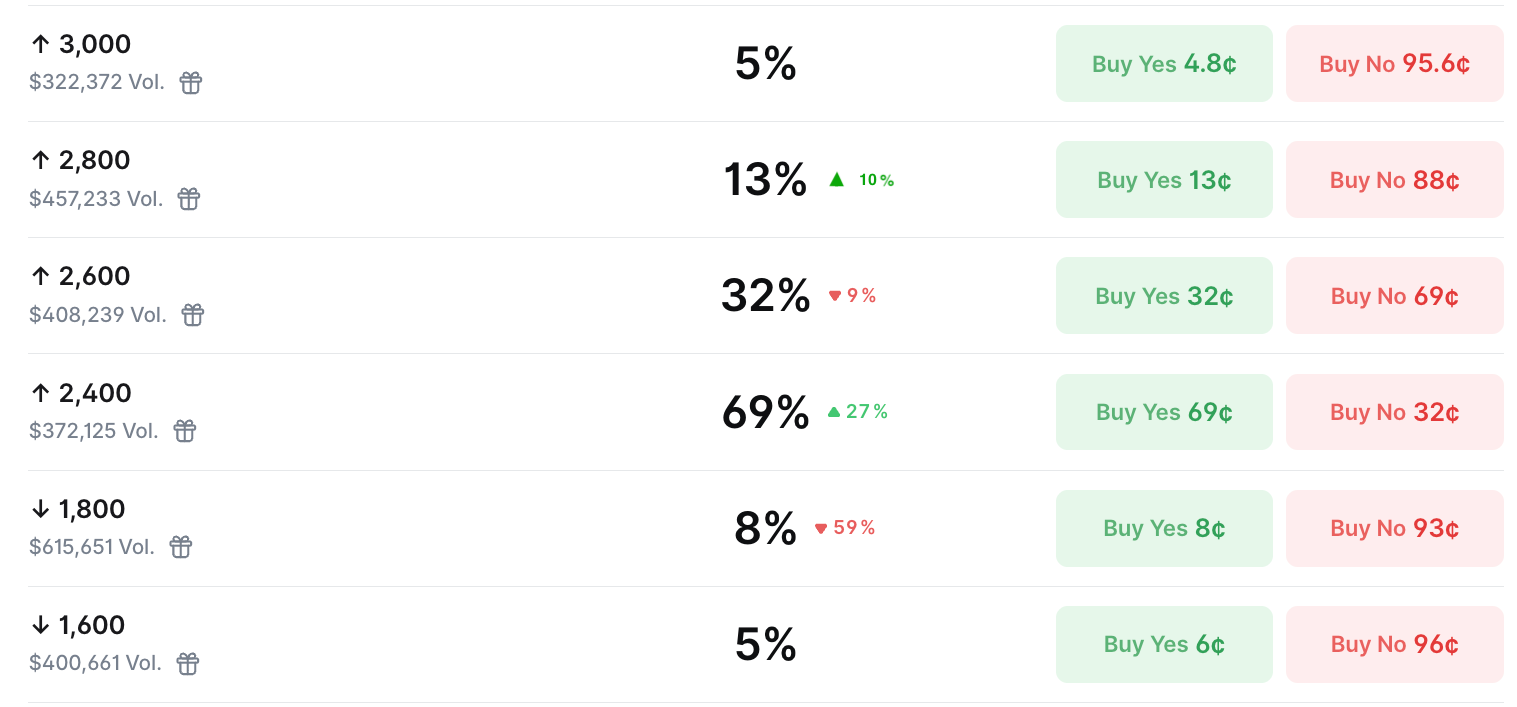
与此同时,ETH三月跌至1800美元和1600美元的概率较此前下降,显示市场正下调对下行风险的预期。


Trending Cryptos

Related Reads

Analysis of 13F Holdings of Seven Major Funds: What Are Buffett, Duan Yongping, Li Lu, and Dan Bin Thinking?

A summary of Q2 2026 13F filings from seven major funds (Berkshire Hathaway, Duquesne Family Office, H&H International Investment, Himalaya Capital, ARK Investment, Oriental Harbor Investment Master Fund, Situational Awareness LP) reveals AI remains the central investment theme, with significant capital reallocation within the sector. Berkshire Hathaway, under Greg Abel, made its largest net stock purchases in years, heavily increasing its stake in Alphabet, signaling a strategic tilt towards tech while maintaining core holdings in consumer and financial stocks. Duquesne Family Office (Stanley Druckenmiller) rotated within semiconductors, selling Micron, Broadcom, and Intel but adding to positions in TSMC, STMicroelectronics, and AMD, while also reinvesting in cloud giants Alphabet and Amazon and cautiously re-entering Chinese tech via Baidu. H&H International Investment (Duan Yongping) and Himalaya Capital (Li Lu) both significantly increased their stakes in PDD, with Li Lu also concentrating his portfolio by selling out of several financial and energy holdings to focus on core positions like Alphabet and Berkshire. H&H also took profits from high-flying AI/tech names like Nvidia and Google, viewing the moves as valuation adjustments rather than a loss of conviction. ARK Investment (Cathie Wood) aggressively bought SpaceX upon its IPO and continued hunting for disruptive innovation across AI, energy, and biotech, while reducing its Tesla holding. Oriental Harbor Investment Master Fund (Dan Bin) executed a dramatic shift towards AI hardware, launching major new positions in Intel, SanDisk, AMD, and others while selling down software/platform holdings like Google and clearing out consumer names Apple and Tesla. Situational Awareness LP's filing, reflecting pre-liquidation positions, showed a story of missed hedging opportunities leading to significant losses. The consensus is that AI growth is continuing, but capital is actively rotating to identify the next profit centers within the value chain—from semiconductors and infrastructure to eventual commercialization. The filings, while lagging, offer a snapshot of how sophisticated investors are positioning for AI's next phase.

Odaily星球日报22m ago

Analysis of 13F Holdings of Seven Major Funds: What Are Buffett, Duan Yongping, Li Lu, and Dan Bin Thinking?

Odaily星球日报22m ago

Arthur Hayes Makes a High-Profile Comeback, Flop Labs Aims to Become the "Fuel" for the Agent Economy

Arthur Hayes, co-founder of BitMEX, has announced his return as head of a new project called Flop Labs, declaring "FLOP is food for your AI agent." This marks his first high-profile return to a leadership role since stepping back from BitMEX. Flop Labs aims to be a native monetary network and verifiable computation settlement layer for the AI Agent economy, distinguishing itself from existing AI Agent projects. Its core concept is "Proof-of-Useful-Inference," which seeks to integrate useful AI inference tasks into the blockchain consensus mechanism, allowing FLOP tokens to serve as the native currency for Agents to purchase computing resources and store memory. The ecosystem involves four key roles: Miners (provide GPU compute), Validators (verify services), Agents (consume services), and KOLs/Partners (community growth). The project promises a 100% fair launch with no presale or VC involvement. A large airdrop is planned for Q4 2026, with the genesis block targeted for Q1 2027. While the announcement has generated community excitement, particularly around the airdrop, the project is in an early conceptual stage. It currently lacks a published whitepaper, detailed tokenomics, technical specifics on its consensus mechanism, or smart contract audits. Arthur Hayes has defended the venture, separating his belief in the potential of the Agentic Economy from concerns about an AI stock bubble. The success of Flop Labs will hinge on its ability to deliver substantive technical progress and ecosystem development in the coming months.

Odaily星球日报37m ago

Arthur Hayes Makes a High-Profile Comeback, Flop Labs Aims to Become the "Fuel" for the Agent Economy

Odaily星球日报37m ago

World Chain Launches EIP-7928 Block Access Lists on Mainnet

World Chain has launched EIP-7928 block access lists on its Mainnet, becoming the first production layer-2 network to implement this standard. This deployment aims to significantly increase blockchain throughput without substantially raising the hardware requirements for validators. By providing access list data incrementally every 200 milliseconds through its flashblock architecture, World Chain enables validators to verify transactions in parallel and begin validation while a block is still being built, eliminating the need for sequential re-execution. Implemented via a runtime flag rather than a hard fork, this approach is an extension of the EIP-7928 standard, which Ethereum may incorporate in a future update. Internal benchmarks on World Chain test networks showed validation latency remained stable as throughput scaled up to one gigabit per second on standard cloud infrastructure, suggesting the potential for increased throughput without a proportional increase in computational resources for validators. This mainnet launch represents the first production use of streaming EIP-7928 block access lists and contributes to Ethereum's broader scaling strategy by expanding verification capacity while remaining accessible to independent validators. Built on the OP Stack and secured by Ethereum, World Chain is designed for scalability within the Superchain ecosystem. It focuses on applications like stablecoin finance, international remittances, and trading, utilizing World ID's proof-of-human system. The network aims to make blockchain technology widely accessible, starting with discovery and use through compatible wallets like World App.

TheNewsCrypto42m ago

World Chain Launches EIP-7928 Block Access Lists on Mainnet

TheNewsCrypto42m ago

Trading

Spot

Hot Articles

Discussions

Welcome to the HTX Community. Here, you can stay informed about the latest platform developments and gain access to professional market insights. Users' opinions on the price of ETH (ETH) are presented below.

活动图片