NFT lending platforms allow users to borrow liquid assets by collateralizing their NFTs. In this thread we’ll dive into peer-to-peer, peer-to-pool, and CDP lending in NFTs to make sense of this growing trend🧵
One of the challenges of long-term investment in NFTs is treasury management. Holding NFTs means locking up significant amounts of capital into an illiquid investment which can drop in price in a matter of days.
Overcollateralized NFT lending protocols (like Compound, Aave, and Maker in traditional DeFi) allow users to free a portion of liquidity in their NFT portfolio without losing exposure to the NFT. Let’s go over how different projects achieve this goal.
Peer-to-Peer
In peer-to-peer lending, borrowers are matched directly with lenders. This the predominant approach for lending NFTs today. Peer-to-peer lending platforms include @NFTfi, @TrustNFT, @PawnfiOfficial, and @YawwwNFT.
These platforms usually require users to lock up an NFT as collateral in an escrow contract and then request a loan for a specific period of time. Then, the user will receive bids from others for collateralization and interest rate parameters.
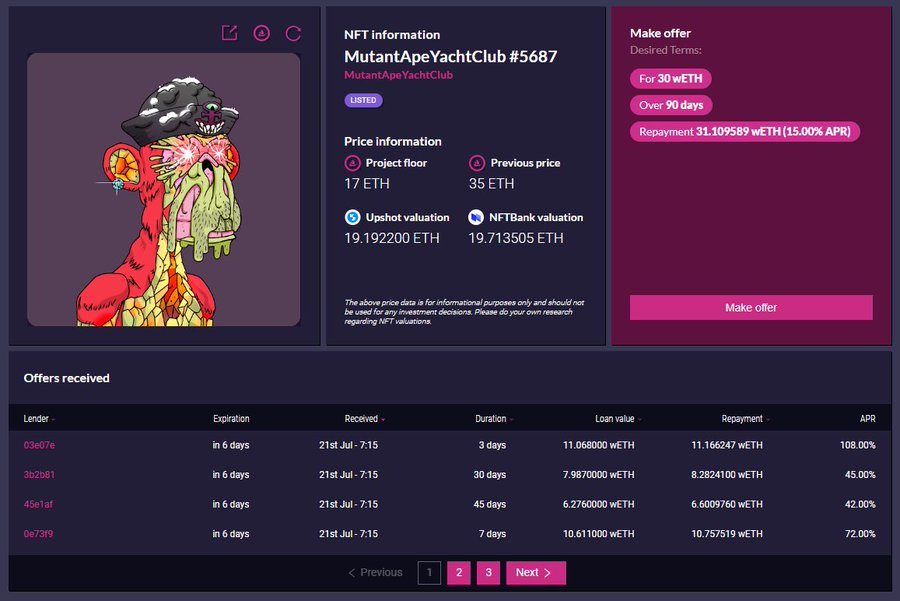
This bidding usually results various combinations of Loan-to-Value and Interest Rate, allowing the owner of the NFT to choose what suits them best. That’s why peer-to-peer lending is perfect for hedging NFT exposure.
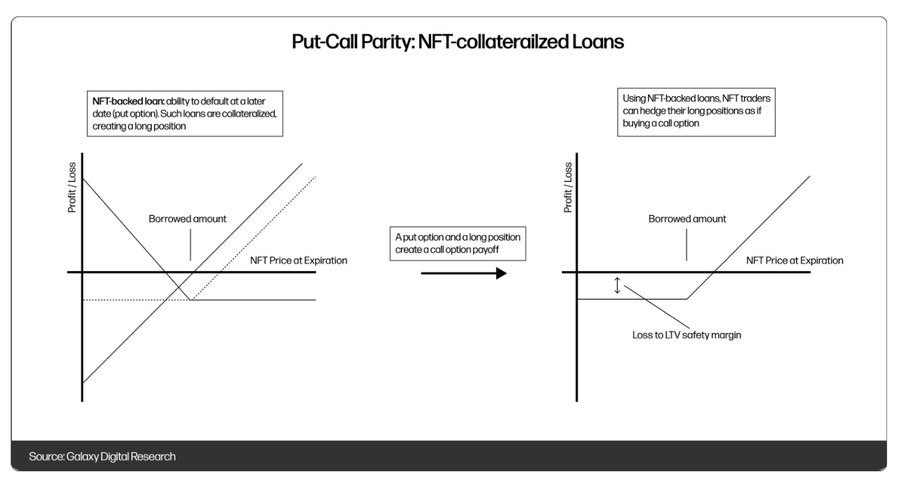
The loan acts as a put option (if the NFT price falls below the borrowed amount, a user is better off defaulting).
By owning the NFT (in the contract) and having a put option on it, the user creates a payoff profile of a call, avoiding losses beyond a defined price.
Another operation we see sophisticated traders do with peer-to-peer loans is leverage. For example, a user can borrow $50,000 by locking a BAYC NFT and buy two MAYC NFTs. If their price rises, they only need to return $50,000 plus interest, making profit.
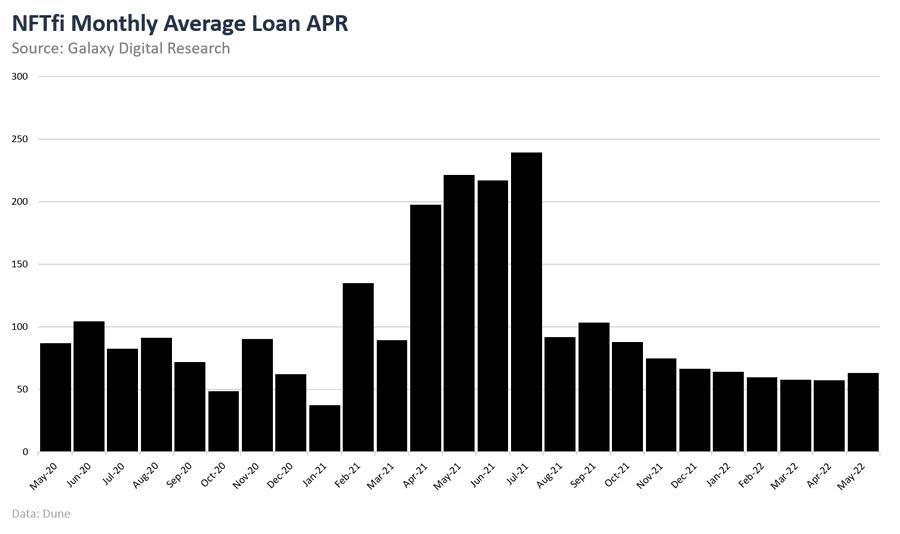
Peer-to-peer loans typically have very high interest rates and moderate Loan-to-Value ratios. Of the platforms we analyzed, @NFTfi has the most traction with $28.6 million in currently outstanding debt. Last month, the average APR has been 63%.
Peer-to-Pool
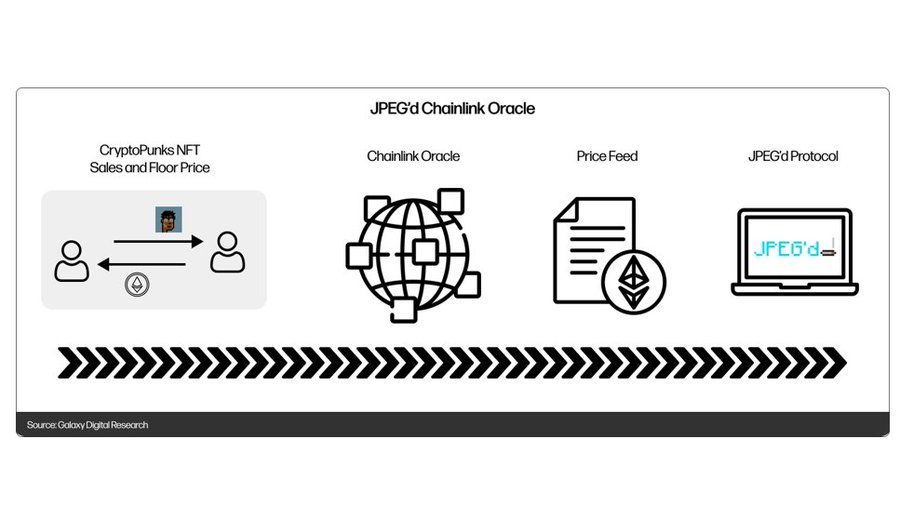
@dropsnft operates a Compound-like money market where users can collateralize NFT portfolios to take out loans in USDC and ETH. NFTs are priced by Chainlink oracles which adjust for outliers and average over a period.
From the user’s perspective, they deposit their NFT as collateral and borrow funds from the pool at a variable interest rate. These funds are supplied by lenders who are earning an interest rate from borrowers.
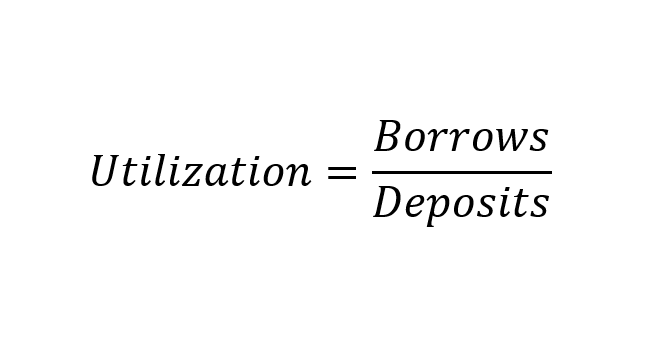
Like Compound and Aave, Drops uses a piecewise interest function which targets a specific utilization rate and starts to significantly increase the rate borrowers pay if there are insufficient funds for withdrawals.
For a more in-depth explanation on how peer-to-pool money markets work, check out this thread
To limit exposure of liquidity providers, Drops separates the protocol into isolated pools, each with their own NFT collection. This is similar to how Fuse works in Rari Capital. This ensures lenders can select which collections they’re comfortable with.
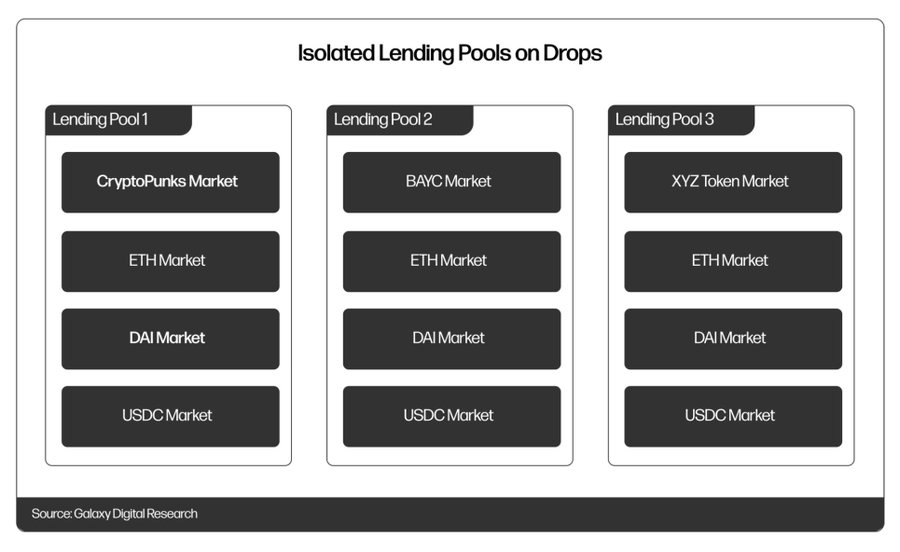
Drops currently has $2.6 million in supplied capital and $388k in outstanding borrows. They offer a moderate LTV ratio to ensure solvency and a relatively low interest rate (around 10% APR on the Yuga Labs vault).
Other peer-to-pool NFT-collateralized lending protocols, @BendDAO and @BailoutFi iterate on this design. BendDAO offers 48-hour liquidation protection for borrowers and Bailout limits loan duration to 30 days to ensure solvency.
Ultimately, peer-to-pool NFT-collateralized lending protocols, like peer-to-pool money markets in DeFi, only accept blue-chip assets as collateral. For these protocols to function, there needs to be oracle infrastructure and a stable floor price.
Collateralized Debt Positions (CDPs)
CDPs, pioneered by MakerDAO, are the final model of NFT-collateralized money markets. @JPEGd_69 is a lending protocol that leverages CDPs to enable borrowing against NFTs.
After the user deposits an NFT into a vault as collateral, they can mint PUSd, a stablecoin pegged to the U.S. dollar. JPEG’d allows PUSd debt positions up to 32% of the collateral value, priced through Chainlink oracles. The protocol charges only 2% in annual interest.
On JPEG’d, liquidations are executed exclusively by the DAO when the debt / collateral ratio of a given user exceeds 33% (or 40% with a staked Cigarette NFT card). The DAO repays the debt and either keeps or auctions off the NFT, thus building its treasury.
On JPEG’d, liquidations are executed exclusively by the DAO when the debt / collateral ratio of a given user exceeds 33% (or 40% with a staked Cigarette NFT card). The DAO repays the debt and either keeps or auctions off the NFT, thus building its treasury.
Users can purchase insurance against liquidations for a 5% one-time non-refundable payment on the loan amount when the loan is taken out. This gives the user the option to repay the debt themselves within 72 hours after liquidation (with a penalty).
JPEG’d raised $72 million in February 2022 through a “Donation Event”.
It looks like an ICO, swims like an ICO, and quacks like an ICO, but it’s not an ICO.
CDP lending through JPEG’d is perfect for those seeking to get some liquidity out of their blue-chip NFTs without paying high rates.
NFT-collateralized lending is still in a nascent stage and is, in my opinion, positioned to develop a lot in the bear market.
When trying these protocols, however, it’s important to exercise caution as they’re very reliant on oracle performance and market stability.