Jambo is a new superapp focused on bringing web3 to African markets with a mission to onboard the next billion African users. Pantera is delighted to have participated in Jambo’s $30M Series A round alongside Paradigm, Delphi, Gemini, and more as they enable a full web3 product suite for African citizens.
African nations boast some of the most promising emerging markets in crypto. With a projected population of 1.7B in 2030 and 2.5B in 2050, Africa is the fastest-growing continent by population. Furthermore, 75% of this population share is under 35, which is the strongest market fit for an emerging crypto consumer sector. Africa also has an extremely strong amount of Internet users, with 155M in Nigeria, 55M in Egypt, and 47M in Kenya. Many of these individuals are crypto-curious and looking for increased exposure to blockchain and web3 markets. A clear example of this trend is the success of VALR, a cryptocurrency mobile trading application that launched recently in Africa (and one of Pantera’s portfolio companies). Furthermore, Nigeria, Kenya, and South Africa are among the top ten nations for crypto adoption and Africans received over $100B worth of crypto payments from July 2020 to June 2021. African citizens typically don’t have access to strong financial services infrastructure, so crypto’s decentralized and relatively secure nature is highly attractive to individuals in these regions.
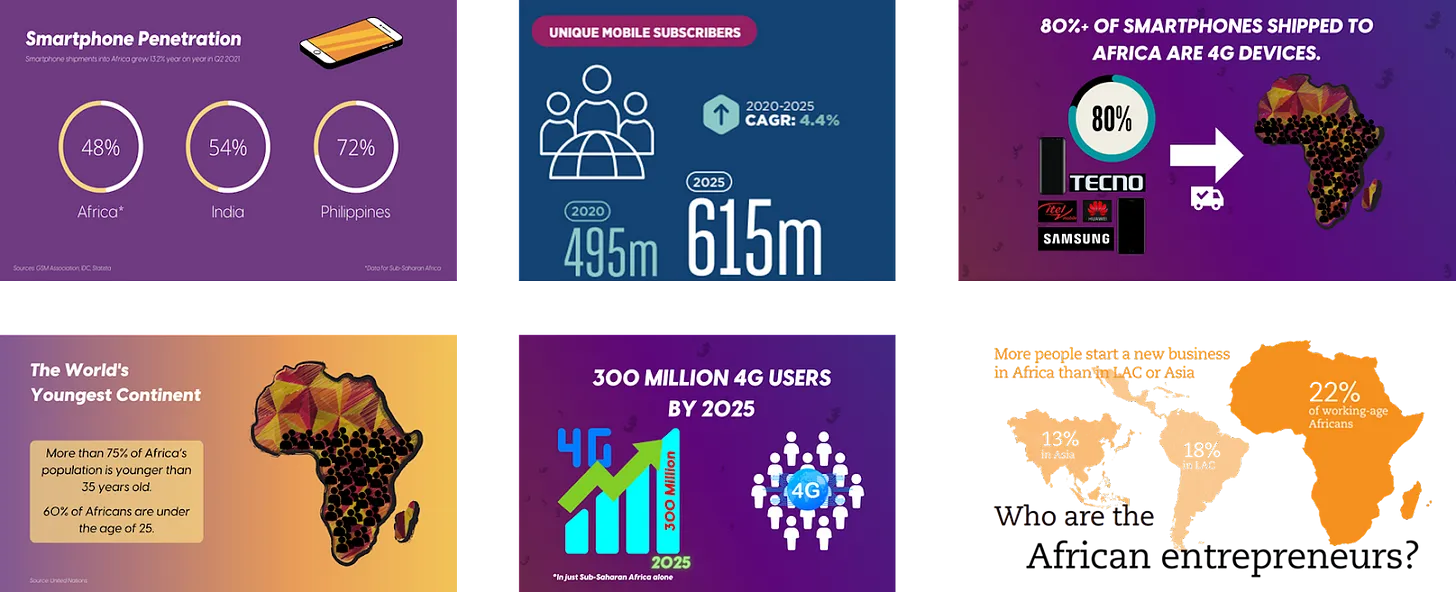
Analytics on African markets. Source: Jambo
Product
There’s already a strong appetite for web3 in Africa, so it’s only natural that crypto will continue to expand within these nations in the form of a fuller web3 experience. This is exactly what Jambo is providing: a “superapp” with everything a user new to cryptocurrency would need to become integrated into web3.
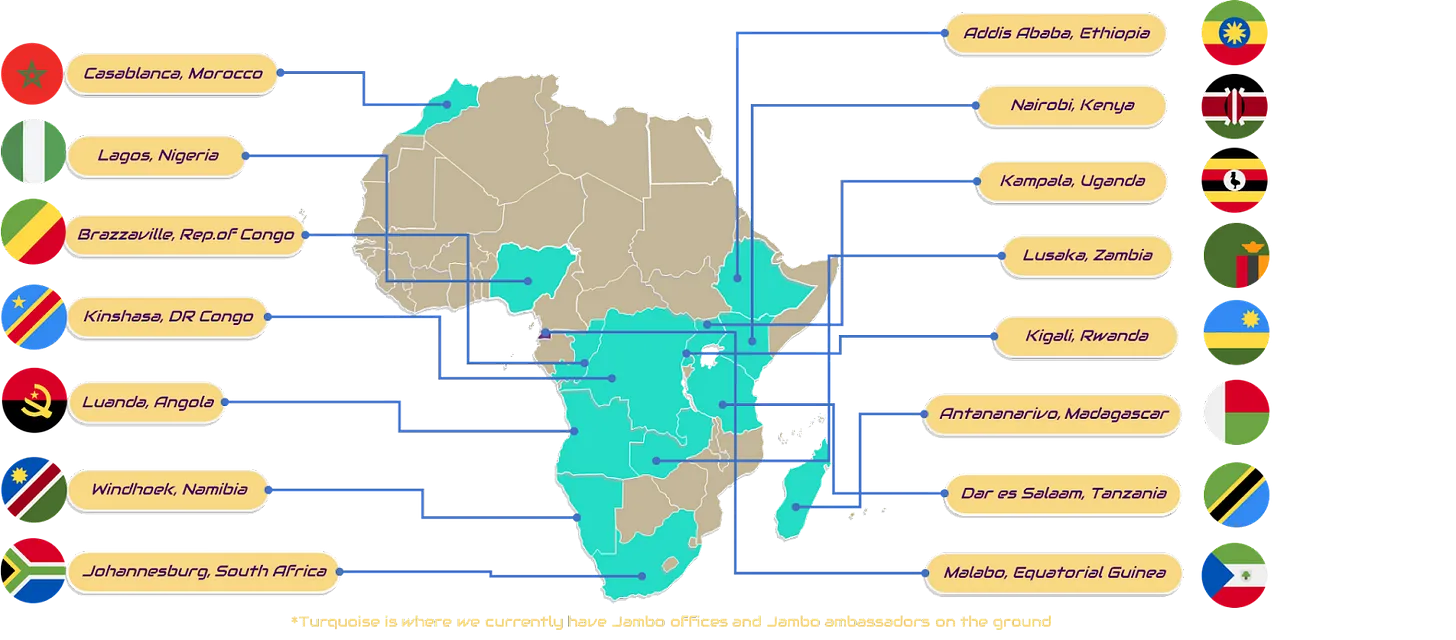
The Jambo team’s presence in Africa so far. Source: Jambo
These features together will make up the Jambo ecosystem and will facilitate the user experience of onboarding into web3. The first offering the team is planning to launch is JamboAcademy. JamboAcademy will construct an extensive network of ambassadors – one city at a time – with a goal of building stronger communities all over Africa. Through these communities, Jambo aims to establish a prominent presence in major population centers to subsequently help expand its reach out to smaller ones. More importantly, with Jambo’s rapidly expanding presence as well as fundamental understanding of cultural nuances, JamboAcademy is developing web3 curriculum that is both geared towards the younger population and tailored for local cultures. Jambo has secured a partnership with AllianceDAO in order to assist the company in educating and impacting the lives of billions across Africa.

Jambo’s academy aims to empower African citizens through web3 education. Source: Jambo
In order to help users fully understand and become integrated into web3, it’s important that the Jambo team also takes web2 into consideration. Jambo is planning to partner with many traditional companies and local African fintech companies to support their app’s product suite and help onboard users. These web2 applications will be complementary to Jambo’s web3 technology and ensure a seamless and user-native onboarding experience for individuals. Jambo is also aiming to be the most preinstalled web3-related app on the continent, which will bolster their user acquisition and help with retention as well.

Jambo Ambassador networks in Africa. Source: Jambo
Traction
Jambo launched in November 2021 and has already made substantial progress across Africa. The app currently has a strong presence in South Africa, Nigeria, Ethiopia, Kenya, Uganda, and many more African nations. So far, Jambo has already gathered a 100-member team and opened offices in 15 countries including Nigeria, Kenya and South Africa.
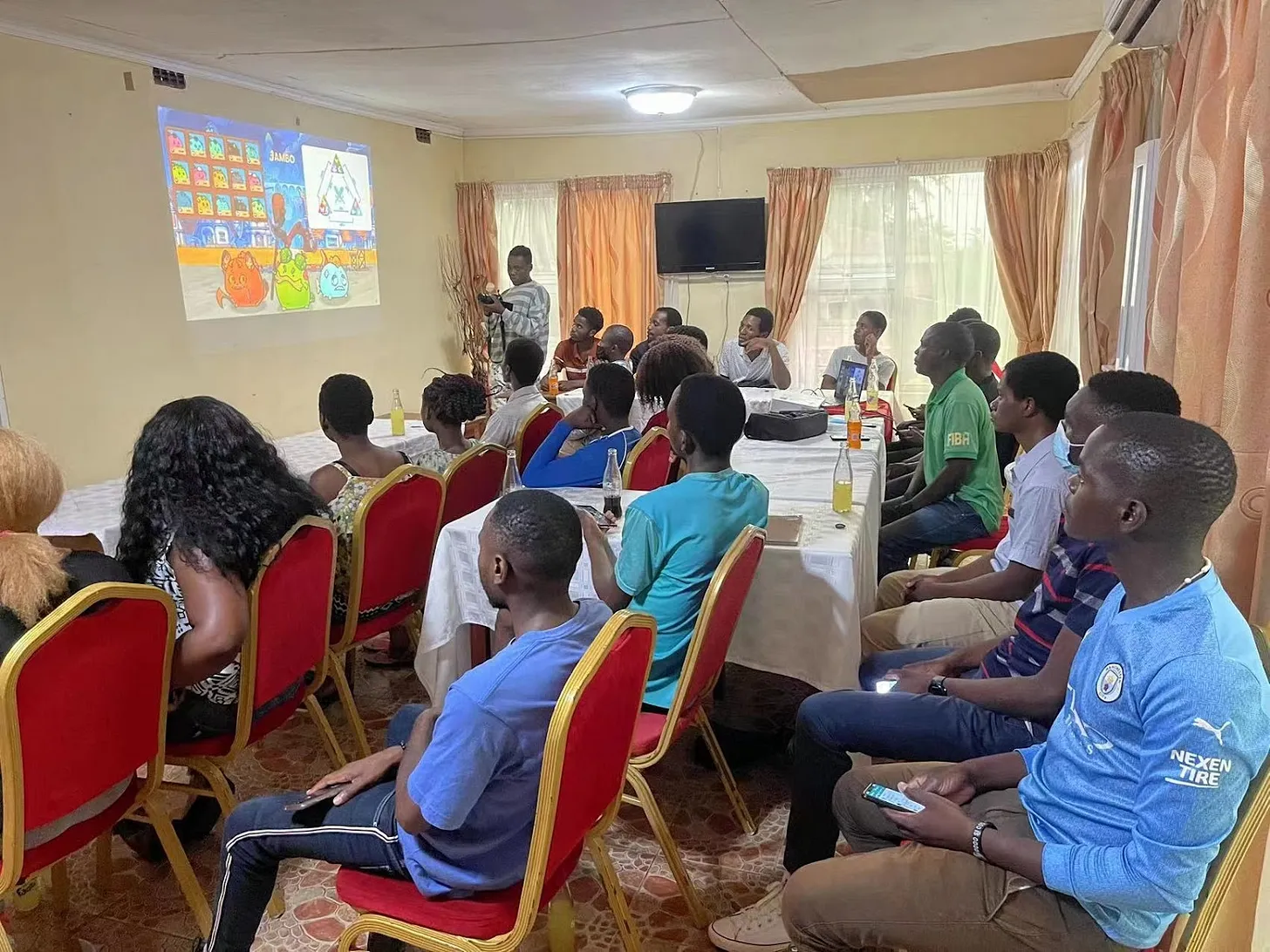
A JamboAcademy class. Source: Jambo
Team
Jambo’s founding team includes African natives who have deep knowledge and expertise in the crypto market in Africa. James Zhang, the company’s CEO, is a serial entrepreneur from the Democratic Republic of Congo who has been active in crypto communities since 2015. The team has also built up an impressive list of advisors, with Sandeep Nailwal, Santiago Roel Santos, Piers Kicks, Joe McCann, Jordan Momtazi, Will Robinson, Qiao Wang, Colleen Sullivan, and Ryan Selkis all on board.
What’s next for Jambo
As web3 explodes in Africa, Jambo is poised to be the all-in-one premier app for earning, trading, and learning about everything blockchain related. Their product suite of blockchain offerings paired with technical education content will be a formidable combination in their go-to-market strategy. Furthermore, investing in digital tokens will allow African citizens to have a new degree of financial autonomy that was previously unavailable. A big component of Pantera’s thesis is democratizing access to web3, so we are especially excited to partner with Jambo as they create and strengthen Africa’s budding web3 ecosystem.