Hai nhà sáng lập của blockchain lâu đời Trung Quốc NEO tranh cãi, nguyên nhân cốt lõi là tài chính không minh bạch

marsbitPublished on 2026-01-01Last updated on 2026-01-01

Abstract

Tranh cãi nảy lửa giữa hai nhà sáng lập của blockchain lâu đời NEO, Zhang Zhengwen (Erik Zhang) và Da Hongfei, bùng phát trên mạng X, với nguyên nhân cốt lõi được cho là tình hình tài chính không minh bạch của Quỹ NEO. Zhang Zhengwen, người trước đó đã rời dự án và mới trở lại vào tháng 9, cáo buộc Da Hongfei độc quyền kiểm soát tài sản của quỹ như một "hộp đen" và sử dụng tài nguyên của NEO để phát triển dự án blockchain riêng là EON. Anh cũng tuyên bố rằng hệ sinh thái NEO trước đây chỉ là "sự thịnh vượng giả tạo" được tạo ra từ các cuộc thi hackathon. Đáp trả, Da Hongfei tuyên bố Zhang Zhengwen mới là người nắm quyền kiểm soát phần lớn tài sản cốt lõi (token NEO và GAS) và quyền bỏ phiếu của các node. Ông cáo buộc Zhang nhiều lần trì hoãn việc chuyển giao số tiền này cho quỹ. Mâu thuẫn leo thang khi Zhang Zhengwen đơn phương tuyên bố Da Hongfei sẽ ngừng tham gia vào mạng chính NEO từ ngày 1/1/2026. Phía Da Hongfei hứa hẹn sẽ công bố báo cáo tài chính vào quý I/2026.

Không ngờ rằng một blockchain lâu đời của Trung Quốc lại có thể có một ngày như vậy, điều đáng buồn hơn là, các dự án AI hàng đầu của Trung Quốc như Manus, Kimi, Minimax liên tiếp có tin tức quan trọng trong hai ngày, hoặc là được mua lại với giá hàng chục tỷ đô la, hoặc là huy động được vài trăm triệu đô la, nhưng blockchain lâu đời lại bắt đầu tranh cãi.

Hiện tại, hai nhà đồng sáng lập của blockchain NEO được thành lập năm 2014, Zhang Zhengwen (Erik Zhang) và Da Hongfei, về cơ bản đã hoàn toàn chia rẽ, vẫn tiếp tục chỉ trích lẫn nhau trên X. Dựa trên phát ngôn của cả hai bên và thông tin công khai trên mạng, hãy thử tìm hiểu chuyện gì đã xảy ra giữa hai nhà sáng lập của blockchain lâu đời này.

Hộp đen tài chính

Thực ra Zhang Zhengwen đã rời NEO vài năm trước, điều này cũng được xác nhận trên Twitter của anh ấy, sau đó chính thức trở lại vào tháng 9 năm nay. Ngòi nổ của cuộc tranh cãi này là vào tháng 11, theo tin tức từ cộng đồng và tài liệu công khai, Zhang Zhengwen, người là cốt lõi kỹ thuật, đã gặp trở ngại khi tìm kiếm báo cáo tài chính chi tiết và dòng tiền của Quỹ Neo.
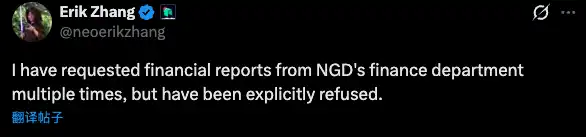
Sau đó, Zhang Zhengwen chỉ trích Quỹ Neo hoạt động lâu nay không minh bạch, tình hình tài sản giống như một "hộp đen". Anh chỉ ra rằng Da Hongfei lâu nay kiểm soát đơn phương các tài sản của quỹ ngoại trừ token NEO/GAS, và thiếu cơ chế công bố đầy đủ, có thể kiểm toán.

Trong cuộc tranh luận của cả hai bên hôm nay, chúng tôi cũng phát hiện ra lý do Zhang Zhengwen rời đi trước đây, anh nói Da Hongfei đã tìm gặp riêng anh, nói rằng hai người phụ trách NEO thì hiệu suất rất thấp, vì vậy anh đã chọn tạm thời rút khỏi ban quản lý để "nâng cao hiệu suất". Tuy nhiên, anh phát hiện Da Hongfei đang sử dụng tài nguyên của NEO để phát triển dự án blockchain độc lập EON. Điều này cũng thúc đẩy anh trở lại và can thiệp vào quản trị quỹ.

Trong cuộc trao đổi với cộng đồng vào tháng 11, Zhang Zhengwen từng nói rằng NEO trước đây đều dựa vào hackathon để tạo ra "sự thịnh vượng giả", không có người dùng thực sự, nhiều dự án hackathon nhận giải xong là biến mất.

Mâu thuẫn leo thang

Tháng 12, Zhang Zhengwen công khai phát tuyên bố, yêu cầu Da Hongfei thực hiện nghĩa vụ công bố tài chính đã cam kết từ ngày 9 tháng 12. Gây chấn động hơn nữa, Zhang Zhengwen đơn phương tuyên bố, theo thỏa thuận điện thoại trước đây của hai bên, kể từ ngày 1 tháng 1 năm 2026, Da Hongfei sẽ không tham gia vào các công việc chính mạng NEO nữa, mà chuyển sang tập trung vào việc phát triển và vận hành sidechain NeoX và dự án mới SpoonOS.

Da Hongfei cũng lập tức phản hồi, nói rằng Zhang Zhengwen thực tế kiểm soát phần lớn tài sản trong hệ sinh thái NEO (bao gồm tài sản cốt lõi là token NEO và GAS), và chi phối quyền bỏ phiếu của các node đồng thuận, cũng chỉ trích Zhang Zhengwen nhiều năm nay với nhiều lý do (như chờ di chuyển N3 hoàn tất) trì hoãn việc chuyển tiền đến địa chỉ đa ký (Multisig) của quỹ.

Da Hongfei cam kết sẽ công bố báo cáo tài chính cuối năm 2025 vào quý I năm 2026, và sẽ chia sẻ trước dữ liệu sơ bộ.


Related Questions

QNguyên nhân chính dẫn đến mâu thuẫn giữa hai nhà sáng lập NEO là gì?

ANguyên nhân chính là việc quản lý tài chính không minh bạch của Quỹ NEO. Zhang Zhengwen (Erik Zhang) cáo buộc Da Hongfei kiểm soát đơn phương các tài sản của quỹ mà không có cơ chế công bố đầy đủ và có thể kiểm toán, khiến tình hình tài sản như một 'hộp đen'.

QZhang Zhengwen (Erik Zhang) đã rời NEO và quay trở lại vì lý do gì?

AZhang Zhengwen rời đi vài năm trước sau khi Da Hongfei đề nghị rằng việc hai người cùng phụ trách NEO là kém hiệu quả. Ông quay trở lại vào tháng 9 năm nay vì phát hiện Da Hongfei đang sử dụng tài nguyên của NEO để phát triển dự án blockchain độc lập EON, thúc đẩy ông can thiệp vào quản trị quỹ.

QSự kiện nào vào tháng 12 đã làm leo thang mâu thuẫn giữa hai người?

AVào tháng 12, Zhang Zhengwen đã công khai đưa ra tuyên bố, yêu cầu Da Hongfei thực hiện nghĩa vụ công bố tài chính đã hứa từ ngày 9/12. Quan trọng hơn, ông đơn phương tuyên bố rằng theo thỏa thuận điện thoại trước đó, kể từ ngày 1/1/2026, Da Hongfei sẽ không tham gia vào các công việc chính của mạng chính NEO nữa.

QDa Hongfei (Đạt Hồng Phi) đã phản ứng thế nào trước những cáo buộc?

ADa Hongfei phản ứng ngay lập tức, cáo buộc ngược lại rằng Zhang Zhengwen mới là người kiểm soát phần lớn quỹ trong hệ sinh thái NEO (bao gồm các token cốt lõi NEO và GAS) và nắm quyền bỏ phiếu của các node đồng thuận. Ông cũng cho rằng Zhang Zhengwen đã trì hoãn việc chuyển tiền vào địa chỉ đa ký (Multisig) của quỹ với nhiều lý do.

QCam kết của Da Hongfei về việc minh bạch tài chính là gì?

ADa Hongfei cam kết sẽ công bố báo cáo tài chính cho quý cuối năm 2025 vào quý đầu tiên của năm 2026 và sẽ chia sẻ trước dữ liệu sơ bộ.

Related Reads

The Trillion-Yuan Market Cap 'Yi Zhong Tian': Who is the True Value King?

The article analyzes the three leading Chinese optical module companies, collectively nicknamed "Yi Zhong Tian": Xinyisheng, Zhongji Innolight, and TFC Optical Communication. It evaluates their "cost-performance" not by current stock price, but through three lenses: PEG ratio (growth vs. valuation), earnings quality, and premium/discount for certainty. Xinyisheng shows the most attractive PEG ratio and high profitability, but its valuation reflects discounts for risks like high customer concentration and reliance on overseas markets. Zhongji Innolight, the most expensive, commands a premium for its market leadership, dominant share in key products like 800G/1.6T modules, and higher earnings certainty, though it faces geopolitical risks. TFC Optical, as an upstream component supplier ("water seller"), has the highest gross margin and bets on the long-term CPO/NPO architecture trend, but trades at a high valuation with more stable, less explosive growth. The core argument is that while these companies dominate module assembly, the true profit pool and technological moat lie upstream in laser and switch chips, currently controlled by U.S. firms like Lumentum and Coherent. The long-term "cost-performance" for these Chinese leaders hinges on whether the domestic industry, exemplified by companies like Yuanjie Technology, can successfully move up the value chain into high-power laser chips. Otherwise, their high growth may remain confined to the lower-margin assembly segment.

marsbit2m ago

The Trillion-Yuan Market Cap 'Yi Zhong Tian': Who is the True Value King?

marsbit2m ago

Has the Crypto Market Bottomed? Here's What Institutions Think

The crypto market is in a period of significant debate, with leading institutions offering differing views on whether a bottom has been reached. Three prominent firms have published detailed analyses: * **Galaxy Digital** argues Bitcoin has **not yet bottomed**. Their analysis of 13 historical indicators across six dimensions (valuation, profit-taking, miner pressure, etc.) shows only four are fully met. They project a potential bottom range between $30k and $54k. * **NYDIG** states a bottom is **possible but not likely**. While metrics are close to historic bear market extremes, they note the absence of a classic panic-selling event. They also suggest increased institutional adoption may have structurally altered the market cycle, potentially leading to a shallower downturn. * **Standard Chartered Bank** asserts the **bottom has already occurred** at around $59k. They cite two key factors: potential US-Iran diplomatic progress and the anticipated SpaceX IPO, which they believe absorbed capital and caused ETF selling pressure that is now subsiding. They forecast a year-end price target of $100k. Despite the surface-level disagreement, the reports share critical common ground more valuable for long-term investors: 1. All three believe the market bottom will form **within this year**. 2. All agree the current price is **closer to the bottom than to previous highs**. 3. All maintain a **bullish long-term outlook** for Bitcoin and a new cycle. The core takeaway is that while the exact bottom price ($40k, $50k, or $60k) is debated, the consensus is that a bottom is imminent. For long-term holders, the primary focus should not be pinpointing the absolute low, but on the future potential for prices to reach $100k, $200k, or higher. The fundamental thesis for Bitcoin—sovereign debt accumulation, inflation, declining trust in centralized institutions, global digitization, and improved accessibility—remains intact and is arguably strengthening. The overall landscape is viewed as more favorable than in previous crypto winters.

marsbit12m ago

Has the Crypto Market Bottomed? Here's What Institutions Think

marsbit12m ago

The 'Chip' Challenge and Breakthroughs in China's Optical Industry Chain

China's Photonics Industry: Bottlenecks and Breakthroughs In the global AI race, computing chips dominate the narrative, but the underlying bottleneck increasingly defining the scale of AI clusters is light—or more specifically, optical connectivity. Optical modules, which translate electrical signals to light and vice versa, are crucial for connecting thousands of GPUs in AI data centers, preventing data congestion and ensuring efficient model training. High-speed modules (800G, 1.6T) are now standard, with performance hinging on advanced DSP (Digital Signal Processor) chips. This is where a critical dependency lies. Two US giants—Marvell and Broadcom—collectively dominate over 90% of the high-end DSP chip market. Chinese optical module leaders like Zhongji Innolight and Eoptolink rely on these chips to manufacture modules for overseas AI customers, primarily in North America. While this creates a supply chain vulnerability, complete decoupling is difficult. Marvell derives over half its revenue from Greater China, and the US firms depend on Chinese partners for chip packaging and optical components. The risk from laser chips (e.g., from Lumentum), another key component, is considered more manageable due to multiple global suppliers and faster progress in domestic alternatives from companies like YOFC and Accelink. To mitigate risks, China's industry is pursuing a multi-pronged strategy: diversifying supply chains and locking in long-term orders; fostering a domestic market ecosystem to adopt homegrown DSPs from firms like Huawei HiSilicon and CETC; accelerating R&D in high-speed DSPs and advanced packaging; and investing in next-gen technologies like silicon photonics and Co-Packaged Optics (CPO) to reduce reliance on discrete DSPs. The ultimate solution lies not in short-term博弈 but in persistent advancement of domestic high-end chip R&D and manufacturing. While challenges remain in performance, certification, and ecosystem building, China's vast domestic market and manufacturing base provide a crucial buffer, buying time for the industry to achieve greater technological independence.

marsbit26m ago

The 'Chip' Challenge and Breakthroughs in China's Optical Industry Chain

marsbit26m ago

Behind SpaceX's $2 Trillion Market Cap: Why Does Musk Always Have the Next Move Planned?

On June 12th, SpaceX debuted on the Nasdaq, reaching a valuation that briefly touched $2 trillion. This marked the culmination of a 24-year journey from its founding in 2002, driven by Elon Musk's frustration at the high cost of buying rockets. The company's path was defined by early failures, with its first three Falcon 1 launches ending in explosions before a successful 2008 flight opened the era of commercial spaceflight. Key to its model was a fixed-price NASA contract, incentivizing cost reduction. SpaceX mastered rocket reusability, first achieving a Falcon 9 landing in 2015, which drastically cut launch costs. This enabled its profitable Starlink satellite internet constellation, envisioned years before reusability was proven, to create an internal market for frequent launches. Similarly, the next-generation Starship rocket was in development long before its first flight, with its business case evolving from Mars colonization to supporting the emerging concept of in-orbit data centers for AI—a story now central to its valuation. The company's recent IPO, a reversal of its long-standing "no IPO" stance, is funding this ambitious "space-based compute" vision. While major tech players like Google, Blue Origin, and others are investing heavily, significant technical and cost hurdles remain. Ultimately, SpaceX's history is one of creating its own demand: first with Starlink and now with space-based AI compute, betting that its next rocket will enable its next giant market.

marsbit29m ago

Behind SpaceX's $2 Trillion Market Cap: Why Does Musk Always Have the Next Move Planned?

marsbit29m ago

Trading

Spot
Futures

Hot Articles

How to Buy CORE

Welcome to HTX.com! We've made purchasing CORE (CORE) simple and convenient. Follow our step-by-step guide to embark on your crypto journey.Step 1: Create Your HTX AccountUse your email or phone number to sign up for a free account on HTX. Experience a hassle-free registration journey and unlock all features.Get My AccountStep 2: Go to Buy Crypto and Choose Your Payment MethodCredit/Debit Card: Use your Visa or Mastercard to buy CORE (CORE) instantly.Balance: Use funds from your HTX account balance to trade seamlessly.Third Parties: We've added popular payment methods such as Google Pay and Apple Pay to enhance convenience.P2P: Trade directly with other users on HTX.Over-the-Counter (OTC): We offer tailor-made services and competitive exchange rates for traders.Step 3: Store Your CORE (CORE)After purchasing your CORE (CORE), store it in your HTX account. Alternatively, you can send it elsewhere via blockchain transfer or use it to trade other cryptocurrencies.Step 4: Trade CORE (CORE)Easily trade CORE (CORE) on HTX's spot market. Simply access your account, select your trading pair, execute your trades, and monitor in real-time. We offer a user-friendly experience for both beginners and seasoned traders.

5.4k Total ViewsPublished 2024.03.29Updated 2026.06.02

How to Buy CORE

Discussions

Welcome to the HTX Community. Here, you can stay informed about the latest platform developments and gain access to professional market insights. Users' opinions on the price of CORE (CORE) are presented below.

活动图片












