2 Days, 20x: A Quick Look at the Automated Market Making Mechanism of the New Gem Snowball

深潮Опубликовано 2025-12-22Обновлено 2025-12-22

Введение

Snowball, a new meme token launched on pump.fun on December 18, gained significant traction in the English-speaking crypto community by introducing an automated market-making mechanism designed to create a self-sustaining "snowball effect." Unlike typical meme coins where creators take a fee (usually 0.5%-1%) from each transaction, Snowball redirects 100% of this fee to an on-chain bot. This bot uses accumulated funds to buy back tokens, add liquidity to the pool, and burn a small portion of tokens periodically. The goal is to create continuous buy pressure and improve trading depth, theoretically allowing the token to grow organically through increased trading activity. Within four days, Snowball reached a $10 million market cap with over 7,000 holders and relatively decentralized ownership. However, the mechanism relies heavily on sustained trading volume to fuel the buyback bot. In a cold market with low on-chain activity, this "flywheel" could reverse if new buyers diminish. While the structure reduces developer exit risk, it doesn’t eliminate other meme coin dangers like large holder dumps or narrative fatigue. Similar projects like FIREBALL are emerging, indicating interest in "mechanism-driven memes," but past examples like OlympusDAO and Safemoon show that mechanisms alone don’t guarantee long-term value. Snowball remains primarily a meme experiment—interesting, but high-risk.

The crypto market in December is as cold as the weather.

On-chain transactions have been dormant for a long time, and new narratives are hard to come by. Just look at the drama and gossip in the Chinese CT (Crypto Twitter) space these past few days, and you'll know hardly anyone is playing in this market anymore.

But the English-speaking community has been discussing something new.

A meme coin called Snowball launched on pump.fun on December 18th. In four days, its market cap surged to $10 million and is still hitting new highs; yet it's barely mentioned in Chinese circles.
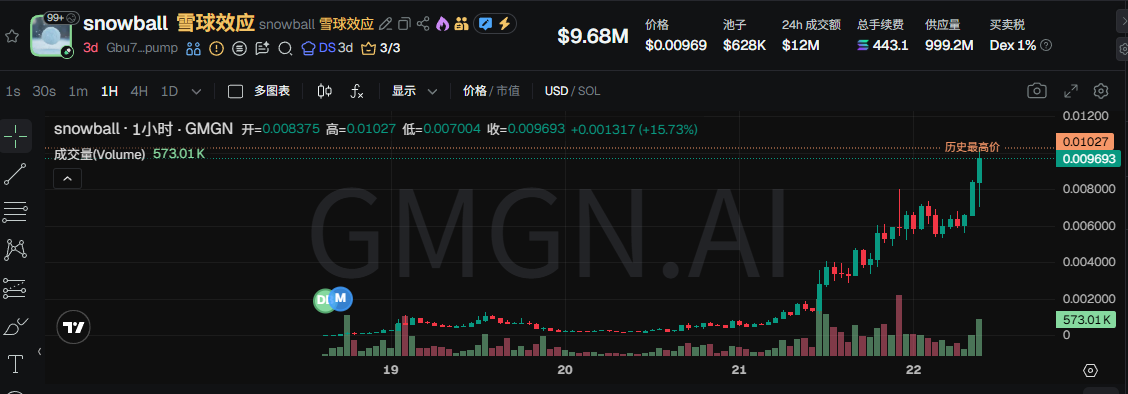
In the current environment, devoid of new narratives and where even memes are considered unplayable, this is one of the few things that catches the eye and shows some localized wealth effect.

And the name Snowball itself tells the story it wants to convey:

A mechanism that allows the token to "roll and grow larger by itself."

Turning Transaction Fees into Buy Pressure, Rolling the Snowball for Market Making

To understand what Snowball is doing, you first need to know how tokens on pump.fun typically make money.

On pump.fun, anyone can create a token in minutes. The token creator can set a "creator fee," essentially taking a cut of every transaction into their own wallet, usually between 0.5% and 1%.

This money could theoretically be used for community building or marketing, but in practice, most Devs choose to: accumulate enough and then run.

This is part of the typical life cycle of a shitcoin. Launch, pump, harvest fees, rug. Investors aren't betting on the token itself, but on the developer's conscience.

Snowball's approach is to not take this creator fee money.

To be precise, 100% of the creator fees do not go into anyone's wallet but are automatically transferred to an on-chain market-making bot.

This bot performs three actions at regular intervals:

First, it uses the accumulated funds to buy tokens on the market, creating buy-side support;

Second, it adds the bought tokens and the corresponding SOL to the liquidity pool, improving trading depth;

Third, it burns 0.1% of the tokens with each operation, creating deflation.
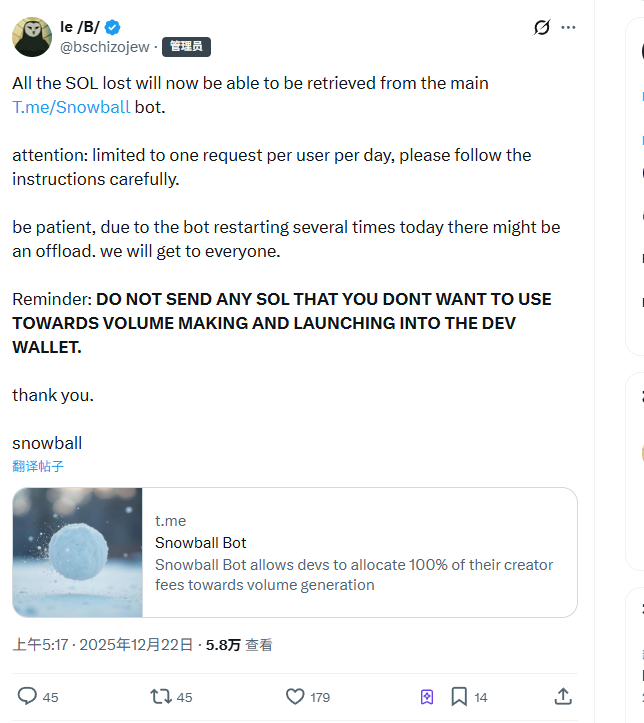
Additionally, the percentage taken as the creator fee is not fixed; it fluctuates between 0.05% and 0.95% based on market cap.

It takes a higher percentage when the market cap is low, allowing the bot to accumulate ammunition faster; it reduces the fee when the market cap is high, decreasing transaction friction.

In one sentence, the logic of this mechanism is: every time you trade, a portion of the money automatically becomes buy pressure and liquidity, instead of going into the developer's pocket.

Therefore, it's easy to understand this snowball effect:

Transactions generate fees → Fees become buy pressure → Buy pressure pushes the price up → Higher price attracts more transactions → More fees... theoretically, it can roll on its own.

On-Chain Data Situation

Now that we've covered the mechanism, let's look at the on-chain data.

Snowball launched on December 18th, so it's been four days now. Its market cap grew from zero to $10 million, with a 24-hour trading volume exceeding $11 million.

For a shitcoin on pump.fun, these results mean it's already one of the longer-lasting ones in the current environment.

In terms of token distribution, there are currently 7,270 holder addresses. The top ten holders combined hold about 20% of the total supply, with the largest single holder holding 4.65%.
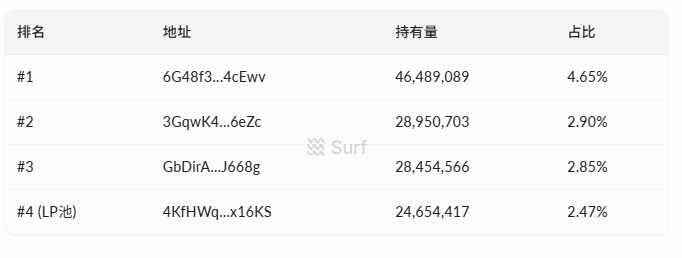
(Data source: surf.ai)

There's no address holding 20-30% of the supply; the distribution is relatively decentralized.

Regarding trading data, there have been over 58,000 cumulative transactions since launch, with 33,000 buys and 24,000 sells. The total buy volume is $4.4 million, and sell volume is $4.3 million, resulting in a net inflow of about $100,000. Buying and selling are basically balanced, with no one-sided selling pressure.

The liquidity pool holds about $380,000, half in tokens and half in SOL. For a market cap of this size, the depth isn't very thick, and large orders would still experience significant slippage.

Another notable point is that Bybit Alpha announced listing the token less than 96 hours after launch, which to some extent confirms the short-term hype.

Perpetual Motion Meets a Cold Market

Looking around, you can see the English community's discussion about Snowball mainly focuses on the mechanism itself. Supporters' logic is straightforward:

This is the first meme coin that locks 100% of the creator fees into the protocol; developers can't take the money and run, making it structurally safer than other shitcoins, at least.

The Dev is also playing into this narrative. The developer wallet, market-making bot wallet, and transaction logs are all public, emphasizing "verifiable on-chain."

@bschizojew labels himself as "on-chain schizophrenia, 4chan special forces, first-generation meme coin veteran," radiating a self-deprecating degen vibe that really appeals to the crypto-native community.

But a safe mechanism and making money are two different things.

The snowball effect relies on the premise that there is sufficient trading volume to continuously generate fees to feed the bot for buybacks. More trades mean more ammunition for the bot, stronger buy pressure, higher prices, attracting more people to trade...

This is the ideal state for any meme coin's so-called buyback flywheel to spin up in a bull market.

The problem is, the flywheel needs external momentum to start.

What is the current crypto market environment? On-chain activity is sluggish, overall meme coin hype is down, and there's simply less capital willing to chase shitcoins. In this context, if new buy pressure doesn't keep up and trading volume shrinks, the fees the bot receives will become less and less, buyback strength weakens, price support falters, and trading willingness declines further.

The flywheel can spin forward, but it can also spin in reverse.

A more realistic problem is that the mechanism solves only one risk point—"developers taking money and running"—but meme coins face far more risks than that.

Whales dumping, insufficient liquidity, narratives going out of style—if any of these happen, 100% fee buybacks can only do so much.

Everyone is tired of being rugged. As one Chinese crypto brother aptly summarized:

Play if you want, but don't get in over your head.

More Than One Snowball Rolling

Snowball isn't the only project telling this automated market-making story.

Within the pump.fun ecosystem, a token called FIREBALL is doing something similar: automatic buybacks and burns, packaged as a protocol other tokens can plug into. But its market cap is much smaller than Snowball's.
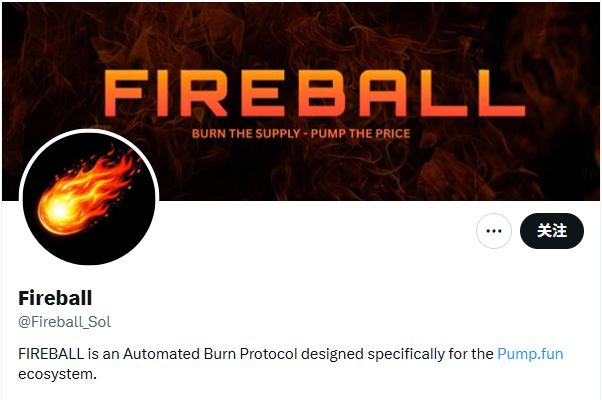
This shows the market is currently responsive to the direction of "mechanism-based meme coins."

The traditional玩法 (playbook) of shilling, pumping, and community hype is finding it harder to attract capital. Using mechanism design to tell a "structurally safe" story might be one of meme coins' latest tricks.

That said, artificially creating a specific mechanism isn't a new玩法 (play) either.

OlympusDAO's (3,3) in 2021 was the most classic case, packaging a staking mechanism with game theory, telling the story "if everyone holds, we all profit together." It reached a peak market cap of several billion dollars. The ending, as everyone knows, was a death spiral, dropping over 90%.

Even earlier, there was Safemoon's玩法 of "taxing every transaction and distributing it to holders," also a narrative of mechanism innovation, which ended with the SEC suing and the founders charged with fraud.

A mechanism can be a great narrative hook, capable of gathering capital and attention in the short term, but the mechanism itself does not create value.

When external capital stops flowing in, even the most精巧 (ingenious) flywheel will stop.

Finally, let's recap what this little gem is actually doing:

Turning the meme coin's creator fees into an "automated market-making bot." The mechanism itself isn't complicated, and the problem it solves is very clear: preventing developers from directly taking the money and running.

Developers not being able to rug doesn't mean you'll make money.

If after reading this you find the mechanism interesting and want to participate, remember one thing: it is first and foremost a meme coin, and only secondly an experiment with a new mechanism.


Трендовые криптовалюты

Связанные с этим вопросы

QWhat is the core mechanism that makes Snowball different from typical meme coins on pump.fun?

ASnowball's core mechanism is that 100% of the creator fees from each transaction are automatically sent to an on-chain market-making bot instead of going to the developer's wallet. This bot uses the accumulated funds to buy back tokens, add liquidity to the pool, and burn a small portion of tokens, creating a self-sustaining 'snowball effect' of buying pressure and liquidity growth.

QHow does the 'snowball effect' theoretically work in this token's economic model?

AThe 'snowball effect' works through a feedback loop: transactions generate fees → fees are used by the bot to buy tokens and add liquidity → buying pressure pushes the price higher → higher prices attract more traders and transactions → which generates more fees for the bot to continue the cycle.

QWhat are some of the risks or limitations of Snowball's automatic market-making mechanism?

AThe mechanism relies on sustained trading volume to generate fees for the bot. If new buyers dry up and trading volume decreases, the bot's buying power weakens, potentially leading to a downward spiral. It also doesn't protect against other risks like large holders dumping, liquidity issues, or narrative fatigue.

QHow does the creator fee percentage in Snowball adjust, and why?

AThe creator fee percentage in Snowball fluctuates between 0.05% and 0.95% based on market capitalization. It charges a higher percentage when the market cap is low to allow the bot to accumulate funds faster, and a lower percentage when the market cap is high to reduce transaction friction for traders.

QWhat precedent exists in crypto for 'mechanism-driven' tokens like Snowball, and what were their outcomes?

APrecedents include OlympusDAO's (3,3) staking mechanism, which collapsed after reaching a multi-billion dollar valuation, and Safemoon's transaction tax redistribution model, which ended with fraud charges from the SEC. These show that while mechanisms can drive short-term hype, they don't create inherent value and often fail when external capital stops flowing in.

Похожее

Южная Корея предпринимает шаги по регулированию трансграничных криптовалютных переводов в рамках новой системы

Южная Корея планирует включить финтех-компании в новую систему лицензирования трансграничных переводов виртуальных активов, которая должна быть введена в декабре. Согласно поправкам в Закон о валютных операциях, компаниям, осуществляющим такие переводы, необходимо будет зарегистрироваться в Министерстве экономики и финансов и отчитываться через национальную систему валютной отчётности. Это сделано для того, чтобы вывести криптовалютные переводы из-под неформального надзора и снизить риски отмывания денег. Изначально ожидалось, что доступ к системе получат в основном криптобиржи, такие как Upbit и Bithumb. Однако регуляторы, включая Банк Кореи, рассматривают возможность расширения круга участников, включив в него нетрадиционные криптоплатформы и финтех-фирмы, если они смогут эффективно осуществлять переводы. Министерство экономики и финансов и Банк Кореи совместно с отраслевыми участниками разрабатывают финальные правила реализации рамок регулирования до их запуска в декабре. Это происходит на фоне усиления надзора за цифровыми активами в стране, включая разработку правил для токенизированных ценных бумаг.

TheNewsCrypto1 ч. назад

Южная Корея предпринимает шаги по регулированию трансграничных криптовалютных переводов в рамках новой системы

TheNewsCrypto1 ч. назад

Мэтт Дэймон выступит на Ripple Swell, поскольку продвижение RLUSD от Water.org привлекает внимание

Мэтт Дэймон выступит на конференции Ripple Swell 2026 в Нью-Йорке в качестве основного докладчика. Он является соучредителем некоммерческой организации Water.org, которая недавно запустила кампанию Get Blue для расширения доступа к безопасной воде и санитарии. Ripple указана в материалах кампании как эксклюзивный партнер по цифровым активам и платежам. Партнерство предполагает использование Ripple Payments и стейблкоина Ripple USD (RLUSD) для более эффективного и дешевого перемещения средств микрофинансовым партнерам в развивающихся странах. Это сотрудничество представляет RLUSD в новом свете — не как инструмент для торговли или расчетов, а как часть платежной инфраструктуры для гуманитарных целей. Участие знаменитости помогает Ripple выйти на более широкую аудиторию и представить стейблкоин как практическое решение для филантропии, где важны скорость и низкая стоимость транзакций. Однако важно отметить, что ключевая работа по решению водного кризиса остается за местными партнерами Water.org.

bitcoinist1 ч. назад

Мэтт Дэймон выступит на Ripple Swell, поскольку продвижение RLUSD от Water.org привлекает внимание

bitcoinist1 ч. назад

Microsoft выявляет новое крипто-вредоносное ПО, нацеленное на адреса кошельков и приватные ключи

В феврале 2026 года Microsoft Threat Intelligence обнаружила новую вредоносную кампанию, нацеленную на пользователей криптовалют. Вредоносная программа, классифицируемая как Trojan/CryptoBandits.A, распространяется через зараженные USB-накопители с помощью файлов .lnk. Особенность этой атаки заключается в использовании технологии Windows Script Host и ActiveX для запуска упакованного Tor-прокси без необходимости в установщике или обычных управляющих серверах. После заражения система подключается к серверам в сети Tor через локальный SOCKS5-прокси. Основная функция вредоноса — слежка за буфером обмена. Он ищет и крадет сид-фразы (12 и 24 слова), приватные ключи Bitcoin и Ethereum, а также адреса кошельков. Обнаружив скопированный адрес, программа подменяет его на адрес, контролируемый злоумышленниками, что позволяет перехватывать переводы. Кроме того, программа делает скриншоты экрана и отправляет их через Tor, что дает атакующим информацию о балансах и активности пользователей. Угроза также обладает возможностью удаленного выполнения кода и обеспечивает свое постоянство в системе через планировщик заданий. В качестве мер защиты Microsoft рекомендует отключать автозапуск для USB, ограничивать использование сценариев и исполняемых ярлыков с внешних накопителей, а также отслеживать подозрительную активность, такую как выполнение JavaScript, работу прокси на localhost:9050 и мониторинг буфера обмена.

TheNewsCrypto1 ч. назад

Microsoft выявляет новое крипто-вредоносное ПО, нацеленное на адреса кошельков и приватные ключи

TheNewsCrypto1 ч. назад

Без отдела продаж и с оборотом в 20 миллионов долларов: как AI-сотрудник Viktor привлек 30 000 компаний?

Традиционное корпоративное ПО требует обширных продаж и долгого внедрения. ИИ-сотрудник Viktor, разработанный командой с опытом в DeepMind, бросает вызов этому подходу. Он позиционируется как «коллега третьего уровня» (Tier 3 AI Coworker), способный на сквозное выполнение задач, а не просто на помощь. Пользователи могут упоминать его в Slack или Microsoft Teams, давая задания на естественном языке, например, «подготовь отчёт по продажам». Viktor самостоятельно подключается к CRM, генерирует графики и отправляет результат. Без отдела продаж и длительных проектов внедрения, через модель роста, управляемую продуктом (PLG), Viktor достиг $20 млн годового дохода, обслужив 30 000 компаний на платформе Slack. Ключом стал минимальный порог входа: бесплатный кредит в $100 и оплата за фактически выполненные задачи, а не за лицензии на сотрудников. Теперь продукт доступен в Microsoft Teams, открывая доступ к 320 млн пользователей. Viktor устраняет барьер сложных промптов, выполняя работу от начала до конца, и может работать автономно, например, проводя сверку счетов ночью или создавая презентации из данных разных систем. Он запоминает коррекции и контекст, становясь «слоем процессов» компании. Однако переход в корпоративную среду Teams сталкивается с проблемами соответствия и безопасности. Полная автоматизация вызывает опасения из-за «чёрного ящика» решений и рисков ошибок с доступом к критическим системам. Баланс между эффективностью и контролем остаётся главным вызовом для внедрения ИИ-сотрудников в бизнес-процессы. Viktor демонстрирует привлекательность модели с нулевым порогом входа, но для масштабирования в крупных организациях необходимы доверие и надёжные рамки управления.

marsbit2 ч. назад

Без отдела продаж и с оборотом в 20 миллионов долларов: как AI-сотрудник Viktor привлек 30 000 компаний?

marsbit2 ч. назад

Интервью с сооснователем CoreWeave: Спрос на ИИ, кажется, «обостряется» с каждым днём

Интервью с руководителями CoreWeave показало, что спрос на ИИ-инфраструктуру продолжает стремительно расти. Согласно Brannin McBee и Nick Robbins, запросы на вычислительные мощности не только не снижаются, но и «обостряются каждый день новыми способами». Особенно заметен всплеск в сегментах агентного ИИ и инференса, что увеличивает важность не только GPU, но и CPU, а также систем хранения данных. CoreWeave, обладающая уникальным положением на рынке и обслуживающая ведущие компании вроде OpenAI, Anthropic, Meta и NVIDIA, видит структурные изменения в нагрузках. Основное узкое место смещается с доступности GPU на более комплексные инфраструктурные проблемы: наличие подготовленных дата-центров («powered shells»), логистика, квалифицированные кадры и общая способность к исполнению проектов. Компания строит свой бизнес, ориентируясь на четкие требования клиентов, и уже адаптировала архитектуру своих дата-центров под растущие потребности в CPU и памяти. Что касается конкуренции, CoreWeave выделяется репутацией, подтвержденной независимыми рейтингами, и способностью быстро разворачивать высокопроизводительные системы. В ближайшие годы ожидается массовое развертывание новых платформ, таких как Vera Rubin, при этом модель ценообразования CoreWeave защищает ее маржу от волатильности стоимости компонентов, таких как HBM.

marsbit2 ч. назад

Интервью с сооснователем CoreWeave: Спрос на ИИ, кажется, «обостряется» с каждым днём

marsbit2 ч. назад

Торговля

Спот
Фьючерсы

Популярные статьи

Как купить QUICK

Добро пожаловать на HTX.com! Мы сделали приобретение Quickswap (QUICK) простым и удобным. Следуйте нашему пошаговому руководству и отправляйтесь в свое крипто-путешествие.Шаг 1: Создайте аккаунт на HTXИспользуйте свой адрес электронной почты или номер телефона, чтобы зарегистрироваться и бесплатно создать аккаунт на HTX. Пройдите удобную регистрацию и откройте для себя весь функционал.Создать аккаунтШаг 2: Перейдите в Купить криптовалюту и выберите свой способ оплатыКредитная/Дебетовая Карта: Используйте свою карту Visa или Mastercard для мгновенной покупки Quickswap (QUICK).Баланс: Используйте средства с баланса вашего аккаунта HTX для простой торговли.Третьи Лица: Мы добавили популярные способы оплаты, такие как Google Pay и Apple Pay, для повышения удобства.P2P: Торгуйте напрямую с другими пользователями на HTX.Внебиржевая Торговля (OTC): Мы предлагаем индивидуальные услуги и конкурентоспособные обменные курсы для трейдеров.Шаг 3: Хранение Quickswap (QUICK)После приобретения вами Quickswap (QUICK) храните их в своем аккаунте на HTX. В качестве альтернативы вы можете отправить их куда-либо с помощью перевода в блокчейне или использовать для торговли с другими криптовалютами.Шаг 4: Торговля Quickswap (QUICK)С легкостью торгуйте Quickswap (QUICK) на спотовом рынке HTX. Просто зайдите в свой аккаунт, выберите торговую пару, совершайте сделки и следите за ними в режиме реального времени. Мы предлагаем удобный интерфейс как для начинающих, так и для опытных трейдеров.

431 просмотров всегоОпубликовано 2024.03.29Обновлено 2026.06.02

Как купить QUICK

Обсуждения

Добро пожаловать в Сообщество HTX. Здесь вы сможете быть в курсе последних новостей о развитии платформы и получить доступ к профессиональной аналитической информации о рынке. Мнения пользователей о цене на QUICK (QUICK) представлены ниже.

活动图片